Hear from Our Customers
When a large tree comes down in Plymouth, the stakes are real. Homes in Old Village date back to the 1840s, and the lots are narrow. There’s no open field to drop a tree into — there’s a roofline, a neighbor’s fence, or a utility line running overhead.
Getting this right takes more than a chainsaw and a truck. When you work with a crew trained for this environment, the job ends without surprises. The tree is down, the debris is gone, and your property looks the way it did before — minus the hazard.
Plymouth’s storm seasons compound the urgency. Wayne County has been included in federal disaster declarations for severe storms and flooding, and Plymouth’s northwest neighborhoods have taken repeated hits from high-wind events. Whether you’re dealing with a tree that came down last night or one that’s been leaning toward your house for a season, a clean, safe resolution is what actually matters — not just getting someone out there fast, but getting someone out there who knows what they’re doing.
We’re a family-owned operation based in Southeast Michigan, founded by Ivan and his fiancée Cecilia. Ivan runs every job in the field. Cecilia handles scheduling, communication, and the administrative side — which means when you call, you reach someone who actually knows what’s going on with your job.
Our team carries ISA Certified Arborist credentials and TRAQ qualification, which is the formal, science-backed methodology for assessing whether a tree poses a structural risk. In Plymouth, where Chapter 8.20 of the city’s municipal code requires a licensed arborist’s written condition assessment before a street tree can be removed, that credential isn’t a marketing detail — it’s what lets the job get done legally and correctly.
We’re also trained and certified to work near electric poles and overhead utility lines. In a city as dense as Plymouth — 2.22 square miles, with mature trees growing through utility corridors throughout Old Village and the streets around downtown — that’s the capability that separates a crew that can handle your job from one that can’t.
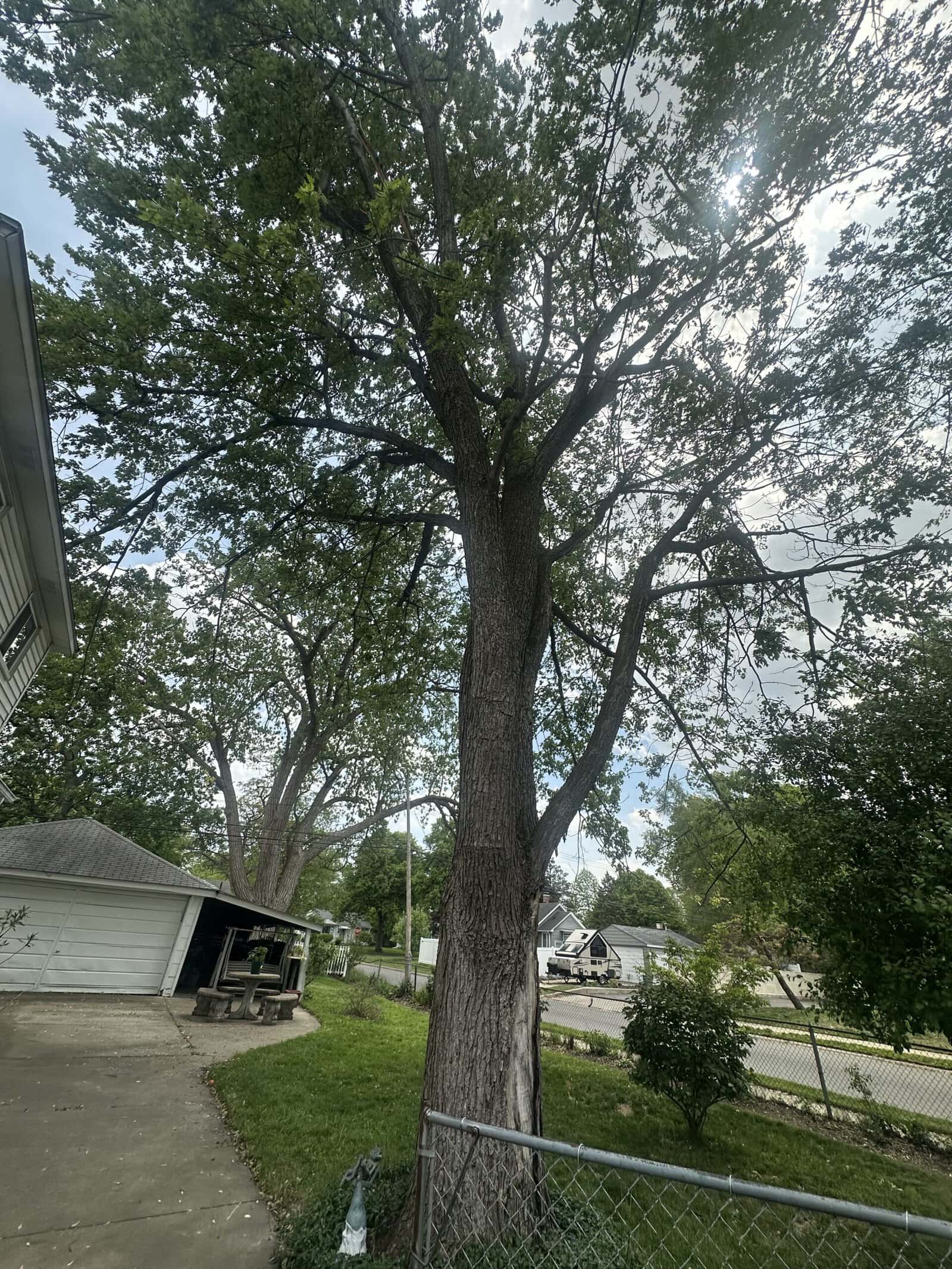
It starts with a site visit — not a phone quote. Our team comes to your Plymouth property, walks the area, and assesses the tree in person before anything else happens. For homeowners dealing with a Heritage or Protected Tree under Chapter 8.20, this visit also includes determining whether a city permit is required and what the correct process looks like. You won’t find out halfway through the job that something needed approval first.
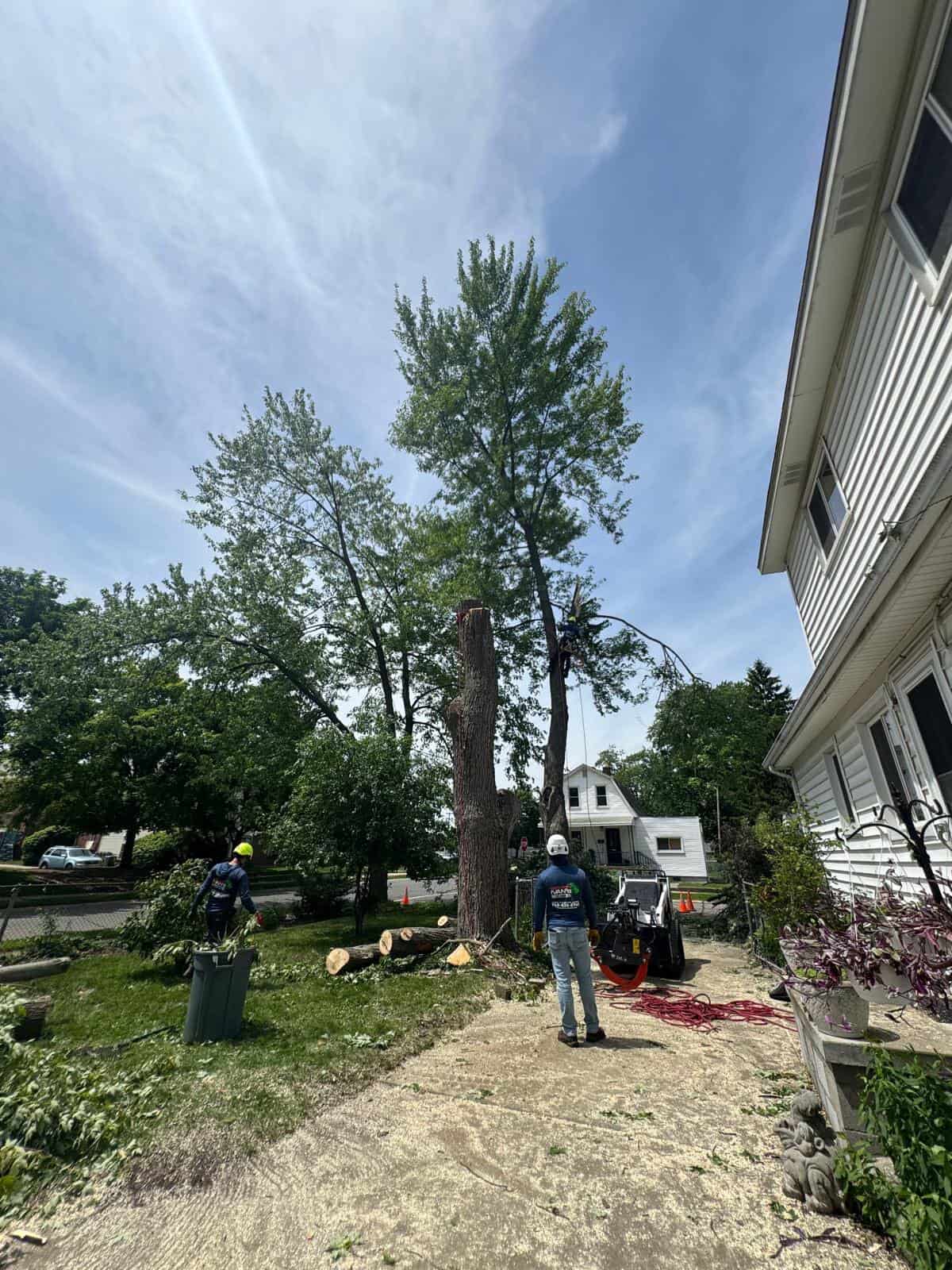
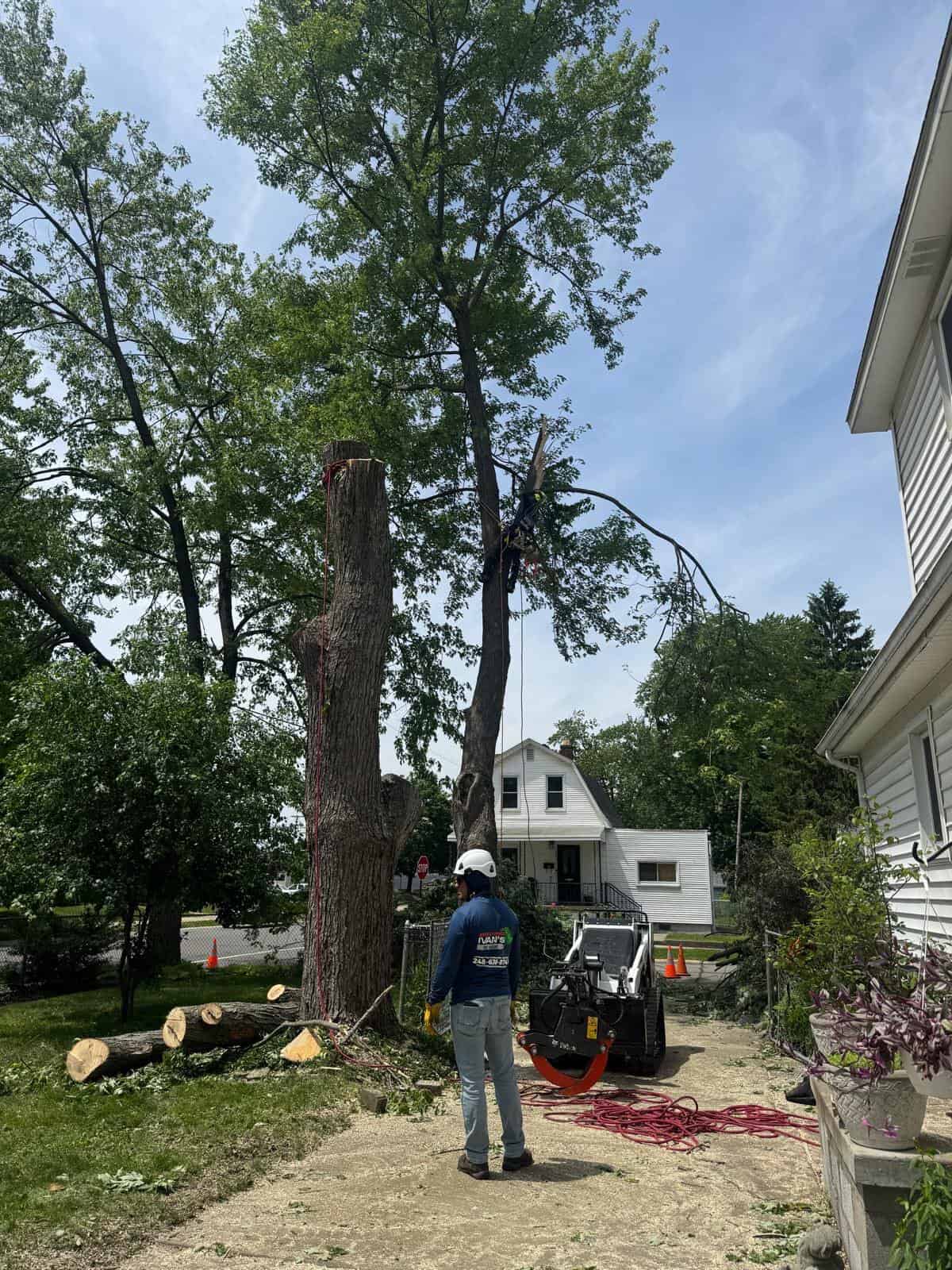
Once the scope is clear, you get a written estimate — no verbal agreements, no vague numbers. If you’re moving forward, the crew arrives with the right equipment for the specific conditions at your property. For tight lots in Old Village or near Ann Arbor Trail, that means controlled lowering, proper rigging, and when overhead lines are involved, the trained technique to work around them safely.
When the work is done, the site is cleaned. Every piece of debris — brush, limbs, logs — is removed before the crew leaves. If stump grinding is part of the job, that’s handled separately and clearly scoped upfront, so there’s no confusion about what’s included.
Ready to get started?
We handle the full range of tree removal situations Plymouth homeowners face — routine removal of dead or unwanted trees, hazardous tree removal when a tree poses a structural risk, emergency tree removal after storm damage, and lot clearing when a property needs a fresh start. Stump grinding and complete stump removal are available as well, and those are always scoped clearly upfront so you know exactly what’s included before the job starts.
For Plymouth specifically, the work often involves conditions that require more than a general tree crew. The city’s density means most removals happen in close proximity to structures, fences, or overhead lines. The older housing stock in and around downtown adds another layer — these homes weren’t built with modern clearances in mind, and the trees that have grown up around them reflect decades of unchecked growth. Our ISA Certified Arborists assess each situation on its own terms, which means the recommendation you get is based on what the tree actually needs, not on what’s easiest or most profitable to sell.
We also handle the documentation side. If your removal requires a condition assessment submitted to Plymouth’s Department of Municipal Services, that’s part of the process — not something you have to figure out on your own. The goal is for you to end up with a safe property, a clean yard, and no outstanding issues with the city.
It depends on the tree and where it’s located on your property. Under Chapter 8.20 of the Plymouth Municipal Code, Heritage and Protected Trees require a permit before any removal can take place. Removing one without the proper permit is a code violation — and each tree removed without authorization counts as a separate violation under Chapter 20.12. That’s not a minor administrative issue; it can result in fines and enforcement actions from the city.
Street trees are a separate category. If the tree sits in the public right-of-way adjacent to your property, Plymouth requires that a licensed arborist determine the tree is dead, diseased, or dying before it can be removed. That arborist’s written condition assessment has to be submitted to the city’s Department of Municipal Services before any work begins, and the cost of that assessment falls on the adjacent property owner. Our team includes ISA Certified Arborists who can produce that documentation, which means the permitting side of the process is handled correctly from the start — not patched together after the fact.
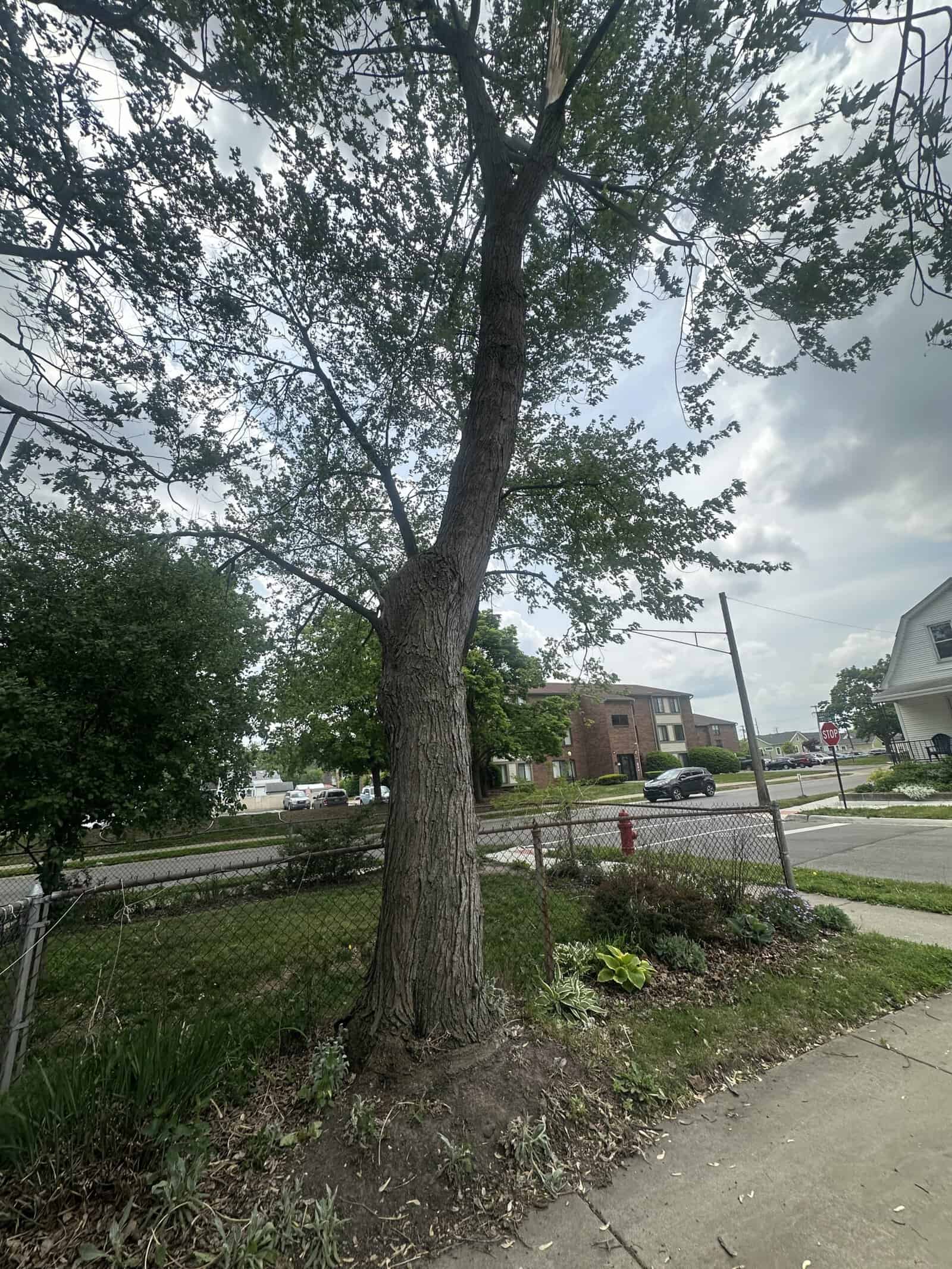
Some warning signs are visible — a significant new lean, cracks in the trunk, large dead branches hanging overhead, or roots that are visibly lifting out of the ground. After a storm, these are the things to look for first, especially given how frequently Plymouth’s northwest neighborhoods take the hardest hits from high-wind events. A tree that looked fine before a storm can have hidden structural damage — split root systems, internal decay, or compromised attachment points — that only shows up under a trained assessment.
What’s harder to catch without a professional eye is internal decay. A tree can look completely healthy on the outside while the core structure is significantly weakened. That’s why a visible inspection matters more than a gut check. Our TRAQ-qualified risk assessors use a formal methodology to evaluate whether a tree poses a genuine structural threat — not just a general impression, but a documented assessment. If the tree is salvageable through trimming or cabling, that’s what you’ll hear. If it needs to come down, you’ll know exactly why.
Tree removal takes the tree down to ground level — the trunk, limbs, and canopy are cut and removed. The stump is left in place unless stump grinding is specifically included in the scope. This is one of the most common points of confusion homeowners run into, and it’s worth clarifying before the job starts rather than after the crew leaves.
Stump grinding is a separate process that uses specialized equipment to grind the remaining stump below grade. For Plymouth homeowners — particularly in older neighborhoods where stumps can interfere with landscaping, sidewalk access, or city right-of-way requirements — getting the stump addressed at the same time as the removal is usually the cleaner solution. We offer both services, and the estimate you receive will clearly separate what’s included in each so there are no surprises when the job is done. If you’re unsure whether stump grinding makes sense for your specific situation, the on-site walkthrough is the right time to ask.
Sometimes — but the details matter. If a tree falls due to a covered event, like a windstorm, and damages a structure on your property, your homeowners insurance policy may cover the cost of removal. Wayne County, including Plymouth, has been included in federal disaster declarations for severe storms and flooding, so storm-related tree damage is a real and recurring situation here, not a hypothetical.
The important thing to know is that removing the tree before an insurance adjuster visits can void your claim. If a storm brings a tree down on your roof or garage, document the damage first — photographs, timestamps — and contact your insurance company before any removal work begins. Once an adjuster has assessed the scene, you can move forward with removal. If the tree fell in your yard without hitting a structure, coverage is less likely, but your policy language will tell you what applies. We can work around your insurance timeline and provide documentation of the scope of work if your insurer requires it.
Not for just any crew — and that’s a real distinction in Plymouth. The city’s density, combined with decades of tree growth in established neighborhoods like Old Village, means overhead utility lines run through a significant number of residential lots. A mature tree growing near or into a utility corridor isn’t just a complicated removal — it’s a situation that requires specific training and certification to handle safely.
Most general tree companies aren’t equipped for this work. Our team is specifically trained and certified to work near electric poles and overhead lines, which is one of the few capabilities in this space that’s genuinely hard to find and genuinely matters. The technique involved — controlled lowering, precise rigging, careful sequencing of cuts — is different from a standard removal, and doing it wrong creates risk for the crew, the property, and the surrounding infrastructure. If your tree is near a utility line, that’s exactly the scenario where credentials stop being a background detail and start being the reason you call one company instead of another.
Most residential tree removals in Plymouth take anywhere from a few hours to a full day, depending on the size of the tree, how close it is to structures or utility lines, and whether stump grinding is included. A large, mature tree on a tight Old Village lot — where controlled lowering is required and access is limited — will take longer than a straightforward removal on an open property. The on-site estimate is where that timeline gets established, so you’re not guessing on the day of the job.
Cleanup is included in every job we complete. Every piece of debris — brush, limbs, wood — is removed from your property before the crew leaves. Plymouth residents care about how their neighborhoods look, and a pile of logs left on a residential street or in front of a historic home isn’t acceptable to us any more than it is to you. The job isn’t finished until the site is clean. If you want the wood chipped for mulch or kept for firewood, that’s worth discussing during the estimate — but either way, the property is left in order when the crew pulls away.
Other Services we provide in Plymouth
