Hear from Our Customers
When tree pruning is done right, you stop reacting and start getting ahead of problems. Deadwood comes out before it falls on something. The crown gets lighter before storm season puts it to the test. Branches stop pushing toward your roofline, your fence, or your neighbor’s yard. And the tree itself — the one that’s been growing in your Old Village backyard or along your Deer Creek property line for decades — stays structurally sound instead of quietly becoming a liability.
Plymouth has lost more than 3,400 ash trees to the Emerald Ash Borer since 2015. That’s not a distant statistic — it happened in a city that covers just over two square miles. For homeowners who still have ash trees, maples, oaks, or any other mature species on their property, regular professional pruning is the early-warning system that catches stress, disease pressure, and structural problems before they become losses. A credentialed arborist doing a canopy assessment during a pruning visit sees things that aren’t visible from the ground.
Mature trees also carry real financial weight in Plymouth. USDA Forest Service research puts the property value contribution of healthy, mature trees at anywhere from 7 to 19 percent — and in the Midwest, that often translates to $10,000 or more added to a home’s value. In a market where Plymouth’s median home value sits near $490,000, keeping those trees healthy isn’t just good stewardship. It’s protecting a measurable part of what your property is worth.
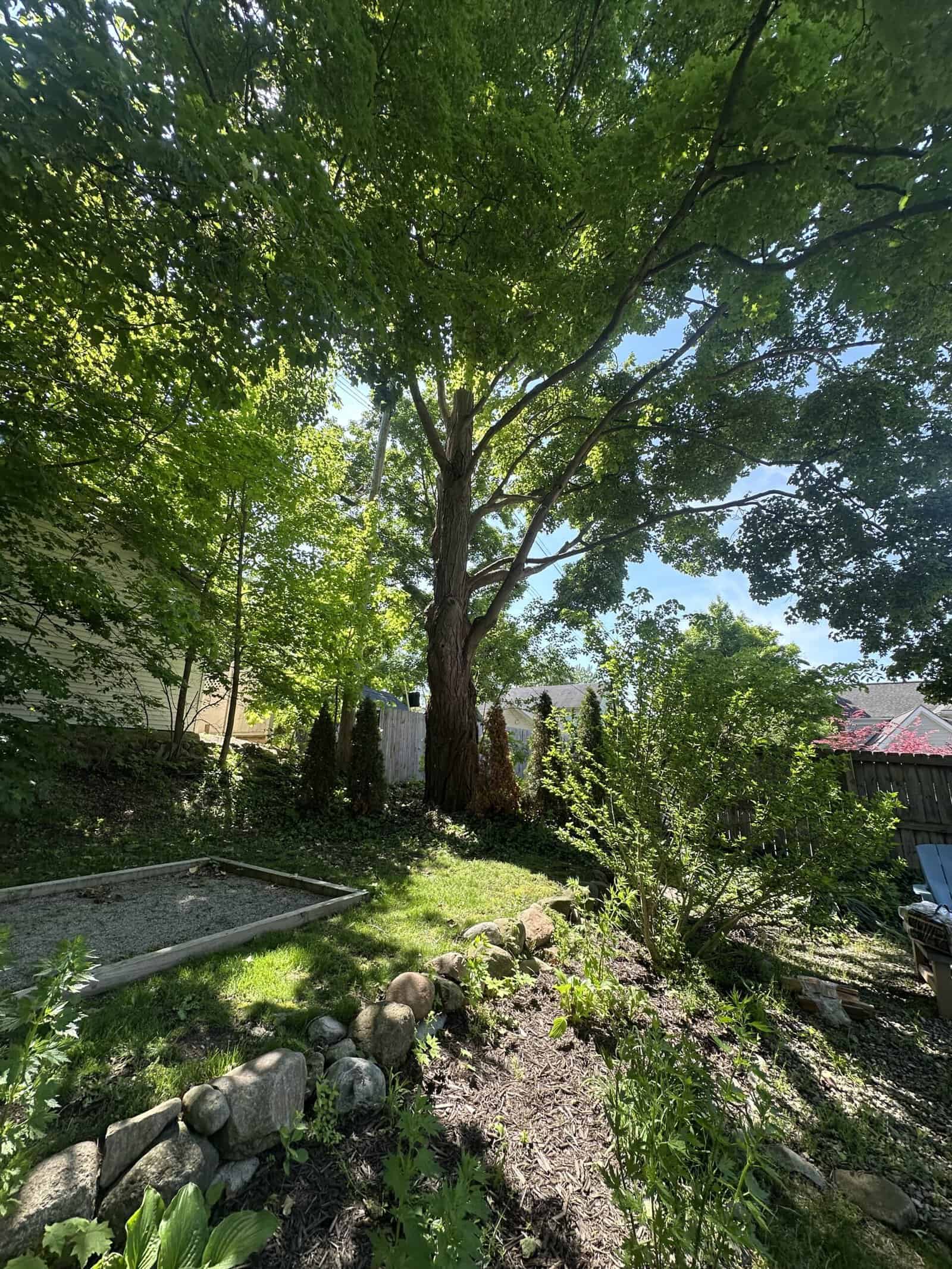
We’re a family-owned company with over seven years of experience serving homeowners across the metro Detroit area. Ivan leads every field operation personally and trains each crew member — not just in proper technique, but in how to communicate clearly and respectfully with the people whose property we’re working on. Cecilia handles scheduling and customer communication, so when you call, you reach someone accountable, not a voicemail.
What sets us apart in Plymouth specifically is the credential depth. We field ISA Certified Arborists and TRAQ-qualified risk assessors — the exact qualifications that Plymouth’s Heritage Tree ordinance effectively requires when significant pruning of a protected tree is involved. Plymouth updated that ordinance in May 2024, and it carries real enforcement weight: up to $700 per tree, per violation. Hiring a general landscaper who doesn’t know the Heritage Tree rules exist isn’t just a risk to your trees — it’s a risk to your wallet.
We also hold line-clearance certification for work near energized utility lines, which matters along the M-14 corridor and Ann Arbor Road where residential trees frequently grow into overhead infrastructure.
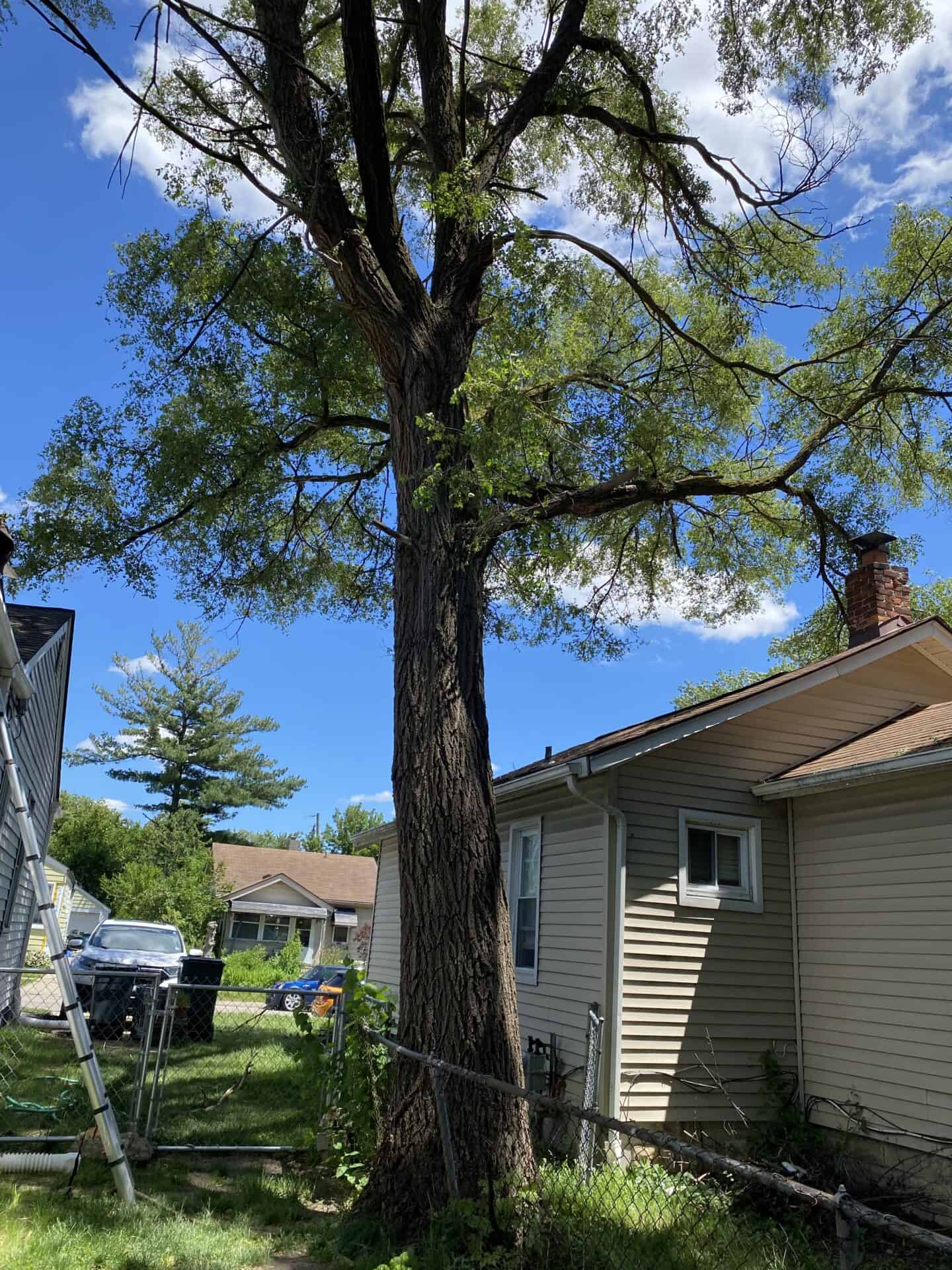
It starts with a site walk. Before any equipment comes out, we walk the property with you, identify every tree that needs attention, and deliver a written scope of work. In Plymouth, that walkthrough also serves a practical compliance function — we can flag any trees that qualify as Heritage or Protected Trees under Chapter 8.20 of Plymouth’s municipal code and guide you through the permit process before a single cut is made. That step alone protects you from violations that homeowners in Plymouth have faced when they hired crews who skipped it.
From there, the actual pruning work follows ANSI A300 standards — the national benchmark for professional tree care and the legal reference point in civil disputes over tree work quality. That means no topping, no flush cuts, no climbing spikes on trees being pruned. Crown thinning removes selective branches to improve airflow and reduce wind resistance — critical before Michigan’s spring and summer storm season, which has produced documented wind gusts over 60 mph in the Plymouth area. Crown reduction brings down overall tree size while maintaining natural form. Deadwooding clears out what’s already failing before it falls on its own.
After the work is done, we clean up completely. Debris gets removed. The site gets left in better shape than it was found. That’s not a bonus — it’s the standard.
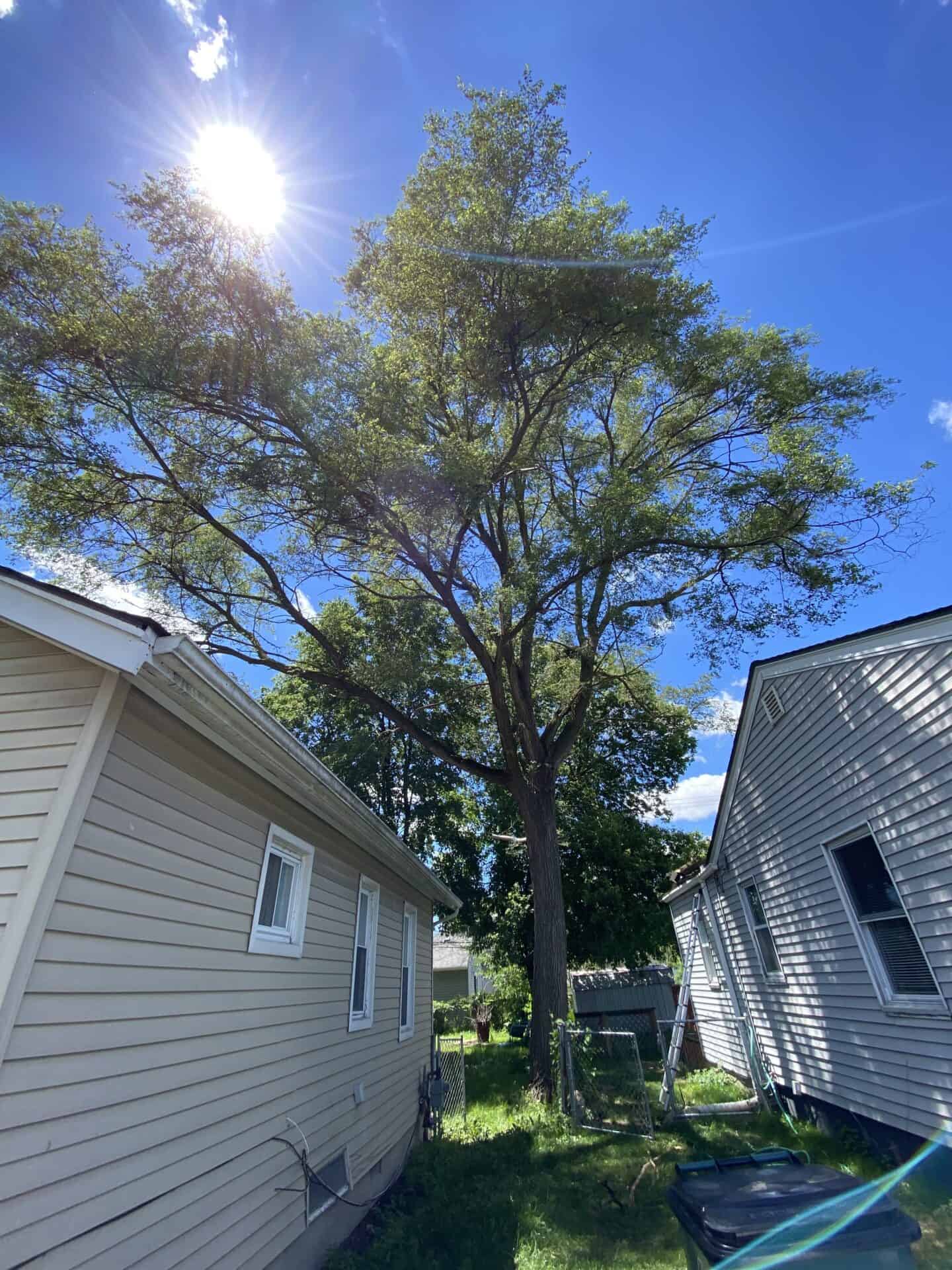
Ready to get started?
Tree pruning in Plymouth covers more ground than most homeowners expect going in. Our service includes a full canopy assessment before any cuts are made — the arborist looks at branch structure, weight distribution, signs of disease or pest pressure, and how the tree’s growth pattern interacts with your structures, utility lines, and neighboring properties. In Plymouth, where the Asian Longhorned Beetle now poses a documented threat to maple trees and the EAB continues to affect ash, that health assessment isn’t a formality. It’s the part of the visit that catches problems early.
Depending on what the assessment finds, the work may involve crown thinning to reduce density and wind load, crown reduction to bring the tree’s size into a safer and more manageable range, deadwooding to remove branches that are already failing, or crown raising to meet Plymouth’s ordinance requirement of maintaining clearance above street and sidewalk surfaces. For trees near the M-14 corridor or along utility-adjacent streets in Plymouth Township, our line-clearance certified arborists handle the work with the specialized training and insurance that utility proximity requires.
Every job includes full debris removal and site cleanup. We provide written estimates before work begins — no surprises on the scope, no surprises on the bill. If your property includes trees that fall under Plymouth’s Heritage Tree protections, we’ll identify them during the site walk and walk you through what the permit process looks like.
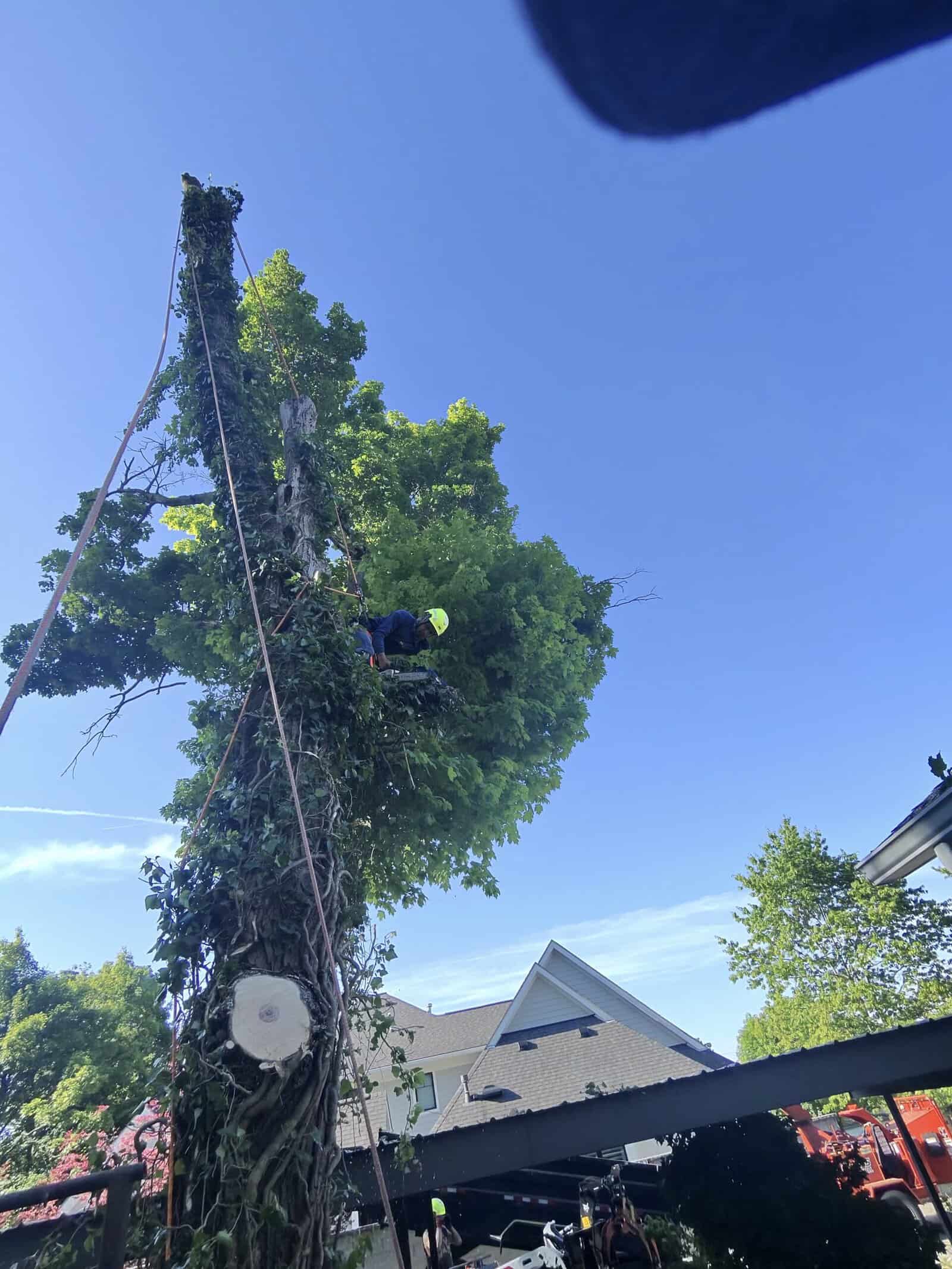
It depends on the tree. Plymouth’s municipal code — specifically Chapter 8.20, updated in May 2024 — makes it unlawful to remove or significantly prune any Heritage or Protected Tree on private or public property without first obtaining a permit from the City Manager. The fines are real: up to $700 per tree, with each tree treated as a separate violation. Many homeowners don’t know this rule applies to pruning, not just removal, until after the fact.
The practical answer is that before any significant work is done on a mature tree in Plymouth, you want someone walking the property who knows how to identify whether that tree qualifies as Heritage or Protected under the city’s definitions. We do that as part of the standard site walk before every job. If a permit is required, we can help you understand the process before any cuts are made — which is exactly how you avoid a violation and protect the tree correctly at the same time.
Crown thinning and crown reduction are both forms of professional tree pruning, but they accomplish different things. Crown thinning selectively removes branches from throughout the canopy to improve light penetration and airflow without changing the tree’s overall size or shape. It’s one of the most effective ways to reduce wind resistance — which matters a lot in Plymouth given the severe storm history in Wayne County, including documented wind gusts over 60 mph in recent years.
Crown reduction, on the other hand, actually reduces the overall size of the tree by shortening the outermost branches back to lateral growth points. It’s the correct alternative to topping — a harmful practice that leaves large wounds, invites disease, and produces structurally weak regrowth. When a tree in Plymouth has grown too close to a roofline, a utility line along Ann Arbor Road, or a neighboring structure, crown reduction is usually the right tool. Both techniques follow ANSI A300 standards when performed correctly, which means no more than 25 percent of live foliage is removed in a single session.
For most deciduous trees in Plymouth, the dormant season — roughly late November through early March — is the professional recommendation. Trees are dormant, so pruning stress is minimized, disease and insect activity is low, and the branch structure is fully visible without foliage in the way. That visibility matters more than most people realize; it’s much easier to identify structural defects, crossing branches, and deadwood when the canopy isn’t full.
Oak trees are the one species where timing isn’t just a preference — it’s a health requirement. Oak wilt is a devastating and incurable disease spread by sap beetles that become active when temperatures exceed 50 degrees Fahrenheit. In Plymouth’s climate, that can happen as early as April. To be safe, oak pruning should be completed between November 1 and March 31. Plymouth’s neighborhoods have significant oak populations, and this window gets missed more often than it should when homeowners wait until spring to schedule. If you have oaks on your property, booking in late fall or winter is the move.
The two things worth verifying before anyone starts work are credentials and insurance. On the credential side, ISA Certified Arborist is the most recognized professional qualification in tree care — it requires passing a comprehensive exam and ongoing continuing education. You can verify any arborist’s certification directly on the ISA’s public directory online. If a company can’t point you to a verifiable ISA credential, that’s a gap worth taking seriously, especially in Plymouth where Heritage Tree work legally requires credentialed arborist involvement.
On the insurance side, you want to confirm two things: general liability coverage and workers’ compensation. Workers’ comp is the one most homeowners overlook. If an uninsured worker is injured on your Plymouth property, your homeowner’s insurance may not cover it — and you can be personally sued. Plymouth’s home values are among the highest in Wayne County, and the legal and financial exposure of hiring an uninsured crew is real. Ask for certificates of insurance before work starts, not after.
The short version: the problems that could have been caught early become expensive emergencies. Deadwood accumulates and eventually fails — sometimes during a storm, sometimes on a calm day when the weight finally wins. Branch structure weakens over time when crossing limbs aren’t removed and the canopy gets too dense. Root and canopy imbalances develop that make the tree more vulnerable to wind throw. And pest or disease pressure that a credentialed arborist would have flagged during a routine pruning visit goes undetected until the damage is already done.
Plymouth’s EAB history makes this point concrete. More than 3,400 ash trees have been removed in the city since 2015 — and while not all of those losses were preventable, regular professional assessment during pruning visits is how early-stage infestation gets caught. The same logic applies to the Asian Longhorned Beetle threat that Plymouth Township’s own forestry page warns residents about, with maple trees as the primary target. Plymouth’s neighborhoods are heavily mapled. Routine professional pruning, done on the right schedule, is the monitoring system that gives you a fighting chance.
Most general tree companies aren’t equipped or insured to work near energized utility lines — and they shouldn’t attempt it. We hold line-clearance certification, which requires specific training, specialized equipment, and the type of utility-adjacent insurance that this work demands. It’s a meaningful distinction that most local competitors in the Plymouth area don’t advertise because they don’t hold it.
In Plymouth and Plymouth Township, this matters along the M-14 corridor and Ann Arbor Road, where residential and commercial trees frequently grow into overhead utility infrastructure over time. It also comes up in older neighborhoods like the Old Village, where mature trees have had decades to grow toward lines that were installed long after the trees were planted. If you have a tree that’s making contact with or growing toward a power line, that’s not a job for a landscaper with a pole saw — it requires a crew that’s trained and covered for exactly that scenario. We handle it as part of standard tree trimming services in Plymouth when utility proximity is involved.
Other Services we provide in Plymouth
