Hear from Our Customers
The neighborhoods that make Plymouth what it is — Heather Hills, Deer Creek, Beacon Meadows — didn’t get their character from new construction. They got it from decades of established trees, mature plantings, and garden beds that have been tended season after season. When the mulch in those beds breaks down, gets compacted, or stops doing its job, the whole yard starts to show it. Fresh mulch fixes that fast. But in a neighborhood with trees that have been growing for 30 or 40 years, how it gets installed matters just as much as whether it gets installed.
A proper mulch layer — applied at the right depth, kept away from the trunk base, extended out toward the root zone — does real work for your soil. It slows moisture evaporation by around 35%, which matters during Plymouth’s July and August dry stretches when established trees and shrubs start showing stress you might not notice until it’s too late. It keeps soil temperatures more stable, which is especially relevant here in Wayne County where freeze-thaw cycles through winter can heave shallow roots and disrupt plantings that took years to establish.
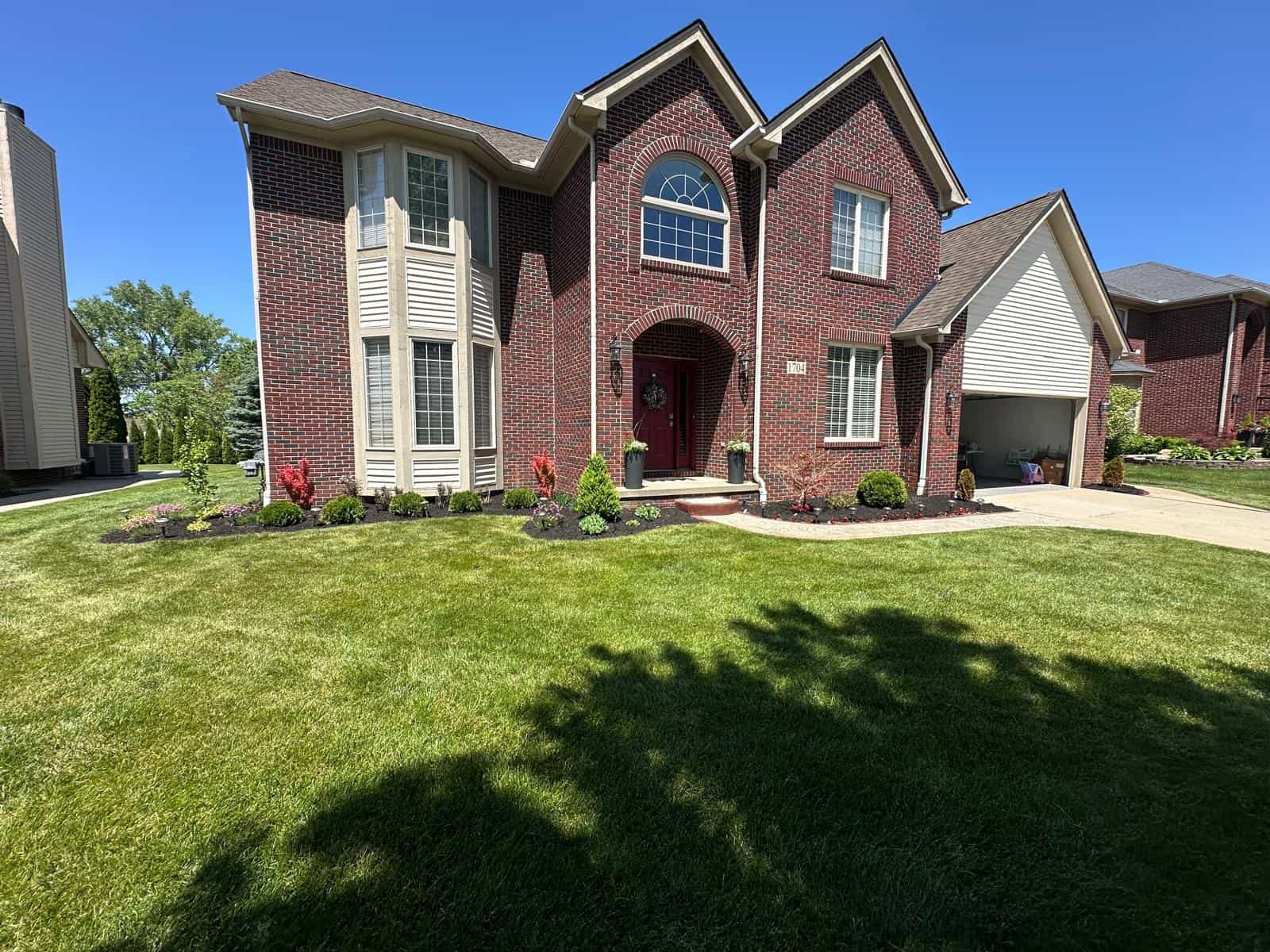
The curb appeal side is obvious. Freshly mulched beds snap a yard back into the standard Plymouth homeowners hold their properties to. But the functional side is what keeps your trees and perennials healthy through the seasons — and that part only works if the installation is done right.
We’re a family-operated tree care company based in Oakland County, serving Plymouth and the broader Southeast Michigan area. Ivan leads every job in the field. His background started as a groundman in California — learning rigging, climbing, pruning, and tree health from the ground up — before he brought that experience to Michigan and built the company alongside his fiancée Cecilia, who handles the customer and administrative side of the business.
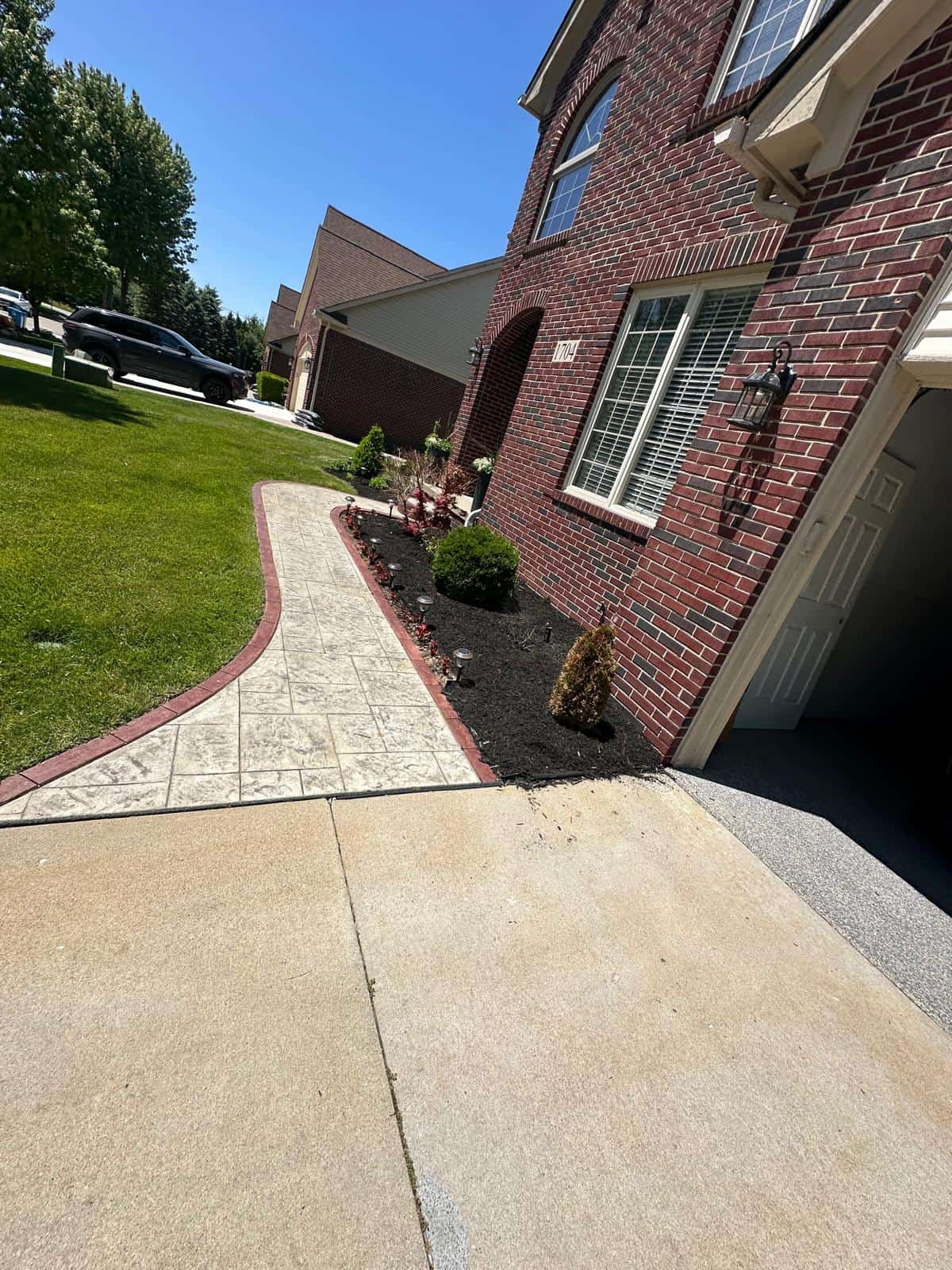
The certified arborist credentials on our staff aren’t a marketing line. They’re the reason our crews apply mulch the way the ISA recommends — 2 to 3 inches deep, root flare exposed, no mulch piled against the trunk. It’s the same standard Plymouth’s own city government follows when their crews plant and mulch street trees through the Street Tree Planting Program. We bring that standard to your private beds and tree rings, not just the trees along the curb.
Licensed, insured, and built on a straightforward model: show up, do the work correctly, and give you a written estimate before anything starts.
It starts with a written estimate. We don’t do verbal-only quotes, and that’s not an accident. It means you know exactly what the job covers before anyone shows up with a truck. The estimate is valid for 30 days, so you have time to compare, ask questions, and decide without pressure.
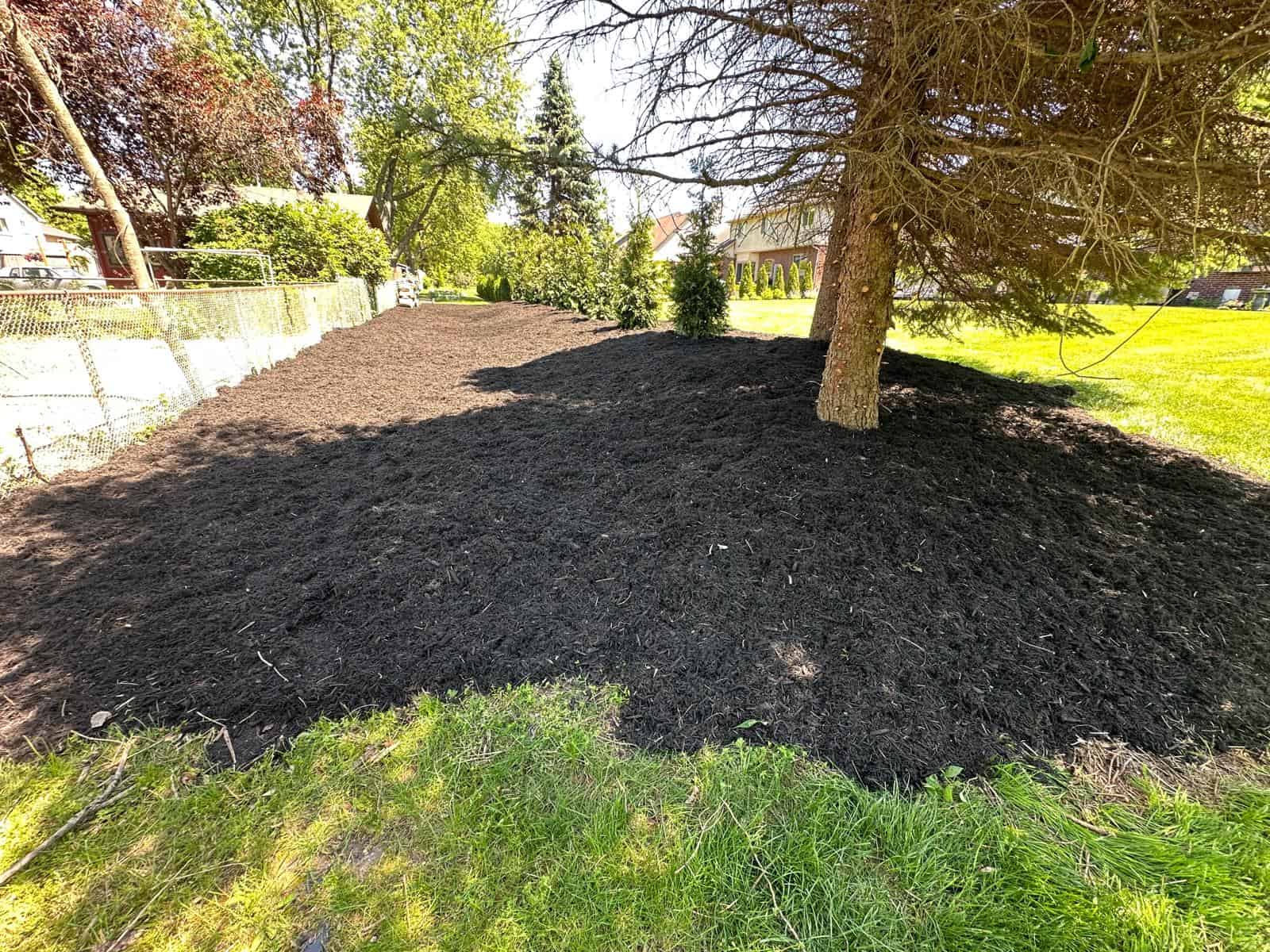
When our crew arrives, the first step is bed preparation — not just dumping mulch on top of whatever’s already there. Existing mulch gets raked and aerated to break up any compaction or matting that’s built up over time. If the old layer is showing signs of mold or fungal growth, we address it before anything new goes down. Edges get cleaned up. Then the mulch goes in at the right depth — typically 2 to 3 inches — with a clear gap maintained around the base of every tree. The root flare stays exposed. That’s not optional; it’s what separates a crew that understands tree health from one that just spreads material.
Timing matters in Plymouth. The spring window — late April through mid-May — is when mulch does the most work before summer heat sets in. Apply too early and you’re insulating cold soil that needs to warm up. Apply in that right window and you’re locking in moisture and suppressing weeds before they get a foothold. We know the difference, and it shows in the results.
Ready to get started?
Our mulch comes from our own tree removal and trimming jobs — real arborist wood chips that include bark and cambium, not processed, dyed product bagged for retail. The ISA specifically recognizes fresh arborist wood chips as excellent material for trees and large shrubs. For Plymouth homeowners who care about what goes into their soil, that distinction is worth knowing.
We cover bulk mulch delivery and installation for residential properties throughout Plymouth and Plymouth Township. That includes garden bed mulching, mulch rings around established trees, and post-tree-work landscape restoration — which is a natural fit if you’ve recently had a tree removed or a stump ground. We can follow that work with mulch and topsoil to restore the yard as part of one service relationship, so you’re not tracking down a separate landscaping crew after the tree work is done.
No named packages or tiers — the scope is built around what your property actually needs. Larger properties with multiple beds and established tree rings in neighborhoods like Beacon Meadows or Andover Lakes will have a different job size than a smaller lot near downtown Plymouth. The written estimate reflects that. If you’re also thinking about topsoil installation or, those can be bundled into the same visit. One call, one crew, one estimate.
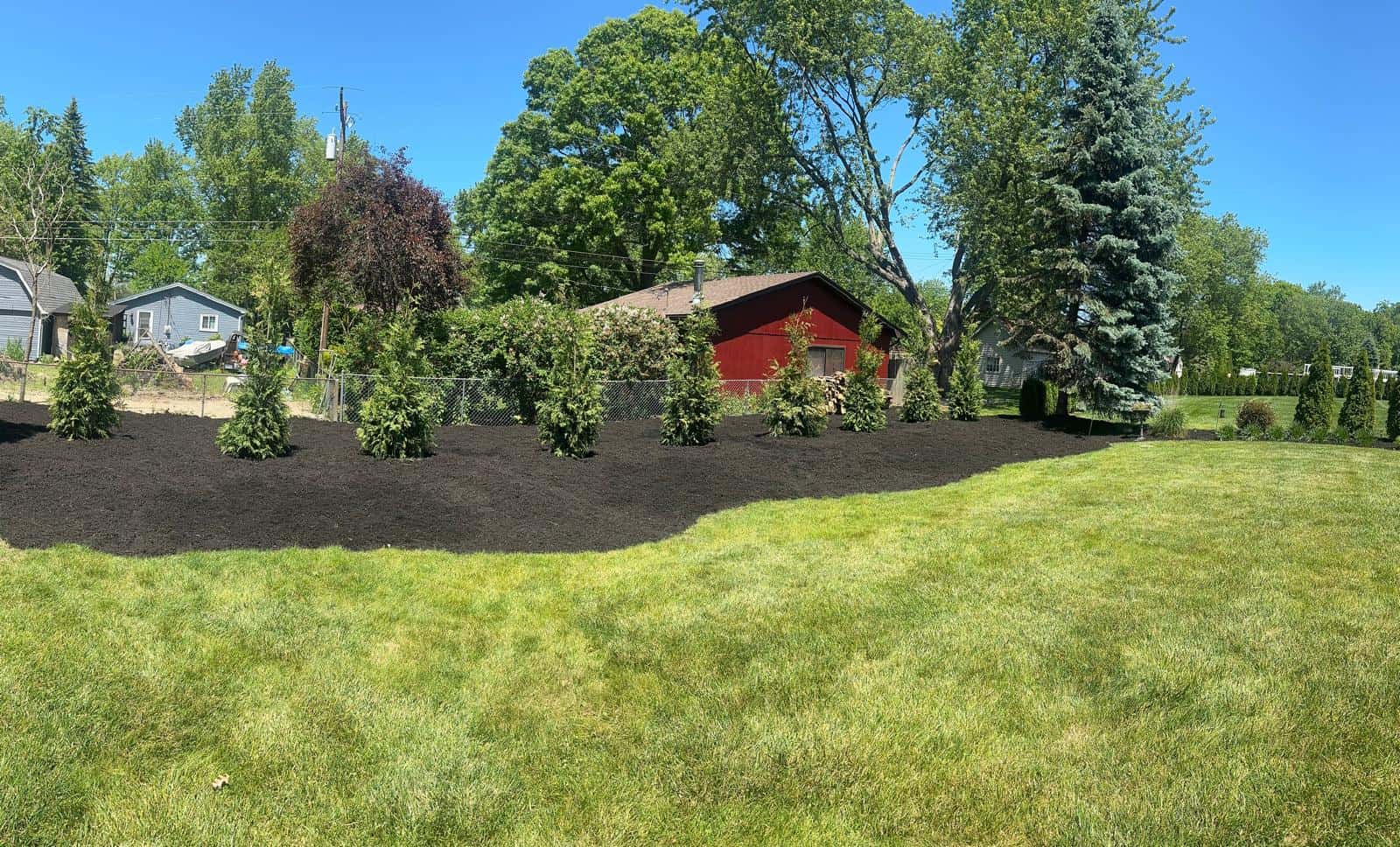
The spring window in Plymouth runs roughly from late April through mid-May. That’s the sweet spot — soil has warmed enough to support plant growth, but summer heat hasn’t arrived yet. Mulch applied in that window locks in moisture before the dry stretch hits and suppresses weed germination before seeds have a chance to take hold. Apply too early in spring and you’re actually slowing things down, because the mulch insulates cold soil and delays the warming your plants need.
The fall window is just as important for Plymouth homeowners with established plantings. After the first hard frost — typically late October to early November in Wayne County — a fresh layer of organic mulch protects root systems through the freeze-thaw cycling that Southeast Michigan winters are known for. That cycling can heave shallow roots and stress perennials that looked perfectly healthy going into fall. A proper mulch layer significantly reduces that damage. If you have mature trees or established garden beds, scheduling both a spring and fall application is worth considering.
The ISA-recommended depth is 2 to 3 inches for most organic mulch applications. That range gives you the moisture retention and weed suppression benefits without creating the conditions that cause problems. Going deeper than 4 inches — especially right against a tree trunk — is where things go wrong fast.
Piling mulch against the base of a tree, sometimes called volcano mulching, traps moisture against the bark and creates conditions for rot, fungal disease, and secondary root systems that grow into the mulch layer instead of the soil. Over time, it can kill a mature tree. In Plymouth’s established neighborhoods, where some of those trees have been growing for decades, that’s not a recoverable situation. The root flare — the point where the trunk widens at the base — needs to stay fully exposed. A 3-inch gap between the mulch and the trunk isn’t a detail; it’s what keeps the tree alive long-term. Our crews are trained on this specifically because it’s one of the most commonly done wrong things in the industry.
Not always, but it’s not as simple as just dumping new material on top. If your existing mulch is compacted or matted — which happens over time, especially in Plymouth’s wetter spring seasons — it needs to be raked and aerated before anything new goes down. Compacted mulch repels water instead of absorbing it, which defeats the whole purpose of the application.
If the old layer is showing signs of mold, fungal growth, or pest activity, that needs to be addressed before new mulch goes in. The same goes for any significant buildup — if you’ve been adding mulch every season without removing any, and the total depth is already at 4 or 5 inches, adding more will push you into territory that harms roots and suffocates soil. The general rule: if the existing layer is below about 1.5 inches, top-dress to bring it back to 2 to 3 inches. If it’s already at or above 3 inches and in good condition, you may not need a full application — just aeration and cleanup. A site assessment before the job starts is the right way to make that call.
Yes, and it often makes the most sense to bundle them. If you’ve recently had a tree removed or a stump ground in Plymouth, the area around the work site is usually disrupted — bare soil, uneven ground, sometimes exposed roots from adjacent trees. Mulch installation and topsoil can both be done as part of the same service visit, which means the yard gets restored without you needing to coordinate a separate landscaping crew after the tree work is finished.
Plymouth’s city ordinance also requires that stumps of street trees and front yard trees be removed below ground surface, which leaves a void that needs to be backfilled before the area can be mulched or seeded properly. We handle that sequence — stump grinding, backfill, topsoil, mulch — as a connected process rather than separate jobs. For homeowners who’ve participated in Plymouth’s Community Canopy Program and received a free tree through the Arbor Day Foundation partnership, getting a proper mulch ring established around that new planting is one of the most important things you can do to give it a real chance at long-term survival.
We use repurposed wood chip mulch generated from our own tree removal and trimming work. These are real arborist wood chips — material that includes bark and cambium from the trees we’ve worked on — not the dyed, processed bark you’d pick up in bags from a garden center or big-box store.
The ISA specifically recognizes fresh arborist wood chips as excellent mulch material for trees and large shrubs. The composition is different from retail bark products: it breaks down more gradually, adds organic matter back to the soil as it does, and doesn’t carry the chemical dyes that some colored mulch products use. For Plymouth homeowners with established trees and perennial beds, the material going into the soil actually matters for long-term plant health. Dyed mulch can fade quickly after rain and may not deliver the same soil-building benefit over time. Our repurposed wood chip approach also means the material is locally sourced from our own work in Southeast Michigan — not shipped in from a regional processing facility. It’s a practical, eco-conscious choice that happens to be better for your trees.
The mulch and landscaping industry has a documented problem with door-to-door operators who give low verbal quotes and significantly increase the price after work is done or even during the job. It’s been covered in local news and consumer reports, and Plymouth homeowners — particularly in higher-value neighborhoods — are a common target because the assumption is they’ll pay to make the problem go away.
We address this directly: every estimate is provided in writing before any work begins, and it’s valid for 30 days. That gives you time to compare quotes from other providers without being pressured into a same-day decision. The written estimate documents exactly what’s included — the scope of the bed prep, the volume of mulch, and any additional services like topsoil — so there’s no ambiguity at the end of the job. Our reviews on Google, Angi, and HomeAdvisor consistently mention fair and transparent pricing as a specific reason customers came back or referred us to neighbors. In a market where that’s not always the standard, a written quote from a licensed, insured company with verifiable reviews is a meaningful baseline to hold any provider to.
Other Services we provide in Plymouth
