Hear from Our Customers
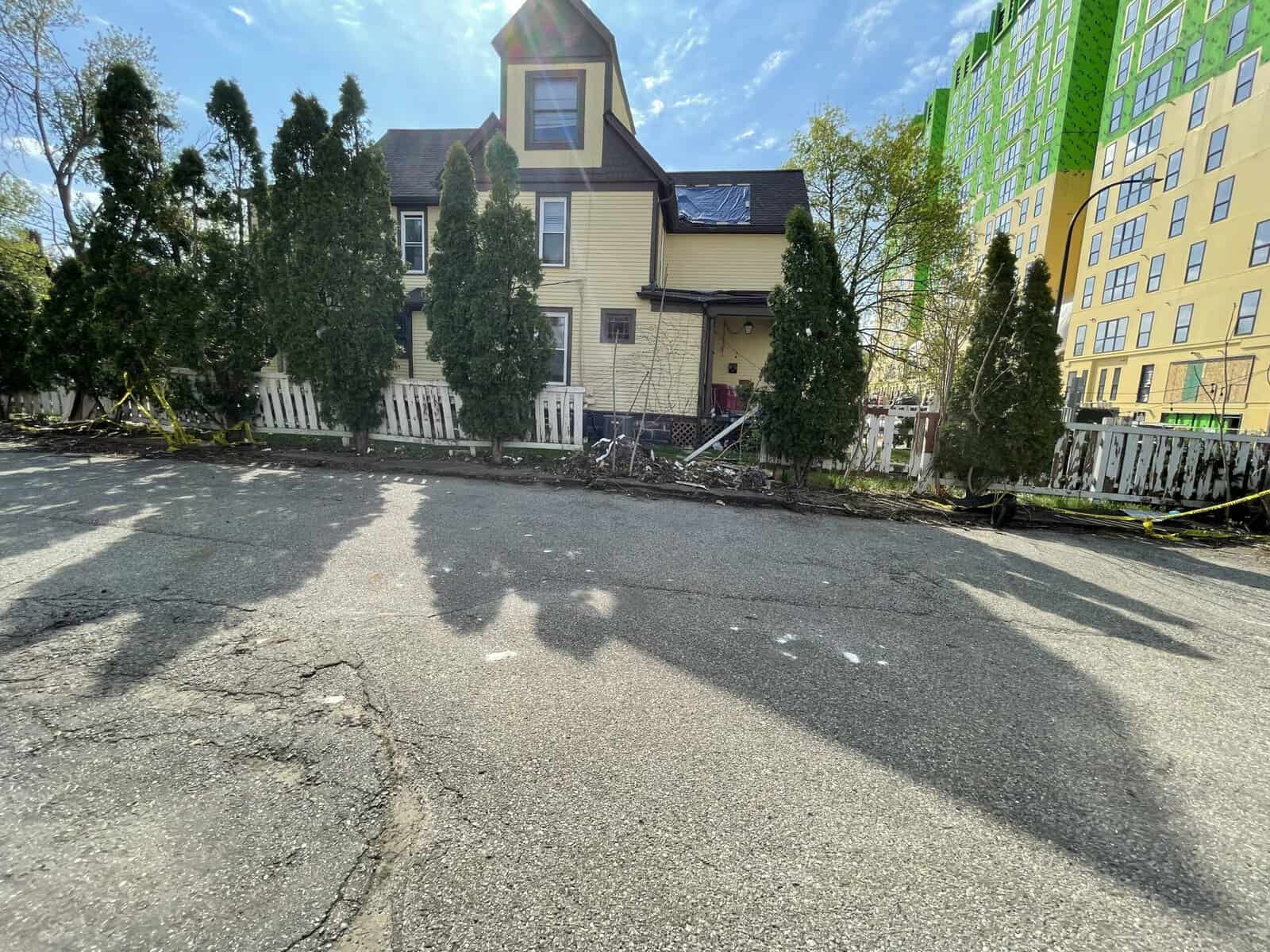
Plymouth’s residential neighborhoods carry a specific kind of risk. The mature, established trees in areas like Old Village, the Kellogg Park Historic District, and Heather Hills are decades old. They have large canopies, significant weight, and root systems that interact with the kind of saturated soil that follows a heavy summer storm along the Rouge River corridor.
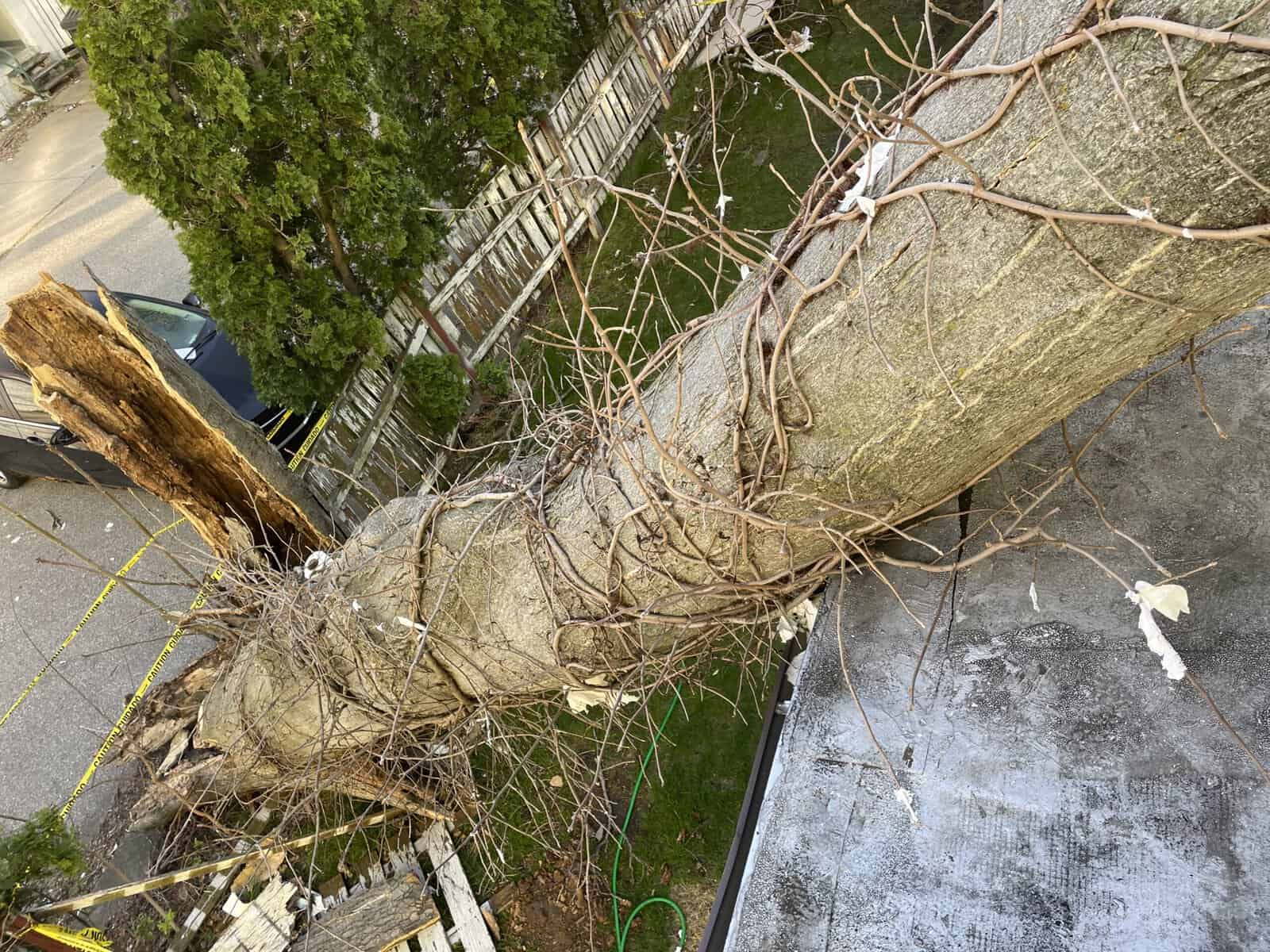
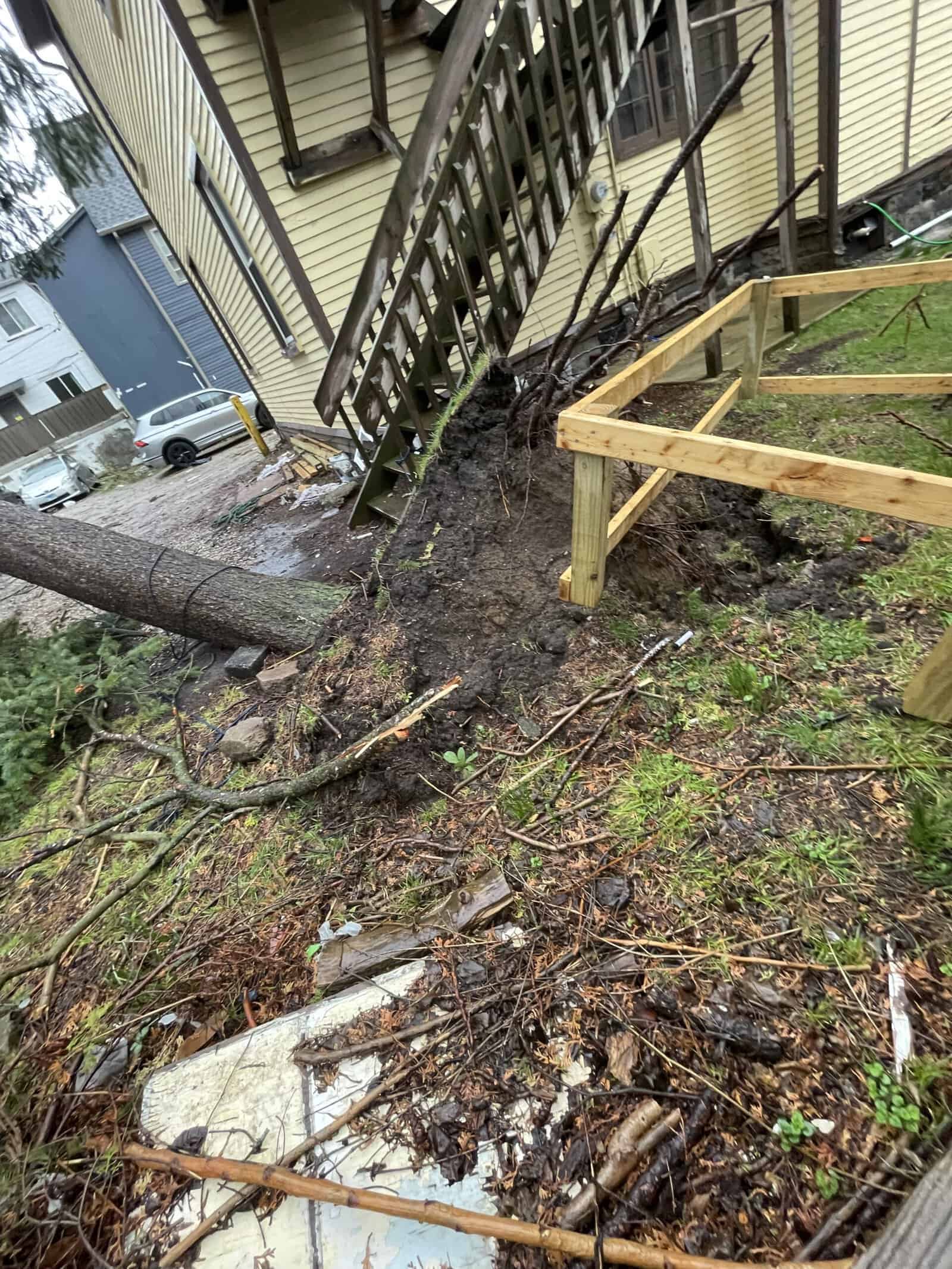
When one of those trees fails, it rarely falls clean. It lands on fences, structures, and — in Plymouth’s city neighborhoods — directly into overhead utility lines.
That’s the reality we’re built for. With ISA Certified Arborists, TRAQ-qualified risk assessors, and line-clearance certified crews, every storm damage call in Plymouth gets the level of response the situation actually demands. The tree comes down safely, the site gets cleaned up completely, and you’re not left managing the aftermath alone.
We’ve been serving Metro Detroit and Oakland County for over seven years. Our founder started his career as a groundman in California, built his expertise in climbing, rigging, and tree risk assessment, and brought that experience to Michigan when he and his family settled in Oakland — just up the M-14 corridor from Plymouth.
Michigan doesn’t require a state license to operate a tree company. That means the only real protection you have as a homeowner is verifying credentials yourself. We carry ISA Certified Arborists and TRAQ-qualified risk assessors on every significant job — the kind of documentation that actually holds up when a situation is serious.
For Plymouth homeowners specifically, that also means having arborists who can produce the formal condition assessment report that Plymouth’s 2024 tree ordinance requires before a street tree or protected tree can be removed. That’s not something every crew can provide — and it’s the difference between a clean resolution and a bureaucratic headache on top of an already stressful situation.
When you call us for storm damage in Plymouth, MI, someone picks up — not a voicemail, not an automated system. The first conversation is about understanding what you’re dealing with: where the tree is, what it’s in contact with, whether there are utility lines involved, and how urgent the situation is.
Before any work begins, our crew walks the site with you. In Plymouth’s compact city neighborhoods — where homes sit close together and mature trees are large — that walkthrough isn’t a formality. It’s how a controlled, precision removal gets planned so that the surrounding structures, fences, and neighboring properties stay protected.
One thing worth knowing if you’re dealing with a street tree or a protected tree in the City of Plymouth: the 2024 tree ordinance requires a formal arborist condition assessment submitted to the city’s Municipal Services department before removal can proceed. Our ISA Certified Arborists handle that documentation as part of the job.
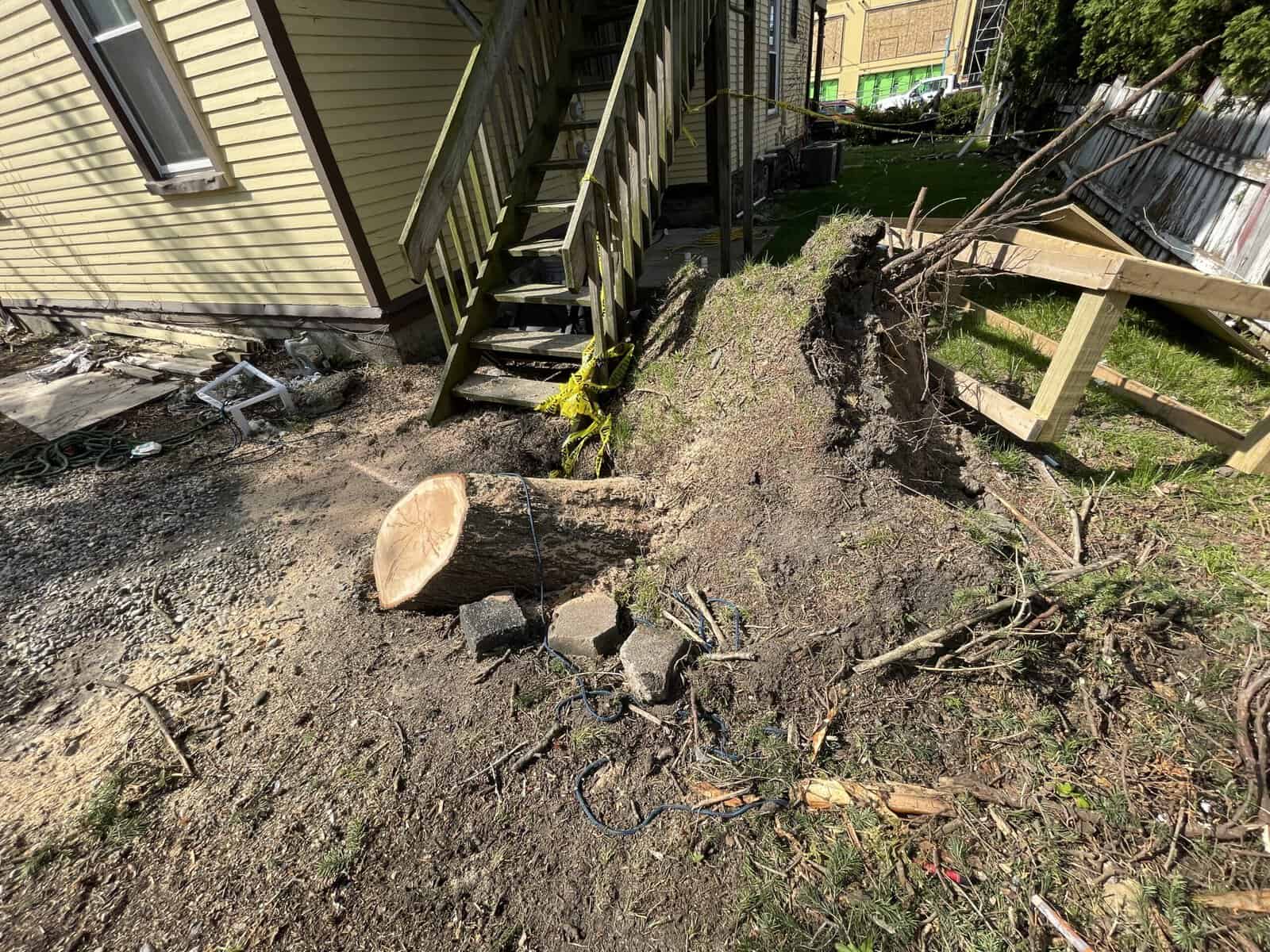
Once the removal is complete, we do a full site cleanup — debris, wood chips, drag marks, all of it. You do a final walkthrough, and the job isn’t done until you’re satisfied with what you’re looking at.
Ready to get started?
Storm damage cleanup in Plymouth, MI covers a lot of ground depending on what the storm left behind. We handle the full range: fallen tree removal, hazardous limb removal, emergency tree clearing for blocked driveways and roadways, storm damage assessment for trees that are still standing but structurally compromised, and stump grinding once the tree is down.
Our line-clearance certification is particularly relevant in Plymouth. The city’s documented storm history — including the August 2022 event that snapped three electrical poles over M-14 at Beck Road, and the July 2026 storm that left multiple trees and power lines down across Plymouth Township with large limbs blocking the roadway near 5 Mile and Sheldon — shows a consistent pattern. Trees and utility lines in Plymouth don’t stay separate during a serious storm.
Most tree companies in this market are not trained or insured to work near energized lines. We are.
For trees that survived a storm but took damage, the TRAQ-qualified assessment process matters. A tree with root heave, a cracked trunk, or a compromised anchor can look stable and fail weeks later. That’s a particular concern in Plymouth’s older neighborhoods along the Hines Park corridor and the Rouge River floodplain, where saturated soil after a heavy rain loosens root systems that were already under stress.
Getting a professional assessment after the storm — not just cleaning up what fell — is the difference between resolving the problem and waiting for the next one.
It depends on the tree and where it’s located. Plymouth updated its tree ordinance in 2024, and the rules apply differently depending on what you’re dealing with. If the storm-damaged tree is a street tree — meaning it sits in the public right-of-way adjacent to your property — you cannot simply have it removed. The city requires that an ISA-certified arborist produce a formal condition assessment report, submitted to Plymouth’s Municipal Services department, before removal can proceed.
If the tree is on your private property but qualifies as a protected tree under the ordinance — native trees at nine inches DBH or larger, non-native trees at sixteen inches DBH or larger — a permit is required, along with a $25 application fee. In Plymouth’s older neighborhoods like Old Village and the Kellogg Park Historic District, many of the mature trees that are most likely to be storm-damaged also fall into the protected category.
We handle the condition assessment documentation and walk you through the permit process so the city requirements don’t become a secondary problem on top of the storm damage itself.
Most cannot — and this is not a minor distinction. Working near energized power lines requires specialized training, specific equipment, and a separate category of insurance called utility insurance. Without line-clearance certification, a crew working near live lines is creating serious risk for themselves and for you as the property owner.
In Michigan, where no state license is required to operate a tree service, there’s nothing stopping an uncertified company from taking that call. We hold line-clearance arborist certification — the credential specifically required to work safely in proximity to energized utility lines.
In Plymouth, this matters more than it might in some other communities. The city’s storm history shows a consistent pattern of trees and power lines failing together: the 2022 storm that snapped electrical poles over M-14 at Beck Road, the May 2026 event that shut down I-275 at Ann Arbor Road due to downed lines, and the July 2026 storm that left multiple trees and power lines down across Plymouth Township all point to the same reality. If your storm damage involves a utility line, you need a crew that is actually certified to handle it.
This is one of the most important questions to ask after a storm, and it’s one that most homeowners can’t answer on their own. A tree that survived a storm visually — still upright, still leafed out — can be structurally compromised in ways that aren’t visible from the ground. Root heave, internal trunk decay, cracked scaffold branches, and weakened anchor points are all failure modes that don’t announce themselves until the tree comes down, often in the next wind event.
In Plymouth, this concern is especially relevant along the Rouge River corridor and the Hines Park greenway, where trees grow in riparian soil that becomes heavily saturated during summer storms. A tree that’s been through a storm with significant rainfall and high winds may have root systems that are partially dislodged even if the tree looks fine.
Our TRAQ-qualified risk assessors — Tree Risk Assessment Qualification, a specialized ISA credential — can evaluate a storm-damaged tree professionally, document the findings, and give you a clear, honest answer: safe to leave, needs pruning, or needs to come down. That’s not a guess. It’s a documented risk assessment.
Possibly, but the coverage is more limited than most homeowners expect. Standard homeowners insurance policies typically cover tree removal when the fallen tree has damaged a covered structure — your home, garage, fence, or similar. In those cases, coverage is often capped at a sublimit, commonly in the range of $500 to $1,000 per storm event for debris removal, or up to a percentage of your dwelling coverage if a structure was actually damaged.
If the tree fell in your yard without hitting anything, most standard policies won’t cover the removal cost at all. The most important step after a storm is documentation. Before any debris is moved or any cleanup begins, photograph everything — the fallen tree, what it’s in contact with, the damage to any structures, and the surrounding area.
That documentation is what your insurance adjuster will use to evaluate the claim. We can work around your documentation needs and, where helpful, provide written assessment details that support the claims process. If you’re unsure whether your situation qualifies, call your insurer first to understand your policy’s specific sublimits before committing to a removal scope.
We offer 24/7 emergency response for storm damage in Plymouth, MI and the surrounding Wayne County area. We’re based in Oakland, MI — directly connected to Plymouth via M-14 — which means our crew isn’t routing from a distant dispatch center. When a storm hits Plymouth at midnight on a weekend, the M-14 corridor is the direct path from our base to your property.
Response time in a genuine emergency depends on conditions — active weather, road closures from downed trees or power lines, and call volume all factor in. What doesn’t change is that someone answers the phone. The first call gets you a real conversation about what’s happening, how urgent it is, and when a crew can be on-site.
If there’s an immediate safety threat — a tree on your roof, a hanging limb over an occupied space, a blocked driveway with a live line involved — that gets prioritized. For situations that are serious but not immediately life-threatening, we’ll give you an honest timeline and keep you informed rather than leaving you waiting without any communication.
Storm damage cleanup typically refers to the work that follows an active weather event — removing what fell, clearing debris, grinding stumps, and restoring access to your property. It’s reactive by nature: something happened, and now it needs to be dealt with. Fallen tree removal, emergency tree clearing for blocked driveways and roads, and debris hauling all fall under this category.
Hazardous limb removal is different. It’s proactive. It’s the work of identifying and removing limbs that are structurally compromised — cracked, dead, or hanging — before they fail on their own. In Plymouth’s older neighborhoods, particularly in areas like Beacon Hill and the Kellogg Park Historic District where large trees grow close to homes, hazardous limbs are a consistent concern between storm seasons.
A widow-maker limb — a large dead or detached branch still caught in the canopy — can weigh several hundred pounds and is under unpredictable tension. It doesn’t need another storm to come down. Wind, temperature swings, or simply time can bring it down without warning. Getting those limbs removed before the next weather event is one of the most practical things a Plymouth homeowner with mature trees on their property can do to avoid the next emergency call.
Other Services we provide in Plymouth
