Hear from Our Customers
Livonia is one of the most densely built cities in Southeast Michigan. Almost every square foot of it is developed — homes, driveways, fences, garages, power lines running through established neighborhoods that haven’t changed much since the 1960s and 70s. The trees planted alongside those brick ranches and colonials are now 50, 60, sometimes 70 years old. That’s not a problem in an open field. On a suburban lot in Burton Hollow Estates or Coventry Gardens, it’s a different story entirely.
When a hazardous or dead tree gets removed properly, you stop carrying that risk. Your roof isn’t under threat every time a thunderstorm rolls in off I-96. You’re not watching a leaning trunk every time the wind picks up. The June 2024 tornado that cut through Livonia’s neighborhoods, uprooting trees along Newburgh Road and through Rotary Park, wasn’t a hypothetical. It happened here.
Professional tree removal in Livonia also means the job ends cleanly. Every piece of debris gone, the yard left looking like the tree was never there. In a community that takes genuine care of its properties, that matters. You shouldn’t have to manage a pile of logs and brush after paying someone to handle the problem.
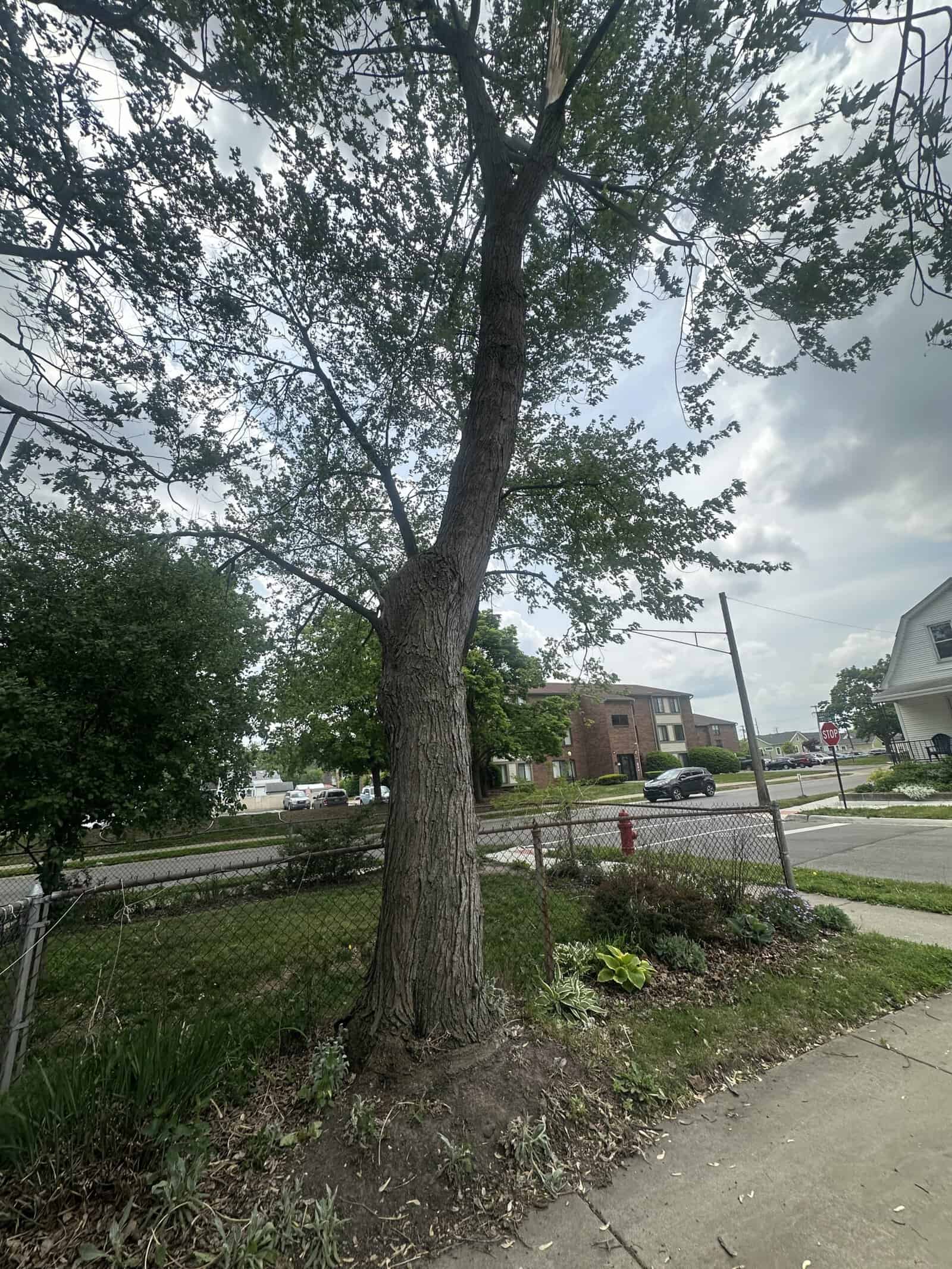
We’re a family-owned operation based in Oakland, Michigan, serving communities across Southeast Michigan and Oakland County — including Livonia and the surrounding Wayne County area. Ivan runs every job in the field. Cecilia handles scheduling, communication, and everything that keeps the operation running smoothly on the back end. There’s no call center, no hand-off to a subcontractor you’ve never heard of.
Our team carries ISA Certified Arborist credentials and TRAQ qualification — a formal, science-based methodology for assessing whether a tree poses a genuine structural risk. In a Tree City USA community like Livonia, where the city’s own Forestry Division actively manages the urban canopy, that level of credentialing isn’t a bonus. It’s the baseline for doing this work correctly.
One thing that sets us apart in a market full of tree companies: we’re trained and certified to work near electric infrastructure. In Livonia’s fully built-out residential grid, that capability comes up on nearly every large removal job. Most companies aren’t equipped for it. We are.
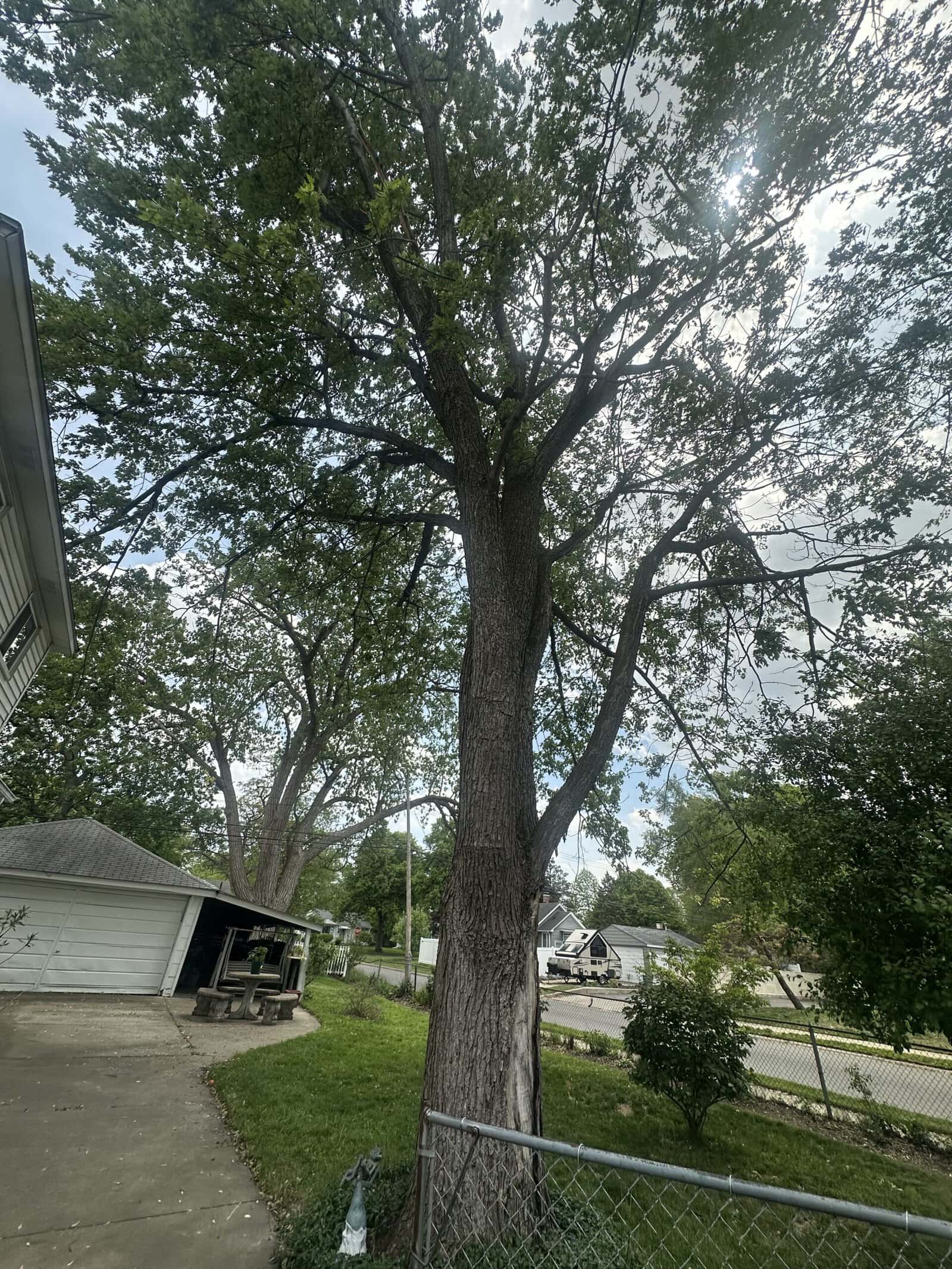
It starts with a free on-site visit. Someone from our team comes to your property, walks the site with you, looks at the tree, and gives you a clear picture of what’s involved. No guessing over the phone, no vague estimate that balloons later. If you’re dealing with a tree near your roofline, a fence, or a utility corridor — which is most of Livonia — that walk-through matters. It’s how we plan the approach before anything gets cut.
One thing worth knowing if you’re in Livonia specifically: the city has an active Forestry Division with permit requirements for certain tree work, particularly for trees in the public street right-of-way and parcels subject to the Tree Conservation Ordinance. Our process-first approach means those details get addressed upfront, not after the fact. Permits need to be signed by City Forestry staff to be official, and a contractor assumes liability for property damage — so working with us protects you as the homeowner.
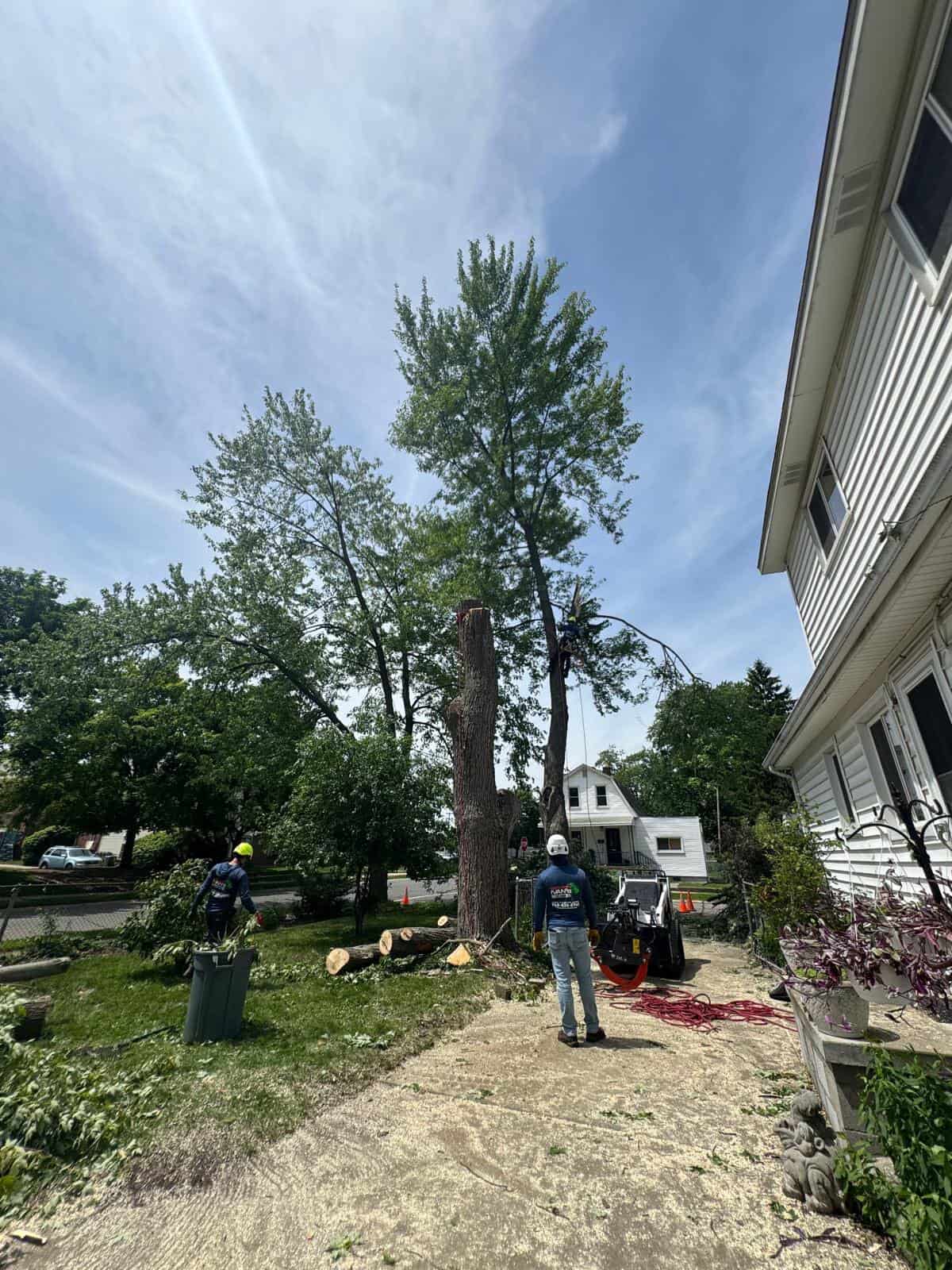
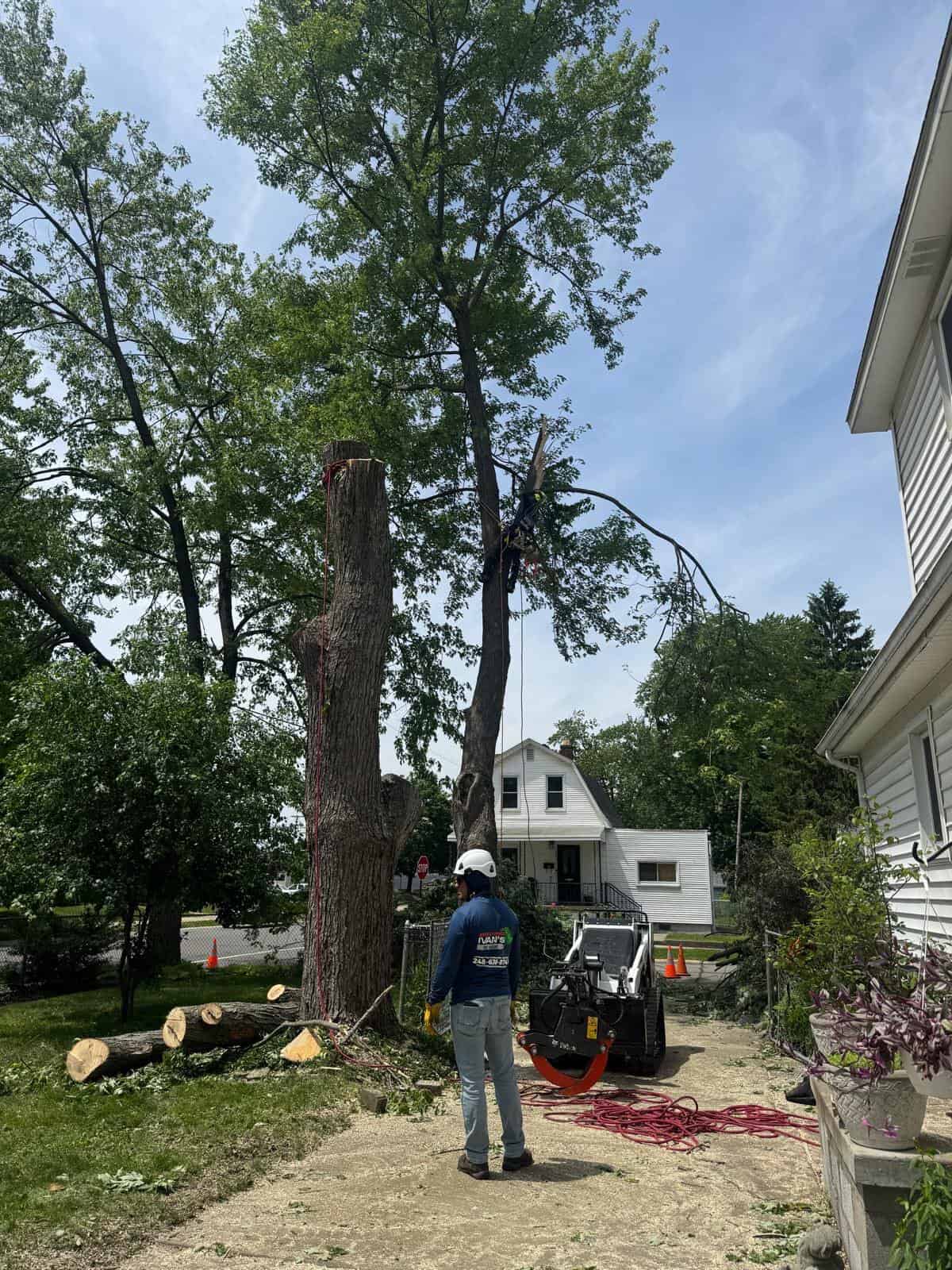
Once the plan is set and everything’s in order, our crew handles the removal using controlled techniques designed to protect the surrounding property. After the tree is down, full debris cleanup is included — logs, brush, chips, all of it. The job isn’t finished until the site is clean.
Ready to get started?
Tree removal in Livonia covers a wider range of situations than most people realize when they first start looking. The obvious ones — a dead tree, a storm-damaged limb, a trunk that’s been leaning for two seasons — are straightforward. But Livonia’s specific conditions create some scenarios that need more than a standard approach.
We offer emergency tree removal 24 hours a day. After a storm event — and Livonia has had its share, including the EF-1 tornado that tore through residential neighborhoods along Newburgh Road and Middlebelt Road in June 2024 — waiting until business hours isn’t always an option. If a tree has come down on a structure or is blocking access to your property, that’s an emergency call, not a scheduled appointment.
Hazardous tree removal is a different conversation than standard removal. It starts with a real assessment — not a glance from the street, but an ISA-certified evaluation of the tree’s structure, root system, and actual risk to the surrounding property. Dead tree removal in Livonia often involves trees that have been quietly declining for years, sometimes accelerated by the Emerald Ash Borer damage that’s moved through Southeast Michigan’s ash populations. Lot clearing, stump grinding, and full debris removal are also available as standalone services or as part of a complete removal job. Whatever the situation, the estimate is written, the scope is clear, and the cleanup is included.
It depends on where the tree is located and what your parcel is subject to. Livonia has an active Forestry Division with specific permit requirements that catch a lot of homeowners off guard. If the tree is in the public street right-of-way — the strip between the sidewalk and curb — a permit is required, and that work can only be done by City crews or City-contracted workers under most circumstances. For trees on private property, permits are required for parcels regulated by the city’s Tree Conservation Ordinance, and for any tree under 6 inches in diameter at breast height, a permit, inspection, and City approval are all needed before removal.
The permit itself isn’t complicated — it’s $30 for contractors and free for residents — but it has to be signed by City of Livonia Forestry staff to be considered official. The bigger issue is that the contractor assumes liability for property damage once the permit is pulled. That’s why working with us matters. We handle this as part of the upfront consultation, so nothing gets started without the right approvals in place.
This is one of the most common questions, and it’s a fair one — trees can look rough on the outside and still be structurally sound, or they can look perfectly fine while hiding serious internal decay. A few things to watch for: a new lean that wasn’t there before, especially if you notice the soil heaving or lifting around the base; cracks or splits in the main trunk; large dead limbs in the upper canopy; or bark that’s falling away in sections. Any of these warrant a professional look, not a wait-and-see approach.
In Livonia specifically, the concern is compounded by the age of the tree stock. Neighborhoods built in the 1950s through 1980s — which covers most of the city — have trees that are now 50 to 70 years old. That’s the window where structural issues become more common, even in trees that have been healthy for decades. A TRAQ-qualified risk assessment gives you an actual answer based on the tree’s condition, not a guess. Our team can come out, evaluate what you’re looking at, and tell you honestly whether removal is the right call or whether trimming or cabling might address the problem instead.
First, get everyone out of the affected area and don’t try to move the tree yourself. A fallen tree can have tension built up in the wood, and shifting it without the right equipment creates serious risk. Once everyone is safe, call your homeowner’s insurance company before any removal work begins — this is important. If the tree fell because of a covered event like a windstorm and it’s caused structural damage, your policy may cover some or all of the removal cost. But if the tree gets removed before an insurance adjuster can document the damage, you could void that claim.
After you’ve contacted your insurer, that’s when you call for emergency tree removal. We offer 24/7 emergency response precisely for situations like this. Livonia’s June 2024 tornado — which brought 95 mph winds through residential neighborhoods and resulted in a tree falling through the roof of a home — is a real reminder that these situations aren’t rare. When a storm hits, availability and response time matter more than anything else. We’re equipped to respond when it’s not a normal business day.
Stump removal is a separate service in most cases, and this surprises a lot of homeowners. When a tree is removed, the stump stays in the ground unless stump grinding is specifically included in the scope of work. It’s worth asking about this upfront and making sure it’s clearly spelled out in your written estimate, because the cost and the process are distinct from the tree removal itself.
Stump grinding involves using specialized equipment to grind the stump down below the surface, which allows the area to be replanted, sodded, or just left flush with the surrounding ground. We offer stump grinding as part of a complete removal job or as a standalone service if you have an existing stump that’s been sitting. In Livonia’s established neighborhoods, leftover stumps from previous removals are actually pretty common — especially in older subdivisions where trees were taken down years ago but the stumps were never addressed. If you’re dealing with one of those, it can be handled on its own without needing a full removal job.
You don’t need to wait. Dead trees can be removed year-round, and winter is actually a preferred time for certain types of tree work. With the leaves gone, the structure of the tree is fully visible, which makes it easier to assess and work with safely. Frozen ground can also protect your lawn and landscaping from equipment damage that might otherwise occur during wet spring conditions.
In Livonia, winter tree removal is worth considering for another reason: ice storms that hit Michigan leave homeowners across the state dealing with damaged and downed trees well before spring arrives. Ice loading puts enormous stress on branches and trunks, and a tree that’s already dead or structurally compromised is significantly more likely to fail under that weight. If you have a dead tree on your property heading into late fall or winter, having it removed before ice storm season reduces the risk considerably. Waiting until spring means carrying that liability through the most unpredictable stretch of weather Southeast Michigan typically sees.
The most important things to verify before hiring anyone are insurance and credentials. Ask for proof of general liability coverage and workers’ compensation. If a worker is injured on your property and the company doesn’t carry workers’ comp, you can be held personally liable — that’s not a hypothetical risk, it’s a documented pattern with unlicensed operators. Beyond insurance, look for ISA Certified Arborist credentials. Michigan doesn’t require a state-issued arborist license, which means the ISA certification is the industry’s de facto standard for demonstrating real training and competence.
In Livonia specifically, the competitive landscape includes companies with 20 to 35 years of local history, so it’s worth looking at verified reviews across multiple platforms — not just one — and paying attention to what reviewers actually say about cleanup, communication, and whether the job matched the estimate. A written estimate is non-negotiable. If a company quotes you verbally and won’t put it in writing, that’s a red flag. Finally, given Livonia’s permit requirements, ask whether the company is familiar with the city’s Forestry Division process and who’s responsible for pulling the permit. A company that handles that conversation upfront is one that knows what they’re doing.
Other Services we provide in Livonia
