Hear from Our Customers
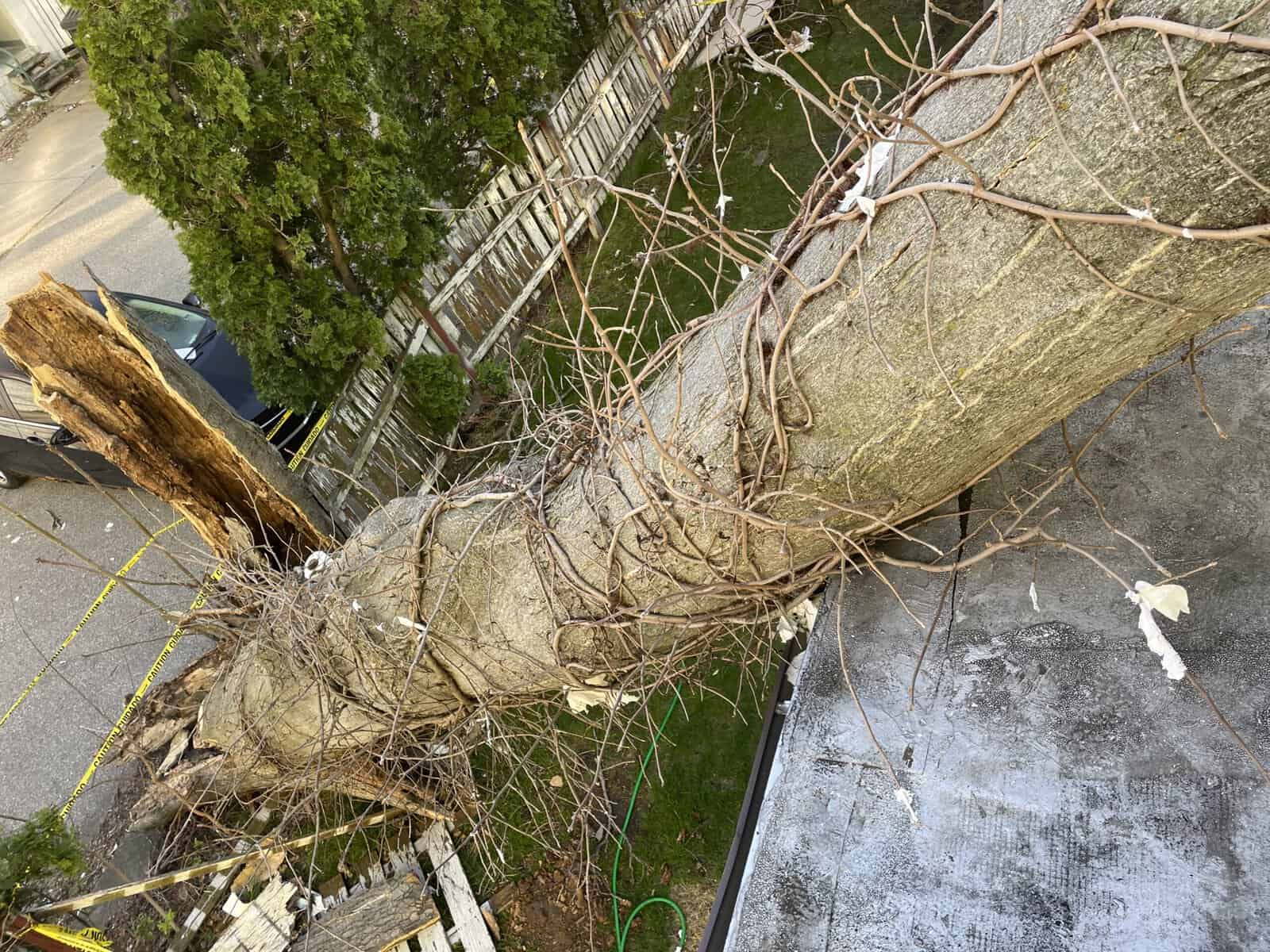
Most Livonia homeowners dealing with storm damage aren’t just dealing with a downed tree. They’re dealing with a tree that’s been standing in their yard since the house was built — a silver maple or oak that’s now 50 to 70 years old, structurally tired, and sitting somewhere between the roofline and the power line running through the backyard. That’s not a chainsaw job. That’s a precision removal that requires the right credentials and the right equipment.
When we handle storm damage cleanup in Livonia, MI, you get a complete assessment before anything gets touched. Our crew walks the site, identifies what’s hazardous, determines what can be saved, and maps out a removal plan that accounts for the overhead utilities that run through nearly every residential corridor in this city — from the Five Mile Road neighborhoods to the subdivisions along Newburgh Road. If a line-clearance certified arborist isn’t on the job, that work shouldn’t be happening near energized DTE lines.
The end result is a property that’s clean, documented, and safe — not just partially cleared with a pile of brush left at the curb. Every job includes full site cleanup, because leaving debris behind isn’t finishing the job.
We’ve been operating for over seven years, built on a foundation that started with hands-on groundman work in California before bringing that experience to Michigan and founding this company with our family in Oakland. That background matters because it shows up in how the work gets done — not just the speed of it, but the precision.
Every significant job comes with ISA Certified Arborists and TRAQ-qualified risk assessors on site. TRAQ certification means we can tell you, professionally and in documented form, whether a storm-damaged tree that’s still standing is actually safe — or whether it’s a liability waiting for the next weather event to finish what this one started. In Livonia, where the June 2024 EF-1 tornado cut a 5.5-mile path through neighborhoods like Beverly Park and through Rotary Park without a single minute of advance warning, that assessment isn’t a formality. It’s the answer to the question every homeowner on that path has been asking since.
We’re licensed, insured, and verified across Google, HomeAdvisor, and Angi. Our reviews are real, our credentials are verifiable, and the crew shows up ready to work.
When you call us for emergency tree service in Livonia, MI, the first thing that happens is a real person picks up — not a voicemail, not a callback form. You describe what’s going on, and we determine whether this is an immediate hazard situation or something that can be assessed at first light. Either way, you’re not left waiting without a plan.
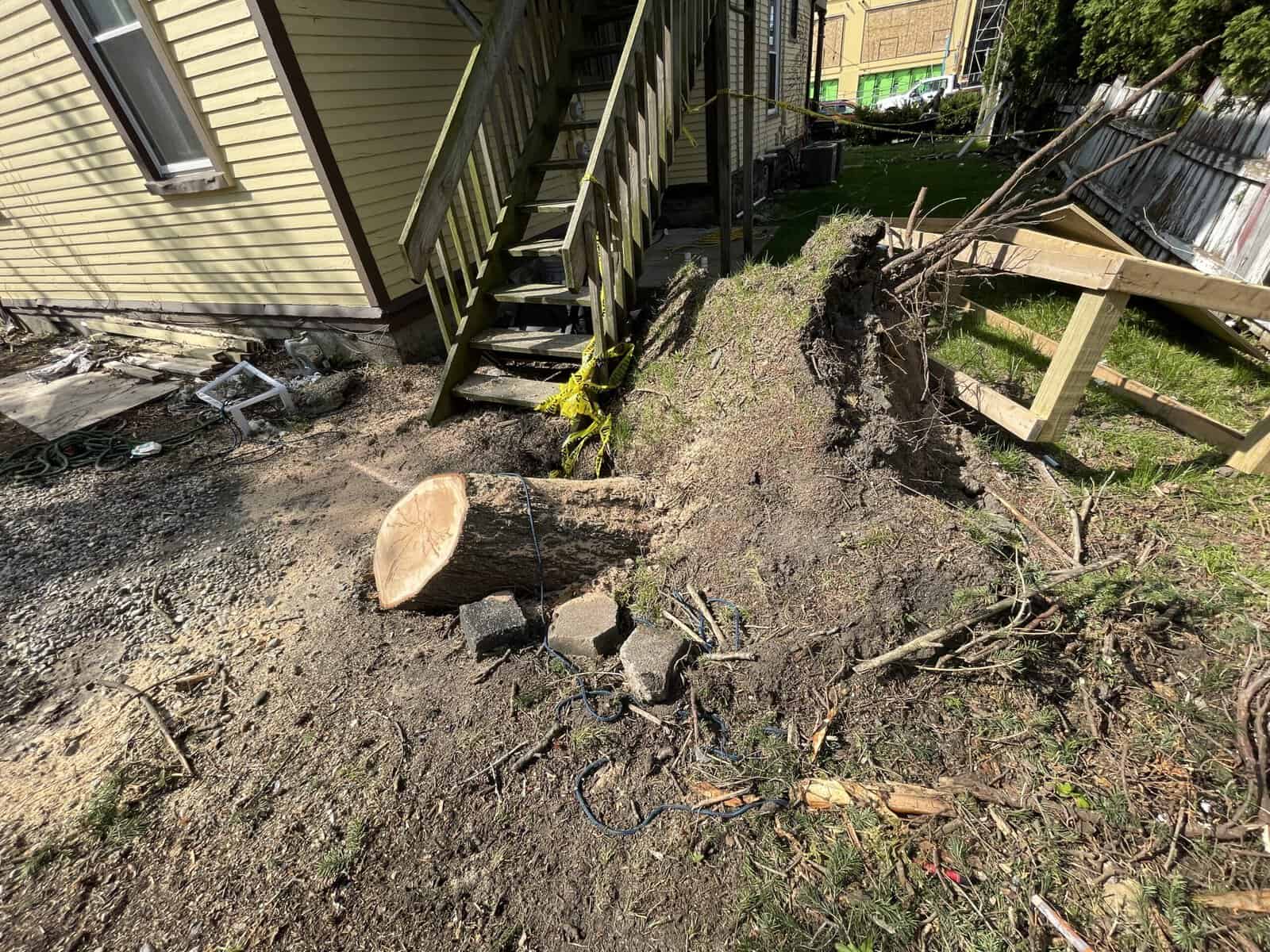
Once on site, our crew does a full walkthrough before any equipment comes out. This is where the ISA Certified Arborist and TRAQ-qualified assessor evaluate what came down, what’s still hanging, and what the removal sequence needs to look like. In Livonia, that walkthrough also accounts for the city’s tree ordinance — if the storm-damaged tree is in the right-of-way between the sidewalk and the curb, that work requires a permit from the City of Livonia Forestry Division before it’s legally complete. We handle that process, so you don’t end up with a code issue on top of a tree problem.
After the assessment, removal happens in a controlled sequence — the hazardous material first, then the structural debris, then the site cleanup. You get a walkthrough at the end so you can see exactly what was done and have documentation in hand if you’re filing an insurance claim.
Ready to get started?
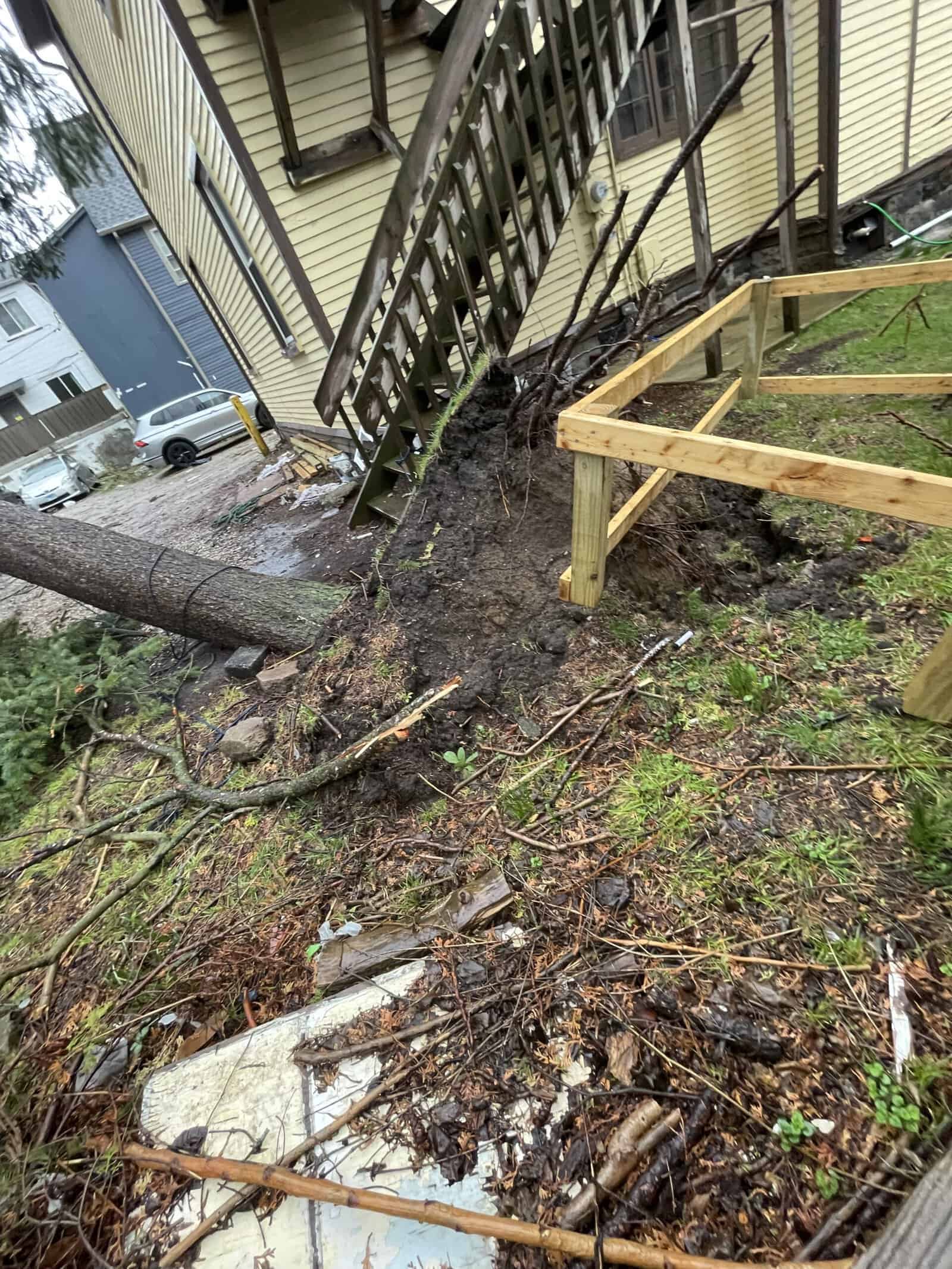
Storm damage in Livonia doesn’t look the same every time. Sometimes it’s a full tree down on a structure — the kind of emergency that needs a crew on site within hours. Sometimes it’s a hanging limb suspended in the canopy over a garage on Six Mile Road, under tension that nobody can predict, waiting for someone to walk underneath it. Sometimes it’s a tree that looks completely fine but has root heave or a cracked trunk that a trained eye catches before the next storm finishes the job.
We handle the full range. Fallen tree removal in Livonia, MI covers everything from trees on roofs and fences to trees blocking driveways along the I-96 corridor and Schoolcraft Road. Emergency tree clearing gets your access restored first, then addresses the remaining debris. Hazardous limb removal in Livonia, MI is its own service for exactly the scenario where the tree is still standing but something up in the canopy is no longer safe — widow-makers, split attachments, partially broken branches that look stable until they’re not.
For properties near DTE Energy overhead lines — which is most of Livonia — our line-clearance certified crews are the reason this work can be done safely and legally where other companies would have to stop. That’s not a minor detail in a city where trees and utility lines have been sharing the same space for 60 years.
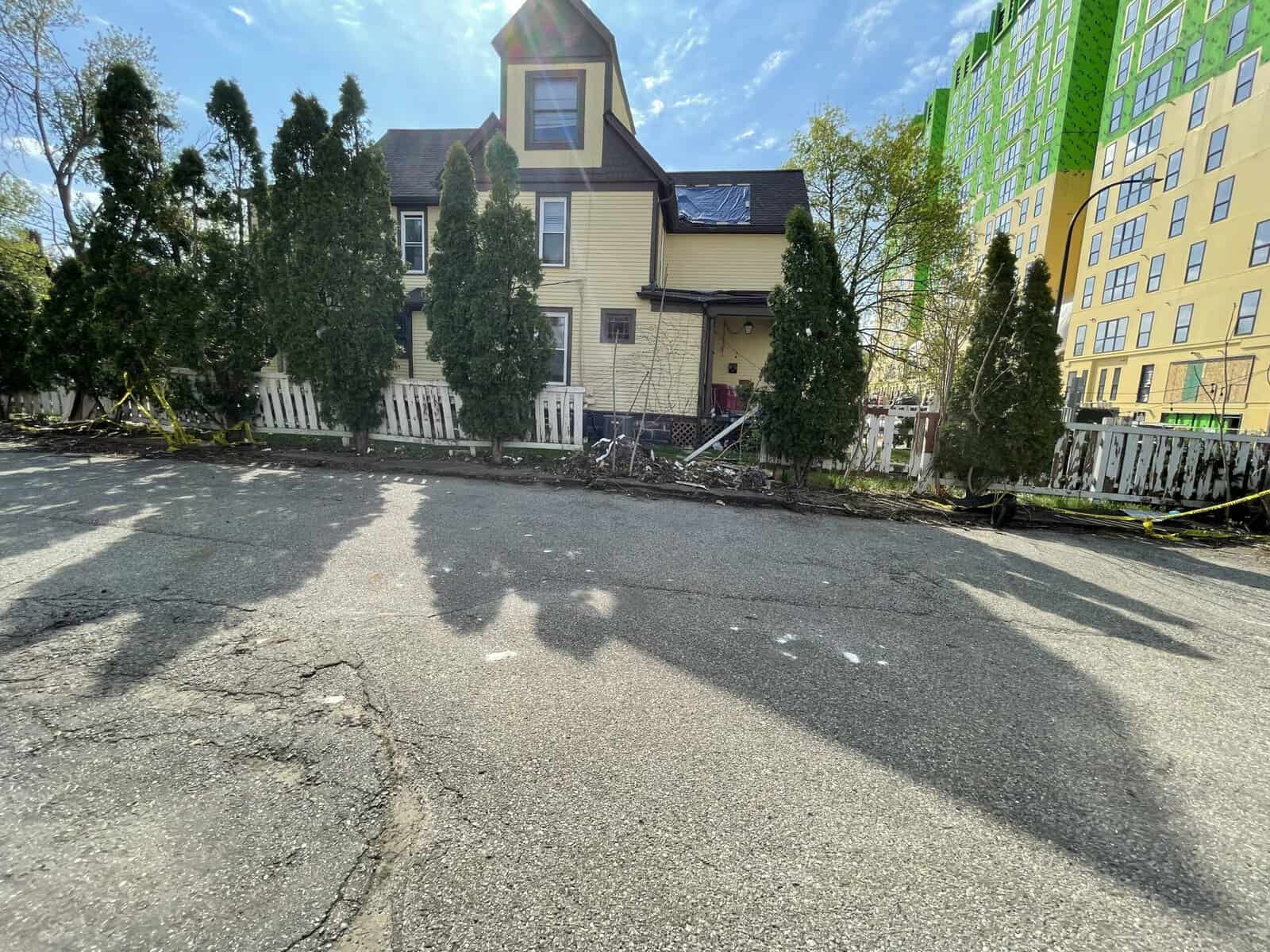
It depends on where the tree is located. For trees on private property, Livonia’s tree ordinance generally allows removal — but if the tree is in the public right-of-way, which is the strip of land between the sidewalk and the curb, a permit is required before any contractor can legally remove it. That permit is issued by the City of Livonia Forestry Division, costs $30 when obtained by a contractor, and isn’t officially valid until it’s been signed by City Forestry staff.
This matters more than most people realize after a storm. A contractor who skips the permit process and removes a right-of-way tree without authorization can leave you, the homeowner, exposed to a code violation — even if you had nothing to do with the decision. We handle the permit process as part of the job, so the cleanup is done correctly from a regulatory standpoint, not just physically. If you’re not sure whether the tree that came down is on your property or in the right-of-way, that’s exactly the kind of question the pre-job site walkthrough is designed to answer.
Most can’t — and that’s not an exaggeration. Working near energized power lines requires line-clearance arborist certification, which is a specialized credential that covers the training, equipment, and insurance needed to operate safely in proximity to live electrical infrastructure. It’s not the same as general tree service experience, and in Michigan, where no state license is required to operate a tree company, there’s nothing stopping an uncertified crew from showing up and attempting the work anyway.
In Livonia, this is a real and frequent issue. DTE Energy’s own published guidance acknowledges that trees and branches falling into electrical equipment are the leading cause of power outages — and in a city where overhead lines run through virtually every residential neighborhood, storm damage and power lines are often in the same space. We employ line-clearance certified arborists, which means our crew can legally and safely work in those conditions where other companies would have to stop and wait for DTE to de-energize the line first. If a contractor tells you they can handle a tree near a live wire without that certification, that’s a problem — for the crew, for your property, and for your liability.
You usually can’t tell just by looking at it, and that’s the honest answer. A tree can lose a major limb in a storm, appear structurally intact from the ground, and still have significant internal damage — a cracked trunk, compromised root anchoring, or root heave that isn’t visible until the soil settles or the next storm puts it under load again. Silver maples, which are extremely common in Livonia’s postwar subdivisions, are particularly prone to this. They were planted throughout the city in the 1950s and 1960s because they grow fast, but they’re known for brittle wood that can fail unpredictably under storm stress.
A TRAQ-qualified risk assessment is the professional answer to this question. TRAQ stands for Tree Risk Assessment Qualification — it’s an ISA credential held by arborists who are specifically trained to evaluate tree failure risk using documented, standardized methods. We have TRAQ-qualified assessors on staff. After a storm event in Livonia, they can evaluate the trees on your property that are still standing and give you a clear answer: structurally sound, monitor and recheck, or remove before the next weather event. That assessment eliminates the guesswork and gives you something concrete to act on.
The first priority is distance. Don’t go near the tree until you know whether any power lines are involved — and in Livonia’s residential neighborhoods, there’s a real chance they are. If you see a downed line or the tree is in contact with any electrical infrastructure, stay at least 30 feet away and call 911 and DTE Energy before you call anyone else. Electricity can travel through a tree, through the ground, and through standing water, so the area around a downed tree near a line is not safe to walk through.
Once you’ve confirmed there’s no electrical hazard, document the damage with photos before anything is moved. This is important for your homeowners insurance claim — you want a clear record of the tree’s position, what it struck, and the extent of the damage before cleanup begins. Standard homeowners insurance policies typically cover tree removal when a tree has damaged a covered structure, but the documentation requirements matter and insurers will ask for it. After that, call us. The pre-job site walkthrough creates an additional record of the scope of work, which supports the claim process rather than complicating it.
We offer genuine 24-hour emergency tree service — meaning someone answers the phone when you call, regardless of the time. In an active emergency, our goal is to get a crew on site as quickly as the situation and safe travel conditions allow. For hazardous situations — a tree on a roof, a hanging limb over a living space, a blocked driveway preventing access — we prioritize accordingly.
What matters in Livonia specifically is that post-storm demand can spike fast. The June 2024 EF-1 tornado that cut through the city generated widespread tree damage across a 5.5-mile corridor in a matter of minutes, from the Schoolcraft and Eckles area all the way through Rotary Park and Beverly Park. In a scenario like that, every tree service in the region gets flooded with calls simultaneously. Our 24/7 availability means you’re not starting from the back of a callback queue — you’re talking to someone who can assess the urgency of your specific situation and give you a realistic timeline based on what’s actually happening on the ground, not a generic estimate.
It depends on what the tree hit. Standard homeowners insurance policies in Michigan typically cover tree removal costs when the fallen tree has damaged a covered structure — your roof, your fence, your garage, your car if it’s covered under a comprehensive auto policy. If the tree fell in the yard and didn’t damage anything, most policies won’t cover the removal cost, even if the tree is large and the cleanup is significant.
When coverage does apply, most standard policies have a sublimit for tree removal — commonly in the range of $500 to $1,000 per storm event, or up to a percentage of your dwelling coverage if a structure was damaged. That sublimit often surprises homeowners who assumed the full removal cost would be covered. The gap between what insurance pays and what the job actually costs is real, and it’s worth understanding before you file a claim. The documentation you gather immediately after the tree comes down — photos, written scope of work from the contractor, the pre-job assessment — is what makes the claim process straightforward rather than contested. We walk through the site and document the scope before removal begins, which gives you a clear record to work from when you contact your insurer.
Other Services we provide in Livonia
