Hear from Our Customers
The homes in South Lyon’s Historic District and established subdivisions like Carriage Trace weren’t built yesterday, and neither were the trees on those properties. Decades of Michigan freeze-thaw cycles leave their mark — stress fractures you can’t see from the ground, deadwood accumulating in the upper canopy, branches that have quietly grown past the eight-foot sidewalk clearance threshold required under South Lyon’s municipal code.
When those issues get addressed by someone who knows what they’re looking at, the difference is immediate and lasting.
A properly thinned crown handles South Lyon’s winters differently. With an average of 44 inches of snowfall per year and ice storms that load unpruned branches well past their structural limits, crown thinning isn’t cosmetic — it’s the reason a branch stays on the tree instead of coming down on your roof at 2 AM in February. Reducing that load by opening up the canopy is one of the most direct ways to protect a home that’s worth protecting.
For homeowners in newer Lyon Township developments like Mill River or Abbey Knoll, the calculus is different but equally real. Young trees on large lots need formative pruning now, while the structure is still developing. The cost of correcting a poorly formed tree 15 years from now is significantly higher than guiding it correctly from the start. Either way — established neighborhood or new construction — professional tree pruning in South Lyon pays for itself in ways that show up on your property and your peace of mind.
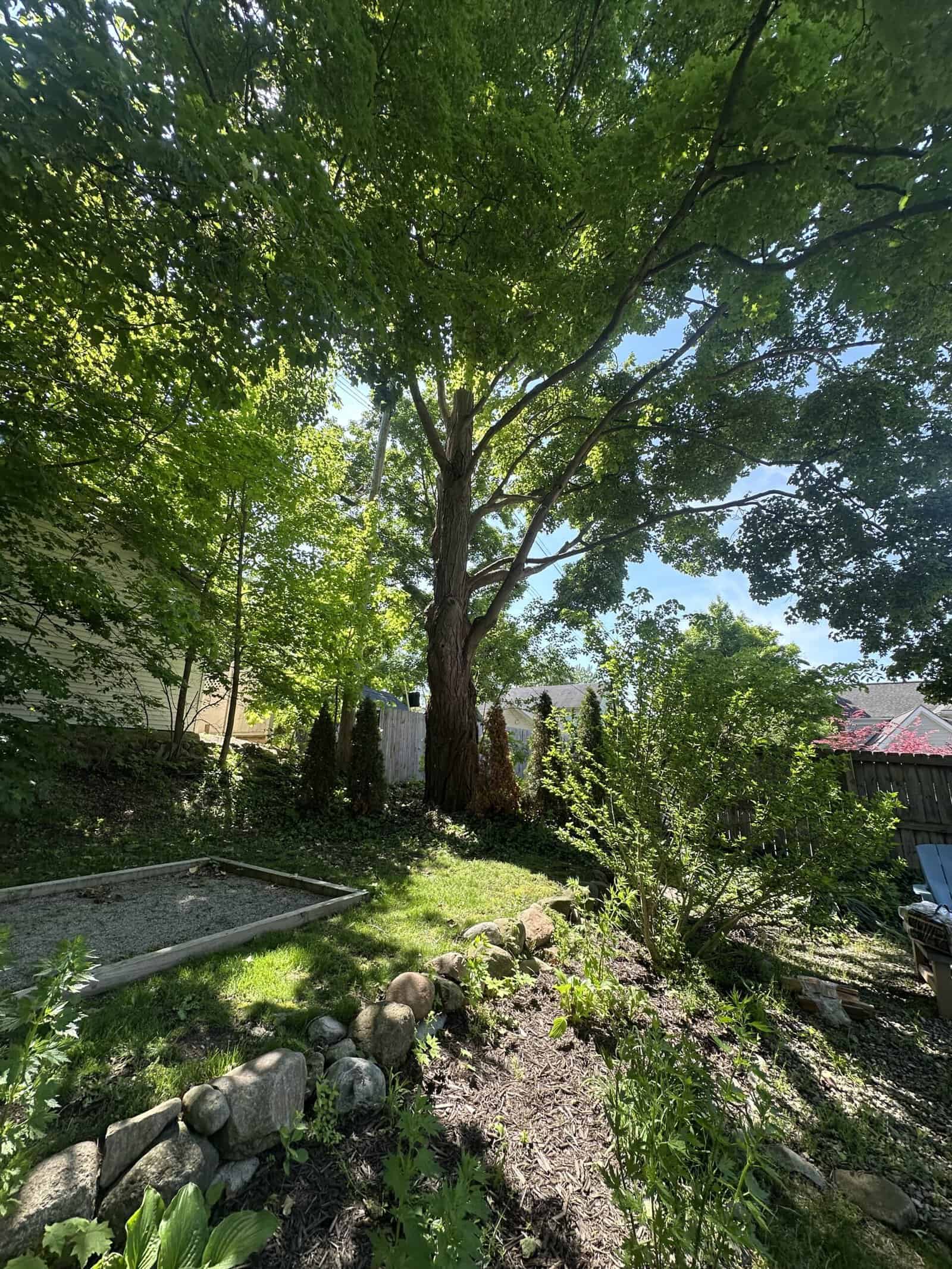
We’re based in South Lyon up the same route most South Lyon residents take to reach I-96 every morning. That proximity means we’re familiar with the tree species, soil conditions, and utility corridor patterns across southwestern corner. We’re not a regional chain dispatching from a distant office.
Ivan has been delivering tree care across Michigan for over seven years. He personally trains every crew member — not just in technique, but in how to communicate clearly and respectfully with South Lyon homeowners. Cecilia handles scheduling and customer care, which means when you call, you reach someone accountable, not a general inbox. Every job starts with a site walk and a written scope of work before anything gets cut.
It starts with a conversation, not a sales pitch. When you reach out to Ivan’s Tree Services, Cecilia gets you scheduled for a site walk at a time that works for you. Ivan comes out, walks the property with you, and looks at each tree with the kind of attention that only comes from ISA certification and TRAQ-qualified risk assessment training. He’s not just looking at what branches to cut — he’s looking at the whole tree, its structure, its load distribution, and how it interacts with your roofline, your fence, and anything else nearby.
From that walk, you get a written scope of work before any equipment comes out. For South Lyon properties, that assessment often includes a check against the city’s Chapter 82 ordinance requirements — specifically the eight-foot sidewalk clearance rule and the obligation to address dead or dangerous limbs. If your trees are close to utility lines along Pontiac Trail or on corner lots with visibility triangle requirements, those factors get addressed in the scope too. Our line-clearance certified arborists are equipped and insured to work near energized lines — most local companies are not.
Once work begins, the crew follows ANSI A300 pruning standards throughout. That means no topping, no flush cuts, and no removing more than 25 percent of live foliage in a single session. When the job is done, the site gets cleaned — debris removed, yard raked, property left in better shape than we found it.
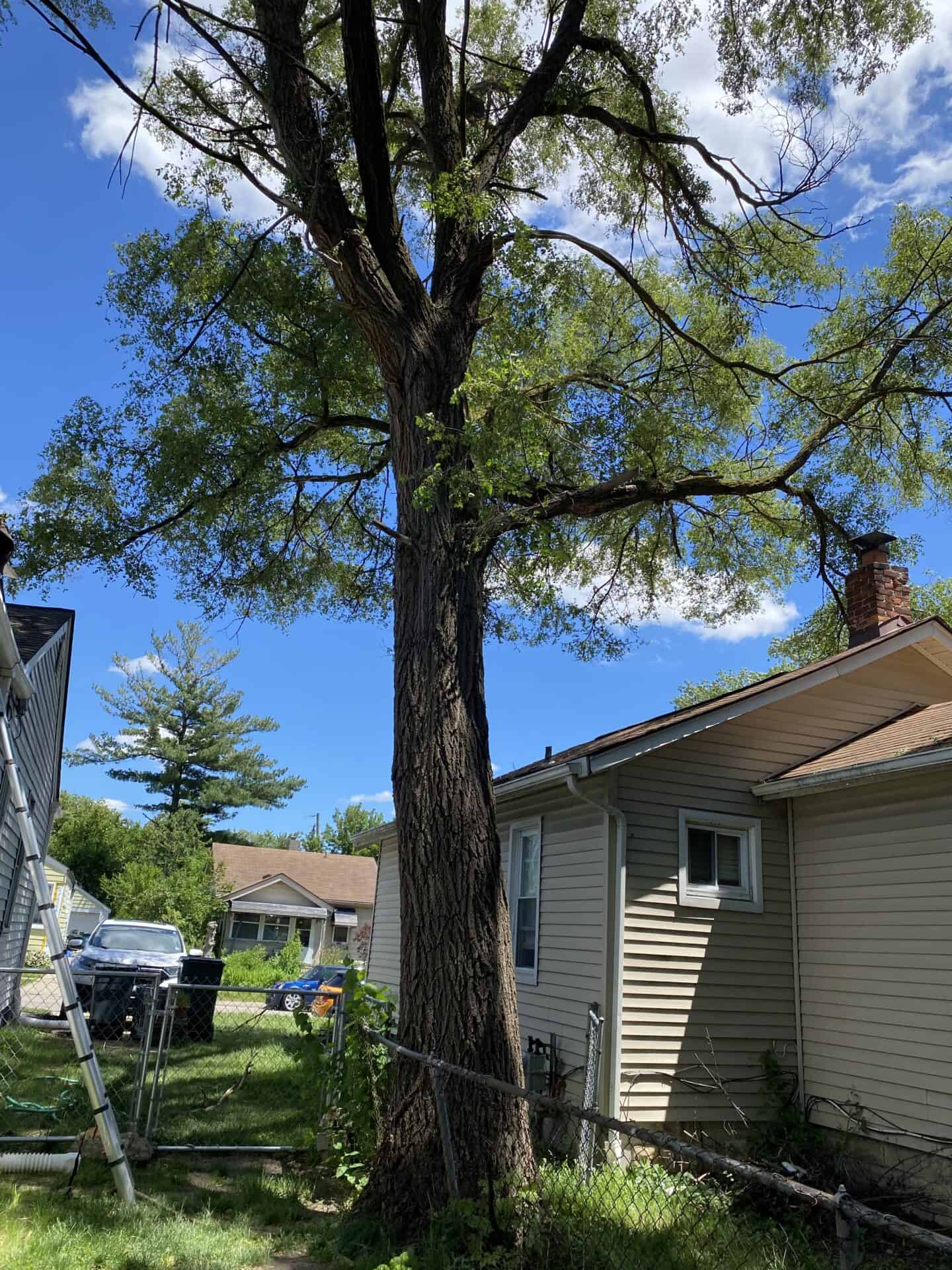
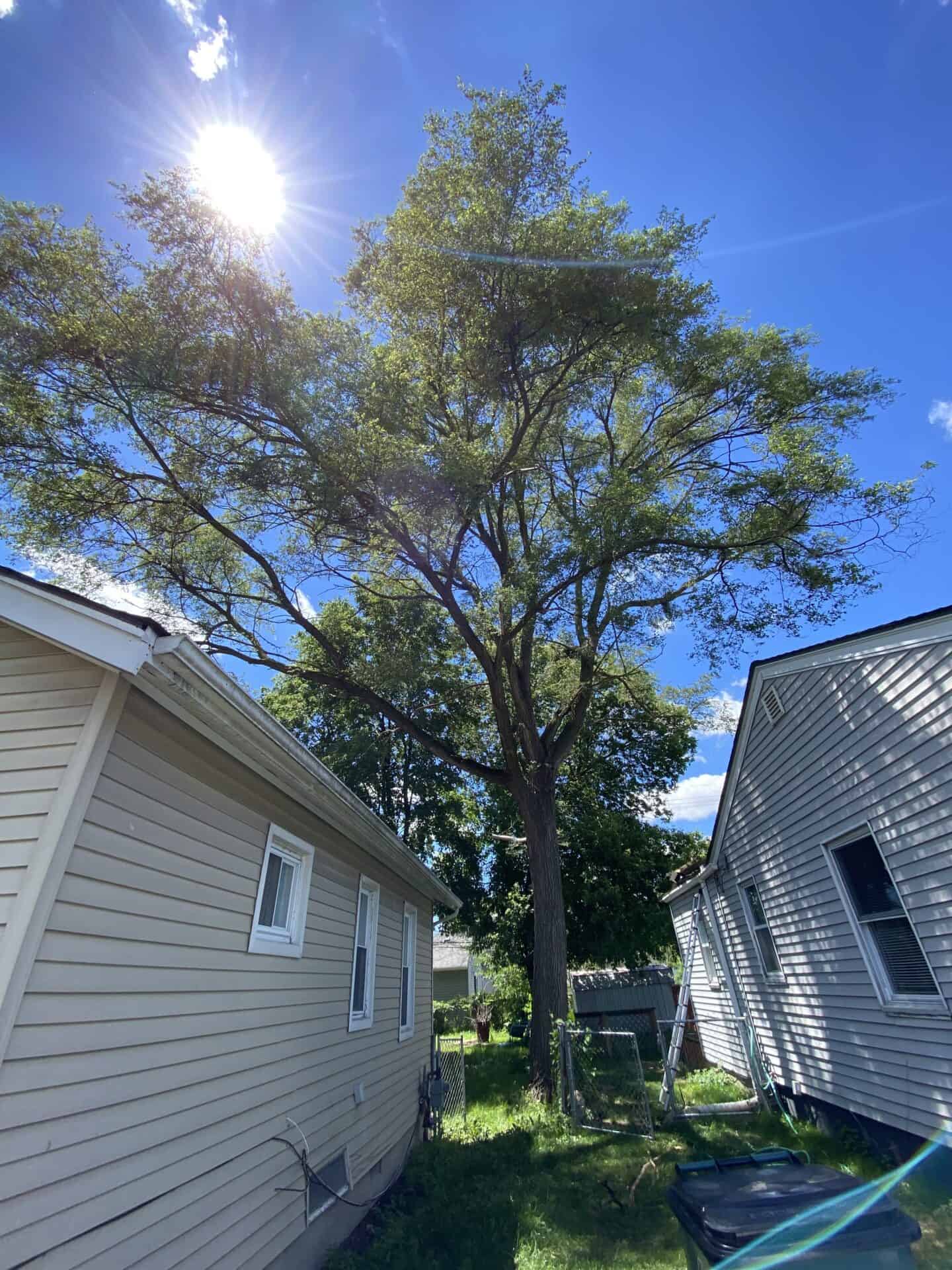
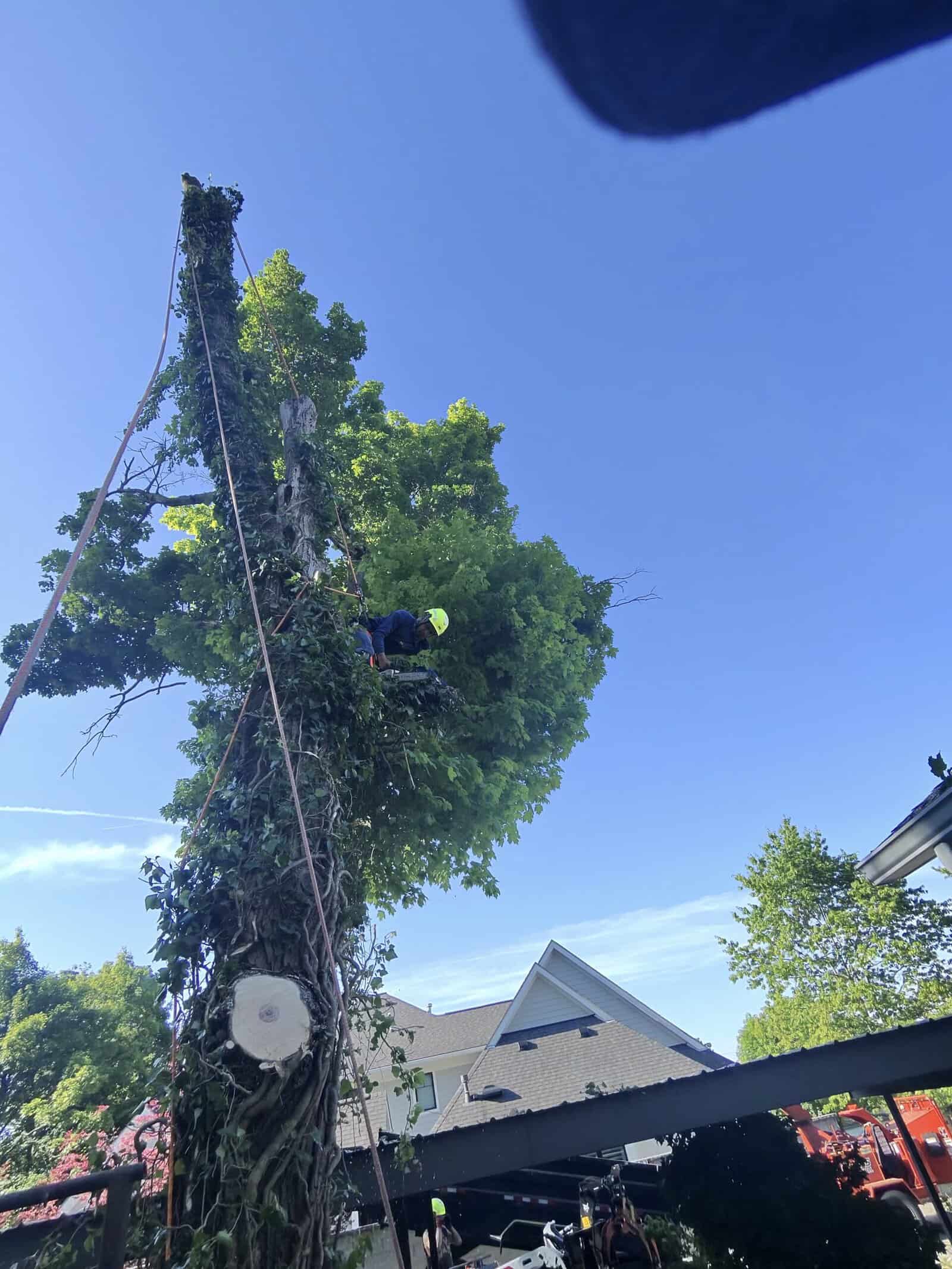
Tree pruning covers a range of techniques, and what gets applied depends entirely on what your tree needs — not on a standard package. Crown thinning selectively removes interior branches to improve airflow and reduce the wind and snow load that South Lyon winters are known for. Crown reduction brings the overall size of the canopy down while keeping the tree’s natural shape intact — the right answer when a tree has grown into a roofline or is shading out a neighbor’s property.
Crown raising removes lower limbs to meet clearance requirements, which matters in South Lyon where city code requires eight feet of clearance above public sidewalks. Deadwooding removes branches that are already dead, dying, or structurally compromised before they become a liability.
For South Lyon properties near Pontiac Trail, Lafayette Street, or anywhere utility lines run through the canopy, our line-clearance certified arborists handle that work with the specialized training and insurance it requires. That’s not a service every tree company can offer.
Every service includes the pre-work site walk, the written scope, and full cleanup after the job is complete. For commercial properties, HOA communities, or larger residential estates in the Lyon Township area, our ISA Certified Arborists and TRAQ-qualified risk assessors can provide formal tree risk assessments as part of the scope. If you’re not sure what your trees need, the site walk will tell you — and you’ll have it in writing before any decision is made.
Yes, and most South Lyon homeowners don’t find out until there’s a problem. South Lyon’s municipal code under Chapter 82 requires property owners to remove dead, diseased, or dangerous trees that pose a risk to public safety. It also requires that any limbs or foliage growing over a public sidewalk maintain a minimum clearance of eight feet above the surface. If you’re on a corner lot, there’s an additional visibility triangle requirement — trees within 25 feet of an intersection must be trimmed to maintain clear sightlines.
If the city determines your trees are out of compliance, they can issue a notice requiring you to correct the issue within five days. That’s not a lot of runway, especially if the tree in question is large or structurally complex. Getting a professional assessment before the city knocks is the smarter move. Our site walk process checks for exactly these conditions as part of every job scoped in South Lyon.
They’re related but they solve different problems. Crown thinning removes selective branches from throughout the canopy — not to make the tree smaller, but to open it up. Better airflow, less wind resistance, less snow and ice load. In a South Lyon winter where you’re averaging 44 inches of snowfall and ice storms are a regular occurrence, thinning is one of the most practical things you can do to reduce storm damage risk without changing the tree’s overall shape or size.
Crown reduction actually brings the canopy down in size. It’s used when a tree has grown into a roofline, is overhanging a neighbor’s property, or has simply gotten too large for its space. Done correctly — following ANSI A300 standards — crown reduction maintains the tree’s natural form and doesn’t leave it looking hacked back. Topping a tree, which some companies still do, is not crown reduction. It creates large wounds, invites disease, and produces structurally weak regrowth. It’s explicitly prohibited under the same standards our crew follows on every job.
For most deciduous trees in Southeast Michigan, the dormant season — roughly late November through early March — is the professional recommendation. Trees are dormant, so pruning stress is minimized. The canopy is bare, which makes it much easier to assess structure and identify problem branches. And the insects and pathogens that spread disease between trees are inactive.
For oak trees specifically, timing isn’t just a preference — it’s a hard rule. Oak wilt is a devastating, incurable disease spread by sap beetles that become active once temperatures climb above 50 degrees Fahrenheit. In Michigan, that means oak trees should only be pruned between November 1 and March 31. South Lyon and the surrounding Lyon Township area have established oak populations, particularly in older neighborhoods and wooded lots near Kensington Metropark. If you have oaks on your property, this window matters. Pruning outside of it is a real risk that most homeowners aren’t aware of until it’s too late.
The two things that matter most are ISA certification and insurance. An ISA Certified Arborist has passed a comprehensive exam on tree biology, diagnosis, and proper care techniques — it’s the recognized credential in this industry, and it’s verifiable through ISA’s public directory. A company that can’t point you to a certified arborist on their crew is asking you to trust their word on something that affects your property and your liability.
Insurance is the other half. If a tree worker is injured on your property and the company doesn’t carry workers’ compensation, you can be personally sued. Your homeowner’s insurance may not cover it. Always ask for proof of both general liability and workers’ compensation before anyone starts work. Beyond credentials and insurance, ask for a written estimate with a detailed scope of work. If a company is reluctant to put the scope in writing before starting, that tells you something important about how the job is likely to go.
You can, but the cost of doing nothing tends to show up eventually — usually at the worst possible time. In South Lyon, where homes in the Historic District and subdivisions like Carriage Trace have trees that have been growing for 50 or more years, unpruned canopies accumulate deadwood, develop structural weaknesses, and grow into rooflines, fences, and utility lines. None of that gets better on its own.
The practical risk is storm damage. An unpruned crown with dense interior growth and heavy deadwood is significantly more likely to shed large branches — or fail entirely — under the ice and snow loads that South Lyon winters produce. Beyond the safety issue, there’s the property value angle: mature, well-maintained trees add measurable value to a home. Neglected trees that look overgrown, dead in sections, or structurally compromised do the opposite. In a market where South Lyon home values have climbed to a median around $470,000 to $482,000, the condition of your landscape is part of what you’re protecting.
Yes. We cover the broader South Lyon area, including Lyon Township and the surrounding communities that fall within the South Lyon Community Schools district footprint. That district spans 83 square miles across Oakland, Livingston, and Washtenaw counties — and the families who identify as South Lyon residents are spread across all of it, from the city core to newer developments in Lyon Township like Mill River and Arcadia Ridge.
The tree care needs across that footprint vary. Older properties in the city core have mature trees that need structural assessment and ongoing maintenance. Newer construction in Lyon Township has younger trees on larger lots that benefit from formative pruning before structural problems develop. Our crew handles both, and the starting point is always the same: a site walk, a written scope, and a clear conversation about what your trees actually need before any work begins. If you’re in the South Lyon area and you’re not sure whether you fall within the service area, a quick call to Cecilia will get you an answer immediately.
Other Services we provide in South Lyon
