Hear from Our Customers
Most South Lyon homeowners don’t have a mulch problem — they have a time problem. You know the beds need attention. You’ve watched the old layer break down through another Michigan winter, leaving behind compacted, bare soil that’s already letting weeds push through. The issue isn’t motivation. It’s that between a 30-minute commute each way and everything else filling up your calendar, a weekend spent hauling and spreading bags from the hardware store just isn’t happening.
When mulch is installed correctly — not just dumped and spread, but prepped, calibrated, and applied at the right depth — your garden beds hold moisture through South Lyon’s dry summer stretches, your soil temperature stays regulated, and weeds don’t get the foothold they need. That’s not a short-term visual fix. That’s a functional layer of protection that keeps working through July and August when the heat sets in.
There’s also something specific about the soil in western Oakland County worth knowing. Clay-heavy soils compact easily and drain poorly — and South Lyon sits right in that zone. Organic wood chip mulch doesn’t just cover the surface. As it breaks down over time, it adds organic matter that loosens clay, improves drainage, and builds a healthier root environment underneath. That’s the difference between mulch as decoration and mulch as genuine soil care.
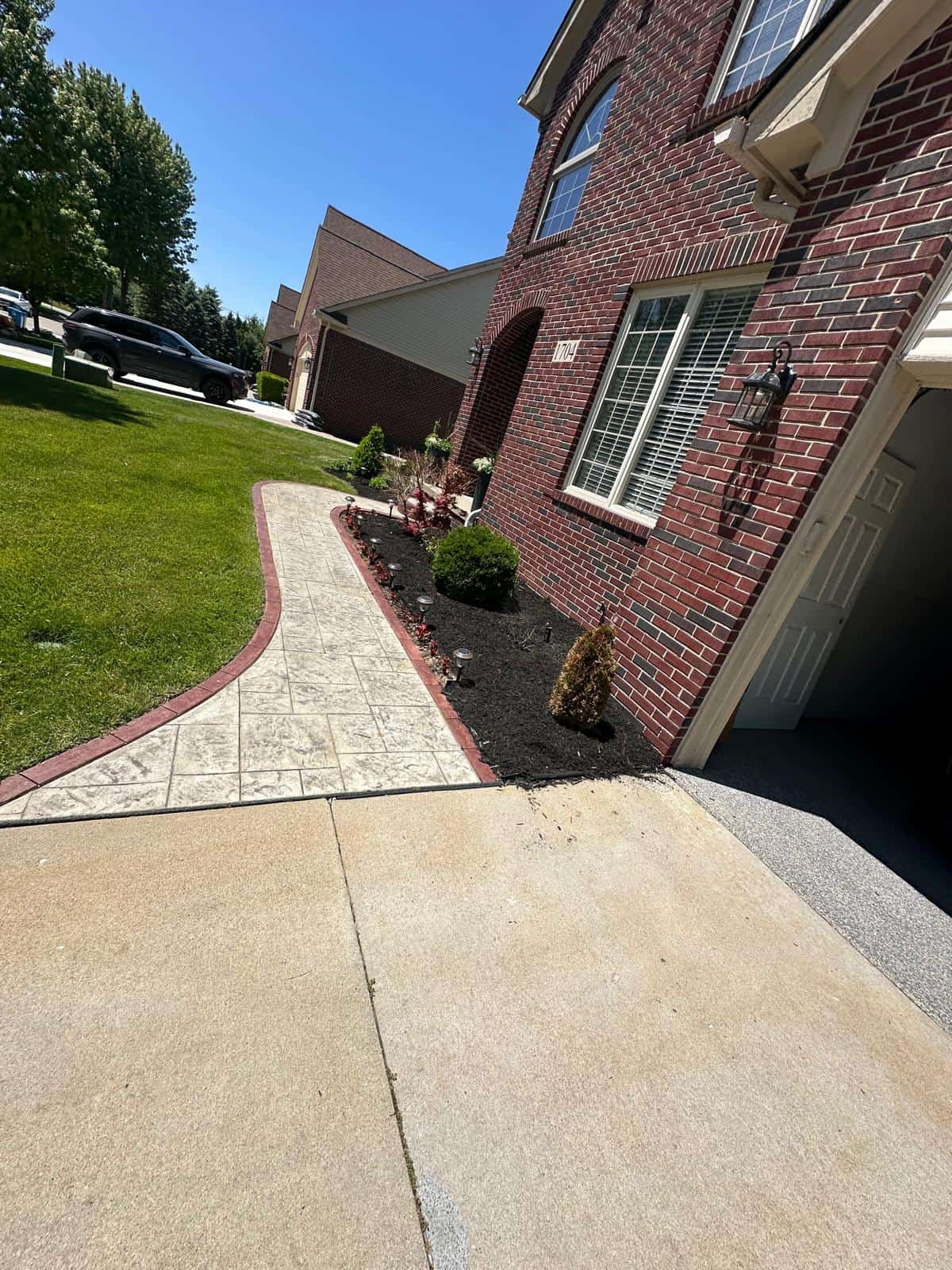
We’re based in Oakland — directly north of South Lyon on Oakland Road — and have been serving South Lyon and Oakland County homeowners for over seven years. I started my career as a groundman in California, learning the fundamentals of tree health, rigging, and safe technique from the ground up before bringing that knowledge to Michigan. I lead every field crew personally, and our team includes certified arborists who understand how mulch interacts with tree root systems, not just how it looks from the curb.
That background matters more than it might seem. A landscaping crew spreading mulch and an arborist-trained crew spreading mulch are doing two very different things. One is covering ground. The other is making deliberate decisions about depth, root flare exposure, and bed preparation that protect the trees and plants underneath.
We’re fully licensed and insured, and every estimate is provided in writing before any work begins. For South Lyon residents who’ve seen the door-to-door mulch operators work the area, that written commitment isn’t a small thing — it’s the difference between a professional job and a gamble.
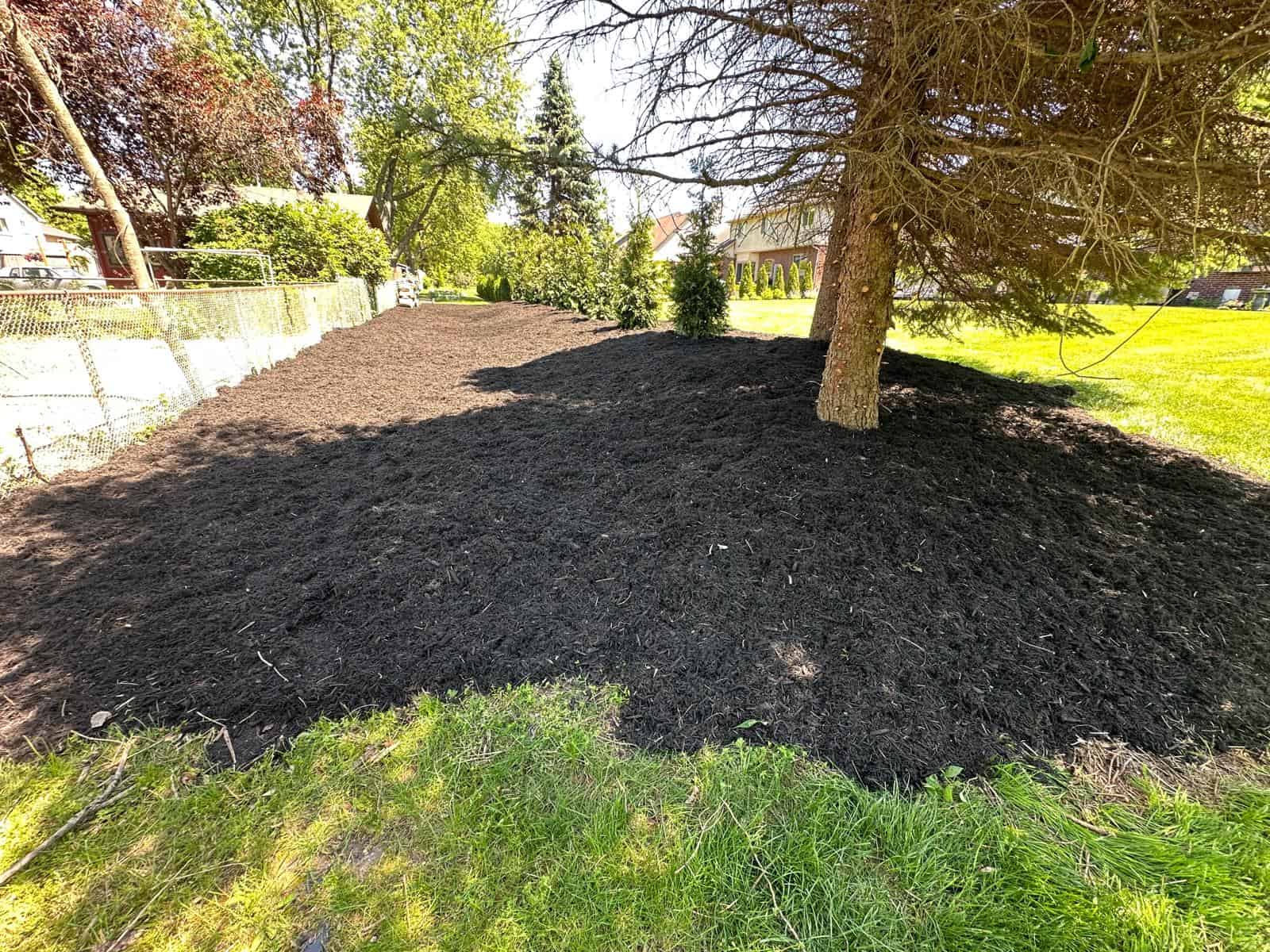
It starts with a written estimate. You describe your beds, our crew comes out to assess the scope, and you get a clear quote in writing before anyone picks up a tool. No verbal ballpark figures, no surprises when the job is finished.
Once you approve the work, we handle bed preparation first. That means clearing debris, raking and aerating any existing mulch layer that’s still present, and addressing the bed condition before a single yard of new material goes down. Skipping this step is one of the most common mistakes in mulch installation — piling new material on top of compacted, matted old mulch creates uneven coverage and traps moisture in the wrong places.
From there, the mulch goes down at the ISA-recommended depth of two to three inches. Around trees, our crew keeps the root flare fully exposed — no piling material against the trunk base, which is the kind of well-intentioned mistake that quietly damages trees over several seasons. South Lyon’s spring window for optimal mulch installation runs from late April through mid-May, after the soil has had time to warm from winter. Installing too early insulates cold soil and delays plant growth, so timing is part of the job, not an afterthought.
If you’re also coming off a recent tree removal or stump grinding, we can follow up with topsoil in the same visit — one call, one crew, full yard restored.
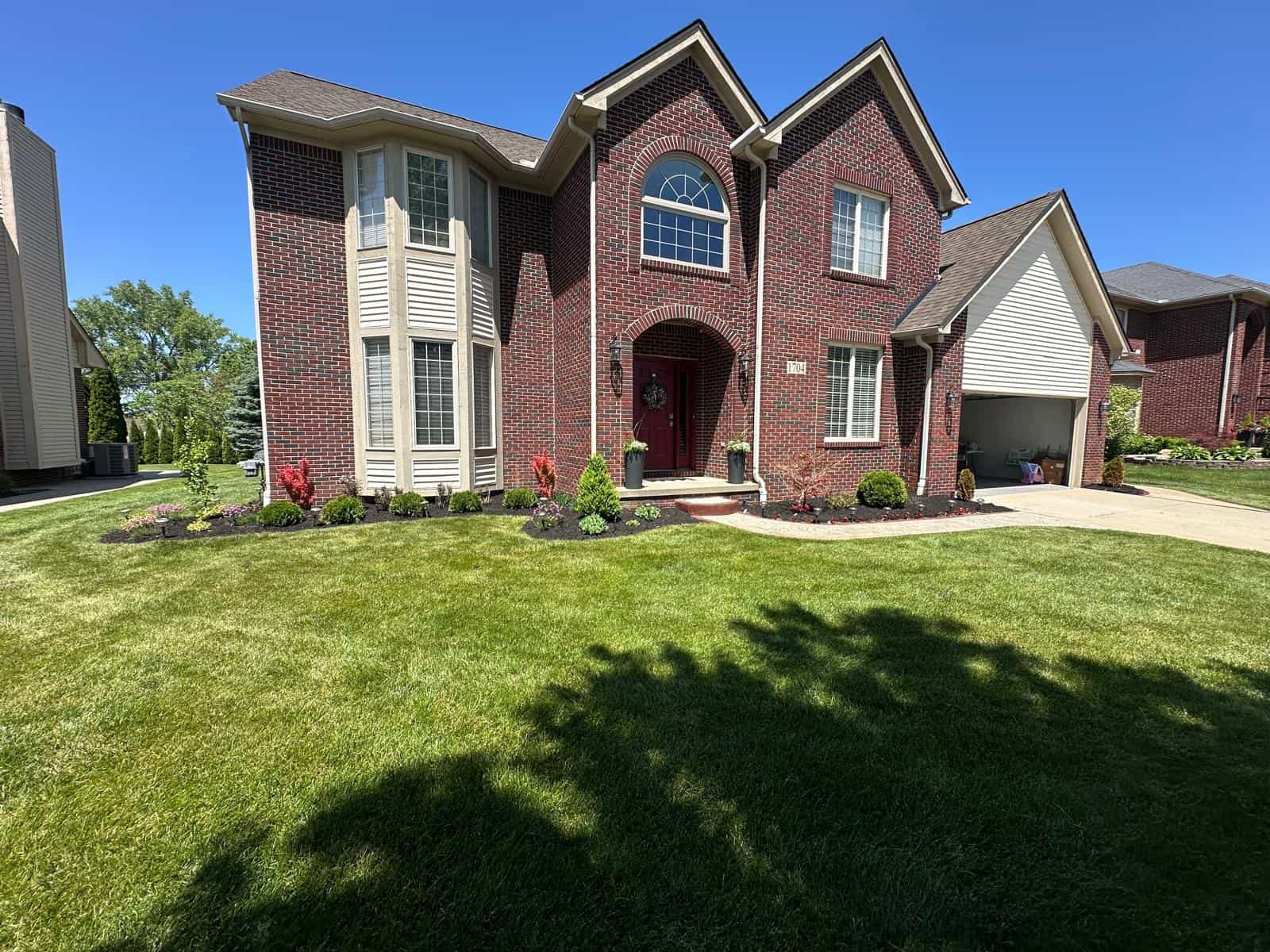
Ready to get started?
South Lyon already has a well-known local source for mulch materials — Stone Depot on Griswold Road has been supplying the area since 1963, and they offer eight types of mulch for delivery. But Stone Depot delivers material. They don’t install it. That gap — between a yard of mulch sitting in your driveway and a properly finished set of garden beds — is exactly where we work.
Our service includes bulk mulch sourced from our own tree work: repurposed wood chips containing bark and leaf material that the ISA specifically identifies as excellent mulch for trees and large shrubs. This isn’t dyed, processed, or imported material. It comes from the same kinds of trees growing in South Lyon’s neighborhoods, and it breaks down in a way that actively benefits your soil rather than just sitting on top of it.
For homeowners in Lyon Township’s newer construction communities — where grading and construction equipment have left behind compacted, nutrient-depleted soil — the installation can be paired with topsoil to address the full picture. New South Lyon homeowners establishing their landscape for the first time get a complete foundation, not just a cosmetic layer. Whether your beds are decades old or brand new, the process is the same: proper prep, correct depth, arborist-level technique, and a finished result that holds up through Michigan’s seasons.
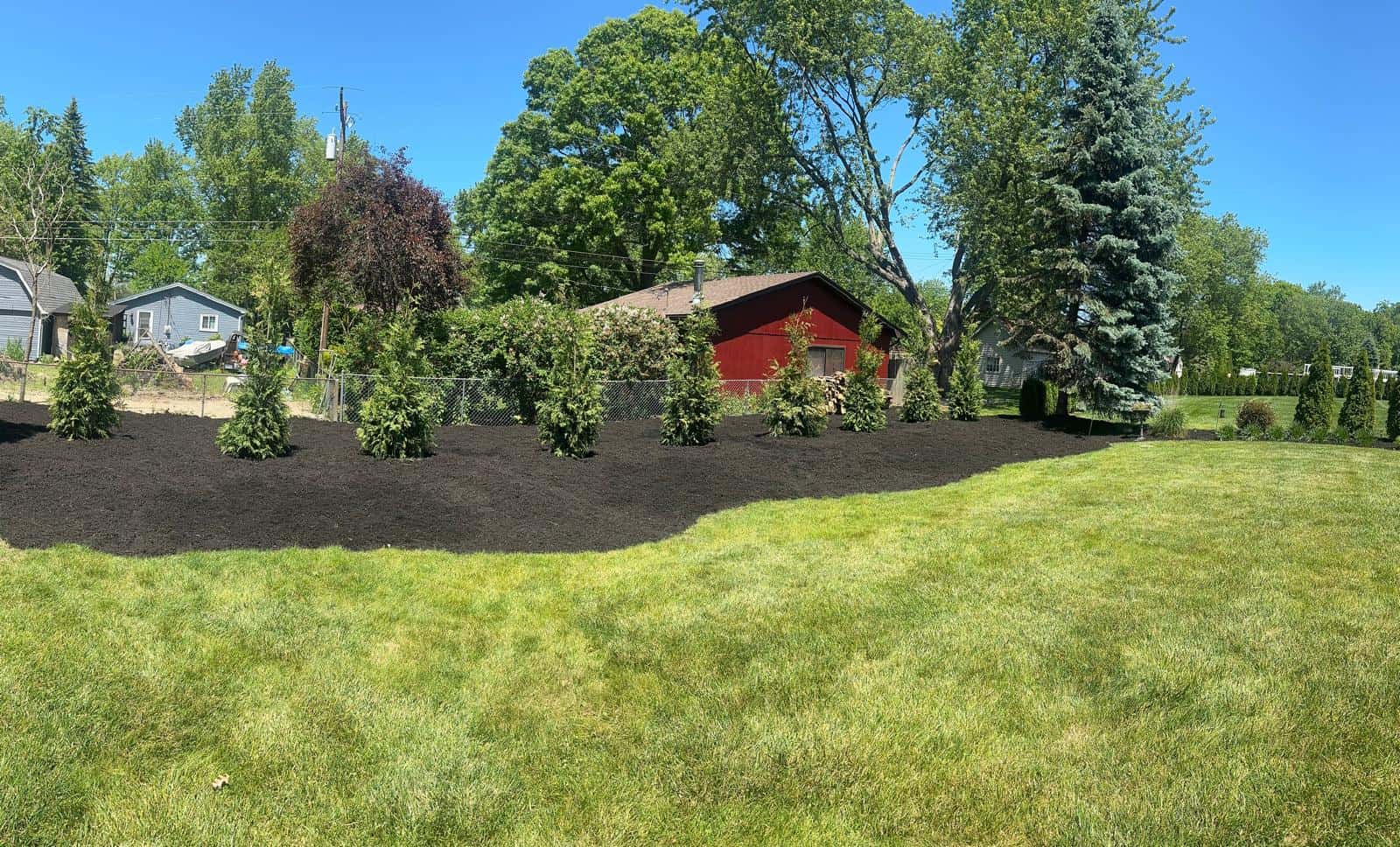
The optimal window for spring mulch installation in South Lyon runs from late April through mid-May. The goal is to get mulch down after the soil has warmed enough to support active plant growth but before the summer heat and dry spells arrive — that timing gives you maximum weed suppression before seeds germinate and locks in soil moisture heading into the warmer months.
South Lyon sits near the Livingston County border in southwestern Oakland County, which means it can see slightly later soil warming in spring compared to communities closer to Detroit. Applying mulch too early — when the ground is still cold — insulates that cold soil and can actually delay plant emergence. Fall is the secondary season, ideally after the first hard frost, when mulch helps protect root systems through Michigan’s freeze-thaw cycles. South Lyon’s winters are hard on garden beds, and a properly timed fall application makes a real difference by spring.
Depth matters more than most people realize, and it matters differently depending on what’s underneath. For garden beds, the ISA recommends two to three inches of organic mulch — enough to suppress weeds and regulate soil temperature without creating the compaction and moisture problems that come with going too thick.
Around trees, the depth guideline stays the same, but there’s an additional rule that’s frequently ignored: the root flare — the point where the trunk base flares out at ground level — must remain fully exposed. Piling mulch against the trunk creates what’s known as volcano mulching, and it’s one of the most common ways well-intentioned homeowners slowly damage mature trees. Trapped moisture against the bark causes rot, encourages secondary root systems to grow into the mulch layer instead of the soil, and weakens the tree’s structural base over time. Our arborist-trained crews follow ISA standards on every job, which means your trees are protected, not just your beds.
Not always, but you can’t just dump new material on top and call it done. If the existing layer is below about an inch and a half of depth, it’s ready for a top-dress. But before new mulch goes down, the old layer needs to be raked and aerated — matted, compacted mulch blocks moisture and air from reaching the soil below, and adding fresh material on top of it doesn’t fix that problem.
The exception is when the existing mulch shows signs of fungus, mold, or pest activity. In those cases, removing the old layer before installing fresh material is the right call. In South Lyon’s climate, where wet springs and humid summers are common, mulch can mat and develop fungal issues faster than in drier regions. Part of what our crew does during bed preparation is assess the condition of what’s already there before making that call — so you’re not paying to install new mulch on top of a problem.
For most South Lyon residential properties, organic wood chip mulch is the strongest choice — and not just for the surface-level benefits. Western Oakland County soils tend toward clay-heavy compositions that compact easily and drain poorly. Organic mulch breaks down over time and adds organic matter to the soil beneath it, which gradually loosens clay, improves drainage, and feeds the microbial activity that supports healthy root systems. Dyed or processed mulch products don’t deliver that benefit — they cover the surface, but they don’t improve what’s underneath.
For newer construction properties in Lyon Township, where grading has left behind compacted or nutrient-depleted soil, pairing organic mulch with topsoil amendment gives you the best foundation for establishing healthy beds. The mulch we use from our own tree work has a clean, natural appearance that holds up well through the season without the color-fade issues that come with artificially dyed products. Our crew can walk you through what makes sense for your specific beds during the estimate.
Yes, and it’s one of the more practical reasons to use a tree service for mulch rather than a separate landscaping company. After a tree removal or stump grinding, the surrounding area is often left with disrupted soil, exposed roots, bare patches, and beds that look like a job site. Coordinating a separate landscaper to come in afterward adds time, cost, and another scheduling gap in the middle of a short Michigan spring window.
Our crew can follow up tree work with mulch installation and topsoil in the same service relationship — sometimes the same visit, depending on scope. The mulch used is repurposed wood chip material from our own tree work, which means you’re getting fresh arborist chips that are genuinely beneficial to the soil rather than a generic filler product. For South Lyon homeowners who’ve just had a large tree taken down, this approach restores the full yard rather than leaving a patchy, half-finished landscape waiting on a second contractor.
It’s a fair concern, and it’s more common in suburban Michigan communities than most people expect. Door-to-door mulch operators typically offer a verbal quote on the spot, start the work quickly before you’ve had time to compare, and then present a final bill that bears little resemblance to what was discussed. The tactic works because there’s no written record of what was agreed to.
We operate differently. Every estimate is provided in writing before any work begins, and that quote is valid for 30 days — which gives you time to compare it against other options without pressure. There’s no showing up unannounced, no verbal-only agreements, and no charges that weren’t in the original quote. I’m a named, local business owner based in Oakland with verifiable reviews on Google, Angi, and HomeAdvisor — reviewers consistently mention fair pricing and transparent communication. In a community like South Lyon, that accountability to the local area is built into how we operate.
Other Services we provide in South Lyon
