Hear from Our Customers
A properly pruned tree doesn’t just look better — it behaves better. Branches stop competing for space. The canopy thins out so wind moves through instead of pushing against it. Dead limbs that were one ice storm away from landing on your roof get removed before they get the chance.
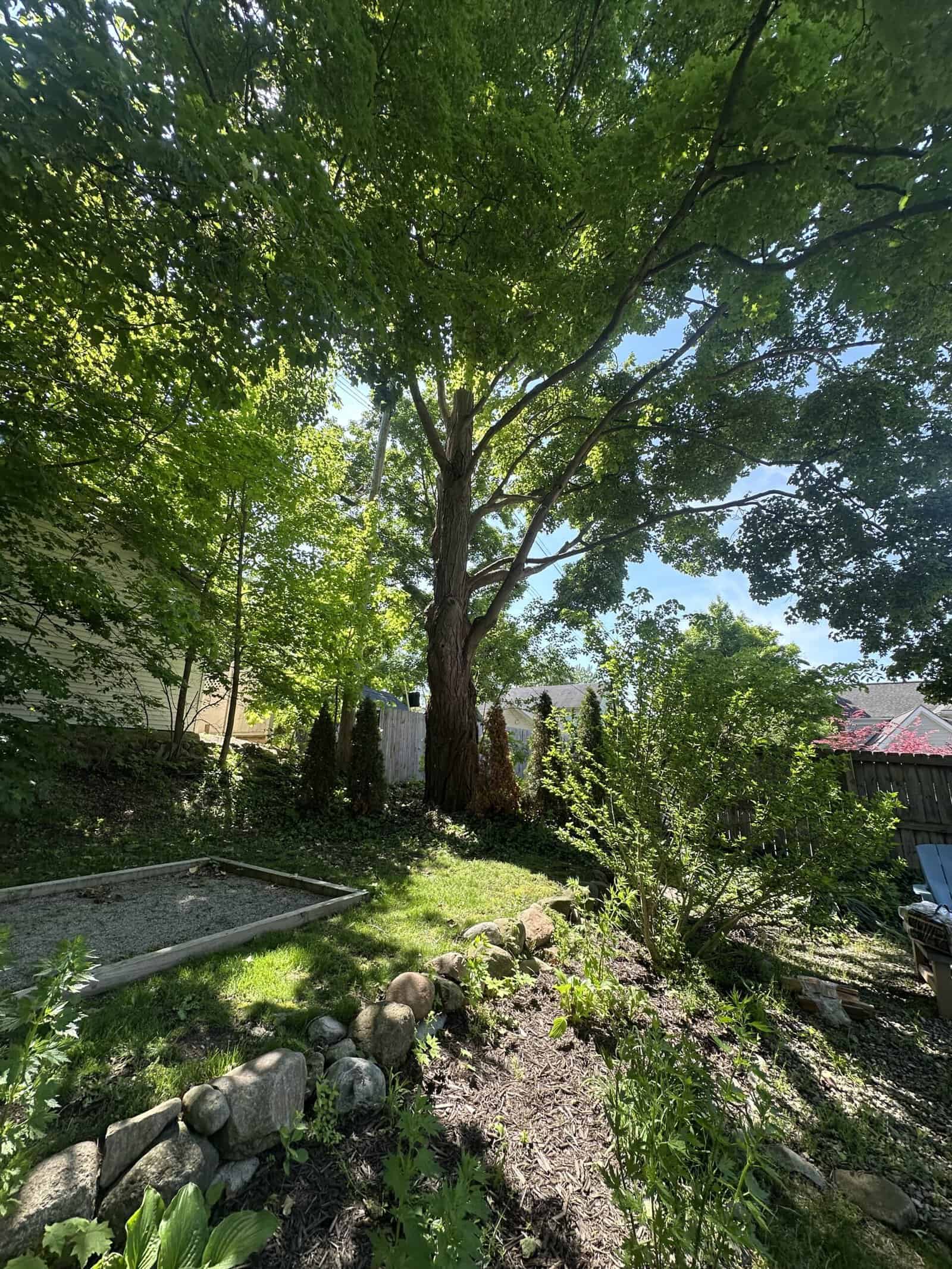
The older neighborhoods around downtown Howell are full of mature sugar maples, white oaks, and black walnuts that have been growing for 40, 50, sometimes 60 years. They’re genuinely beautiful, and they add real value to those properties. But heavy clay soil — which is common throughout Howell and the surrounding townships — limits drainage and affects how roots anchor large trees.
A canopy that’s never been thinned creates leverage problems in that kind of soil. Crown reduction and canopy thinning redistribute weight, reduce wind load, and extend the structural life of trees that would otherwise become hazards. The result is a yard that looks intentional, trees that are structurally sound going into the next season, and one less thing to worry about when the forecast turns ugly.
We’ve been working with Howell and Livingston County homeowners for over seven years. Our company is family-owned — I run field operations and personally train every crew member, not just in technique but in how to communicate clearly with you before, during, and after the job. Cecilia handles scheduling and customer care, so when you reach out, you’re talking to someone who’s actually accountable for what happens next.
What separates us in the Howell and Livingston County market is straightforward: ISA Certified Arborists and TRAQ-qualified risk assessors on the job, ANSI A300-compliant pruning methods, and line-clearance certification for work near utility corridors. Most local tree companies operating in this area can’t say the same. When you ask for proof of credentials or workers’ compensation, we have the answer — and that matters, because without workers’ comp coverage, a homeowner can be personally liable for an injury that happens on their property.
Every job starts with a site walk. We don’t begin work without walking the property with you first and putting a detailed scope in writing. No surprises on the bill. No guessing about what got done.
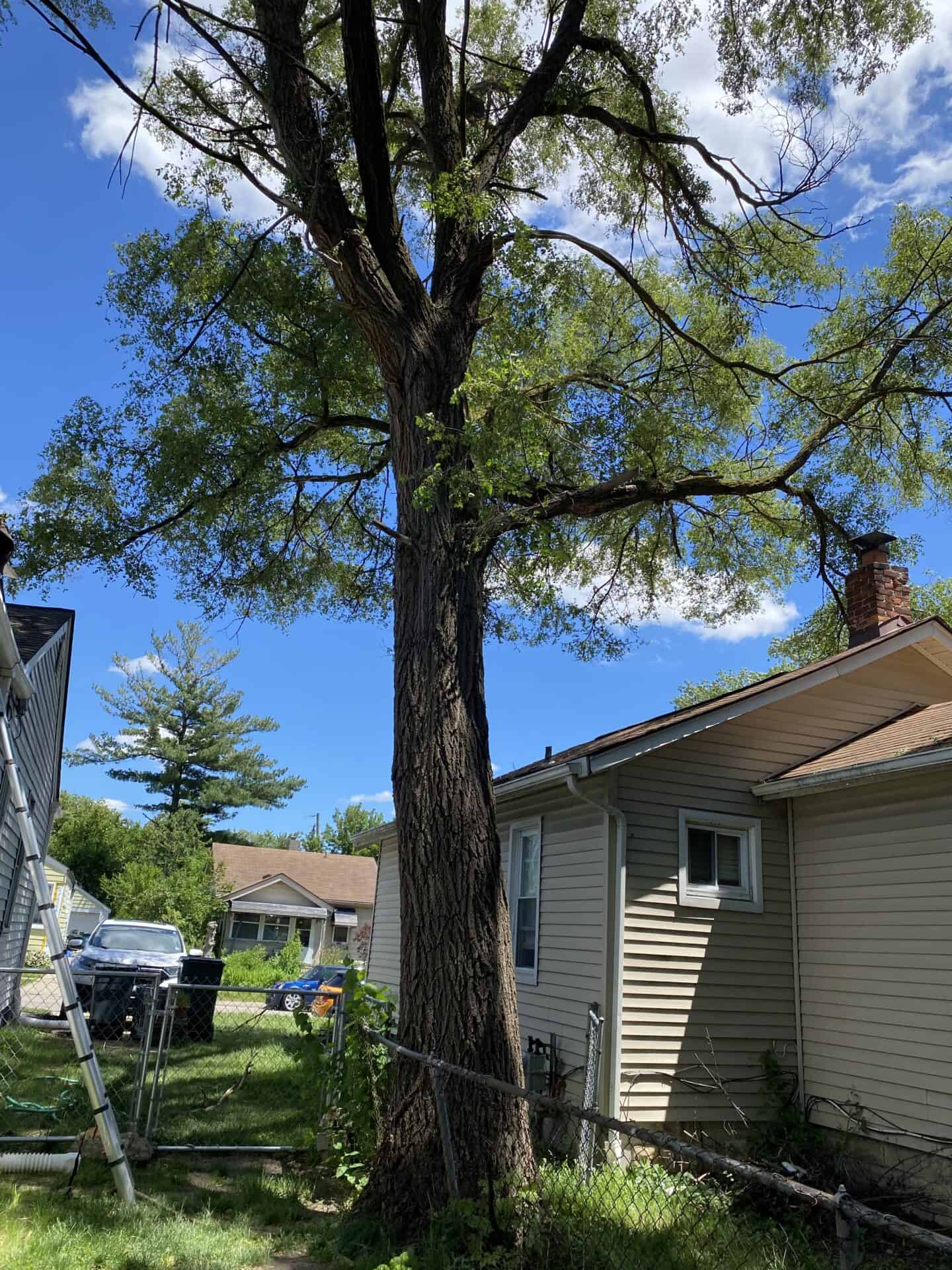
It starts with a conversation and a site walk. Before any equipment comes out, we walk your property with you, look at the trees you’re concerned about, and put together a written scope of work. You know exactly what’s being done, why, and what it will cost. There are no verbal agreements that turn into something different on the day of the job.
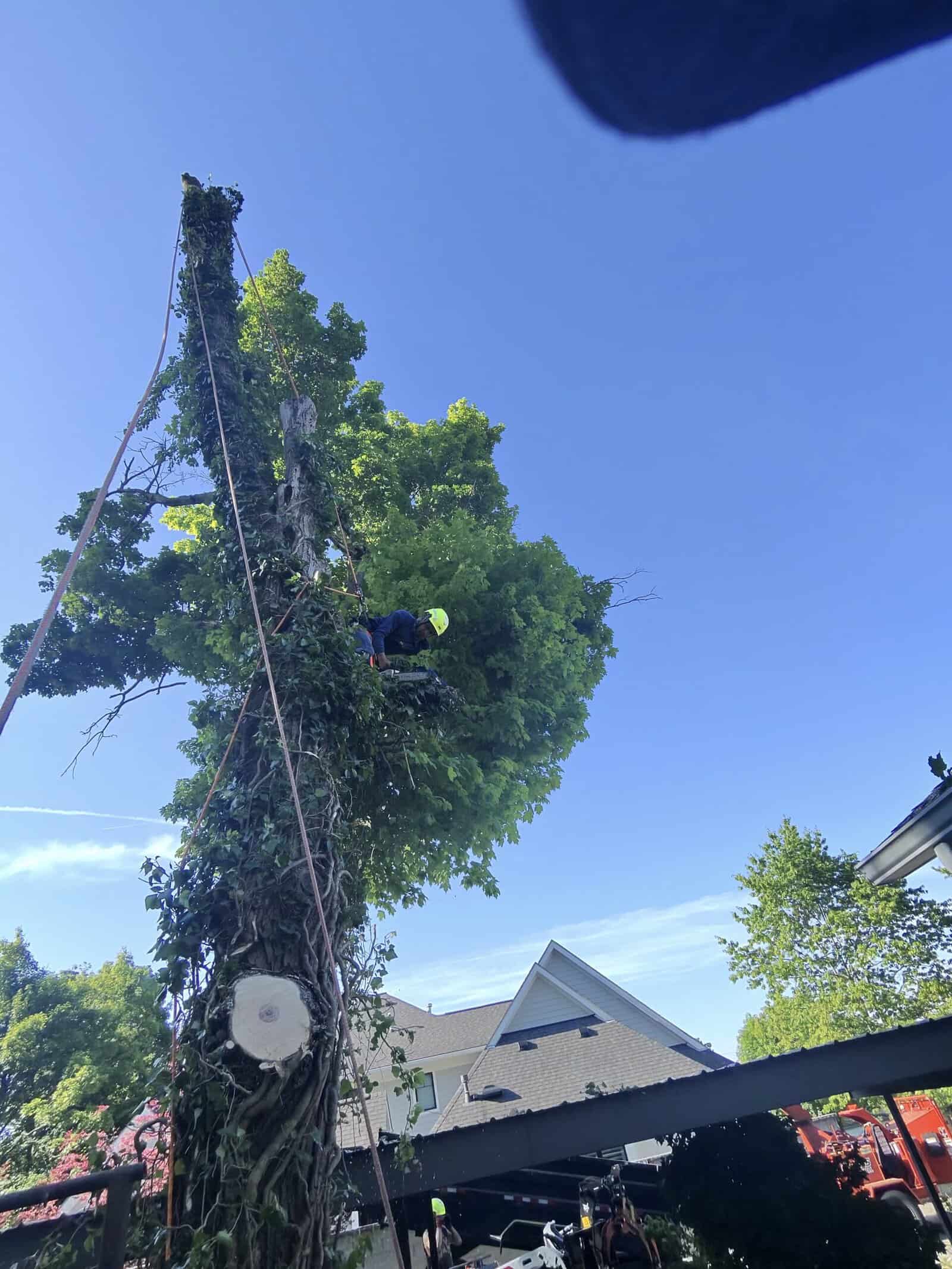
From there, our crew gets to work following ANSI A300 pruning standards — which means crown thinning removes no more than 25% of live foliage in a single session, cuts are made correctly to support the tree’s natural healing response, and nobody is topping your trees or using climbing spikes on trees that are being pruned rather than removed.
If you have oaks on your property, the timing of that work matters significantly. Livingston County has a real oak wilt risk, and our ISA-certified arborists follow the Michigan DNR’s guidance on the pruning window — which runs from November through March — to make sure your trees aren’t exposed to the sap beetles that spread the disease.
One more thing worth knowing: if any of your trees sit in or near the public right-of-way along Grand River Avenue, Michigan Avenue, or any county road, the City of Howell and the Livingston County Road Commission have permit requirements for that work. Our pre-work site walk identifies those situations so you’re not caught off guard. When the job is done, our crew cleans up completely — debris, branches, all of it — and leaves the property in better shape than we found it.
Ready to get started?
Tree pruning covers more ground than most people realize when they first call. Depending on what your trees need, the work might involve crown thinning — selectively removing branches to improve airflow and light penetration through the canopy. It might involve crown reduction, which brings down the overall size of the tree while maintaining its natural shape, rather than the destructive shortcut of topping. It might involve crown raising to clear branches from structures, vehicles, or the sidewalk. And it almost always involves deadwooding — removing dead, dying, or structurally compromised branches that are the first things to fail in a storm.
For Howell homeowners with mature trees on heavy clay soil, canopy weight management is a real structural concern, not just an aesthetic one. A large maple or oak with a dense, unpruned crown on one side creates a serious leverage problem when the ground is saturated after a heavy rain and a strong wind hits. That’s a scenario Livingston County residents know well. Our ISA-certified arborists assess each tree’s structure, root zone, and proximity to your home before deciding what kind of pruning it actually needs.
Cedar Creek Estates, the historic residential streets near downtown, the wooded lots in Howell Township and Marion Township — the character of each property is different, and the pruning plan reflects that. Every job includes full debris removal and cleanup. What you get at the end is a yard that looks like a professional was there, not like a crew just finished and drove away.
Oak wilt is one of the most serious tree diseases in Michigan, and Livingston County has a genuine exposure risk. The disease spreads through sap beetles that become active when temperatures climb above roughly 50°F — which in Howell typically means April through October is a high-risk window for any fresh pruning cuts on oak trees. The Michigan DNR recommends pruning oaks between November 1 and March 31 to avoid that window entirely.
This isn’t a minor technicality. Oak wilt is incurable, and once it takes hold it can move through root grafts to connected trees, wiping out multiple oaks on a single property. If you have white oaks or red oaks in your yard — and many Howell properties do, particularly in older neighborhoods and wooded lots in the surrounding townships — the timing of pruning work genuinely determines whether those trees survive. Our ISA-certified arborists follow this calendar and will never schedule oak pruning during the high-risk months.
For most mature shade trees — the maples, oaks, and similar large-canopy species that define a lot of Howell’s older residential streets — crown thinning every three to five years is the general professional recommendation. That said, the right interval depends on the specific tree, its age, its growth rate, and what’s happening around it.
In Howell, there are a few local factors that can push that timeline earlier. Trees growing in heavy clay soil, which is common throughout the city and surrounding townships, tend to develop surface root issues and canopy imbalance that benefit from more frequent attention. Trees that went through significant ice loading during a hard winter, or that took storm damage during one of Livingston County’s severe weather events, often need corrective pruning sooner than the standard interval would suggest. A site walk with an ISA-certified arborist is the most reliable way to get a straight answer for your specific trees rather than guessing based on a general rule.
For trees on your private residential property in Howell, you generally don’t need a permit to prune or remove them. The City of Howell’s tree regulations under Chapter 22 primarily govern trees in the public right-of-way — the strip of land between your property line and the curb, which often includes street trees.
If any work involves trees in that right-of-way, you’ll need a ROW permit from the City of Howell before work begins. And if your property is on a county road rather than a city street, the Livingston County Road Commission requires a permit for any work within 33 feet of the center of that road. These aren’t obscure rules — they exist to protect public safety and the city’s urban tree canopy, and the City of Howell’s active participation in the Tree City USA program reflects a genuine municipal investment in those standards. Our pre-work site walk identifies right-of-way trees and flags permit requirements before the crew shows up, so you’re not dealing with a compliance issue after the fact.
These terms get used interchangeably, and in casual conversation that’s fine — but they do point to slightly different goals. Trimming is typically used to describe shaping work done for appearance: keeping a tree looking neat, managing its size relative to the house or yard, or cleaning up growth that’s gotten unruly. Pruning is a more precise term that refers to the strategic removal of specific branches to improve the tree’s health, structure, and long-term safety.
In practice, a professional job usually involves both. When our ISA-certified arborists work on a tree in Howell, we’re not just making it look better — we’re evaluating branch structure, identifying deadwood, assessing how the canopy is loaded relative to the root system, and making cuts that support the tree’s natural healing response. That’s the difference between work that helps a tree and work that just changes how it looks for a season. ANSI A300 standards govern how those cuts are made, and following them is what separates a qualified arborist from someone who showed up with a chainsaw.
Yes, and it happens more often than most homeowners realize. The most common form of damaging pruning is topping — cutting large branches back to stubs without regard for the tree’s structure or biology. It’s sometimes marketed as a way to make a tree “safer” or reduce its size, but it does the opposite. Topping creates large, open wounds that the tree struggles to close, inviting decay fungi and disease. The regrowth that follows is structurally weak, growing from just beneath the cut with no strong attachment to the branch it grew from. Within a few years, a topped tree is often more dangerous than it was before the work was done.
Over-pruning is also a real risk. ANSI A300 standards specify that no more than 25% of live foliage should be removed in a single pruning session for most mature trees. Removing more than that puts the tree under significant stress, weakening its ability to produce energy and defend itself against insects and disease. For Howell homeowners with mature oaks and maples that have been growing for decades, a single bad pruning job from an unqualified crew can undo years of healthy development — or trigger a decline that ends with an expensive emergency removal.
The most reliable thing you can ask for is ISA Certified Arborist credentials. The International Society of Arboriculture maintains a public directory where you can verify any arborist’s certification by name. It’s not a marketing claim — it’s a verifiable credential that requires passing a comprehensive exam and ongoing continuing education. Most tree companies operating in Howell don’t prominently advertise this credential because most don’t hold it.
Beyond credentials, ask for proof of general liability insurance and workers’ compensation coverage before anyone sets foot on your property. This is not optional. If an uninsured worker is injured on your property during tree work, your homeowner’s insurance may not cover it, and you can be personally sued. A qualified company hands over that documentation without hesitation. You should also expect a written estimate with a detailed scope of work before any work begins — not a verbal agreement on the day of the job. We provide all of this as standard practice, not as something you have to negotiate for.
Other Services we provide in Howell
