Hear from Our Customers
When a tree comes down the right way, you stop worrying about it. No more checking the sky every time a storm warning pops up on your phone. No more wondering if that lean got worse over winter. The job gets done, the debris disappears, and your property looks like the tree was never there.
For homeowners in Howell’s Downtown Historic District, that peace of mind is especially meaningful. The Victorian and Craftsman-era homes along those older residential streets sit beneath trees that have been growing for 50, 60, sometimes 80 years. They’re part of what makes the neighborhood look the way it does — but they’re also aging infrastructure. When one of those trees is compromised, it’s not just a yard issue. It’s a structural threat to a home that can’t easily be replaced.
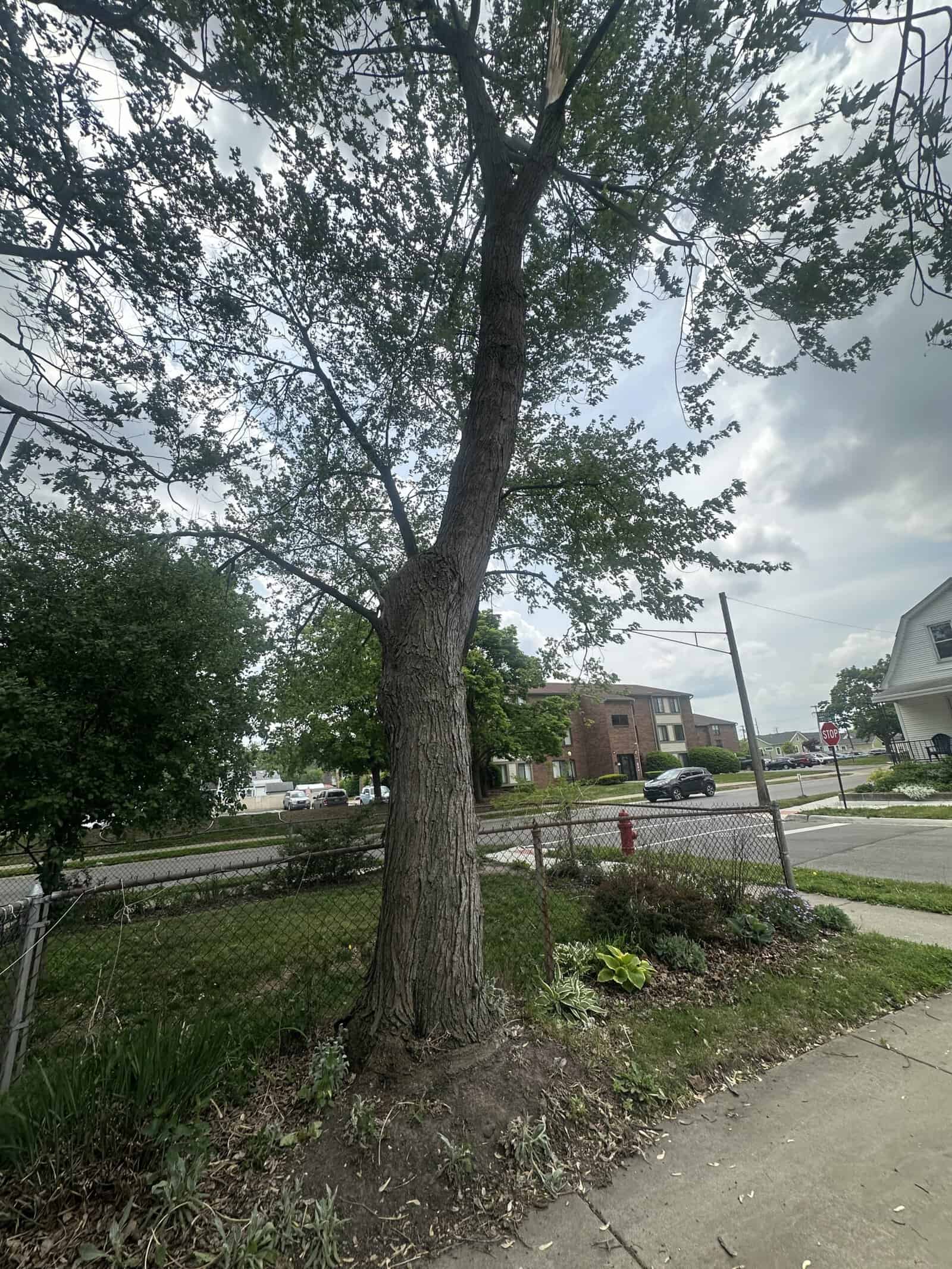
Howell’s heavy clay soil makes this more complicated than it looks from the street. Clay limits drainage, which saturates root systems over time and reduces how well a tree is anchored in the ground. A tree that appears completely healthy on the outside can have a root system that’s been quietly failing for years. Removing it before it falls — rather than after — is the difference between a planned job and an emergency one.
We’re a family-owned company based in Milford — just across the county line from Howell — and have been serving the southeast Michigan area for over seven years. Ivan leads every field operation personally. Cecilia handles scheduling and client communication, which means when you reach out, you’re talking to someone who actually knows what’s going on with your job.
What separates us from most of the local competition isn’t just experience — it’s credentials. Our team includes ISA Certified Arborists and TRAQ-qualified risk assessors, meaning tree risk isn’t eyeballed. It’s evaluated using a formal, science-backed methodology. In a Howell market where Livingston County was one of the first six Michigan counties to confirm emerald ash borer, that level of assessment matters. Dead and dying ash trees don’t always look dangerous until they are.
We’re also trained and certified to work near electric poles and utility lines — a specific capability that most local tree companies don’t have and don’t advertise, but that comes up constantly in Howell’s older neighborhoods where mature trees have grown into utility corridors over decades.
It starts with a real on-site visit — not a phone estimate, not a ballpark figure based on a photo you text over. Someone from our team comes to your property, walks the site with you, looks at the tree, and assesses what’s actually going on. That includes the condition of the tree, what’s around it, how close it sits to your home, your fence, your neighbor’s property, and whether there are power lines in the work zone. You get a clear, written estimate before anything is agreed to.
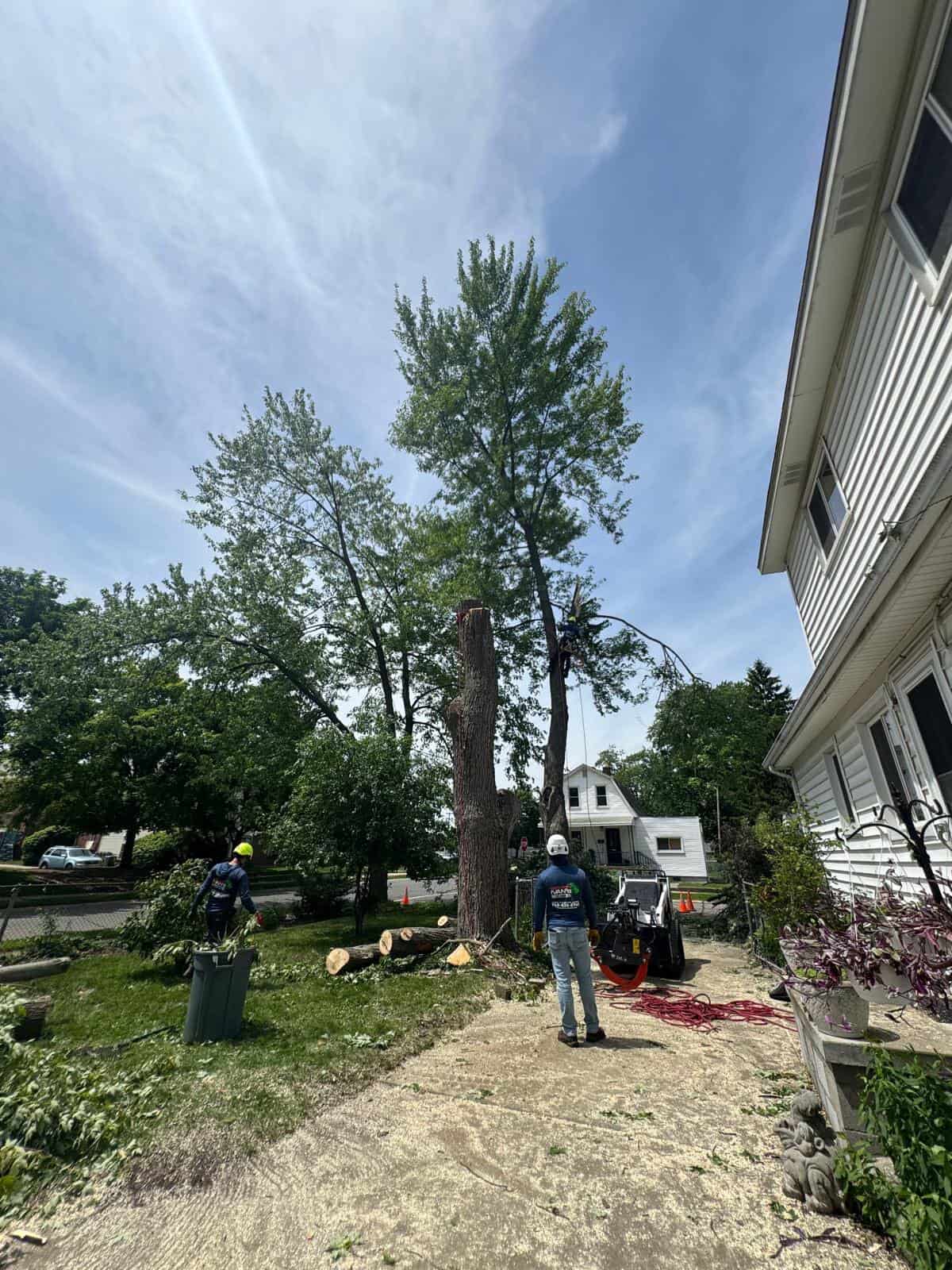
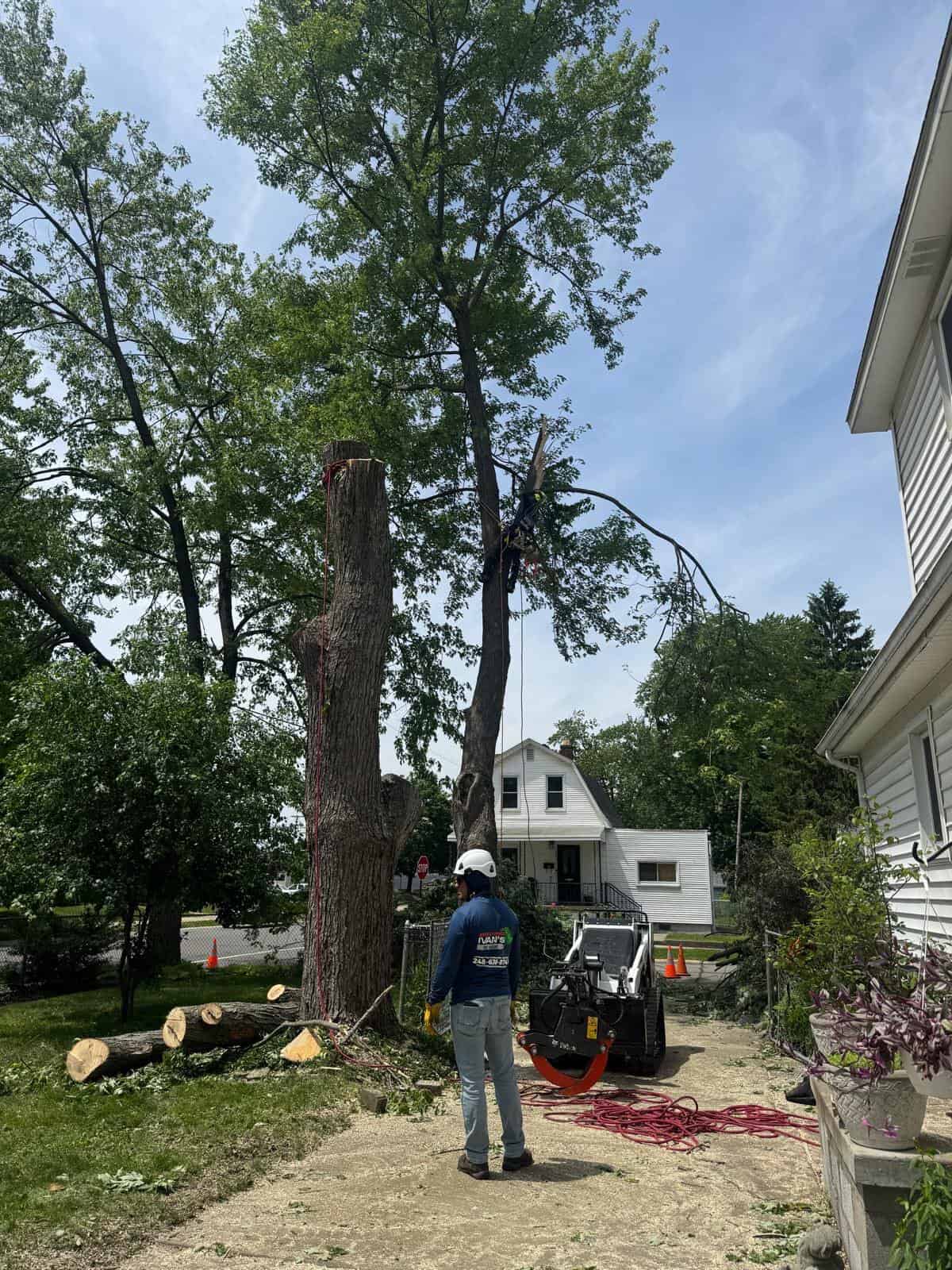
Once the job is scheduled, our crew arrives with the right equipment for the scope of the work. For trees in tighter spaces — like the narrower lots in Howell’s historic neighborhoods — that means careful rigging and controlled lowering rather than just dropping the tree and hoping for the best. For larger properties in Howell Township with more room to work, the approach changes accordingly. The process adapts to what’s actually in front of the crew, not a one-size-fits-all method.
One thing worth knowing if you’re in a newer subdivision: Howell-area HOAs frequently impose tree removal restrictions that go beyond what the city itself requires. We can help you understand what applies to your property before work begins, so you’re not dealing with a fine or a replanting requirement after the fact. When the job is done, all debris is removed and the site is cleaned up. That’s included, not an add-on.
Ready to get started?
We handle the full range of tree removal situations that come up for Howell homeowners. That includes standard removal of dead, dying, or unwanted trees; hazardous tree removal for trees that pose an active risk to your home or property; and emergency tree removal when something comes down in the middle of the night during a storm. Our 24/7 emergency response isn’t a line in the marketing — Howell has taken real hits from severe weather, including the kind of ice events that devastated Livingston County in March 2025, and when a tree is across your driveway or on your roof, you need someone who will actually show up.
Stump grinding is available as well, and it’s worth knowing upfront that it’s a separate service from tree removal — the stump doesn’t automatically come with the job unless it’s specifically included in your estimate. We’ll make that clear before anything is agreed to, so there are no surprises after the crew leaves.
For properties in Howell Township with wooded acreage, we also offer lot clearing. If you’re dealing with an ash tree that’s been compromised by emerald ash borer — a documented, ongoing issue throughout Livingston County — we can assess it and remove it before it becomes a liability. Every job ends with full debris removal and site cleanup. Your yard should look like the tree was never there, and that’s the standard we hold ourselves to on every single job.
For most residential tree removals within Howell city limits, a permit is not required — but there are situations where it is, and they’re worth knowing about before you start. Trees located within a public utility easement or right-of-way are subject to different rules and may require coordination with the City of Howell or the utility company before any work happens. New construction or development projects governed by zoning may also trigger permit requirements.
One thing that trips up a lot of Howell homeowners is the distinction between the City of Howell and Livingston County. The Livingston County Building Department does not handle permitting for properties inside city limits — the city manages that directly. If your property is in Howell Township rather than the city itself, the rules may differ again. And if you’re in a subdivision with an HOA, there’s a good chance your HOA covenants impose restrictions beyond what either the city or the county requires. Violating those can mean fines or mandatory replanting at your expense. We can help you figure out what applies to your specific property before anything is scheduled.
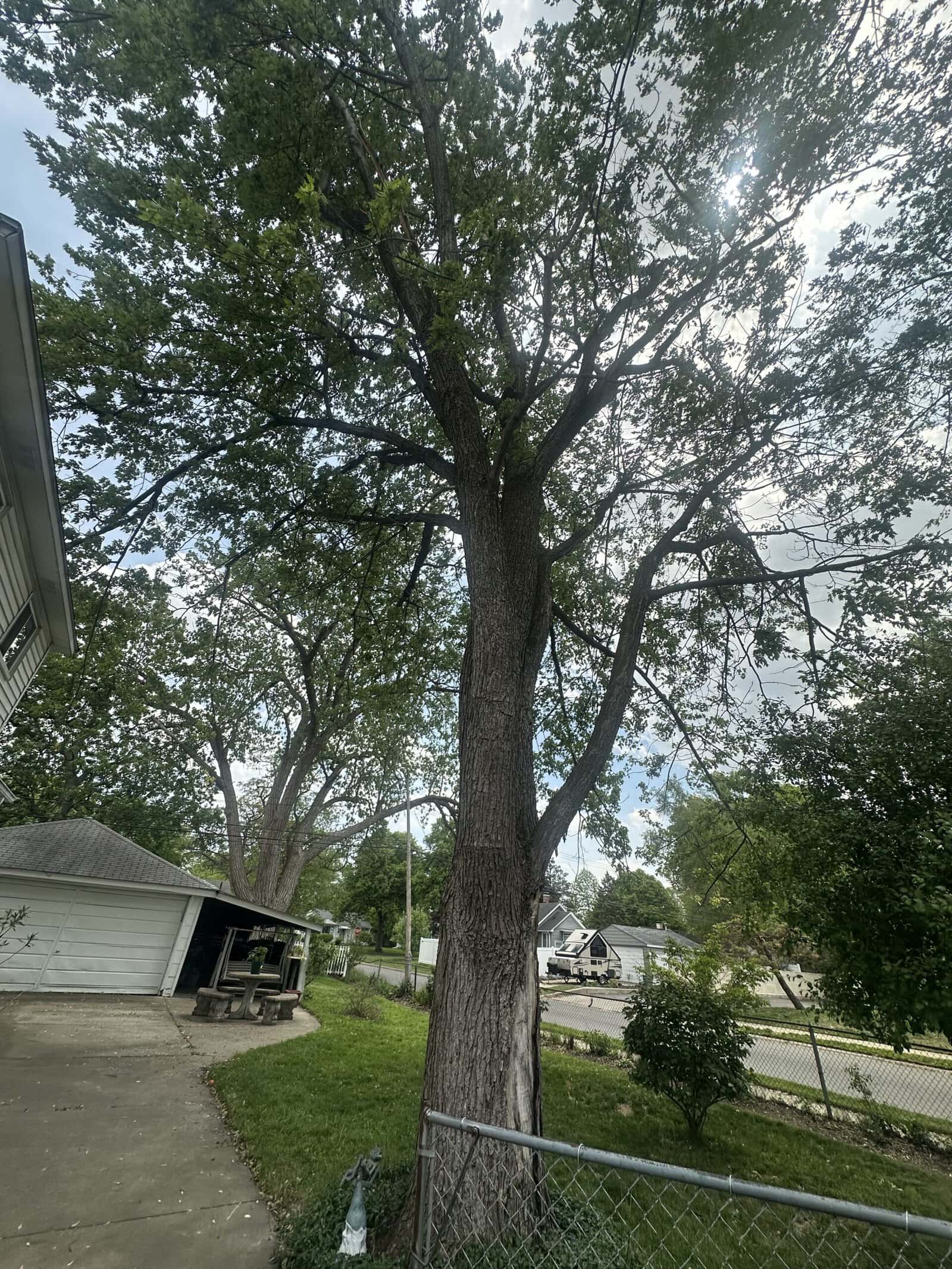
This is one of the most common questions we hear, and the honest answer is that you often can’t tell from the outside. A tree can look completely intact while the internal structure is compromised — internal decay, root damage from saturated soil, or vascular destruction from emerald ash borer larvae don’t show up until you know what to look for.
In Howell specifically, the clay soil conditions create a situation where root systems are regularly stressed by poor drainage and saturation. A tree that’s been sitting in waterlogged clay for years may have significantly reduced anchoring depth without any visible sign of it above ground. A new lean, especially after a storm or a wet spring, is a serious warning sign — particularly if you notice the soil heaving or lifting near the base of the tree. Cracks in the trunk, large dead branches concentrated in the upper crown, and fungal growth at the base are also indicators that something is wrong. The only way to know for certain is a professional assessment. Our team includes TRAQ-qualified risk assessors who use a formal methodology to evaluate structural risk — not a gut call.
Stump removal is not automatically included in tree removal — this surprises a lot of homeowners, and it’s worth being clear about upfront. When a tree is cut down, the stump remains unless stump grinding is specifically added to the scope of work and included in your estimate. These are two separate services.
Stump grinding involves using specialized equipment to grind the stump down below the surface, typically 6 to 12 inches deep, leaving behind wood chips that can be used as mulch or raked away. It does not remove the entire root system, but it eliminates the visible stump and allows the area to be graded, seeded, or replanted. For homeowners in Howell’s historic neighborhoods with smaller lots and tighter landscaping, leaving a stump in place isn’t usually a practical option — it affects curb appeal, creates a tripping hazard, and can attract insects as it decays. We offer stump grinding as part of the overall job when it’s requested, and the estimate will clearly spell out whether it’s included so there’s no confusion after the crew leaves.
Yes — but it requires specific training that not every tree company has. Working near energized power lines is one of the higher-risk scenarios in tree removal, and most local operators either avoid it or underestimate what it takes to do it safely. Our team is trained and certified for power line proximity work, which is a specific credential, not just a general claim about experience.
This comes up regularly in Howell’s older neighborhoods, particularly around the Downtown Historic District and the established residential streets near Grand River Avenue, where mature trees have been growing alongside utility corridors for decades. In some cases, branches have grown directly into the lines over the years. Removing those trees requires controlled rigging, careful directional cutting, and coordination with the utility infrastructure — not just a standard felling approach. If you have a tree near a power line and you’re not sure whether it can be removed safely, the right first step is an on-site assessment. We can evaluate the situation and tell you exactly what the job involves before any commitment is made.
The first thing to do is stay away from the tree, especially if it’s anywhere near a power line. If the tree has brought a line down or is in contact with one, treat the area as live and call your utility provider before anything else. Don’t assume a downed line is de-energized just because it’s not sparking.
Once it’s safe to assess the situation, call for emergency tree removal. We offer 24/7 emergency response for exactly this scenario — Howell and the surrounding Livingston County area see significant storm activity, from summer thunderstorms with high winds to ice events like the one in March 2025 that caused widespread tree damage across the region. If the fallen tree has damaged your home, document everything with photos before any removal begins. Your homeowners insurance may cover storm-related tree removal if the tree fell due to a covered event and damaged a structure — but removing the tree before an insurance adjuster visits can potentially affect your claim. Call your insurer first if there’s structural damage involved, then coordinate the removal timing from there.
Local tree service companies operating in the Howell area have noted that tree removal in this market typically ranges from $400 to $1,800, depending on the size of the tree, its location on the property, and what the job involves. Nationally, averages tend to run higher — most data sources put the typical range between $630 and $906 for a standard removal, with larger trees or more complex situations pushing well beyond that.
What drives the cost up or down comes down to a few factors: the size and species of the tree, how close it sits to your home or other structures, whether it’s near a power line, whether stump grinding is included, and how much debris needs to be hauled away. Emergency removal — after a storm, for instance — typically costs more than a planned job because of the urgency and after-hours response involved. We provide free, on-site estimates with no obligation to commit. The estimate will be written and itemized, so you know exactly what’s included before any work begins. There are no hidden fees added after the fact.
Other Services we provide in Howell
