Hear from Our Customers
A lot of homeowners in Howell get mulch installed and wonder a few weeks later why it looks the same as before — weeds pushing through, beds drying out, color already fading. That’s usually not a mulch problem. It’s an installation problem. Depth matters. Bed prep matters. And if you’ve got mature trees on your property, what goes around those trunks matters more than most people realize.
Howell has a real mix of housing stock. The historic neighborhoods near Grand River Avenue have trees that have been growing for decades — root systems that are both an asset and a vulnerability. Then there are the newer builds out in Howell Township, places like Tamarack Place and Marion Oaks, where new plantings are still getting established and need consistent moisture and temperature protection to survive Michigan’s first few freeze-thaw cycles. Both situations call for mulch, but not the same approach.
When it’s installed correctly — two to three inches deep, beds prepped beforehand, root flares left exposed — mulch does real work. It can reduce weed germination by up to 90% through the growing season. It cuts soil moisture evaporation significantly, which matters when Howell summers push into the mid-80s and your plants are fighting for water. In the fall, that same layer protects root systems when temperatures start swinging hard — something Livingston County homeowners deal with every year.
We’re based in Oakland and serve Howell and the broader Livingston County area. Ivan started his career as a groundman in California — learning rigging, climbing, pruning, and tree health from the ground up — before relocating to Michigan and building the company alongside his fiancée, Cecilia. Ivan leads every field job. Cecilia handles scheduling and communication. There’s no middleman, no franchise structure, no crew showing up without anyone accountable on-site.
The certified arborists on our staff are what separate us from a standard landscaping crew. Mulch installed by someone with tree science training isn’t just mulch placed in a bed — it’s applied with an understanding of how it interacts with root systems, soil temperature, and long-term tree health. That matters everywhere, but it matters especially in Howell, where established neighborhoods near Thompson Lake and the historic downtown have mature trees that took generations to grow.
We carry general liability insurance and workers’ compensation, provide written estimates valid for 30 days, and have verified reviews on Google, Angi, and HomeAdvisor consistently calling out fair pricing and professional communication. That’s the baseline you should expect from anyone working on your property.
It starts with a written estimate. You reach out, describe what you’re working with — bed size, current condition, whether there are trees involved — and we put together a quote in writing before anything happens. No verbal agreements, no numbers that change at the end of the job. The estimate is valid for 30 days, so you have time to plan without pressure.
Once you’re ready to move forward, timing is part of the conversation. In Howell, the spring mulch window runs roughly late April through mid-May. That’s when soil has warmed enough that mulch won’t trap cold and delay plant growth, but early enough to lock in moisture before summer heat sets in. Howell’s last frost typically falls around May 5 to 10, so that window is real and it’s narrow. If you’re thinking about it, earlier contact gives you more flexibility on scheduling.
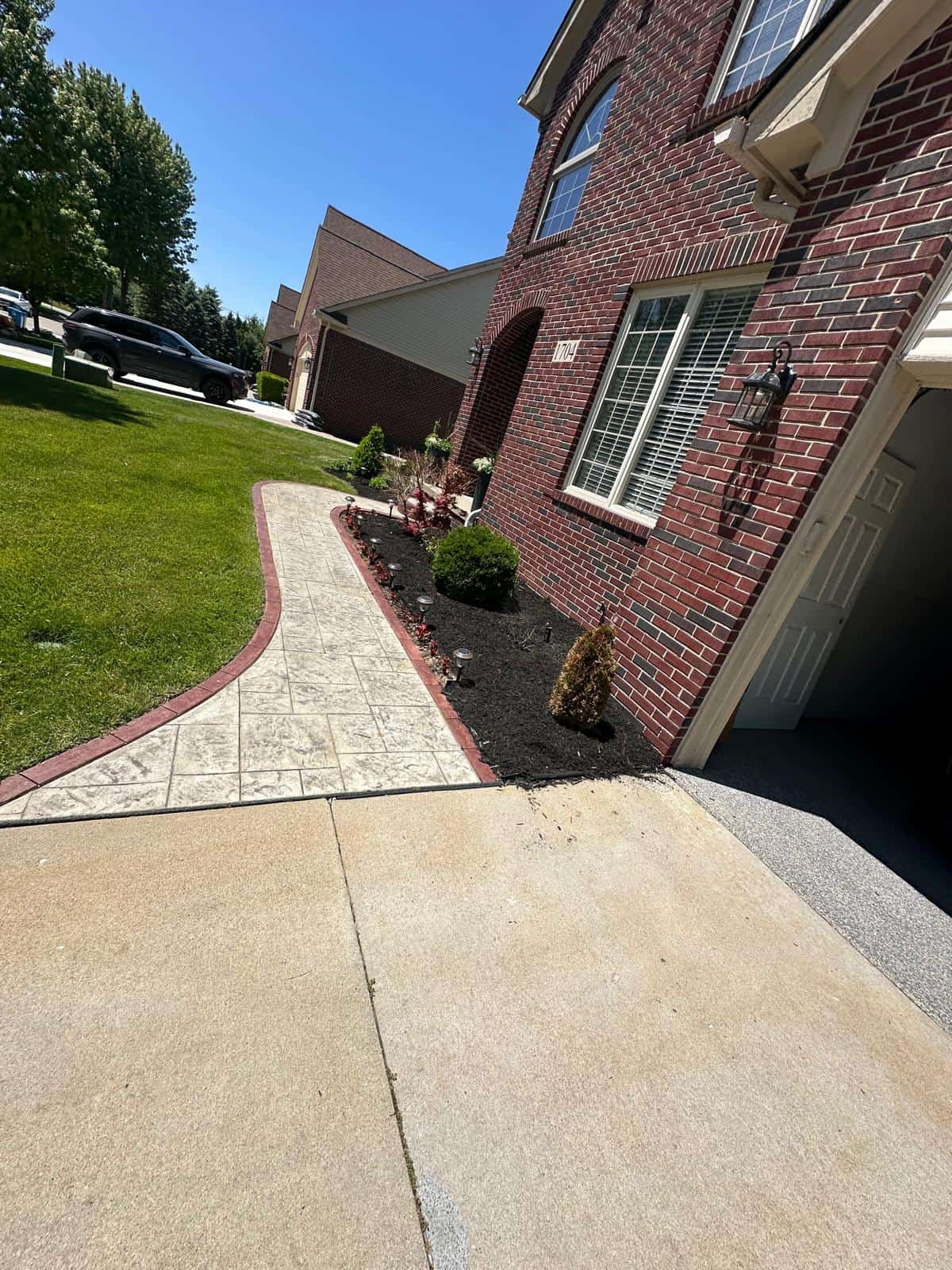
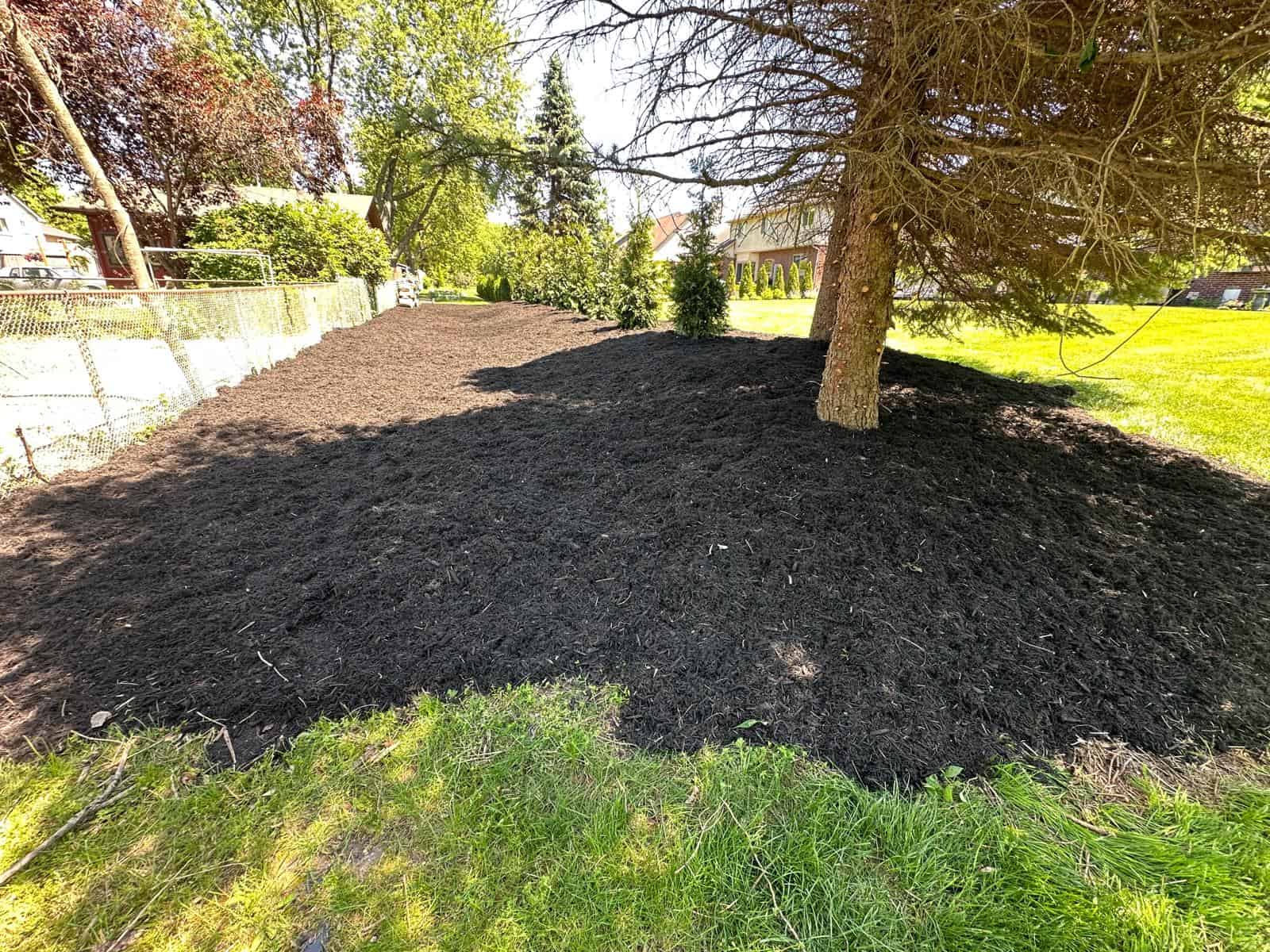
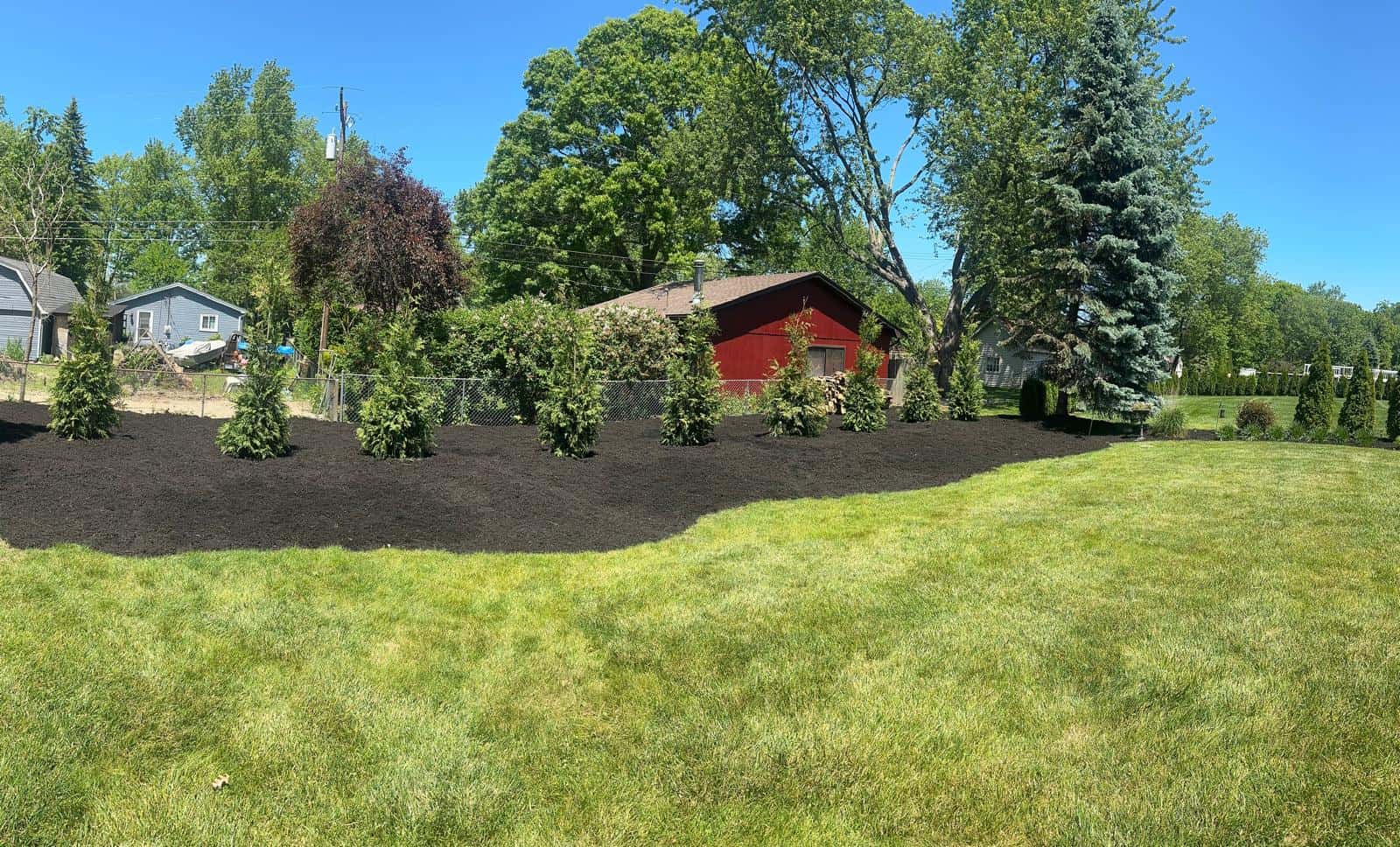
On the day of the job, our crew handles bed preparation first — clearing debris, addressing any issues in the existing mulch layer — before anything gets spread. Mulch goes down at two to three inches of depth, root flares stay exposed on any trees in or near the beds, and the work gets done cleanly. If you’ve recently had a tree removed or a stump ground, we can follow up with mulch and topsoil in the same visit, so you’re not coordinating a second crew to restore what the tree work disrupted.

Ready to get started?
We offer bulk mulch delivery and installation in Howell, MI — including repurposed wood chip mulch sourced from our own tree removal and trimming operations. These arborist wood chips, which contain bark and leaf material, are considered among the best mulch materials available for trees and garden beds according to ISA research. For homeowners in Howell who want something more useful than dyed bagged mulch from a big-box store, this is a meaningful difference.
Our service covers residential mulch installation across Howell’s range of property types — from older homes with established beds in the historic downtown district to newer construction in Howell Township where landscaping is still being built out. Bed preparation is part of the job, not an afterthought. That includes clearing existing debris and raking down any compacted layers before new mulch goes in. Skipping that step is one of the most common reasons mulch underperforms.
We also offer mulch as part of a broader landscape restoration package that includes topsoil installation — particularly useful after tree removal or stump grinding, when the surrounding yard needs attention. If you’re dealing with a disrupted area in your yard from recent tree work, that combination handles the full scope in one service call. No need to find a separate landscaper for the follow-up work.
In Howell, the spring mulch window runs from late April through mid-May. That timing matters more than most people think. Livingston County’s last frost date typically falls around May 5 to 10, and applying mulch too early — before the soil has had a chance to warm — can actually insulate cold ground and slow plant growth. You want to hit that window after the soil has started warming but before summer heat begins pulling moisture out of your beds.
Fall is the second good window, typically after the first hard frost in mid-October. At that point, mulch shifts from a moisture-retention tool to a root protection layer — buffering against the freeze-thaw cycles that Howell gets consistently through winter. With an average of 36 inches of snow per year, those cycles are real and they do real damage to unprotected root systems, especially on newer plantings. If you missed the spring window, fall installation is worth doing.
The ISA standard is two to three inches of organic mulch for most applications. That depth is enough to suppress weeds, retain moisture, and regulate soil temperature without creating problems. Going deeper — especially piling mulch six or more inches against a tree trunk — is one of the most common mistakes homeowners make, and it’s one of the most damaging. That practice is called volcano mulching, and it traps moisture against the bark, promotes rot, and can slowly kill a mature tree over several years.
For trees specifically, the root flare — the visible base where the trunk widens into the root system — needs to stay exposed. Mulch should never be packed against the trunk itself. The ring should extend outward toward the dripline of the tree where possible, giving the root zone coverage without suffocating the base. In Howell’s historic neighborhoods, where some trees have been growing for a century or more, getting this detail right is the difference between protecting an irreplaceable asset and quietly damaging it.
Not always, but it depends on what’s underneath. If the existing mulch layer is healthy — no visible mold, no fungal growth, no signs of pest activity — you don’t need to remove it entirely. What you do need to do is rake and aerate it before adding anything on top. Mulch that’s been sitting for a season or more can compact and mat together, which blocks water from reaching the soil below. Spreading new mulch over a compacted layer just adds depth without adding function.
If the existing layer is already at two to three inches after raking, you may only need a light top-dress to bring it back to the right depth. If it’s broken down significantly — which happens faster in Michigan’s humid summers — you’ll want a fuller application. Our crew will assess the existing condition before anything gets spread, so you’re not paying to add mulch on top of mulch that’s already doing its job.
That depends on the size and number of your beds, the depth you’re targeting, and what’s already there. The standard calculation is one cubic yard of mulch per 100 square feet at a three-inch depth. A typical residential property in Howell with a few garden beds around the foundation and a couple of tree rings might need anywhere from three to eight cubic yards, but larger lots — especially in Howell Township where properties tend to run bigger — can need considerably more.
Rather than trying to calculate it yourself, the written estimate process handles this. We’ll assess your beds, factor in existing depth, and give you a clear number before any work begins. What you want to avoid is guessing low and ending up with thin coverage that breaks down in a few weeks, or guessing high and paying for material you don’t need. Getting the cubic yardage right upfront is part of what makes professional installation worth the call.
It’s not overstated — but it depends on the depth and the installation. A two to four inch layer of organic mulch can reduce weed germination by up to 90% through the growing season. That’s a significant reduction, not a minor one. The mechanism is straightforward: weed seeds need light to germinate, and a proper mulch layer blocks that light from reaching the soil surface. It doesn’t eliminate every weed, but it dramatically reduces the volume and frequency of what you’re pulling through spring and summer.
Where homeowners get disappointed is when mulch is applied too thin — one inch or less — or when existing weeds aren’t addressed before installation. If weeds are already established in a bed, mulch slows new growth but doesn’t eliminate what’s already rooted. Bed prep before installation handles that. For Howell homeowners managing larger lots or beds that have been neglected through a season, that prep step is what makes the difference between mulch that works and mulch that looks okay for three weeks.
Yes, and it’s one of the more practical combinations we offer. When a tree comes down — or a stump gets ground — the surrounding area usually needs attention. There’s often bare soil, disrupted ground cover, and beds that look worse than before the work started. We can follow up tree removal or stump grinding with mulch installation and topsoil in the same service relationship, so you’re not hunting for a separate landscaping crew to handle the restoration.
This matters in Howell specifically because a lot of the tree work in the area comes after storm damage — ice storms and wind events are common in Livingston County through late winter and early spring, and they generate emergency calls that leave yards in rough shape afterward. Having one company that handles the tree work and the landscape restoration simplifies the whole process. You get one written estimate covering the full scope, one crew that knows the property, and one less thing to coordinate when you’re already dealing with the aftermath of a downed tree.
Other Services we provide in Howell
