Hear from Our Customers
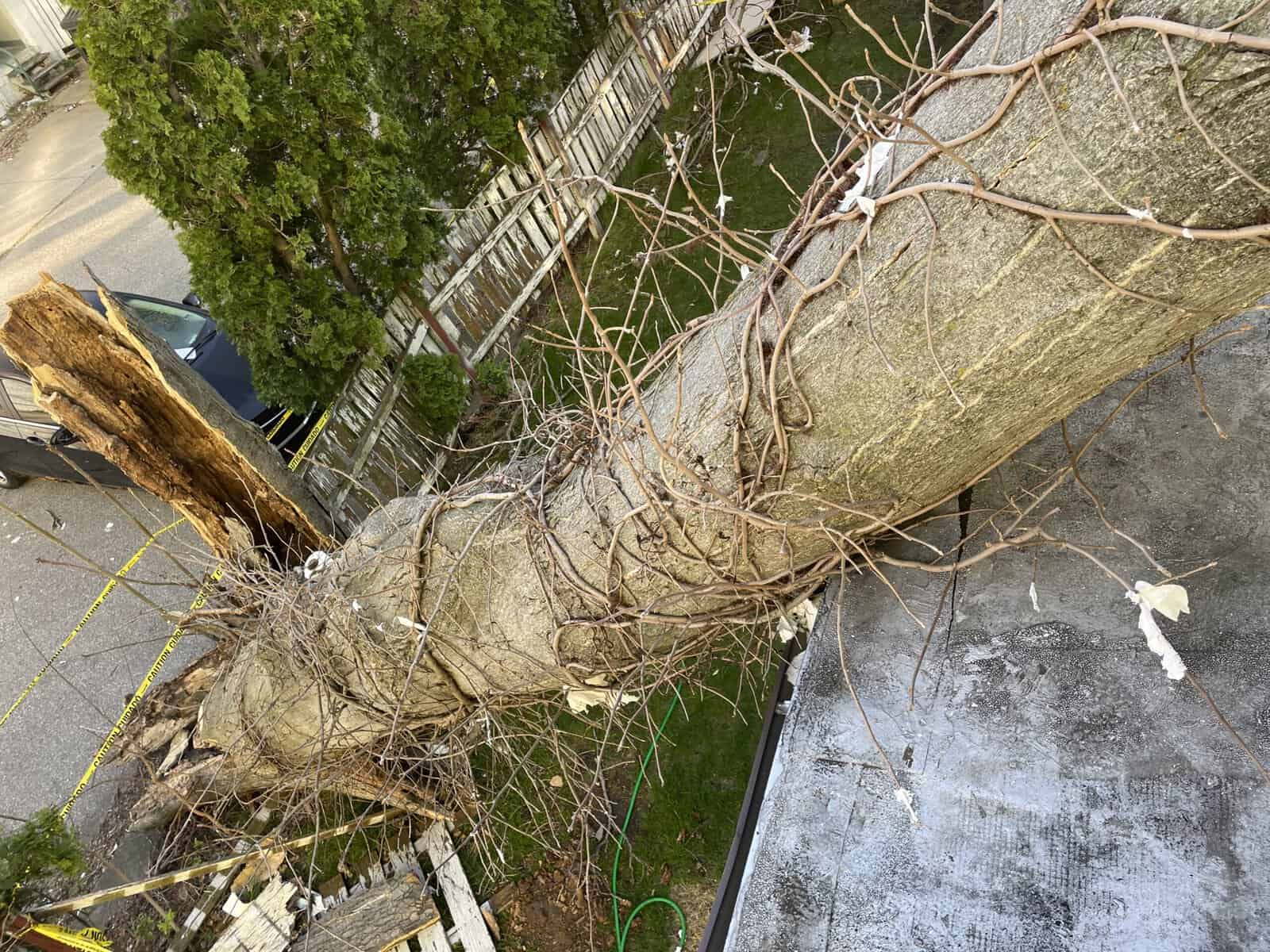
After a storm rolls through Troy, the visible damage is only part of the problem. A fallen limb on your fence is obvious. What’s harder to spot is the silver maple in your backyard that’s still standing but has a root ball that shifted six inches out of the ground. In Oakland County’s heavy clay soil, shallow root systems are the norm — and a tree that looks stable after a storm can fail completely a week later. Getting a professional assessment isn’t overcautious. It’s the only way to actually know.
Troy’s older neighborhoods — the subdivisions built along Livernois and Coolidge in the 1950s and 1960s, and the areas that expanded northward toward Long Lake through the 1980s — are carrying tree stock that’s now 50 to 70 years old. Silver maples planted in those decades are structurally brittle under wind stress. Ash trees throughout Oakland County have been hit hard by the Emerald Ash Borer, leaving standing dead wood scattered through neighborhoods like Old Troy and Northfield Hills. These aren’t trees that lose a branch in a storm. They fail structurally — and when they do, they fall toward whatever is closest.
The outcome you’re looking for isn’t just “tree removed.” It’s knowing the job was done safely, the property is clean, and there are no compromised trees left standing that are going to become next season’s emergency. That’s what a qualified, credentialed crew delivers — and that’s exactly what we build every job around.
We’ve been serving Troy and the broader Metro Detroit area for over seven years. Our crew isn’t just licensed and insured — we include expert arborists and TRAQ-qualified risk assessors on every significant job. TRAQ certification means a professional, documented tree risk assessment, not a crew member’s gut feeling about whether your storm-damaged oak is safe.
One credential that sets us apart in the Troy market specifically: line-clearance arborist certification. Troy’s residential corridors — Livernois, Coolidge, Rochester Road, Big Beaver Road — run alongside dense overhead utility infrastructure. On March 30, 2025, a storm put a tree down on wires near Livernois and Wendelton. Most tree companies that showed up to jobs like that had to stop at the property line. Our crews didn’t. Line-clearance certification means we’re trained, equipped, and insured to work safely around energized power lines — a capability most competitors in this market simply don’t have.
We’re based in Oakland, MI, connected to Troy directly via I-75. When Oakland County gets hit, we’re already moving.
When you call us after a storm, the first thing that happens is a real conversation — not a voicemail callback two days later. For genuine emergencies, we respond 24 hours a day. You describe what happened, we ask the right questions, and we give you an honest read on urgency before anyone drives out.
Once on-site, our crew walks the property with you before any equipment comes out. This isn’t a formality — it’s how we operate on every job. In Troy, that walkthrough matters more than most places. Homes in Beach Forest and Bailey’s Vineyards sit on large lots with mature canopies and significant landscaping investments. A removal plan that doesn’t account for what’s around the tree is a plan that creates new damage while fixing the original problem. The site assessment covers the fallen or damaged tree, any secondary hazards like hanging limbs or root-compromised neighbors, and whether utility lines are involved.
From there, you get a written estimate before any work starts. The removal is sequenced to protect your property, and cleanup is included — not as an add-on, not as a separate call. When we leave, the site is clean. If your situation involves a right-of-way tree or a question about what Troy’s Department of Public Works handles versus what falls on the homeowner, we can help you navigate that too.
Ready to get started?
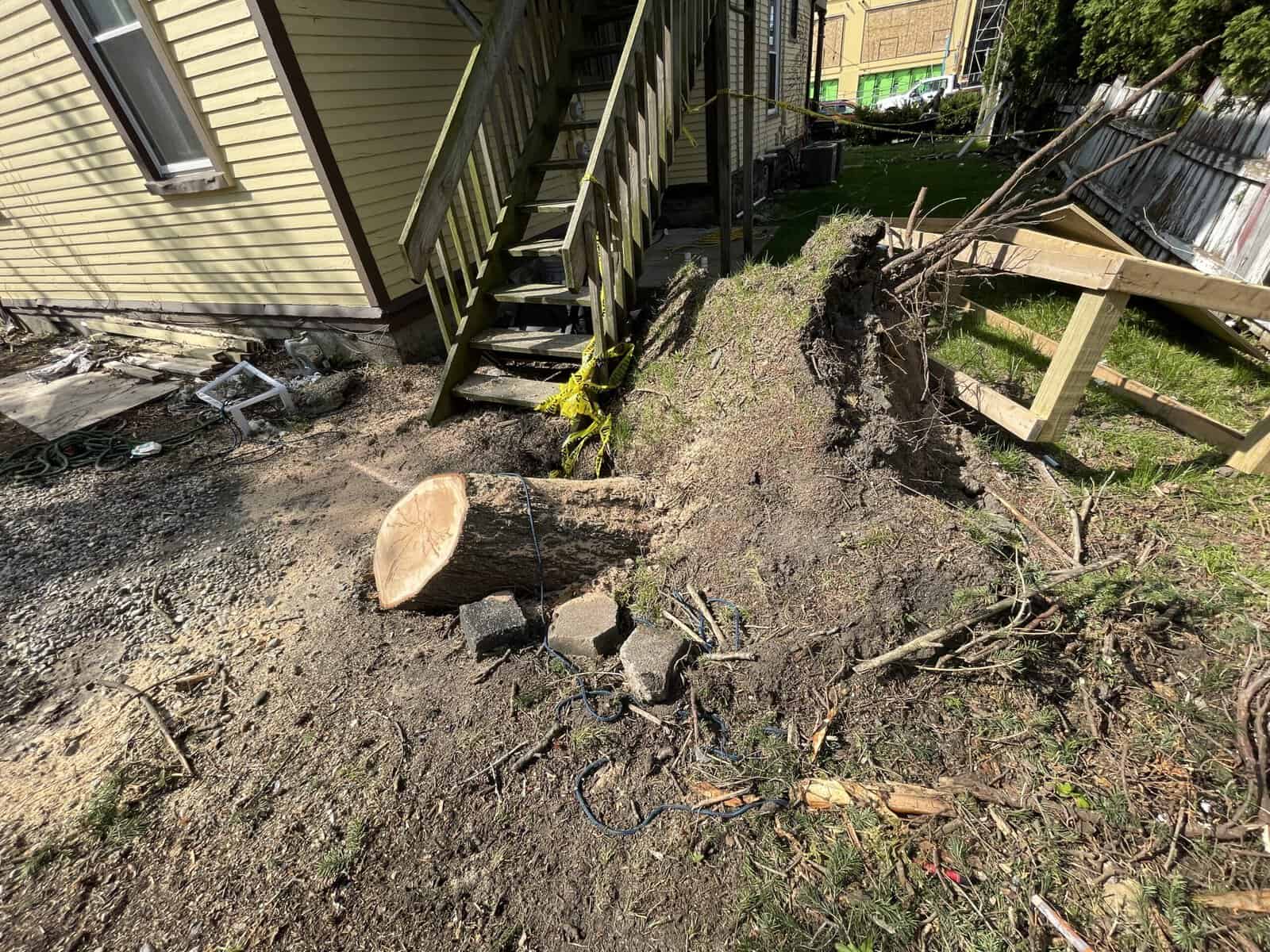
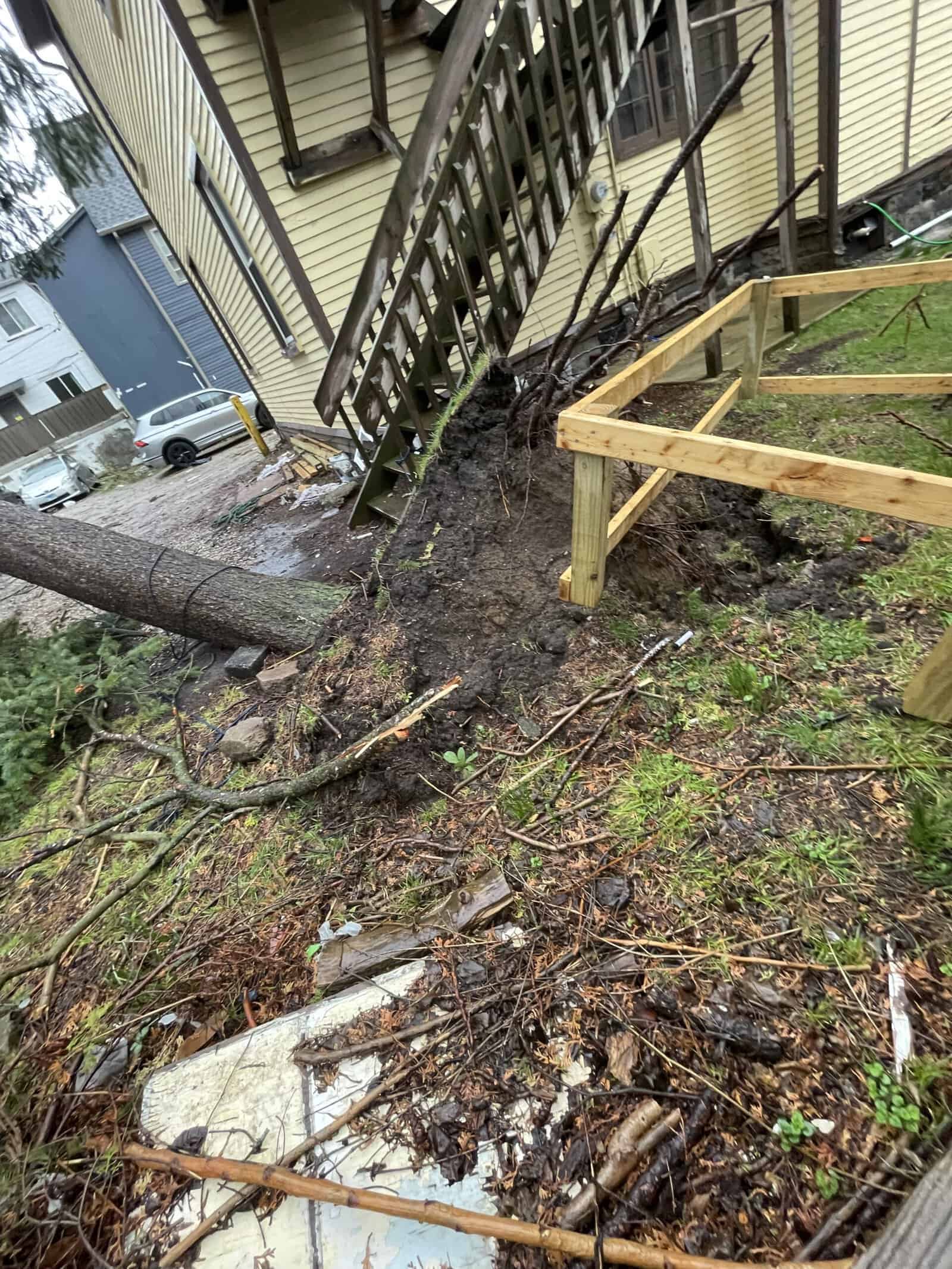
Storm damage in Troy covers a wider range of situations than most homeowners expect when they first call. The obvious ones are fallen tree removal and emergency tree clearing when a tree has come down on a structure, a vehicle, or is blocking a driveway off Rochester Road or I-696. Those get handled fast. But the calls that matter just as much are the ones about what’s still standing.
Hazardous limb removal is one of the most underserved parts of storm damage response. A widow-maker — a large hanging limb that’s partially broken and suspended overhead — can weigh several hundred pounds and is under unpredictable tension. It doesn’t look dangerous from the ground. It is. We handle these as part of the storm response, not as a separate service call weeks later. The same goes for trees showing root heave, trunk cracks, or crown damage that signals structural compromise. Our TRAQ-qualified team assesses these and gives you a straight answer on what needs to come down now versus what can be monitored.
For Troy homeowners in HOA communities like Somerset North or Adams Pointe, we can work directly with your property manager and provide written documentation for insurance purposes. If your homeowners insurance covers tree removal after a structure was damaged, having a professional assessment on record from a credentialed arborist strengthens your claim. That’s not a bonus — it’s part of doing the job right.
It depends on the specifics of your policy and what the tree actually hit. Standard homeowners insurance policies typically cover tree removal when the fallen tree has damaged a covered structure — your roof, fence, garage, or another insured part of the property. In those cases, coverage often applies up to a sublimit, commonly in the range of $500 to $1,000 per storm event for debris removal, though policies vary significantly.
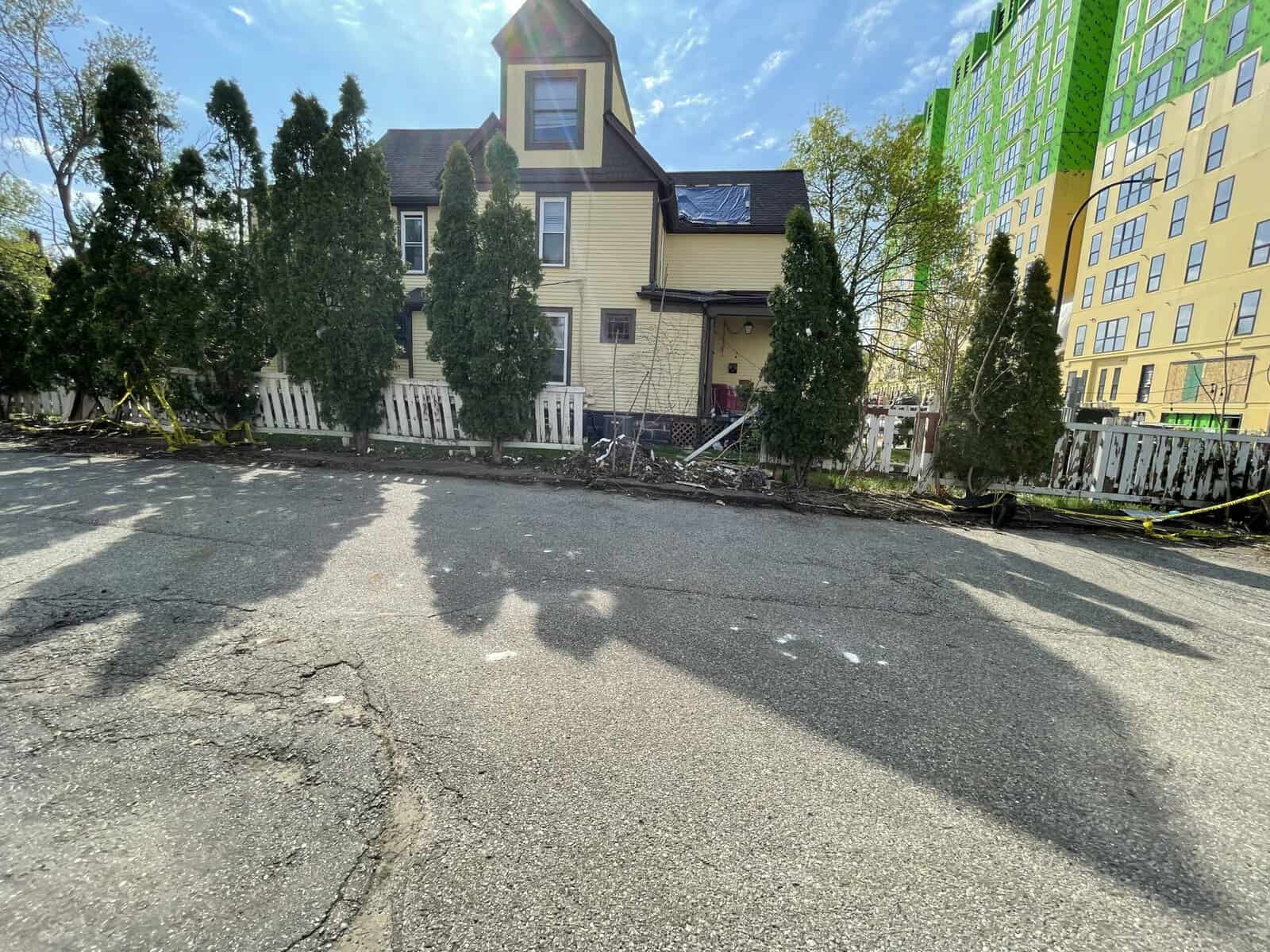
If the tree fell in your yard without hitting anything, most policies won’t cover the removal cost — even if the tree was massive. This catches a lot of Troy homeowners off guard, especially after major events like the May 2025 severe thunderstorm that produced 70 MPH gusts and widespread tree damage across Oakland County.
The most important thing you can do is document everything before any cleanup begins. Photos, video, and a written assessment from a credentialed arborist create the paper trail your adjuster needs. We can provide that documentation as part of the job — which is worth more than most homeowners realize when it comes time to file.
This is the question most homeowners don’t ask until it’s too late. A tree that’s still standing after a storm isn’t necessarily safe. The signs that matter most — root heave, trunk cracks, crown lean, or bark separation at the base — aren’t always visible from a distance, and they’re easy to miss if you don’t know what you’re looking for.
In Troy specifically, Oakland County’s heavy clay soil creates shallow root systems. That means a tree can look completely normal from the outside while the root ball has partially separated from the ground during a storm. The tree is still upright. It’s also at serious risk of complete failure in the next windstorm — or even on a calm day if the root damage is severe enough.
A TRAQ-qualified risk assessment is the only reliable way to get a definitive answer. We have TRAQ-certified assessors on staff. We’ll walk the property, evaluate the structural integrity of any tree you’re concerned about, and give you a clear, documented finding — not a guess. That assessment also matters if you’re dealing with an insurance claim or if a neighbor’s tree is leaning toward your property.
This is one of the most dangerous situations that comes out of a storm, and it’s also one of the most common in Troy’s older neighborhoods. The residential corridors along Livernois, Coolidge, and Rochester Road all run alongside overhead utility infrastructure. When a large branch or full tree comes down into those lines, the hazard is immediate and significant.
Most tree companies — even experienced ones — are not certified to work near energized power lines. They’ll show up, assess the situation, and tell you they can’t touch it until the utility company clears the lines. That can mean waiting days in some cases.
We hold line-clearance arborist certification. That’s a specialized credential that requires dedicated training, specific equipment, and a separate insurance category to work safely around energized lines. It means that when a tree comes down on the wires near your home, our crew can complete the removal safely rather than leaving you with a half-cleared hazard while you wait on a utility crew. In a documented March 2025 storm event near Livernois and Wendelton in Troy, that capability was exactly what the situation required.
We offer 24/7 emergency response across Troy and Oakland County. We operate out of Oakland, MI, with direct I-75 access to Troy — the same freeway that runs through the heart of the city with ten interchanges inside city limits. For genuine emergencies — a tree on your roof, a fallen tree blocking your driveway, a hanging limb over a structure — response is prioritized and doesn’t wait for business hours.
That said, after a major storm event that hits a wide area of Oakland County, every credible tree company in the region is fielding calls simultaneously. The homeowners who get the fastest response are the ones who call immediately rather than waiting to see if the situation resolves itself. If you’re looking at a tree on your house or a limb hanging over your car at 10 PM, that’s the right time to call — not the next morning.
For situations that aren’t immediate emergencies but still need attention soon — a leaning tree, a partially broken limb, a root-compromised tree that’s still standing — we can schedule a same-day or next-day assessment and give you a clear picture of urgency before anything is removed.
For most storm damage situations on private residential property in Troy, you do not need a permit to remove the tree. Emergency removal of a hazardous tree — one that’s fallen, is actively threatening a structure, or has been assessed as an imminent risk — generally doesn’t require homeowners to go through a permitting process before acting.
Where it gets more complicated is with right-of-way trees. Trees planted between the sidewalk and the street in Troy are technically city property and fall under the jurisdiction of Troy’s Department of Public Works. If a right-of-way tree falls onto your private property during a storm, the removal process involves notifying the city, and the city retains authority over that tree. You can’t simply hire a contractor to remove it without going through the proper channels — though emergency situations are typically handled more quickly than routine removal requests.
There are also cases where trees sit in regulated wetland buffers or easements, which may require permit applications before removal. If you’re unsure which category your tree falls into, a quick call to us can help clarify. We’re familiar with how Troy’s tree ordinance works in practice and can help you navigate the process without creating additional delays or compliance issues.
The short answer is tree age and species. Troy’s residential development happened in two main waves — the 1950s and 1960s along Livernois and Coolidge, and the 1970s and 1980s expansion northward toward Long Lake. Both waves planted fast-growing species: silver maples, ash, and locust trees. Those trees are now 50 to 70 years old, and they’re showing it.
Silver maples are notoriously brittle. Under high wind stress — the kind that comes with a derecho or a severe thunderstorm warning like the one that covered Troy in May 2025 with 70 MPH gusts — they don’t just lose branches. They split at major crotches, shed large limbs without warning, or fail completely at the base. Ash trees across Oakland County have been further compromised by the Emerald Ash Borer, which has left standing dead wood throughout neighborhoods like Old Troy and Northfield Hills. Dead ash has brittle, unpredictable wood that fails in ways a healthy tree wouldn’t.
Add Oakland County’s clay soil — which limits root depth and leaves trees more exposed to wind loading — and you have a combination that makes the older parts of Troy genuinely higher risk than newer developments with younger, healthier tree stock. If your home is in one of these older neighborhoods, a pre-storm assessment from a TRAQ-qualified arborist isn’t an overreaction. It’s the kind of information that can prevent a $440,000 home from becoming a claim.
Other Services we provide in Troy
