Hear from Our Customers
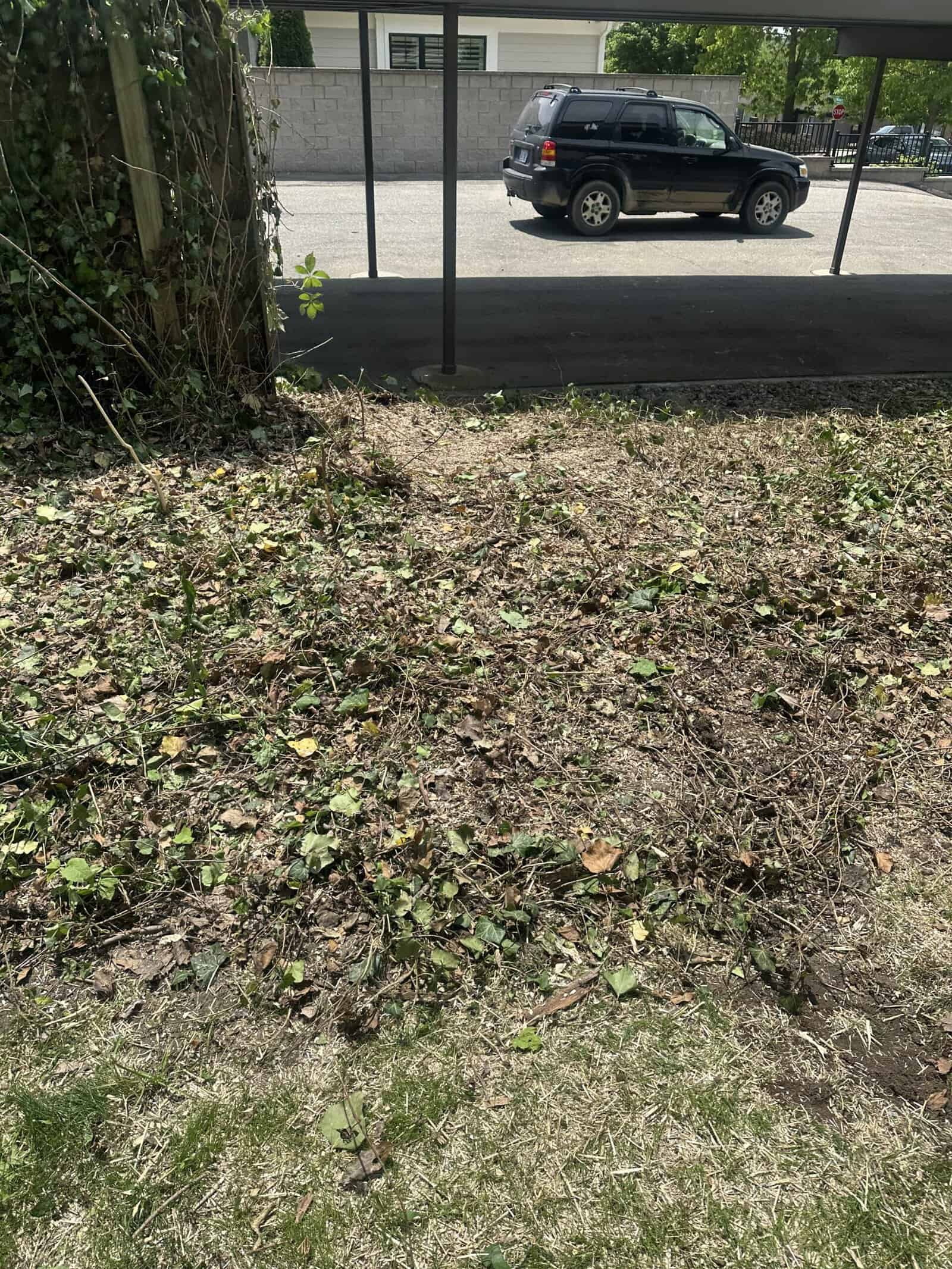
Troy’s residential subdivisions — many of them built out between the 1960s and 1990s — are sitting on lots where trees have had 30, 40, even 50 years to grow. When one of those trees comes down, what’s left isn’t a small ornamental stump you can ignore. It’s a large-diameter root crown from a mature ash, oak, or maple that blocks mowing, creates a real trip hazard, and sticks out on a property where appearances genuinely matter.
The emerald ash borer swept starting in the early 2000s, and Troy lost a significant portion of its ash canopy over the years that followed. A lot of those trees were removed, and a lot of those stumps were never ground. If you’ve been mowing around one for years — or just inherited the problem when you bought the house — you already know the low-grade frustration of working around something that shouldn’t still be there.
Beyond the inconvenience, there’s a real property-value dimension here. With median home values in Troy above $500,000, every detail of how your property looks and functions carries weight. In HOA-governed neighborhoods like Oak River East, Orchard Hills, or Raintree Village, a neglected stump isn’t just an eyesore — it can trigger a covenant notice. Our professional stump grinding in Troy, MI clears the stump completely, levels the area, and gives you a clean slate for whatever comes next, whether that’s new grass, fresh landscaping, or simply a yard that looks the way it should.
Ivan’s Tree Services LLC is based in Oakland, right here in Oakland County — the same county as Troy. This isn’t a company dispatching crews from across the state or a franchise operation where you get whoever’s available that day. Ivan leads every field job personally, and Cecilia handles all scheduling and communication on the administrative side, so calls get answered and jobs get booked without the runaround.
On larger residential and commercial jobs, we bring ISA Certified Arborists and TRAQ-qualified risk assessors — credentials issued by the International Society of Arboriculture and verifiable at isa-arbor.com. In a market where several local competitors list no certifications at all, that distinction matters. Troy homeowners doing their research will notice it.
Ivan started his career as a groundman in California, learning rigging, climbing, and safety fundamentals before relocating to Michigan and founding this business. That background, combined with direct familiarity with Oakland County’s clay soils, mature tree species, and HOA-dense neighborhoods, means the team that shows up at your Troy property knows what we’re doing before the grinder even starts.
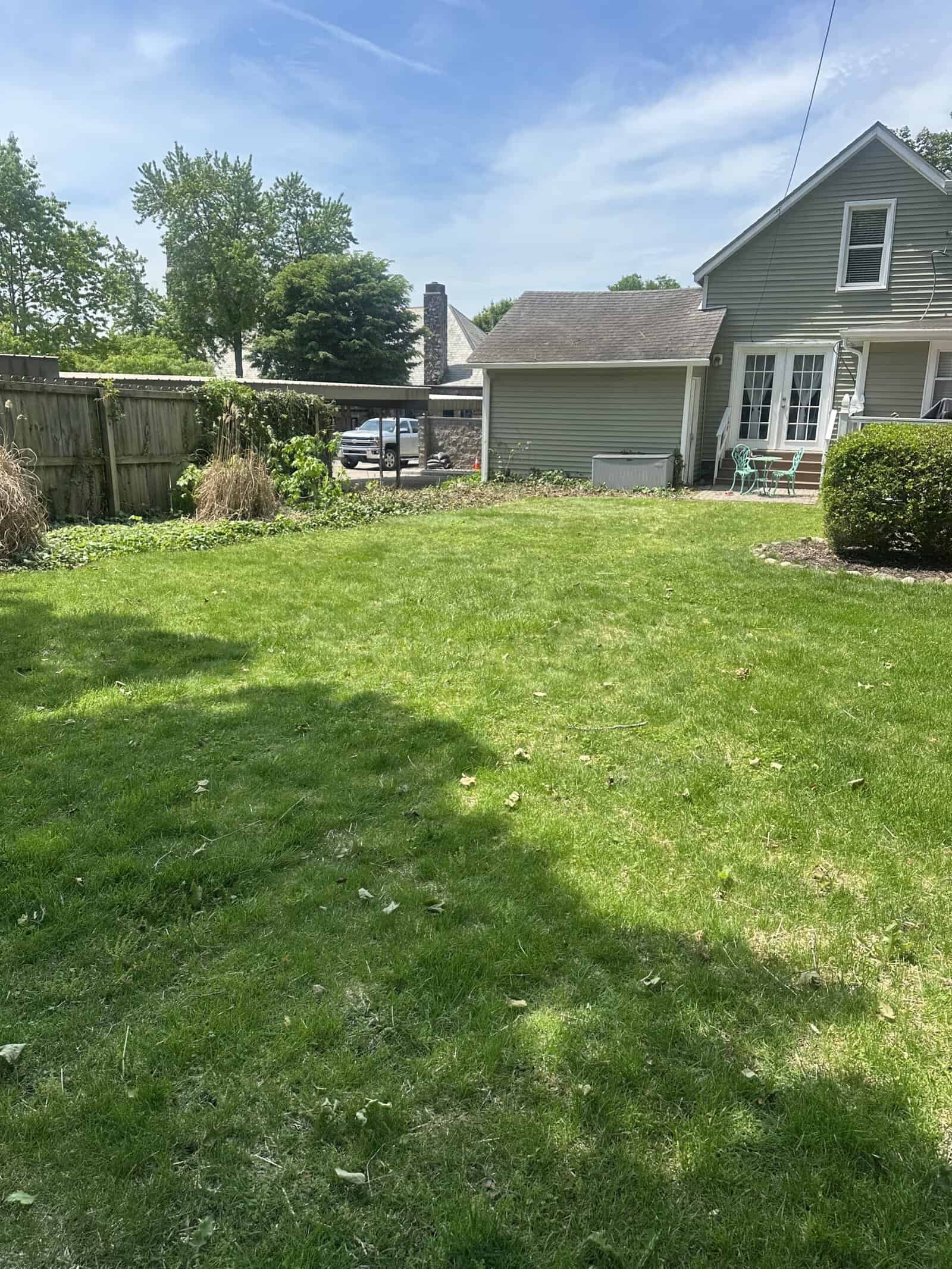
It starts with a site visit — not a phone estimate. Our team comes to your property, walks the area, assesses the stump size, checks the surrounding space, and accounts for anything that could affect the job: nearby fencing, irrigation lines, underground utilities, or tight gate access. You get a written estimate before any work is scheduled, and that estimate is valid for 30 days. No pressure, no guessing, no surprises when the invoice arrives.
Before any grinding begins, MISS DIG — Michigan’s 811 utility locating service — is required. This is state law for any ground-disturbing work, and it’s standard practice for every job we take on. In Troy’s established neighborhoods, where irrigation systems, buried electrical conduit, and drainage infrastructure have been in the ground for decades, this step isn’t optional. It protects your property, and it protects you from a costly repair bill.
The grinding itself goes deep — typically 6 to 8 inches or more below grade, depending on what you’re planning to do with the space afterward. That depth destroys the root crown, which is what prevents regrowth. When the work is done, the resulting wood chips are handled based on your preference: left in place to break down into topsoil over time, spread in garden beds as mulch, or removed entirely for a clean finish. Troy’s noise ordinance prohibits loud equipment work before 7 a.m. on weekdays and all day Sunday, so we schedule accordingly. The yard gets left smooth, level, and ready for whatever comes next.
Ready to get started?
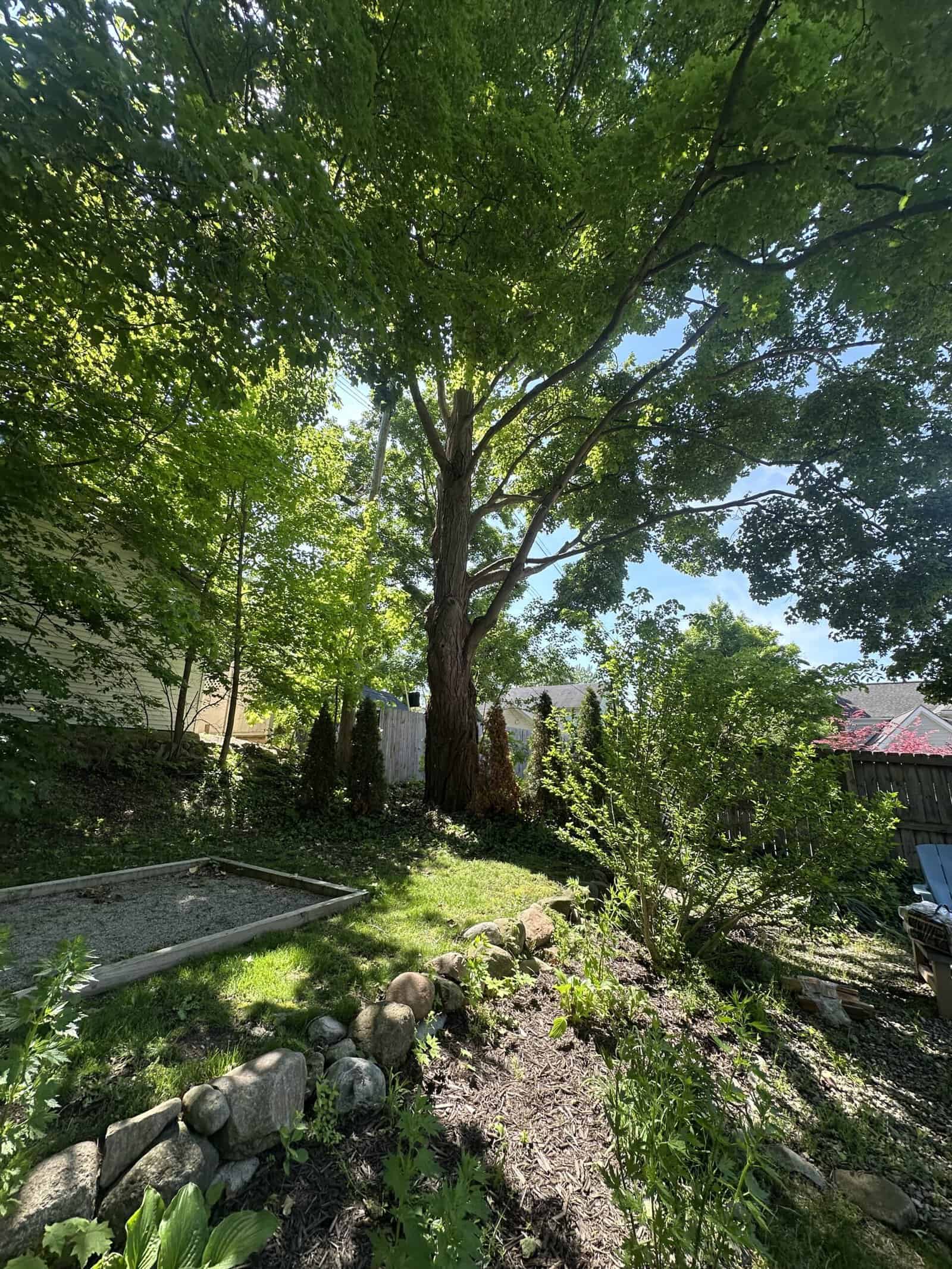
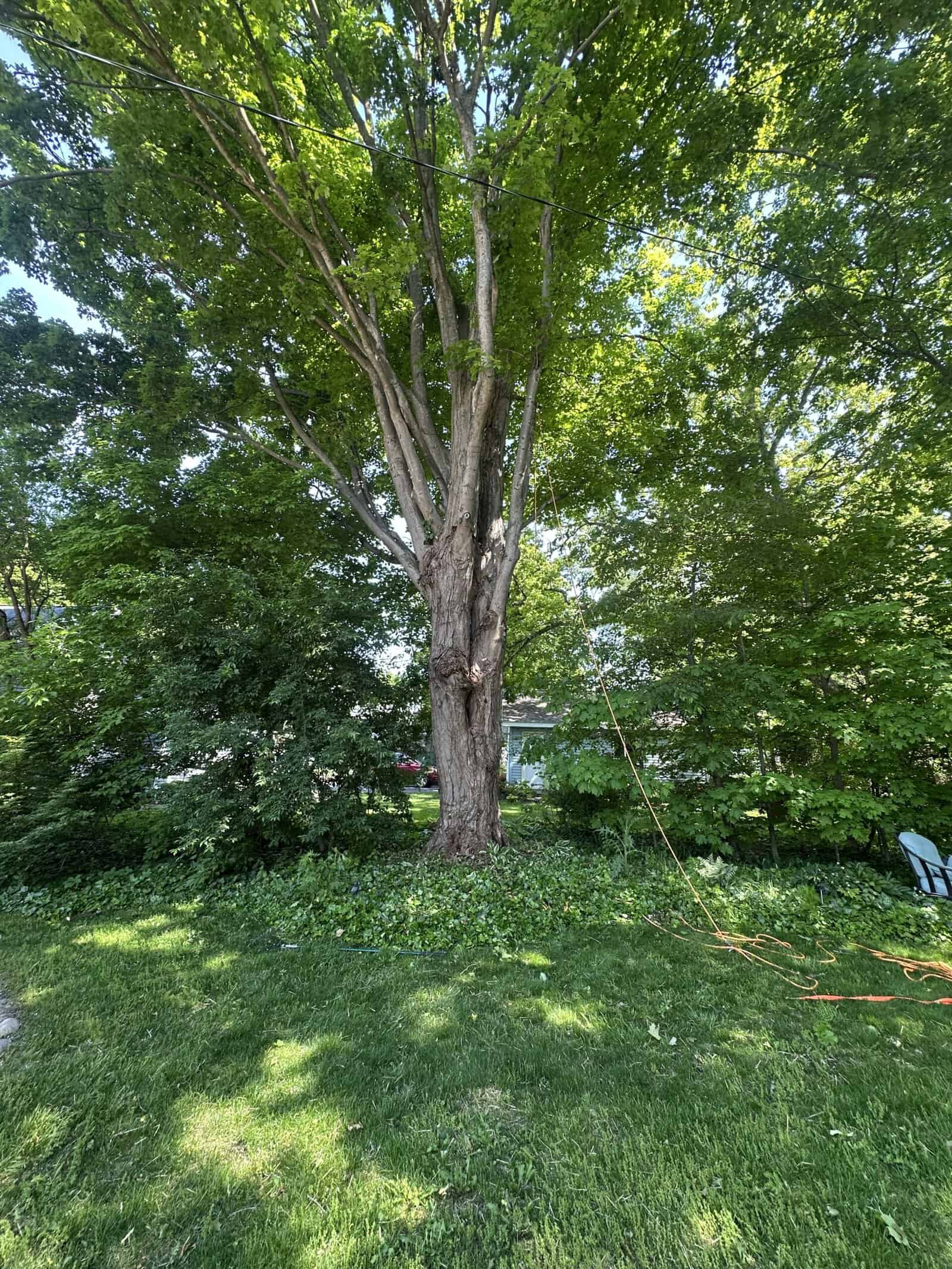
The stumps left behind in Troy aren’t average. Mature oaks along Wattles Road corridors, large ash trees removed after EAB damage in subdivisions off Rochester Road and Coolidge Highway, decades-old maples in the Troy Corners area — these are large-diameter stumps that require serious equipment and the experience to run it correctly. Our deep grinding process handles stumps of any size, and we’re equipped to work in tight spaces, including backyards accessed through standard 36-inch gates.
For properties near overhead utility lines — common in Troy’s older neighborhoods — our crew includes line-clearance certified arborists with the specialized training and insurance to work safely in those conditions. That’s a level of coverage most local stump-only operators don’t carry and don’t mention.
The full scope of what we include: site inspection before any work begins, MISS DIG utility locating prior to grinding, deep grinding to the appropriate depth for your intended use, complete debris management, and site cleanup. On jobs where regrowth is a concern — particularly for aggressive species — herbicide treatment of the stump is available the same day to prevent any reshooting from the root system. If you’re in an HOA-governed subdivision and need the result to meet community standards, that’s exactly the finish we deliver. For commercial properties, corporate campuses, or condominium associations along Troy’s I-75 corridor, the same process and the same credentials apply.
Grinding depth depends on what you’re planning to do with the space afterward, but the standard for preventing regrowth is at least 6 inches below grade. At that depth, the cambium layer — the part of the root crown responsible for generating new shoots — is destroyed. For most residential applications in Troy, 6 to 8 inches is sufficient. If you’re planning to plant directly over the area or do significant landscaping work, deeper grinding may be recommended.
For species that are particularly aggressive about reshooting — certain maples and other hardwoods common in Troy’s mature subdivisions — we also offer same-day herbicide treatment of the cut stump as an added layer of protection. This is especially useful on larger stumps where root systems run deep and wide. The combination of proper grinding depth and herbicide treatment gives you the most complete solution available for preventing any future growth from the root system.
This is one of the most common concerns homeowners bring up, and it’s a fair one. Troy’s established neighborhoods have decades of underground infrastructure — irrigation systems, drainage tile, buried electrical conduit — and a careless operator can absolutely cause damage. That’s why we require a MISS DIG (811) utility locate before any grinding begins. Michigan state law mandates this for ground-disturbing work, and it’s a step that responsible operators don’t skip.
As for lawn damage from equipment access, modern professional grinders are significantly lighter than older machines and are designed to minimize turf impact. Compact units fit through standard 36-inch gates for backyard access. If your property has established landscaping or a manicured lawn — which is common in Troy’s higher-value subdivisions — we account for that during the site inspection and plan equipment access accordingly. The goal is to leave your yard looking better after the job, not worse.
For the vast majority of residential properties in Troy, grinding is the right call. It removes the visible stump and grinds the root crown down below grade, which stops regrowth and eliminates the trip hazard and mowing obstacle. Full stump removal — excavating the entire root ball — is more invasive, significantly more expensive, and leaves a large hole in your yard that requires substantial fill work to restore.
Full removal is typically only warranted when you’re building a structure directly on top of the stump location, or when roots are actively damaging a foundation, underground pipes, or a driveway. If you’re not in one of those situations, grinding accomplishes everything you need at a fraction of the disruption and cost. During the site visit, our team will walk you through what makes sense for your specific stump, its species, and what you’re planning to do with the space — so you’re not guessing.
After grinding, you’re left with a pile of wood chips and sawdust where the stump used to be. What happens to them is up to you, and we handle it based on your preference. The most low-effort option is leaving them in place — wood chips from grinding break down into rich topsoil over roughly one to two years, which works well if you’re planning to landscape the area eventually. If you have garden beds nearby, the chips can be spread as natural mulch instead.
If you want a clean finish — which is common in Troy’s HOA-governed neighborhoods where the result needs to meet community appearance standards — the material can be removed entirely, leaving the area smooth and ready for fresh landscaping. This is something to discuss during the estimate visit so the team comes prepared. Either way, the site isn’t left as a mess for you to deal with after the crew leaves.
Stump grinding is typically priced by diameter — the industry standard runs $2 to $5 per inch of stump diameter, with a minimum service fee that accounts for equipment transport and setup. A smaller stump might fall well under $100 on the diameter calculation alone, while a large mature ash or oak — the kind that’s common in Troy’s older subdivisions — can run significantly higher based on size. The national average for a single stump job lands around $272, though larger stumps and additional services like chip removal or herbicide treatment will affect the final number.
We provide written, no-obligation estimates valid for 30 days, based on a site visit — not a phone guess. That means the number you receive reflects the actual stump, the actual access conditions, and the actual scope of work at your property. There are no surprise charges when the job is done. If you have multiple stumps, that’s worth discussing during the estimate visit, as pricing for multiple stumps on the same visit is typically more efficient than separate appointments.
Yes, and it’s a meaningful part of what we do in Troy. HOA-governed subdivisions like Oak River East, Orchard Hills, Somerset Place, and Raintree Village have property maintenance standards that go beyond personal preference — stumps that don’t meet those standards can result in covenant notices and friction with the association. Our full-service process, which includes deep grinding, complete site cleanup, and debris management, delivers results that meet HOA expectations without leaving anything for the homeowner to follow up on.
For commercial properties, corporate campuses, and condominium associations — particularly those along the I-75 corridor in Troy — we bring ISA Certified Arborists and TRAQ-qualified risk assessors to larger jobs. That level of credentialing matters when a property manager or HOA board needs documentation that the work was performed by qualified professionals, not just whoever showed up with a grinder. Written estimates, proper insurance, and a clear scope of work are standard on every commercial engagement.
Other Services we provide in Troy
