Hear from Our Customers
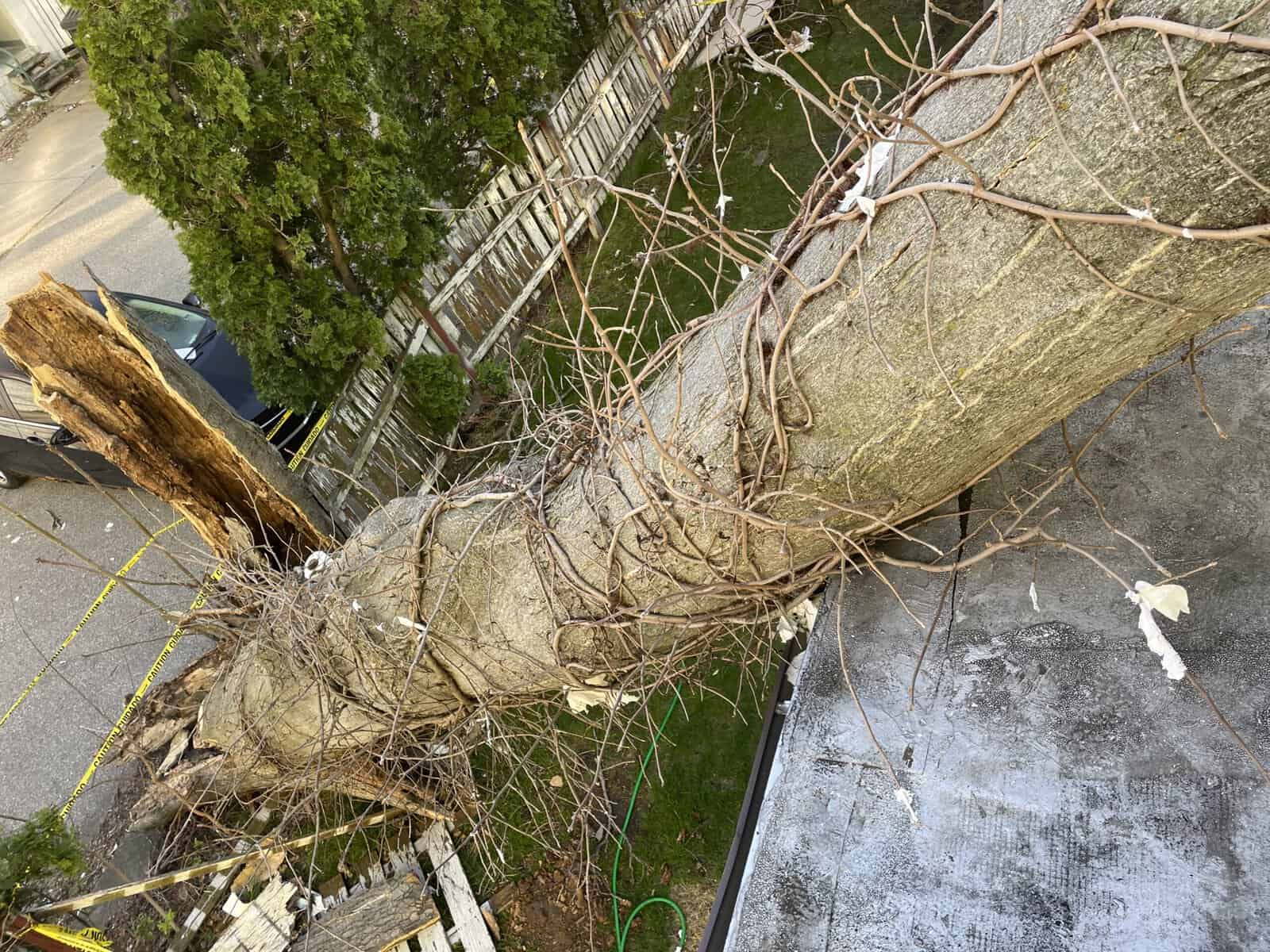
After a major storm rolls through Oakland County, the obvious damage is only part of the picture. A fallen limb on the driveway is one thing. A compromised root system on a 70-foot white oak overhanging your guest wing is something else entirely — and the difference between those two situations is exactly what a certified arborist is trained to catch.
In Bloomfield Hills, the trees that line Woodward Avenue, shade the Cranbrook corridor, and tower over estate driveways were planted generations ago. That maturity is part of what makes this city so distinctive. It’s also what makes post-storm assessment genuinely critical. Older hardwoods develop hidden structural issues — trunk cracks, weakened branch unions, root systems destabilized by saturated glacial soils — that don’t announce themselves until the next storm finishes the job.
What you actually get out of a proper storm damage response isn’t just debris removal. It’s a clear answer on which trees are safe, which need emergency pruning, which need to come down, and which can be preserved with the right care. That’s what protects your property long-term — not just the cleanup you can see from the street.
We’ve been serving Oakland County for over seven years. We’re based in Oakland, family-owned, and built around a straightforward idea — every job gets a certified arborist on-site, a thorough walkthrough before work begins, and complete cleanup when it’s done.
For Bloomfield Hills specifically, that standard matters more than anywhere else in our service area. The city’s tree ordinance requires a Building Department plan review before any removal begins, and the city designates certain trees as Landmarks with heightened protections. You need a team that understands those requirements — not one that shows up, cuts, and leaves you to sort out the paperwork.
Our crews include ISA Certified Arborists, TRAQ-qualified risk assessors, and line-clearance certified arborists — the last of which is particularly relevant along the Woodward Avenue corridor, where overhead utilities and mature canopy interact directly after every significant storm. These aren’t credentials for show. They’re what the work in Bloomfield Hills actually requires.
When you call us — day or night — you reach a real person. Our 24-hour emergency tree service line exists because storm damage in Bloomfield Hills doesn’t wait for business hours, and neither does the risk that comes with it. The first conversation is about understanding what you’re dealing with: what fell, what’s hanging, what’s near a structure, and whether there’s any immediate danger.
From there, we come to you. Before any work starts, an ISA Certified Arborist walks the site with you, assesses the full scope of the damage, and gives you a clear written estimate. In Bloomfield Hills, this step also includes a conversation about the city’s tree ordinance — specifically whether the situation qualifies for emergency removal or requires a plan review submission to the Building Department. That’s not a detail most tree companies think about. It’s one that can protect you from a code violation on top of a storm damage claim.
Once the scope is confirmed, our crew works through removal in a controlled sequence — priority given to anything threatening a structure, followed by hazardous hanging limbs, then full debris clearing. The job isn’t finished until the site is clean. On estate properties with manicured grounds, that means no drag marks, no scattered wood chips, no debris left at the tree line. A final walkthrough with you closes it out.
Ready to get started?
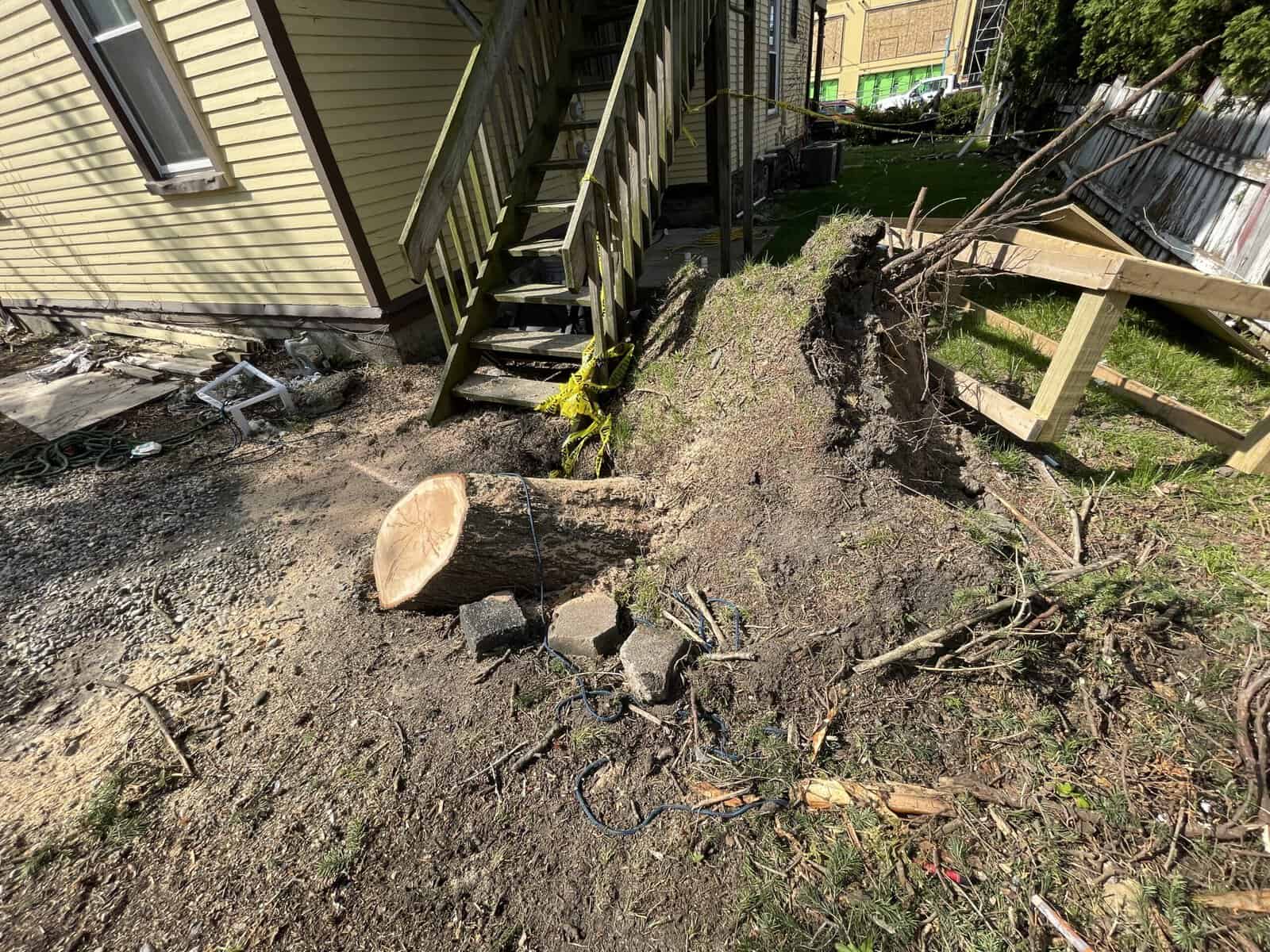
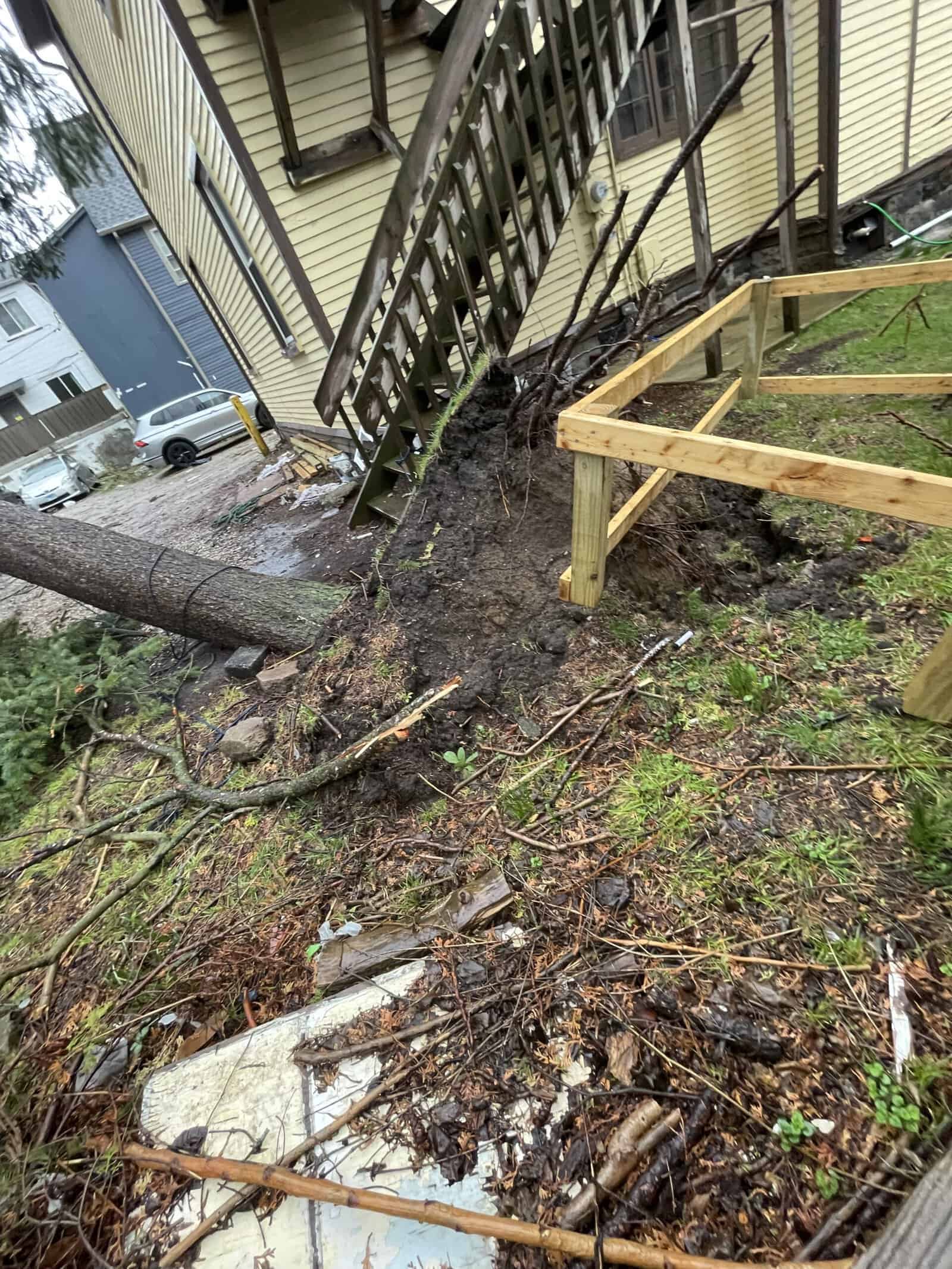
Storm damage in Bloomfield Hills covers a wider range of situations than most homeowners expect when they first call. The most urgent is active structural threat — a fallen tree on a roof, a cracked limb hanging over a carriage house, a root-heaved tree leaning toward a fence line or outbuilding. We handle all of it under our 24/7 emergency tree service, with line-clearance certified crews available for any situation involving overhead utilities along Woodward Avenue, Long Lake Road, or Lone Pine Road.
Beyond the immediate emergency, we provide a full post-storm assessment of trees that are still standing. Bloomfield Hills sits on glacially formed terrain — rolling hills and soil depressions that create drainage patterns unique to this part of Oakland County. After heavy rain combined with high winds, root systems in low-lying areas can be significantly destabilized even when the tree looks fine from the outside. A TRAQ-qualified risk assessment documents exactly what’s compromised and what’s structurally sound, giving you something concrete rather than a guess.
Stump grinding, debris removal, and full site cleanup are part of the job. If a storm-damaged tree can be preserved through emergency pruning rather than full removal, our arborist will tell you that directly. The goal isn’t to remove everything — it’s to give you an honest picture of what each tree needs, then do the work that actually makes sense for your property.
Bloomfield Hills has one of the most active tree ordinances in Southeast Michigan. The city requires a plan review by the Building Department before any tree removal begins — even on private property. That said, genuine emergency situations are treated differently. If a tree has fallen on a structure or a limb poses an immediate threat to life or property, emergency removal can proceed, but documentation and notification to the city are still part of the process.
The city also designates certain trees as Landmarks, which carry additional protections and require a higher level of review before removal. On parcels under 1.5 acres, you’re generally limited to removing up to two trees per year without a standard permit. On larger parcels, that threshold is three. Trees under eight inches in caliper or those confirmed as diseased may qualify for removal without a permit, but that determination needs to be made by a qualified professional — not assumed.
This is exactly why the pre-job site walkthrough matters so much in Bloomfield Hills. An ISA Certified Arborist can assess the situation, identify what qualifies for emergency removal, and help you understand what documentation the city will need. Skipping that step can turn a storm damage response into a code enforcement issue on top of everything else.
This is one of the most important questions to ask after a storm — and one of the most commonly skipped. A tree that didn’t fall during the storm isn’t necessarily safe. In fact, some of the most dangerous post-storm situations involve trees that are still upright but structurally compromised in ways that aren’t visible from the ground.
In Bloomfield Hills, the glacially formed terrain creates specific risk patterns. Low-lying areas and natural depressions in the landscape collect water during heavy rain, saturating the soil around root systems. After a storm that combines high winds with significant rainfall, root systems in those areas can be destabilized even when the tree shows no obvious signs of failure. On estate properties where a large hardwood overhangs a primary residence or an outbuilding, that’s not a risk worth guessing on.
A TRAQ-qualified risk assessment — which we provide — is the professional standard for evaluating exactly this kind of situation. It looks at root zone conditions, trunk integrity, branch union structure, and canopy load to determine the actual failure risk. You get a documented assessment, not an opinion. That’s what gives you a real answer about whether to act now or monitor over time.
The first priority is distance. Don’t approach a fallen tree until you know whether it’s in contact with a utility line. In Bloomfield Hills, overhead lines run along Woodward Avenue and the city’s arterial roads, and private drives feeding off those corridors can bring utility infrastructure close to residential structures. A downed tree that looks like a yard problem can be a live electrical hazard. Keep everyone away from the tree and the surrounding area until you know it’s clear.
Once you’ve established that there’s no immediate electrical danger, document the damage before anything is moved. Photographs of the fallen tree, the point of failure, and any structural damage to your home, fence, or outbuildings are important for your homeowners insurance claim. Your insurer will want to see the condition of the property before cleanup begins.
Then call for emergency tree service. We operate a 24-hour emergency line specifically for situations like this — a real person picks up, you describe what’s happened, and we respond. Don’t wait until morning if the situation is urgent. A tree on a roof or a hanging limb over an occupied structure is an active hazard, and delay multiplies the damage.
It depends on what the tree hit. Standard homeowners insurance policies typically cover tree removal when the fallen tree has damaged a covered structure — your home, an attached garage, a fence, or another insured outbuilding. In those cases, the removal cost is usually covered up to the policy’s sublimit, which commonly runs between $500 and $1,000 per storm event for debris removal specifically, or up to a percentage of your dwelling coverage if structural damage is involved.
If a tree fell in your yard but didn’t hit anything, most standard policies won’t cover the removal cost — that’s typically considered a maintenance or landscaping expense rather than a covered loss. Given the size of estate lots in Bloomfield Hills and the scale of the trees on them, this is worth reviewing with your insurer before you need it.
The documentation step matters here. Photographs of the damage, a written estimate from a certified arborist, and a clear record of what was removed and why all support a smoother claims process. We provide written estimates as a standard part of every job, which gives you exactly what an adjuster needs to process the claim accurately.
A widow-maker is a broken or partially detached limb that’s still suspended in the tree canopy — held in place by bark, adjacent branches, or simple friction — rather than falling to the ground. The name comes from the logging industry, where these hanging limbs were responsible for a disproportionate number of worker fatalities. The danger is that they can drop without warning, often hours or days after the storm that broke them, and they can weigh several hundred pounds even when they look manageable from below.
In Bloomfield Hills, where the tree stock consists largely of mature hardwoods — white oaks, red maples, elms — the limbs involved in widow-maker situations are often substantial. A large branch from a century-old oak can exceed 500 pounds. When that’s suspended over a driveway, a garden, a roof section, or a path that family members use daily, it’s not a situation to monitor. It’s a situation to address immediately.
Hazardous limb removal is a specific part of what we handle as emergency tree clearing. Our crew uses controlled rigging techniques to bring hanging limbs down in a managed sequence rather than letting gravity decide. On estate properties with formal landscaping and high-value structures in close proximity, that precision matters.
Post-storm is the highest-risk period for tree service fraud. After a significant weather event hits Oakland County, out-of-area operators show up door-to-door, quote low prices on the spot, ask for cash or a large deposit upfront, and either do shoddy work or disappear entirely. The BBB documents this pattern consistently after every major storm season in Southeast Michigan.
A few things to look for: any legitimate tree company should be able to provide proof of liability insurance and workers’ compensation before work begins — ask for it directly. In Michigan, there’s no state license required to operate a tree service, which means the only real verification mechanism is third-party credentials. ISA Certified Arborist status is verifiable by credential number through the ISA’s public database. If a company can’t point you to a verifiable credential, that’s a meaningful signal.
Local presence matters too. A company with a physical address in the region, verifiable reviews on Google and HomeAdvisor, and a named owner who’s been operating in Oakland County for years is a fundamentally different proposition than a crew that appeared in your neighborhood the morning after a storm. We’re based in Oakland, have been serving Oakland County for over seven years, and provide written estimates before any work begins — the clearest signal that the scope and price are fixed, not subject to revision once the crew is on your property.
Other Services we provide in Bloomfield Hills
