Hear from Our Customers
Most homeowners think about tree pruning when something looks off — a branch hanging too low over the driveway, a canopy that’s gotten too dense, or a limb that didn’t survive last winter. But on a Bloomfield Hills estate, the stakes behind that decision are a lot higher.
Mature trees here aren’t incidental. They’re part of what makes the property what it is. Research consistently shows that healthy, well-maintained trees add 7 to 19 percent to residential property values, and in the Midwest specifically, mature trees contribute an average of $10,000 to home value. On a property already valued near or well above $900,000, that’s not a trivial number — and it’s one that improper pruning can quietly erode over time.
Done right, crown thinning opens up the canopy so light and air move through it properly, which reduces the internal stress that causes branches to fail during storm season. Crown reduction brings a tree back to a manageable size without destroying its natural form. Deadwooding removes the branches that are already a liability before a wind event makes them one.
The result is a tree that’s structurally sound, visually balanced, and far less likely to cause damage to the structures, hardscaping, or vehicles on your property.
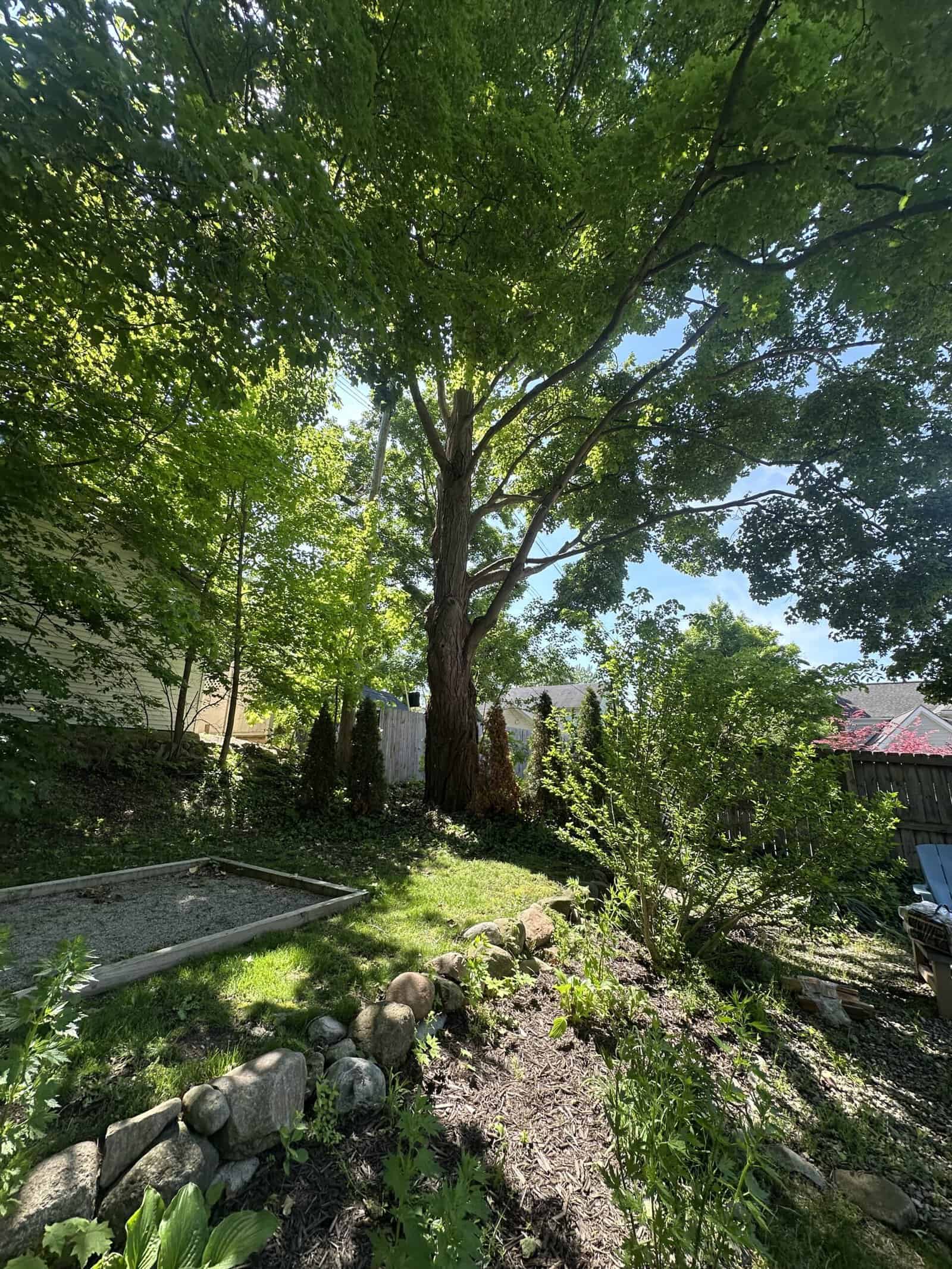
We’ve been working with Michigan homeowners for over seven years, with an established presence that includes Bloomfield Hills and surrounding communities like Troy, Farmington Hills, and West Bloomfield. That’s not a stretch of the service area — it’s genuine familiarity with the tree stock, soil conditions, and regulatory environment that define this part of the county.
Ivan holds ISA Certified Arborist credentials — verifiable on the ISA’s public directory — along with TRAQ qualification, which is specifically designed for assessing structural risk in mature trees. That matters when you’re dealing with century-old oaks along the Cranbrook corridor or large specimen maples on a Lone Pine Road estate. Ivan also holds line-clearance certification, which is required to legally and safely prune trees near energized utility lines — a credential most local competitors don’t carry.
Every job starts with us walking the property with you. No assumptions, no surprises, and no work begins until the scope is in writing. Cecilia manages scheduling and client communication, so you’re not chasing down callbacks or waiting on vague timelines. Two accountable people, every time.
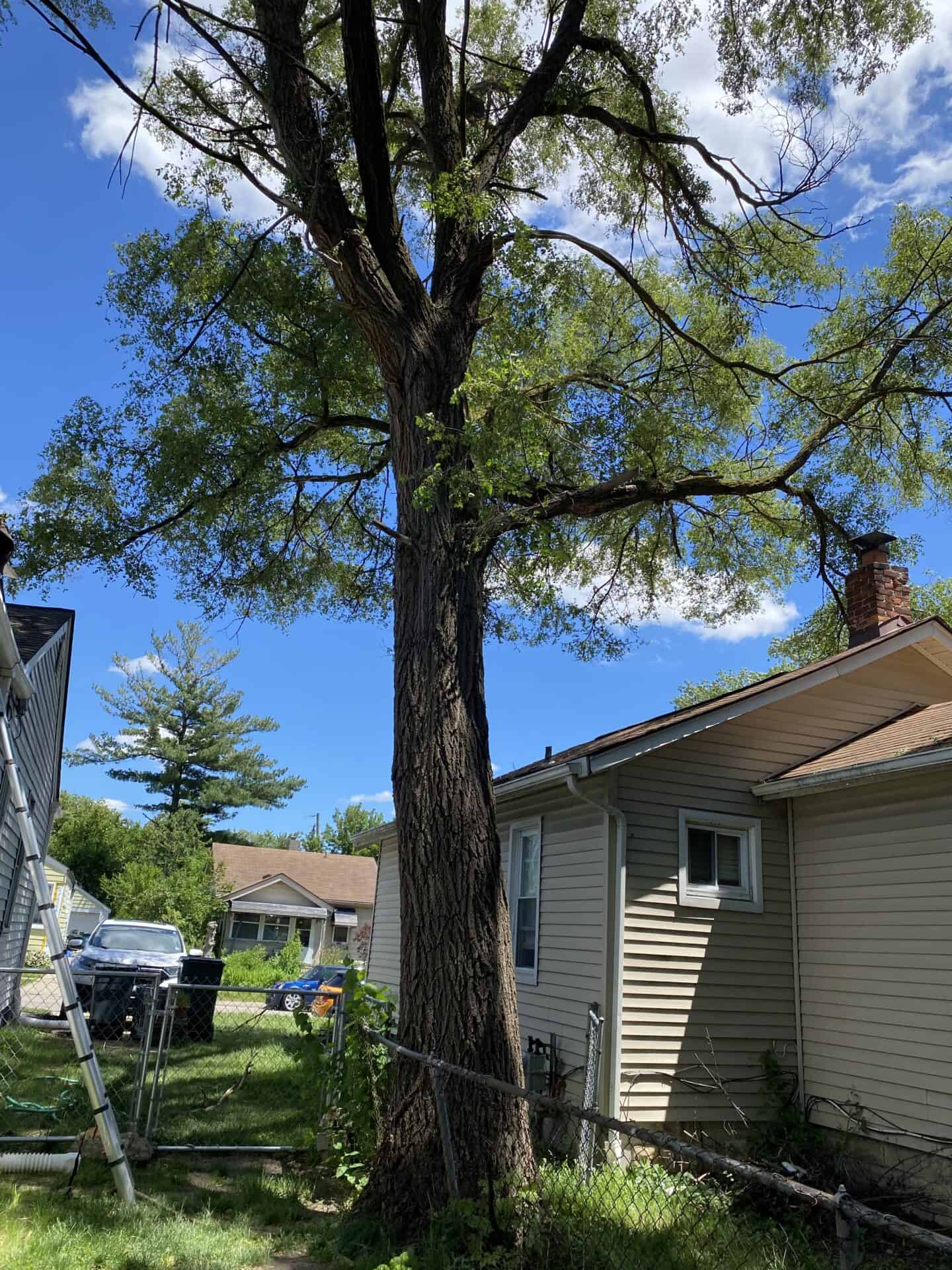
Before anything gets cut, we walk the property with you. On Bloomfield Hills estates — with winding private drives, formal landscaping, overhead utility lines, and trees that may sit close to structures — this step isn’t optional. It’s how mistakes get prevented before they happen.
We review the trees you’re concerned about, identify any structural or health issues you may not have noticed, and put together a written scope of work that covers exactly what will be done, where, and how.
From there, the work follows ANSI A300 pruning standards — the national benchmark for professional tree care. That means no topping, no flush cuts, no climbing spikes on trees being pruned. Every cut is made to heal cleanly and maintain the tree’s natural form.
For red oaks, which are common on Bloomfield Hills properties, we work strictly within the November through March window to avoid oak wilt — a fungal disease that spreads through sap beetles during warmer months and can move through root systems to neighboring trees. Getting that timing right isn’t a technicality; it’s how you protect trees that can’t be easily replaced.
When the work is done, we clean up completely — debris, chips, everything. Customers consistently call out the cleanup specifically, because it’s not just “tidy enough.” The property is left the way it should be.
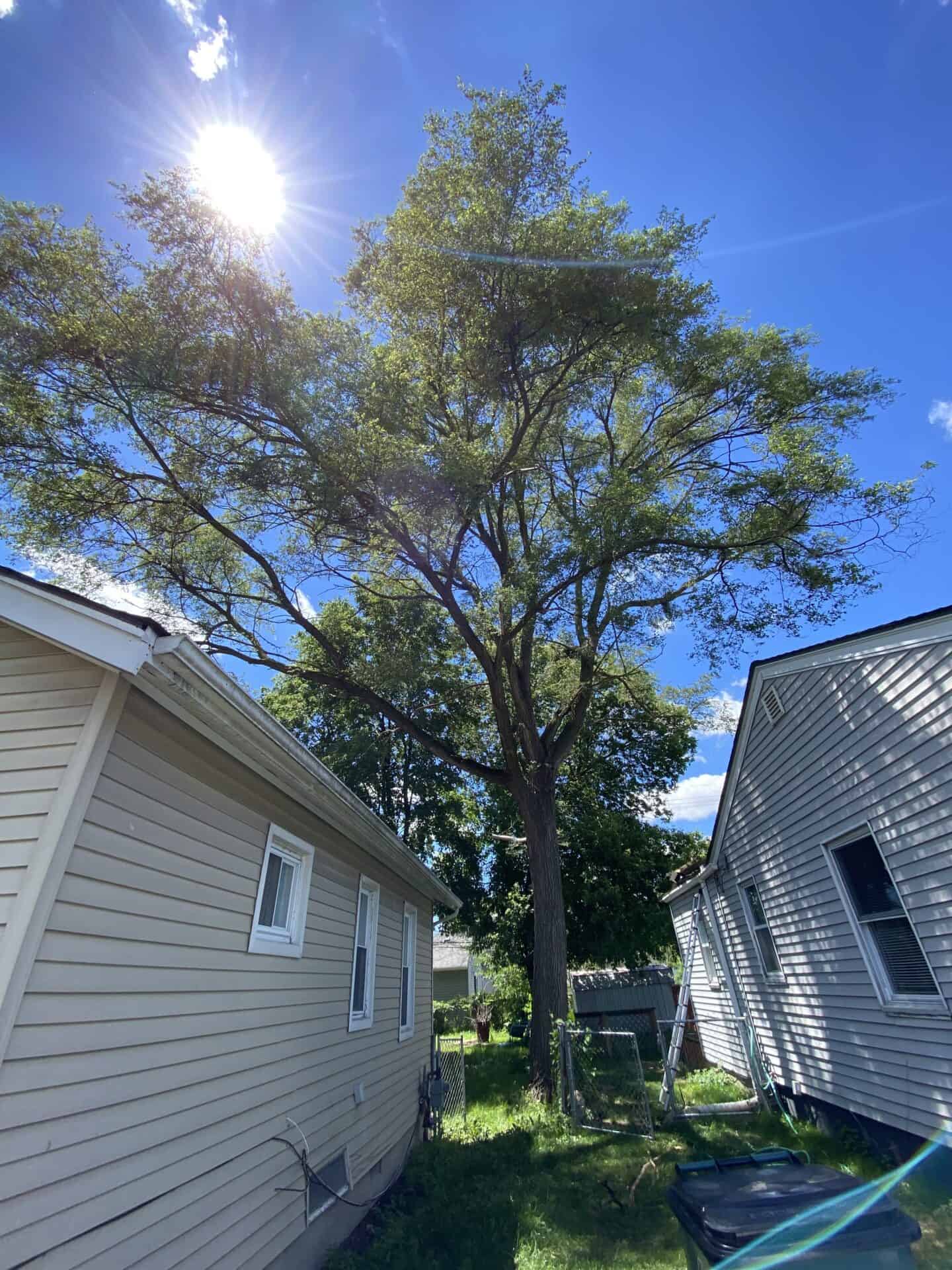
Ready to get started?
Here’s something worth knowing if you own property in Bloomfield Hills: every tree removal in this city requires a building department review before work begins. That’s not a formality — it’s a mandatory step that applies to every single removal, regardless of the tree’s condition. Permit-free removals are capped at two trees on parcels under 1.5 acres, and three on larger parcels. Landmark Trees carry even stronger protections.
If a code enforcement notice lands in your mailbox about a dead or declining tree, the city’s definition of “dead” requires less than 50 percent of the canopy to be present during the growing season — a specific threshold, not a judgment call.
Professional tree pruning in Bloomfield Hills sidesteps all of that. Crown thinning, crown reduction, deadwooding, and structural pruning address the same concerns — overextended branches, wind-load risk, diseased limbs, canopy imbalance — without triggering the removal review process. For homeowners managing large estates with multiple mature trees, that’s a meaningful distinction.
We handle the full range of pruning work: crown thinning to improve light penetration and reduce storm damage risk, crown reduction to bring oversized canopies back to proportion, deadwooding to remove hazardous limbs before they become a problem, and structural pruning for younger trees that need to be set up correctly for the long term. Every service includes a written scope, ANSI A300-compliant technique, and complete site cleanup.
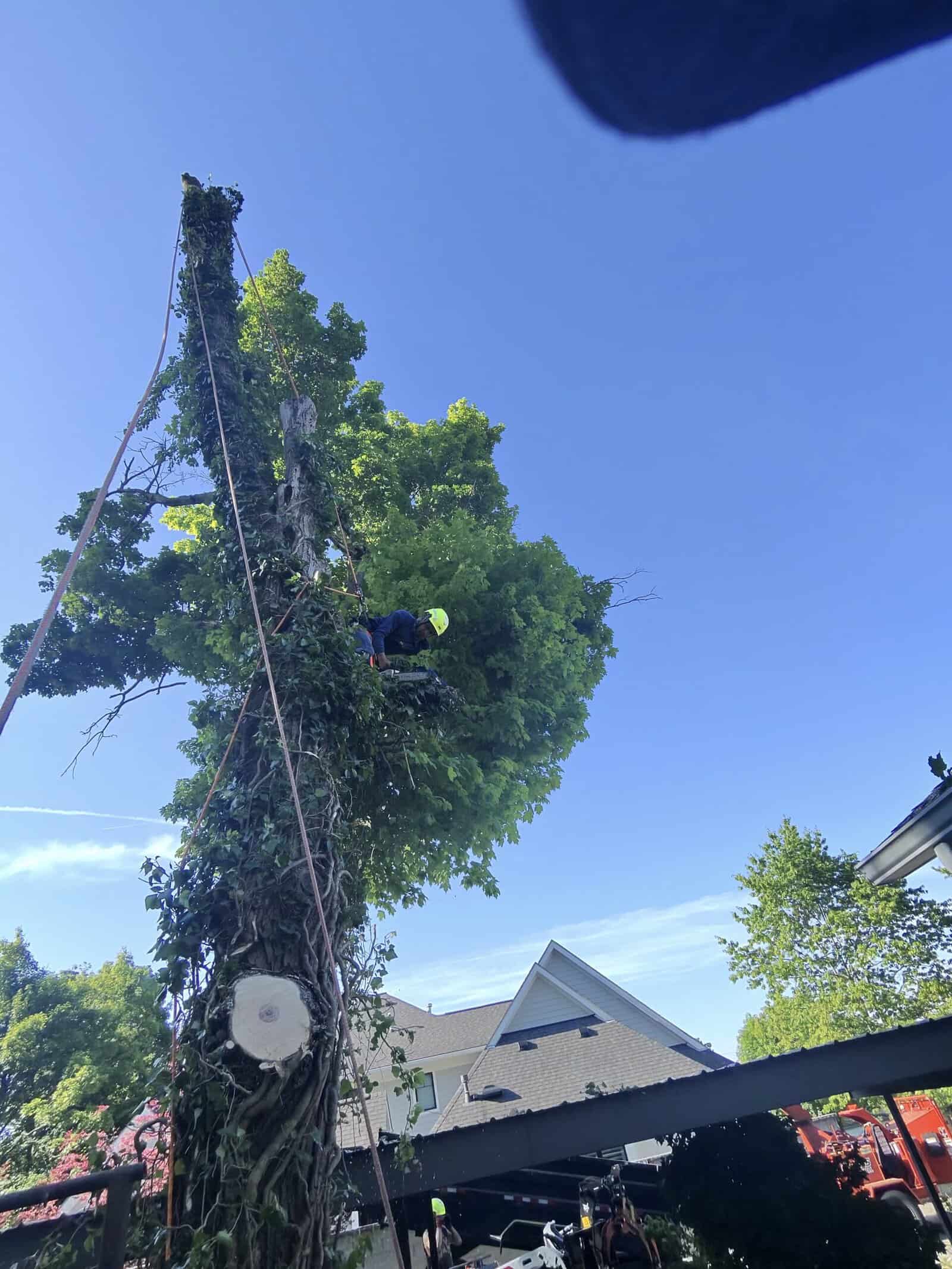
Pruning does not require a permit in Bloomfield Hills — that requirement applies specifically to tree removal. However, it’s worth understanding the full picture. The city’s woodlands ordinance requires building department review before any tree removal takes place, regardless of the tree’s size or condition. Permit-free removals are limited to two trees on parcels under 1.5 acres and three on larger parcels, and Landmark Trees carry additional protections beyond that.
What this means practically is that professional pruning — crown thinning, crown reduction, deadwooding, structural work — is the path of least friction for managing your trees in Bloomfield Hills. It addresses structural concerns, removes hazardous limbs, and reduces storm damage risk without triggering the city’s removal review process. If you’re managing a large estate with multiple mature trees and want to stay ahead of any code enforcement issues, a consultation with an ISA Certified Arborist is the right starting point.
For most deciduous trees on Bloomfield Hills properties — oaks, maples, elms — late winter is the professional standard. February through early March is the window most arborists recommend: trees are dormant, their structure is visible without foliage, and the insects and fungi that cause disease are still inactive. Dormant season pruning also tends to produce cleaner healing responses once spring growth begins.
For red oaks specifically, the timing isn’t flexible. Michigan’s oak wilt risk runs from mid-April through mid-July, when sap beetles are active and capable of carrying the fungal spores that cause oak wilt into fresh pruning wounds. The professional standard is to prune oaks between November 1 and March 31. In Bloomfield Hills, where century-old red oaks are a defining feature of the landscape — and where the ordinance makes replacement difficult and expensive — getting that window right is not a minor detail. It’s how you protect trees that have been growing on these properties longer than the homes themselves.
They’re two different approaches to two different problems. Crown thinning removes select branches from throughout the canopy — not to reduce the tree’s overall size, but to improve light penetration, increase airflow, and reduce the density that causes internal branch stress. It’s typically recommended every three to five years for mature shade trees and is especially relevant for the large oaks and maples common on Bloomfield Hills estates, where dense canopies can create significant wind-loading during storm season.
Crown reduction is about size. It reduces the overall spread or height of the canopy while maintaining the tree’s natural form — done correctly, it follows the tree’s existing branch structure rather than cutting indiscriminately across it. This is the appropriate alternative when a tree has outgrown its space or is encroaching on a structure, utility line, or neighboring property.
It’s worth noting that crown reduction is not the same as topping. Topping — cutting branches back to stubs regardless of the tree’s structure — is one of the most damaging things you can do to a mature tree, and it’s explicitly prohibited under ANSI A300 standards that we follow on every job.
This is the right question to ask before making any decision, especially in Bloomfield Hills where removal comes with regulatory weight. A tree that has dead branches, a thinning canopy, or visible structural concerns isn’t automatically a removal candidate. Many trees that look stressed or hazardous can be stabilized and extended significantly through proper pruning, cabling, or a combination of both.
The threshold that matters under the city’s woodlands ordinance is canopy coverage: a tree is considered dead or dying only when less than 50 percent of its canopy is present during the growing season. Below that threshold, removal may be warranted and documentable. Above it, pruning is almost always the better first step — both because it preserves a mature tree that contributes to your property’s value and character, and because it avoids the building department review process that removal triggers.
Our TRAQ-qualified arborists are specifically trained to assess structural risk in mature trees and give you a clear, honest answer about what the tree actually needs — not a default recommendation toward the more expensive option.
Improper pruning causes real, lasting damage — and in some cases it’s irreversible. Topping a mature oak or maple creates large wounds that don’t heal cleanly, invites fungal decay into the heartwood, and produces structurally weak regrowth that’s more prone to failure than the original branches. Over-pruning — removing more than 25 percent of a tree’s live foliage in a single session, which is the ANSI A300 limit — stresses the tree and can trigger a decline that plays out over years rather than weeks.
On a Bloomfield Hills estate, the consequences compound quickly. A topped specimen tree that declines over three to five years and ultimately needs to be removed means navigating the city’s woodlands ordinance, paying for the removal, and starting over with a replacement tree that won’t reach comparable size for decades.
Beyond the tree itself, there’s also the question of liability. If a company works on your property without proper workers’ compensation coverage and someone is injured, you can be held personally responsible. Always ask for proof of insurance before any crew starts work — and verify it.
Yes. We offer 24/7 emergency response and are typically on-site within 60 to 90 minutes. It sees regular severe thunderstorm activity — hail and high-wind events that can split large canopy limbs, drop branches onto rooflines, or block private drives without any warning. On an estate property with a slate roof, custom hardscaping, or mature specimen trees in close proximity to the house, a hanging limb after a storm isn’t something you wait on until the next business day.
Emergency pruning after a storm follows the same standards as scheduled work — ANSI A300-compliant cuts, full site cleanup, and a written scope before anything begins. If a storm-damaged tree raises questions about whether removal might be necessary, our team can assess that on-site and walk you through what the city’s review process would look like if it applies. The goal is always to preserve what can be preserved, and to give you a clear picture of your options before any decision gets made.
Other Services we provide in Bloomfield Hills
