Hear from Our Customers
When a tree comes down on your Novi property, the job isn’t just about cutting — it’s about doing it right the first time. We understand which trees in your yard may fall under Novi’s Woodland Protection Ordinance, pull the right permits before work begins, and leave your property in better shape than we found it.
A lot of homeowners don’t find out about Section 37 until after a crew has already cut something down without authorization. At that point, the city can require you to restore the area at your own expense and contribute to the Tree Fund. That’s not a situation you want to be in.
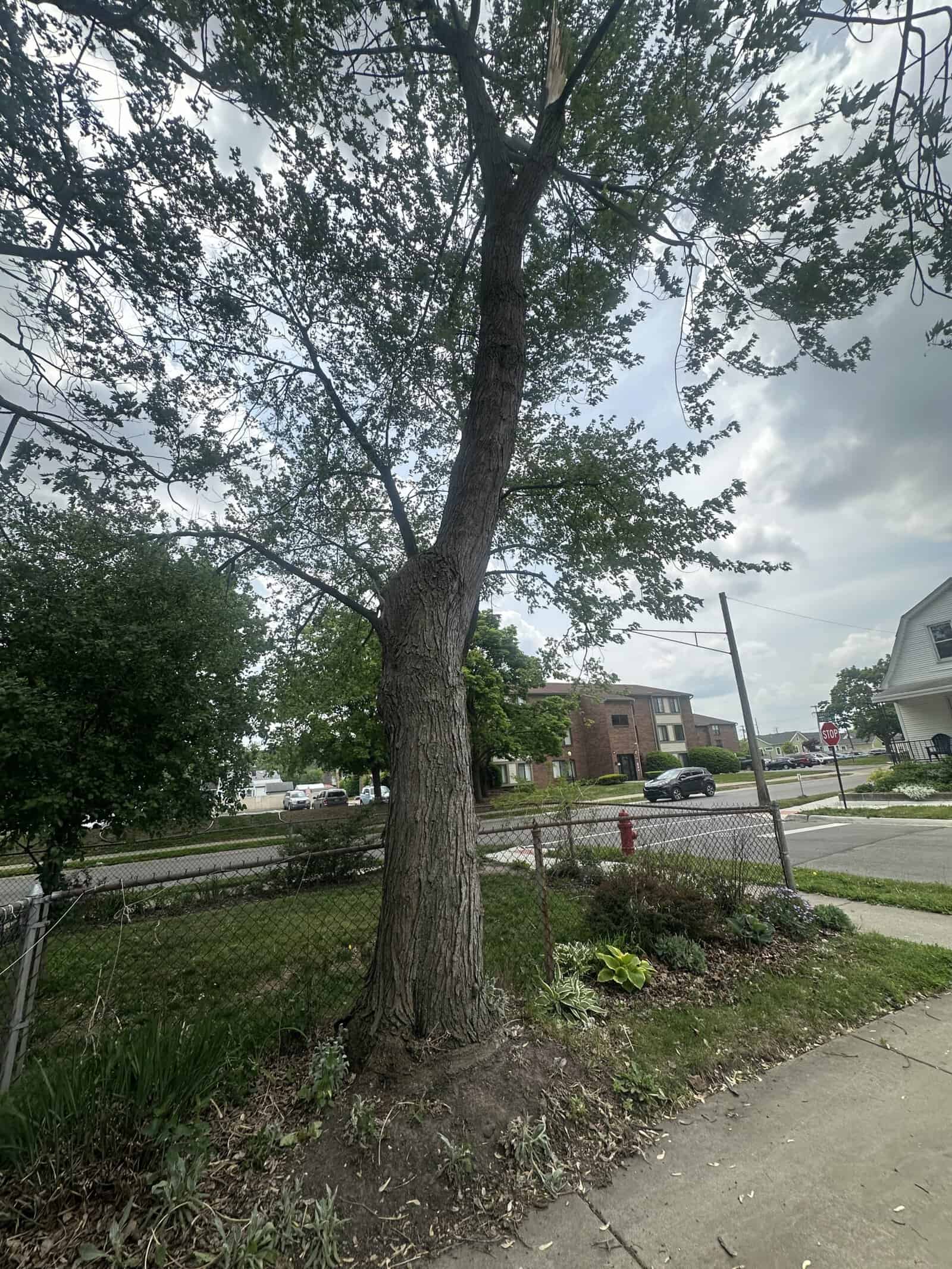
Novi’s established neighborhoods — places like Novi Heights, Greenwood Oaks, and Jamestowne Green — are full of oaks and sugar maples that have been growing since the 1980s. These trees are beautiful, but at 30 to 40 years old, they can develop internal decay, compromised root systems, and structural weakness that isn’t visible from the ground. A TRAQ-qualified risk assessment tells you what’s actually going on inside that tree before it becomes a problem for your home or your neighbor’s.
And when a storm rolls through Oakland County — the kind that hit Southeast Michigan in August 2023 with 60 to 80 mph wind gusts — you need someone who can respond fast, assess the damage accurately, and handle removal safely. That’s what professional tree removal in Novi actually looks like.
Ivan’s Tree Services LLC is a family-owned, Oakland County-based tree care company founded by Ivan and his fiancée Cecilia out of Oakland, Michigan — roughly 15 to 20 miles from Novi via I-96. Ivan handles every job in the field. Cecilia manages scheduling, communication, and the administrative side of the business. When you call, you reach real people who know this area.
We hold ISA Certified Arborist credentials and include TRAQ-qualified risk assessors — the same level of expertise that Novi’s Woodland Use Permit process is built around. Our crew is also specifically trained to work near electric poles and overhead utility lines, which matters in a city where ITC Transmission — one of the largest independent electric transmission companies in the country — is headquartered and the utility infrastructure runs through residential neighborhoods throughout Novi.
Seven years of work across Southeast Michigan means we’ve seen the full range of what this region throws at trees: the ice storms, the freeze-thaw cycles, the late-summer wind events. That experience shows up in how we assess, plan, and execute jobs — not just in a list of credentials on a website.
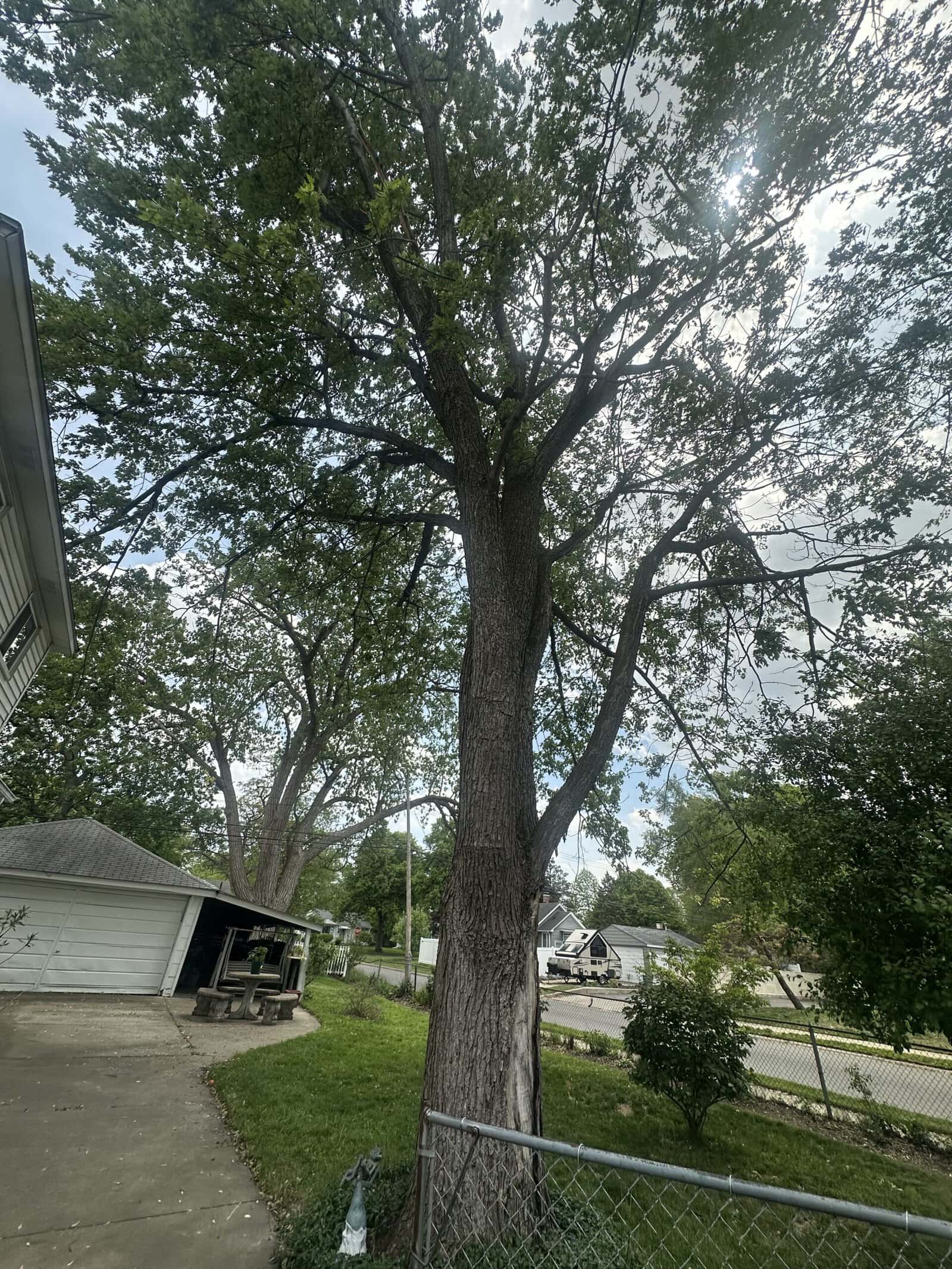
It starts with a free, no-obligation on-site estimate. Ivan or a member of our team comes out to your property, walks the site with you, evaluates the tree, and gives you a clear written scope before any commitment is made.
For Novi homeowners, this visit also includes checking whether your tree falls within a regulated woodland area under Section 37 of the city’s Woodland Protection Ordinance. If a Woodland Use Permit is required — because the tree meets the 8-inch DBH threshold in a regulated woodland, or the 36-inch threshold anywhere in the city — we identify that upfront, not after the fact.
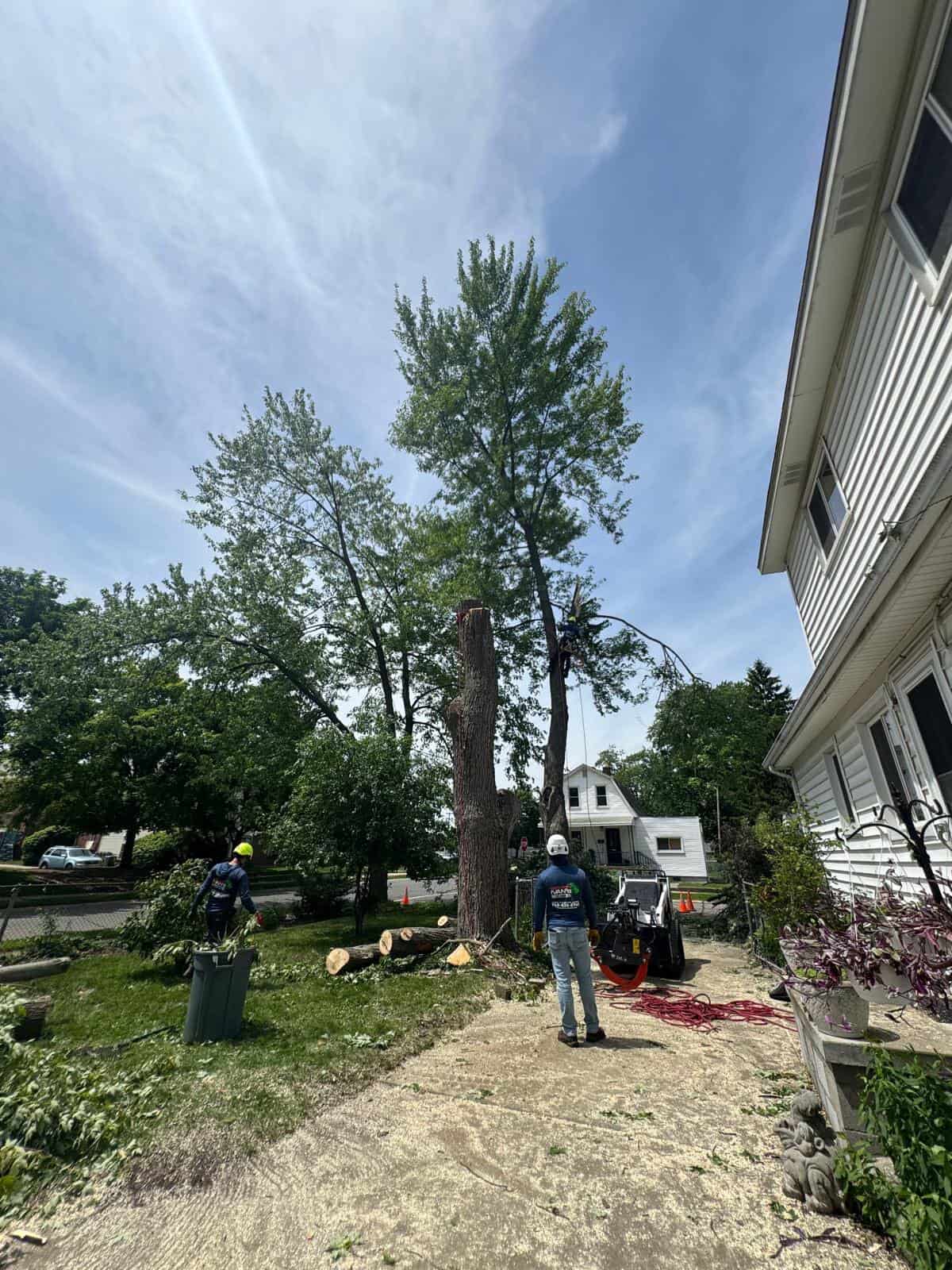
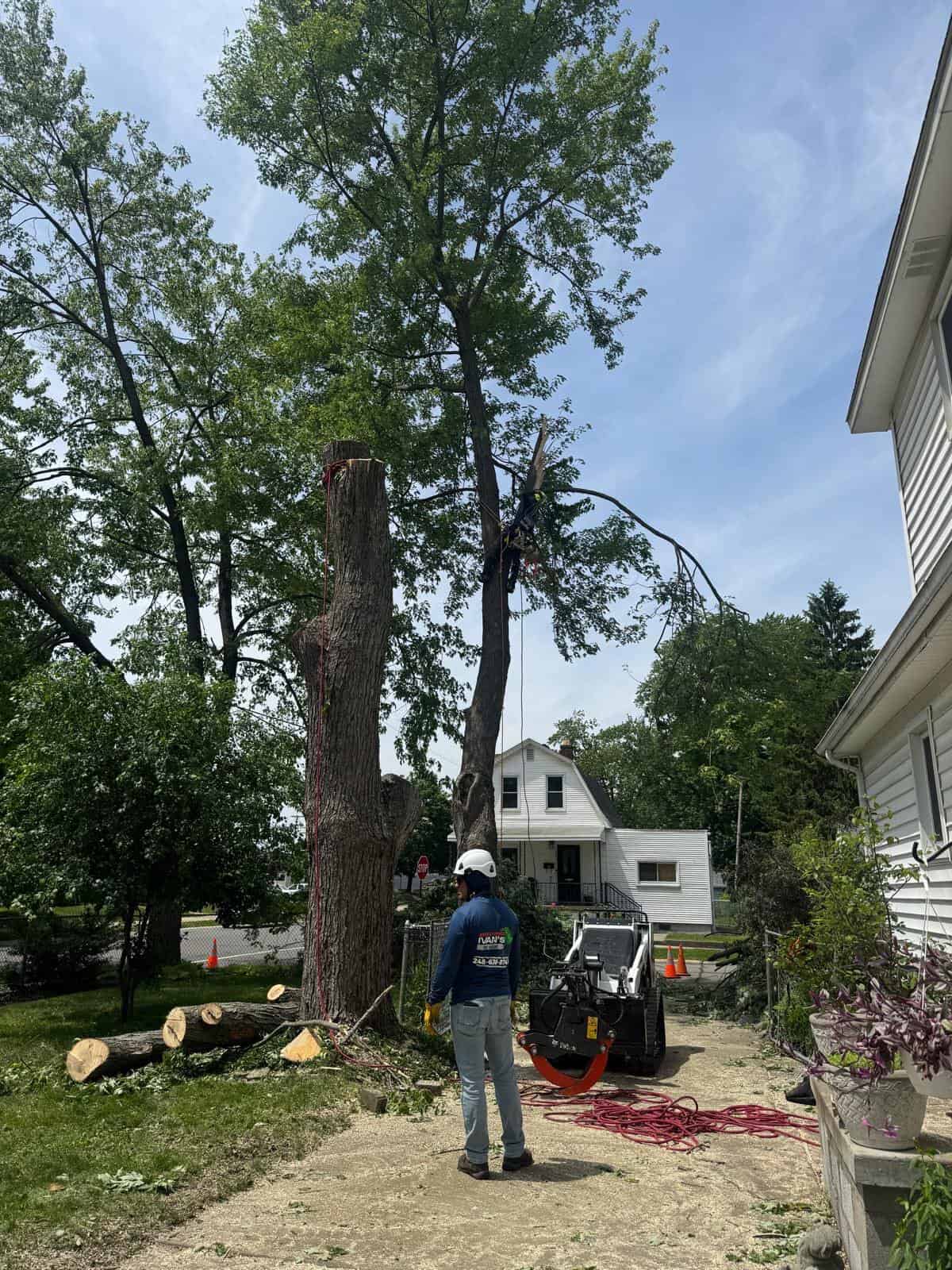
Once the scope is agreed on and any required permits are in order, our crew arrives with the right equipment for the job. Controlled removal using proper rigging is standard practice near structures, fences, and landscaping — especially on high-value lots in communities like Island Lake or Autumn Park where the homes and surrounding landscaping represent a significant investment. Nothing gets cut until the fall path is planned and the site is set up safely.
After the tree is down, the work isn’t done. Every job ends with full debris removal and site cleanup — wood, brush, chips, everything. You don’t come home to a pile of logs in your yard. If stump grinding is part of the scope, that’s handled before we leave. The job is finished when the property looks right, not just when the tree is on the ground.
Ready to get started?
Tree removal in Novi covers more ground than most homeowners expect going in. The most common calls are hazardous tree removal — trees showing signs of lean, root heaving, crown dieback, or internal decay — and dead tree removal, which is more urgent in Michigan’s climate than people realize.
A dead tree in Novi’s freeze-thaw cycle loses structural integrity faster than in milder climates, and ice loading during winter storms can bring one down without warning. It’s worth noting that even a dead tree in a regulated woodland area may still require a Woodland Use Permit if it meets the DBH threshold — so “it’s already dead” doesn’t automatically mean the permit process doesn’t apply.
We offer emergency tree removal 24 hours a day, seven days a week. Oakland County storms can move fast, and a tree on a roof or blocking a driveway in Greenwood Oaks at 11 p.m. on a Sunday isn’t something you want to wait on until Monday morning. Our team is reachable and equipped to respond.
Beyond removal, we handle stump grinding, storm cleanup and debris removal, lot clearing for new construction — which is relevant given Novi’s active development pipeline along Eight Mile Road and Wixom Road — and services like mulch spreading and topsoil installation to restore the area after the work is done. It’s a complete scope, handled by the same crew from start to finish.
In many cases, yes — and it depends on where your property sits and how large the tree is. Novi’s Woodland Protection Ordinance, codified under Section 37 of the city’s zoning ordinance, protects trees with a diameter at breast height of 8 inches or more within designated regulated woodland areas. Outside those areas, trees measuring 36 inches DBH or larger are still protected citywide.
Before removing any tree that might fall under these thresholds, you need to check whether your property is within a regulated woodland using the city’s Regulated Woodland Map, available through the Community Development Department. If a permit is required, you’ll need to submit a Woodland Use Permit application that includes a plot plan identifying the trees to be removed and retained, along with their species and sizes.
The city’s environmental consultant reviews the application — this isn’t a rubber-stamp process. For every protected tree removed in Novi, the city can require up to four replacement trees, which must be Michigan-native species. If your property can’t accommodate all the replacements, you’ll be required to contribute to the city’s Tree Fund. Removing a protected tree without going through this process can result in mandatory restoration at your own expense. Getting this right before any cutting starts is the only way to avoid that outcome.
A tree can look completely fine from the outside and still be a serious structural risk. Internal decay, compromised root systems, and co-dominant stems with included bark are all failure points that aren’t visible without a trained assessment. The signs that are visible — a new lean after a storm, soil heaving around the base, cracks in the trunk, dead wood concentrated in the upper crown, or fungal growth at the root flare — are worth taking seriously, but they’re also easy to misread without experience.
This is where a TRAQ-qualified risk assessment makes a real difference. TRAQ stands for Tree Risk Assessment Qualification, an ISA designation that uses a formal, science-backed methodology to evaluate whether a tree poses a genuine structural risk. For homeowners in Novi’s older neighborhoods — where oaks and maples planted in the 1980s and early 1990s are now reaching sizes where failure risk increases — this kind of professional evaluation is worth doing before a storm makes the decision for you.
A home in Island Lake or Novi Heights worth $400,000 or more deserves that level of care. The free on-site estimate from Ivan’s Tree Services LLC includes a professional evaluation of the tree’s condition, so you get a real answer, not a sales pitch.
The first thing to do is stay away from the tree until you know what you’re dealing with. A storm-damaged tree — especially one that’s partially fallen or leaning against a structure — can shift unpredictably. If there’s any contact with overhead utility lines, treat it as a live wire situation and call your utility provider before anyone approaches the tree.
Oakland County storms, including the severe thunderstorm system in August 2023 that produced wind gusts of 60 to 80 mph across Southeast Michigan, can leave trees with hidden structural damage even when they’re still standing. A trunk that looks intact may have a split running through the core.
We offer 24/7 emergency tree removal for exactly this situation. Our team can respond after hours, assess the damage accurately, and handle removal safely — including near power lines, which requires specific training that not every tree crew has. One more thing worth knowing before you start clearing debris: if the tree caused damage to a structure, contact your homeowners insurance company before the tree is moved. Removing it before an adjuster can document the scene can affect your ability to file a claim. Get the insurance call in first, then get the tree handled.
Tree removal and stump grinding are separate services, and this is one of the most common points of confusion homeowners run into. When a tree is cut down, the stump and root system remain in the ground unless stump grinding is specifically included in the scope of work. It’s worth asking about this upfront so there are no surprises after the crew leaves.
We handle both tree removal and stump grinding, and the two can absolutely be scheduled together. Grinding the stump down removes the visible portion and allows the area to be replanted, seeded, or covered with mulch. If you’re in a Novi neighborhood where the HOA has landscaping standards — or if you’re planning to restore the area after removal and want a clean finish — stump grinding is usually worth including.
For properties in Novi’s regulated woodland areas, it’s also worth noting that the replacement tree requirements under the Woodland Protection Ordinance apply to the removed tree, not the stump — so even after grinding, you may still need to plant replacement trees as part of your permit conditions. We can walk you through what the full scope looks like for your specific property during the on-site estimate.
It can be done safely, but it requires a crew that’s specifically trained for it — and not every tree service in the area is. Working near energized overhead lines is a different category of risk than standard tree removal. The wrong cut, the wrong fall direction, or a branch making contact with a live line creates a serious hazard for the crew, the homeowner, and anyone nearby.
Many tree companies simply won’t take on jobs with significant power line proximity, which leaves homeowners stuck. Our team is trained and certified to work near electric poles and overhead utility lines. This is an explicit part of how we operate, not an afterthought.
In Novi, this capability is particularly relevant. The city’s residential neighborhoods are served by an extensive overhead utility infrastructure, and many of the mature trees in established neighborhoods along Ten Mile Road, Beck Road, and throughout the older subdivisions have grown into or adjacent to utility corridors over the past few decades. If you have a tree that’s close to power lines and you’ve had other companies tell you they can’t handle it, that’s a specific scenario we’re equipped to address. The free on-site estimate will confirm what’s involved and how the job would be approached safely.
Tree removal costs vary based on the size of the tree, its location on the property, proximity to structures or utility lines, and whether stump grinding is included. Nationally, professional tree removal ranges from around $200 on the low end for a small tree to $2,000 or more for a large one, with averages typically landing somewhere in the $630 to $900 range depending on the source. Emergency removal — when a tree needs to come down immediately after storm damage — can cost significantly more, sometimes reaching $5,000 depending on the complexity and access conditions.
In Novi specifically, a few factors can affect where your job lands within that range. Large, mature oaks and maples — the kind that are common in Greenwood Oaks, Novi Heights, and similar neighborhoods — are on the higher end of the size scale, which affects both the time and equipment required. Properties with tight access, overhead lines, or structures in the fall zone take more planning and rigging, which is reflected in the cost.
And if your tree is in a regulated woodland area, the permit process and replacement tree requirements are separate from the removal cost itself. Ivan’s Tree Services LLC provides a free, written on-site estimate before any work begins — no phone guessing, no verbal quotes that change when the crew shows up. The estimate covers the full scope so you know exactly what you’re agreeing to before the job starts.
Other Services we provide in Novi
