Hear from Our Customers
The oldest subdivisions in Novi — Village Oaks, Carriage Hill, Whispering Meadows — were built between the mid-1970s and late 1980s. The trees planted then are now large, mature hardwoods with canopies spreading over driveways, rooflines, and in some cases, power lines along Haggerty Road and Meadowbrook Road. At that size and age, a neglected crown isn’t just an eyesore. It’s a liability.
Overgrown, structurally weak branches don’t announce themselves before they fail. After proper crown thinning and reduction work, the tree is lighter, better balanced, and far less likely to lose a major limb during one of Novi’s spring or summer storms. Novi’s tornado activity runs 27% above the national average, which makes removing dead wood and reducing wind resistance before storm season essential planning, not pessimistic thinking.
There’s also the property value angle, and it’s worth stating plainly. Homes in Novi average $457,636 at sale — 44% above the average. In neighborhoods like Providence Park and Island Lake, you’re often looking at $500,000 to $650,000. Research consistently shows that healthy, well-maintained mature trees add 7 to 19% to home value, which in the Novi market averages out to roughly $10,000 or more per property. Letting that canopy deteriorate isn’t saving money. It’s leaving equity on the table.
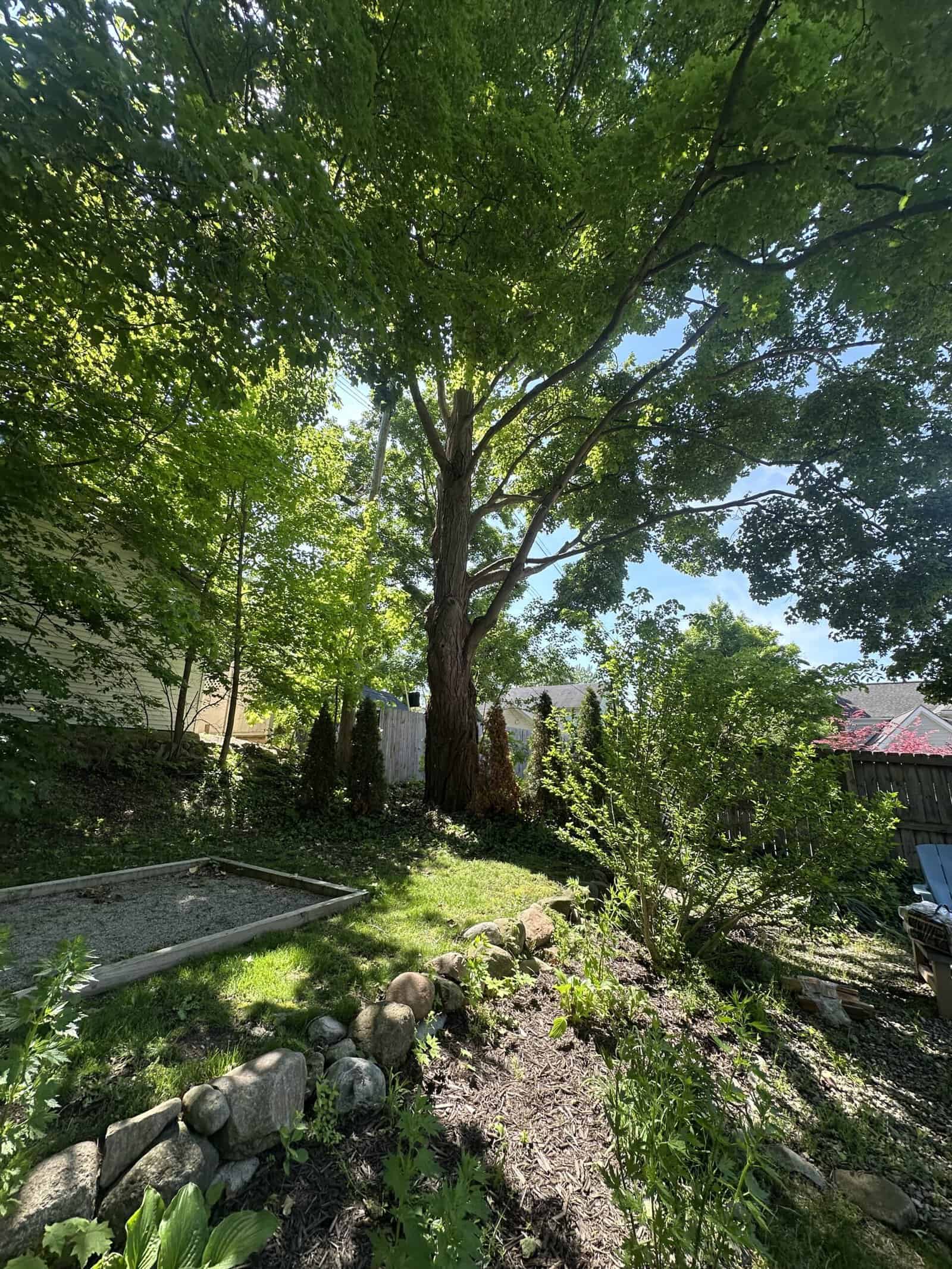
We’re a family-owned company based in Milford serving Novi and the broader County area for over seven years. I lead every job in the field, and my fiancée Cecilia handles scheduling and customer communication directly — so when you reach out, you’re not leaving a voicemail in a queue. You’re getting a real response from someone who manages this operation.
On the credential side, we field ISA Certified Arborists and TRAQ-qualified risk assessors on commercial and large residential jobs. TRAQ — the Tree Risk Assessment Qualification — is a specialized ISA credential built specifically for evaluating structural risk in mature trees. It’s exactly the kind of assessment that a 40-year-old oak overhanging a roof in Carriage Hill or a dense canopy in Greenwood Oaks actually calls for. We personally train every crew member, not just in technique, but in how to communicate clearly and respectfully with homeowners throughout the job.
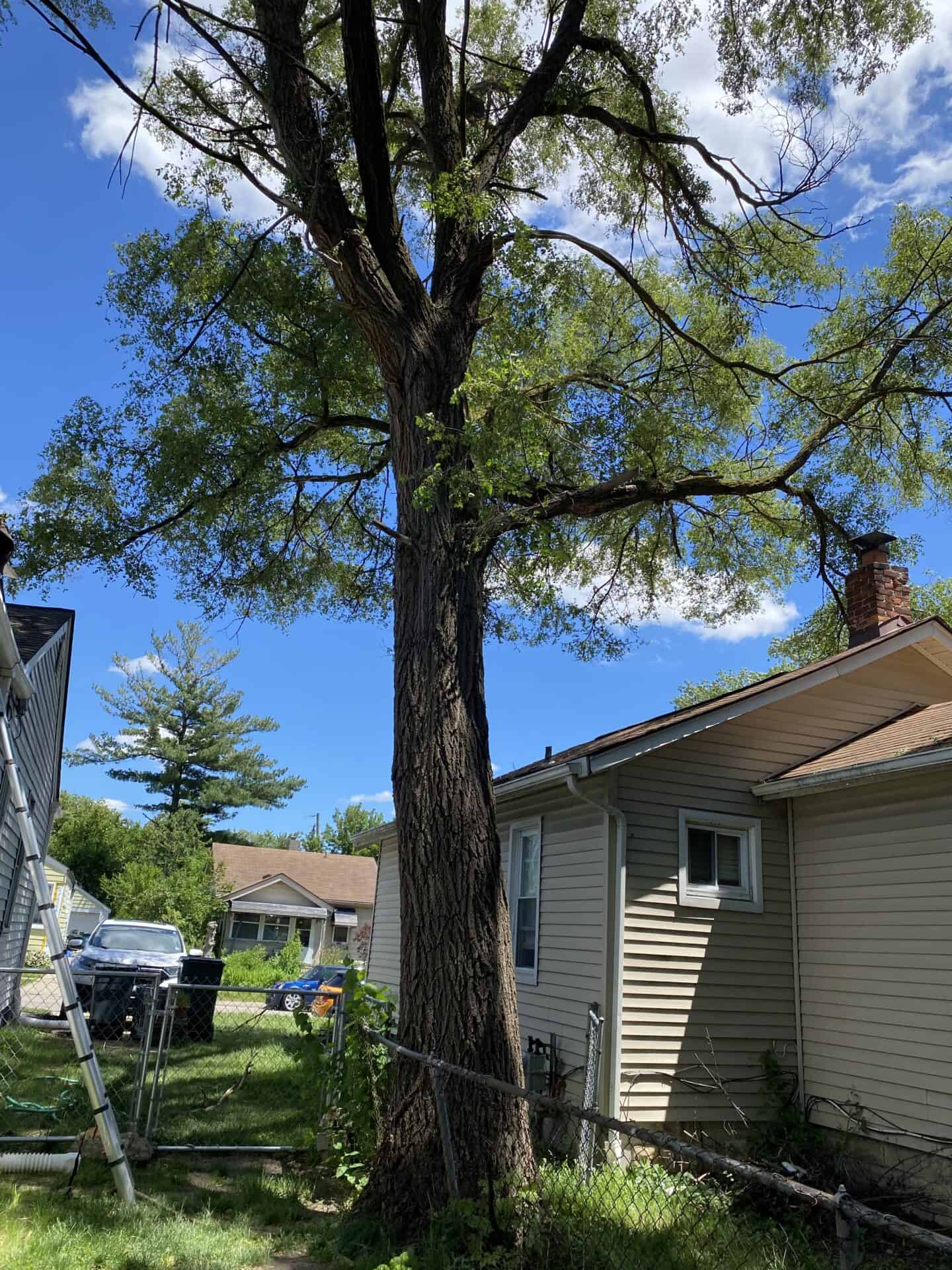
It starts with a site walk. Before any equipment comes out, we walk the property with you and assess what’s there. For Novi homeowners, this step matters more than most people realize. Novi’s Woodland Protection Ordinance — Section 37 of the city code — protects trees 8 inches DBH or larger in regulated woodland zones, and trees 36 inches DBH or larger everywhere else. Removing a protected tree without a Woodland Use Permit can trigger a requirement to plant up to four replacement native Michigan trees, or pay into the city’s Tree Fund if there isn’t room on the lot.
The site walk is where we identify what’s regulated, what isn’t, and what the right scope of work looks like before a single cut is made. From there, you get a written estimate with a detailed scope. No verbal ballparks. No scope that expands after the job starts.
The pruning itself follows ANSI A300 standards — the national benchmark for professional tree care. That means crown thinning, crown reduction, and deadwooding are done with precision: proper cuts, no topping, no removal of more than 25% of live foliage in a single session. For Novi’s clay-heavy soil — particularly in subdivisions along the 10 Mile Road corridor — crown reduction also reduces the above-ground wind load that shallow-rooted trees have to resist, which is a real structural concern in this specific area. When we leave, the site is clean. Debris removed, yard restored.
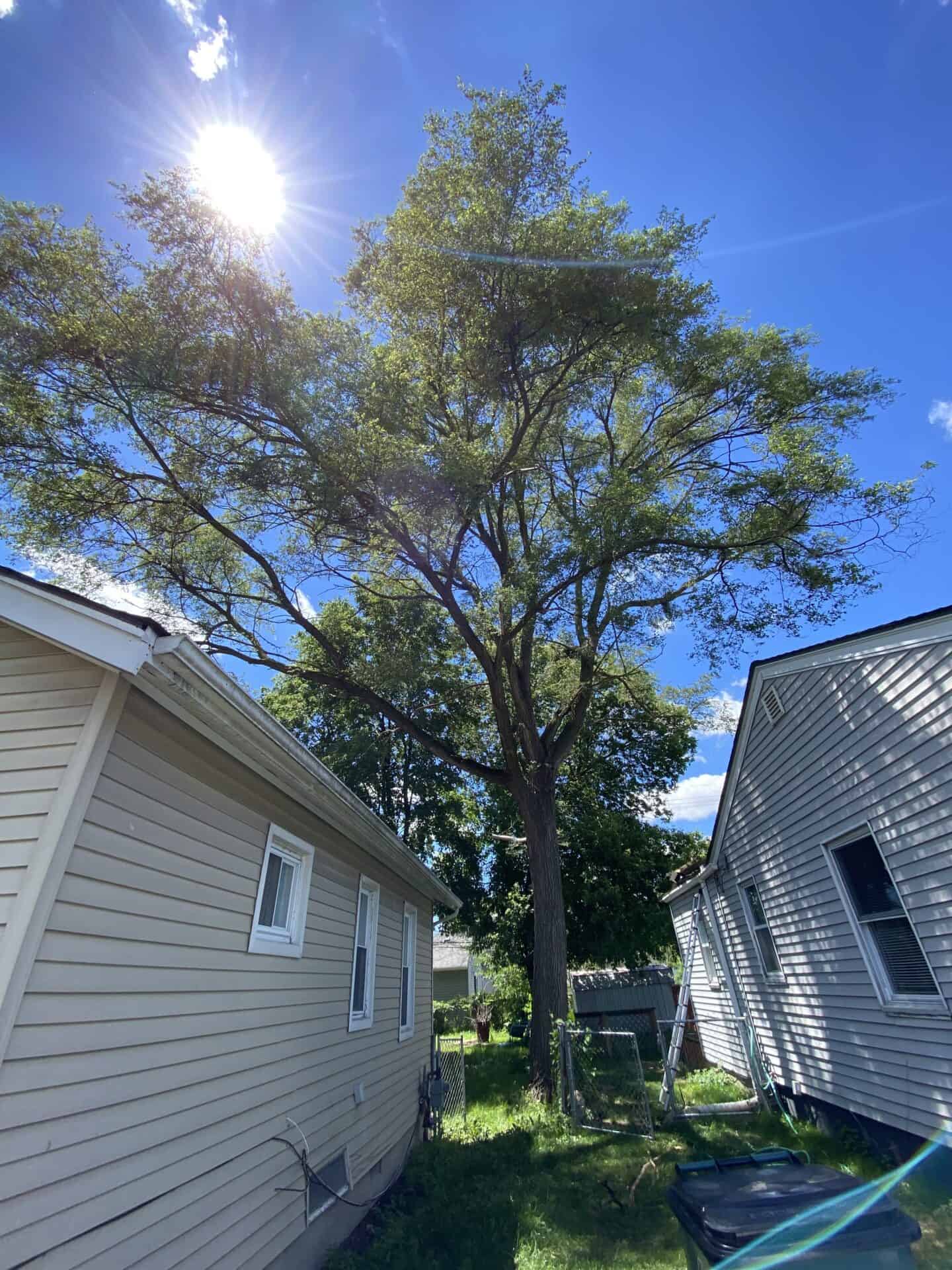
Ready to get started?
Tree pruning through our services covers the full scope of what a mature tree in Novi’s established neighborhoods typically needs. Crown thinning selectively removes branches to improve light penetration and airflow through the canopy — reducing the sail effect that makes dense, heavy crowns vulnerable during the kind of wind events Novi sees in spring and summer. Crown reduction brings the overall size of the tree down while maintaining its natural shape, which is the correct approach when a tree has outgrown its space near a structure or utility line. Deadwooding removes dead, dying, or diseased branches that pose a drop risk regardless of weather conditions.
For properties near Novi’s arterial roads — Haggerty Road, Meadowbrook Road, Grand River Avenue, Beck Road — we carry line-clearance certification, meaning our crew is trained, equipped, and insured specifically for work near energized power lines. That’s not a credential every local tree service holds, and it matters when a canopy has grown into a utility corridor.
If a storm has already done damage, we handle emergency pruning and fallen branch removal with 24/7 availability and typical on-site arrival within 60 to 90 minutes. For Novi homeowners in Island Lake, Autumn Park, or Beckenham — where homes are closely situated and a downed branch can affect more than one property — that response time is worth knowing before you need it. Every job ends with full debris removal and site cleanup.
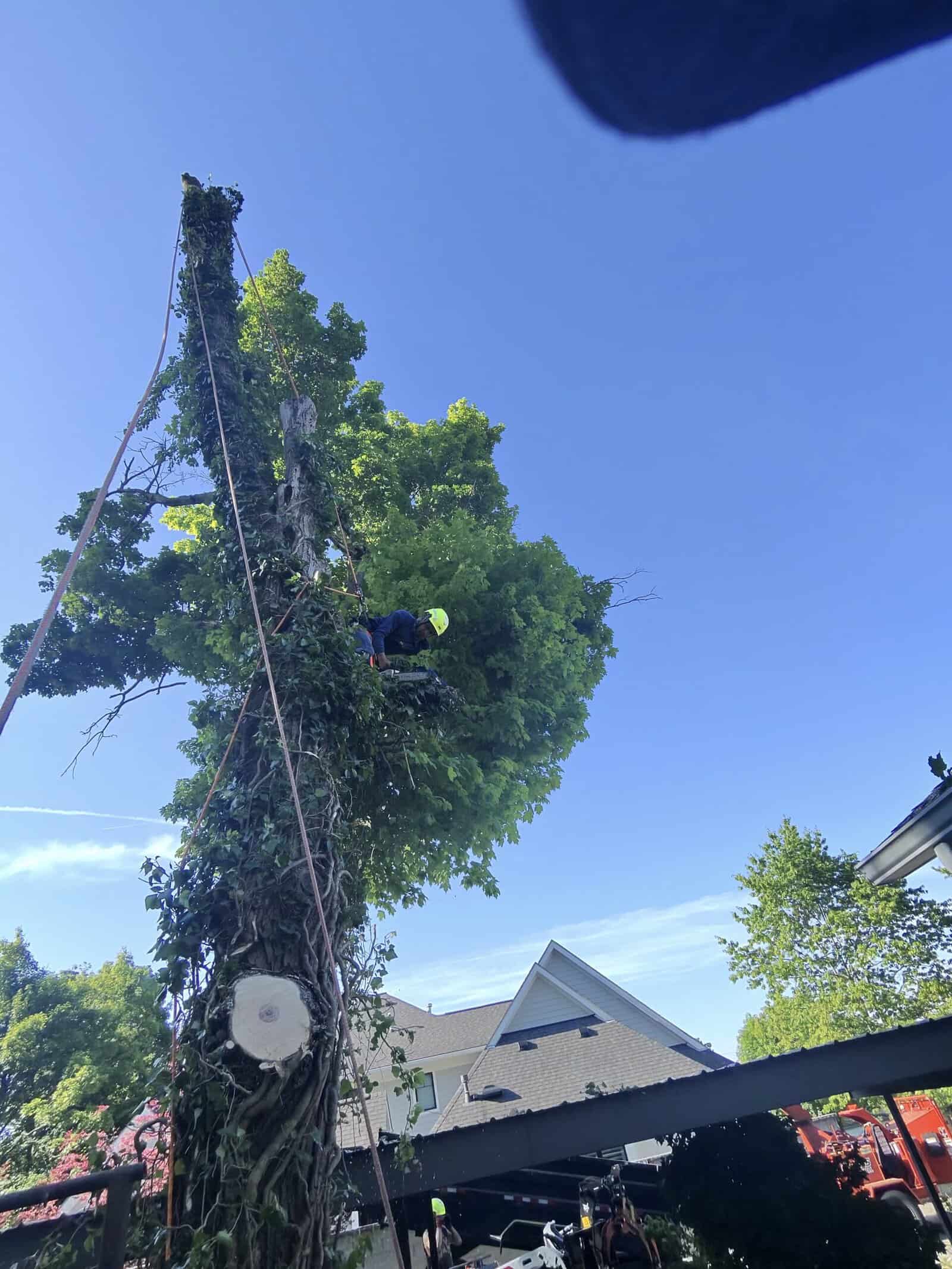
Pruning and removal are treated differently under Novi’s Woodland Protection Ordinance, and it’s worth understanding the distinction before any work starts. The ordinance — Section 37 of Novi’s city code — primarily governs tree removal, not routine pruning. If you’re having branches trimmed, shaped, or thinned without removing the tree itself, you generally don’t need a Woodland Use Permit for that work.
Where it gets more complicated is when a pruning job is significant enough that it overlaps with questions about the tree’s long-term viability, or when you’re considering removing a tree that sits within a regulated woodland zone. In those cases, trees 8 inches in diameter at breast height or larger are protected, and removal without a permit can trigger a mandatory replacement requirement of up to four native Michigan trees. Before any work begins on your property, we walk the site and help you understand exactly what’s regulated and what isn’t — so you’re not dealing with a city notice after the fact.
For most deciduous trees in Southeast Michigan, late winter is the professional recommendation — roughly February through early March, while trees are still dormant. The structure is fully visible without foliage, disease vectors are inactive, and wounds callus quickly once the growing season begins. Dormant-season pruning also reduces stress on the tree compared to cutting during active growth.
Oak trees are a specific case that Novi homeowners should know about. Oak wilt — a serious, incurable fungal disease — is spread by sap beetles that become active when temperatures climb above 50°F, typically from April through October. In Michigan, the professional guidance is clear: oak trees should be pruned between November 1 and March 31. Pruning an oak outside that window, even for a small cut, carries a real risk of infection. If you have oaks in your yard — and many of Novi’s established subdivisions do — timing isn’t a preference, it’s a health decision for the tree.
These are two distinct techniques with different goals, and knowing which one your tree actually needs makes a real difference in the outcome. Crown thinning involves selectively removing branches throughout the canopy to improve light penetration and airflow without changing the overall size or shape of the tree. It reduces wind resistance and weight without altering the tree’s natural form. Most arborists recommend thinning mature shade trees every three to five years.
Crown reduction is different — it’s used when a tree has grown too large for its space, whether that’s encroaching on a structure, overhanging a neighbor’s property, or extending into a utility corridor. The goal is to reduce the overall size of the crown while preserving as much of the tree’s natural shape as possible. In Novi, crown reduction is particularly relevant for mature trees in clay-heavy soil areas like the 10 Mile Road corridor, where shallow root systems can’t always support the full weight and wind load of an oversized canopy. Done correctly and within ANSI A300 standards, crown reduction strengthens the tree’s structural integrity rather than weakening it.
This is one of the more common questions homeowners face, and the honest answer is that it depends on what’s actually wrong with the tree — which is why a proper assessment matters before any decision is made. Trees that have structural defects like co-dominant stems, significant lean toward a structure, or large sections of dead wood may be candidates for removal even if they look healthy from a distance. On the other hand, many trees that appear problematic can be stabilized and preserved through targeted pruning, cabling, or risk mitigation work.
We field TRAQ-qualified risk assessors — that’s the Tree Risk Assessment Qualification from the International Society of Arboriculture — on commercial and large residential jobs. TRAQ is specifically designed for evaluating the kind of structural risk that mature trees in Novi’s older neighborhoods present. It’s an evidence-based assessment, not a visual guess. If the tree can be saved safely, the recommendation will reflect that. If removal is the right call, that will be clearly explained with the reasoning behind it — not just a quote for the work.
Pruning near energized power lines is not standard tree work — it requires specialized training, specific equipment, and a separate category of insurance that most general tree services don’t carry. Attempting it without line-clearance certification puts the crew, the homeowner, and the property at serious risk.
We hold line-clearance certification, which means our crew is specifically trained and insured for work near energized utility lines. This is directly relevant to Novi homeowners whose trees have grown into utility corridors along Haggerty Road, Meadowbrook Road, Grand River Avenue, or Beck Road — all major arterials where overhead lines and mature canopies frequently intersect. If your tree is touching or approaching a power line, the first step is not to attempt any pruning yourself. Contact us for an assessment, and we’ll handle it with the right credentials and equipment for that specific type of work.
This is a risk that catches Novi homeowners off guard more often than it should. If a tree worker is injured on your property and the company they work for doesn’t carry workers’ compensation insurance, you can be held personally liable for those injuries. Your homeowner’s policy may not cover it. That’s not a hypothetical — it’s a documented exposure that applies any time an uninsured worker is on your property.
Beyond the liability issue, uninsured crews also tend to skip the credentials and techniques that protect your trees and your property during the job. No ISA certification means no obligation to follow professional pruning standards. No liability insurance means no coverage if equipment damages your roof, fence, or vehicle. In a community where homes average nearly $460,000 at sale, the difference between a credentialed, insured crew and a cheaper alternative isn’t just a matter of quality — it’s a matter of what’s at risk if something goes wrong. Before any tree service starts work on your Novi property, ask for proof of both general liability insurance and workers’ compensation. A legitimate company will have both and won’t hesitate to provide them.
Other Services we provide in Novi
