Hear from Our Customers
West Bloomfield has 24 lakes. That’s not just a selling point for real estate listings — it’s a physical condition that changes how wind moves through your property. Open water across Orchard Lake, Walnut Lake, Cass Lake, and Pine Lake means storm winds travel with almost nothing slowing them down before they hit your yard.
A dense, unpruned canopy acts like a sail in those conditions. Crown thinning — the selective removal of interior branches — lets wind pass through instead of pushing against the whole structure. For lakefront and near-lakefront homeowners in West Bloomfield, that difference matters every spring and summer when severe weather rolls through.
Most of West Bloomfield’s housing stock was built between the 1970s and 1990s. The trees that went in with those homes are now 40 to 50 years old. At that age, they’re not young trees that need light shaping — they’re mature specimens where deferred pruning starts compounding. Deadwood accumulates. Co-dominant stems develop weak attachment points. The canopy grows in ways that increase risk rather than reduce it.
Professional tree pruning in West Bloomfield, done by people who understand what they’re looking at, is what keeps those trees healthy, structurally sound, and genuinely valuable to your property for decades more.
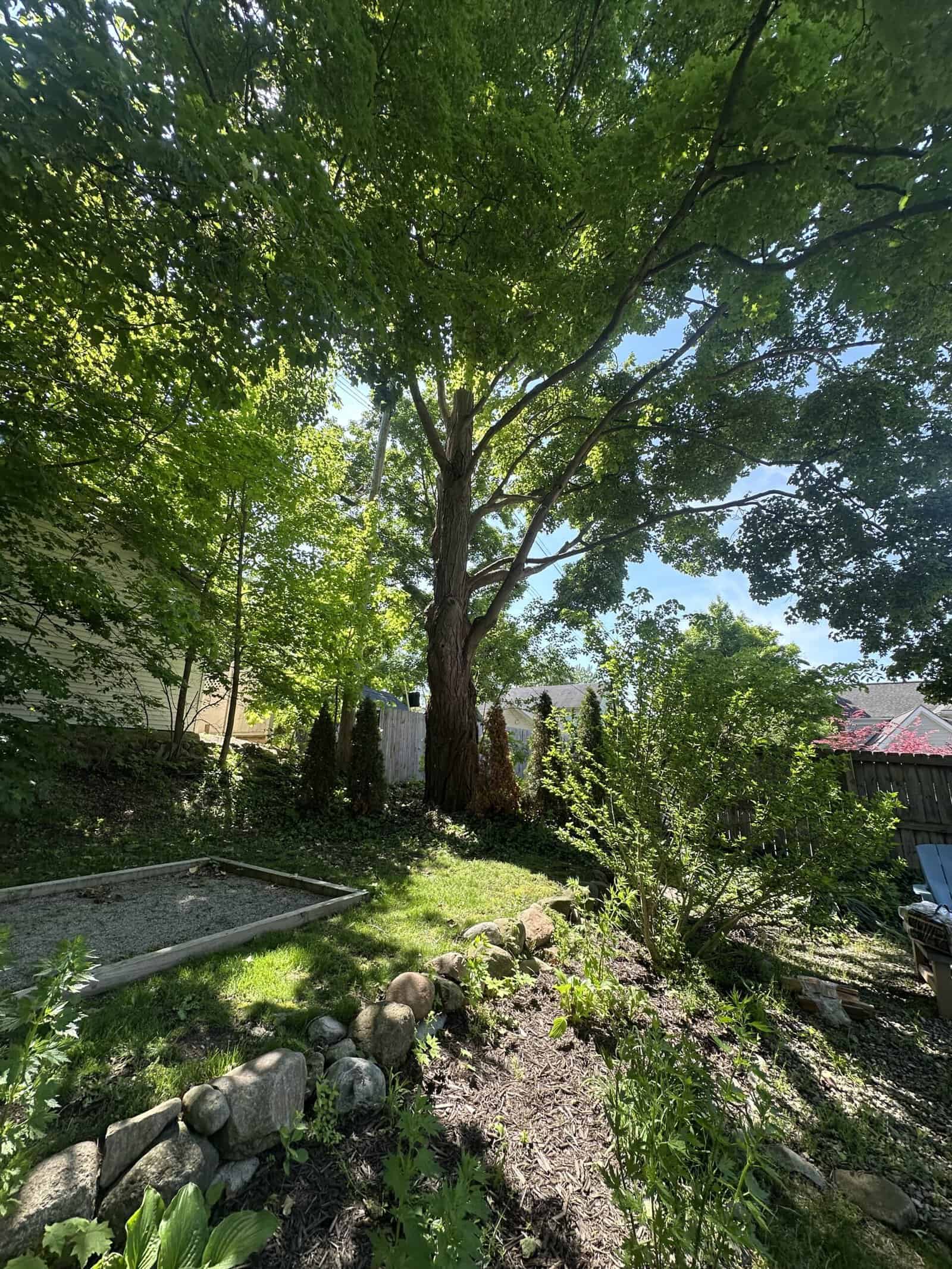
We’re a family-owned company based in Michigan, with over seven years of experience serving homeowners — including West Bloomfield and the communities that border it directly, like Commerce Township to the west and Farmington Hills to the south. Ivan leads every field operation. Cecilia handles scheduling and customer communication, which means when you reach out, you’re talking to someone accountable — not a call center.
What separates us from a lot of local options is the credential depth. ISA Certified Arborists and TRAQ-qualified risk assessors on the job. Line-clearance certified arborists for work near utility corridors, including the overhead lines running along Orchard Lake Road and the residential streets feeding off it. These aren’t certifications listed on a website and left in an office — they’re the qualifications that show up on your property and inform every cut that gets made.
Ivan personally trains every crew member, not just in technique, but in how to communicate clearly and treat a homeowner’s property with respect. That shows up in the work, and it shows up in the cleanup.
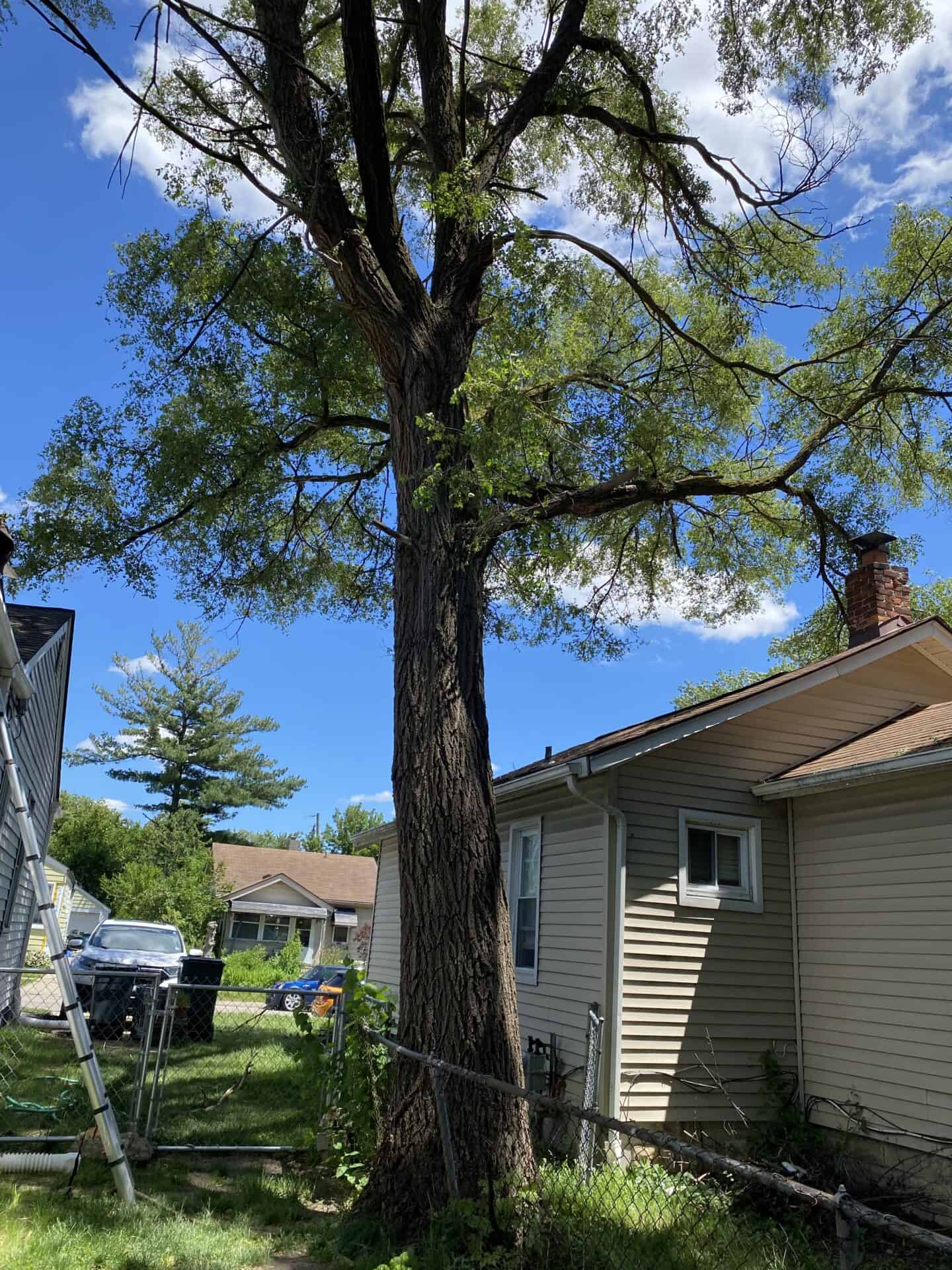
It starts with a site walk. We never begin work without walking the property with you first, understanding what you’re working with, and providing a written scope of work before anything gets touched. On West Bloomfield properties — where lakefront access can be tight, drop zones sometimes include docks or boathouses, and underground infrastructure like private wells and septic systems needs to be accounted for — that pre-work conversation isn’t optional. It’s how the job gets done right.
From there, the approach depends on what the tree actually needs. Crown thinning removes interior branches to reduce canopy density and wind resistance, which is especially relevant for trees sitting on or near open water. Crown reduction brings the overall size of the canopy down while preserving the tree’s natural form — the right answer when a tree has outgrown its space or developed structural imbalance. Deadwooding clears out dead, dying, or diseased branches that create hazard risk.
Each cut follows ANSI A300 standards, which means no topping, no flush cuts, no climbing spikes on trees being pruned. One timing note that matters specifically in West Bloomfield: if you have mature oaks on your property — and many homeowners here do — they need to be pruned between November 1 and March 31. Oak wilt is an incurable disease spread by sap beetles that become active once temperatures climb above 50°F. Missing that window by even a few weeks can cost you a tree that took 80 years to grow. Our ISA Certified Arborists know this and schedule accordingly.
When the work is done, the crew cleans up completely — debris removal, raking, site restoration. You shouldn’t have to do anything after we leave except notice the difference.
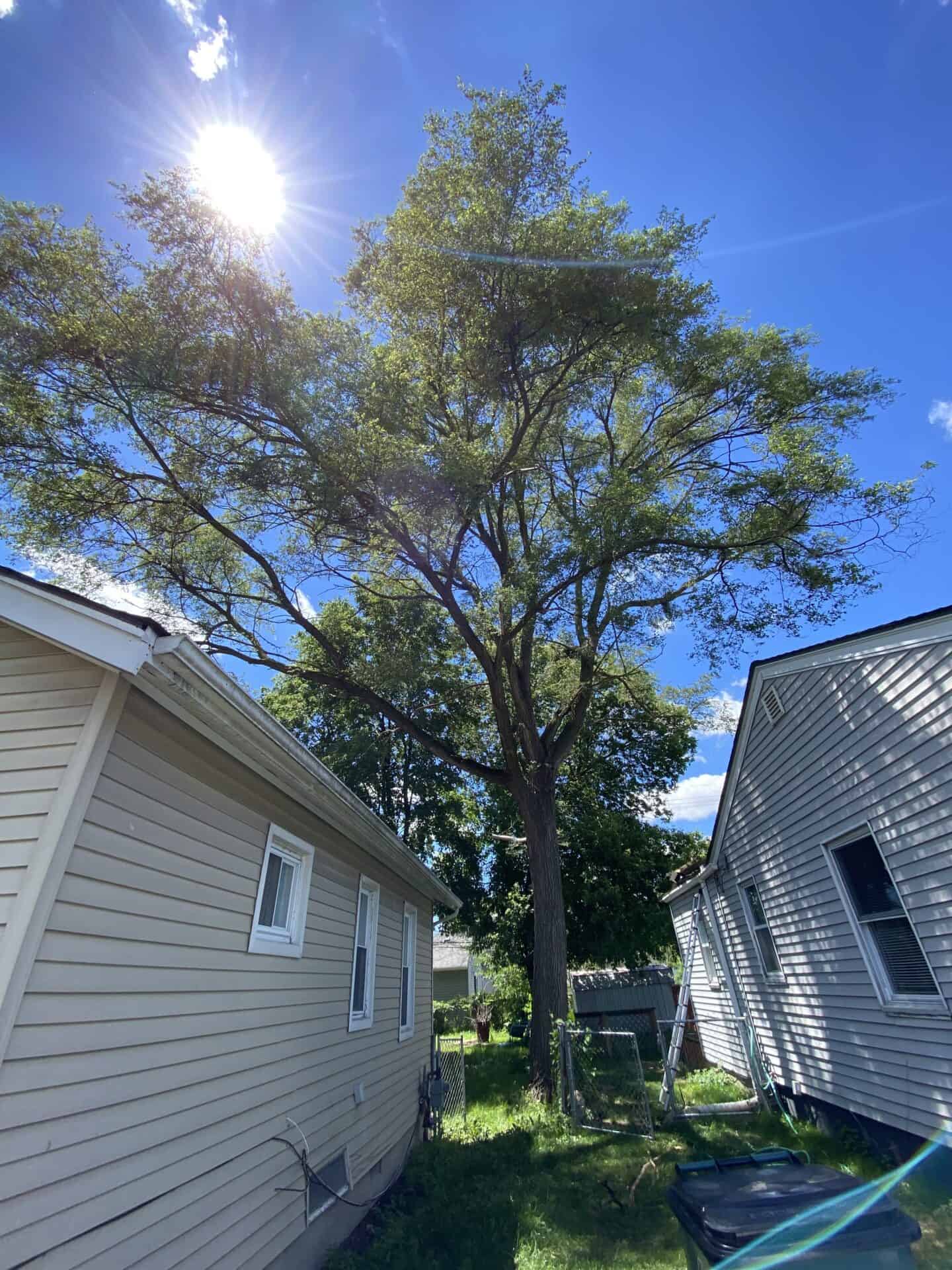
Ready to get started?
Every tree pruning job with us starts with a written estimate. The scope is detailed, agreed upon before work begins, and doesn’t change after the fact. That’s a documented practice — not a marketing line — and it’s one of the things customers consistently mention when they talk about why they came back or referred a neighbor.
The service itself covers the full range of professional pruning techniques: crown thinning for canopy density and wind resistance, crown reduction for size and structural management, crown raising for clearance below the canopy, and deadwooding to remove hazardous material. For West Bloomfield homeowners with trees near utility corridors — along Orchard Lake Road, West Maple Road, or the residential streets running between them — our line-clearance certified arborists are equipped and specifically insured to work near energized power lines. That’s a capability most local competitors don’t hold.
West Bloomfield’s Woodland Preservation Ordinance (C-420-B) requires permits for cutting trees in designated woodland areas, but routine pruning and maintenance is explicitly exempt. If your property sits near a regulated woodland boundary, our team understands the local ordinance and can help you navigate what applies to your specific situation. The goal is always to leave your property cleaner, safer, and better-looking than it was before we arrived — and that standard applies to every job, regardless of size.
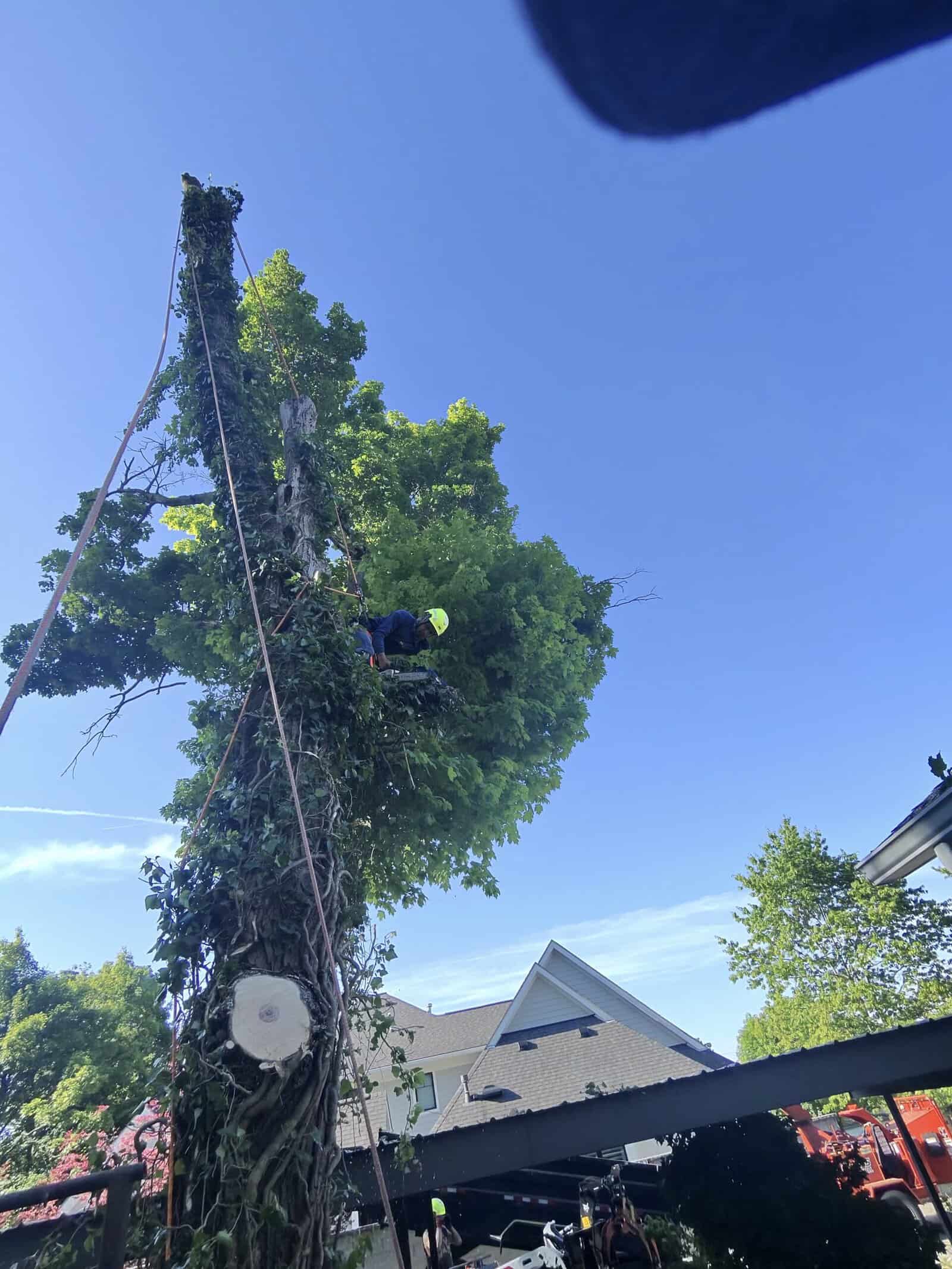
In Michigan, oaks need to be pruned between November 1 and March 31 — and that window matters more than most homeowners realize. Oak wilt is caused by a fungal pathogen spread by sap beetles that become active as soon as temperatures consistently exceed 50°F, typically starting in April. A fresh pruning wound made outside the dormant window can attract those beetles within hours, and once oak wilt takes hold, there’s no treatment that saves the tree.
West Bloomfield has a significant number of mature oaks — what local arborists often call Heritage Oaks — on estate properties, lakefront lots, and wooded subdivisions throughout the township. These are trees that have been growing for decades and represent real value, both to your property and to the neighborhood character. Scheduling pruning in late fall or winter protects that investment. If you’re not sure whether your oak was pruned at the right time in the past, an ISA Certified Arborist can assess the tree’s current condition and help you plan the next pruning cycle correctly.
Crown thinning and crown reduction are both legitimate pruning techniques, but they solve different problems. Crown thinning is about reducing the density of the canopy — selectively removing interior branches so that light and air can move through the tree more freely. It doesn’t change the overall size or shape of the tree significantly, but it reduces wind resistance, which is a meaningful benefit for trees on or near open water.
For West Bloomfield homeowners with lakefront properties along Cass Lake, Walnut Lake, or Orchard Lake, crown thinning is often the most practical storm-preparation step available. Crown reduction is different. It brings down the overall size of the canopy by shortening the outer branches back to lateral growth points, reducing the tree’s height and spread while maintaining its natural form. This is the correct approach when a tree has grown too large for its space, is encroaching on a structure, or has developed an unbalanced canopy that creates structural risk. The key distinction from topping — which is harmful and prohibited under ANSI A300 standards — is that crown reduction preserves the tree’s natural architecture rather than cutting it back to stubs. A qualified arborist will assess which technique is appropriate based on the tree’s species, age, condition, and location before any work begins.
For standard residential tree pruning and maintenance, no permit is required in West Bloomfield. The township’s Woodland Preservation Ordinance (C-420-B) explicitly exempts regular trimming, pruning, and maintenance of trees from its permit requirements. It also exempts the removal of dead, diseased, or dying trees, and any emergency actions needed to prevent injury or property damage from storm-damaged trees.
Where permits do come into play is if you’re cutting trees within a designated woodland area — not just any wooded corner of your yard, but areas formally classified as woodland under the ordinance. Utility corridor work in existing easements or rights-of-way also requires a permit in some situations. If your property borders a regulated woodland boundary or involves overhead utility lines, it’s worth having a credentialed arborist review the situation before work begins. Our team is familiar with West Bloomfield’s ordinance and can help you understand what applies to your specific property so there are no surprises before or after the job.
For most mature shade trees — the oaks, maples, and hardwoods that define so many West Bloomfield neighborhoods — professional pruning every three to five years is the general professional recommendation. That said, the right interval depends on the species, the tree’s current condition, its location on the property, and what the last pruning looked like.
A tree that was topped or improperly pruned in the past may need more frequent corrective work to restore its structure. A tree that’s been consistently maintained may hold up well toward the longer end of that range. Given that a large share of West Bloomfield’s residential trees were planted in the 1970s and 1980s, many are now at an age where structural assessment matters as much as routine maintenance. A TRAQ-qualified risk assessor — which we field on commercial and large residential jobs — can evaluate a mature tree’s branch attachment strength, canopy balance, and overall condition to give you a clearer picture of what it actually needs and when. That kind of informed schedule is more useful than a blanket calendar rule, especially for large trees near your home, dock, or any structure on the property.
Yes — and it happens more often than most homeowners expect. The most common culprit is topping, which involves cutting a tree’s main branches back to stubs without regard for the tree’s natural structure. Topping is prohibited under ANSI A300 standards for good reason: it creates large wounds that the tree struggles to compartmentalize, invites decay and disease into the heartwood, and triggers the growth of weakly attached water sprouts that are structurally inferior to the branches they replaced.
A topped tree often looks like it’s recovering for a season or two before the long-term damage becomes visible. Other harmful practices include flush cuts — removing a branch so close to the trunk that the branch collar is damaged, eliminating the tree’s natural wound-closure mechanism — and using climbing spikes on trees that are being pruned rather than removed. Spikes create dozens of small wounds up and down the trunk that can introduce pathogens and stress the tree unnecessarily. For West Bloomfield homeowners with mature oaks and maples that have been growing for 40 or 50 years, hiring a crew that follows ANSI A300 standards isn’t a premium upgrade — it’s the baseline that protects what you already have.
The two things that matter most and are most commonly skipped during the hiring process are credentials and insurance. ISA Certified Arborist status is the professional benchmark in this industry — it requires passing a comprehensive exam and ongoing continuing education, and it’s verifiable through ISA’s public directory. In West Bloomfield, where several established companies advertise ISA certification, the follow-up question worth asking is whether the certified arborist actually shows up on the job or just signs off on work done by uncertified crew members.
Insurance is the other non-negotiable. General liability coverage protects your property if something goes wrong during the job. Workers’ compensation is what protects you — if an uninsured worker is injured on your property, your homeowner’s policy may not cover it, and you can be personally liable. Always ask for proof of both before work begins. Beyond credentials and insurance, look for a written estimate with a detailed scope of work before any cutting starts, a clear cleanup policy, and a company that walks the property with you before the job rather than showing up and starting without context. In a market like West Bloomfield, where properties carry significant value and the trees on them are often decades old, those basics aren’t small details — they’re the difference between a job done right and one you’re dealing with for years afterward.
Other Services we provide in West Bloomfield
