Hear from Our Customers
West Bloomfield has more inland lakes than almost any township in Michigan — 24 of them, including Cass Lake, Pine Lake, Walnut Lake, and Orchard Lake. That’s a lot of lakefront exposure, and when a summer derecho or fast-moving July thunderstorm tracks across that open water, the wind arrives at your shoreline with more force than it does two streets inland.
The mature oaks, maples, and willows that have been growing along West Bloomfield’s lakefronts for 40, 50, 60 years aren’t small trees. When one of them fails, it doesn’t just block a path — it lands on a boathouse, a dock, or a home worth well over half a million dollars. What you actually need after that happens is someone who can assess what fell, assess what’s still standing but compromised, and remove the hazard without causing a second problem in the process.
That means ISA Certified Arborists, not just a crew with equipment. It means TRAQ-qualified risk assessment so you know whether the tree that’s still standing is safe or a ticking clock. And it means line-clearance certified arborists for the situations — common in West Bloomfield’s residential neighborhoods — where storm damage puts trees in contact with energized power lines.
When we finish a job in West Bloomfield, the debris is gone, the site is clean, and you’ve had a real conversation about what happened and what, if anything, still needs attention. That’s what a complete storm damage response actually looks like.
We’re based in Oakland, MI — right here in Oakland County, just minutes from West Bloomfield. When a storm hits West Bloomfield, it hits our community too. This isn’t a franchise dispatching crews from a call center. We’re a family-owned operation with over seven years of hands-on experience, ISA Certified Arborists on staff, TRAQ-qualified risk assessors, and line-clearance certified arborists who can work safely near energized utility lines — a credential most tree companies in this market simply don’t hold.
Michigan doesn’t require a state license to run a tree service. That means after a major storm, the market fills up fast with operators who have a truck and a chainsaw and not much else. Our credentials are verifiable. The ISA certification, the TRAQ qualification, the proof of insurance — these aren’t talking points, they’re documented. And the pre-job site walkthrough that happens before any work begins isn’t just a quality step — in West Bloomfield, where Environmental Features Setback regulations govern tree removal within 25 feet of any lake or wetland, it’s the step that keeps you out of regulatory trouble.
When you call us after storm damage in West Bloomfield, someone picks up. Our 24-hour emergency line isn’t a voicemail system — it’s a real response, because a tree on your roof or a hanging limb over your boathouse on Pine Lake isn’t a situation that waits until Monday morning.
Once our crew arrives, the first step is always a site assessment — not just of what fell, but of everything around it. Storm-damaged trees that are still standing can be the bigger threat. Root heave, trunk cracks, and compromised anchoring are invisible from the street but can produce catastrophic failures days or even weeks after the initial storm. The TRAQ-qualified assessment covers this, and it produces documented findings that are useful if you’re working with your insurance adjuster.
Before any cutting starts, we walk the site with you, review the scope, and provide a written estimate. This matters in West Bloomfield specifically because a meaningful number of properties — particularly those near Cass Lake, Walnut Lake, Orchard Lake, and the township’s other water bodies — fall within the township’s Environmental Features Setback zone. Any tree removal within 25 feet of a lake, wetland, or watercourse requires a permit from West Bloomfield Township’s Development Services Department, and violations carry real penalties.
That assessment happens before the chainsaw comes out, not after. Once the scope is clear and the work is approved, we handle removal, debris clearing, and full site cleanup — and do a final walkthrough with you before leaving.
Ready to get started?
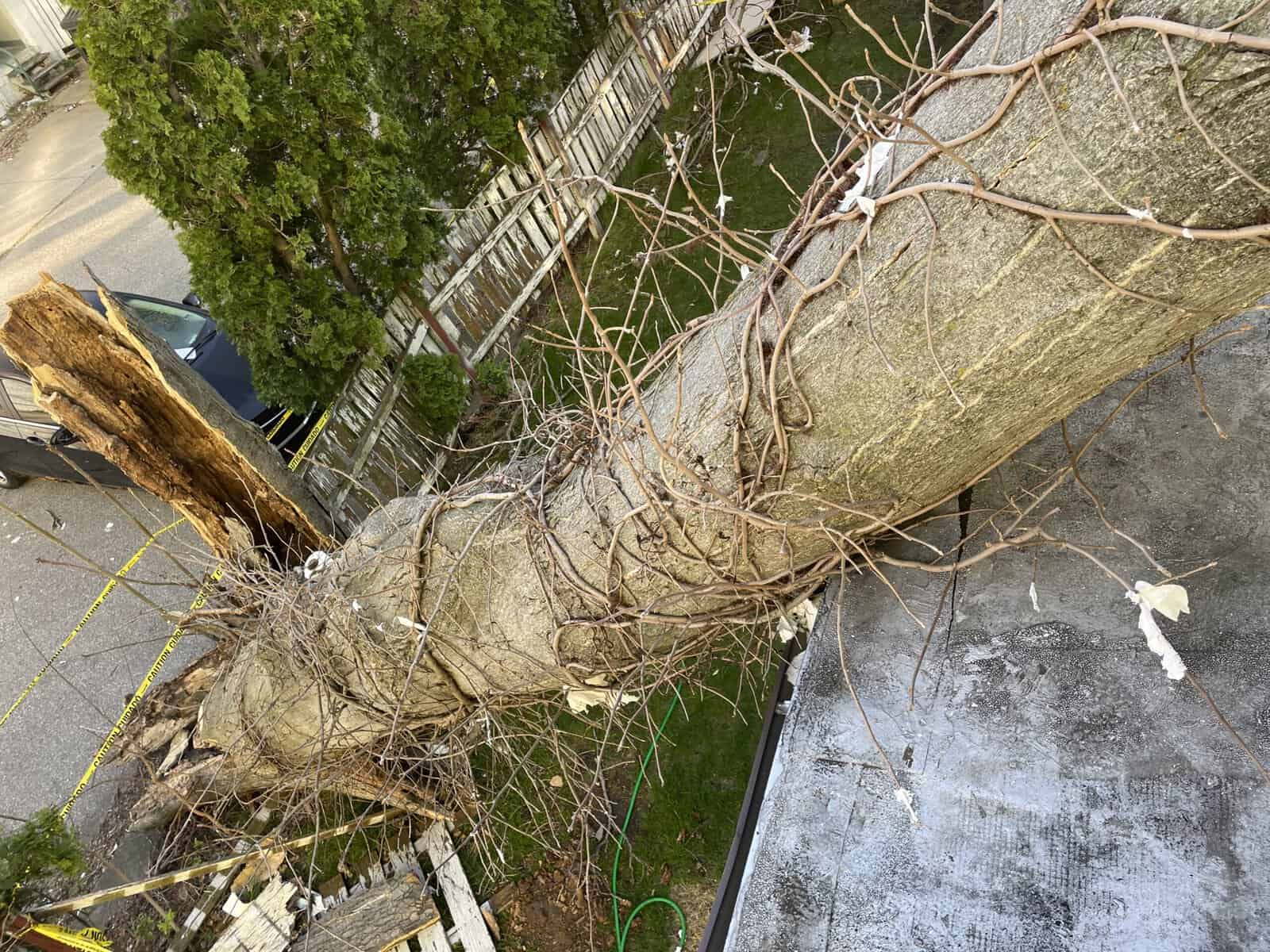
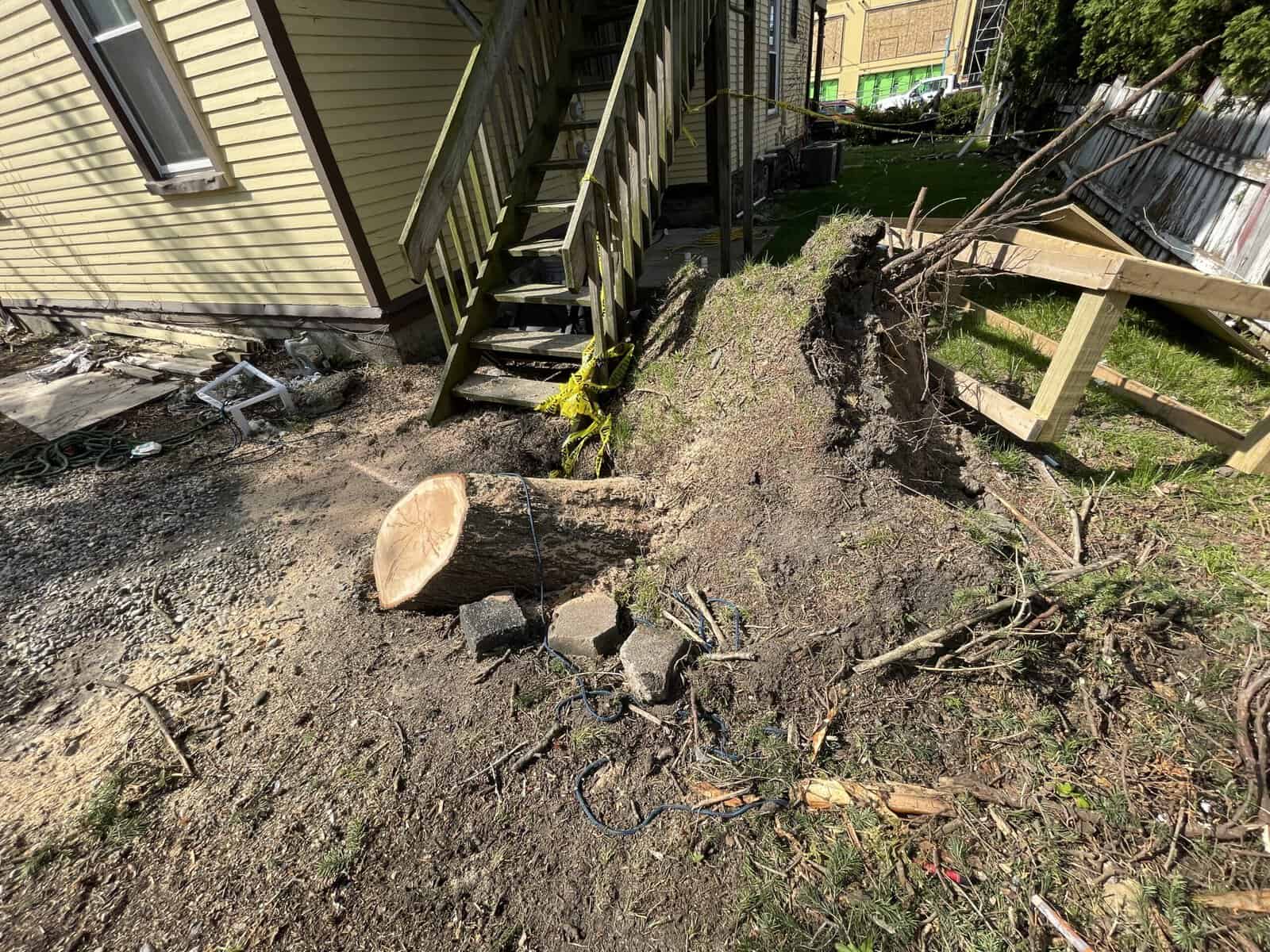
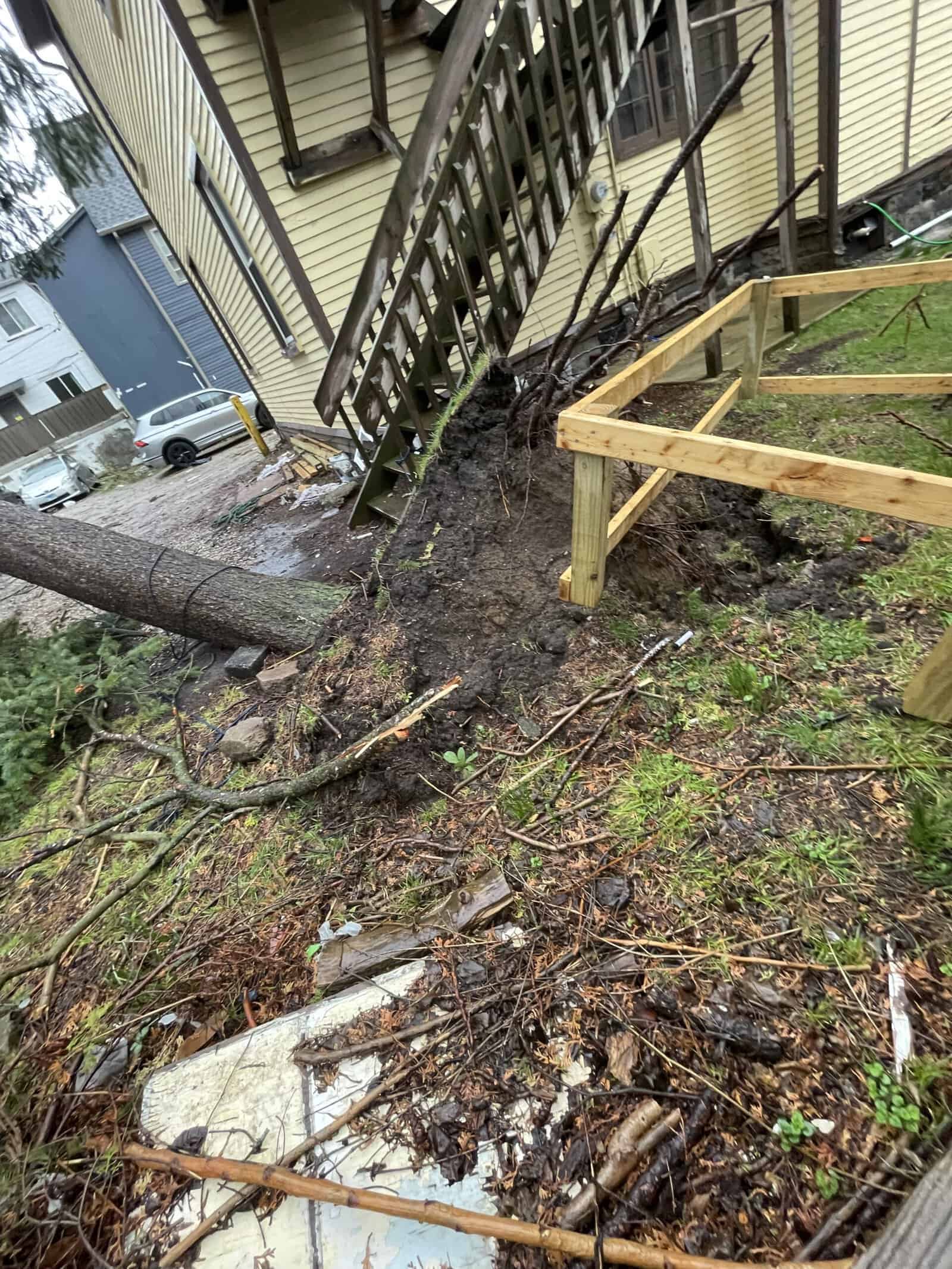
Storm damage in West Bloomfield doesn’t look like one thing. It’s a 70-foot maple that split at the trunk and landed across a fence line in a Walnut Lake-area subdivision. It’s a willow with a widow-maker limb hanging over a private dock on Orchard Lake. It’s a storm-compromised oak in a HOA-governed community off Orchard Lake Road that needs to come down before the association requires documentation. It’s a tree that came down near overhead utility lines on West Maple Road and needs a line-clearance certified crew to handle it safely.
We cover the full range: 24-hour emergency tree service for active hazards, storm damage cleanup for properties dealing with fallen debris, fallen tree removal when a whole tree has come down, emergency tree clearing when access is blocked, and hazardous limb removal for situations where the tree is still standing but a section of it isn’t safe. Each of these is handled by ISA Certified Arborists with the equipment and training to work on West Bloomfield’s estate-scale hardwoods — the 50 and 60-year-old oaks and maples that dominate lots throughout the township.
For properties near any of West Bloomfield’s 24-plus lakes, the pre-job walkthrough also covers whether the work falls within a regulated Environmental Features Setback or a township Woodland Conservation area, so you’re protected before anything begins. Full site cleanup is included — because a lakefront property with a half-million-dollar value deserves to look like a professional crew was there.
It depends on where the tree is located on your property. West Bloomfield Township does not regulate tree removal on standard residential lots outside of designated environmental areas. However, if the tree is within 25 feet of a lake, wetland, or watercourse — what the township calls an Environmental Features Setback — a permit is required from the Development Services Department before any work can proceed.
Given that West Bloomfield has more than 24 inland lakes, including Cass Lake, Pine Lake, Walnut Lake, and Orchard Lake, a significant number of properties in the township have EFS zones covering portions of their lots. There is a process for imminent-hazard situations within regulated areas, but it still requires written notice and departmental review before removal. The township’s Regulated Woodland ordinance adds another layer for properties within designated woodland areas.
This is exactly why we conduct a pre-job site walkthrough before any cutting begins — to determine whether your property falls within a regulated zone and to make sure the work is done in compliance with West Bloomfield requirements. Skipping that step can expose you to penalties of $500 per day, so it’s not a formality.
This is one of the most important questions to ask after a storm, and it’s one most homeowners can’t answer on their own. A tree can look completely intact from the street and still be structurally compromised. Root heave — where the root system has partially lifted from the ground — is one of the clearest warning signs, but trunk cracks, bark separation, and changes in the tree’s lean are also indicators that a failure could happen days or weeks after the initial storm event.
The only reliable way to know is a professional risk assessment conducted by someone with TRAQ qualification — the Tree Risk Assessment Qualification issued by the ISA. We have TRAQ-qualified assessors on staff who conduct documented evaluations of storm-damaged trees, including trees that are still standing. In West Bloomfield, where mature 50 to 70-year-old oaks and maples are common on estate-scale lots, this assessment is especially important. A large hardwood that fails unexpectedly can cause catastrophic damage to a home, a boathouse, or a neighboring property. Getting the assessment done right after the storm — not a week later — is the right move.
This is a situation that requires a specific credential most tree companies in this market don’t hold. Working near energized power lines isn’t just a matter of being careful — it requires line-clearance arborist certification, specialized equipment, and the appropriate insurance coverage. In West Bloomfield’s residential neighborhoods, overhead utility lines run through backyards and along streets throughout the township, and storm damage frequently brings trees or large limbs into contact with those lines.
We employ line-clearance certified arborists, which means our crew can legally and safely work in exactly these situations. A company without this certification has to stop at the edge of the hazard zone and wait for the utility to de-energize the line — which, after a major storm affecting thousands of DTE customers across Oakland County, can mean a multi-day wait. Having a line-clearance certified crew means the work gets done safely and completely, without leaving you in a holding pattern while a hazardous tree sits against a live wire.
Possibly — but the coverage depends on the specifics of your policy and the circumstances of the damage. Standard homeowners insurance policies typically include some coverage for tree removal after a storm, but there’s usually a sublimit per event — often in the range of $500 to $1,000 for debris and tree removal alone. If the tree has damaged a covered structure, such as your roof, fence, garage, or boathouse, the coverage picture changes and the claim can be substantially larger.
The most important thing you can do immediately after storm damage is document everything before any cleanup begins — photographs of the tree, the point of impact, and any structural damage from multiple angles. Keep any written estimates you receive. If we’re conducting a TRAQ-qualified assessment, that documented report can support your insurance claim with professional findings rather than just your own account. Contact your insurer early in the process to understand your specific sublimits and what documentation they require. Don’t assume the full cost is covered, but also don’t assume nothing is — the details of your policy determine the outcome.
We offer 24-hour emergency tree service, which means the line is answered around the clock — not just during business hours. For active hazards, our goal is to get a crew on-site as quickly as possible. West Bloomfield is within our Oakland County service area, and we’re dispatched from Oakland, MI, which puts the township well within our regular service footprint.
Response time for non-emergency storm damage cleanup depends on demand, which spikes sharply after major weather events. Oakland County has been documented as one of the hardest-hit areas during regional storm events — a single July storm left more than 5,000 West Bloomfield-area residents without power and 80,000-plus DTE customers affected across Southeast Michigan. In those conditions, every credentialed tree company in the area is working through a backlog. The advantage of calling us early — even in the middle of the night — is getting on the schedule before that backlog builds. For situations involving a tree on a structure, a hanging limb over an occupied area, or contact with power lines, communicate that clearly when you call so dispatch can prioritize accordingly.
After a significant storm event in Oakland County, out-of-area operators show up quickly, often going door to door in affected West Bloomfield neighborhoods. Some are legitimate. Many are not — they lack insurance, hold no certifications, and disappear after collecting a deposit. Michigan makes this especially easy for bad actors because the state does not require a license to operate a tree service. Anyone can show up with a truck and call themselves a tree company.
The verification steps are straightforward. Ask for proof of general liability insurance and workers’ compensation coverage — a legitimate company provides this without hesitation. Ask whether they have ISA Certified Arborists on staff, and if so, ask for the credential number, which is verifiable through the ISA’s public registry. Check that the company has a physical local address and a verifiable review history on Google, HomeAdvisor, or Angi — not just a phone number and a door knock. Be cautious of any company that demands full cash payment upfront, refuses to provide a written estimate, or pressures you to sign immediately.
We provide written estimates before work begins, carry verifiable insurance, and have ISA-certified and TRAQ-qualified staff whose credentials can be confirmed. That’s the standard to hold any company to before work starts on your West Bloomfield property.
Other Services we provide in West Bloomfield
