Hear from Our Customers
There’s a real difference between a tree that’s been properly pruned and one that’s just been cut back. Proper pruning improves the structural integrity of the tree, reduces the risk of branch failure, and keeps the canopy balanced in a way that holds up through Michigan’s storm season. For Northville homeowners, that’s not a small thing — the area has been under severe weather warnings 40 times in the past 12 months alone.
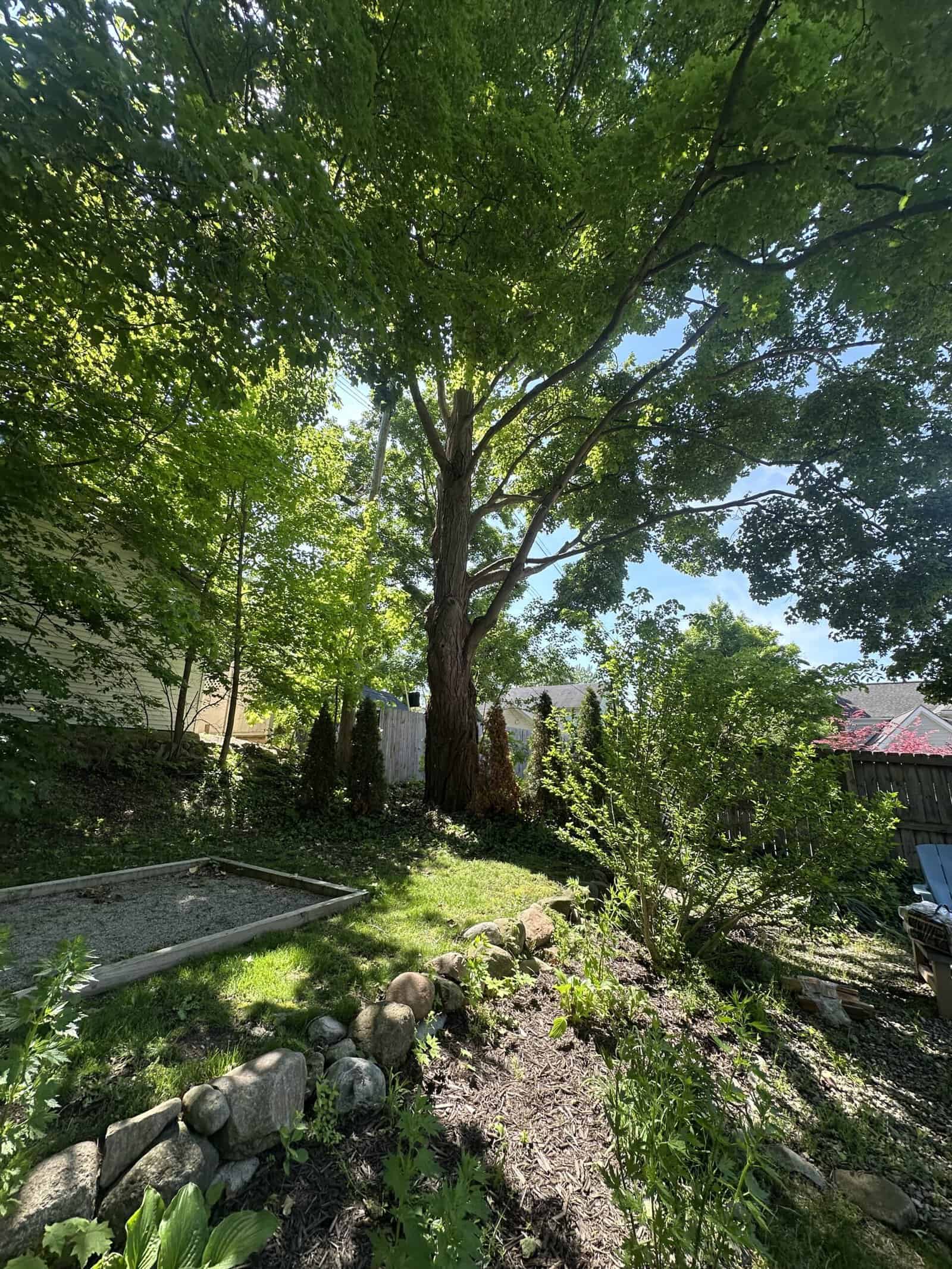
Northville’s soil runs heavy with clay. That matters more than most people realize. When clay saturates during spring thaw or a sustained rain event, it loses its grip on root systems — and a dense, unpruned canopy acts like a sail in those conditions. Crown thinning, done correctly, reduces that wind resistance without changing the shape or character of your tree. It’s one of the most practical things you can do for a mature tree on a Northville property, and most homeowners don’t know to ask for it until after something goes wrong.
Beyond storm risk, well-maintained trees add measurable value to your home. Research consistently shows that mature trees can increase property value by 7 to 19 percent. In the Midwest specifically, that often translates to around $10,000 in added home value. For a community where median property values sit above $465,000, keeping your trees healthy and structurally sound isn’t just maintenance — it protects one of your biggest financial assets.
We’re a family-owned company — about 15 to 20 miles north of Northville via Beck Road. Ivan leads every field operation, and Cecilia handles scheduling and customer communication so that when you reach out, you hear back from a real person quickly. That’s not a given in this industry.
We’ve been delivering tree care across Michigan for over seven years, serving homeowners and the broader metro Detroit area. Ivan personally trains every crew member — not just in technique, but in how to communicate clearly and respectfully with the homeowners we’re working for. That standard shows up consistently in reviews across Google, Angi, and Nextdoor.
For Northville specifically, the credentials matter. The Historic District’s Victorian-era homes are surrounded by mature oaks, maples, and ornamentals that require ISA Certified Arborists — not general laborers — to prune without causing long-term structural damage. We field ISA Certified Arborists and TRAQ-qualified risk assessors on every large residential job in Northville, along with line-clearance certified arborists for trees near utility corridors along roads like Five Mile and Six Mile. That combination isn’t common at the local level.
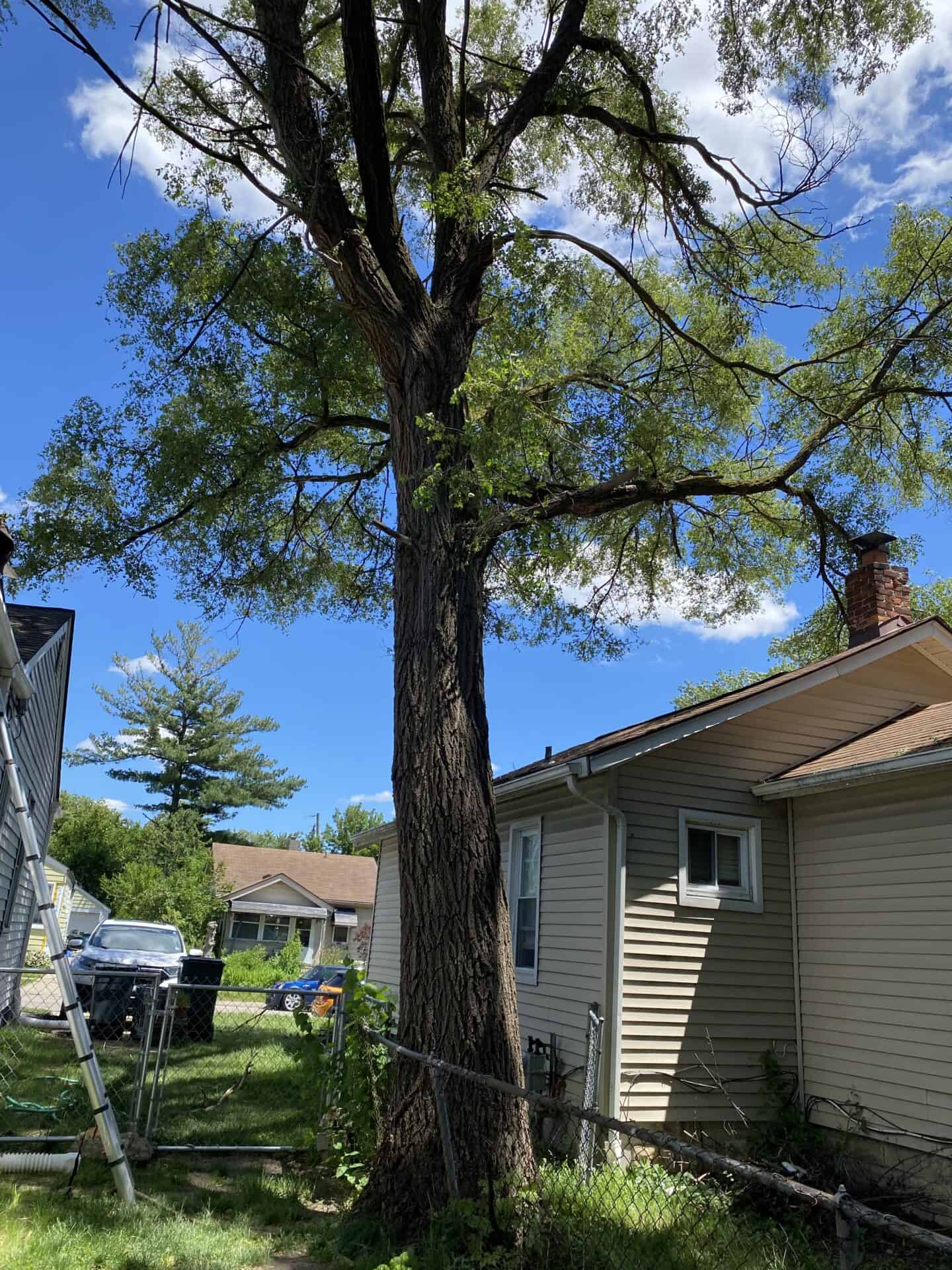
Every job starts with a site walk. We don’t send a crew out to begin cutting before someone has walked your property with you, reviewed every tree in scope, and put together a written estimate with a clear breakdown of what’s being done and why. That’s not just good practice — it’s the only way to make sure the work actually matches what your trees need, not just what’s fastest to complete.
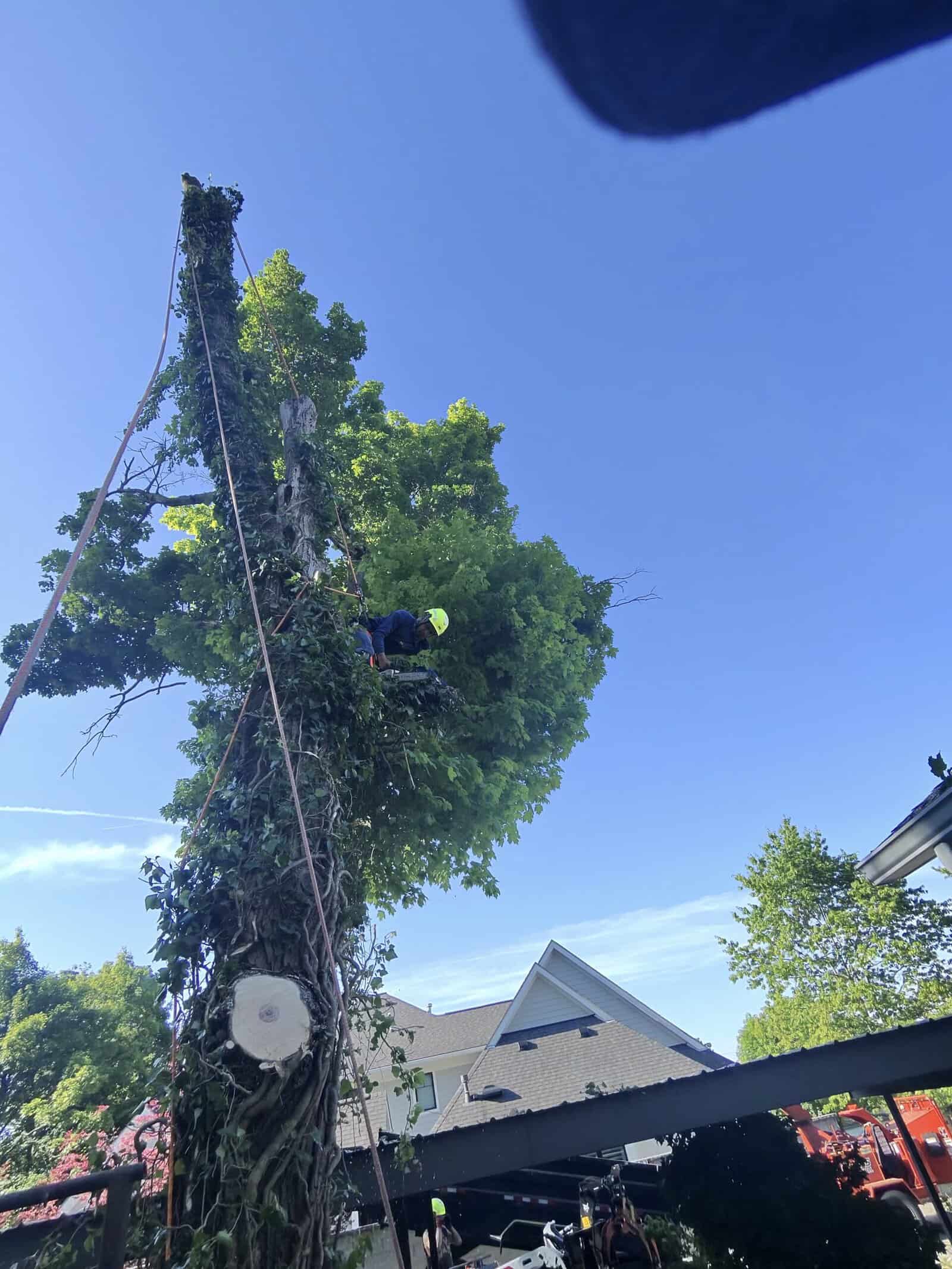
Once the scope is agreed upon, our crew works to ANSI A300 standards — the national benchmark for professional tree pruning in the U.S. In practical terms, that means no topping, no flush cuts, no climbing spikes on trees being pruned. No more than 25 percent of live foliage is removed in a single session for most mature trees, which keeps the tree from going into stress and losing structural integrity. For oak trees specifically — and Northville’s older neighborhoods have plenty of them — all pruning is scheduled within the safe window of November 1 through March 31 to eliminate the risk of oak wilt, a disease that spreads through sap beetle activity once temperatures climb above 50 degrees.
When the work is finished, our crew cleans up completely. Debris is removed, the site is raked, and your property is left in better condition than when we arrived. That’s not a bonus — it’s the standard every Northville homeowner should expect.
Ready to get started?
Tree pruning isn’t one thing — it’s a range of targeted techniques, each suited to a specific goal. Crown thinning removes select interior branches to improve light penetration and airflow through the canopy without reducing its overall size or shape. It’s the right move for mature shade trees in Northville’s established neighborhoods, particularly those sitting on clay-heavy ground where wind resistance is a real structural concern. Crown reduction brings down the overall size of the canopy while preserving the tree’s natural form — a meaningful distinction from topping, which is harmful and not something we perform. Crown raising removes lower limbs to create clearance beneath the tree, and deadwooding targets branches that are dead, diseased, or dying before they become a hazard.
For properties in or near Northville’s Historic District, there’s an added layer of consideration. The City of Northville has a Tree Preservation Ordinance — Chapter 90 of the city’s code — that governs tree removal within city limits. Routine pruning doesn’t require a permit, but working with a crew that understands the local regulatory environment matters, especially for homeowners in a preservation-conscious neighborhood where the wrong approach to a tree can create real problems. We operate with that awareness on every Northville job.
Every service includes the pre-work site walk, a written scope of work, ANSI A300-compliant pruning, and full debris cleanup. For trees near energized utility lines along corridors like Beck Road or Five Mile Road, our line-clearance certified arborists are equipped and insured to handle that work safely — a capability most local competitors don’t hold.
The City of Northville has a Tree Preservation Ordinance — Chapter 90 of the city’s Code of Ordinances — that applies specifically to tree removal within city limits. If you’re removing certain trees on your property, you’ll need to apply for a permit through the Community Development Director, and in some cases a site inspection is required before approval. Failure to comply is treated as a misdemeanor under Section 90-42, so it’s not something to overlook.
The good news is that routine tree pruning and trimming does not require a permit in Northville. You can schedule regular maintenance work without going through the city’s approval process. That said, if you’re unsure whether your project crosses into removal territory — particularly for large or significant trees in the Historic District — it’s worth getting clarity before work begins. We walk every Northville property before starting any job, and that pre-work conversation is a good opportunity to flag any compliance questions specific to your situation.
These terms get used interchangeably all the time, but they’re not quite the same thing. Trimming is generally used to describe aesthetic shaping — cutting back growth to keep a tree looking tidy or maintaining a certain size. Pruning is more precise. It refers to the strategic removal of specific branches to improve the tree’s health, structure, and long-term safety. Both are legitimate services, but they serve different goals.
When an ISA Certified Arborist prunes a tree, they’re making decisions based on the biology of the tree — identifying co-dominant stems, included bark, deadwood, or structurally weak branches and removing them in a way that promotes healthy regrowth. That’s a different skill set than general trimming, and it’s the difference between work that helps your tree and work that just changes how it looks temporarily. For mature trees in Northville’s older neighborhoods, where some specimens are decades old and structurally complex, that distinction really does matter.
For most deciduous trees in Southeast Michigan, the dormant season — roughly late November through early March — is the professional recommendation. Trees are dormant, so pruning causes less stress, disease and insects are also dormant, and without foliage in the way, an arborist can actually see the tree’s structure clearly and make better decisions about what to remove.
For oak trees specifically, timing isn’t just a preference — it’s a hard rule. Oak wilt is a devastating and incurable disease spread by sap beetles that become active once temperatures consistently exceed 50 degrees Fahrenheit. In Michigan, that means oak trees should only be pruned between November 1 and March 31. Northville’s older neighborhoods, particularly in and around the Historic District, have significant oak populations, and this window is taken seriously by any credentialed arborist working in the area. Maples are also best pruned during dormancy to avoid significant sap loss. If you’re scheduling routine maintenance, late winter — February into early March — is generally the ideal window for most of the trees you’d find on a Northville property.
A few things are worth looking at. Dead or hanging branches are the most obvious sign — if you can see branches that aren’t leafing out, or limbs that look like they’re barely attached, those need attention before they become a hazard. Crossed or rubbing branches are another indicator, because over time they create wounds that invite disease and decay. If the canopy has become so dense that light and air aren’t moving through it freely, that’s a sign crown thinning would help.
In Northville, there’s a specific condition worth paying attention to after Michigan winters. The freeze-thaw cycles here are hard on tree structure — water gets into small cracks in the wood, freezes, expands, and gradually widens those weaknesses. By the time spring arrives, branches that looked fine in October may have developed internal vulnerabilities that aren’t obvious until a spring windstorm tests them. A post-winter structural inspection — something Northville arborists and tree service companies specifically recommend for this area — is a practical way to catch those issues before they cause damage to your home, vehicle, or fence line.
Crown thinning is the selective removal of interior branches throughout the canopy. The goal isn’t to make the tree smaller — it’s to reduce density so that wind moves through the canopy rather than pushing against it, and so that light reaches the interior of the tree more evenly. Done correctly, it doesn’t change the overall shape or silhouette of the tree at all. It just makes the canopy less of a solid mass.
For Northville homeowners specifically, crown thinning addresses a real and local risk. The clay-heavy soil throughout this part of Southeast Michigan holds water and saturates during spring thaw and heavy rain events. When that happens, the root system’s grip on the soil weakens. A large, dense canopy on a tree with compromised root anchorage is a meaningful structural risk — particularly during the kind of high-wind thunderstorm events the Northville area sees regularly through spring and summer. Crown thinning reduces that risk without sacrificing the aesthetic value of a mature tree. For properties near Maybury State Park or in subdivisions along Five Mile Road and Ridge Road where large native trees are common, it’s one of the most practical maintenance steps a homeowner can take.
The most important thing to verify is whether the company employs ISA Certified Arborists. ISA certification — issued by the International Society of Arboriculture — requires passing a comprehensive exam and maintaining ongoing continuing education. It’s the recognized credential standard in the tree care industry, and it’s verifiable through ISA’s public directory. A company that employs certified arborists is accountable to a professional standard; one that doesn’t is operating without that baseline.
Beyond credentials, always confirm that the company carries both general liability insurance and workers’ compensation. This matters more than most homeowners realize. If an uninsured worker is injured on your property, your homeowner’s policy may not cover it — and you can be personally liable. In a community like Northville, where property values are significant and homeowners have a lot to protect, hiring an uninsured crew is a risk that isn’t worth taking to save a few dollars on a quote. Ask for proof of both before any work starts. A reputable company will provide it without hesitation. We carry the appropriate coverage and field ISA Certified Arborists, TRAQ-qualified risk assessors, and line-clearance certified arborists depending on the scope of work — and all of that is available to confirm before you commit to anything.
Other Services we provide in Northville
