Hear from Our Customers
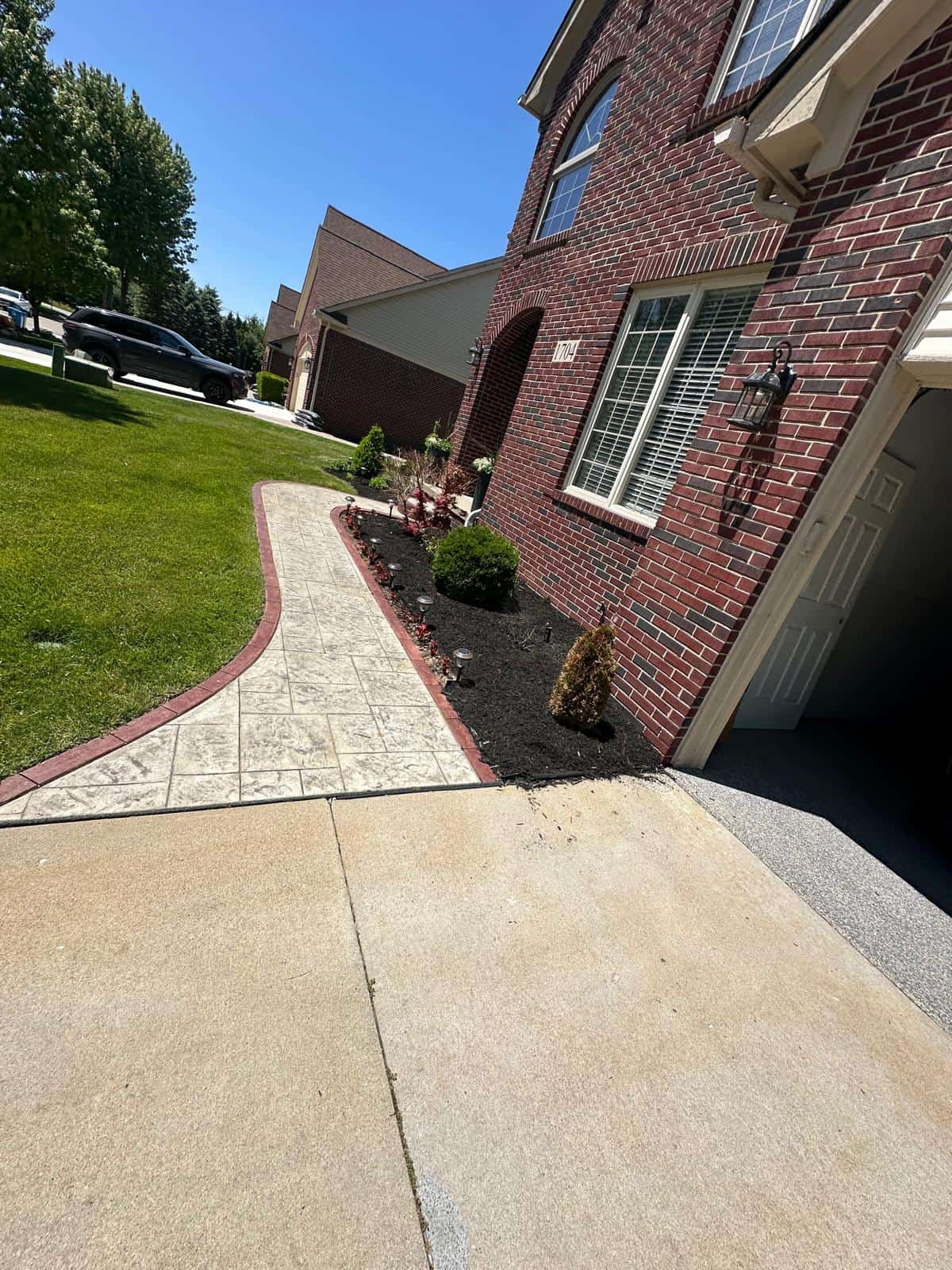
The beds in Northville’s older neighborhoods — Abbey Knoll, Taft Colony, the Historic District — have mature trees, layered root systems, and decades of established plantings underneath them. A fresh layer of mulch applied correctly does more than clean things up.
It cuts weed pressure by up to 90%, reduces soil moisture evaporation by around 35%, and keeps root temperatures stable through Michigan’s freeze-thaw swings. That’s not a small thing when you’re dealing with a 40-year-old oak or a perennial border that took years to establish.
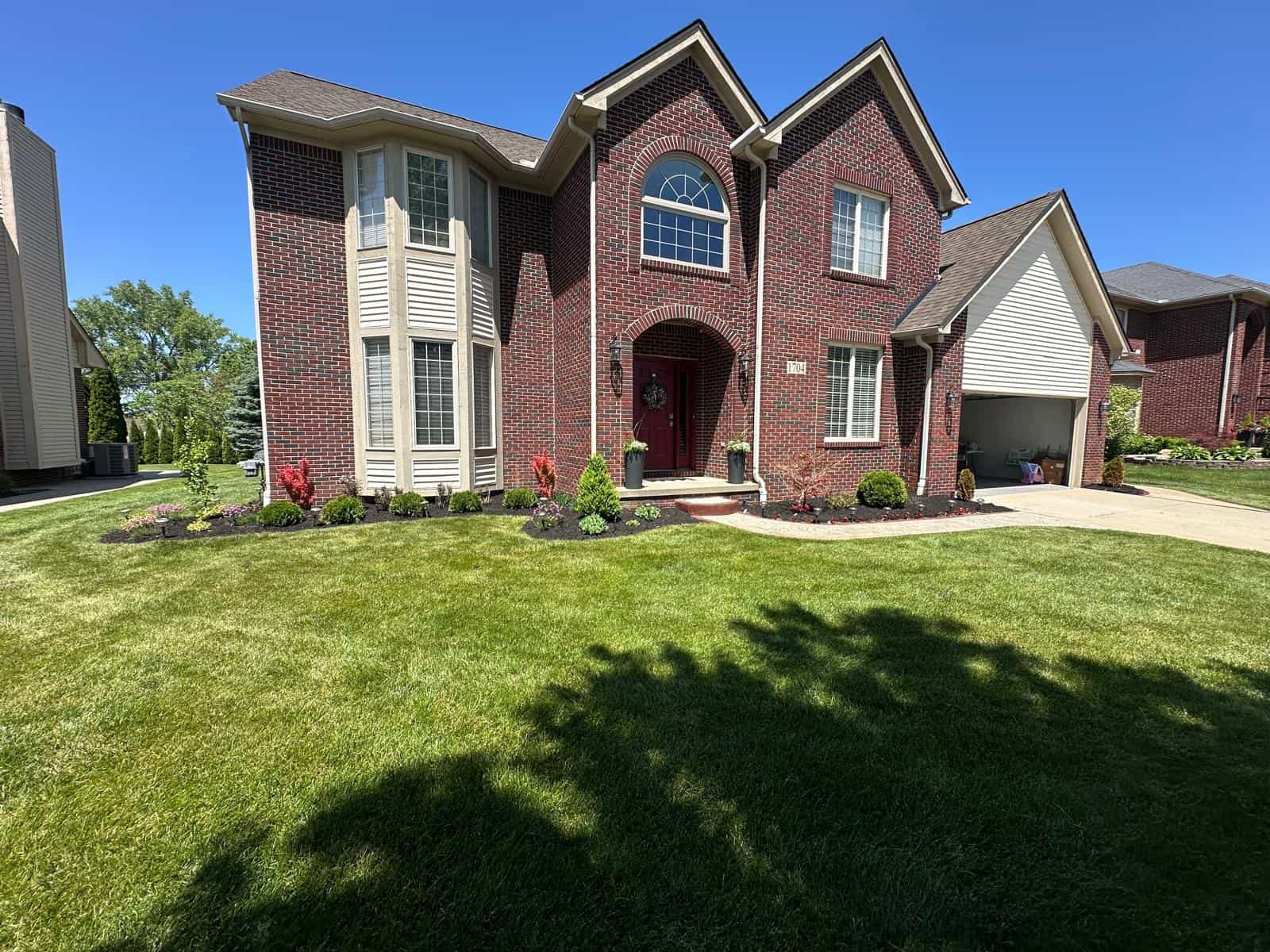
For homeowners in communities like Stonewater or Northville Hills, where HOA standards are real and neighbors notice, a professionally installed bed also means you’re not redoing it in six weeks. Proper depth, clean edges, and the right material from the start — that’s what holds through a Michigan summer and into fall.
If you work from home — and many Northville residents do — you’re looking at those beds every day. From the desk, from the kitchen table, from the back patio. The result needs to hold up to that kind of daily visibility, not just a drive-by glance.
We’re based in Oakland, in Oakland County — about 15 to 20 miles north of Northville via Novi Road. That’s not a distant company targeting your zip code. We’re a local, owner-operated business that has been working this corridor of northwest Wayne and Oakland County long enough to know what the soil, the seasons, and the neighborhoods actually require.
Our founder built his career from the ground up — literally starting as a groundman in California, learning rigging, climbing, pruning, and tree-health assessment before bringing that knowledge to Michigan. Every crew member is trained not just to do the work, but to understand why the work matters. That includes mulch. Certified arborists on staff means the people installing around your trees know what’s happening below the surface, not just what looks good on top.
We’re licensed, insured, and every estimate is provided in writing before a single shovel hits the ground. No verbal quotes, no surprises at the end.
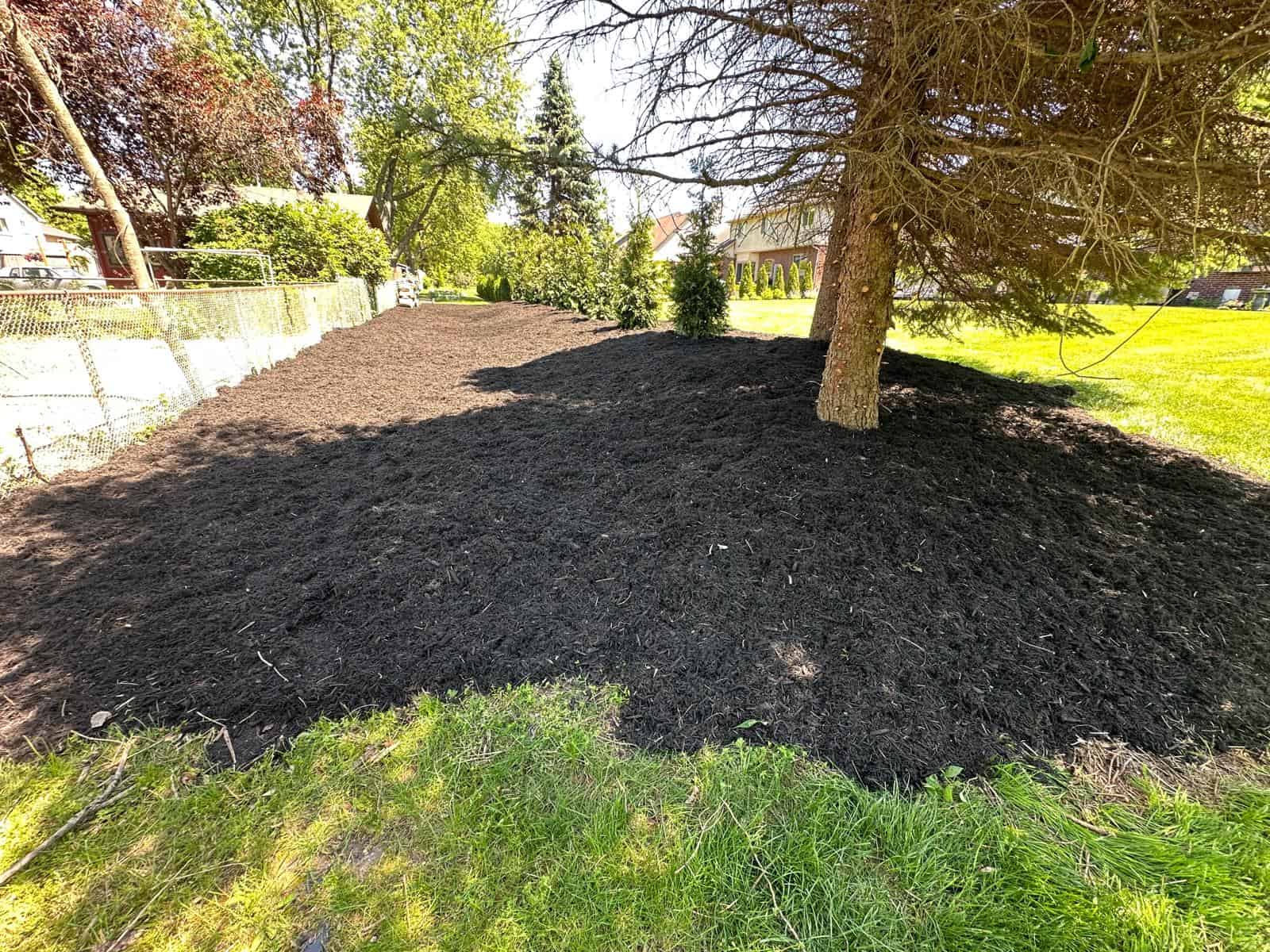
It starts with a written estimate. You describe the beds, the square footage if you know it, and what you’re working with — new beds, overgrown beds, post-tree-removal areas that need restoration. We’ll give you a clear scope of work and a price in writing, valid for 30 days. No pressure, no verbal-only quotes that balloon later.
Once the job is scheduled, our crew assesses what’s already in the beds before anything is spread. In Northville’s established neighborhoods, that step matters more than people realize. Existing mulch that’s compacted or showing signs of matting gets raked and aerated first. Any debris is cleared. If the beds are adjacent to mature trees — which they often are in neighborhoods like Whisper Wood or around the River Rouge corridor on the east side of the city — the root flare is checked and kept fully exposed. That’s the ISA standard, and it’s the difference between mulch that helps a tree and mulch that slowly harms it.
Then the material goes down at the right depth: two to three inches, consistent across the bed. For Northville properties, spring installations are timed for late April through mid-May — after the soil has warmed but before summer heat sets in and weed seeds are already moving. Fall installations happen after the first hard frost, typically mid-October to early November, to protect roots through Michigan’s winter cycling.
Ready to get started?
We offer mulch installation as a standalone service and as part of a broader landscape restoration after tree work. If you’ve had a tree removed or a stump ground on your Northville property, the area around it often needs more than just cleanup — it needs topsoil and mulch to bring the yard back to where it was. We handle all of that without requiring a second contractor.
The mulch itself is repurposed wood chip material generated from our own tree removal and trimming work. That means it’s locally sourced, organic, and genuinely recycled — not dyed bulk product from a distant supplier. For Northville homeowners near Stonewater’s lake corridor or along the waterfront sections of the township, organic wood chip mulch breaks down over time and adds back to the soil structure rather than sitting inert on top of it.
For HOA communities like Northville Hills Golf Club or Steeplechase, the finished result matters as much as the process. Clean bed edges, uniform depth, and proper clearance from tree trunks are the details that satisfy community standards and hold up through the season. That’s what arborist-trained installation actually looks like — and it’s what separates this from a landscaping crew that added mulch to a long list of services.
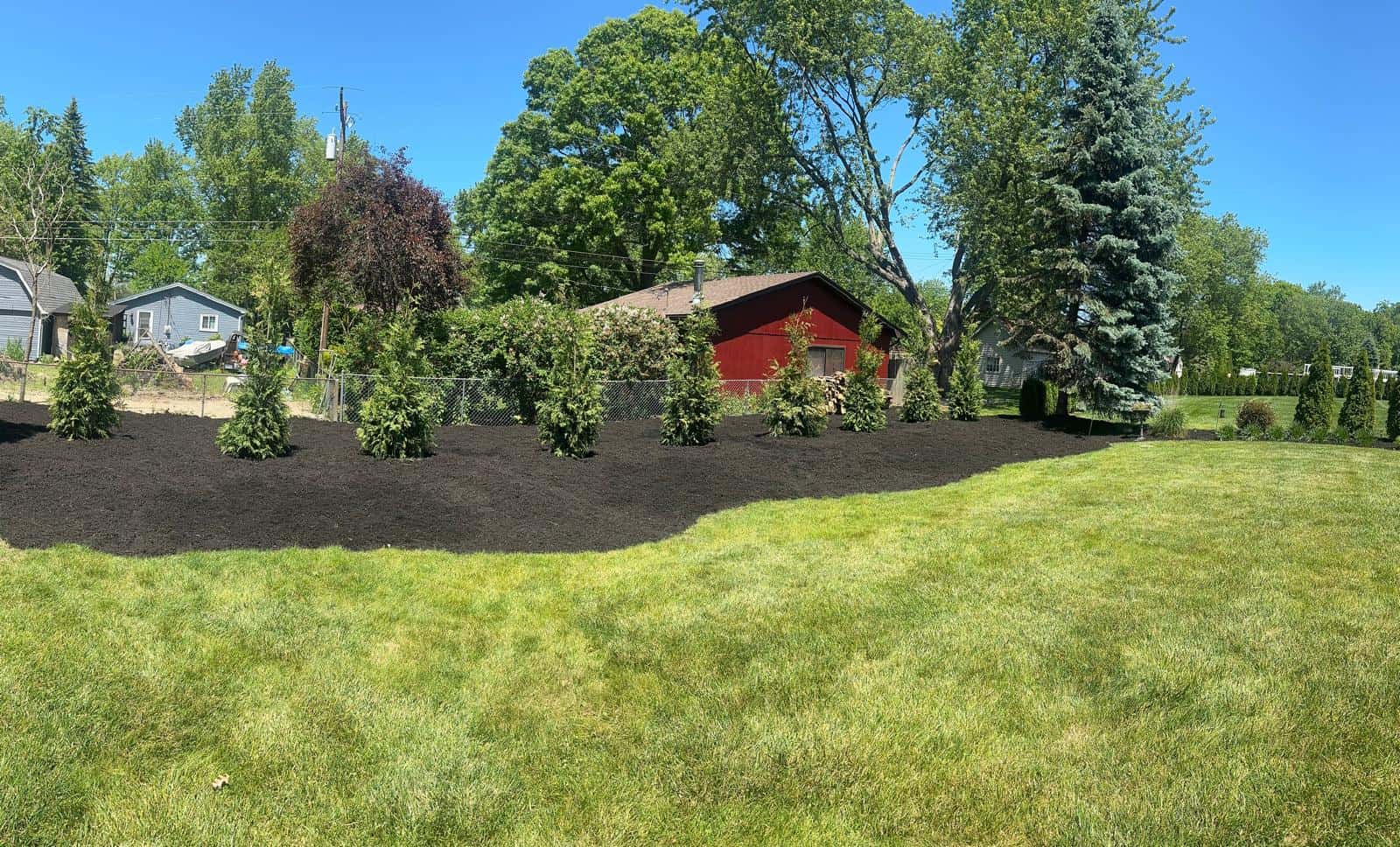
The standard recommended by the International Society of Arboriculture is two to three inches of organic mulch. That depth is enough to suppress weeds, regulate soil temperature, and retain moisture without creating the conditions that damage tree roots and bark. The critical detail most people miss is the root flare — the base of the trunk where it begins to widen into the root system. That area needs to stay fully exposed. Mulch piled against the trunk, even an inch or two up the base, traps moisture against the bark and creates conditions for rot and secondary root growth over time.
In Northville’s older neighborhoods, where large established trees are a defining feature of the streetscape, this matters more than it does in a new-construction yard with a two-inch sapling. A mature oak or maple that has been mulched incorrectly for several seasons can show real decline before the problem is obvious. Getting the depth and the clearance right from the start protects that tree for the long term, not just for the season.
There are two good windows in Michigan, and the timing on both of them matters. Spring is the primary season — late April through mid-May is the target range for Northville. By then, the soil has warmed enough to support plant growth, but the weed seed bank hasn’t fully activated yet. Mulch applied in that window suppresses germination before it starts and locks in soil moisture before summer heat arrives. Installing too early, when the ground is still cold, insulates the soil and delays the warming your plants need to come out of dormancy.
The second window is fall, after the first hard frost — typically mid-October to early November in this part of Wayne County. Fall mulch protects root systems from the freeze-thaw cycling that Michigan winters are known for. In Northville’s established neighborhoods with mature perennial plantings and ornamental shrubs, that protection is a real plant-health investment. It extends soil warmth into dormancy and reduces the winter heaving that can damage root systems that have been in place for decades.
The math is straightforward once you have your measurements. Measure the length and width of each bed in feet, multiply to get square footage, then divide by 12 and multiply by the depth you want in inches. For a two-inch application, divide your square footage by 6. For three inches, divide by 4. That gives you cubic feet — divide by 27 to convert to cubic yards, which is how bulk mulch is typically sold and priced.
In practice, most homeowners underestimate. A single garden bed along the front of a house often covers more square footage than it looks from the driveway, and beds that have been in place for years in neighborhoods like Abbey Knoll or Taft Colony tend to be larger and more layered than a simple perimeter strip. When we provide a written estimate, our crew calculates the coverage based on the actual beds rather than a rough guess — so you’re not left with a pile of excess material or beds that look thin after the first rain.
You don’t need to remove old mulch every time, but you can’t just pile on top without checking what’s already there. If the existing layer is still in reasonable condition — breaking down slowly, no signs of mold or fungal growth, not matted into a dense sheet — it can stay. The right move is to rake and aerate it first to break up any compaction, then top-dress to bring the total depth back to two to three inches.
The problem comes when layers have been accumulating for years without anyone measuring the total depth. In Northville’s older neighborhoods, it’s not unusual to find beds that have been top-dressed repeatedly and now have five or six inches of decomposed material sitting against tree trunks. That’s the scenario where the old layer needs to be pulled back before anything new goes down. It’s also the reason an arborist-trained crew approaches the bed differently than a general landscaping team — we’re checking the root flare and the total depth, not just spreading material until it looks full.
Yes, and for homeowners in those communities it’s often one of the practical reasons to hire a professional rather than doing it themselves or calling whoever shows up first. HOA standards in Northville’s managed communities typically address the overall appearance and maintenance of garden beds — bare soil, visible weeds, and uneven or poorly installed mulch are the kinds of things that generate notices. A professionally installed bed with consistent depth, clean edges, and proper clearance from structures and tree trunks is the result that satisfies those standards.
Beyond the HOA checklist, there’s the community visibility factor. Northville has an active gardening culture, and the appearance of your beds is visible to neighbors, to people walking the brick-paved streets downtown, and to anyone attending the community events that happen throughout the season. A professional installation that holds its shape through spring and summer is worth more than a quick fix that needs redoing by July.
The material itself is genuinely different. Bagged mulch from a retail supplier is typically processed, often dyed, and standardized for appearance over function. The coloring fades, the material breaks down quickly, and it doesn’t contribute much to soil health over time. Wood chip mulch from a tree service — the kind we generate from our own removal and trimming work — is arborist-grade material that includes bark, wood, and sometimes leaf matter. The ISA has specifically noted that fresh wood chips from arborist work are among the best mulch options for trees and large shrubs.
For Northville homeowners with mature trees and established ornamental plantings, that distinction matters. Organic wood chip mulch breaks down gradually and feeds the soil biology underneath it — improving soil structure over multiple seasons rather than just sitting on top. It also tends to stay in place better than shredded or processed material, which matters in areas near Stonewater’s waterfront or along the lower sections of the city near the River Rouge corridor, where spring runoff can move lighter material around. You’re getting a functional, locally sourced product from a company that understands what it does — not just what it looks like on day one.
Other Services we provide in Northville
