Hear from Our Customers
After professional pruning, your trees aren’t just cleaner — they’re structurally stronger, less likely to fail in a storm, and better positioned to stay healthy for years. That matters everywhere, but it matters especially in Milford, where the August 2024 storms left uprooted trees on rooftops and kept tree companies slammed with emergency calls for days.
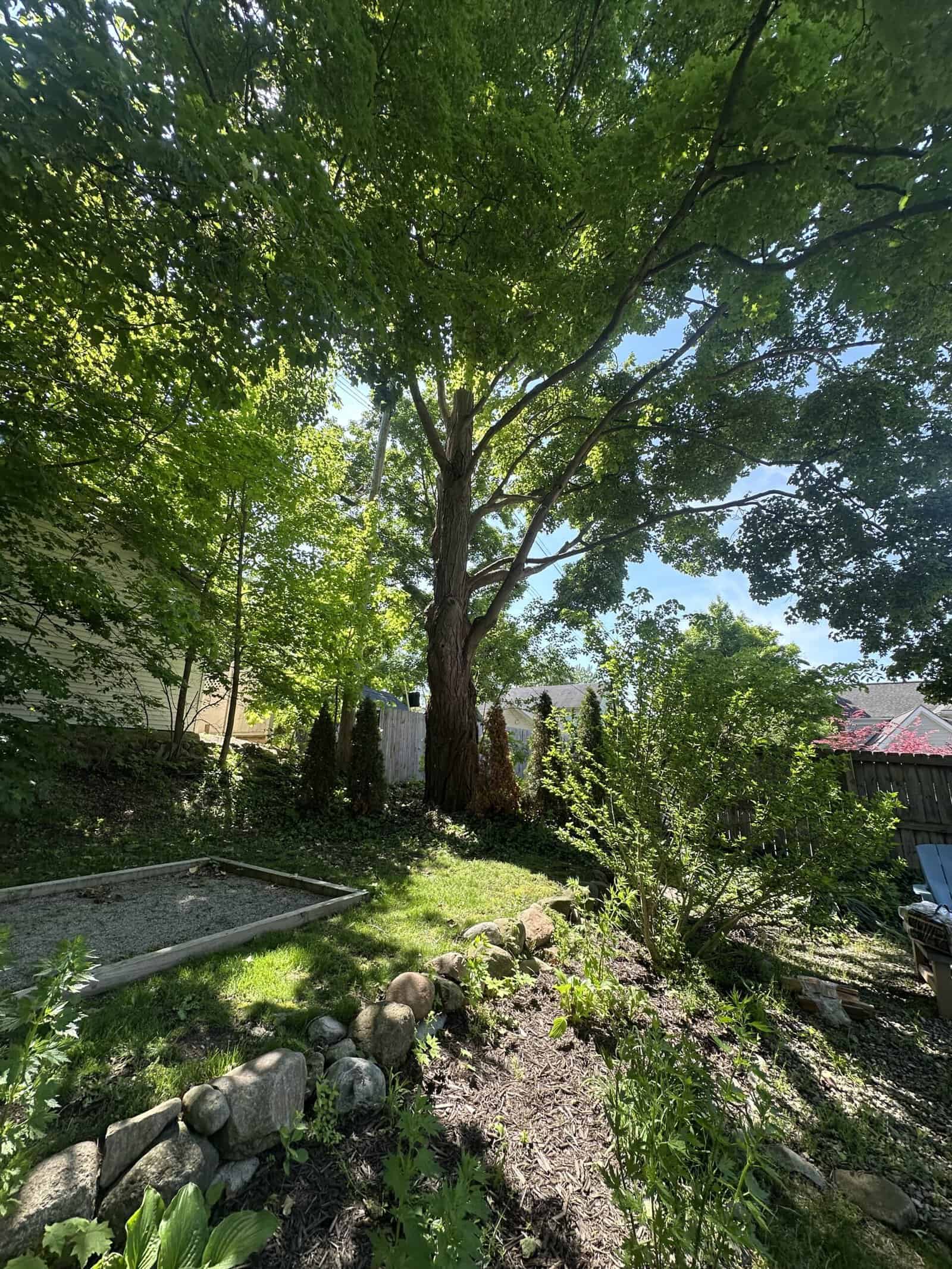
Crown thinning — removing select branches to reduce wind resistance without stripping the tree — is exactly the kind of work that separates a tree that bends in a high-wind event from one that comes down on your roof. Milford’s neighborhoods carry some of the oldest and largest trees in Milford. The historic areas near downtown have mature oaks, maples, and elms that have been growing for generations. These aren’t young ornamentals you can manage with a ladder and bypass pruners. They have complex canopy structures, significant weight distribution, and real consequences if something is cut wrong.
Proper crown reduction on a mature tree preserves its form, protects its health, and removes structural risk — without topping it or leaving it looking like it survived a bad haircut. The financial case is straightforward too. Milford homes carry median values above $430,000. Mature, well-maintained trees add measurably to that — research consistently puts the number at 7 to 19 percent of residential property value. A tree that dies from a bad pruning cut, or falls in a storm and damages your property, is a direct loss on a high-value asset. Professional tree trimming services in Milford, MI aren’t a luxury expense — they’re how you protect what you’ve already invested in.
Ivan’s Tree Services is headquartered in Milford. Ivan and Cecilia didn’t set up a service-area page and drive in from somewhere else — they live here. When we prune a tree on your property, we’re working in the same community where we shop, drive Milford Road, and have a stake in how the neighborhood looks and holds up through storm season.
We’ve been delivering tree care across Michigan for over seven years, and we field ISA Certified Arborists and TRAQ-qualified risk assessors on every commercial and large residential job. That’s the credential combination that matters most when you’re dealing with the kind of mature, established hardwoods that define Milford’s older neighborhoods and the wooded lots throughout the township — especially for oak trees, where a pruning cut made at the wrong time of year can introduce oak wilt, a disease with no cure.
Cecilia manages scheduling and customer communication, which means when you call or reach out, you get a real person with a real answer — not a callback that never comes. Every job starts with a site walk and a written scope. No surprises, no scope creep, no ambiguity about what you agreed to.
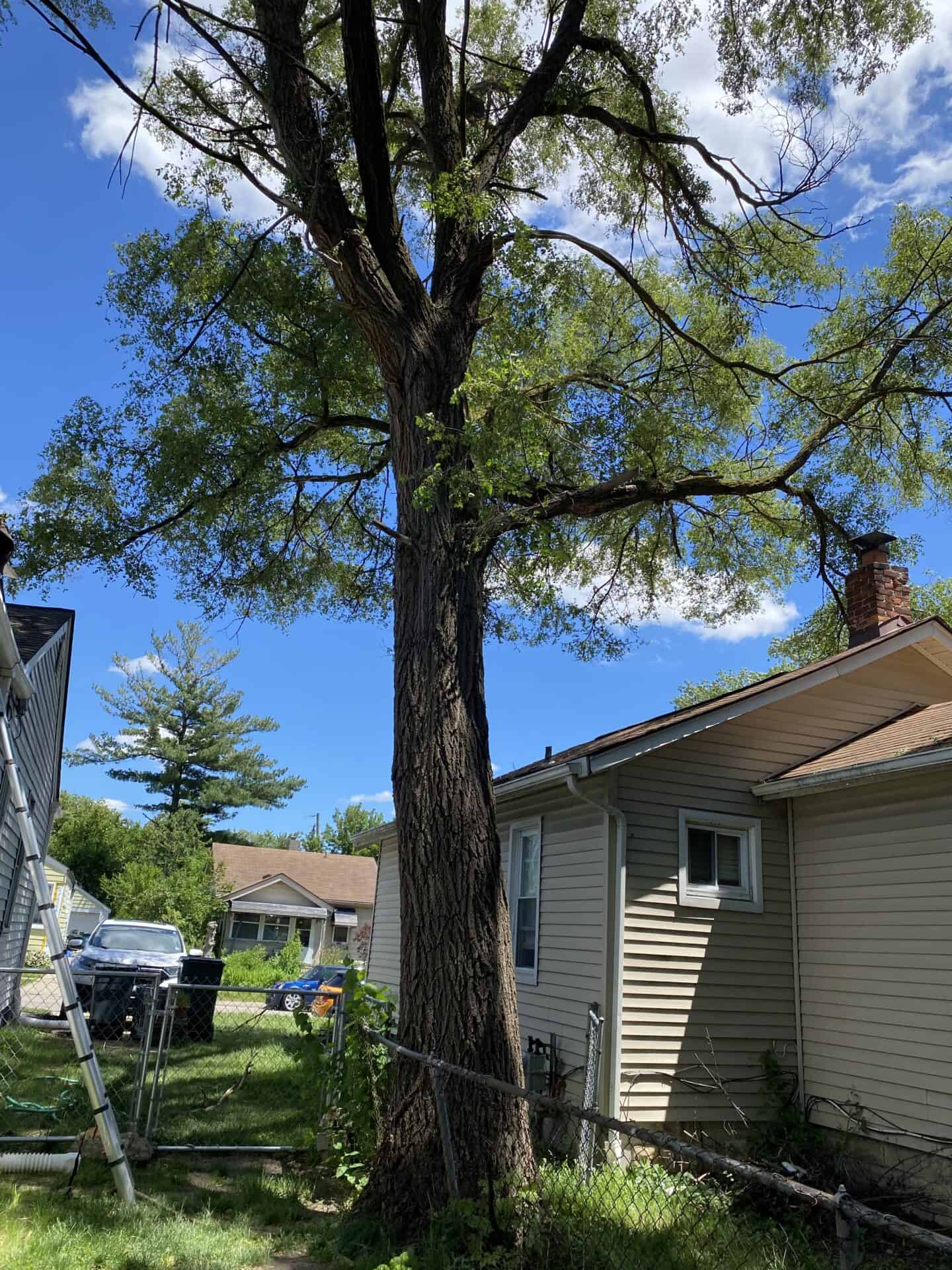
It starts before any equipment comes out. We walk the property with you, look at every tree in the scope of work, and put together a written estimate with a detailed breakdown of what’s being done and why. You know exactly what you’re agreeing to before anything happens.
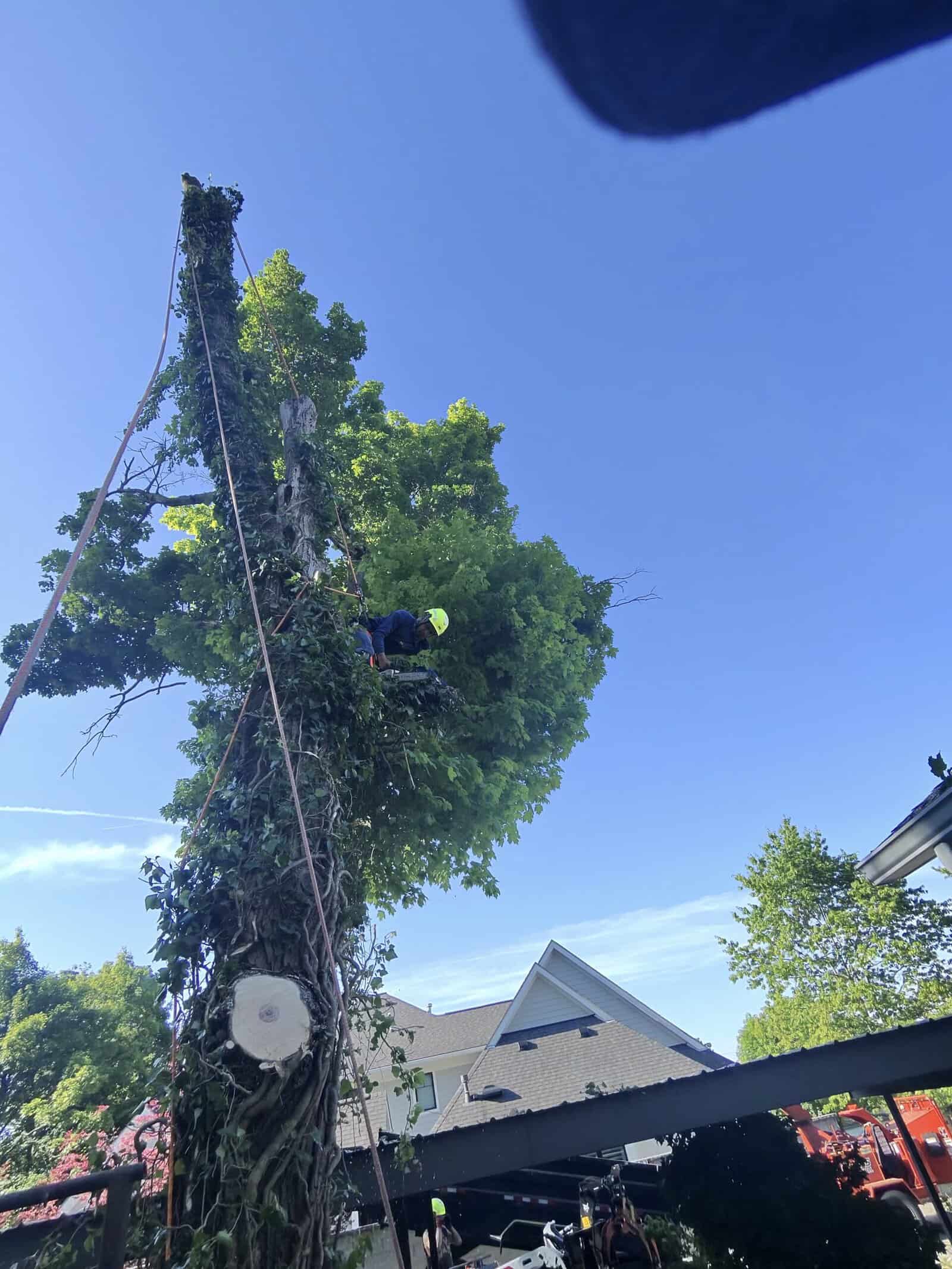
Once work begins, the pruning approach depends on what each tree actually needs. Crown thinning removes select interior branches to improve light penetration and airflow while reducing the canopy’s resistance to wind — a real priority for Milford properties that sit near wooded areas or back up to the open land surrounding Kensington Metropark. Crown reduction brings a tree’s overall size down while maintaining its natural shape, following the ANSI A300 standard that limits live foliage removal to no more than 25 percent per session.
Deadwooding removes branches that are already dead, dying, or structurally compromised — the ones most likely to fail in a storm. Timing matters here, particularly for oaks. Michigan’s oak wilt prevention window runs from November 1 through March 31. Once temperatures climb above 50 degrees in spring, the sap beetles that spread oak wilt become active, and any fresh pruning wound becomes a potential entry point. If you have oaks on your Milford property, scheduling matters as much as technique.
When the work is done, we clean up completely — debris, brush, and anything left behind — so your yard looks like the job was done right, not just done.
Ready to get started?
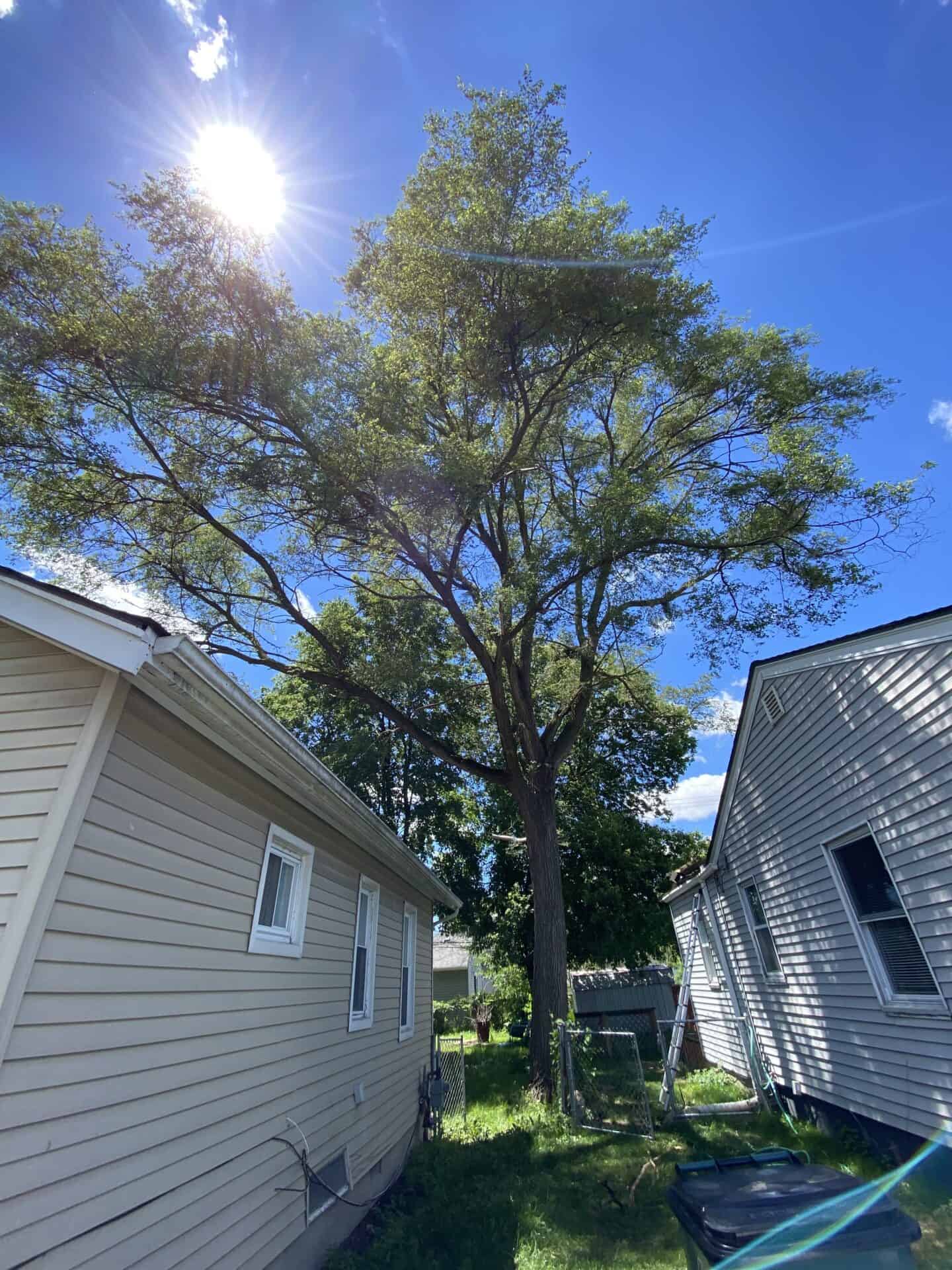
Tree pruning in Milford, MI through Ivan’s Tree Services covers the full scope of what your trees need — not a one-size-fits-all trim. Crown thinning, crown reduction, crown raising, and deadwooding are all part of our toolkit, and the right approach gets determined during the site walk, not assumed in advance. Every job follows ANSI A300 standards, which means no topping, no flush cuts, and no climbing spikes on trees being pruned. Those practices cause long-term damage, and they’re exactly what separates a qualified arborist from someone who just owns a chainsaw.
For properties in Milford Township — which has a formal Tree Protection and Woodland Preservation ordinance — routine pruning on an occupied single-family lot doesn’t require a tree permit. That said, if you’re working near the Village’s right-of-way trees or dealing with a tree that’s grown into the utility corridor along Milford Road or Commerce Road, the situation changes. We employ line-clearance certified arborists with the specialized training and utility insurance required to work near energized power lines — a capability most local tree services in the Milford market don’t hold.
Emergency pruning and storm damage response is also available 24/7, with typical on-site arrival within 60 to 90 minutes. After what Milford saw in August 2024, that’s not a small thing. Every job — routine or emergency — ends with complete debris removal and site cleanup. The goal is to leave your property in better shape than we found it, and that’s what the reviews from Milford and the surrounding Milford area consistently describe.
For most deciduous trees in Milford, late winter — roughly February through early March — is the professional recommendation. Trees are still fully dormant, which reduces stress, limits the risk of disease entry through fresh cuts, and makes the structure easier to assess without foliage in the way. The dormant season broadly runs from late November through early March, and most pruning work fits comfortably within that window.
The exception that matters most in Milford is oak trees. Michigan’s oak wilt prevention window is November 1 through March 31 — hard stops on both ends. Oak wilt is a fungal disease spread by sap beetles that become active once temperatures consistently exceed 50 degrees, typically in April. A fresh pruning wound on an oak outside that window is a real risk, and oak wilt kills trees within months with no cure available. If you have oaks on your property — which is common throughout Milford’s older neighborhoods and wooded township lots — timing your pruning correctly isn’t optional. It’s the difference between a healthy tree and a dead one.
Crown thinning and crown reduction are both forms of professional tree pruning, but they serve different purposes. Thinning removes select branches from throughout the canopy — not the overall size of the tree, but the density of it. The goal is to improve light penetration, increase airflow, and reduce the canopy’s resistance to wind. For Milford properties near wooded areas or open parkland, thinning is one of the most effective ways to reduce the likelihood of storm damage without significantly changing the tree’s appearance.
Crown reduction actually brings the tree’s overall size down. It’s the right approach when a tree has grown too large for its space, is encroaching on a structure, or poses a clearance issue. Done correctly — following ANSI A300 standards, which cap live foliage removal at 25 percent per session — crown reduction maintains the tree’s natural form and keeps it structurally sound. What it is not is topping. Topping cuts a tree back to large stubs, creates massive open wounds, and produces structurally weak regrowth that fails faster than the original branches. It’s harmful, and it’s not something we do.
A few things are worth looking for. Dead or hanging branches — especially large ones — are the clearest signal. They’re not going to recover, and they will eventually come down on their own, usually at the worst possible time. Branches growing toward your roofline, rubbing against the house, or crossing over utility lines along your property are also worth addressing sooner rather than later.
For Milford homeowners specifically, the August 2024 storm is a useful reference point. Trees that failed during that event — the ones that came down on roofs and blocked roads throughout Milford Township — were largely trees with existing structural issues: dead wood, weak branch unions, or canopies that were too dense to let wind pass through. If your trees haven’t been assessed or pruned in several years, a site walk with a qualified arborist is worth doing before the next severe weather season. Waiting until there’s a problem typically means paying significantly more to fix it than you would have spent on preventive pruning.
For routine pruning on an occupied single-family residential lot in Milford Township, no tree permit is required. The Township’s Tree Protection and Woodland Preservation ordinance includes an explicit exception for routine yard maintenance on occupied single-family lots that aren’t subject to site plan review. Removal of a single tree on that same type of lot — with a valid certificate of occupancy — is also generally exempt. Clear-cutting, however, is not included in that exemption, and any work tied to new development or a project requiring site plan approval is subject to the full ordinance.
If your property is within the Village of Milford rather than the Township, the Village DPS manages all street trees between the curb and property line. Work on those trees is handled by the Village, not by private contractors working independently. For trees on your own property inside the Village limits, the practical rules are similar — routine pruning doesn’t require a permit — but it’s always worth a quick call to the Village office at 248-684-1515 if you’re uncertain about what’s on your side of the line versus theirs.
Two credentials matter most: ISA Certified Arborist and proof of insurance — both general liability and workers’ compensation. The ISA certification is the recognized professional standard in arboriculture. It requires passing a comprehensive exam and ongoing continuing education, and it’s verifiable through the ISA’s public directory. It signals that the person making decisions about your trees understands tree biology, proper pruning technique, and what a wrong cut actually costs a tree long-term.
Workers’ compensation is the one most homeowners overlook. If an uninsured worker is injured on your property, your homeowner’s policy may not cover it, and you can be personally liable. It’s not a theoretical risk — it’s a documented legal exposure. Beyond those two, the TRAQ qualification (Tree Risk Assessment Qualification) is worth asking about if you have older, larger trees on your property. It’s an ISA credential specifically for evaluating structural risk, and it’s directly relevant to the mature hardwoods that are common throughout Milford’s established neighborhoods and wooded township lots. We field both ISA Certified Arborists and TRAQ-qualified risk assessors.
Complete debris removal is part of every job — not an add-on, not something you negotiate separately. After the pruning work is done, we remove all cut branches, brush, and debris from the property. The expectation is that your yard looks cleaner when we leave than it did when we arrived, and that’s what the reviews from Milford and the surrounding Milford area consistently describe.
This matters more than it might seem at first. In a tight-knit community like Milford, a crew that leaves a mess behind doesn’t stay busy for long. Our reputation in this market is built largely on the combination of quality work and thorough cleanup, and that reputation is something we take seriously because we live here. When the job is on your street, it reflects on our neighborhood too. That’s a different kind of accountability than you get from a regional chain or a company that doesn’t have a stake in how Milford looks.
Other Services we provide in Milford
