Hear from Our Customers
After a storm hits Milford, the immediate danger isn’t always the tree that already fell. It’s the one still standing with a cracked root system, a split trunk hidden by bark, or a heavy limb hanging over your roof by a thread. Getting the visible mess cleaned up is one thing. Knowing what’s still a threat — that’s where the real value is.
Milford’s residential landscape is different from most of Milford. The lots in Heritage Hills, Stone Hollow, and the neighborhoods that back up to the Kensington Metropark corridor are heavily wooded with mature hardwoods that have been growing for decades. When a storm strong enough to snap trees across 4,481 acres of Kensington Metropark moves through — as one did in May 2026 — the properties along that corridor take the same hit. These aren’t small trees on small lots. They’re large, complex removals on properties where precision matters.
What you get when the job is done right: the hazardous material is gone, the debris is cleaned up, and you have a clear, documented picture of what’s safe and what still needs attention. No half-finished jobs. No mystery limbs left in the canopy. No crew that packs up before the site is clean.
We’re headquartered at 1944 Borman Ct in Milford. This isn’t a satellite territory — it’s home. When a storm rolls through western Milford, our crew is already here, in the same neighborhoods, dealing with the same conditions you are.
Over the past seven-plus years, we’ve built a reputation in this area on a straightforward approach: show up, walk the site with the homeowner, give an honest assessment, and do the work right. ISA Certified Arborists are on every significant job. TRAQ-qualified risk assessors handle the evaluations that go beyond what a visual inspection can tell you. And because Milford’s neighborhoods run alongside DTE Energy’s overhead utility infrastructure, our crews hold line-clearance arborist certification — the specialized training required to work safely near energized power lines that most competitors in this market simply don’t have.
The reviews from local customers say it consistently: fair pricing, professional crews, thorough cleanup, and clear communication from the estimate through to the final walkthrough.
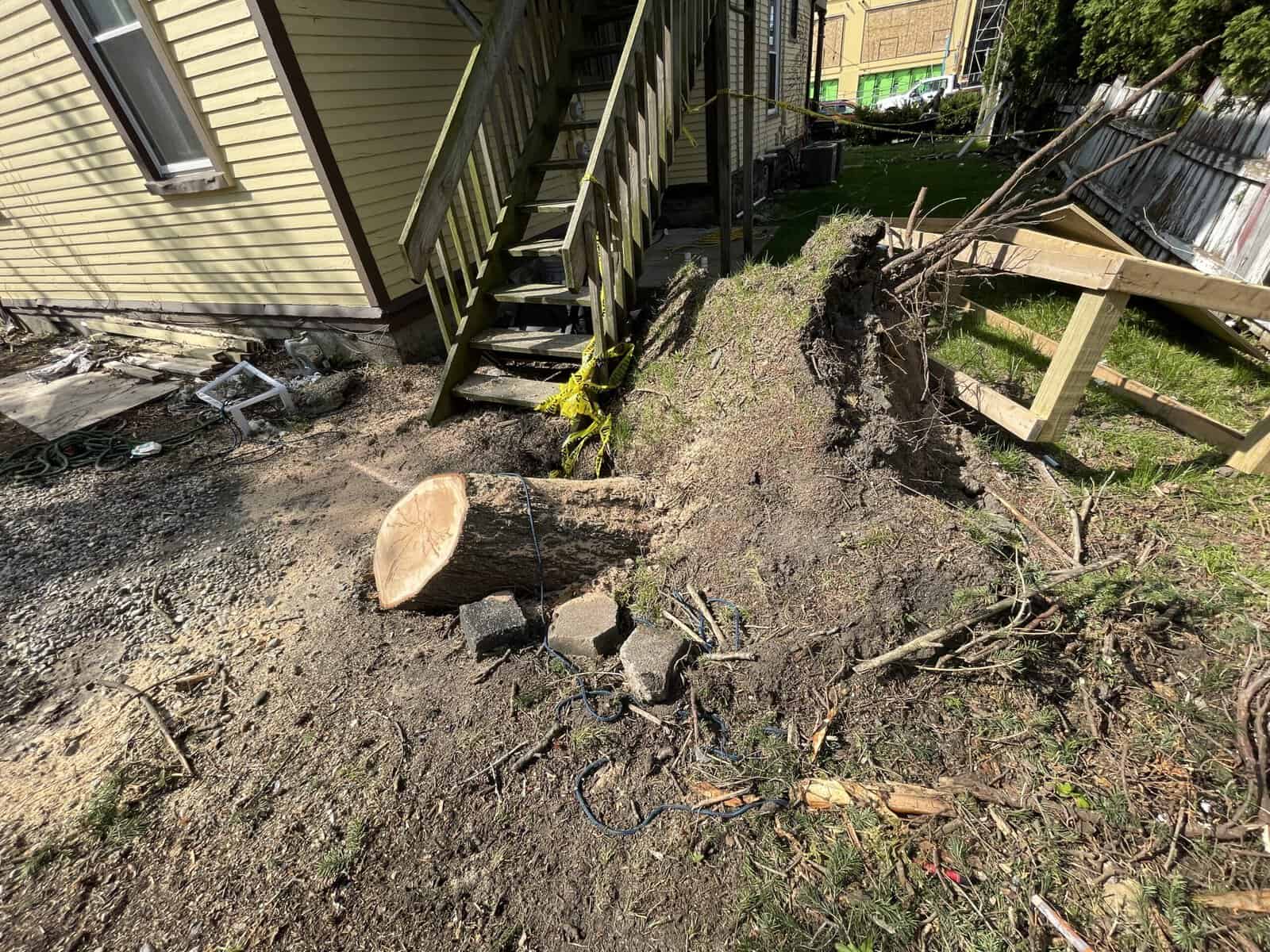
When you call us after storm damage in Milford, the first thing that happens is a real conversation — not a voicemail, not a callback form. You describe what you’re seeing, and we determine whether this is an immediate emergency or something we can assess safely within a short window. For active hazards — a tree on a structure, a hanging limb over a living space, a root ball that’s heaved out of saturated ground — we respond immediately, 24 hours a day.
Before any work starts, our crew walks the site with you. This isn’t a formality. In Milford, where a single storm-damaged tree can involve overhead DTE lines, a riparian root system near the Huron River, or a 70-year-old oak positioned 15 feet from a historic home, the pre-job assessment shapes the entire removal plan. The TRAQ-qualified assessment identifies what came down, what’s still compromised, and what the sequencing needs to look like to keep our crew and your property safe.
One practical note for Milford homeowners: if the damaged tree is between the curb and your property line, that’s a Village of Milford DPS responsibility, not yours. We can help you identify which portion of the job falls on you and what to report to the Village — cutting through the confusion that often delays action after a storm.
Once the plan is set, our crew handles the full scope: hazardous limb removal, fallen tree removal, emergency tree clearing, stump grinding if needed, and complete debris cleanup. The job isn’t done until the site is clean and you’ve walked it with our crew.
Ready to get started?
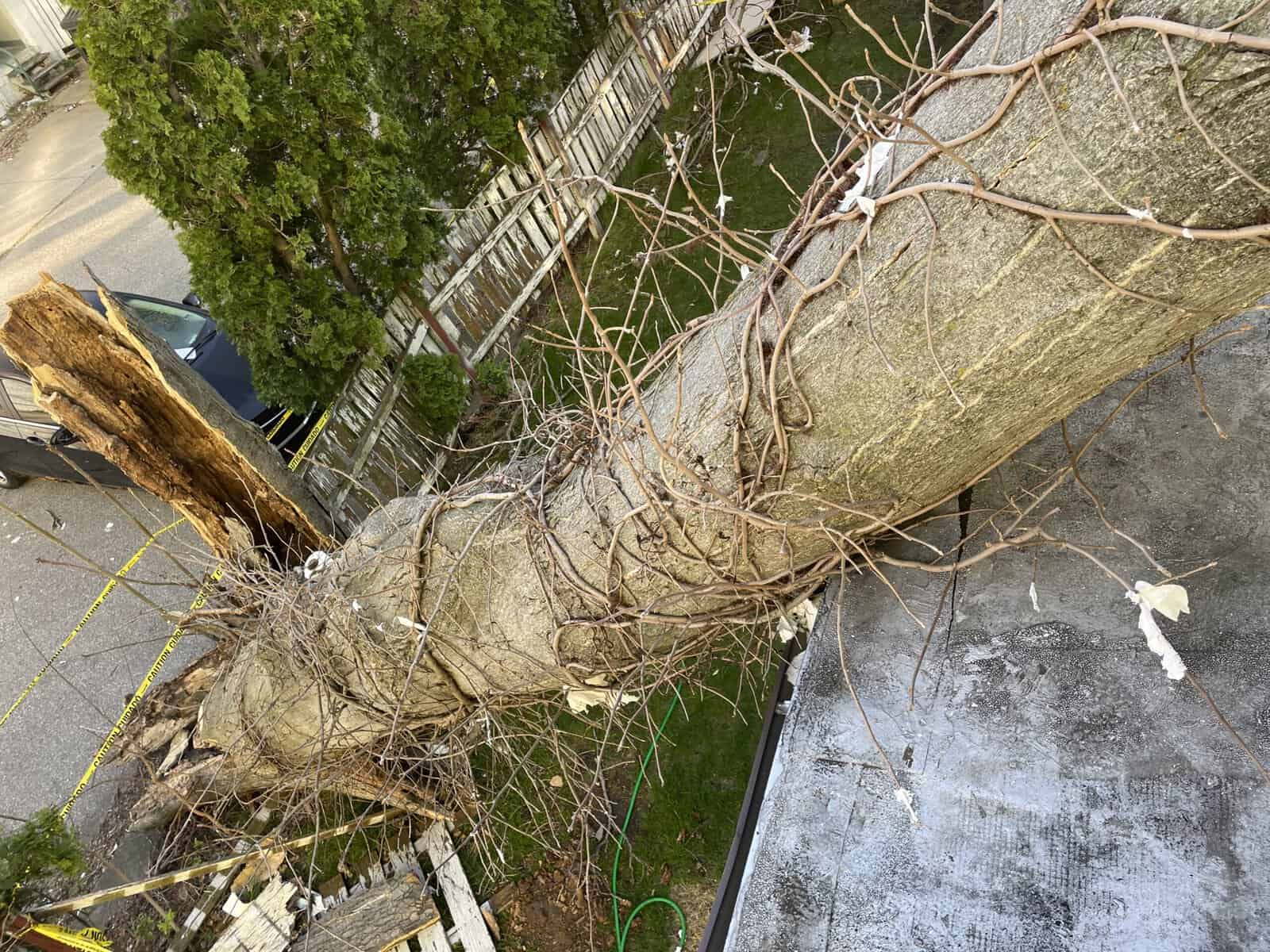
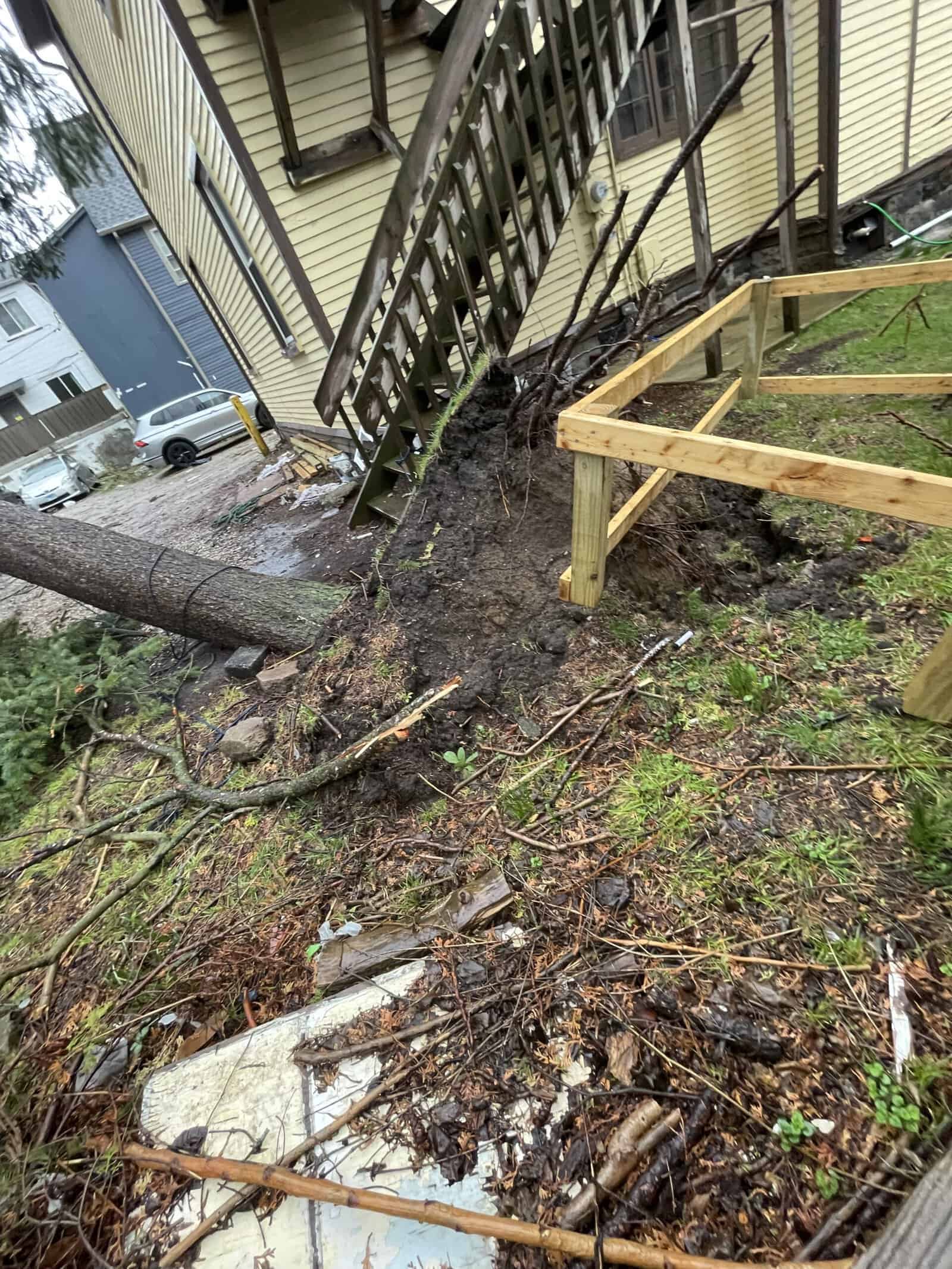
Storm damage in Milford rarely looks like one clean problem. A single severe weather event can leave you with a fallen tree blocking the driveway, a widow-maker hanging over the back porch, a split branch still attached to the trunk and holding tension, and a root ball that’s displaced enough soil to threaten the foundation. We handle all of it — not just the straightforward pieces.
The specific services we provide for storm damage calls in Milford include 24-hour emergency tree service for active hazards, storm damage cleanup for post-storm debris and structural assessment, fallen tree removal from structures, driveways, fences, and open ground, emergency tree clearing when access is blocked, and hazardous limb removal for widow-makers and hanging branches that are under tension and dangerous to approach without proper rigging.
Because Milford Charter Township’s tree ordinance — specifically Section 32-723 — exempts occupied single-family lots from permit requirements for tree removal, there’s no permit delay standing between you and getting a hazardous tree down. For homeowners in the Village of Milford, the street tree distinction matters: trees between the curb and your property line are managed by the Village DPS, while everything on your private property is your call. We’re familiar with both sides of that line and can help you navigate it quickly. The goal every time is the same: your property is safe, the site is clean, and you know exactly what was done and why.
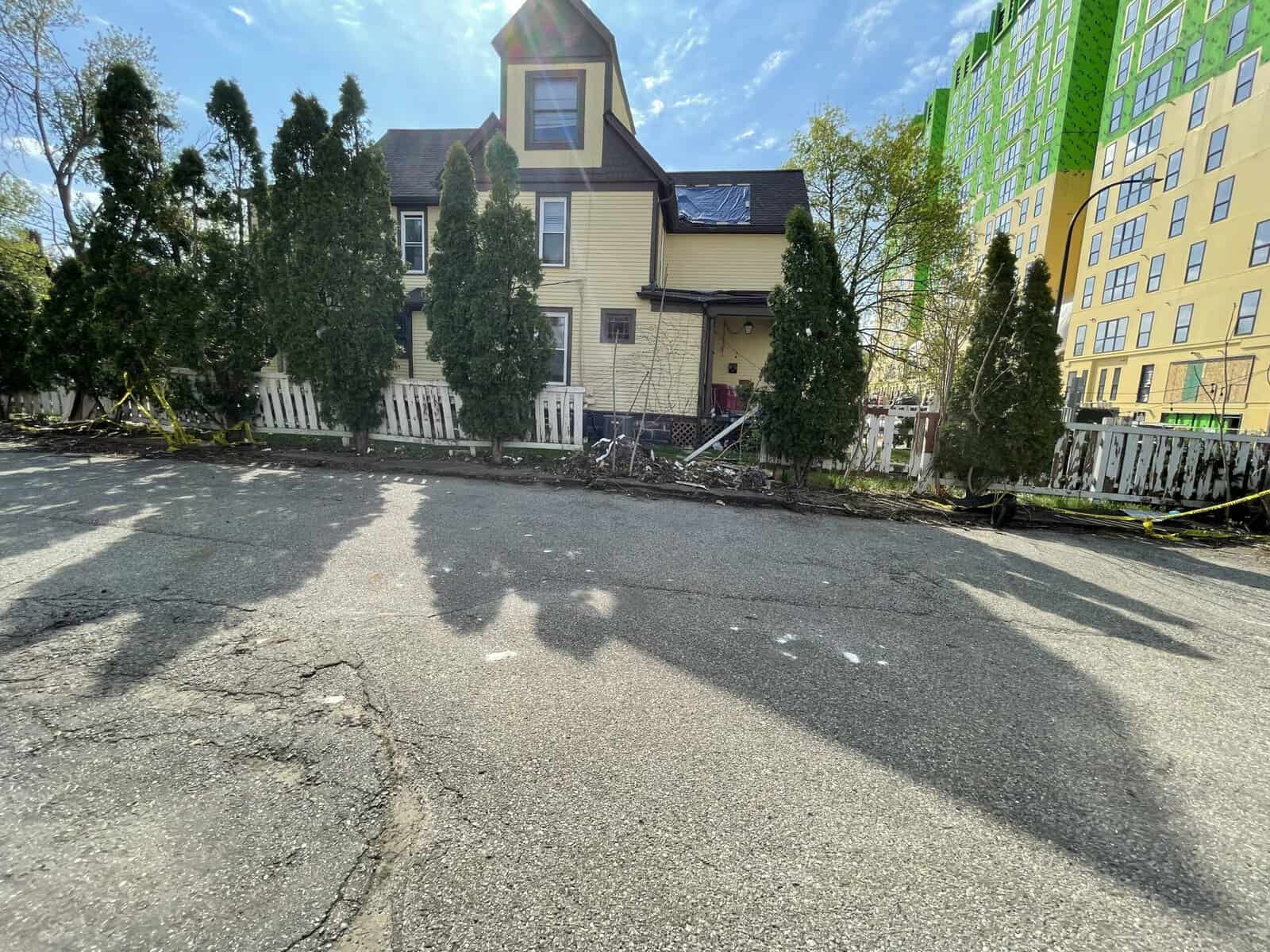
Not necessarily, and this is one of the most common mistakes homeowners make after a storm. A tree that’s still upright can have significant structural damage that isn’t visible from the ground — a cracked root plate, a trunk split hidden under bark, or compromised anchoring from saturated soil. In Milford, where properties near the Huron River and Kensington Metropark corridor sit on ground that becomes heavily saturated during spring and summer storms, root systems can lose their grip even when the tree looks fine from the outside.
A TRAQ-qualified risk assessment — which we provide — goes beyond a visual check. It evaluates the tree’s structural integrity, identifies failure points, and gives you a documented answer: this tree is safe to leave, this one needs pruning and cabling, or this one needs to come down before the next storm. That assessment protects you from the “wait and see” gamble that ends with a tree through a roof three weeks after the original storm.
Get everyone out of the affected area of the house first. If the tree has come down near or on a structure, treat the situation as a potential structural compromise — don’t walk under damaged rooflines or through rooms where the ceiling may be bearing load from the tree. If there are any downed or sagging power lines involved, stay well clear and call DTE Energy before anyone approaches the tree.
Once the immediate safety perimeter is established, call us. The 24-hour emergency tree service line is there for exactly this situation. While you’re waiting, document the damage with photos from a safe distance — this will be useful when you contact your homeowner’s insurance. Standard policies typically cover tree removal when a tree has damaged a covered structure, but the documentation you provide to your adjuster matters. Our crew will walk the site with you when we arrive, assess the full scope, and get the hazard addressed before any further damage can occur.
For most Milford homeowners, no. Milford Charter Township’s tree ordinance — Section 32-723 specifically — exempts occupied single-family residential lots from the permit requirement for tree removal. This means that if you own and occupy your home in Milford Township and need a storm-damaged tree removed from your private property, you can proceed without waiting on a permit application or approval.
The exemption does not apply to development-related clearing or commercial properties, but for the typical residential storm damage scenario in Milford, it removes a barrier that slows things down in other municipalities. If you live within the Village of Milford rather than the Township, the same general principle applies to private property — but if the damaged tree is between the curb and your property line, that’s a street tree and falls under the Village Department of Public Services’ responsibility. We can help you identify which situation you’re in and who handles what, so you’re not spending time on the phone with the wrong department while a hazardous tree sits unaddressed.
Yes — and this is actually one of the more important distinctions to understand when you’re calling around after storm damage. Michigan does not require a state license to operate a tree service, which means many companies operating in the Milford area are not qualified to work near energized utility lines. Working near an active DTE Energy line without line-clearance arborist certification is not just a liability issue — it’s a serious safety risk.
Our crews hold line-clearance arborist certification, which is the specialized training, equipment, and insurance required to work safely in proximity to energized power lines. In Milford’s neighborhoods — where overhead utilities run through nearly every backyard and the Kensington corridor sees consistent storm-related outages — this credential matters. If your storm-damaged tree is leaning toward a line, has already made contact, or is positioned in a way that makes standard removal unsafe, we’re equipped to handle it where most competitors legally and safely cannot. If the line itself is down or actively arcing, DTE Energy needs to be called first — no tree crew should approach an energized downed line under any circumstances.
For genuine emergencies — a tree on a structure, a hanging limb over a living space, a blocked driveway with an active hazard — we offer 24-hour emergency tree service across Milford and Milford. Because we’re headquartered in Milford itself, the response time for local calls is as fast as it gets. There’s no crew driving in from Pontiac or Farmington Hills — our team is already here.
For post-storm situations that are hazardous but not immediately life-threatening, the process starts with a call, a quick description of what you’re dealing with, and a scheduled site assessment. During major storm events — like the severe weather that moved through western Milford in May 2026 and temporarily closed Kensington Metropark — demand spikes quickly and crews get booked fast. Calling sooner rather than later puts you ahead of the backlog. If you’re unsure whether your situation qualifies as an emergency, call anyway and describe what you’re seeing. We’ll tell you honestly where it falls.
This is a fair and important question. After significant storm events in western Milford, out-of-area operators sometimes move into affected communities offering quick work at low prices — and then disappear after collecting a deposit or doing incomplete work. The BBB has documented this pattern consistently following major weather events in Southeast Michigan.
A few things separate a legitimate, established company from an opportunistic one. First, ask for proof of liability insurance and workers’ compensation before anyone sets foot on your property. In Michigan, where no state license is required to operate a tree service, insurance is one of the only legal protections you have. Second, look for verifiable credentials — ISA Certified Arborist status is publicly searchable through the ISA’s online database. Third, a legitimate company will walk the site with you and provide a written estimate before starting any work. No reputable tree service demands full cash payment upfront before the job begins. Ivan’s Tree Services LLC has a verifiable local address in Milford, confirmed reviews across Google, HomeAdvisor, and Angi, ISA Certified Arborists on staff, and a documented pre-job walkthrough process — all of which you can verify before the first branch comes down.
Other Services we provide in Milford
