Hear from Our Customers
Southfield’s residential neighborhoods were built out in the 1950s and 1970s. The trees that went in the ground back then — oaks, silver maples, ash — are now 50 to 70 years old, and a lot of them are showing wear that isn’t always obvious from the street. Root systems weakened by Southfield’s heavy clay soil, trunks stressed by decades of ice loading, branches that have quietly been failing one storm at a time. When one of those trees finally goes, it rarely falls in a convenient direction.
Getting a hazardous tree removed before it becomes an emergency means you’re not calling anyone in a panic at midnight after a storm tears through the Lahser Road corridor. You get a yard that’s safe again, a property that looks right, and the peace of mind that comes from knowing the work was done by a team that actually knows what they’re looking at — not a crew that showed up with a chainsaw and a truck.
For Southfield homeowners dealing with emerald ash borer damage, silver maple limb failure, or trees that have grown into overhead utility lines along Evergreen Road or Telegraph Road, the outcome isn’t just “the tree is gone.” It’s a property that no longer has a structural liability sitting in the middle of it.
We’re a family-owned operation based in Oakland, Michigan, serving Oakland County — including Southfield — for over seven years. Ivan leads every field job personally. Cecilia handles scheduling and communication, which means when you call, you’re not navigating a call center. You’re dealing with the people who actually run the business.
Our team includes ISA Certified Arborists and TRAQ-qualified risk assessors — credentials that matter in a city like Southfield, where the Planning Department requires a permit and city inspection before any tree over eight inches in diameter can be removed. That’s not a bureaucratic footnote. It’s a real process, and working with a crew that understands it means you don’t end up on the wrong side of a fine or a mandatory replanting order.
We’re also trained and certified to work near electric poles — a specific capability that’s directly relevant in Southfield’s dense urban grid, where mature trees and overhead utility lines share the same narrow corridors in neighborhoods from Evergreen Hills to Washington Heights.
It starts with a site visit. Before anything is quoted or scheduled, someone from our team comes to your property, walks the site with you, and assesses the tree in person. There’s no guessing over the phone and no pressure to commit. For trees in Southfield that meet the city’s eight-inch diameter threshold, this visit also helps determine whether a permit is required — and if it is, what that process looks like and how long it takes. Dead trees are exempt from Southfield’s permit requirement, which matters when speed is a priority.
Once the scope is clear and any necessary permits are in order, our crew arrives with the right equipment for the job. In Southfield’s older neighborhoods, that often means working in tight lots with homes, fences, driveways, and utility lines in close proximity. We use controlled rigging techniques to bring trees down safely — no guessing, no hoping it falls the right way. For trees growing into overhead lines, our power line proximity training is what separates a safe removal from a dangerous one.
When the work is done, the site is cleaned. All debris, brush, and wood is removed before the crew leaves. Your yard should look like a job was completed — not like a logging operation happened in your backyard.
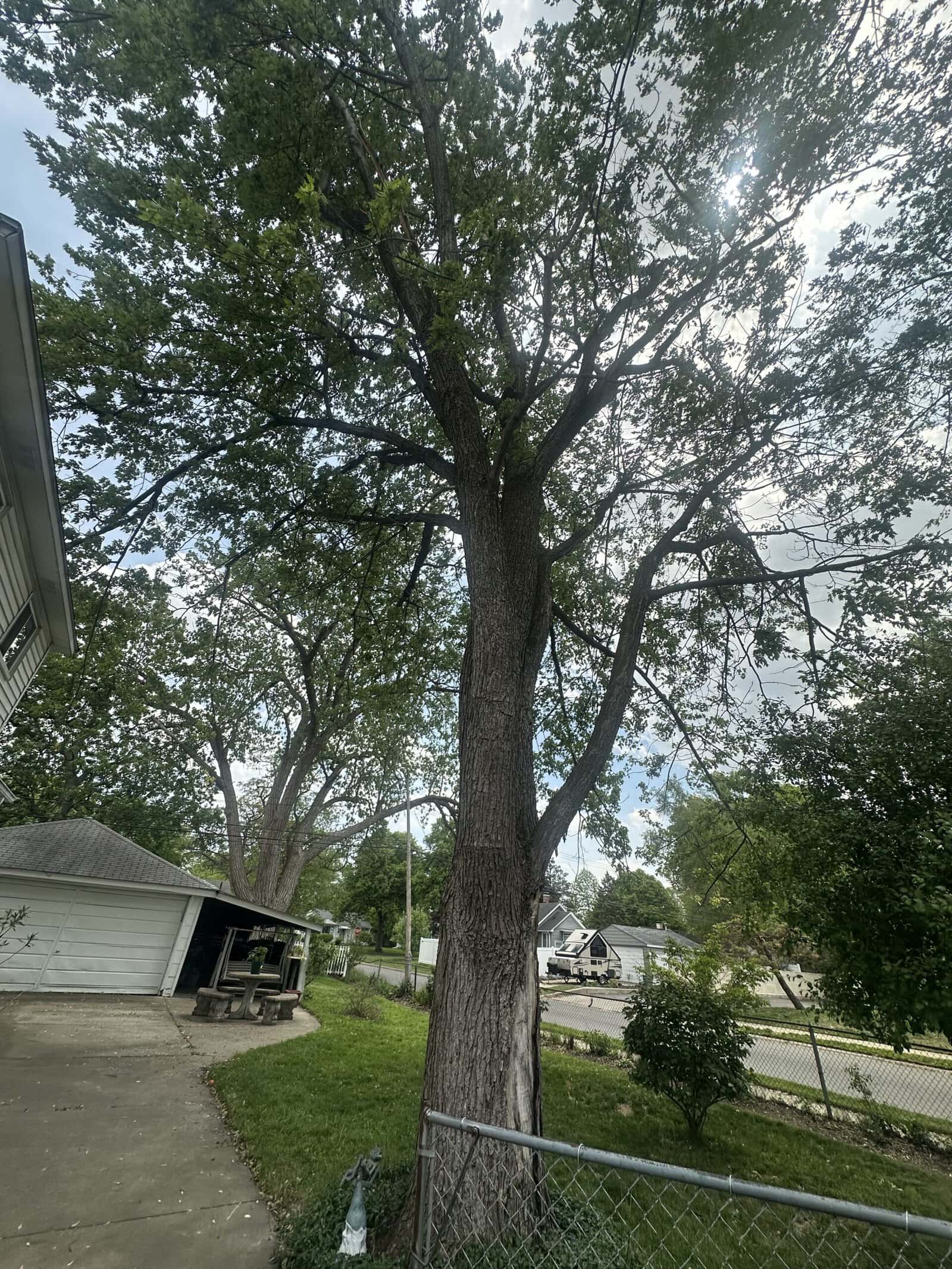
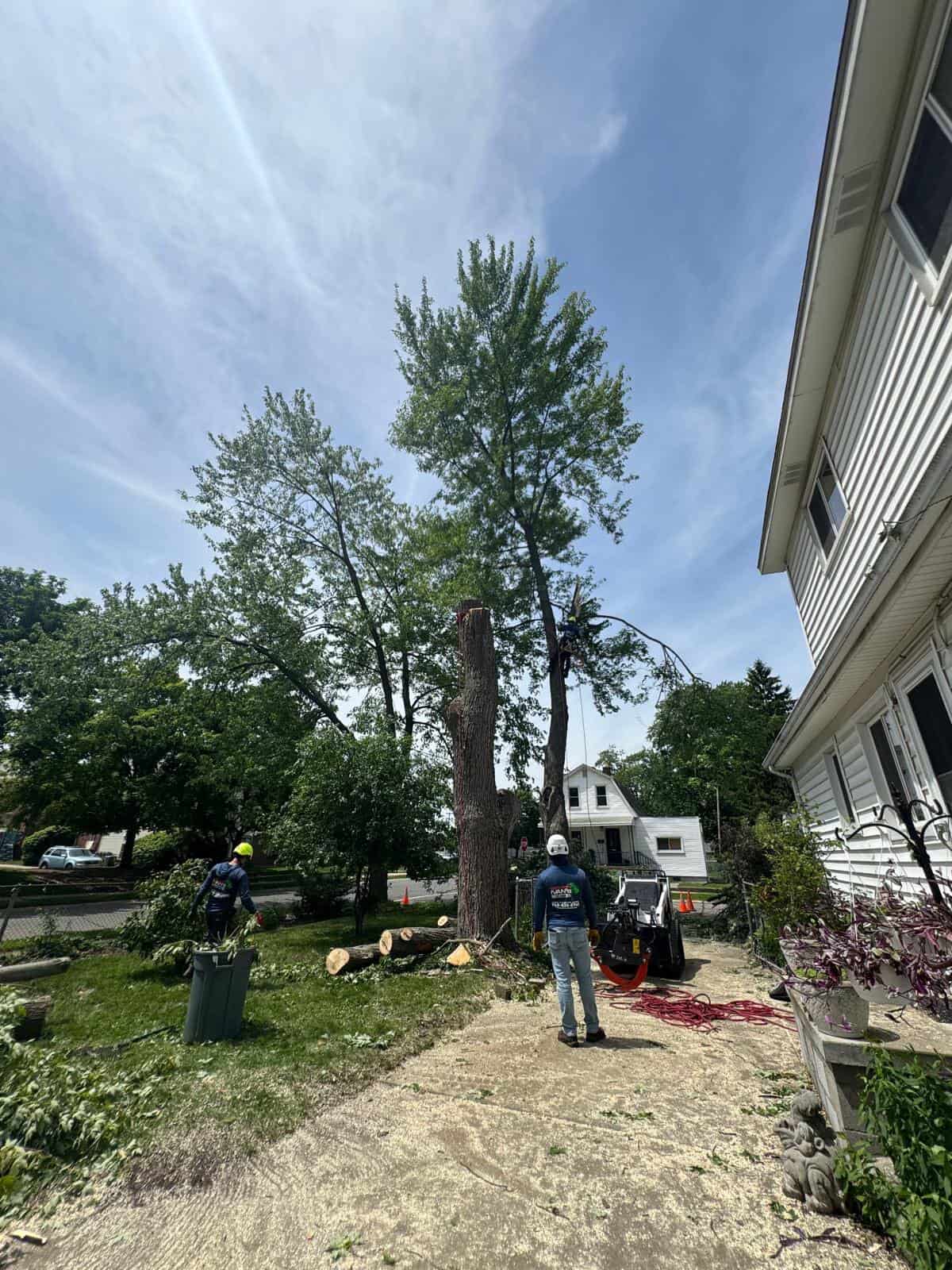
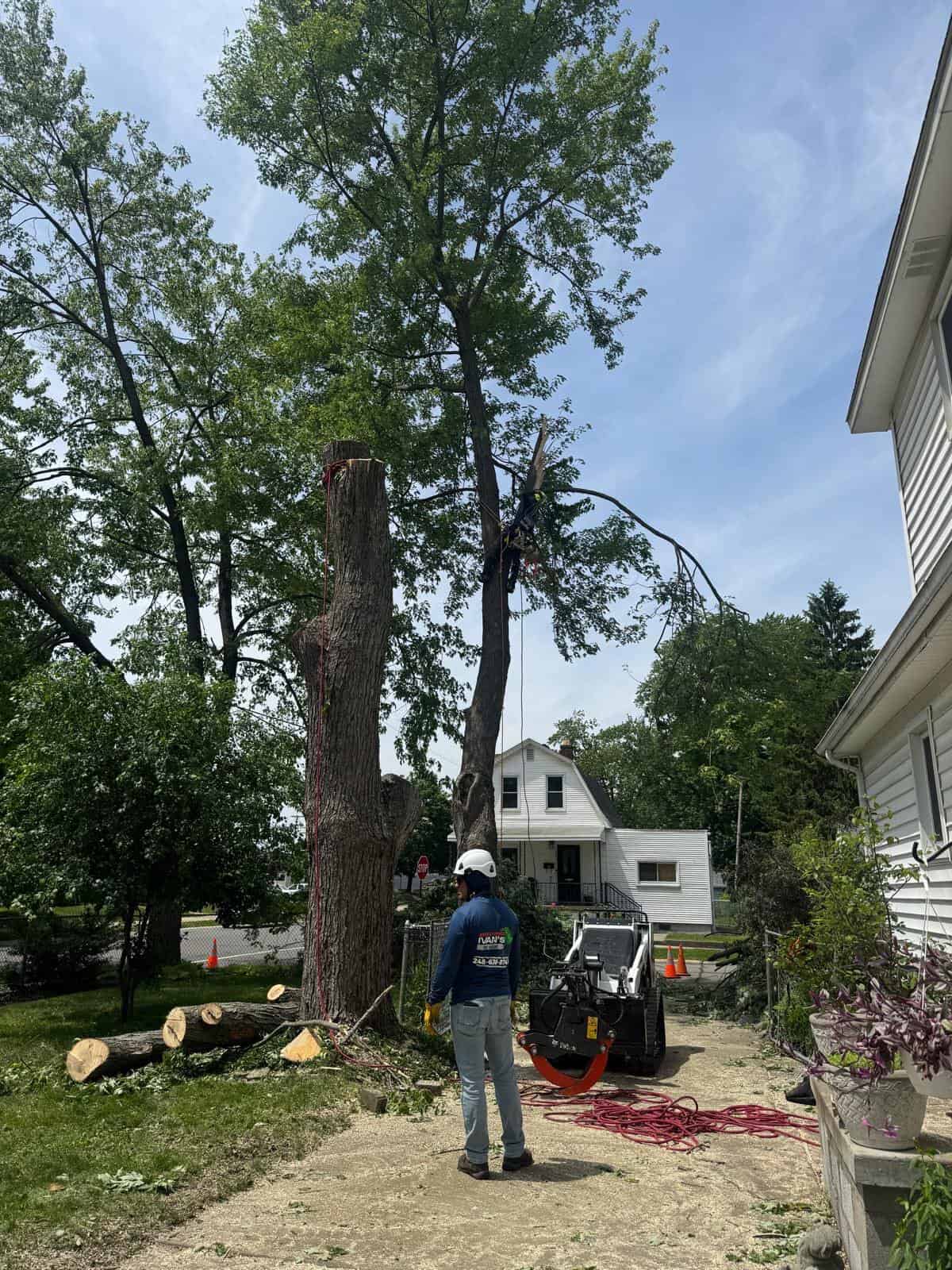
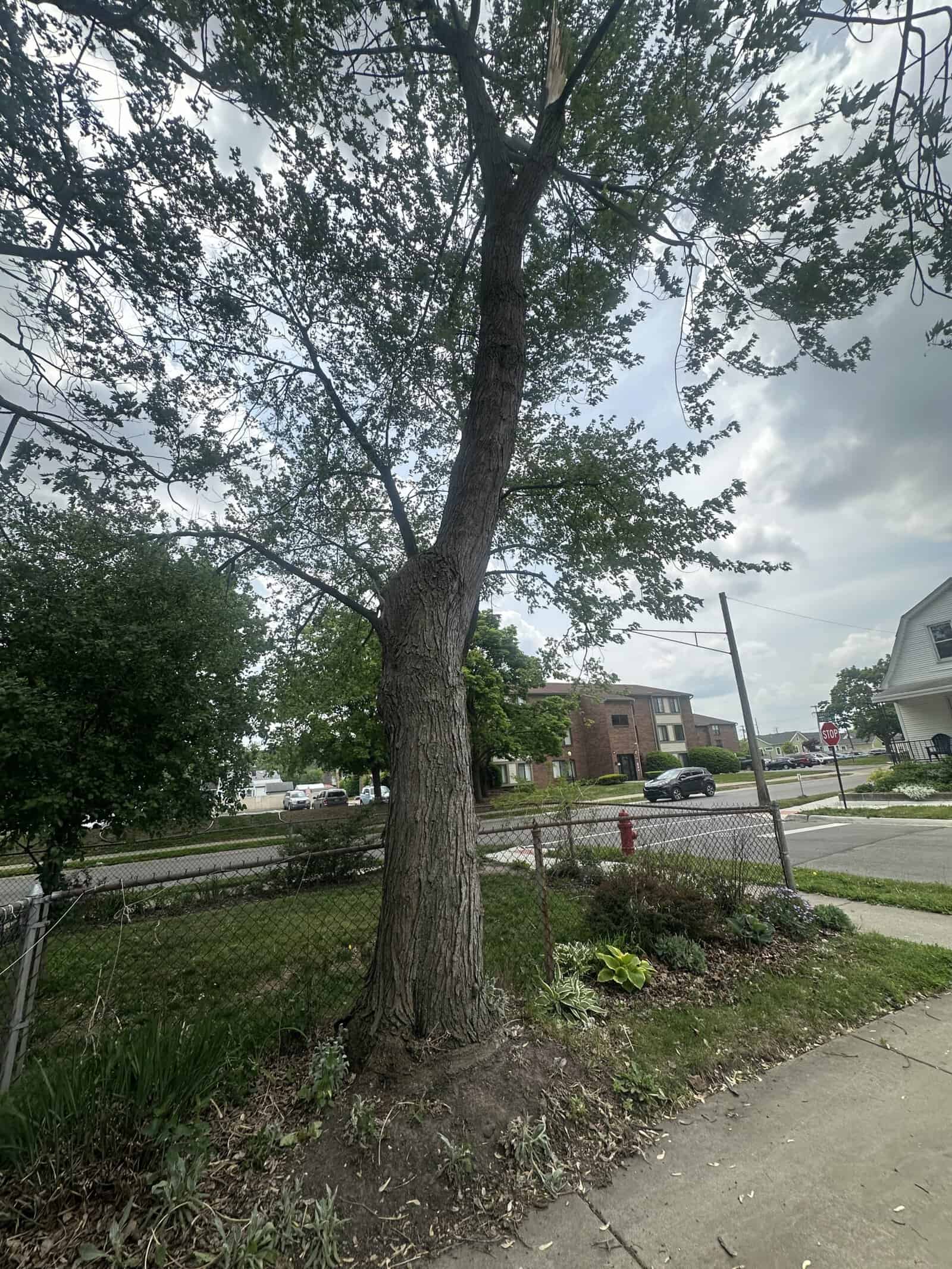
We handle the full range of tree removal needs in Southfield — from routine removal of trees that have outgrown their space to emergency response after the kind of severe weather the city has seen twice in the past two years. In June 2024, Southfield’s mayor declared a State of Emergency following a storm that caused widespread tree damage across the city. In August 2023, more than 91 of the Southfield Fire Department’s calls in a single day were storm-related. When the next storm comes through, we offer 24/7 emergency tree removal — not a voicemail.
For dead tree removal specifically, Southfield’s ordinance includes a permit exemption for completely dead trees, which means removal can move faster when a structurally failed ash tree — common along the Lahser Road corridor due to emerald ash borer damage — needs to come down without delay. We can assess whether your tree qualifies and move accordingly.
Beyond removal, we also handle stump grinding, lot clearing, storm debris cleanup, and full site restoration. Stump removal is a separate service from tree removal and should be discussed upfront so there are no surprises after the job is done. Every service includes complete debris removal — nothing is left behind for you to deal with.
Yes, in most cases. Southfield requires a permit and a city inspection before any tree with a diameter of eight inches or more — measured at breast height, which is 4.5 feet above the ground — can be removed. The application process is handled entirely online through the city’s BS&A portal, and as of December 2024, the city no longer accepts in-person or mailed submissions. Processing typically takes up to five business days, though that can stretch during busy spring construction season.
The main exception is dead trees. Completely dead trees are exempt from Southfield’s permit requirement, which is relevant for homeowners dealing with ash trees that have been killed by the emerald ash borer — a documented issue particularly along the Lahser Road corridor and around Beech Woods Park. If you’re not sure whether your tree qualifies as dead or just declining, an on-site assessment from a certified arborist can answer that before you spend time on paperwork. Removing a tree without the required permit can result in fines and mandatory replacement planting, so it’s worth getting right from the start.
This is one of the most common questions homeowners ask, and the honest answer is that visual inspection from the ground doesn’t always tell the full story. A tree can look relatively healthy on the outside while carrying internal decay, root damage from Southfield’s heavy clay soil, or structural weakness from years of ice loading and storm stress. Silver maples — common throughout Southfield’s older residential neighborhoods — are particularly known for sudden limb failure, even on trees that appear stable.
The warning signs worth taking seriously include a new or worsening lean, especially if the soil around the base is heaving or lifting. Cracks in the trunk, large dead branches in the upper canopy, and exposed or damaged roots are also red flags. If a tree took damage in one of Southfield’s recent severe storms and you haven’t had it assessed since, that’s worth doing — storm-damaged trees can carry invisible structural problems that only show up later. A TRAQ-qualified risk assessor uses a formal methodology to evaluate these factors, not just a visual guess.
Stump removal is a separate service from tree removal, and this surprises a lot of homeowners. When a tree is cut down, the stump stays in the ground unless you specifically request and pay for stump grinding. It’s worth discussing this upfront so you know exactly what the finished job will look like and what it will cost.
Stump grinding uses a machine to grind the stump down below grade — typically several inches below the surface — leaving behind wood chips that can be used as mulch or hauled away. It doesn’t remove the entire root system, but it eliminates the visible stump and allows the area to be replanted or sodded over. In Southfield’s dense residential lots, where yard space is limited and HOA rules or neighbor proximity make an exposed stump a nuisance, grinding is usually the right call. If you’re planning to replant in the same spot, discuss this with the crew beforehand so the grinding depth accounts for what you want to put there next.
Yes, but it requires a crew that is specifically trained and certified for that type of work — and not every tree service in Southfield has that qualification. Working near energized overhead lines is one of the highest-risk scenarios in tree removal, and the consequences of getting it wrong go well beyond property damage.
We’re trained and certified to work near electric poles, which is a direct differentiator in Southfield’s urban environment. The city’s older neighborhoods — particularly those built out in the 1950s and 1960s along corridors like Evergreen Road and Telegraph Road — have mature trees that have grown into or directly adjacent to utility lines over decades. Removing those trees safely requires controlled rigging, proper equipment, and a crew that understands the clearance requirements and protocols for working in proximity to live infrastructure. If you have a tree that’s entangled with or leaning toward overhead lines, this is not a job for a general contractor or a landscaping crew with a chainsaw.
It depends on the situation, and the details matter. In general, homeowners insurance may cover tree removal costs if a tree falls during a covered event — like a windstorm — and damages a structure on your property, such as your home, fence, or garage. Southfield has seen two significant storm events in the past two years that resulted in exactly this kind of damage, including trees uprooted onto homes and power lines brought down onto driveways.
What insurance typically does not cover is the removal of a tree that fell in your yard but didn’t hit anything, or the proactive removal of a tree that’s still standing but poses a risk. One important note: if a storm damages a tree on your property, do not remove it before your insurance adjuster has had a chance to document the damage. Removing the tree first can void your claim. Call your insurer, document everything with photos, and then bring in a tree removal crew once you have clarity on what’s covered. A reputable company will work around that timeline.
Tree removal costs vary based on the size of the tree, its location on the property, how close it is to structures or utility lines, and whether stump grinding is included. Nationally, professional tree removal ranges from around $200 for a small tree to over $2,000 for a large one, with emergency removal potentially reaching $5,000 depending on the complexity of the situation. Those figures give you a general frame of reference, but Southfield’s specific conditions — tight urban lots, overhead utility lines, heavy clay soil, and the city’s permit process — can all factor into the final scope and cost of a job.
What you want to avoid is choosing a quote simply because it’s the lowest number. In Southfield, where tree removal over eight inches in diameter requires a permit and city inspection, a crew that skips the permitting process isn’t saving you money — they’re transferring the legal and financial risk onto you. A transparent estimate from a licensed and insured company that accounts for the full scope of the job is worth more than a cheap number that leaves out cleanup, stump grinding, or compliance. We provide free, no-obligation on-site estimates so you know exactly what’s included before any work begins.
Other Services we provide in Southfield
