Hear from Our Customers
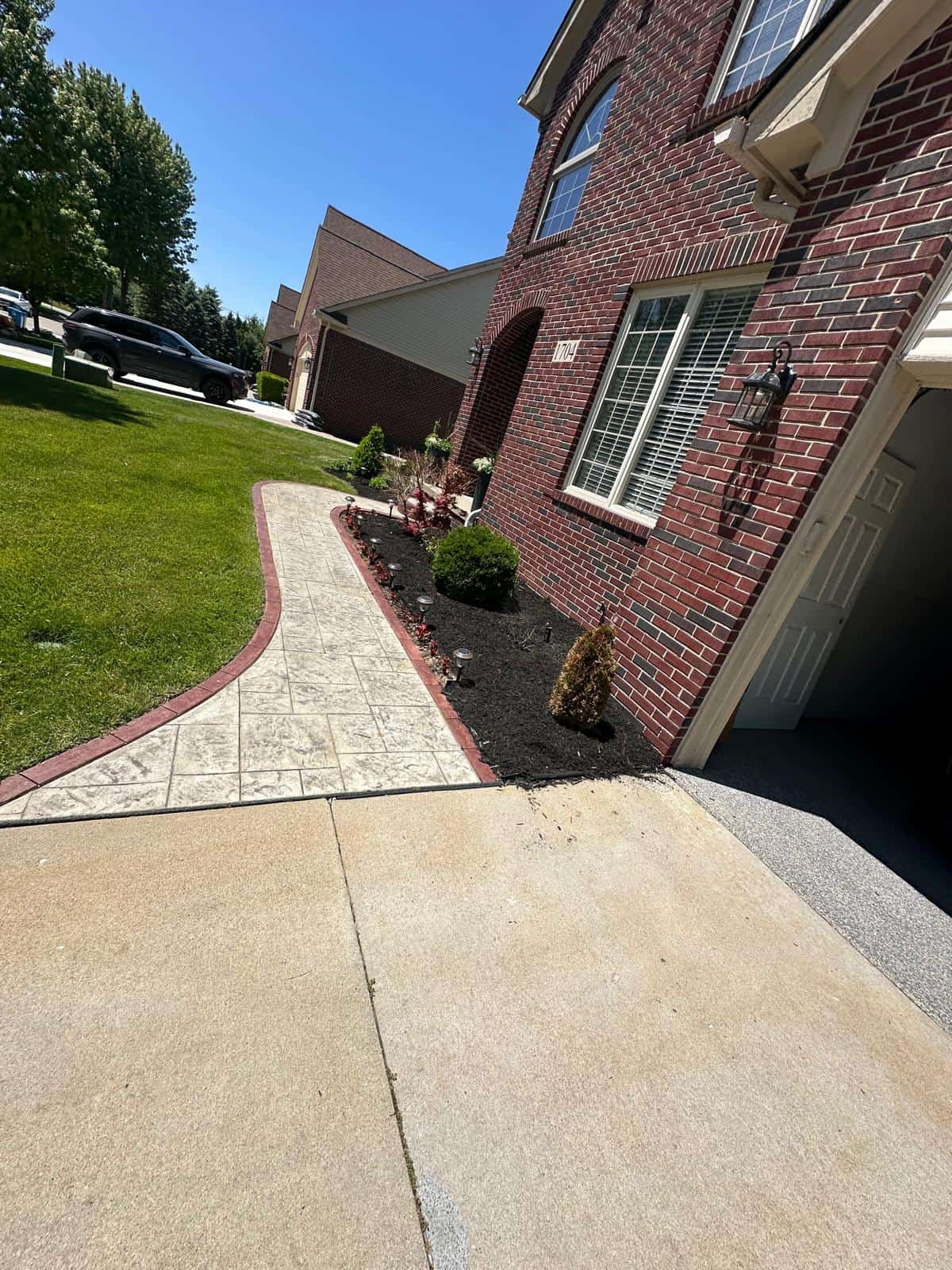
The ranches and colonials that define Southfield’s residential neighborhoods were built in the 1950s and 1960s. The garden beds around them have been there just as long. Old mulch has broken down into compacted, weed-choked layers. Edges have shifted. The soil underneath has lost its ability to hold moisture or regulate temperature the way it once did.
When that gets addressed properly, the difference is immediate — cleaner beds, fewer weeds pushing through all season, and plants that are actually getting what they need from the ground up.
Southfield is also a denser city than most people realize. With I-696, M-10, M-39, and Telegraph Road all converging here, the impervious surfaces surrounding your neighborhood push soil temperatures higher than in cooler, less developed towns nearby. That urban heat load is real, and it puts extra stress on the mature oaks and silver maples in your yard.
A properly installed mulch ring — correct depth, root flare exposed — keeps the root zone cooler, holds moisture longer, and gives those trees a meaningful buffer against heat stress that a landscaping crew without tree science training simply won’t think to account for. The result isn’t just a yard that looks better. It’s beds that actually function the way they should, installed by people who understand what’s happening below the surface.
We’re an Oakland County-based tree care company founded by Ivan, who has 7-plus years of professional experience that started as a groundman in California before relocating to Michigan. Ivan leads every field crew personally. His fiancée Cecilia handles the administrative side. It’s a small, family-run operation — and that’s intentional. Every worker is trained not just to do the work correctly, but to communicate clearly with homeowners throughout the process.
Southfield already has a high bar for tree care — the city’s own Forestry Division employs trained arborists to manage the public tree canopy. Our certified arborist credentials meet that same standard. We have a verified review from a Southfield homeowner on Angi who had a large tree removed that was threatening their roof and specifically recommended our service. That kind of direct, local track record in this city is not something every provider can point to.
We’re licensed, insured, and every estimate is provided in writing before any work begins — valid for 30 days, no pressure.
It starts with a written estimate. Before anything gets scheduled, you know exactly what the job covers, what it costs, and what to expect. That’s not a courtesy — it’s the baseline for how we operate, and it’s documented in writing. In a city like Southfield, where door-to-door landscaping operators are a documented problem, having everything confirmed before work starts matters more than most people think until it doesn’t go that way.
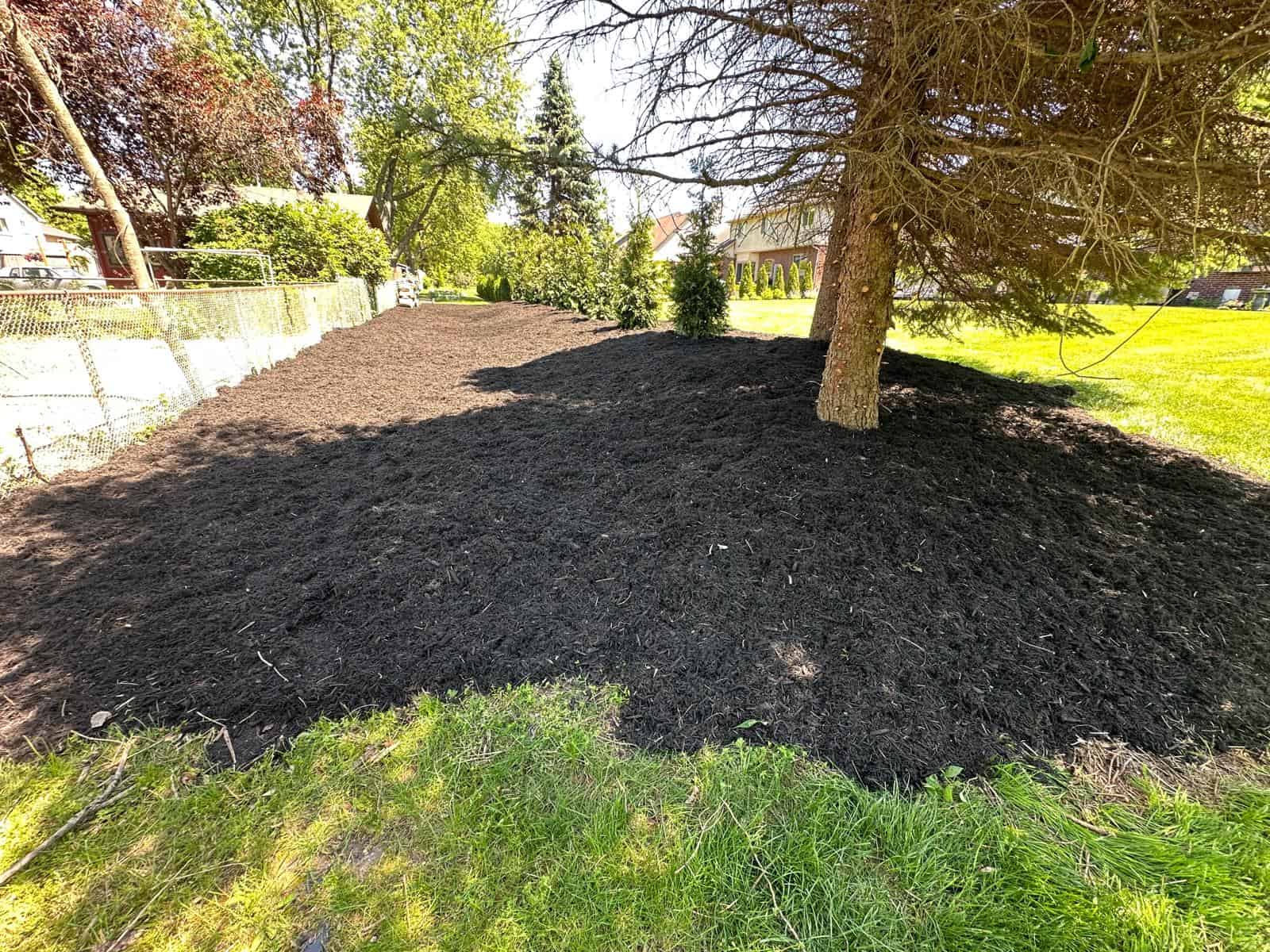
Once the job is scheduled, our crew handles bed preparation first. That means raking and aerating existing material, removing debris, and addressing compaction before any new mulch goes down. Skipping that step is one of the most common shortcuts in the industry — and it’s why a lot of mulch installations look fine for a few weeks and then fall apart. Fresh mulch applied over a compacted, matted base doesn’t perform the way it should.
Timing in Southfield follows the Southeast Michigan window — late April through mid-May for spring installations, when the soil has warmed but summer heat hasn’t peaked. Mulching too early insulates cold ground and delays plant growth. Too late, and you miss the weed suppression window before summer seeds germinate.
Our crew applies mulch at the ISA-recommended 2 to 3 inch depth, keeps the root flare fully exposed on every tree, and leaves the beds clean and even when we go. If the work follows a tree removal or stump grinding, mulch and topsoil can both be handled in the same visit.
Ready to get started?
Mulch installation through our service covers the full process — not just the material. Bed preparation is part of the job, not an add-on. Our crew rakes and aerates existing mulch before new material goes down, removes surface debris, and ensures even coverage at the proper depth across the entire bed area.
The mulch itself is repurposed wood chip material from our own tree removal and trimming work — locally sourced from the same regional tree canopy that defines Southfield’s neighborhoods, not bagged product from a big-box store.
For Southfield properties specifically, our crew is trained to recognize and respond to what the city’s trees actually face. Emerald Ash Borer damage has been documented along the Lahser Road corridor and around Beech Woods Park. Oak wilt has spread in some Southfield neighborhoods, which means any work bundled with pruning needs to respect the Michigan DNR’s high-risk infection window for oaks — generally April 15 through July 15 in Southeast Michigan. These aren’t details a standard landscaping company tracks. An arborist-trained crew does.
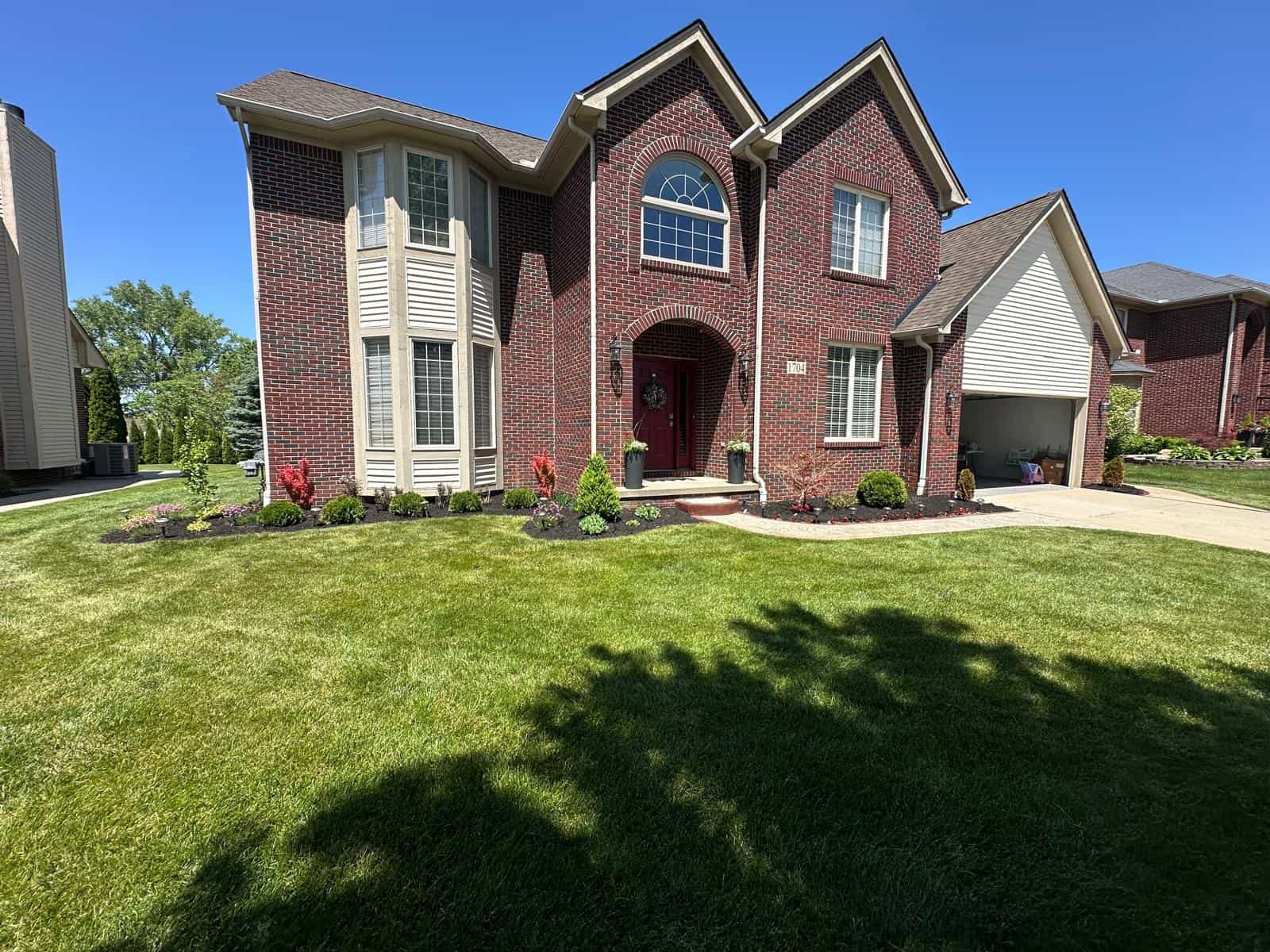
For homeowners in Southfield’s 90-plus active homeowners associations, the installation is done to a clean, consistent finish — uniform depth, defined bed edges, and professional appearance that meets HOA landscape standards. If you’re in Lathrup Village, the small city completely surrounded by Southfield, the same crew and the same process applies. One call covers it all.
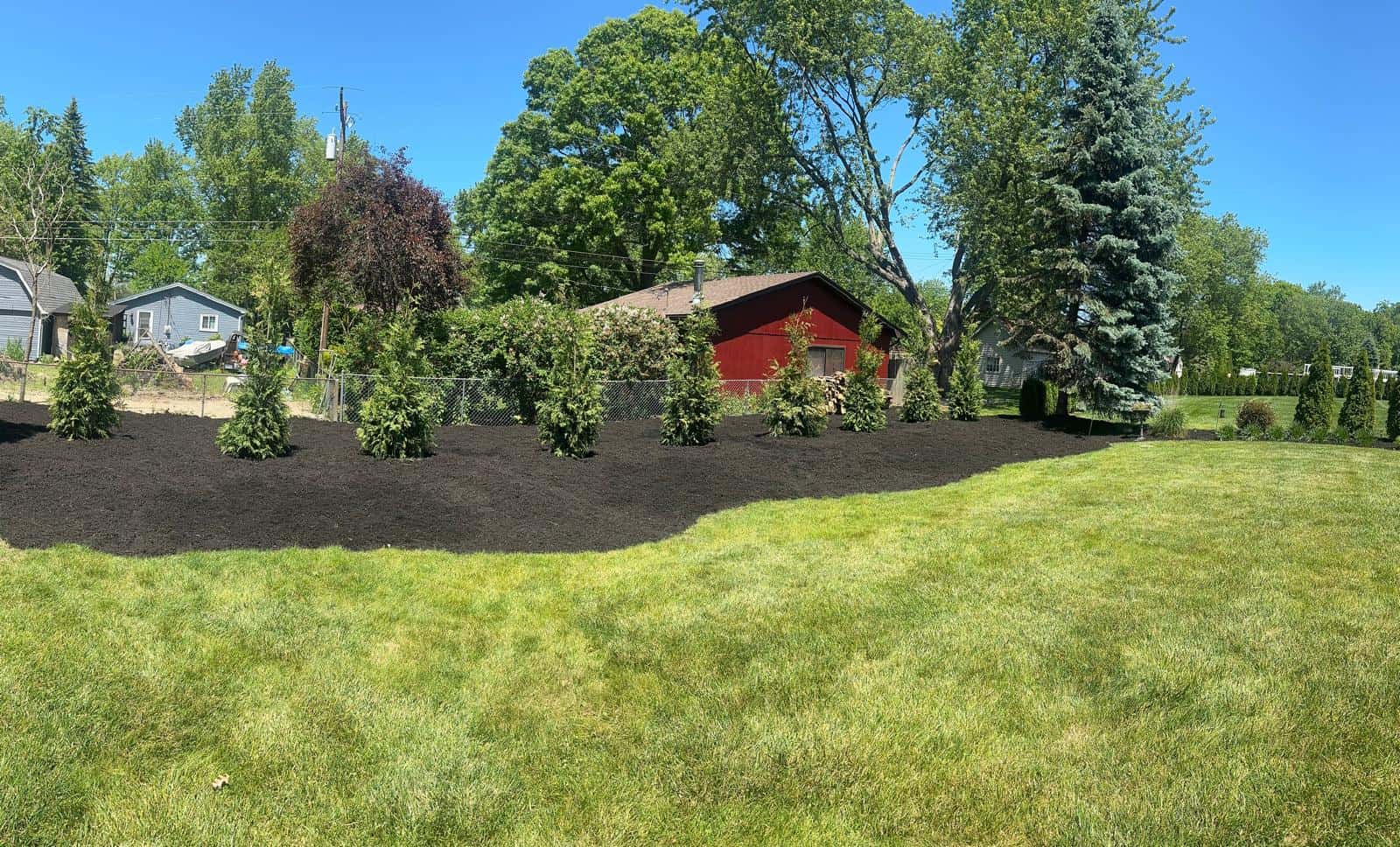
The ISA standard is 2 to 3 inches of organic mulch for most applications. That depth is enough to retain soil moisture, suppress weed germination, and regulate root zone temperature without causing the problems that come from going too deep. In Southfield specifically, where urban heat island conditions push soil temperatures higher than in less developed surrounding communities, staying within that range matters more than it might in a cooler, rural town. The goal is a consistent layer that works — not a thick pile that looks impressive from the curb.
What you want to avoid is what the industry calls volcano mulching — piling mulch 5 or 6 inches deep directly against a tree trunk. It traps moisture against the bark, encourages rot, and can promote secondary root systems that slowly strangle the tree over years. Southfield’s mature oaks and silver maples are already under stress from documented Emerald Ash Borer activity and urban soil compaction. Piling mulch against the trunk on top of that is a problem that builds quietly until it’s expensive. The root flare — where the trunk meets the ground — needs to stay fully exposed. That’s non-negotiable on every job we do.
For Southfield and the rest of Southeast Michigan, late April through mid-May is the primary window for spring mulch installation. By that point, the soil has had time to warm after winter, but the peak summer heat hasn’t arrived yet. That timing matters for two reasons: mulch applied too early insulates cold soil and actually delays plant growth, and mulch applied too late misses the most effective window for weed suppression before summer seeds have a chance to germinate.
The secondary window is fall — after the first hard frost, typically late October in this part of Oakland County. Fall mulch protects root zones from the freeze-thaw cycles that Southeast Michigan winters are known for. When temperatures swing above and below freezing repeatedly through late fall and early spring, unprotected soil heaves and shifts. A proper mulch layer keeps the ground more stable and helps roots stay dormant through those fluctuations. If you’re thinking about fall installation, waiting until after that first frost is the right call — you want the plants to be fully dormant before you insulate the ground around them.
Wood chip mulch — the kind generated from actual tree removal and trimming work — is a fundamentally different material than the dyed, processed product sold in bags at home improvement stores. Arborist wood chips contain bark, wood, and often leaf material from the tree, which means they break down over time and actively contribute organic matter back to the soil. The ISA specifically identifies fresh arborist wood chips as excellent mulch for trees and large shrubs. They’re not uniform in color or texture, but they perform well where it counts — moisture retention, temperature regulation, and gradual soil enrichment.
Bagged mulch is typically processed, sometimes dyed with colorants, and often made from a single material type with consistent appearance. It looks clean and uniform right after installation, but it doesn’t always deliver the same functional benefits over time, and the dyes in colored products can fade quickly after rain. We use repurposed wood chip mulch from our own tree work — material sourced directly from the regional tree canopy, not a supply chain. For Southfield homeowners who want a functional result and not just a cosmetic one, that distinction is worth understanding before you decide what you want installed.
It’s not marketing — it’s measurable. Research cited by the National Center for Biotechnology Innovation shows that a 2 to 4 inch layer of organic mulch can reduce weed germination by up to 90 percent. The mechanism is straightforward: mulch blocks sunlight from reaching the soil surface, which is what weed seeds need to germinate. It doesn’t eliminate every weed, especially persistent perennials with established root systems, but it dramatically reduces the ongoing pressure from annual weeds that would otherwise push through bare soil all season.
The key qualifier is that the mulch has to be installed correctly and at the right depth. A thin, uneven layer — or one applied over compacted old material without any bed preparation — won’t deliver the same results. That’s why bed prep before installation isn’t optional. If existing material is matted down and blocking drainage, new mulch on top of it creates a layered problem rather than solving one. We include bed preparation as part of the installation process, not as an upsell, because skipping it undermines the entire point of the job.
Yes, and it’s one of the most practical ways to handle the service. After a tree removal or stump grinding, the area around the work site often looks disrupted — bare soil, disturbed ground, an obvious gap in the landscape where a tree used to be. Scheduling mulch installation as a follow-up to that work is a natural next step, and we can handle both under the same service relationship. Topsoil can be added to the same visit if the ground needs more than mulch to recover.
From a tree health standpoint, mulching the root zone of nearby trees after a removal also makes sense. When a large tree comes out, the surrounding trees are suddenly exposed to more sunlight and wind than they were before. Their root zones benefit from the additional protection a fresh mulch layer provides during that adjustment period. If the removed tree was an ash and EAB was involved — which is a documented issue in parts of Southfield — there may also be soil health considerations worth discussing with our crew. Our arborist-trained team can assess the site and recommend what makes sense before the job is closed out.
This is a fair concern in any urban market, and Southfield is no exception. Door-to-door landscaping operators are more common in densely populated cities than in small towns, and the mulch scam pattern is well-documented across metro Detroit — a low verbal quote that grows significantly once work has started. Real cases have involved quotes of $250 turning into bills over $1,000, with homeowners feeling pressured to pay because the work was already underway.
The clearest signal that a company is operating legitimately is a written estimate provided before any work begins. We document every estimate in writing, and those estimates are valid for 30 days. There’s no verbal-only quoting, no pressure to commit on the spot, and no scope that expands without your knowledge. We’re licensed, insured — general liability and workers’ compensation — and carry verified reviews on Angi, Google, HomeAdvisor, and Yelp from real customers, including a Southfield homeowner who left a named recommendation after a tree removal job. For Southfield residents who are used to vetting vendors the same way they’d vet any professional service, that paper trail and those verifiable references are the baseline you should expect from anyone you hire.
Other Services we provide in Southfield
