Hear from Our Customers
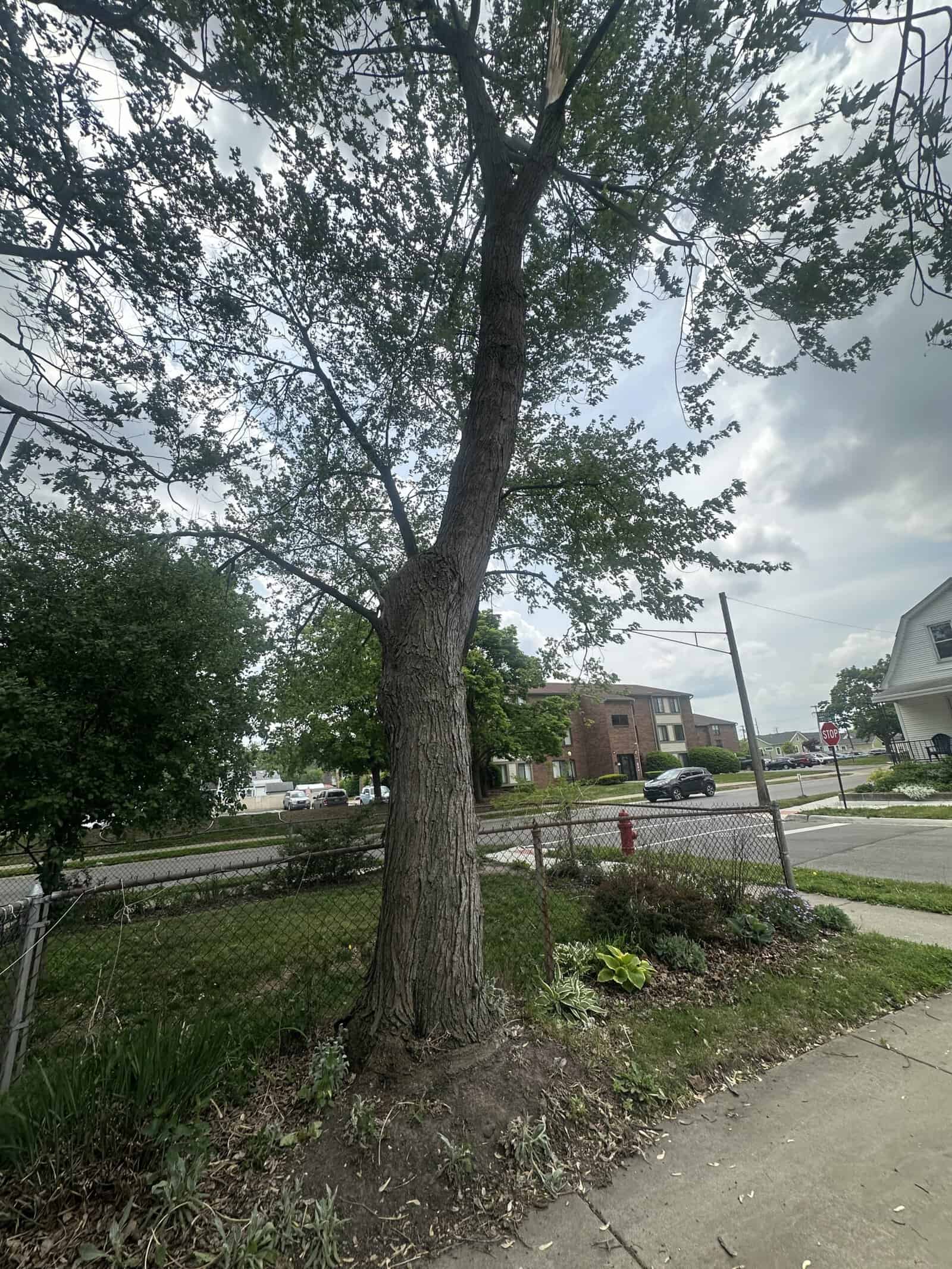
When a tree comes down the right way, you stop worrying. The hazard is gone, the debris is gone, and your property looks the way it should — not like a logging crew passed through and left. That’s the outcome we deliver on every job in Commerce Township.
Commerce Township has a specific tree problem that most generic service pages won’t acknowledge: a lot of the trees on older lake-corridor properties are 60, 80, even 100 years old. They were standing when the original lake cottages went up, and they’ve been through decades of Michigan ice storms, spring floods along the Huron River, and summer wind events that hit harder on open water than they do inland. A tree that looks solid from your dock can have a root system that’s been quietly compromised by years of saturated soil. That’s not a guess — that’s what happens to trees on lakefront lots over time.
Getting that tree assessed and removed by a certified crew means you’re not waiting for the next storm to make the decision for you. It means your shoreline, your dock, your neighbor’s fence, and your roof stay where they belong. When the job is done, your yard is clean — no logs stacked in the corner, no brush pile left for you to deal with.
We’re a family-owned operation based out of Oakland — right next door to Commerce Township. Ivan leads every field job personally, and Cecilia handles scheduling and communication so you’re never chasing someone down for an update. We’ve been serving Oakland County for over seven years, and we know Commerce Township’s tree conditions well: the aging resort-era lots, the lake-adjacent soil, the mature canopy that makes the township beautiful and occasionally hazardous.
Our crew is ISA Certified and includes TRAQ-qualified risk assessors — meaning tree hazard evaluations follow a formal, science-backed methodology, not a gut feeling. We’re also trained and certified to work near power lines, which matters in older neighborhoods throughout Commerce Township where mature trees have grown into utility corridors over the decades.
Every job starts with a free on-site estimate. No phone quotes, no pressure. Ivan walks the property, assesses the tree, and gives you a clear written scope before any work begins. You know what’s included, what it costs, and what to expect.
It starts with a call or a form submission. Cecilia gets back to you quickly — same day in most cases — and schedules a time for Ivan to come out and walk the property. That on-site visit is where the real work begins. He looks at the tree, the surrounding structures, the proximity to water if you’re on a lake lot, and any utility lines in the area.
If there’s a permit requirement — which can apply to certain properties near the Huron River corridor or within regulated wetland setbacks in Commerce Township — that gets identified and handled before anything else moves forward. We take care of the administrative side so you don’t have to.
From there, you get a written estimate that covers the full scope: removal, stump grinding if applicable, and complete debris cleanup. Nothing is left vague. We use controlled rigging and lowering techniques on jobs near structures, docks, or neighboring properties — this isn’t a situation where a tree just gets dropped and everyone hopes for the best. Near-power-line work follows our specific utility proximity training, which most local operators simply don’t have.
When the job is done, the site is cleaned. All debris, brush, and wood is removed before we leave. You don’t have to do anything after we’re gone except look at a yard that’s back to normal.
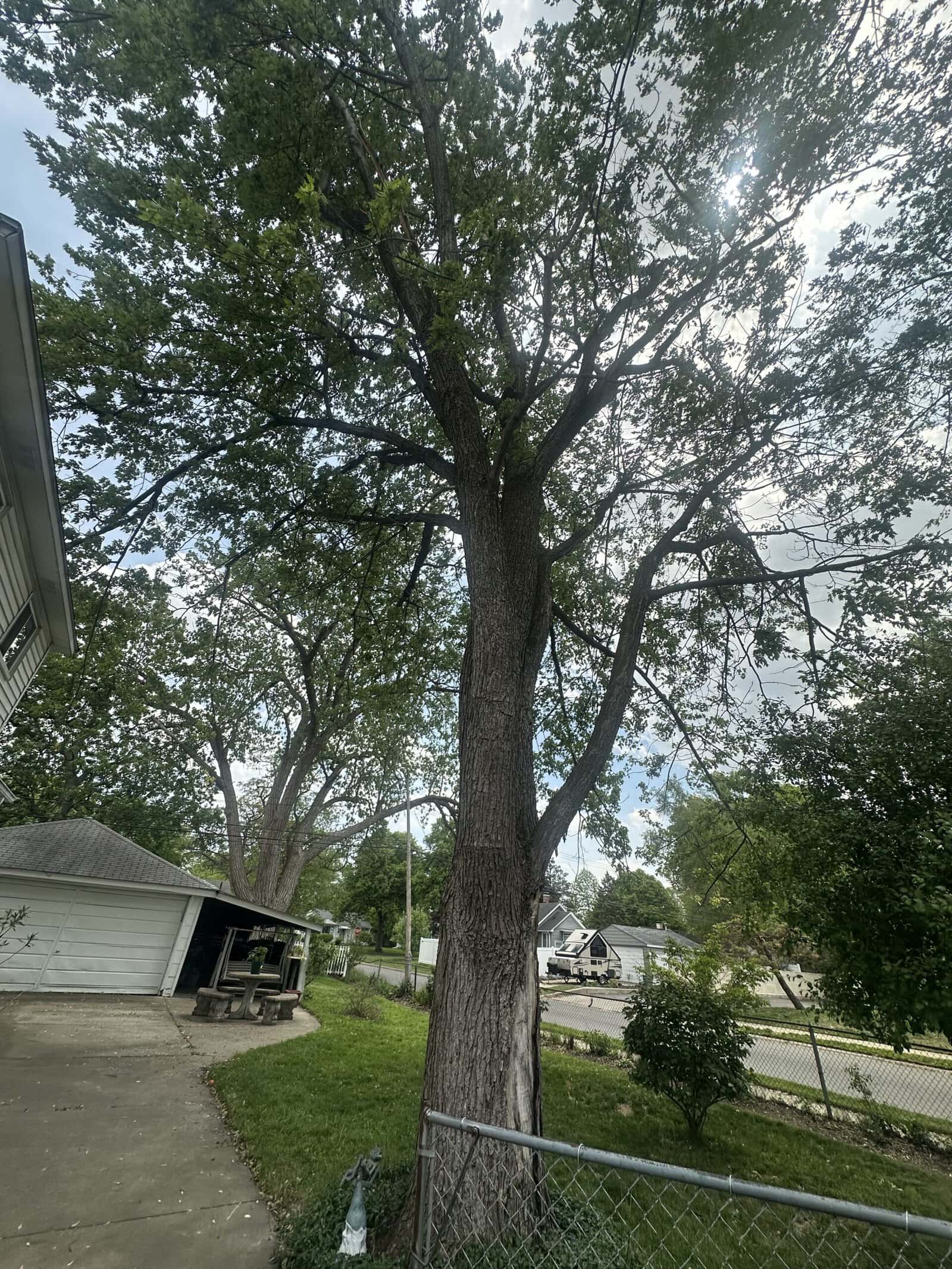
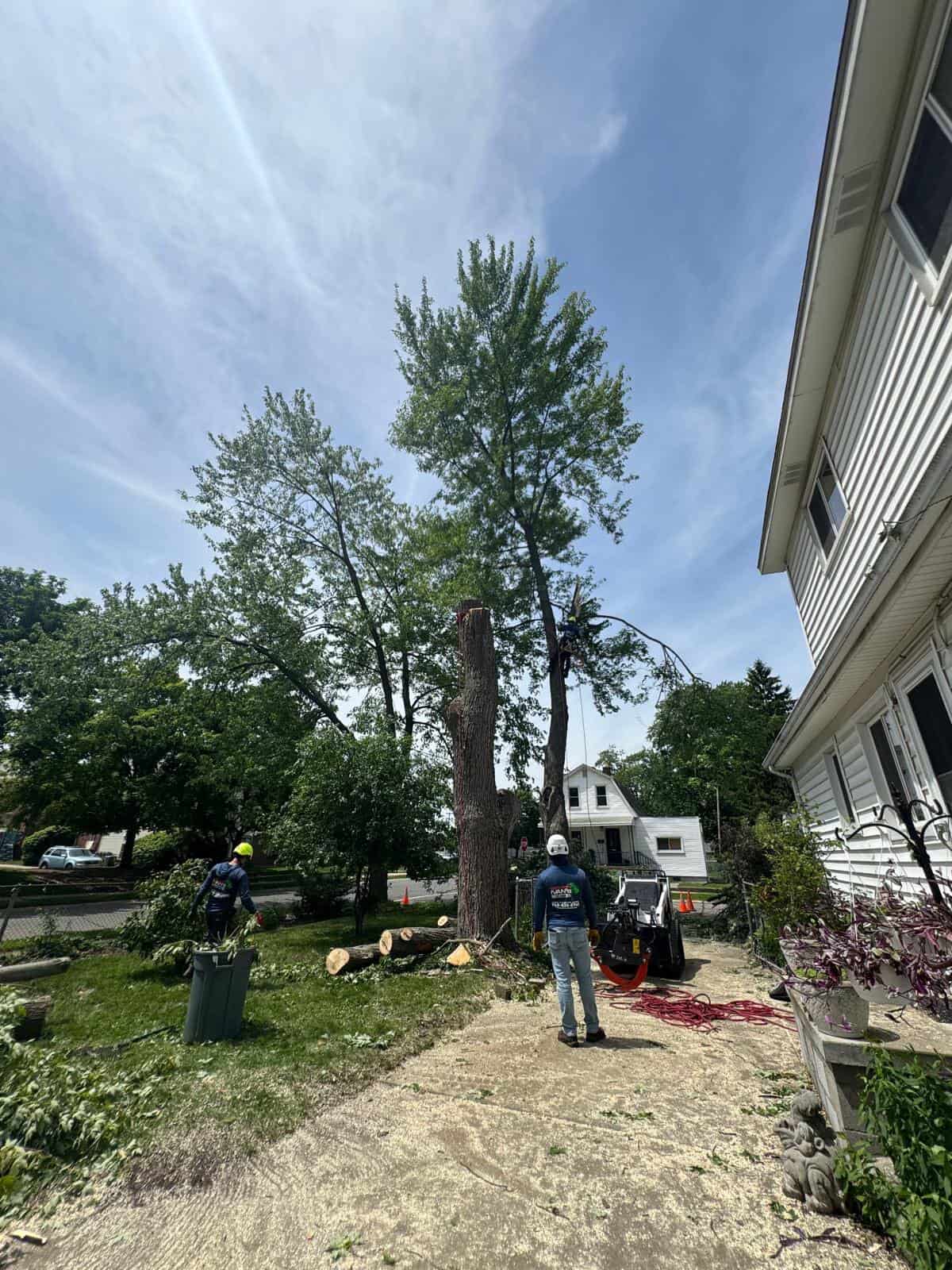
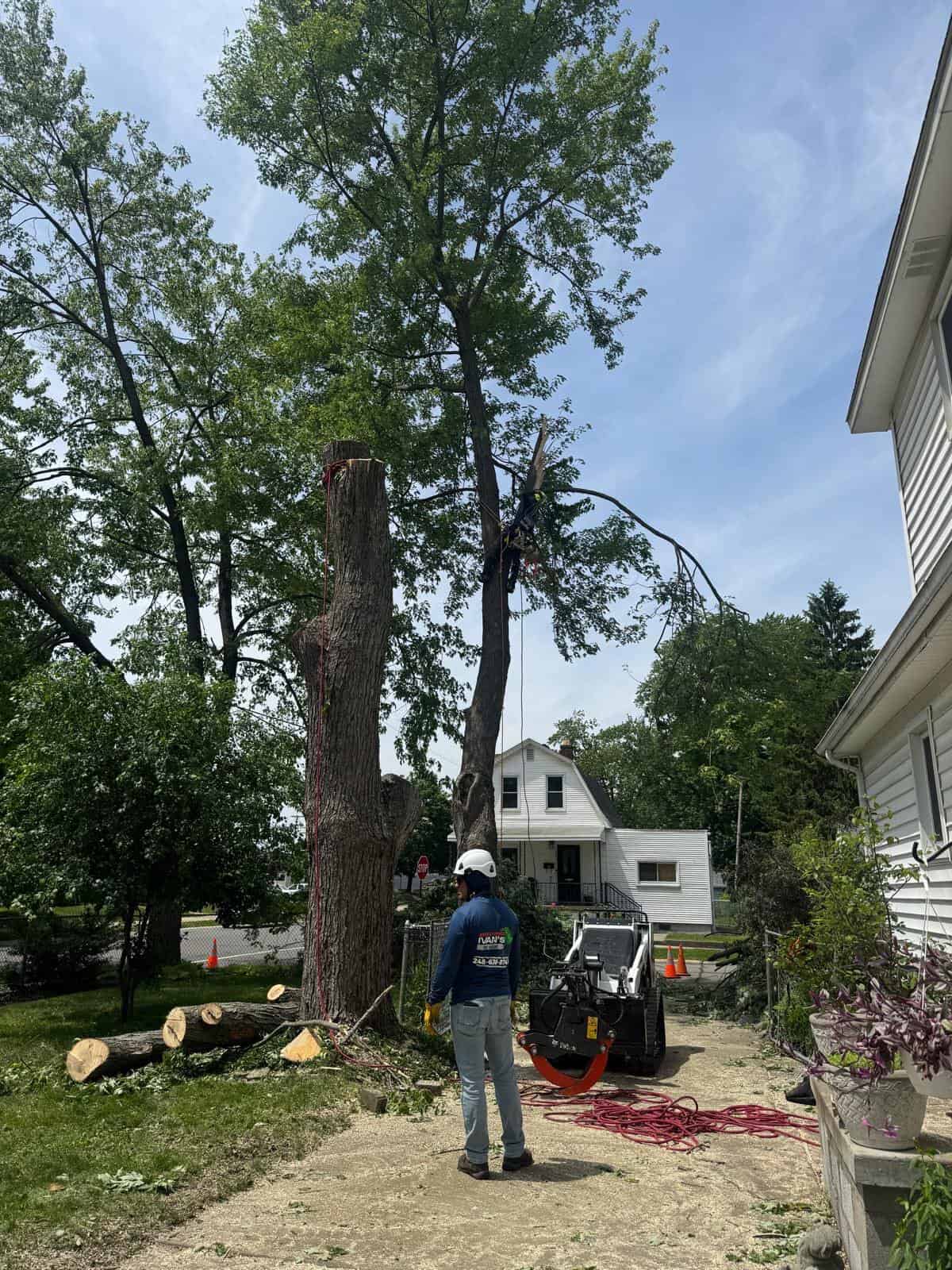
Tree removal in Commerce Township covers a range of situations — dead trees that have been standing too long, hazardous trees leaning toward a structure or shoreline, storm-damaged trees after one of Michigan’s spring or summer wind events, and trees that simply need to come down to make room for new construction or lot clearing. We handle all of it, including emergency tree removal in Commerce Township for situations that can’t wait until the following week.
Stump grinding is a separate service that gets scoped and priced clearly upfront — it’s not assumed and it’s not a surprise add-on. If you want the stump gone and the area cleaned down to grade, that’s part of the written estimate before any work starts. The same applies to debris removal: everything comes out, including on lake-adjacent properties where leaving material near the water’s edge isn’t an option.
For Commerce Township properties near the Huron River, Proud Lake, or any of the township’s inland lakes, we account for the specific site conditions — saturated soil, sloped terrain near the water, proximity to docks or seawalls — in how the job is planned and executed. This isn’t a one-size approach. The process adapts to what’s actually in front of our crew on your property.
It depends on your specific property and where the tree is located. Commerce Township administers its own zoning ordinance, and the Michigan DNR has a recorded tree ordinance document specific to the township — so there are local regulations in place that go beyond just state-level guidelines. For most standard residential lots, a permit isn’t required for routine removal. But if your property is near the Huron River, borders a regulated wetland, or falls within a shoreline protection zone — which applies to a significant number of lake-adjacent properties throughout Commerce Township — additional permits may be required before work can begin.
We identify any permit requirements during the initial on-site assessment, before the written estimate is issued. If a permit is needed, we handle that as part of the process — you’re not left to figure it out on your own. The goal is to make sure the job is done correctly and that nothing comes back on you after the fact.
The honest answer is that you often can’t tell from the outside — and that’s exactly the problem with older trees on Commerce Township’s lake-corridor properties. A tree that looks healthy from your dock can have a root system that’s been compromised by years of fluctuating water levels and saturated soil near the shoreline. Internal decay, split trunk structures, and root system decline don’t announce themselves visually until something fails.
The warning signs worth taking seriously include a new lean that wasn’t there before, soil heaving or lifting around the base of the tree, large dead branches in the upper canopy, cracks or seams running down the trunk, and bark that’s separating or falling away. After a significant wind event — and Commerce Township’s open lake surfaces amplify wind exposure compared to more sheltered inland areas — a tree that seemed stable before the storm may have sustained invisible structural damage.
Our TRAQ-qualified risk assessors use a formal methodology to evaluate whether a tree is genuinely hazardous or whether trimming or cabling could preserve it. The assessment gives you an honest answer, not a removal recommendation driven by what’s more profitable.
Stump grinding is not automatically included in tree removal — it’s a separate service, and any company that doesn’t make that clear upfront before the job starts is setting you up for a frustrating conversation afterward. We scope stump grinding separately and include it explicitly in the written estimate if you want it done. Nothing is assumed.
For Commerce Township homeowners, this matters more than it might seem. A stump left on a lakefront lot, near a dock, or along a manicured shoreline isn’t just an eyesore — it becomes a tripping hazard, a lawn maintenance obstacle, and in some cases a structural issue as the root system continues to decay beneath the surface. If you want the stump ground down and the area cleaned to grade, that’s exactly what gets included. The site is left clean and level, not half-finished with a stump for you to work around for the next five years.
Nationally, professional tree removal runs anywhere from $200 to over $2,000 depending on the size of the tree, its location on the property, and what the job involves. Emergency removal situations can reach $5,000 or more, particularly when a fallen tree has caused structural damage and needs to be removed immediately. Smaller trees under 30 feet typically run $150 to $450; larger trees over 80 feet can run $1,000 to $2,000 or more.
In Commerce Township specifically, lake-adjacent properties, trees near utility lines, and older large-canopy trees from the resort era add complexity that affects pricing. The right way to understand what your specific job will cost is with an on-site estimate — not a phone quote based on a description. We provide free, written on-site estimates so you know the full scope and the final price before any work begins.
Dead trees can be removed any time of year — winter is actually a preferred season for certain types of removal work. With leaves off the canopy, our crew has better visibility of the tree’s structure, which makes it easier to identify weak points and plan the removal safely. Frozen ground also reduces the risk of equipment causing damage to lawns and landscaping during the job, which is a real consideration on Commerce Township properties where the yard and shoreline are part of the value.
Waiting until spring carries its own risks. A dead tree in Commerce Township that makes it through winter still has to survive the ice loading events that Michigan’s late-winter and early-spring weather regularly produces. Ice accumulation on dead wood is a significant structural risk — branches and whole trees that might have been removable safely in December become unpredictable hazards by March. If you’ve identified a dead tree on your property heading into winter, getting it assessed and scheduled before the season ends is usually the smarter move.
The two non-negotiable items are general liability insurance and workers’ compensation coverage — both verified, not just claimed. If a worker is injured on your property and the company doesn’t carry workers’ comp, you can be held personally liable. In a township where property values run $375,000 to $400,000 and above, that’s not a theoretical risk worth taking. Ask to see the certificate before work starts.
Beyond insurance, ISA certification is the credential that separates trained arborists from general laborers with a chainsaw. Michigan doesn’t require a state-specific arborist license, which means the market is open to uncredentialed operators. ISA certification is the voluntary but industry-recognized standard, and TRAQ qualification — which our team holds — is the more advanced designation used for formal tree risk assessments. For older lake-lot properties in Commerce Township where aging trees may have invisible structural issues, that level of assessment methodology matters.
Finally, any reputable company should provide a written estimate after an on-site visit — not a verbal number over the phone. If a company is quoting you without seeing the tree, that’s a red flag. The written estimate should clearly state what’s included, whether stump grinding is part of the scope, and how debris removal is handled.
Other Services we provide in Commerce Township
