Hear from Our Customers
Most homeowners in Commerce Township don’t think about their trees until something goes wrong — a branch hanging low over the dock on Commerce Lake, a heavy limb brushing the roofline after a storm, or a maple that’s started looking more like a problem than a feature. The reality is that the trees on your property are doing one of two things: adding value or building toward a costly repair bill. Proper pruning keeps them firmly in the first category.
Commerce Township’s housing stock tells an important story. The median home here was built around 1988, which means the trees planted at construction are now well over 35 years old. They’ve grown from saplings into large, structurally complex trees with canopies that extend over driveways, neighboring properties, and in many cases, directly over the water. A tree that looked manageable ten years ago looks very different to a trained arborist today — and the gap between what you see and what the structure actually looks like is where storm damage risk lives.
The township’s lake geography adds another layer. Waterfront and lake-adjacent properties along Union Lake, Middle Straits Lake, and Lower Straits Lake carry some of the highest property values. When a branch fails over a dock or drops debris into the water, you’re not just dealing with cleanup costs — you’re dealing with a hit to a property that’s worth protecting. Routine professional pruning is what prevents that scenario, and it costs a fraction of what a single storm-related repair would run.
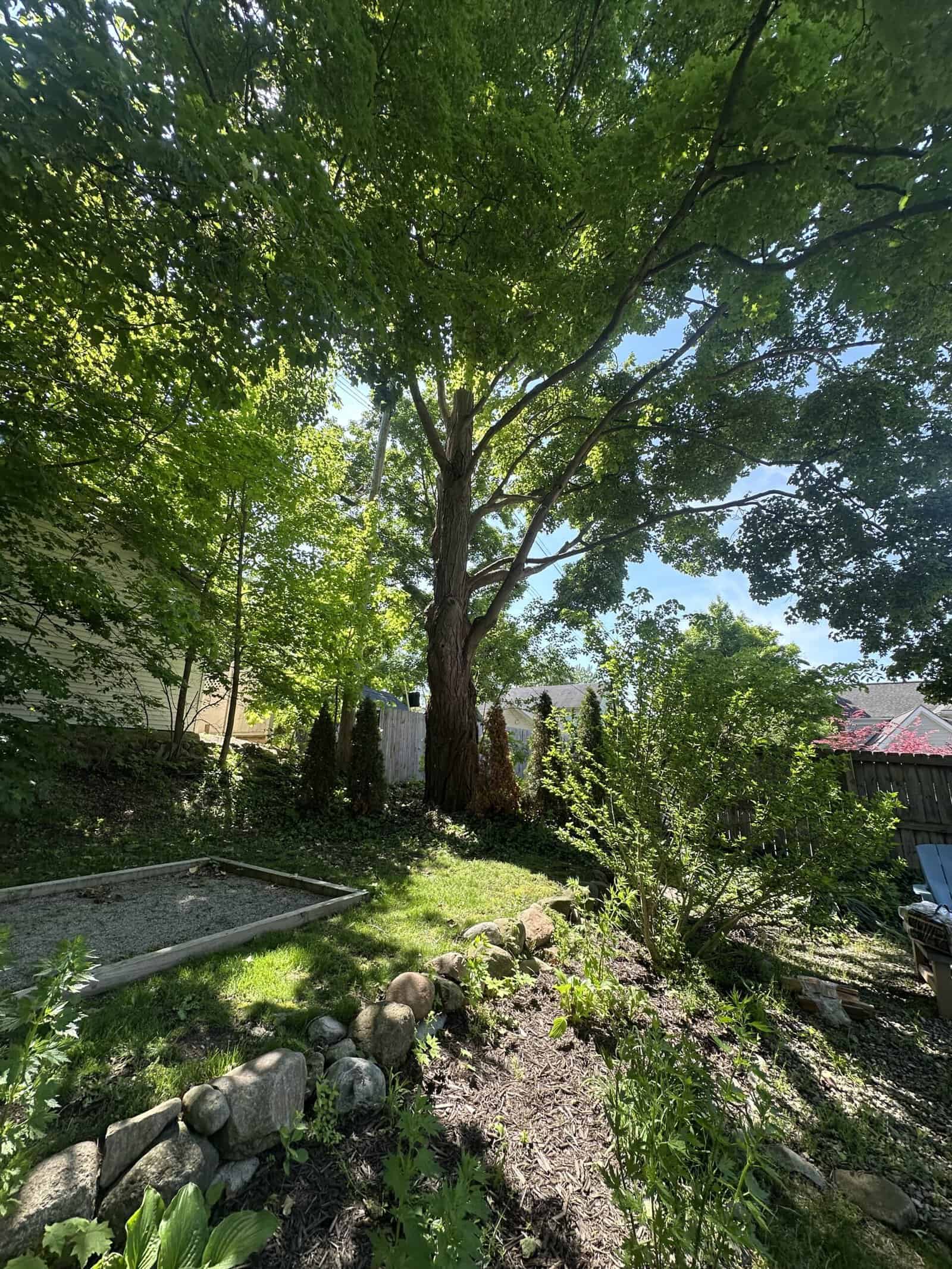
We’re a family-owned operation right next door to Commerce Township. We’ve been serving homeowners for over seven years, and we personally train every member of our crew, not just in proper cutting technique, but in how to communicate clearly and treat a homeowner’s property with the same respect we’d want shown to our own.
What sets us apart from many of the other companies serving Commerce Township isn’t just the work — it’s the credentials behind it. We field ISA Certified Arborists and TRAQ-qualified risk assessors on commercial and large residential jobs. We also hold line-clearance certification, which means we’re specifically trained and insured to prune trees near energized power lines — a real consideration along the winding lake roads throughout Commerce Township where utility corridors follow irregular routes.
Every job starts with a written estimate and a site walk. No one picks up a saw until we’ve walked the property with you, reviewed the scope in detail, and made sure you understand exactly what’s happening and why.
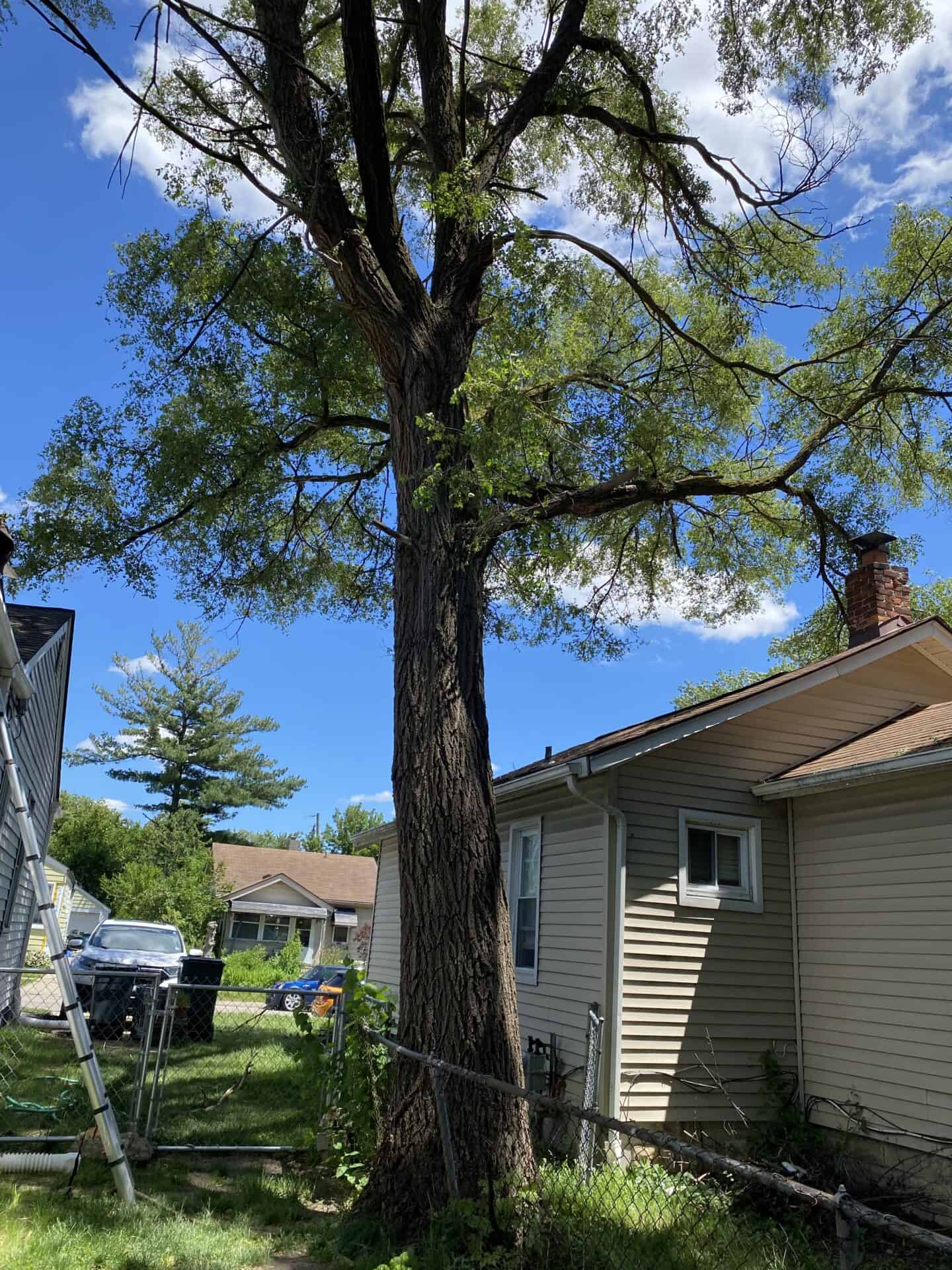
When you reach out to us, Cecilia handles scheduling and makes sure you get a clear answer fast — not a callback three days later. She coordinates the site visit and keeps communication straightforward from the start. That responsiveness matters, especially if you’re dealing with a storm-damaged limb or a tree that’s been on your radar for a while and you’re finally ready to act.
Before any work begins, our team walks your property with you. For Commerce Township homeowners with wooded lots near Proud Lake, lakefront properties on Commerce Lake or Union Lake, or mature trees in neighborhoods like Windsor Lake Estates or Oakley Park Estates, this step is especially important. The site walk lets our arborist assess what’s actually going on structurally — not just what’s visible from the ground — and gives you a written scope of work before a single cut is made.
The pruning itself follows ANSI A300 standards, which means no topping, no flush cuts, and no removal of more than 25% of live foliage in a single session. Depending on what your trees need, that might mean crown thinning to improve airflow and reduce wind load, crown reduction to bring an oversized canopy back into proportion, or targeted deadwood removal to eliminate failing branches before they become a hazard.
Seasonal timing matters here too — if you have oaks on your property, they need to be pruned between November 1 and March 31 to prevent oak wilt, a fungal disease that spreads rapidly once temperatures climb above 50°F. We plan around that window and will flag it for you if it applies to your property.
When the work is done, our crew cleans up completely — debris removed, site restored — and leaves your property looking better than we found it.
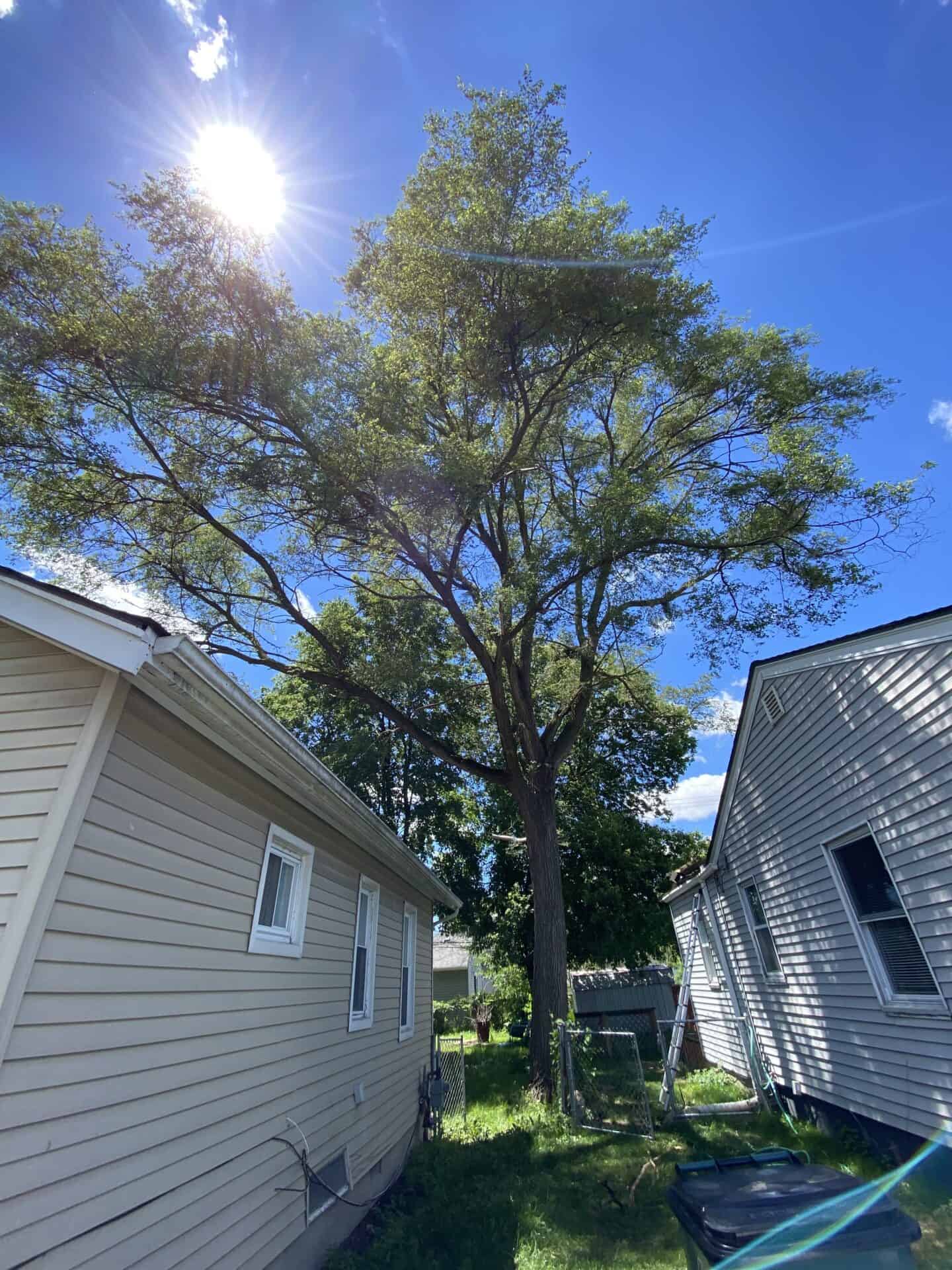
Ready to get started?
Professional tree pruning covers more ground than most homeowners expect. It’s not a single cut or a uniform trim — it’s a targeted approach based on the specific species, age, structure, and location of each tree on your property. For Commerce Township residents, that often means working with mature oaks and maples that have been growing for decades, navigating canopies that extend over water, and accounting for the wind exposure that comes with lakefront and lake-adjacent properties.
Crown thinning is one of the most common services for mature trees in the township. It involves selectively removing branches throughout the canopy to improve light penetration and airflow, which reduces the weight load the tree carries during high-wind events — a meaningful benefit in a community that sits squarely in southeast Michigan’s severe storm corridor.
Crown reduction addresses trees that have outgrown their space, bringing the canopy back to a manageable size while preserving the tree’s natural form. Deadwooding removes branches that are already dead, dying, or structurally compromised — the ones most likely to fail in a storm without warning.
Commerce Township also has a formal Urban Forest Management Plan, and our ISA-certified arborists are familiar with the township’s landscape requirements and how they apply to residential properties. If you’re in a wooded area near Proud Lake State Recreation Area or managing trees on a larger lot, that context matters when planning the scope of work. Every service includes a pre-work site walk, a written estimate, and full cleanup when the job is complete.
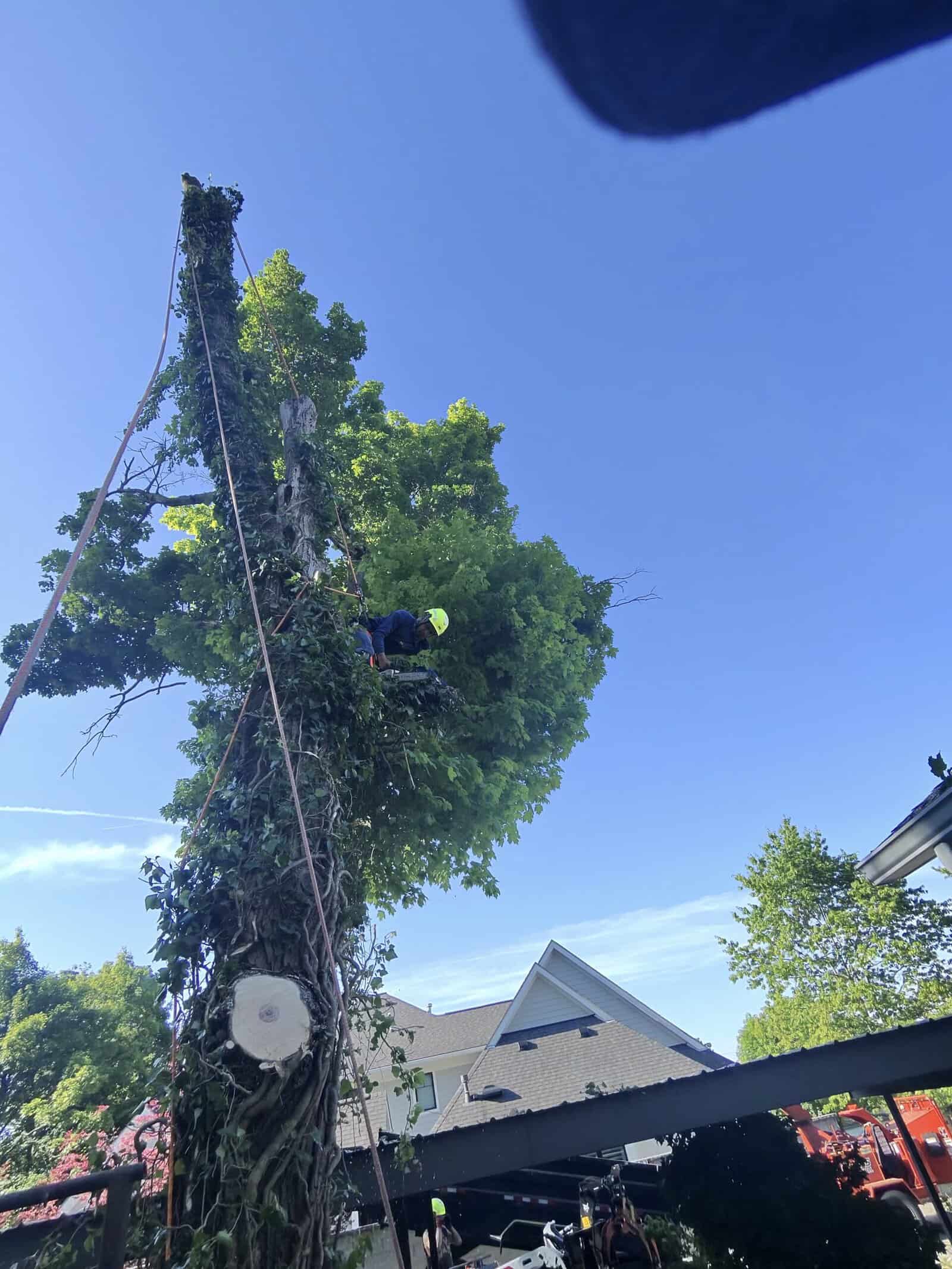
Oak trees in Commerce Township need to be pruned between November 1 and March 31. That window isn’t arbitrary — it’s driven by oak wilt, a fungal disease spread by sap beetles that become active once outdoor temperatures consistently climb above 50°F in the spring. When a fresh pruning cut is exposed during the active beetle season, it creates an entry point for the fungus, and oak wilt can kill an infected tree within a single growing season. There is no cure once a tree is infected.
Commerce Township’s wooded residential neighborhoods and proximity to Proud Lake State Recreation Area mean there are significant oak populations throughout the township. If you’re not sure whether your trees are oaks or when they were last pruned, that’s exactly the kind of question to raise during the pre-work site walk. Our team will identify your species, confirm the appropriate timing, and schedule the work accordingly — so you’re not inadvertently opening your trees up to a disease that’s both devastating and entirely preventable.
For most mature deciduous trees — the oaks, maples, and elms that make up a large portion of Commerce Township’s residential canopy — professional arborists generally recommend crown thinning every three to five years. That’s not a hard rule that applies to every tree equally, but it’s a useful baseline. Trees that are growing faster, showing signs of structural imbalance, or located in high-exposure areas like lakefront properties or open lots near M-5 may benefit from more frequent attention.
The honest answer is that the right interval depends on the specific tree, its species, its age, and what’s happening around it. A 40-year-old silver maple near the Huron River corridor grows and behaves very differently from a young ornamental in a newer subdivision. The pre-work site walk we conduct before every job is designed to answer exactly this question for your specific property — not give you a generic schedule that may or may not fit what you actually have.
Crown thinning and crown reduction are two distinct pruning approaches, and the right one depends on what’s actually going on with your tree. Crown thinning is about selectively removing branches from throughout the canopy to improve light and airflow without significantly changing the tree’s overall size or shape. It’s particularly effective for large, mature trees in Commerce Township where wind load is a concern — reducing the canopy’s density means wind passes through rather than pushing against it, which lowers the risk of branch failure or uprooting during a severe storm.
Crown reduction is different. It’s used when a tree has genuinely outgrown its space — when the canopy is encroaching on a roofline, hanging over a dock or deck, or creating clearance issues with a neighboring property. Crown reduction brings the overall size of the canopy down while maintaining the tree’s natural branching structure. It’s not the same as topping, which is a harmful practice that removes large portions of the canopy indiscriminately and leaves the tree structurally weakened and vulnerable to disease. Proper crown reduction, done to ANSI A300 standards, preserves the tree’s long-term health while solving the space problem.
Commerce Township has a formal Urban Forest Management Plan and zoning landscape requirements that are documented in the township’s code of ordinances. For most routine residential pruning — trimming branches, thinning a canopy, removing deadwood — you’re unlikely to need a permit. However, if you’re managing trees in a wooded area near Proud Lake State Recreation Area, removing trees above a certain size on a lot with woodland preservation provisions, or doing work connected to a new construction or renovation project, the township’s regulations may be relevant to your specific situation.
The safest approach is to work with an ISA-certified arborist who is already familiar with regulatory environment. We’ve been working in Commerce Township and the surrounding area for years and can flag any local considerations that apply to your property before work begins. If your situation does require any township review or documentation, you’ll know about it upfront — not after the fact.
Yes, and it happens more often than most homeowners realize. The most common example is topping — cutting back large portions of the canopy to stubs — which is sometimes marketed as a way to “reduce the size” of an overgrown tree. In practice, topping creates large open wounds that the tree struggles to compartmentalize, invites fungal decay and disease, and stimulates rapid regrowth of structurally weak shoots that are far more likely to fail in a storm than the original branches were.
A topped tree is often less safe, not more, within a few growing seasons. Other harmful practices include flush cuts (removing a branch too close to the trunk, which destroys the branch collar and slows healing), using climbing spikes on trees that are being pruned rather than removed, and removing more than 25% of the tree’s live foliage in a single session. All of these stress the tree, compromise its structural integrity, and can set off a decline that takes years to become visible but is difficult or impossible to reverse. ANSI A300-compliant pruning — which is what we follow — specifically prohibits these practices and sets the standard for work that actually supports long-term tree health.
The most reliable signal is ISA certification. The International Society of Arboriculture maintains a public directory where you can verify whether a company’s arborists hold current credentials — it’s not a self-reported claim, it’s a verifiable record. Beyond that, ask specifically whether the company carries both general liability insurance and workers’ compensation. In Michigan, if an uninsured worker is injured on your property, your homeowner’s policy may not cover it, and you can be held personally liable.
For Commerce Township specifically, the stakes are higher than in many other communities. With median home listing prices around $787,000 and lakefront properties on Commerce Lake and Union Lake regularly exceeding that figure, the cost of property damage from a botched pruning job — or an injury claim from an uninsured crew — is significant. Ask for proof of insurance before anyone starts work, get a written estimate with a detailed scope, and verify credentials independently rather than taking a company’s word for it. We carry full insurance, hold ISA certification and TRAQ qualification, and provide written estimates on every job before work begins.
Other Services we provide in Commerce Township
