Hear from Our Customers
There’s a version of this where a crew shows up, cuts back whatever looks overgrown, and leaves. The tree survives — for now. But in neighborhoods like Southfield Gardens and Evergreen Hills, where mature oaks and maples have been growing since the Eisenhower administration, that approach eventually costs you.
A tree that’s been improperly pruned year after year develops weak structure, hidden decay, and branches that are one ice storm away from coming down on your roof. Proper crown thinning and crown reduction pruning change that trajectory. Done correctly — following ANSI A300 standards, which cap live foliage removal at 25% per session — pruning strengthens a tree’s structure, reduces the wind load it has to carry, and extends its life significantly.
For Southfield homeowners dealing with clay-heavy soil that limits root depth, that wind load reduction isn’t just an arborist talking point. It’s the reason your neighbor’s tree came down in the June 2024 storm and yours didn’t. Well-maintained mature trees also add measurable value to your property. Research consistently puts the number between 7% and 19% of home value — and in the Midwest specifically, a healthy mature tree can add around $10,000. In a housing market as competitive as Southfield’s, that’s not something you want to leave on the table.
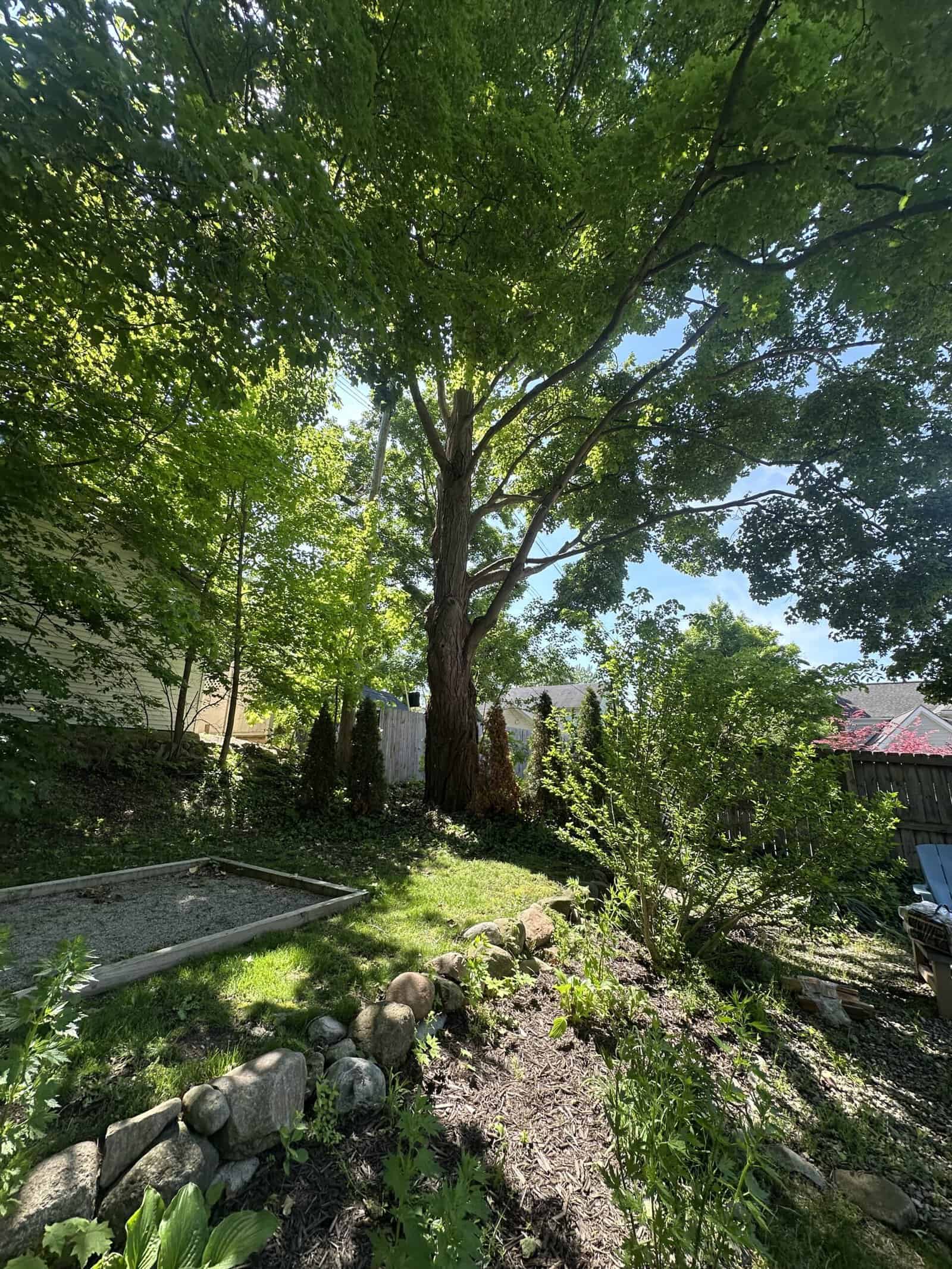
Ivan’s Tree Services is a family-owned company with over seven years of experience serving homeowners and commercial properties across the broader metro Detroit area. I lead every field operation personally, and Cecilia handles scheduling and customer communication — so when you reach out, you’re talking to someone accountable, not a call center.
What sets us apart in the Southfield market specifically is the depth of credentialing behind our work. Our team includes ISA Certified Arborists and TRAQ-qualified risk assessors — the latter being a specialized qualification for identifying structural risk in trees that look fine on the surface but aren’t. That matters in a city where the Southfield Forestry Division employs its own trained arborists and horticulturists. Southfield residents know what professional tree work looks like, and we’re built to meet that standard.
We also hold line-clearance certification with the specialized utility insurance required to prune trees near energized lines — a capability that’s directly relevant in Southfield’s utility-dense residential neighborhoods, where overhead lines run through properties that were developed decades before underground utilities became standard.
It starts with a site walk. We never send a crew to a property without first walking it with you, assessing each tree individually, and putting together a written scope of work. In Southfield, where a single property in an established neighborhood might have a 70-year-old red oak, a mature silver maple with co-dominant stems, and a flowering crabapple all within 30 feet of each other — a one-size approach doesn’t work. Every pruning plan is specific to what’s actually there.
Once the scope is agreed on and you have a written estimate in hand, our crew gets to work. The type of pruning depends on what each tree needs: crown thinning to reduce wind resistance and improve airflow, crown reduction to bring back a tree that’s outgrown its space while keeping its natural form, or targeted deadwood removal to eliminate branches that are already failing.
For oak trees specifically, timing matters — Michigan’s oak wilt risk means oaks should only be pruned between November 1 and March 31, when the sap beetles that spread the disease aren’t active. We’ll tell you that upfront, not after the fact. Cleanup is part of the job, not an add-on. Every branch, every wood chip, every piece of debris gets removed. The property is left cleaner than we found it — something our customers mention consistently in their reviews, and something that’s particularly important in Southfield’s denser residential neighborhoods where there’s not a lot of room for mess to land.
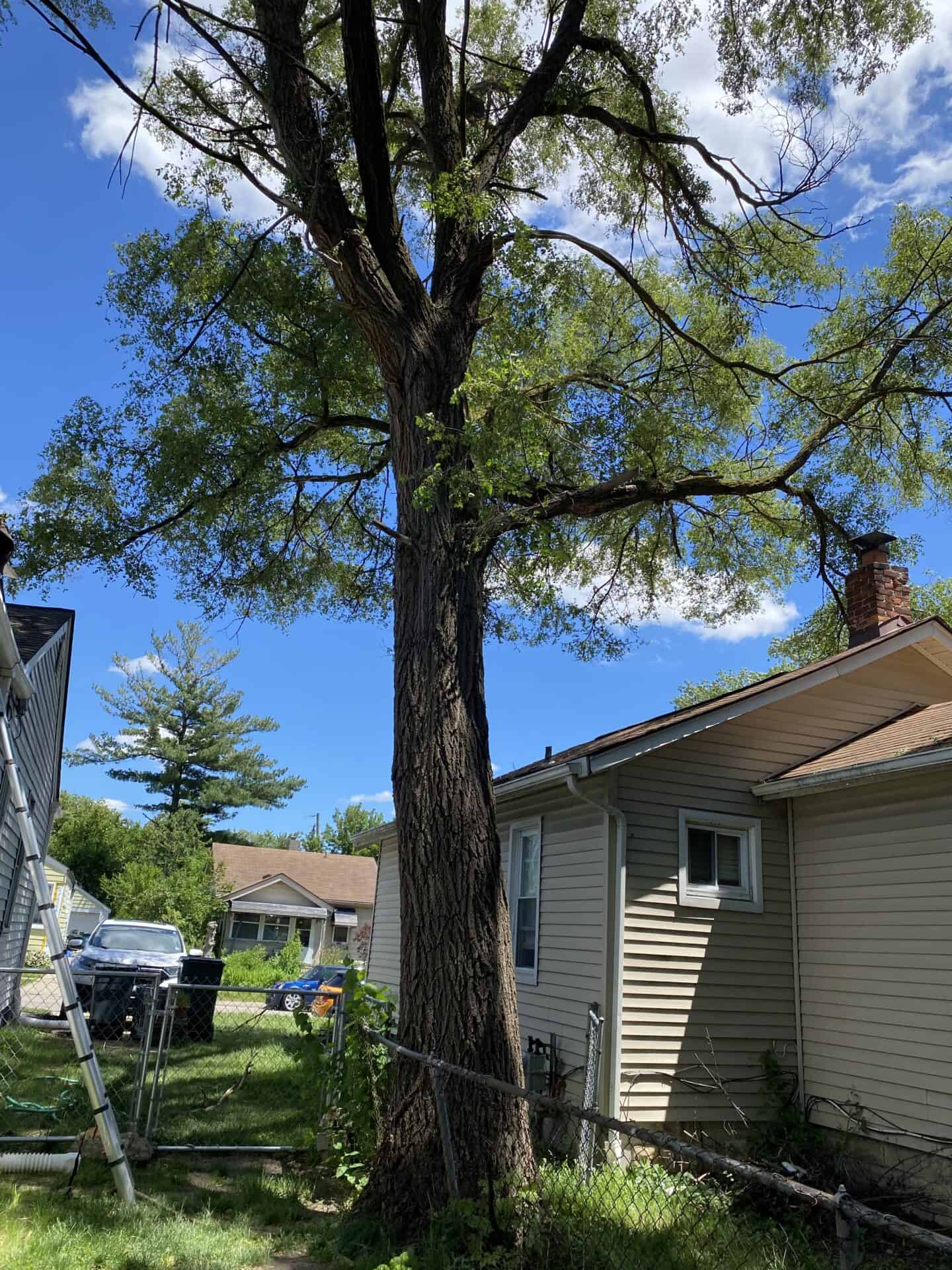
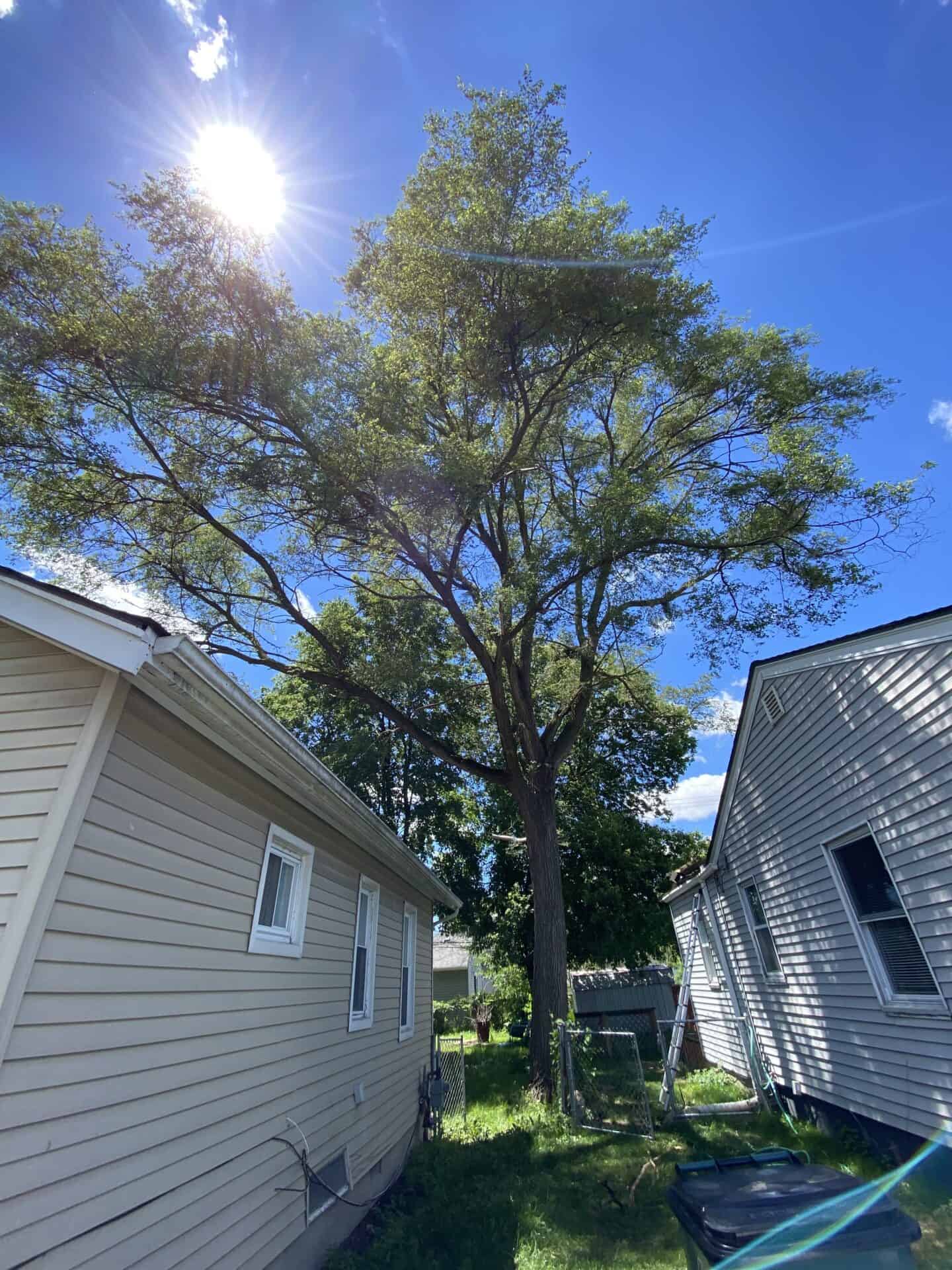
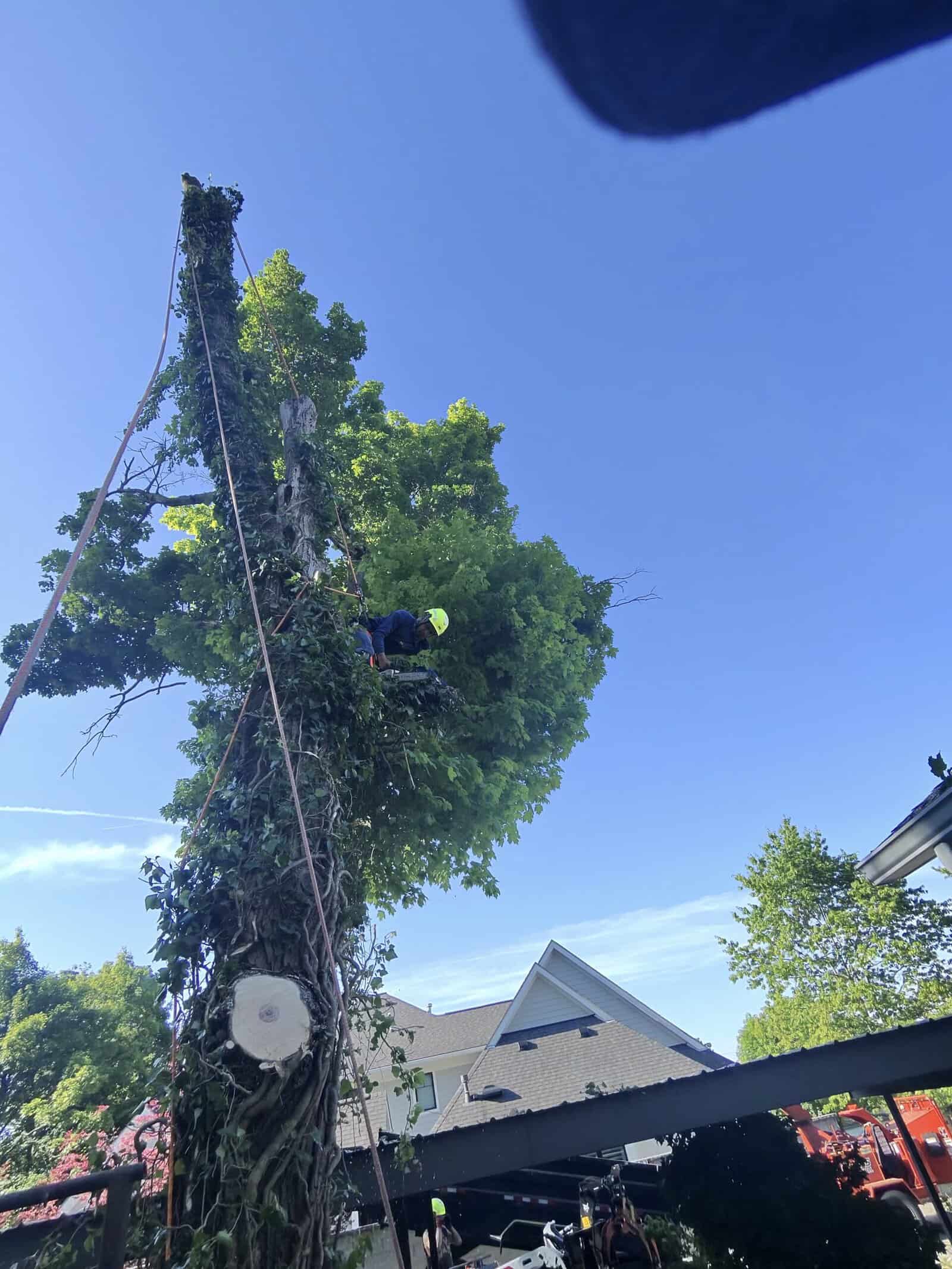
The pruning services we deliver in Southfield are shaped by what Southfield’s trees actually deal with. Crown thinning is one of the most requested services in this market — and for good reason. Southfield’s clay-heavy soil, especially in 1960s-era neighborhoods, limits how deep root systems can anchor. A tree with a dense, unpruned canopy sitting in compacted clay is carrying more wind load than its roots can reliably handle.
Thinning the crown selectively reduces that load without removing the tree’s structural integrity or visual presence. Crown reduction pruning addresses trees that have grown beyond their safe or practical size — common in Southfield Gardens and Washington Heights, where homes and their trees have been growing side by side for six or seven decades.
Unlike topping, which leaves large wounds and produces structurally weak regrowth, proper crown reduction maintains the tree’s natural form while bringing it back to a manageable size. It’s the approach ANSI A300 standards require, and it’s the only approach we use. For properties near Southfield’s overhead utility corridors — common throughout the city’s older residential grid — our line-clearance certified arborists can handle pruning near energized lines safely and legally.
If your project involves trees in or near the public right-of-way (the Southfield Forestry Division manages the first 30 feet from the center of local streets), we can help you understand what requires city coordination and what doesn’t before work begins.
For most deciduous trees in Southfield — maples, elms, and the large shade trees common throughout Southfield Gardens and Evergreen Hills — the best window is late fall through early March, when trees are fully dormant. Pruning during dormancy reduces stress on the tree, minimizes the risk of disease entering fresh cuts, and lets you see the tree’s actual structure without foliage getting in the way.
Oak trees have a stricter deadline. Michigan’s oak wilt pressure means oaks should only be pruned between November 1 and March 31. Oak wilt spreads through sap beetles that become active once temperatures climb above 50°F in spring — and because Southfield’s urban heat island effect along Telegraph Road and major corridors can push local temperatures higher than surrounding areas earlier in the season, that window can close faster than homeowners expect. If you have oaks on your property, don’t wait until late March to schedule — book in January or February to be safe.
Crown thinning is the selective removal of interior branches throughout the canopy — not a haircut from the outside, but a reduction of density from within. The goal is to improve airflow, let more light reach the lower canopy and the ground beneath, and reduce the amount of wind resistance the tree carries. It’s done carefully, removing no more than 25% of live foliage in a single session per ANSI A300 standards, so the tree isn’t stressed in the process.
Whether your Southfield property needs it depends on your trees and your soil. In neighborhoods built in the 1960s — Washington Heights, parts of Southfield Gardens — the soil is predominantly clay-heavy, which limits root depth and compacts over time. A tree with a dense, unpruned canopy and a shallow root system in compacted clay is significantly more vulnerable to windthrow during storms than the same tree with a properly thinned crown. After the June 2024 storm that led Southfield to declare a State of Emergency, this isn’t a hypothetical concern for most homeowners here. If your trees went through that storm but you’re not sure about their structure, a professional assessment is a reasonable next step.
They’re related but they solve different problems. Crown thinning removes branches from throughout the interior of the canopy to reduce density — the overall size and shape of the tree stays roughly the same, but it’s lighter, airier, and carries less wind load. Crown reduction actually reduces the tree’s overall size by shortening the outermost branches back to lateral growth points, bringing the canopy in while maintaining the tree’s natural form.
Crown reduction is the right approach when a tree has outgrown its space — when branches are overhanging a roof, growing into utility lines, or extending further than the root system can safely support. It’s also what you use instead of topping, which is the harmful practice of cutting branches back to stubs without regard for the tree’s structure. Topping creates large, open wounds that invite decay and disease, and the regrowth it produces is structurally weak. ANSI A300 standards prohibit it, and we don’t do it. If a previous crew topped one of your trees and you’re seeing fast, dense regrowth from the cut points, that’s a sign the tree needs proper remedial pruning — not more of the same.
For routine pruning on private property in Southfield, you generally don’t need a permit. The Southfield Forestry Division manages trees in the public right-of-way — typically within 30 feet of the center of a local street — and any work affecting those trees requires coordination with the city. But trees that are clearly on your private property and away from the right-of-way can typically be pruned without a permit or city approval.
Where it gets more nuanced is when trees are near overhead utility lines or close to the street. Work near energized lines requires a provider with line-clearance certification and specialized utility insurance — not just a standard liability policy. We hold that certification, which means the work can be done safely and legally without you having to navigate that on your own. If there’s any question about whether your project touches the right-of-way or involves utility proximity, our site walk process will flag it before work begins, not after.
Visible damage — a broken branch, a split trunk, bark that’s been torn away — is obvious. But some of the most serious storm damage isn’t visible at all. Internal cracks, compromised branch unions, and root system disruption can all result from a severe wind event without leaving any outward sign for weeks or months. The Michigan DNR has specifically warned that freeze-thaw cycles cause bark rupture and internal damage that doesn’t become apparent until later in the season.
After the June 2024 storm that triggered Southfield’s State of Emergency, a lot of trees that looked intact from the street were carrying hidden structural issues. The way to know for certain is a professional risk assessment — not just a visual glance from the ground, but an evaluation by someone with the training to identify non-obvious failure points. Our TRAQ-qualified risk assessors hold the ISA’s Tree Risk Assessment Qualification specifically for this kind of work. If your trees went through that storm and you haven’t had them assessed since, that’s worth doing before the next Michigan winter adds ice load on top of whatever’s already compromised.
Yes — and it’s one of the most underappreciated risks in this industry. If a tree worker is injured on your property and the company doesn’t carry workers’ compensation insurance, you can be held personally liable for those injuries. Your homeowner’s insurance policy may not cover it, which means you could be facing a lawsuit out of pocket. This isn’t a remote scenario — it’s a documented risk that the Better Business Bureau and consumer protection organizations specifically warn homeowners about.
In Southfield, where the housing market is active and home values have been rising, the financial stakes of that liability are real. Before any crew starts work on your property, ask for proof of both general liability insurance and workers’ compensation — not just a verbal confirmation, but an actual certificate. We carry both, and providing that documentation before work begins is standard practice. The Southfield Forestry Division employs trained arborists who know what professional tree work looks like, and the city’s homeowners are accustomed to a higher standard. Cutting corners on insurance to save a few dollars on a quote isn’t worth what it can cost you if something goes wrong.
Other Services we provide in Southfield
