Hear from Our Customers
When pruning is done right, you stop losing sleep over the oak branch hanging over your roof every time a storm rolls through. You stop wondering whether that leaning limb is going to come down on your neighbor’s fence. The tree looks better, holds its structure, and actually lives longer — because the work was done with the biology in mind, not just a quota for the day.
Ann Arbor took a direct hit in April 2026 when wind gusts reached 70 mph and an EF1 tornado touched down in Washtenaw County. Trees came down across the city. The ones that failed were almost always the ones carrying dead weight, dense unpruned crowns, or structurally compromised branches that had been ignored for years. Crown thinning reduces wind resistance. Deadwood removal eliminates the branches most likely to fail under ice load — and Michigan winters load canopies hard.
There’s also the financial side of it. Ann Arbor is the priciest city in Washtenaw County, with a median listing price around $535,000. Peer-reviewed research consistently shows that mature, well-maintained trees add 7 to 19 percent to property value. On a home at that price point, that’s a real number. Neglecting your trees — or having them improperly pruned by a crew that tops instead of thins — doesn’t just hurt the tree. It works against the value of everything you’ve built here.
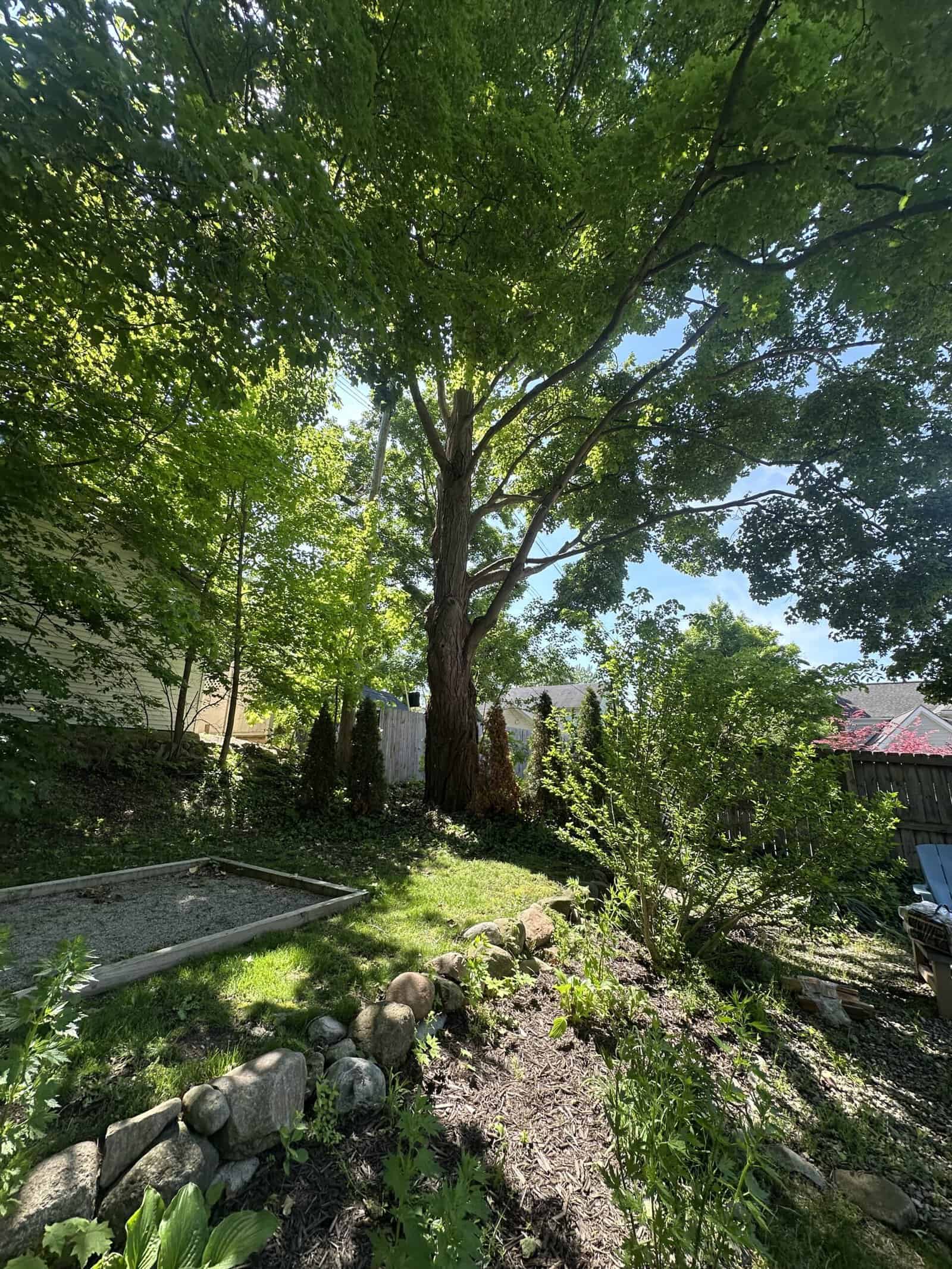
We’ve been doing this work across Michigan for over seven years. Every crew member is trained directly by Ivan — not just in proper technique, but in how to communicate clearly with homeowners and respect the property we’re working on. Cecilia manages scheduling and customer care, so when you reach out, you’re talking to someone who’s accountable, not a call center routing you around.
Ann Arbor has one of the most educated buyer bases in the country — the city ranked first in America for education levels. Residents here research providers, ask for credential documentation, and know the difference between a certified arborist and someone with a truck and a saw. We field ISA Certified Arborists and TRAQ-qualified risk assessors on commercial and large residential jobs — credentials that are verifiable through ISA’s public directory and that hold up to scrutiny.
From the wooded lots in Barton Hills to the tight residential streets of the Old West Side, we have the training and equipment to handle what Ann Arbor’s mature urban canopy actually demands.
Before anything gets cut, we walk the property with you. That site visit isn’t a formality — it’s where the scope gets built. In Ann Arbor, that walkthrough also means identifying whether any trees in your project are city-owned street trees, which require a written permit under Ann Arbor’s Chapter 40 tree ordinance before any work can legally begin. Most homeowners don’t know that until they’re already in the middle of a project. We flag it upfront, so there are no stops, no violations, and no surprises mid-job.
From there, our crew executes the scope that was agreed on — crown thinning, crown reduction, deadwood removal, or whatever combination your trees actually need. Every cut follows ANSI A300 standards, which means no topping, no flush cuts, and no more than 25 percent of live foliage removed in a single session. That’s not just best practice — it’s the legal benchmark used in civil disputes over tree work quality in the U.S.
When the work is done, the cleanup is thorough. Debris, branches, and wood are cleared from the property. Customers consistently call out the cleanup as one of the standout parts of the experience — because the yard looks better after we leave than it did before we arrived.
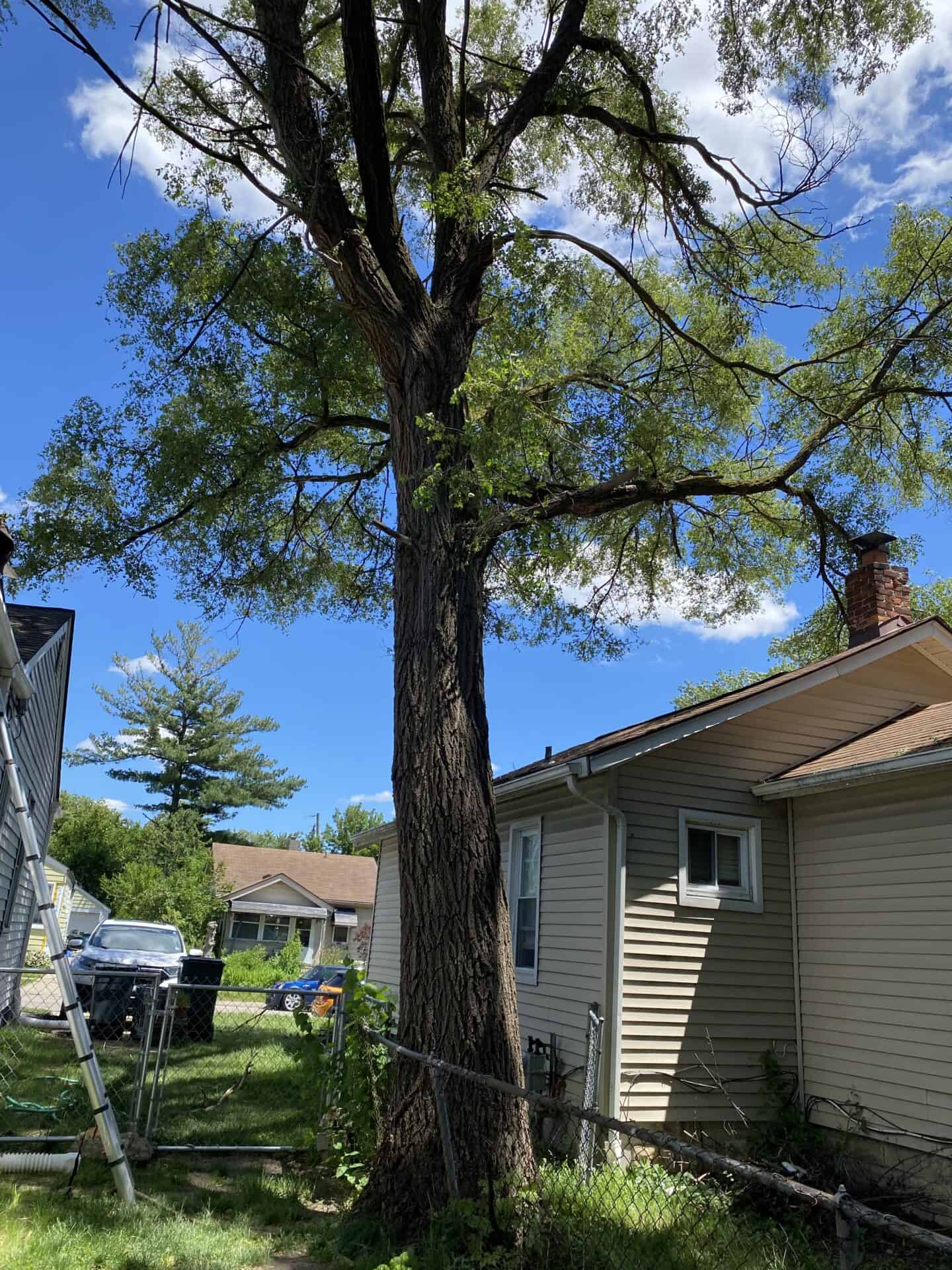
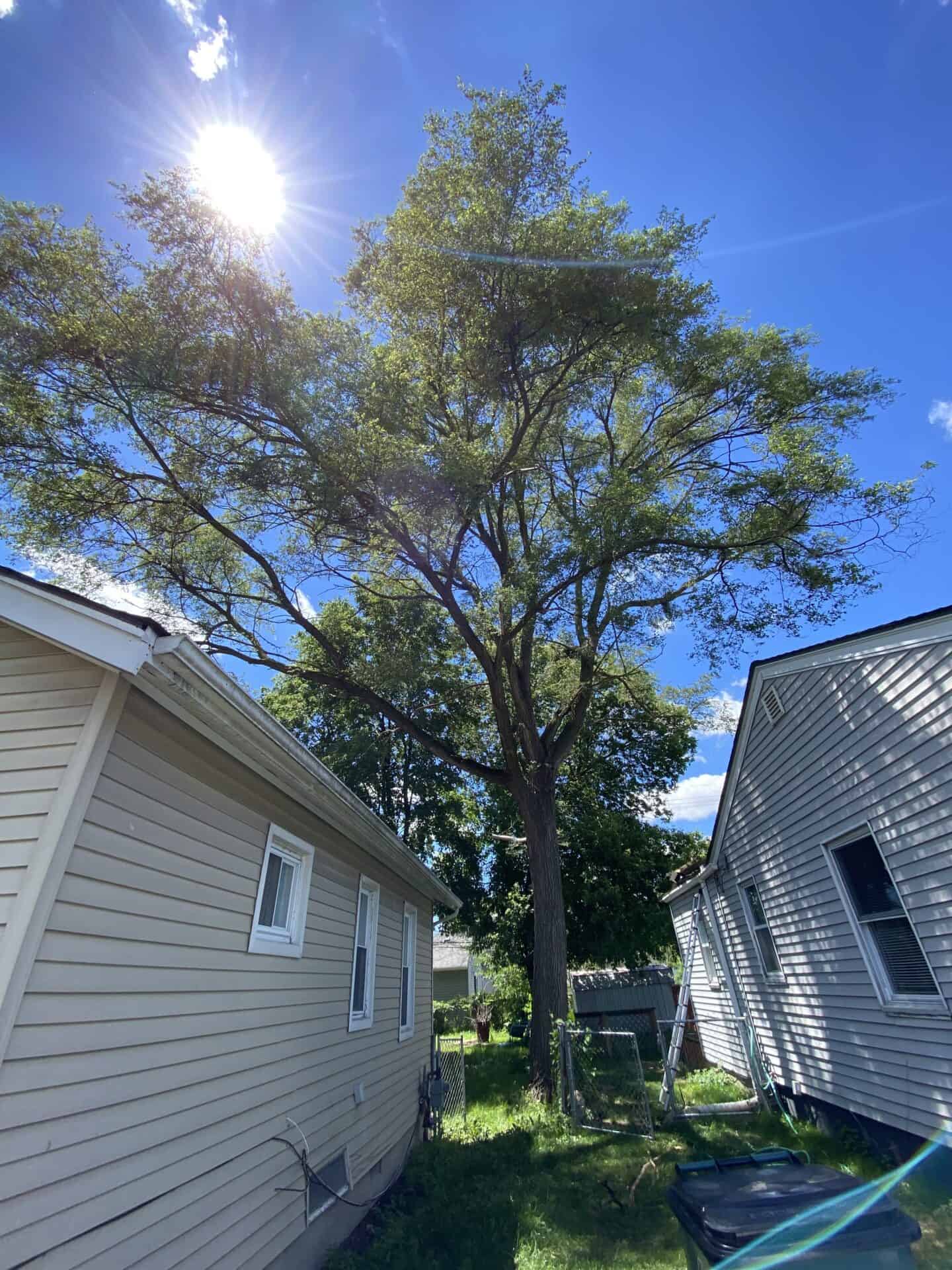
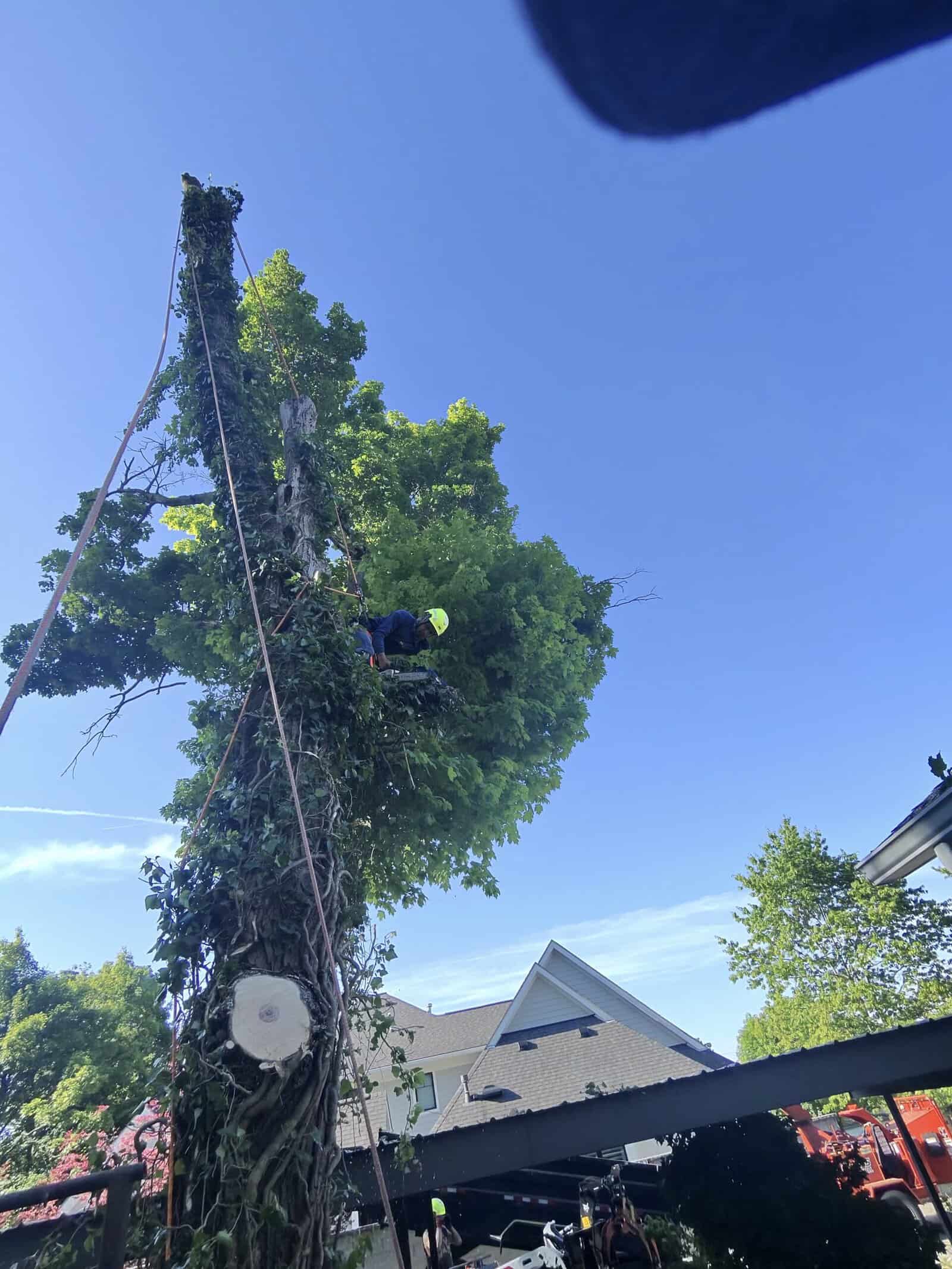
Ann Arbor’s urban forest is genuinely complex. The city has over 42,000 inventoried street trees, a confirmed oak wilt case in Bird Hills Nature Area, and a Washtenaw County Emerald Ash Borer quarantine that affects how ash tree work should be approached. These aren’t background details — they directly shape how professional tree pruning in Ann Arbor needs to be handled.
For oak trees, that means strict adherence to the November 1 through March 31 pruning window. Pruning oaks outside that window exposes them to the sap beetles that carry oak wilt from tree to tree, and the disease is incurable. For ash trees showing any EAB stress, our TRAQ-qualified risk assessors evaluate structural condition before recommending pruning — because work on a tree that needs removal isn’t a good investment for anyone.
We deliver tree trimming and shaping, crown thinning to improve light and airflow, crown reduction to bring oversized canopies back to a manageable and structurally sound form, deadwood removal, and storm damage cleanup. Line-clearance certified arborists handle any work near energized utility lines — a capability that requires specialized training, equipment, and utility insurance that most local crews don’t carry. Every job comes with a written estimate and a detailed scope before work begins. That’s not a policy that gets waived — it’s how we operate on every single project.
It depends on whether the tree is on your private property or owned by the city. For trees on your own lot, you generally don’t need a permit to prune them — though Ann Arbor’s Chapter 40 ordinance does establish protections for Landmark and Woodland trees that can complicate removal decisions. The permit requirement kicks in when the work involves a city-owned street tree, which includes trimming, pruning, stump grinding, fertilization, or any treatment. That permit is free, but it’s required — and skipping it is a code violation.
This is one of the reasons we walk every property before starting work. In Ann Arbor’s dense residential neighborhoods, it’s not always obvious from the street which trees are privately owned and which belong to the city. The pre-work site visit identifies that before a single branch comes down, so the project moves forward cleanly without regulatory interruptions.
For most deciduous trees in Ann Arbor, late winter is the professional recommendation — roughly February through early March, while trees are still dormant but the worst of the cold has passed. Dormant season pruning reduces stress on the tree, minimizes disease and pest exposure, and makes the structure easier to assess without foliage in the way.
For oak trees specifically, the window is November 1 through March 31, and it’s not flexible. Ann Arbor has confirmed active oak wilt in the city — it was identified in Bird Hills Nature Area in August 2023 — and the sap beetles that spread the disease become active when temperatures climb above 50 degrees Fahrenheit. Pruning an oak outside the dormant window in Washtenaw County is a real risk, not a theoretical one. Maple trees are also best pruned in dormancy to avoid significant sap loss. If you’re unsure what species you have or when to schedule, that’s exactly the kind of question we address during the initial site walkthrough.
Crown thinning removes select branches from throughout the canopy to improve light penetration and airflow without significantly changing the tree’s overall size or shape. It’s typically recommended every three to five years for mature shade trees, and it’s one of the most effective ways to reduce wind resistance — which matters a lot in Ann Arbor given the severe weather the area sees. The April 2026 storm that brought 70 mph gusts and downed trees across the city is a reminder that an unpruned, dense canopy acts like a sail in high wind.
Crown reduction is different. It reduces the overall size of the canopy by cutting branches back to lateral growth points, which maintains the tree’s natural form while bringing it down to a more manageable scale. It’s the correct alternative to topping — a harmful practice that leaves large, open wounds and produces structurally weak regrowth. ANSI A300 standards, which we follow on every job, prohibit topping outright. If a previous crew topped your trees, crown reduction work may be part of the recovery process.
A few things to look for: dead or hanging branches, limbs crossing and rubbing against each other, branches growing toward the house or over utility lines, a canopy that’s become so dense it blocks light to the yard or lower portions of the tree, and any visible decay or structural irregularities at the branch unions. If you’re seeing any of those, waiting typically makes the problem more expensive to fix, not less.
In Ann Arbor’s older residential neighborhoods — Old West Side, Kerrytown, Burns Park — many of the trees are mature and have been in place for decades. Mature trees don’t necessarily need pruning every year, but they do need periodic assessment. A TRAQ-qualified risk assessor can evaluate the tree’s structural condition and tell you what’s actually needed versus what can wait. That’s a different conversation than a crew that shows up and quotes removal on everything they touch.
Improper pruning — especially topping — causes damage that compounds over time. Topping creates large, open wounds that the tree struggles to compartmentalize, inviting decay fungi and weakening the branch structure. The regrowth that follows topping is fast but structurally weak, producing long, whippy branches attached to the tree with poor unions that are more likely to fail in a storm than the original branches were.
Beyond the tree damage, there’s a liability dimension. ANSI A300 standards are used as the legal benchmark for tree work quality in civil disputes in the United States. If a crew performs work that falls below that standard and the tree subsequently fails and damages your property or a neighbor’s, the documentation of how the work was done matters. Hiring a crew that follows ANSI A300 — and can document that it does — protects you on both ends. We follow those standards on every job, and the written estimate and scope of work create a clear record of what was agreed to and performed.
Yes, and this is worth understanding before you hire anyone for this type of work. Pruning trees near energized utility lines isn’t the same as general tree trimming. It requires line-clearance certification, specialized equipment, and a specific category of utility insurance that most general tree service companies don’t carry. Sending an uncertified crew to work near live lines isn’t just risky — it’s the kind of situation that can result in serious injury and significant liability exposure for the homeowner.
We have line-clearance certified arborists on staff with the training, equipment, and insurance required for utility corridor work. In Ann Arbor, where mature trees in older neighborhoods like the Old West Side and Kerrytown frequently grow into or near overhead lines along residential streets, this is a relevant capability. If the tree you need pruned is anywhere near utility infrastructure, make sure the company you hire can actually do that work legally and safely — and ask for documentation before anyone gets in the bucket.
Other Services we provide in Ann Arbor
