Hear from Our Customers
After a storm hits Ann Arbor, the immediate question isn’t just “how do I get this tree off my house” — it’s “is anything else about to come down?” That’s the part most people don’t think about until it’s too late.
A tree that’s still standing after a storm isn’t necessarily a safe one. Cracked trunks, heaved root systems, and hanging limbs under tension can fail days or weeks after the original event, especially in neighborhoods like Old West Side and Burns Park where mature oaks and silver maples grow directly over rooflines and driveways.
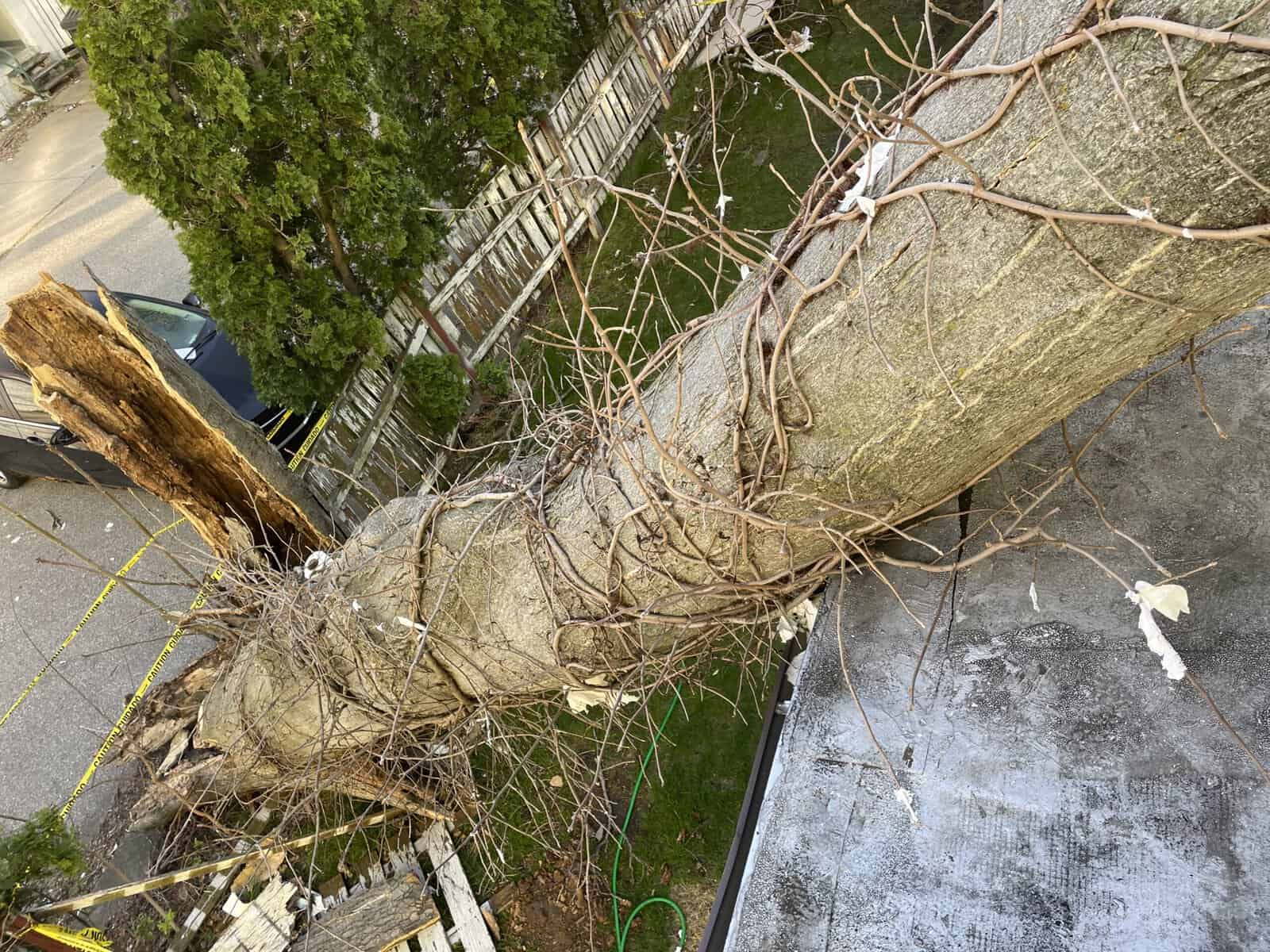
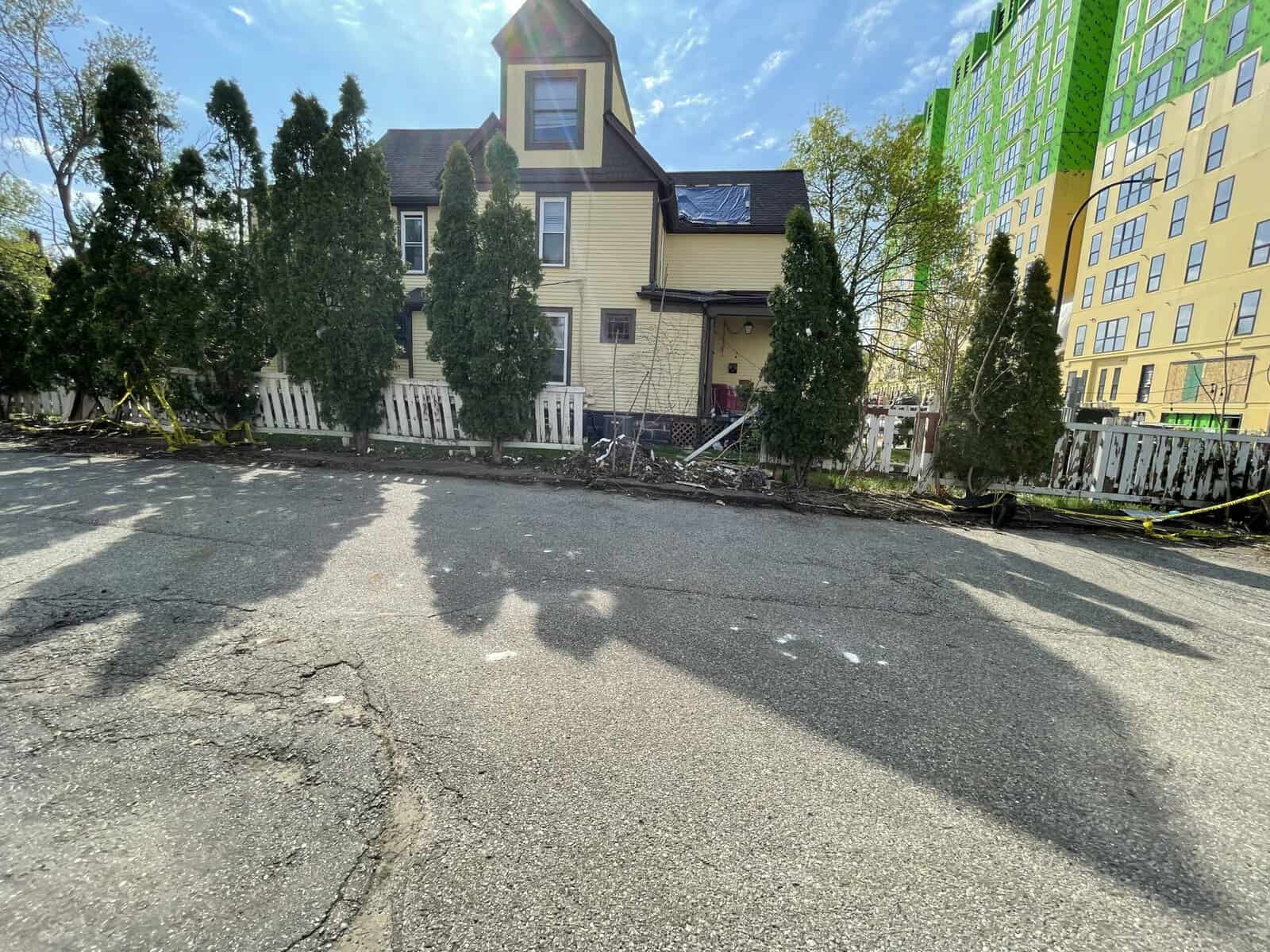
Ann Arbor carries roughly 46% residential canopy coverage — nearly half of every residential block is under tree cover. That’s one of the highest densities in Michigan, and it means every significant storm event here produces more tree failures per square mile than most surrounding communities. The April 2026 EF-1 tornado that tore through the Jackson Avenue corridor and crossed I-94 was a vivid reminder: one resident woke up to eight trees down on a single property.
What we provide when we respond to your call is a complete picture of what happened to your property, not just removal of what’s already on the ground. Our ISA Certified Arborists and TRAQ-qualified risk assessors evaluate what’s still standing, identify hidden hazards, and give you a clear answer on what needs to come down and what can be preserved. In Ann Arbor, where residents genuinely care about their trees, that distinction matters.
We’ve been serving Ann Arbor and the broader Metro Detroit region for over seven years. Based in Oakland, we operate across Oakland County and Southeast Michigan — including Washtenaw County, where multi-county storm systems like the April 2026 event make regional experience directly relevant to what Ann Arbor homeowners face.
What separates us from the field isn’t a longer list of services — it’s the credentials behind the work. We employ ISA Certified Arborists on staff. TRAQ-qualified risk assessors for post-storm evaluations. And line-clearance certified arborists trained specifically to work near energized utility lines — a credential that matters enormously in Ann Arbor’s historic neighborhoods, where overhead utilities thread through dense canopy along corridors like Huron Parkway and Plymouth Road.
Michigan doesn’t require a state license to operate a tree service. That means anyone with a truck and a chainsaw can show up after a storm and call themselves a professional. The ISA certification, TRAQ qualification, and line-clearance training we carry are verifiable, standardized credentials — not marketing language. They mean the same thing in Kerrytown as they do anywhere else.
When you call us after storm damage in Ann Arbor, the first thing that happens is a real conversation — not a voicemail, not a callback form. Our 24-hour emergency line is answered by someone who can assess urgency, ask the right questions, and get a crew moving if the situation calls for it. If a tree is on your roof, blocking your driveway off Jackson Avenue, or tangled in a power line, that’s not a situation where scheduling for next week makes sense.
Once on-site, we do a full walkthrough before any work begins. This isn’t a formality — it’s how we identify scope that an over-the-phone estimate would miss entirely. In Ann Arbor specifically, that walkthrough includes checking whether any part of the damage involves trees in the city right-of-way, which fall under the city administrator’s authority per Ann Arbor’s Chapter 40 ordinance. A damaged tree that’s partly on your property and partly in the public right-of-way involves different rules than a purely private removal, and a crew that doesn’t know that can create a permit problem on top of your storm damage.
After the assessment, you get a written estimate and a clear explanation of what’s being removed, why, and what we’ll do about anything that’s still standing but potentially compromised. When the work is done, the site is cleaned completely — debris, wood chips, drag marks, all of it. You do a final walkthrough with our crew before we leave.
Ready to get started?
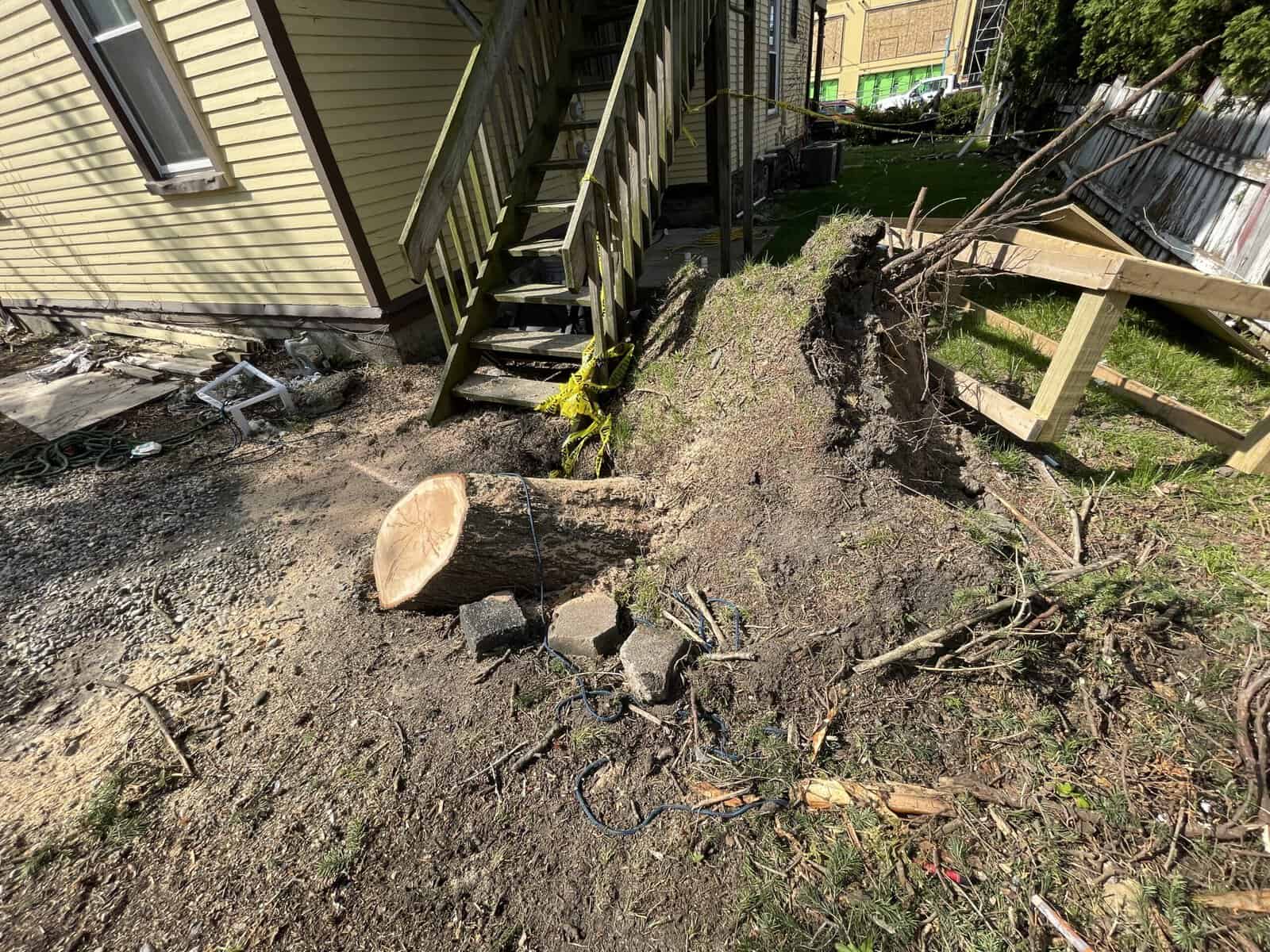
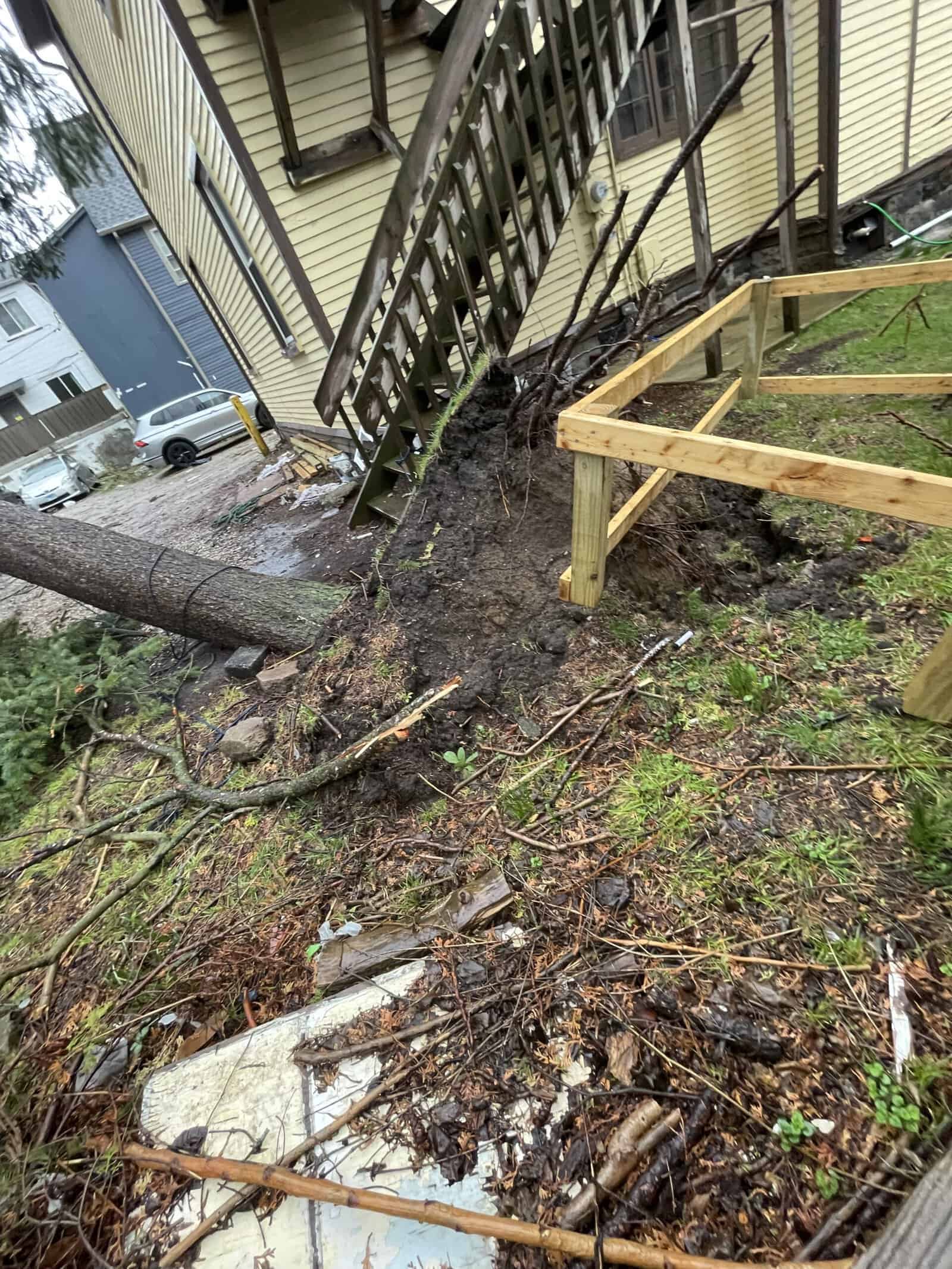
Storm damage in Ann Arbor rarely presents as one clean problem. More often it’s a combination: a fallen tree on a structure, a hanging limb over a car, a root ball that’s heaved and left a 60-foot tree leaning toward a fence, and somewhere in the mix, a branch that’s resting on an overhead utility line.
We handle all of it — fallen tree removal, hazardous limb removal, emergency tree clearing, stump grinding, and post-storm tree risk assessment for trees that are still standing but structurally suspect.
Our line-clearance certification is worth understanding in concrete terms. In neighborhoods like Burns Park, Water Hill, and Ann Arbor Hills, overhead utility lines run through the canopy at the same height as major limbs. After a storm, the scenarios where a limb or fallen tree is in contact with or directly adjacent to an energized line are common, not exceptional. Most general tree service operators are not trained, equipped, or insured to work in those conditions. We are — and that’s not a minor distinction when you’re looking at a situation where the wrong move creates a far worse outcome than the storm itself.
For trees that are damaged but still standing, our TRAQ-qualified assessment gives you a documented, professional answer on structural integrity and failure risk. This is particularly relevant in Ann Arbor given the city’s emotional investment in its urban canopy — “Tree Town” residents don’t want to remove a tree that can be saved, and they shouldn’t have to guess. The assessment tells you what’s actually going on, so the decision is based on fact, not anxiety.
It depends on the tree and where it’s located. Under Ann Arbor’s Chapter 40 ordinance, the city administrator holds sole authority over trees in the street right-of-way and other public property. If your storm-damaged tree is entirely on your private property and is dead, hazardous, or has been structurally compromised by the storm, you can generally remove it without a permit. However, if the tree is a designated landmark or protected tree, a permit is required regardless of its condition.
The situation gets more complicated when a fallen tree crosses the property line into the city right-of-way — which happens frequently in older neighborhoods like Old West Side and Kerrytown, where trees have grown over sidewalks and public easements for decades. In those cases, the removal involves both private and city-controlled portions of the tree, and the rules are different for each. We conduct a full site walkthrough before any work begins, which includes identifying right-of-way issues and permit requirements specific to your property. If there’s a question about what applies to your situation, Ann Arbor’s Forestry division can be reached at trees@a2gov.org or 734-794-6320.
We offer 24/7 emergency response across Ann Arbor and the broader Southeast Michigan region. In a genuine emergency — a tree on your roof, a limb hanging over a structure, a fallen tree blocking access — our goal is to get someone on-site as fast as possible. Our emergency line is answered directly, not routed to a voicemail, which matters when you’re dealing with an active hazard at 2 a.m.
Response time in practice depends on how many simultaneous calls are coming in, which after a significant storm event can be substantial. The April 2026 tornado that moved through Ann Arbor’s west side and crossed I-94 generated widespread damage across multiple neighborhoods in a single night. In high-demand situations like that, calls are triaged by urgency — a tree actively on a structure or in contact with a power line takes priority over a fallen tree in an open yard. If your situation is urgent, say so clearly when you call. We’ll tell you honestly where you stand and what the timeline looks like.
This is one of the most important questions to get right, and the honest answer is: you can’t tell by looking at it. A tree that survived a storm visually intact can have a compromised root system from saturated soil, a trunk crack that’s hidden by bark, or a major scaffold limb that’s partially detached and held in place by tension alone. These are called widow-makers — hanging limbs under unpredictable load — and they’re one of the leading causes of post-storm injuries, often days after the original event.
In Ann Arbor, this risk is amplified by the city’s building stock. In historic neighborhoods like Burns Park and Germantown, mature trees grow in close proximity to older homes with narrower setbacks. A limb failure that would land in an open yard in a newer subdivision lands on a roofline or a parked car here. The TRAQ (Tree Risk Assessment Qualification) credential our assessors hold is specifically designed to evaluate these scenarios — it’s a documented, professional assessment of structural integrity and failure probability, not a visual eyeball. If you have a tree that went through the April 2026 storm or any subsequent severe weather event and you haven’t had it professionally assessed, that’s the right next step before writing it off as fine.
Partially, in most cases — but probably not as much as you’re expecting. Standard homeowners insurance policies typically include a sublimit for tree removal that ranges from $500 to $1,000 per storm event. If the fallen tree has damaged a covered structure — your roof, a fence, a detached garage — the policy is more likely to contribute meaningfully to removal costs, sometimes up to 5% of your dwelling coverage. If the tree fell in your yard without hitting anything, most policies cover very little or nothing for removal.
The local emergency tree removal benchmark in Ann Arbor runs around $888 for a standard removal, and complex jobs involving large trees, tight access, or proximity to utility lines can run significantly higher. That gap between what insurance covers and what the job actually costs is where most homeowners get surprised. Before you authorize any work, document the damage thoroughly — photographs from multiple angles, timestamps, and a record of the storm event date. This documentation supports your claim and helps establish that the damage was storm-related rather than pre-existing. We can walk through the site assessment with you before work begins, giving you a clear written estimate that you can submit directly to your adjuster.
Line-clearance arborist certification is the specific credential that authorizes and qualifies a tree crew to work safely near energized utility lines. It requires specialized training beyond standard arborist certification, dedicated equipment, and a separate insurance classification that covers utility-adjacent work. It is not a standard credential — the majority of residential tree service companies in the Ann Arbor market do not hold it.
This matters in Ann Arbor more than in many Michigan cities because of how the city’s overhead utility infrastructure interacts with its canopy. Along corridors like Huron Parkway and Plymouth Road, and throughout the dense residential blocks of Old West Side, Water Hill, and Kerrytown, utility lines run at canopy height through mature tree cover. After a storm, the scenarios where a limb or fallen tree is in contact with or directly adjacent to an energized line are common, not exceptional. Sending an uncertified crew into that environment creates serious liability exposure for the homeowner and genuine danger for the workers. We employ line-clearance certified arborists and carry the appropriate insurance for this work. If the tree you need removed is anywhere near a utility line, that credential is the first thing you should ask any company to confirm before they start.
After a significant storm event, out-of-area operators move into affected markets quickly — sometimes within hours. Ann Arbor saw this pattern after the April 2026 tornado, and it’s a documented phenomenon after any major weather event in Southeast Michigan. The warning signs are consistent: no local address, cash-only payment demands, no written estimate, pressure to sign immediately, and no verifiable credentials when you ask for them.
Michigan does not require a state license to operate a tree service, which means the bar to show up and call yourself a professional is effectively zero. The credentials that actually mean something are ISA Certified Arborist status — verifiable by credential number through the ISA’s public directory — TRAQ qualification for risk assessment work, and proof of general liability insurance and workers’ compensation coverage. Ask for all three before anyone touches your property. A legitimate company will have them and won’t hesitate to provide documentation. We carry ISA certification, TRAQ qualification, line-clearance certification, and full insurance coverage — all verifiable, none of it contingent on you signing before you’ve had time to check.
Other Services we provide in Ann Arbor
