Hear from Our Customers
When a stump is gone, it’s gone. No more mowing around it every weekend. No more tripping hazard in the middle of a yard you’ve put real effort into. No more wondering whether it’s going to send up new shoots or whether the roots are quietly working their way toward your driveway.
The subdivisions across New Hudson and Lyon Township — Arbors of Lyon, Orchards of Lyon, Mallard Crossing, and the rest — were built out through the 2000s and 2010s. The trees planted at construction or preserved from cleared land are hitting the age where they start to fail. That’s just the lifecycle. When a tree comes down, the stump doesn’t disappear on its own. It sits there for years, attracting beetles and carpenter ants, producing new shoots from the root system, and blocking whatever landscaping plans you had for that space.
Oakland County’s heavy clay soils make this worse than it sounds. Root systems in clay tend to spread wide and shallow rather than deep, which means surface roots can keep pushing up through your lawn long after the tree is gone. Grinding to the right depth — and treating aggressive species when needed — is the only way to actually close the chapter.
We’re based in Oakland, which puts us right next door to New Hudson. South Oakland Road connects the two communities directly, and that proximity means we know the tree species, the soil conditions, and the kind of properties that line the roads between Kensington Metropark and the I-96 corridor.
Ivan started his career as a groundman in California, learning rigging, climbing, and safe tree removal from the ground up before relocating to Michigan and founding the business. He leads every field operation personally. Cecilia handles all scheduling and client communication, which means when you call or email, you get a real answer from someone who’s actually paying attention.
We have ISA Certified Arborists and TRAQ-qualified risk assessors on hand for larger and more complex jobs. We’re fully licensed and insured, and every job starts with an in-person site visit — not a phone guess. You get a written estimate that’s good for 30 days, and work doesn’t begin until you’ve walked the property with our team and agreed on the scope.
It starts with a site visit. Ivan comes out to your New Hudson property, walks the area, looks at the stump or stumps in question, and gives you a written estimate before anything else happens. No phone quotes, no ballpark figures — just a clear scope of work in writing, valid for 30 days.
Before any grinding begins, we locate underground utilities. This is Michigan law under the MISS DIG program, and it matters more in Lyon Township than some people realize. DTE Energy regularly marks gas lines in residential yards across this area, and newer subdivisions often have irrigation systems, fiber lines, and water infrastructure that aren’t always obvious from the surface. Skipping this step is how homeowners end up with a broken gas line or a destroyed sprinkler system. We don’t skip it.
Once the site is cleared and utilities are marked, the grinding starts. The stump is ground down to the depth your project requires — typically six to eight inches below grade for a level, ready-to-fill yard, and deeper when you’re planning to plant, landscape, or build over the area. The grinding process destroys the root crown, which is what prevents regrowth. For particularly aggressive species, a same-day herbicide treatment is available to eliminate any remaining regrowth potential.
After grinding, the wood chips are managed based on your preference: left in place to decompose into topsoil over time, spread in garden beds, or removed entirely. The area is left level and clean before we leave.
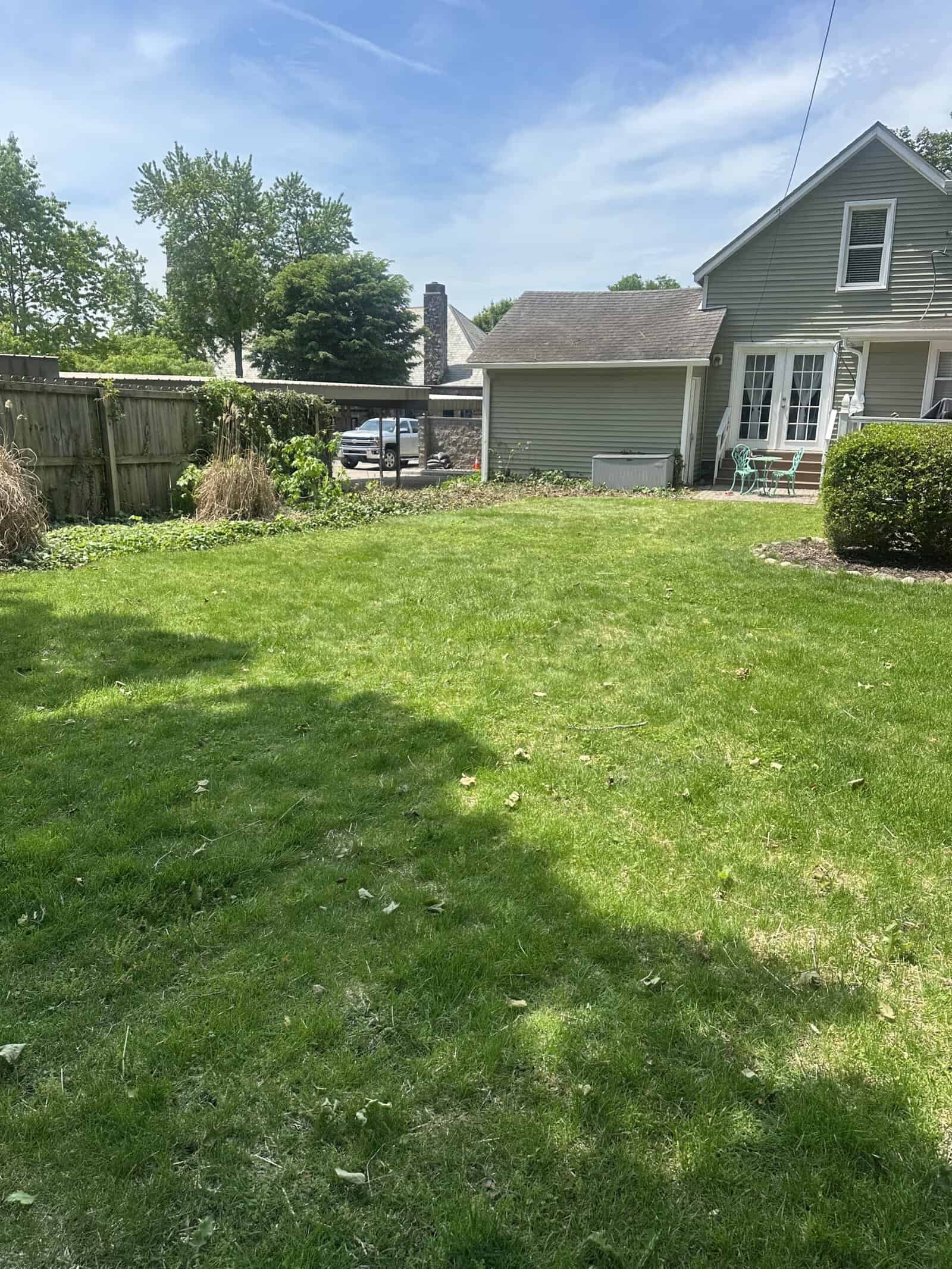
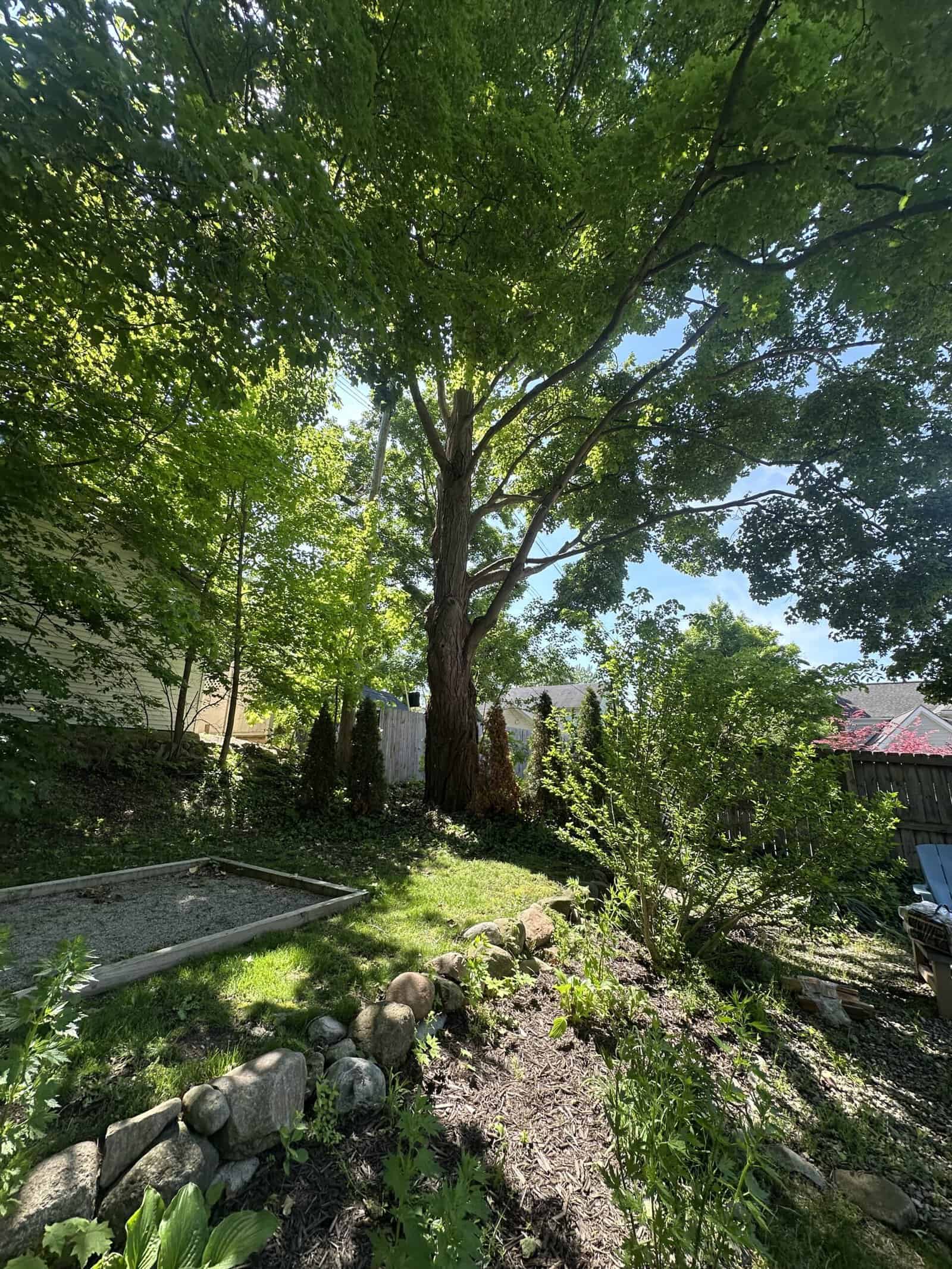
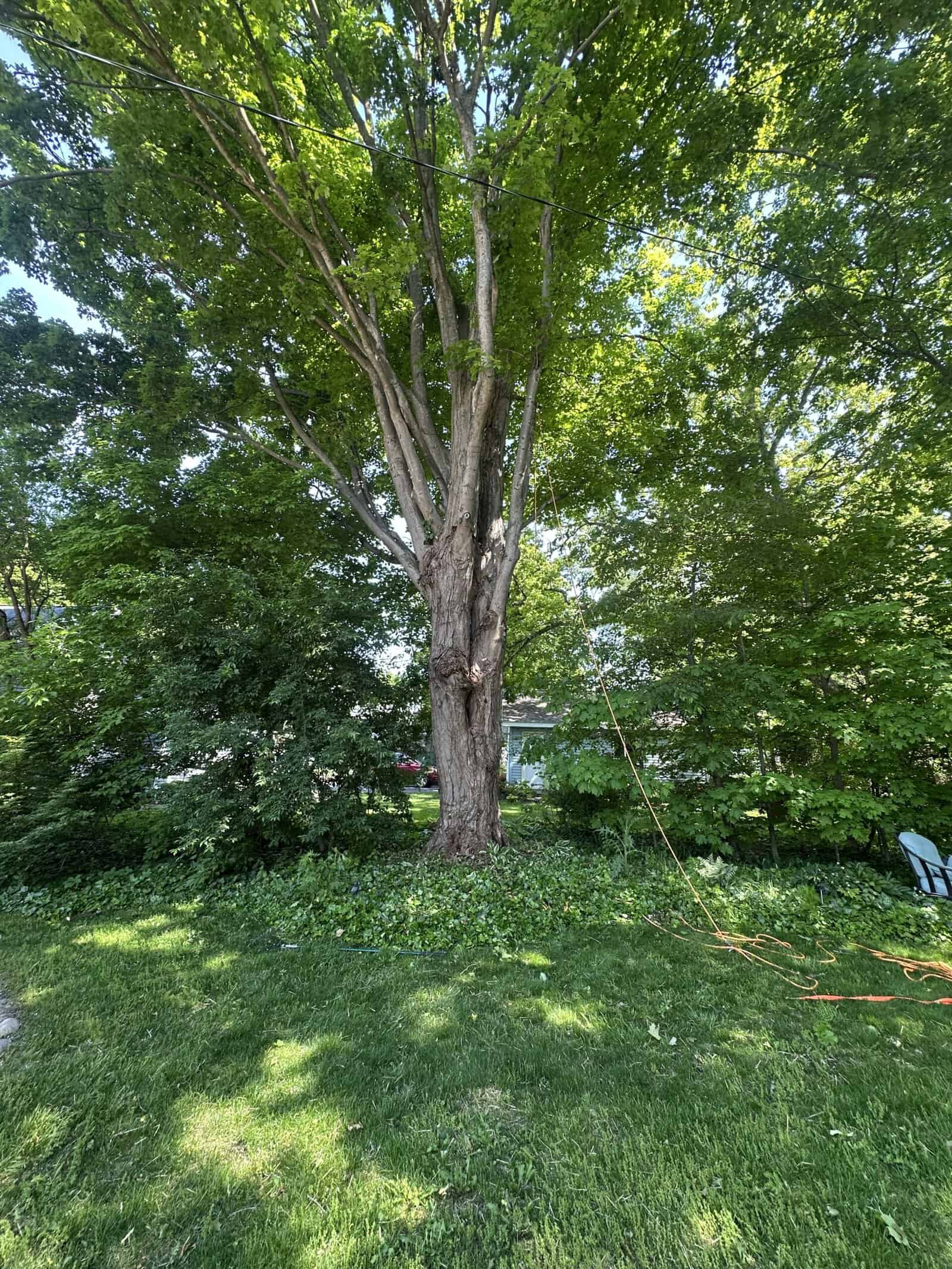
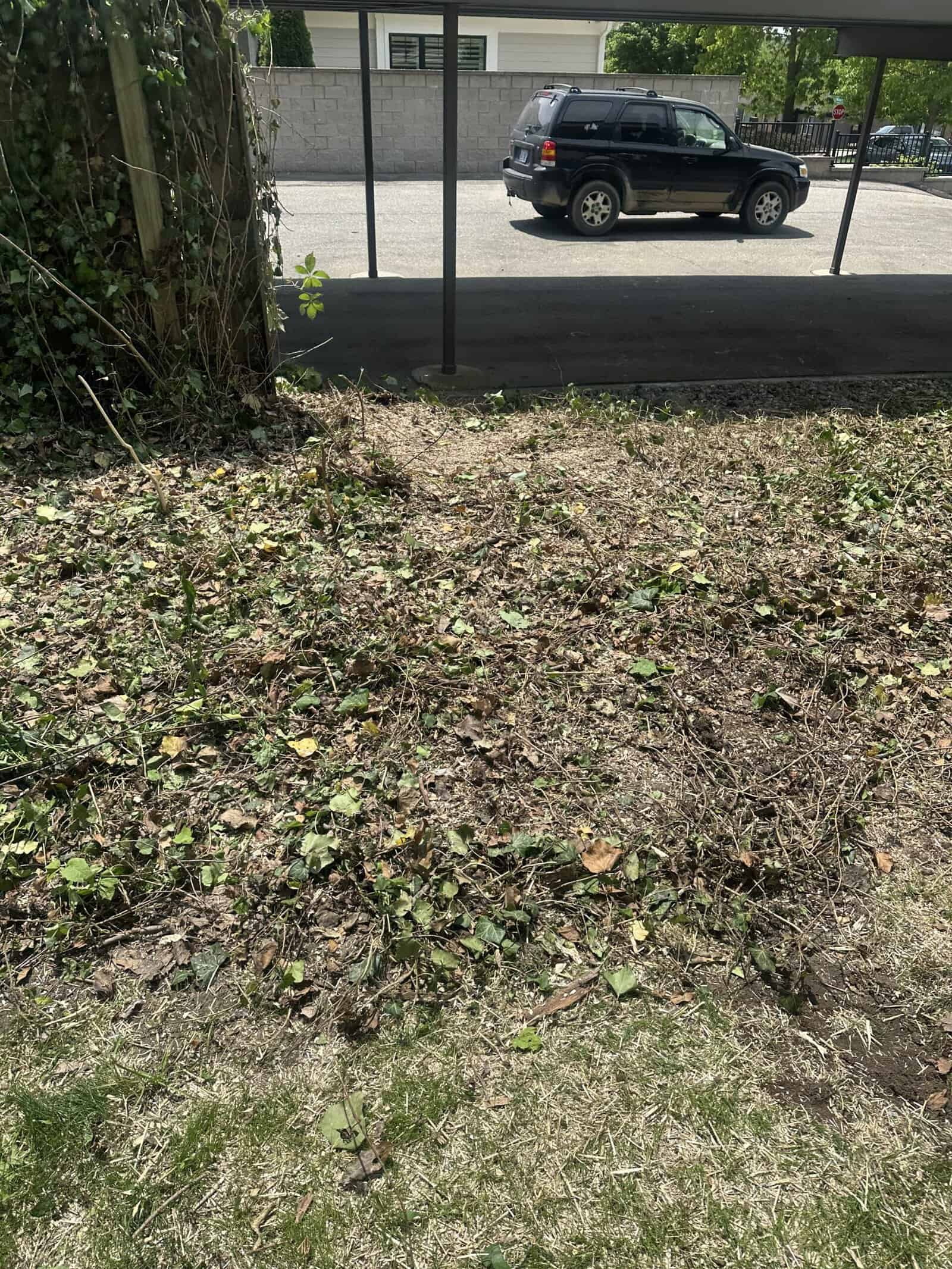
Stump grinding in New Hudson covers the full range of what properties in this area actually deal with. That includes smaller ornamental stumps left over from landscaping changes in newer subdivisions, and it includes the large stumps — mature oaks, maples, and hardwoods — that come down on the bigger lots north and south of I-96 and on properties adjacent to the Kent Lake corridor near Kensington Metropark. Our equipment handles stumps of any size, and the grinding depth is matched to what you’re planning to do with the space afterward.
Root removal is part of the conversation too, not an afterthought. In Oakland County’s clay soils, surface roots spread further than you’d expect, and leaving them in place after grinding can mean continued heaving along driveways or fence lines. When root spread is a concern, we address it as part of the job scope — not as a surprise add-on discussed after the fact.
Every job includes full debris cleanup. The wood chips left after grinding are yours to direct: leave them to break down naturally into the soil over the next year or two, use them as mulch in garden beds, or have them removed for a clean finish. For land clearing and multi-stump jobs — which come up regularly in Lyon Township’s active development areas — same-day herbicide treatment of cut stumps is available to prevent regrowth entirely.
If your subdivision has an HOA with maintenance standards, the written estimate and job documentation we provide gives you the paper trail you may need to satisfy those requirements.
For most residential stump grinding jobs in New Hudson, you don’t need a permit from Lyon Charter Township. Stump grinding on private residential property typically falls outside the scope of Lyon Township’s permit requirements, and Michigan doesn’t mandate a state-level license for tree removal on private land. That said, if your property is part of a homeowners association — which covers a significant number of New Hudson’s subdivisions, including communities in the Arbors of Lyon and Orchards of Lyon areas — your HOA may have its own rules about tree removal and stump grinding. Some HOAs require written approval before work begins, and others require documentation that the contractor is licensed and insured.
We’re fully licensed and insured, and every job comes with a written estimate that serves as formal documentation of the scope of work. If your HOA needs proof of contractor credentials or a record of the completed job, that paperwork is available. For larger-scale land clearing or grading work, Lyon Township may have land use permit requirements that apply — we’ll flag anything relevant during the initial site visit.
Professional stump grinding goes between four and twelve inches below grade, depending on what you’re planning to do with the area afterward. If you’re restoring lawn over the spot, four to six inches is generally sufficient. If you’re planning to plant, install landscaping, or build any kind of structure over the area, you’ll want to go deeper — six to twelve inches — to give yourself a clean base to work with and to make sure the root crown is fully destroyed.
The root crown is what matters for regrowth. That’s the zone where the cambium layer sits, and grinding through it is what stops the tree from sending up new shoots. When grinding is done at proper depth, regrowth is not a practical concern for most species. For trees that are known to be aggressive resprouters — certain maples, cottonwoods, and others that are common in Oakland County — we offer same-day herbicide treatment of the cut stump as an additional measure. This is particularly useful on larger properties or land clearing jobs where you want zero regrowth potential. We’ll let you know during the site visit whether herbicide treatment makes sense for your specific situation.
This is one of the most important questions to ask before any stump grinding job, and it’s especially relevant in New Hudson. Lyon Township has seen significant residential development over the past two decades, and newer subdivisions frequently have irrigation systems, natural gas lines, fiber optic cables, and water infrastructure running through residential yards. DTE Energy regularly marks utility lines in this area — if you’ve ever noticed small flags in your yard before or after utility work, that’s exactly what this is about.
Before our team grinds a single inch, we locate underground utilities through Michigan’s MISS DIG program. This is required by Michigan law, and it’s a step that responsible operators don’t skip. The locate process identifies the position of gas lines, electrical conduits, and other buried infrastructure so the grinding path avoids them. For irrigation systems specifically, we account for their position during the site walk before work begins. The goal is to leave your yard better than we found it — not to hand you a repair bill for a broken sprinkler head or a gas line that wasn’t accounted for.
Stump grinding is typically priced at two to five dollars per inch of diameter, measured at the base of the stump. A small stump — say, six inches across — can cost as little as twelve to thirty dollars on its own, though most companies have a minimum service fee that accounts for equipment transport and setup. The national average for a stump grinding job runs around $272, and most residential jobs fall somewhere between $120 and $500. Very large stumps — the kind that show up on bigger lots near the Kent Lake corridor or on larger-lot properties north of I-96 — can run higher depending on size and species.
A few things affect the final price beyond just diameter. Wood hardness matters — oak and maple take longer to grind than softer species. Root spread matters if root removal is part of the scope. Accessibility matters if the stump is in a tight backyard or behind a narrow gate. And depth matters if you need grinding deeper than standard for a specific project. We provide a written estimate after an in-person site visit, so you know exactly what you’re paying before work begins — not after.
After grinding, you’re left with a mix of wood chips and mulch where the stump used to be. What happens to that material is up to you, and it’s worth thinking through before the job is done. The three most common options are: leave the chips in place to decompose naturally, spread them as mulch in garden beds or around other trees, or have them removed entirely for a clean finish.
If you leave the chips in place, they’ll break down into organic material over roughly one to two years, eventually integrating into the soil. This works well if you’re planning to plant grass over the area — you can fill the depression with topsoil, seed over it, and let the decomposition work in your favor over time. If you want the area to look finished immediately, removal is the cleaner option. For New Hudson homeowners in subdivisions with active HOAs or with landscaping that needs to look a certain way, removal is often the preferred choice. We handle debris management as part of every job, and we’ll confirm your preference before leaving the site.
Yes, and this comes up regularly in Lyon Township given the pace of residential development and the number of larger-lot properties in the area. Multi-stump jobs — whether you’re dealing with several stumps left over from a storm season or clearing a section of wooded property for a new project — are handled as a single coordinated scope of work, not as separate service calls.
For lot and land clearing jobs, the process includes stump grinding as part of the broader clearing work, and same-day herbicide treatment of cut stumps is available to prevent regrowth across the cleared area. This is particularly useful when you’re preparing land for construction or landscaping, where you need to be confident that nothing is going to push back up through the ground after the work is done. Lyon Township’s continued growth means new construction activity is ongoing in the area, and our team has experience working alongside that process — from single-family lot prep to larger clearing projects. The written estimate covers the full scope, and pricing is determined after the site visit so there are no surprises when the job is complete.
Other Services we provide in New Hudson
