Hear from Our Customers
Most New Hudson homeowners don’t think about their trees until something goes wrong — a branch over the roofline, a limb that didn’t survive winter, or a storm that made the decision for them. Professional tree pruning gets ahead of all of that.
When a certified arborist prunes your trees correctly, the canopy opens up, the structure strengthens, and the tree stops being a liability waiting to happen. Lyon Township’s rapid growth over the last two decades means a lot of the trees in New Hudson’s neighborhoods — the maples in Arbors of Lyon, the oaks along the older corridors — were planted in the early 2000s and are now entering the window where crown structure matters most.
Trees in this age range have developed habits, some good and some not. The right pruning now determines whether those trees become a long-term asset or an expensive problem. Kensington Metropark sits right at New Hudson’s back door, and the storm systems that roll don’t discriminate between park land and residential lots.
A properly thinned canopy handles wind load differently than a dense, unpruned one. Dead wood doesn’t wait for a convenient time to fall. Getting your trees professionally pruned before storm season isn’t being overly cautious — it’s smart property management for where you live.
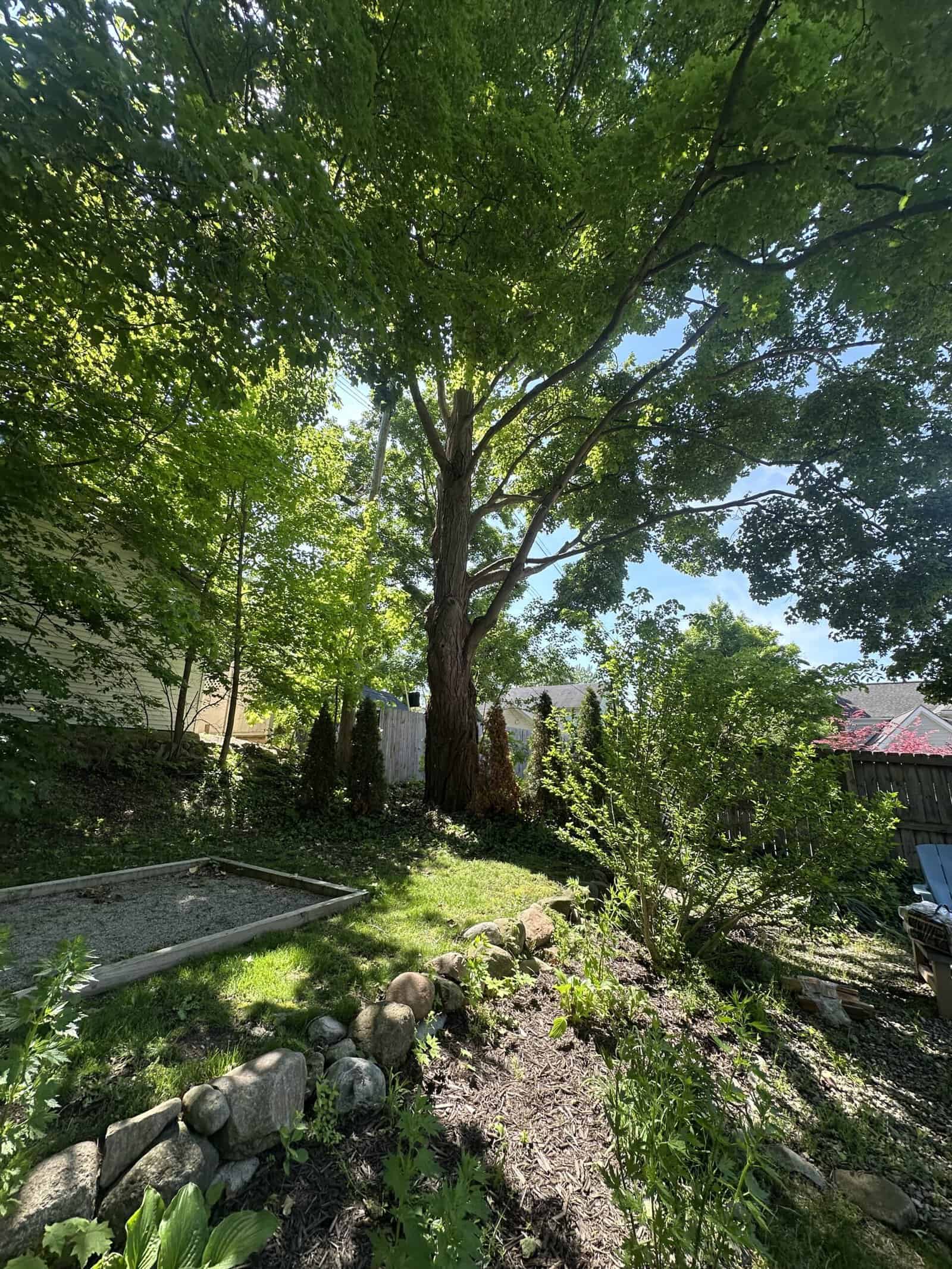
We’re directly connected to New Hudson, just a few miles north. I (Ivan) lead every field operation and personally train each crew member, not just in technique but in how to communicate clearly and respectfully with homeowners. My fiancée Cecilia handles scheduling and customer care, which means when you call, someone actually picks up and follows through.
We’ve been doing this work across Michigan for over seven years. Every commercial and large residential job is staffed with ISA Certified Arborists and TRAQ-qualified tree risk assessors — credentials you can verify through the ISA’s public directory, not just language on a website. We also employ line-clearance certified arborists with the specialized training and insurance required to work near energized utility lines, which matters in New Hudson where overhead lines run along Grand River Avenue and through residential corridors off I-96.
We don’t show up, cut what’s convenient, and leave. I walk every property before work begins, provide a written scope, and won’t start until you know exactly what’s happening and why.
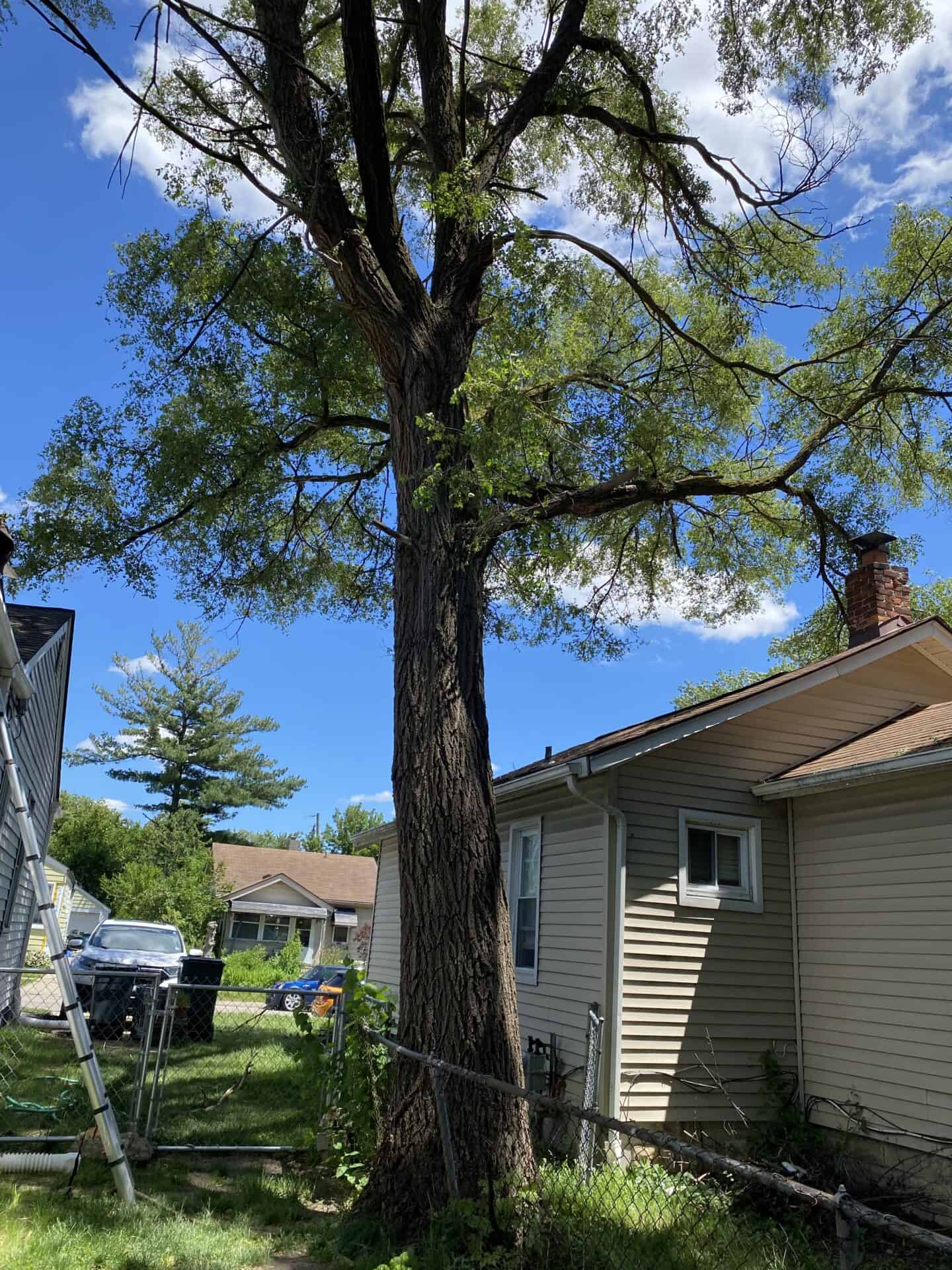
It starts before anyone picks up a saw. I walk your property with you, look at each tree’s structure, identify problem areas — co-dominant stems, dead wood, branches with poor attachment angles — and explain what needs to happen and why. You get a written scope of work before anything begins. No verbal estimates that shift when the job is done.
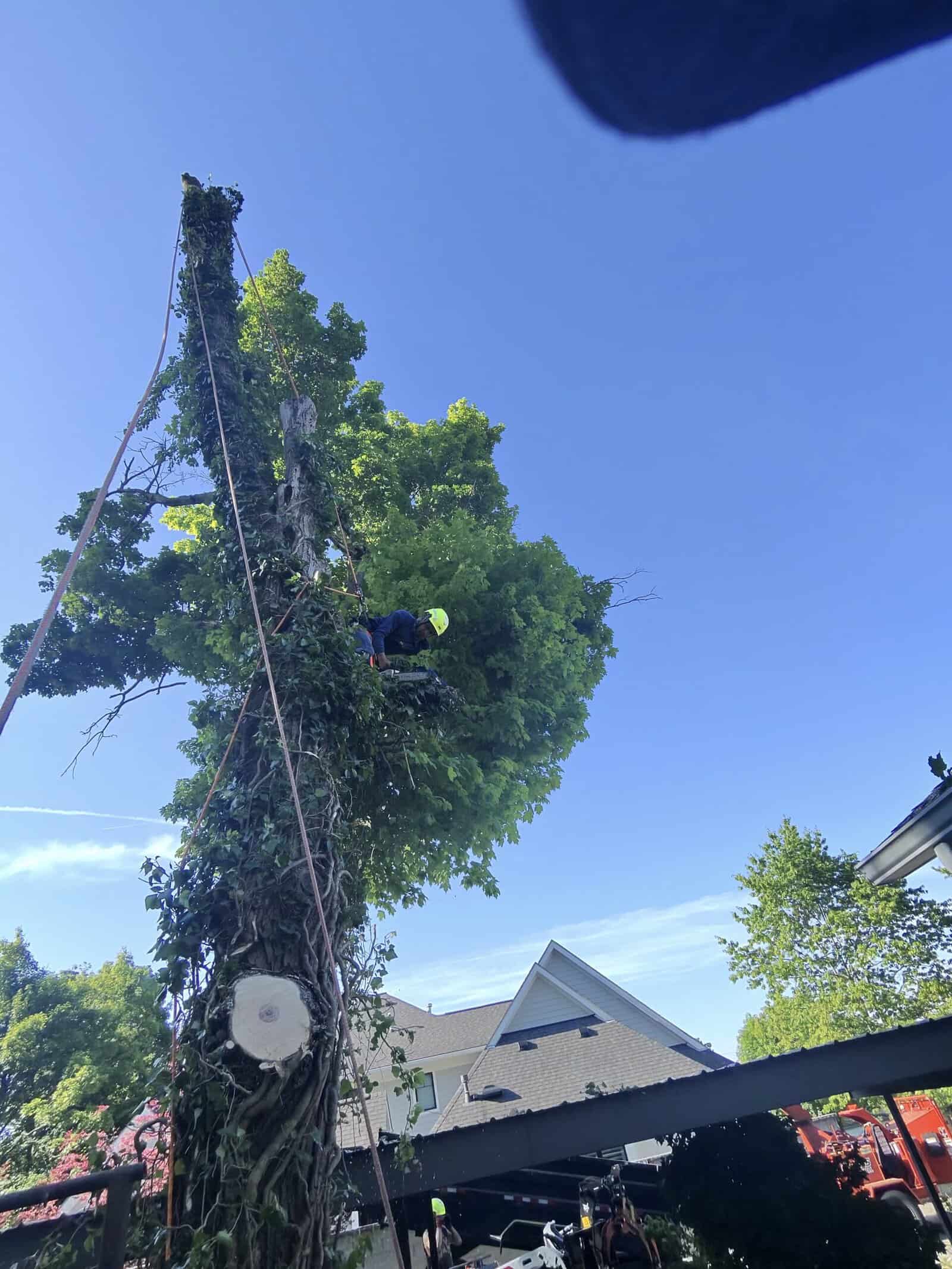
Once work starts, the pruning follows ANSI A300 standards, which is the national benchmark for professional tree care in the United States. That means no more than 25% of live foliage is removed in a single session, no topping, no flush cuts, no climbing spikes on trees being pruned. These aren’t arbitrary rules — they’re the difference between a tree that responds well to pruning and one that goes into stress decline.
For oak trees specifically, timing matters enormously in Southeast Michigan. Oak wilt is spread by sap beetles that become active once temperatures climb above 50°F, which in this region means anything outside the November through March window carries real risk. If your oaks need attention, that timing gets built into the plan.
When the work is done, the crew cleans up completely — debris removed, site restored, nothing left for you to deal with. For New Hudson homeowners managing demanding schedules where time is genuinely scarce, that’s not a small thing.
Ready to get started?
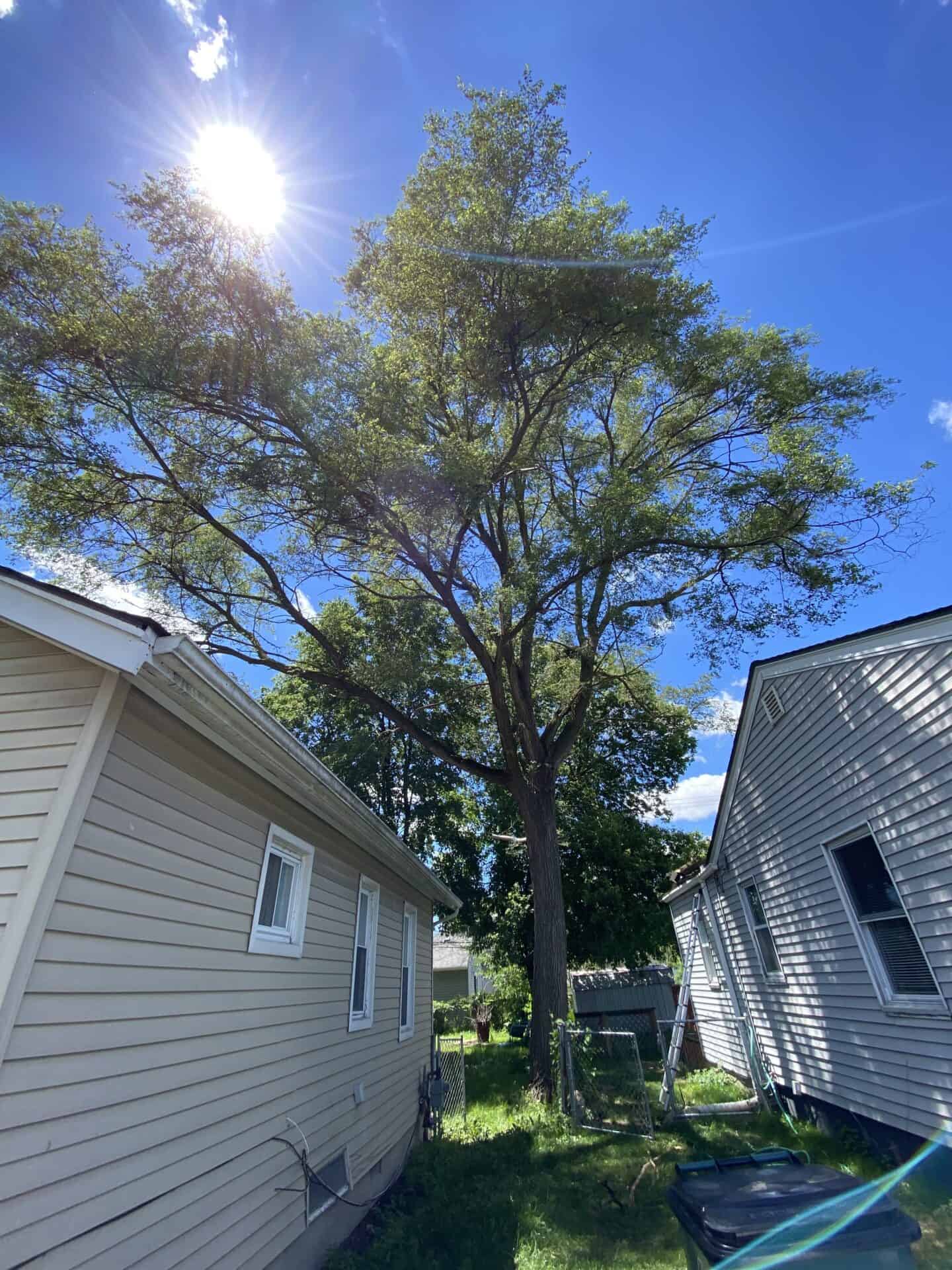
Tree pruning covers a range of specific techniques, and which ones apply depends on what each tree actually needs. Crown thinning selectively removes branches throughout the canopy to improve light penetration and airflow — it’s one of the most common services for mature shade trees in New Hudson’s established neighborhoods, and most arborists recommend it every three to five years for healthy, mature trees.
Crown reduction reduces the overall size of the canopy while maintaining the tree’s natural form, which is the correct alternative to topping when a tree has outgrown its space. Crown raising removes lower branches to create clearance — useful along driveways, walkways, and structures. Deadwooding removes dead, dying, or structurally compromised branches before they become a hazard.
For properties in Lyon Township, particularly those with larger lots or wooded parcels near Kent Lake Road and the Kensington corridor, trees often have more complex structure than typical suburban plantings. That complexity is exactly why a pre-work site walk matters — the pruning plan for a 40-year-old oak on a half-acre lot looks very different from a 15-year-old maple in a newer subdivision.
Every pruning job we provide includes the site assessment, the written scope, the pruning work itself performed to ANSI A300 standards, and complete debris removal. If your trees are near utility lines along Grand River Avenue, our line-clearance certified arborists are equipped and insured to handle that work safely — something most local operators aren’t positioned to do.
For most deciduous trees in New Hudson, late winter is the professional recommendation — roughly February through early March, while trees are still dormant but the worst of the cold has passed. During dormancy, the tree’s structure is fully visible without foliage, stress from pruning is minimized, and the insects and fungal pathogens that take advantage of fresh wounds are still inactive.
Oak trees require more specific timing. In Southeast Michigan, oak wilt is a serious and incurable disease spread by sap beetles that become active once temperatures rise above 50°F — typically from late March through October. The safe pruning window for oaks in New Hudson and Lyon Township runs from November 1 through March 31. If you have oaks on your property, whether along the corridors or in one of the newer developments, that window should drive your scheduling.
Maples are also best pruned in dormancy to avoid significant sap loss in early spring. Emergency pruning — storm damage, hazardous limbs — can be addressed year-round, but routine work should follow seasonal timing whenever possible.
This is one of the most common questions homeowners face, and it’s worth getting a real assessment rather than guessing. A tree that needs pruning typically has dead or dying branches, a canopy that’s become too dense for healthy airflow, limbs growing toward the house or utility lines, or structural issues like co-dominant stems that create splitting risk. These are problems pruning can address.
A tree that may need removal is one where the trunk itself is compromised — significant decay, large cavities, severe lean, or root damage that affects stability. Sometimes a tree that looks like it just needs a trim has underlying structural problems that make it a removal candidate. That’s exactly why we start every job with a site walk and assessment rather than showing up with a saw.
Our TRAQ-qualified tree risk assessors can evaluate structural integrity and give you an honest answer about whether pruning is the right move or whether removal is the safer long-term call. For New Hudson properties with mature oaks or large maples that predate the subdivision development, that assessment is genuinely valuable before any work begins.
Crown thinning is the selective removal of branches throughout the canopy to reduce density, improve light penetration, and increase airflow. It doesn’t change the overall shape or size of the tree — it opens it up from the inside. For mature shade trees, most arborists recommend thinning every three to five years to keep the canopy healthy and structurally sound.
For New Hudson specifically, crown thinning has a practical benefit beyond aesthetics. The storm systems that move — the same ones that have snapped trees at Kensington Metropark and dropped limbs across the area — hit dense canopies harder than thinned ones. A dense, unpruned crown catches wind like a sail. A properly thinned crown lets it pass through.
If your trees haven’t been professionally pruned in several years, or if you moved into a home in one of Lyon Township’s newer subdivisions and inherited trees with unknown maintenance histories, a thinning assessment is a reasonable starting point. It’s not a dramatic intervention — it’s maintenance that keeps the tree healthy and reduces the load on branches during high-wind events.
No, and the difference matters significantly for the long-term health of your trees. Topping is the indiscriminate removal of large portions of the canopy, cutting branches back to stubs without regard for the tree’s structure or biology. It’s still practiced by unqualified crews, and it’s one of the most harmful things you can do to a tree.
Topping creates large, exposed wounds that invite decay and disease, triggers the growth of structurally weak shoots called water sprouts, and ultimately shortens the tree’s lifespan while making it more dangerous — not less. Crown reduction is the correct alternative. It reduces the overall size of the canopy by cutting branches back to lateral growth points, maintaining the tree’s natural form and keeping wounds small enough for the tree to compartmentalize effectively.
ANSI A300 standards — the national legal benchmark for professional tree work — explicitly prohibit topping. We follow ANSI A300 on every job. If you’ve gotten quotes from other providers who described “topping” or “hatracking” as part of their plan, that’s a clear signal to look elsewhere. A properly executed crown reduction can achieve the size management you’re after without the long-term damage that topping causes.
For routine pruning on private residential property in Lyon Township, no permit is generally required. Michigan does not have a statewide permit requirement for tree work on private land, and Lyon Township’s code of ordinances does not have a specific permit requirement for residential tree pruning or removal.
That said, there are situations where you’ll want to check before proceeding. If the tree is in or near a public right-of-way, a utility easement, or the Grand River Avenue commercial corridor where the Lyon Township Downtown Development Authority has active revitalization standards, there may be additional requirements or approvals involved. Work near overhead utility lines — which run along the residential streets feeding off I-96 exit 155 — requires line-clearance certification and specialized insurance that most general tree crews don’t carry.
We employ line-clearance certified arborists specifically for this type of work. If you’re uncertain about your specific situation, Lyon Township’s code and ordinance enforcement department can confirm requirements, and we can advise during the initial site walk based on what’s actually on your property.
Complete debris removal is included with every pruning job — branches, wood chips, and any material generated during the work. We don’t leave piles at the curb or brush stacked in the yard for you to deal with later. The standard we hold ourselves to, and what customers consistently call out in reviews, is leaving the property cleaner than it was found. That means raking, site restoration, and making sure the work area looks like a crew was there to improve the property, not just work on it.
For New Hudson homeowners — many of whom are managing demanding professional schedules and don’t have bandwidth to coordinate follow-up cleanup — this matters more than it might seem. The job isn’t done when the last branch comes down. It’s done when the yard looks right and you can move on. That’s the standard we hold across every job in Lyon Township, and it’s one of the clearest reasons customers come back and refer their neighbors.
Other Services we provide in New Hudson
