Hear from Our Customers
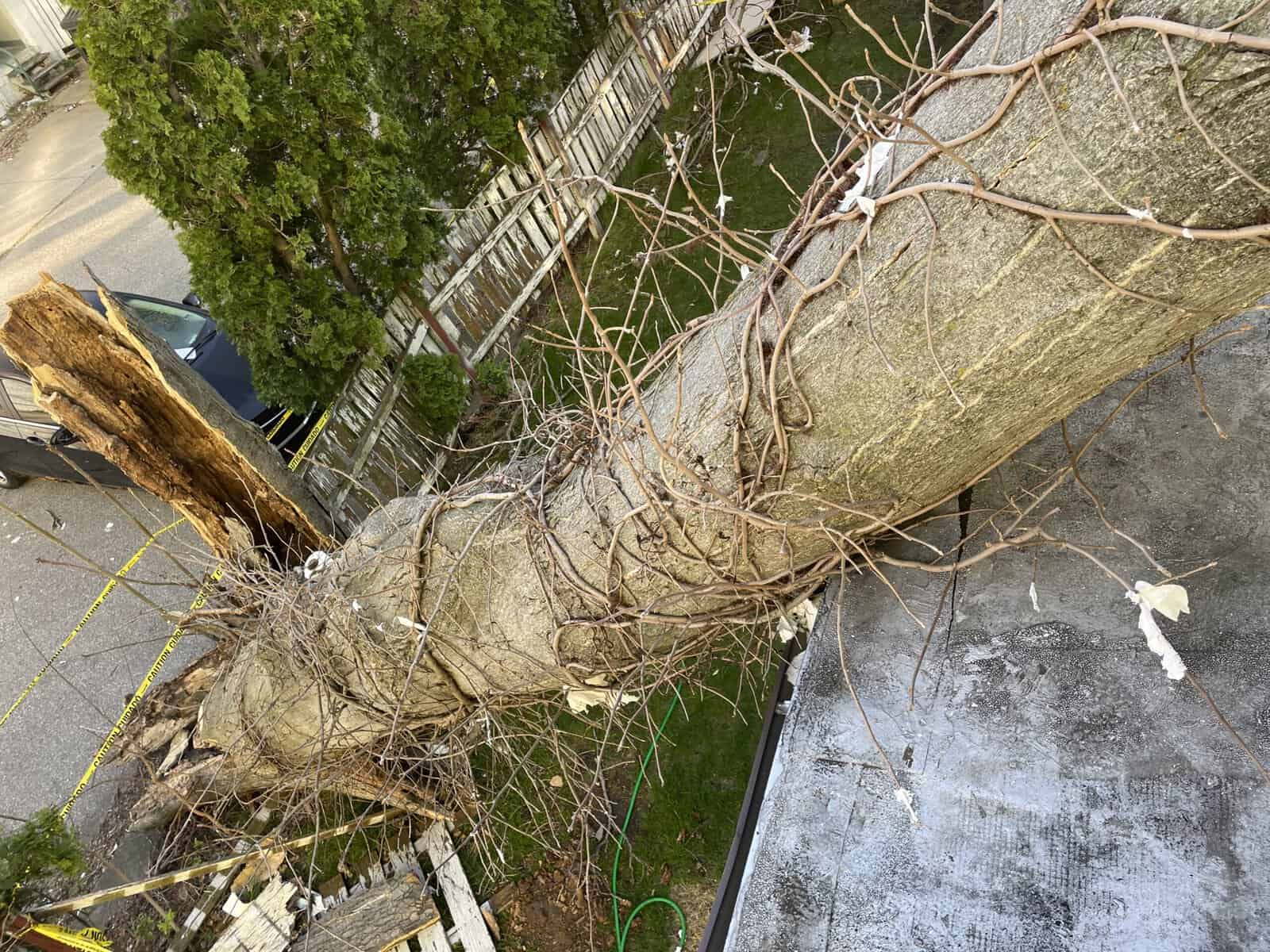
You pulled into your driveway after the commute home and found a tree across your fence. Or a limb hanging over your roof that wasn’t there this morning. That’s not a situation you want to sit on overnight, and you shouldn’t have to. When we respond to storm damage in New Hudson, the goal is simple: assess what’s dangerous, remove what needs to go, and leave your property clean — not just partially dealt with.
New Hudson sits right next to Kensington Metropark’s 4,500-plus acres of mature woodland. When a storm is strong enough to snap trees inside that park — which NWS Detroit confirmed happened during the May 2026 storm event — it’s the same system hitting the subdivisions that border it. Hills of Loon Lake, Loon Lake Woods, Kensington Valley, the communities along Pontiac Trail — they’re all in that same wind corridor. Knowing that isn’t just interesting context. It changes how you should think about what’s still standing in your yard after a storm passes.
The other thing worth knowing: Lyon Township’s housing stock skews newer. A lot of trees on New Hudson properties were planted when the subdivisions went in during the 2000s and 2010s. Those trees are 15 to 25 years old now — large enough to cause real damage, but often never professionally assessed. After a significant storm, the ones that are still standing may not be safe. Our TRAQ-qualified team can tell you which ones are fine and which ones you should be worried about before the next system rolls through.
Ivan’s Tree Services LLC is based in Oakland, MI — directly north of New Hudson on South Oakland Road. When a storm hits Lyon Township, the response doesn’t come from a regional dispatch center routing a crew from across the county. It comes from a team that’s already in the neighborhood, familiar with the landscape, and ready to move.
Ivan started his career as a groundman in California before relocating to Michigan and founding this company alongside his family. That background shows in how the work gets done: ISA Certified Arborists on every significant job, TRAQ-qualified risk assessors for post-storm evaluations, and line-clearance certified crews who can work safely near energized DTE Energy lines — something the majority of tree companies in this area simply cannot offer. Michigan doesn’t require a state license to operate a tree service, which means credentials like these are the clearest way to separate a qualified crew from someone who showed up with a chainsaw after a storm.
The process starts with a face-to-face site walkthrough. No work begins until our team has assessed the situation with you, walked the property, and provided a clear picture of what needs to happen and why.
When you call Ivan’s Tree Services LLC after storm damage in New Hudson, the first thing that happens is a real conversation — not a voicemail. Our 24-hour emergency line is answered by someone who can ask the right questions: Is there a tree on a structure? Are there downed lines nearby? Is there a limb actively threatening the roof? That information determines how quickly a crew is dispatched and what equipment we bring.
Once on-site, our team starts with a safety assessment before anything is cut. Storm-damaged trees near overhead utility lines — which run through most of Lyon Township’s residential corridors — require line-clearance certified handling. This isn’t a step that can be skipped or improvised. Our crews hold that certification and carry the specialized equipment and insurance required to work safely in those conditions. If DTE Energy needs to be involved, we’ll coordinate that rather than leaving it for you to figure out.
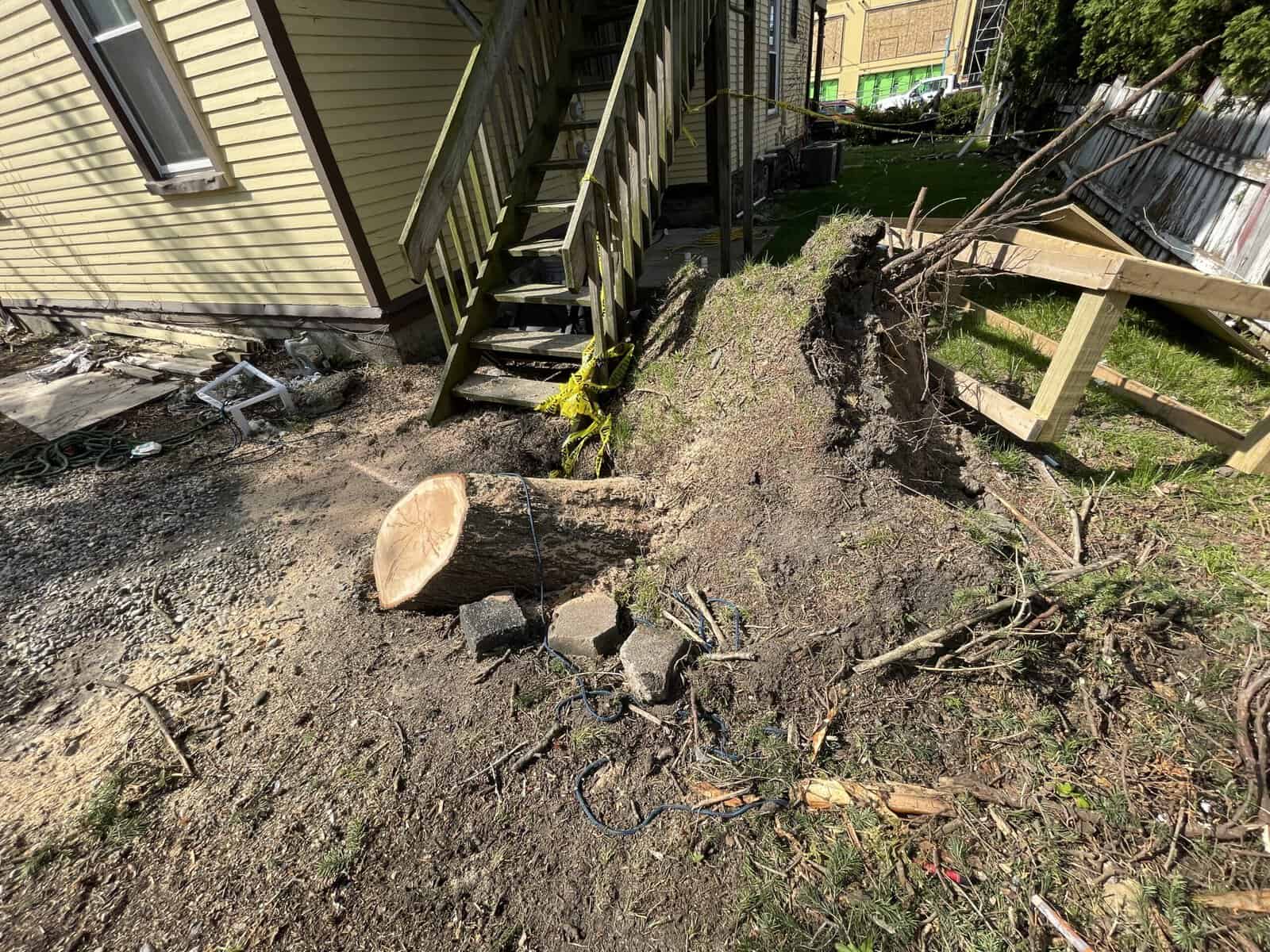
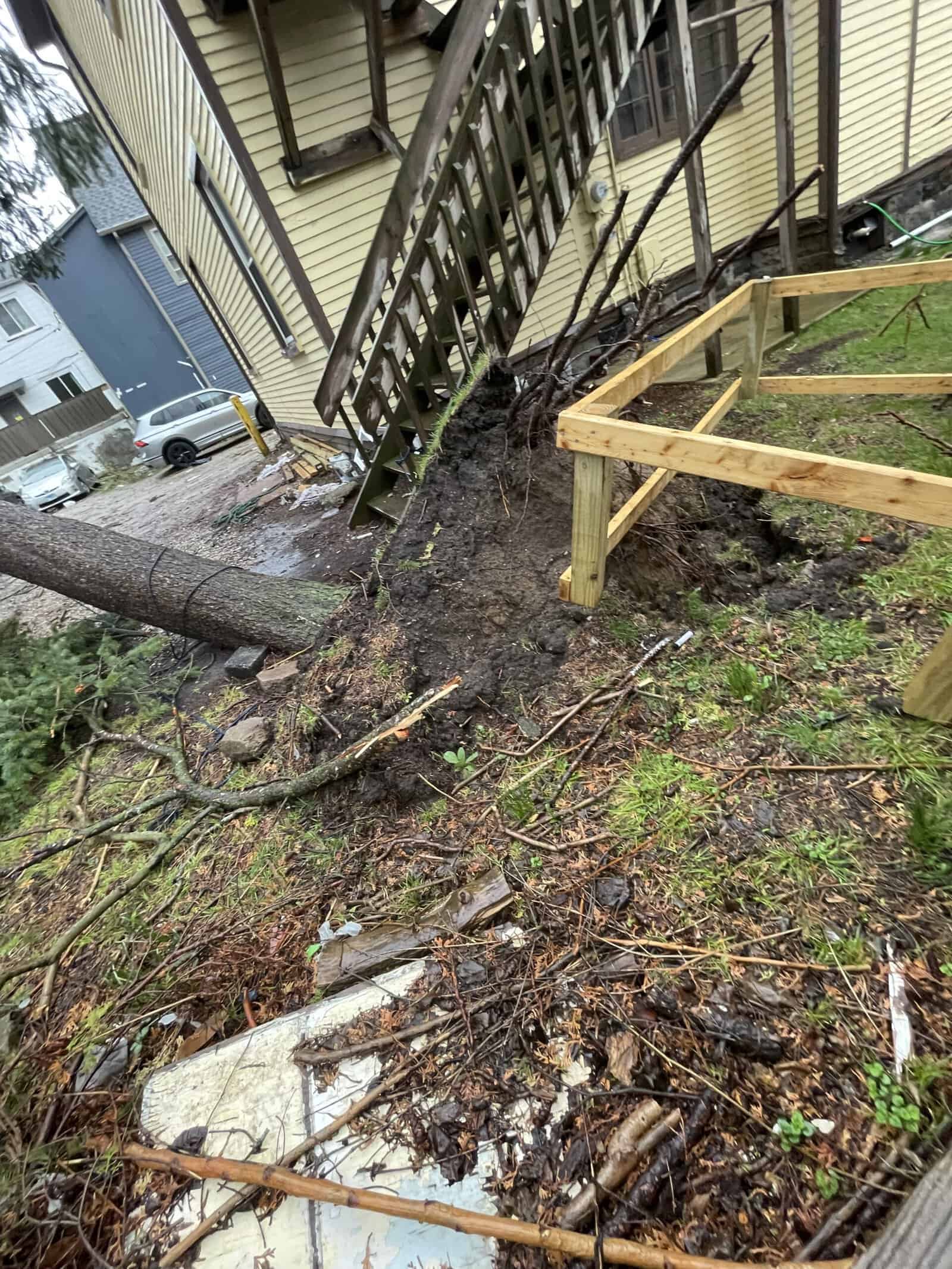
From there, removal is sequenced to protect your property: controlled cuts, rigged sections where needed, and careful work around fences, rooflines, and driveways. Emergency tree clearing on access routes — including driveways off Grand River Avenue or Pontiac Trail — gets handled first when access is blocked. When the tree is down and the hazardous limbs are gone, our crew cleans the site completely. Wood, debris, drag marks — all of it. You shouldn’t have to spend your weekend finishing what a storm started.
Ready to get started?
Storm damage in New Hudson isn’t always a tree flat on the ground. Sometimes it’s a widow-maker hanging 40 feet up over your car. Sometimes it’s a trunk that cracked at the base but didn’t fall — yet. Sometimes it’s a root system that heaved during the storm and left a 60-foot tree leaning toward your house with nothing obvious wrong from the street. We handle all of it: fallen tree removal, hazardous limb removal, emergency tree clearing, and post-storm risk assessment for trees that survived the storm but may not survive the next one.
For Lyon Township homeowners in HOA-governed subdivisions — and there are many throughout the Orchards of Lyon, Martindale Meadows, Spring Meadows, and similar communities in the New Hudson area — there may be HOA guidelines around tree removal near shared property lines or common areas. Our team can help you understand what’s involved and work within those requirements rather than leaving that piece for you to sort out separately.
The service includes complete site cleanup on every job. That means wood, chips, and debris removed — not stacked at the curb for you to deal with. If your situation involves a tree that’s fallen onto a structure and you’re working through a homeowners insurance claim, documenting the damage thoroughly before removal begins is something our team understands and can support. Standard policies often have limits on what they’ll cover for tree removal, so knowing what you’re dealing with upfront matters.
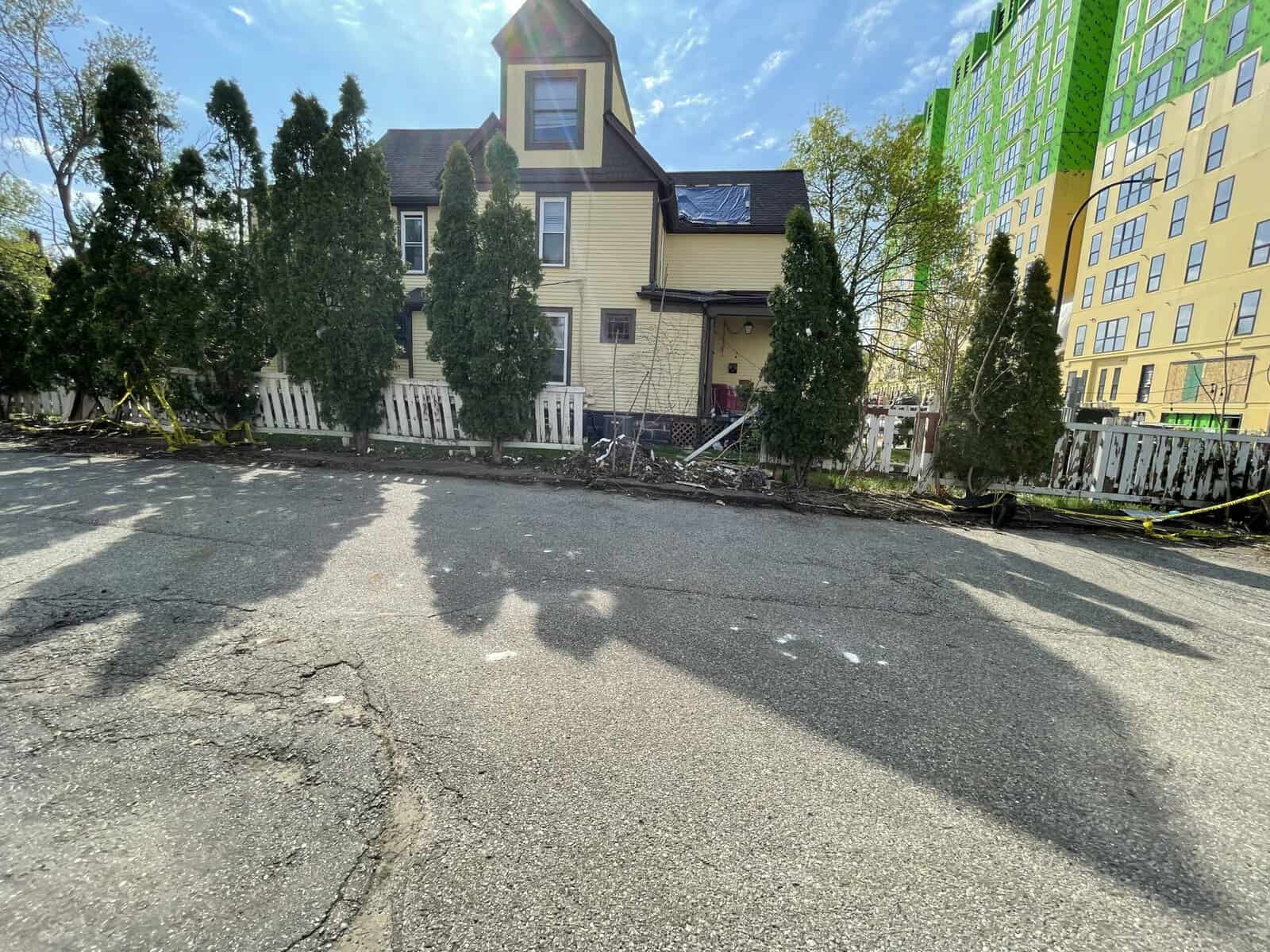
Not always, and this is one of the most important questions to ask after any significant storm in New Hudson. A tree can look completely intact from the street while having serious internal damage — a cracked root system, a split at the base that’s hidden by bark, or compromised anchoring from soil saturation and wind loading. These aren’t obvious to the untrained eye, and they don’t always show up immediately.
The May 2026 storm that snapped trees inside Kensington Metropark was the same system that produced downed limbs in New Hudson and throughout Lyon Township. Any tree on your property that was exposed to that kind of wind load deserves a professional look, not a wait-and-see approach. We have TRAQ-qualified risk assessors on staff — that’s a specialized ISA credential for exactly this kind of post-storm evaluation. They can assess whether a tree is structurally sound or likely to fail in the next weather event, and give you a documented answer rather than a guess.
Response time depends on the severity of the situation and what’s already in progress, but we operate a 24-hour emergency line specifically because storm damage doesn’t keep business hours. The May 2026 storm that hit the New Hudson area produced its worst damage at around 2:30 in the afternoon — right in the middle of the commute window when most Lyon Township residents were still on the road heading home on I-96.
The fact that we’re based in Oakland, directly north of New Hudson on South Oakland Road, means our crew isn’t traveling from the other side of Oakland County. For genuinely urgent situations — a tree on a roof, a limb over an occupied structure, a blocked driveway — that proximity matters. When you call, our team will assess the situation over the phone first to determine priority and dispatch accordingly.
Yes, and this is one of the most important things to verify before hiring any tree company in Lyon Township. Michigan does not require a state license to operate a tree service, which means anyone can show up after a storm and attempt to remove a tree near energized lines without the training or equipment to do it safely. That’s a serious liability for the homeowner if something goes wrong.
Ivan’s Tree Services LLC employs line-clearance certified arborists — a specialized credential that requires dedicated training, specific equipment, and the right insurance coverage to work near energized utility lines. DTE Energy serves the overhead distribution network throughout Lyon Township’s residential neighborhoods, and tree-line interactions are a primary cause of outages in the area. If the tree you need removed is tangled in or near those lines, our crew has the certification to handle it safely and will coordinate with DTE if utility involvement is required.
It depends on the specifics of your policy and what the tree hit. If a storm-damaged tree has fallen onto a covered structure — your home, a detached garage, a fence — your homeowners insurance will typically cover removal as part of the structural damage claim. However, most standard policies have a sublimit specifically for tree debris removal, often in the range of $500 to $1,000 per storm event, which may not cover the full cost of a large removal job.
If the tree fell in your yard without hitting a structure, coverage is less likely unless you can demonstrate it was blocking access to the home. The most important thing you can do before removal begins is document the damage thoroughly — photos, video, and a written description of what fell and where. Our team understands this process and can work with you to make sure the documentation is in order before the tree comes down. Getting that right upfront saves a lot of frustration with the adjuster later.
Hazardous limb removal is exactly what it sounds like — targeting and removing specific limbs that are broken, hanging, or structurally compromised without taking down the entire tree. This is the right call when the tree itself is healthy and stable but has sustained damage to individual branches. It’s also the more common outcome after storms in New Hudson, where the wind damage is often concentrated in the upper canopy rather than at the trunk.
Full tree removal becomes necessary when the trunk is cracked, the root system is compromised, the tree has failed structurally, or a professional assessment determines it’s unlikely to survive or poses an ongoing risk to the property. Our ISA Certified Arborists make that determination based on what’s actually happening with the tree — not a default toward the more expensive option. In a community like New Hudson where a lot of trees were planted at subdivision construction and are now reaching meaningful size, getting an honest assessment of what actually needs to come down versus what can be preserved is worth the conversation.
After any significant storm in Southeast Michigan, unlicensed operators move through affected neighborhoods quickly — offering fast service, low prices, and often demanding cash upfront. Because Michigan has no mandatory state licensing requirement for tree services, there’s no automatic filter. Anyone can show up with a truck and call themselves a tree company. The risk for homeowners is real: if an uninsured crew member is injured on your property, or if the work causes damage, you may be the one holding the liability.
The clearest signals of a legitimate operation are verifiable credentials and a documented process. ISA Certified Arborist status is publicly verifiable. Proof of general liability insurance and workers’ compensation should be provided before work begins. A legitimate company will walk your property with you, provide a written estimate, and not pressure you to sign anything on the spot. Ivan’s Tree Services LLC follows that process on every job — the site walkthrough and written assessment happen before any work starts, regardless of how urgent the situation is.
Other Services we provide in New Hudson
