Hear from Our Customers
Brighton sits right at the I-96 and US-23 interchange. A lot of residents here drive 30-plus minutes to work every day, and when a summer storm comes through overnight, the first thing you find out in the morning is whether you can get your car out. A fallen tree across the driveway, a limb resting on the garage roof, a neighbor’s pine across your fence — that’s not just a property issue, it’s a schedule problem. We’re available around the clock specifically because storm damage doesn’t wait for business hours.
Beyond the immediate clearance, Brighton’s residential tree canopy carries risks that don’t always show up the morning after a storm. Many properties here — especially around Hidden Lake, Woodland Lake, and the wooded subdivisions like The Dominion and Pine Creek Ridge — have large, mature ash trees that have been quietly compromised by emerald ash borer for years. They look mostly fine until a storm provides the final push. Getting a professional assessment after a storm isn’t just about what fell — it’s about identifying what’s still standing but shouldn’t be.
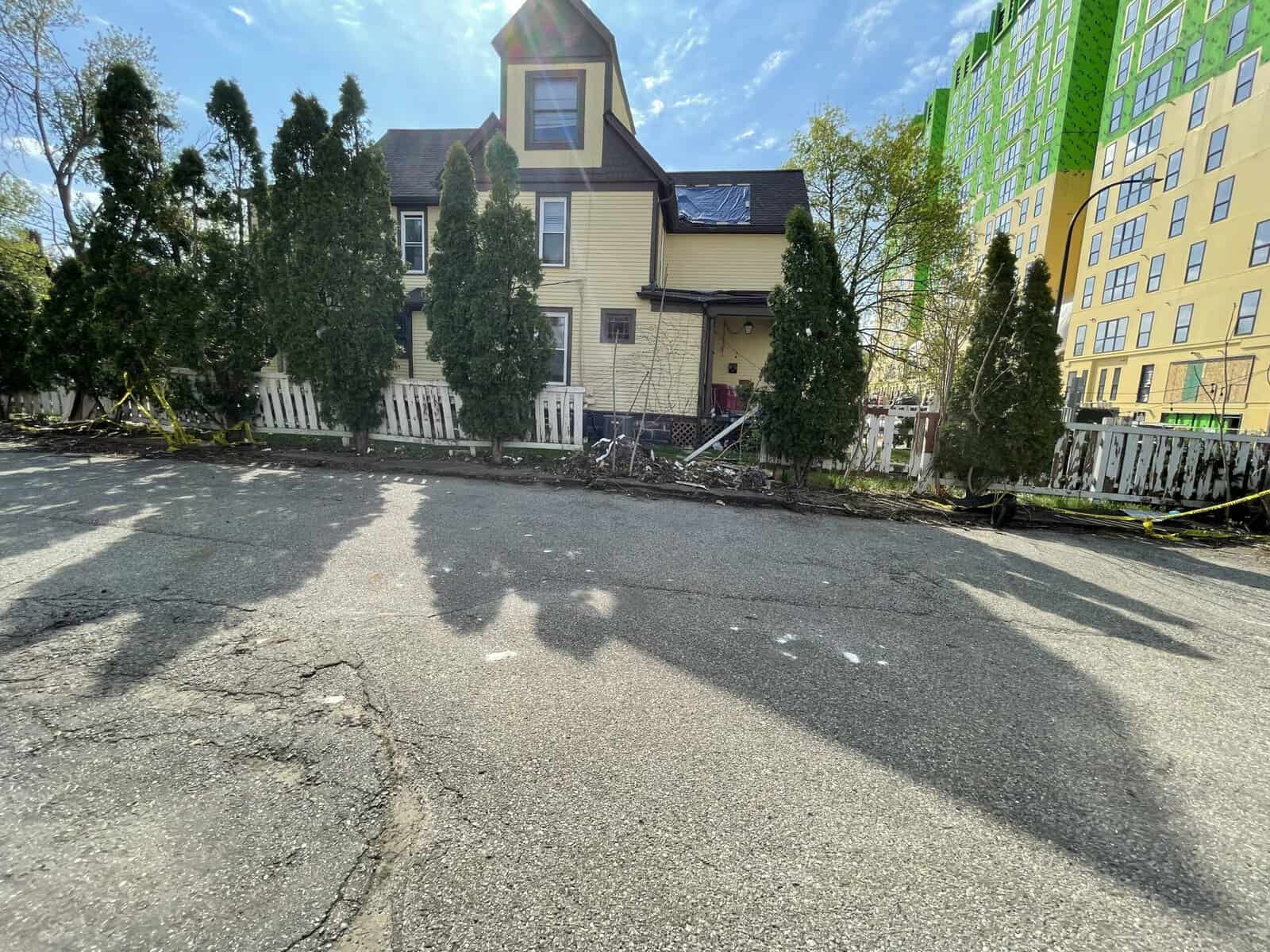
When the job is done, you get your property back. Full debris removal, complete site cleanup, and a walkthrough so you can see the result before the crew leaves. No piles of wood left in the yard, no drag marks through the lawn, no open questions about what comes next.
We’re based in Oakland, MI — about 15 to 18 miles from Brighton, in a community that shares the same lake-and-woods character, the same mature tree canopy, and the same storm exposure. This isn’t a Metro Detroit company occasionally dispatching west on I-96. Our crews work in Brighton and Livingston County regularly, and we know what these trees look like, how they fail, and what it takes to remove them without causing more damage.
What separates us from a lot of the competition in Livingston County is the credential stack. ISA Certified Arborists on every significant job. TRAQ-qualified risk assessors who can evaluate whether a storm-damaged tree that’s still standing is actually safe — or just waiting for the next wind event. And line-clearance arborist certification, which means our crews can work near energized power lines when most other companies have to stop and wait for the utility company. In Brighton, where overhead lines run through nearly every neighborhood and downed lines are a documented reality after major storms, that matters.
We’ve been in business for over seven years, built on a straightforward principle: walk the site, give an honest assessment, provide a written estimate, and don’t start work until the homeowner understands exactly what’s happening and why.
When you call us after a storm in Brighton — whether it’s 2 in the afternoon or 2 in the morning — someone picks up. That’s the starting point. You describe what you’re dealing with, and we determine whether it’s a situation that needs immediate emergency response or whether it can be safely assessed at first light. If there’s a tree on a structure, a hanging limb over a living space, or any indication of power line contact, that’s treated as an emergency, full stop.
Once on-site, the first step is always a thorough walkthrough — not just of what fell, but of the surrounding trees. In Brighton, this matters especially because of the ash tree situation. Emerald ash borer has been working through Livingston County’s ash population for years, and a storm that drops one ash tree often means there are others on the property in similar structural condition. Our TRAQ-qualified assessors can identify those risks and document them clearly, which is also useful if you’re working through a homeowners insurance claim.
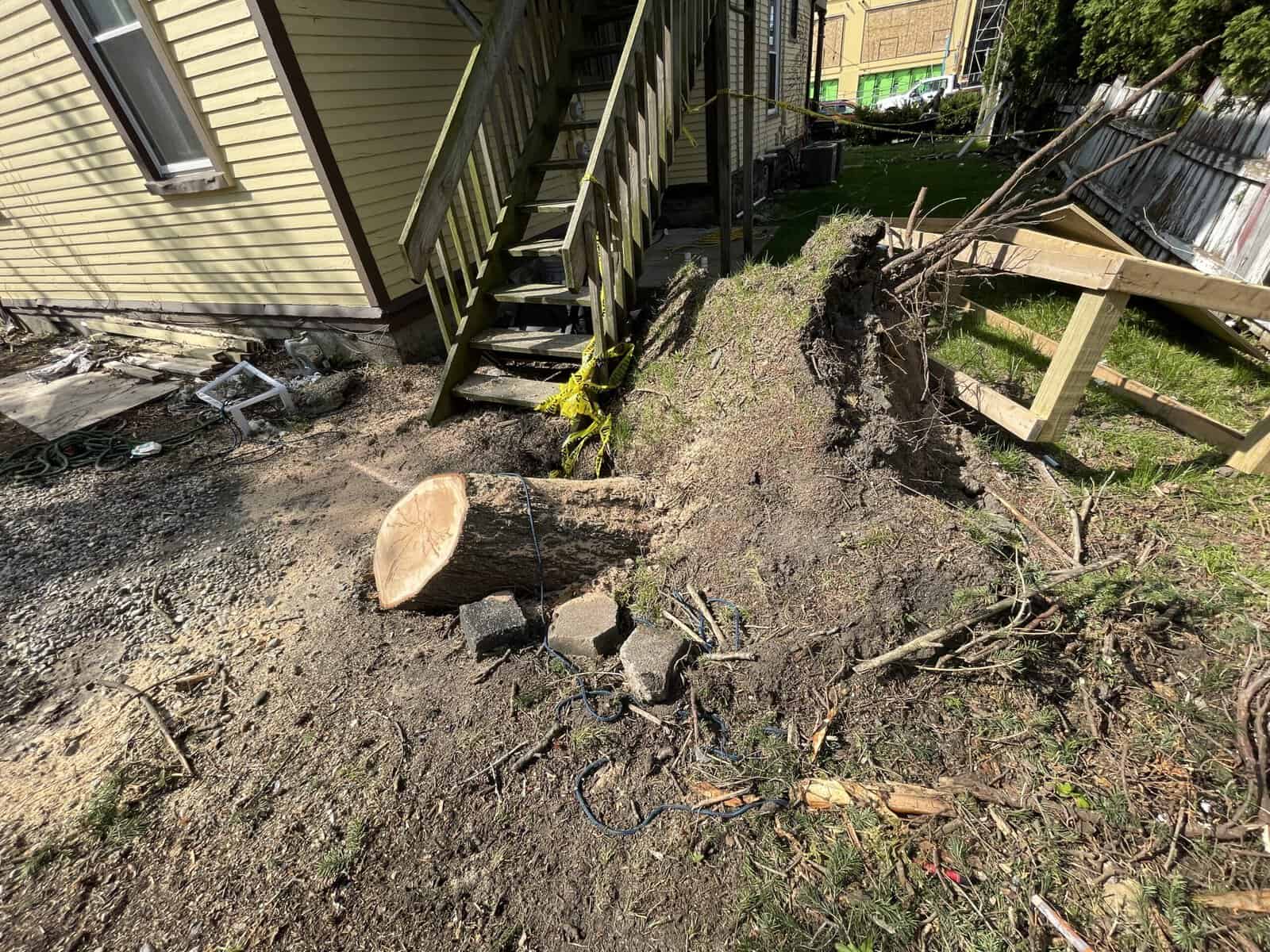
From there, removal is sequenced based on what’s most hazardous first. Controlled cuts, proper rigging, and clear fall paths — especially important on the tighter lots near Brighton Lake and the wooded properties around The Dominion where there’s less room to work. After the tree is down, the full cleanup happens: debris, wood chips, everything. The job isn’t finished until the site is clean and you’ve had a chance to walk it.
One note for Brighton residents: the City of Brighton has a formal tree ordinance that governs trees in street rights-of-way and parks, and Brighton Township has its own separate code. Emergency situations involving hazardous trees typically have a different permit pathway than standard removal, and our team can walk you through what applies to your specific situation before anything is touched.
Ready to get started?
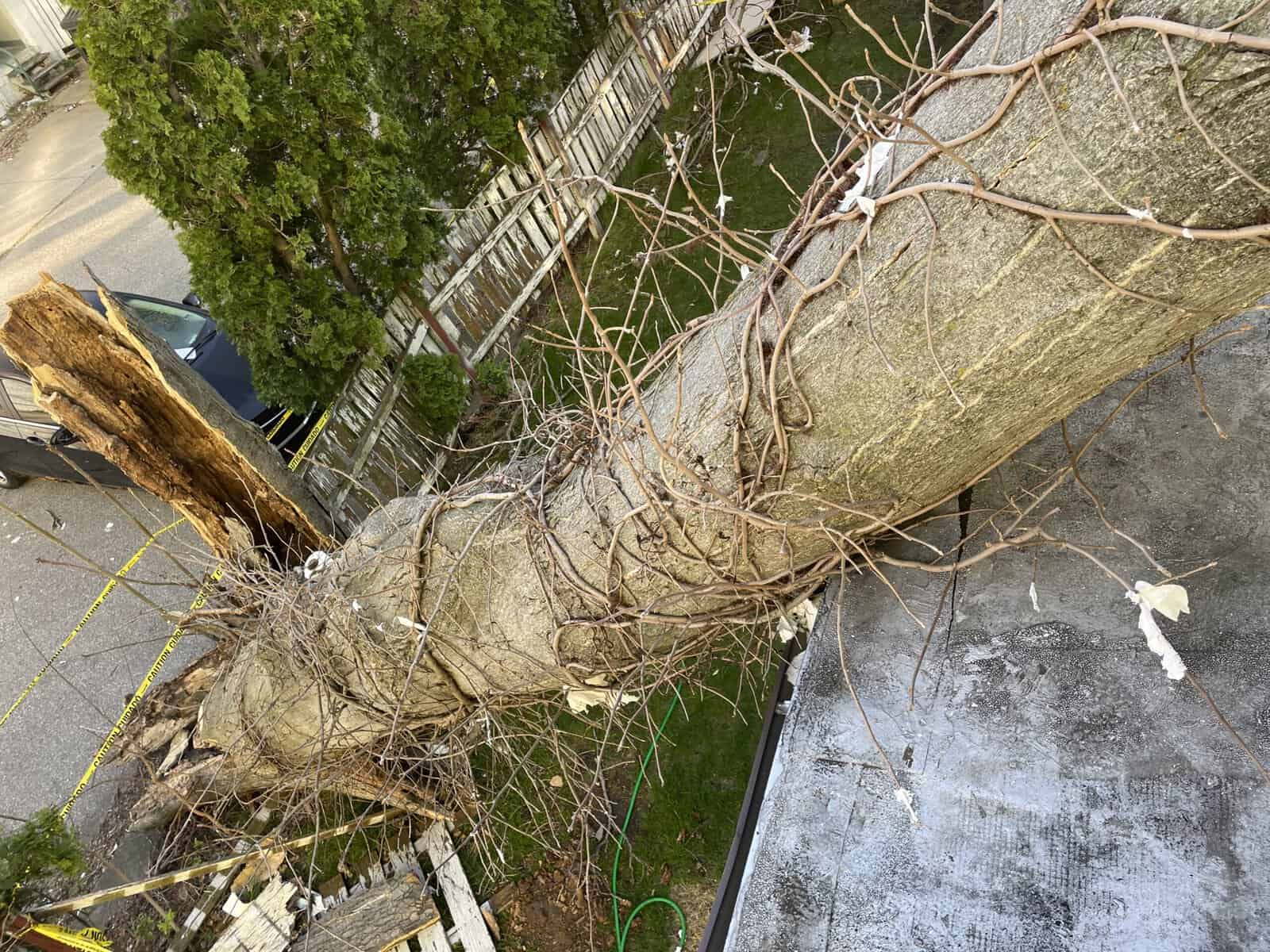
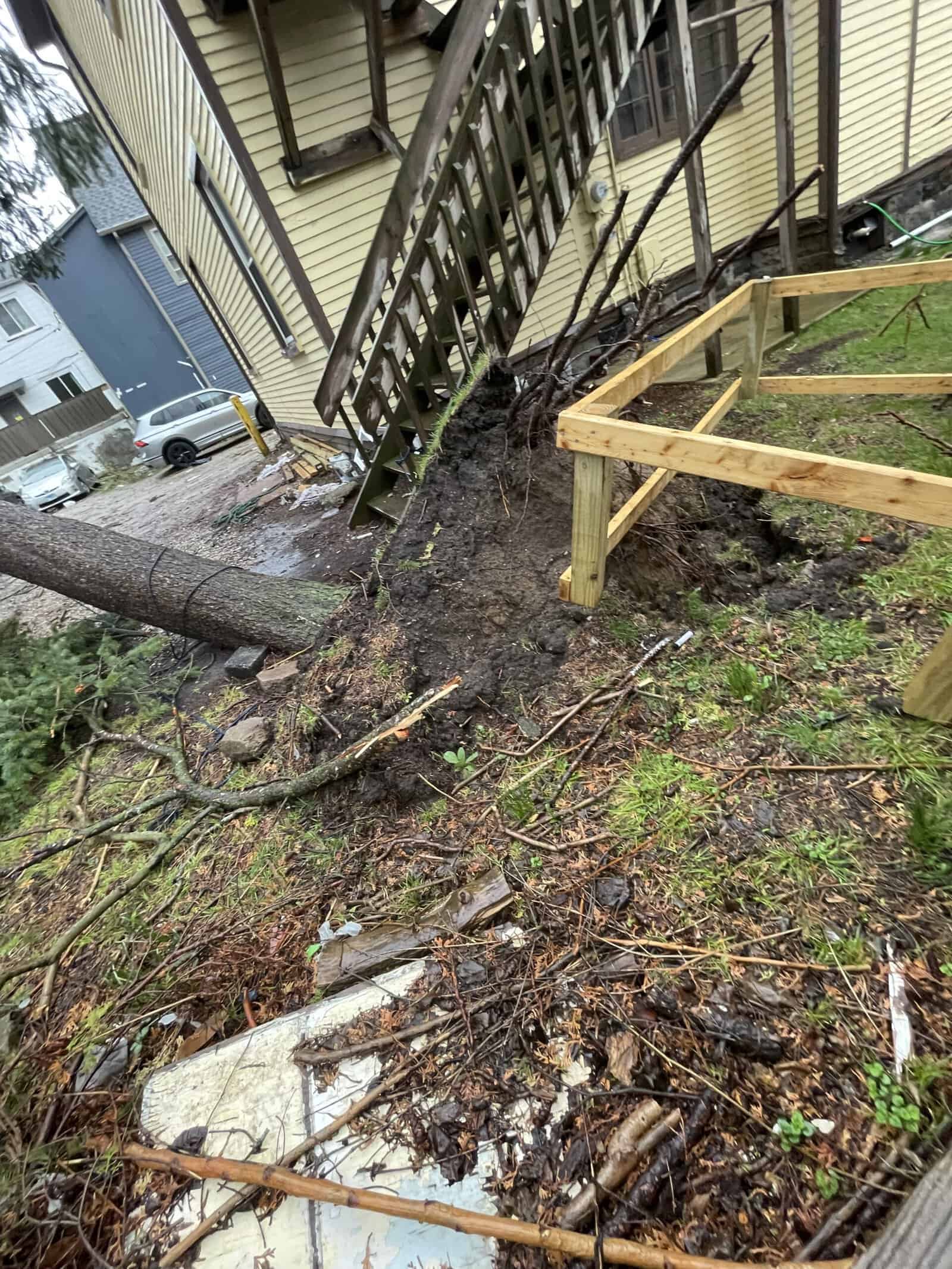
Storm damage in Brighton isn’t a single-problem situation. A fallen tree is obvious. What’s less obvious — and often more dangerous — are the widow-makers: large limbs that are partially broken, hanging under tension, and waiting for the next gust or a warm afternoon to finish the job. We address both, because leaving a hazardous limb overhead after clearing a fallen trunk is only half the work.
For Brighton’s lakeside properties along Hidden Lake, Beach Lake, and Woodland Lake, the wind exposure is real. Trees on the water’s edge face open-water gusts with no windbreak, and the large oaks and pines that define those shorelines are among the most structurally significant — and most at-risk — trees in Livingston County. Post-storm hazardous limb removal on these properties requires careful rigging and controlled work to avoid secondary damage to docks, decks, and structures below.
The full scope of what we handle in Brighton includes emergency tree clearing for blocked driveways and access routes, fallen tree removal from structures and fences, hazardous limb removal from overhead positions, stump grinding after removal, and post-storm tree risk assessment for trees that are still standing but may be compromised. If you have ash trees on your property that haven’t been assessed for emerald ash borer damage, a storm is often the moment that reveals what’s been building for years. Our ISA Certified Arborists can tell you what’s salvageable and what needs to come down before the next event.
The first priority is getting everyone out of the affected area of the house and calling 911 if there’s any risk of structural collapse or power line contact. Do not go near a downed tree that’s touching or close to a power line — even if the line looks intact, it may still be energized. Once you’ve confirmed the immediate area is safe, document the damage with photos before anything is moved. This matters for your homeowners insurance claim.
After that, call a tree service that can respond the same day. In Brighton, where storms have left thousands of Livingston County residents without power and caused significant tree damage across neighborhoods like Hidden Lake and Pine Creek Ridge, the window between a tree coming down and secondary water damage entering a structure can be short. Getting a crew on-site quickly to remove the tree from the roof or wall and tarp the opening is the priority. We’re available 24 hours a day for exactly this situation.
It depends on whether the tree damaged a covered structure. Standard homeowners insurance policies typically cover tree removal when the tree has fallen on your house, garage, fence, or another insured structure. Most policies have a sublimit specifically for tree removal — commonly in the range of $500 to $1,000 per storm event — though if a structure was damaged, coverage may extend further based on your dwelling coverage limits.
If a tree fell in your yard without hitting anything, removal is usually not covered, even if the tree is large and the cleanup is expensive. The same applies to a neighbor’s tree that fell onto your Brighton property — your insurance typically handles it, not your neighbor’s, unless negligence can be established. Before you call your insurer, take clear photos of the damage from multiple angles. Document the tree, the point of impact, and any structural damage. If you’re unsure what’s covered, our team can walk through the damage with you and provide documentation that supports the claim process.
This is one of the most important questions to ask after a storm, and it’s one that most homeowners can’t answer on their own. A tree can look mostly fine after a storm — still standing, still leafed out — and still be significantly compromised. Root heave, trunk cracks, split crotches, and broken scaffold branches don’t always announce themselves visually from the ground. In Brighton, where many properties have mature ash trees that have been weakened by emerald ash borer over years, a storm can accelerate what was already a structural problem.
The right way to answer this question is with a professional risk assessment from someone who holds a TRAQ qualification — the Tree Risk Assessment Qualification from the International Society of Arboriculture. We have TRAQ-qualified assessors who can evaluate a storm-damaged tree, identify the specific failure points, and give you a documented answer: the tree is safe to monitor, it needs targeted work to become safe, or it needs to come down. That documentation also matters if you’re in a conversation with your insurer or if a neighbor has concerns about a tree on your property line.
Most cannot. This is one of the most significant and least-discussed gaps in the tree service industry. Working near energized power lines requires specialized training, specific equipment, and a separate category of insurance — what’s called line-clearance arborist certification. Without it, a crew legally and safely cannot work on a tree that’s in contact with or directly adjacent to an energized line. They have to stop, step back, and wait for the utility company to de-energize the line before anything can happen.
In Brighton, this comes up constantly after major storms. If your storm-damaged tree is anywhere near the overhead lines that run through your neighborhood — and in most Brighton residential areas, those lines are close — you need a company with line-clearance certification. We hold that credential. It means our crew can assess and work on trees near energized lines safely, which translates directly to faster clearance and fewer delays waiting on utility company response.
We offer 24/7 emergency response across Brighton and Livingston County. When you call, someone answers — not a voicemail, not a callback form. The response time depends on the volume of storm-related calls in the area and the nature of your situation, but genuine emergencies involving trees on structures, blocked emergency access, or active hazards are prioritized.
Brighton’s location at the I-96 and US-23 interchange means our crews coming from Oakland can reach most parts of Brighton quickly, without navigating through heavy urban traffic. For situations where a driveway is blocked and you need to get to work or get a vehicle out, that proximity matters. If you’re dealing with a tree across your driveway the morning after an overnight storm, calling early gets you on the schedule before the day’s backlog builds. The more detail you can give when you call — what fell, where it landed, whether there are any power lines involved — the better we can prepare before arriving.
Yes, and it’s worth understanding why. Brighton-area red oaks are specifically identified as being at elevated risk from oak wilt disease, a fungal infection that can move quickly through a tree’s vascular system and kill it within a season or two. A red oak that’s been compromised by oak wilt may look partially healthy on the outside while its structural integrity is already significantly reduced. When a storm hits, those are the trees most likely to fail in ways that surprise homeowners.
There’s also a pruning timing factor that Brighton oak owners should know. The Michigan DNR advises against pruning oaks between April 15 and July 15 because open wounds during that window can attract the beetles that spread oak wilt. After a storm, if your oak has broken branches that need to be addressed during that period, the work should still be done — leaving a large open wound or a hanging limb is more dangerous than the wilt risk — but it should be done by an ISA Certified Arborist who understands how to handle the cut properly. Our team can assess storm-damaged oaks in Brighton and give you a clear picture of whether the tree is recoverable or whether removal is the right call.
Other Services we provide in Brighton
