Hear from Our Customers
Brighton’s residential lots — especially out in Brighton Township — are defined by mature oaks, maples, and pines that have been growing for decades. That’s a genuine asset. But a tree that’s been left to grow without any structural attention is also a liability, and in a market where median home values have climbed to $444,370 and are still rising, what’s growing in your yard matters more than most homeowners realize.
Proper tree pruning removes dead wood, corrects crossing branches, and opens up the canopy so light and air move through the way they should. The result isn’t just a cleaner-looking tree — it’s a structurally sound one that handles Michigan winters differently. Brighton Township sees around 38 inches of snow annually. Dense, unpruned canopies collect that load in ways that healthy, well-maintained trees simply don’t, and the difference shows up in whether branches hold or fail when a storm rolls through.
For homeowners near Brighton Lake, Woodland Lake, or Lake Chemung, there’s an added layer to this. Trees on lakefront lots grow toward open water, which means asymmetric canopies and uneven weight distribution. Wind off the lake accelerates stress on those limbs. Crown thinning and structural pruning on lakefront properties in Brighton isn’t a cosmetic decision — it’s a practical one that protects the dock, the structure, and the investment you’ve made in being there.
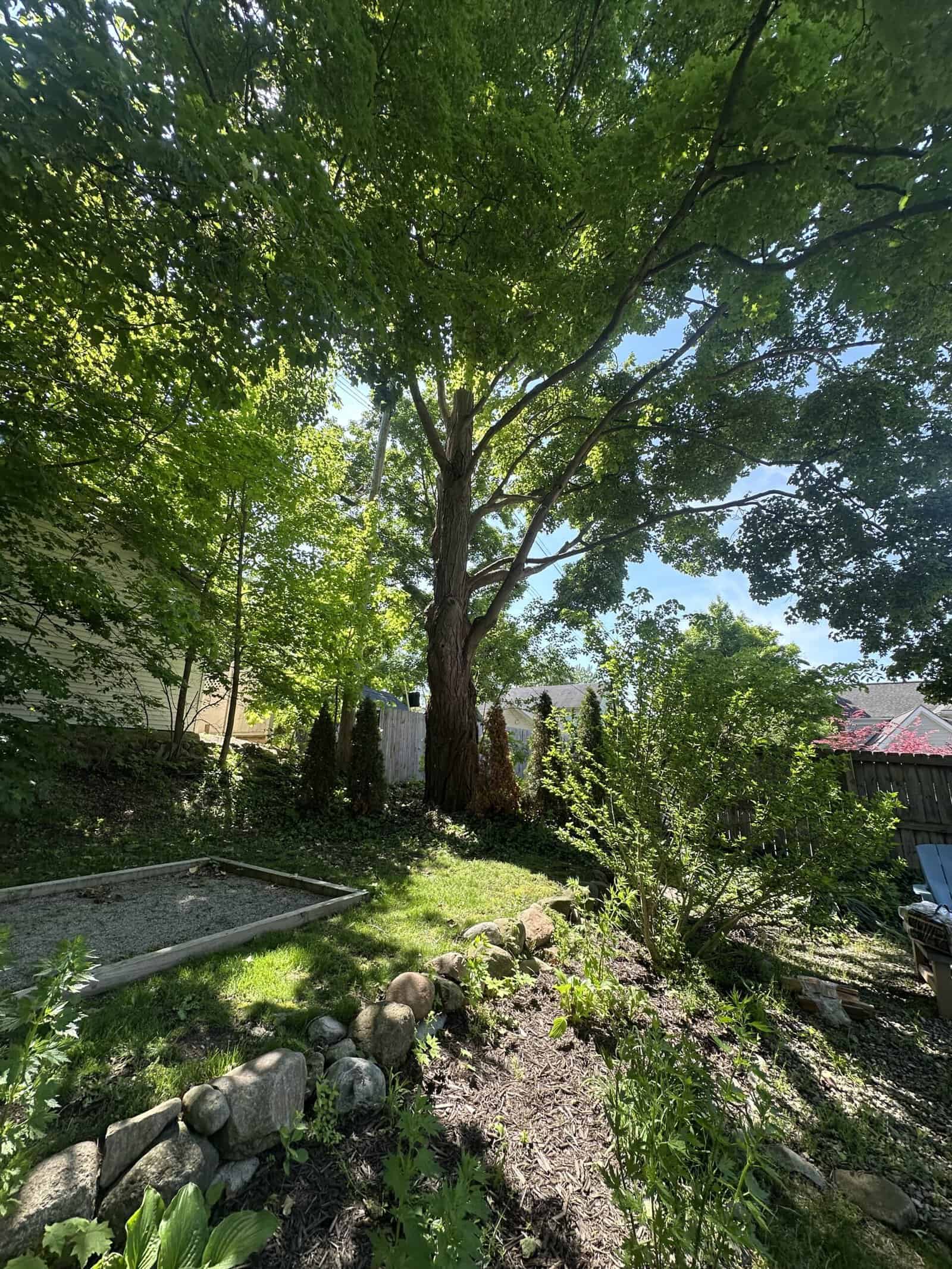
We’re based in Brighton — which means a 15-minute drive to most of our jobs in the area. Over seven years, we’ve worked throughout this corner of Southeast Michigan, and the landscape here is territory we know well. The wooded lots in Brighton Township, the lakefront canopies, the mature oaks that define so many properties along the I-96 and US-23 corridor — we’ve pruned them.
Every job we take on is staffed with ISA Certified Arborists and TRAQ-qualified risk assessors. Those aren’t honorary titles — they’re verifiable credentials that require ongoing education and demonstrated knowledge of tree biology, structural risk, and proper pruning technique. We also hold line-clearance certification, which means our team is trained and insured to work near energized utility lines, something most local operators can’t say.
What you’ll notice on the job is that I train every crew member personally — not just in how to prune correctly, but in how to communicate clearly and treat your property with care. Cecilia handles scheduling and customer communication, so you’re never chasing someone down for a callback. From the first estimate to the final cleanup, there’s a person accountable for every step.
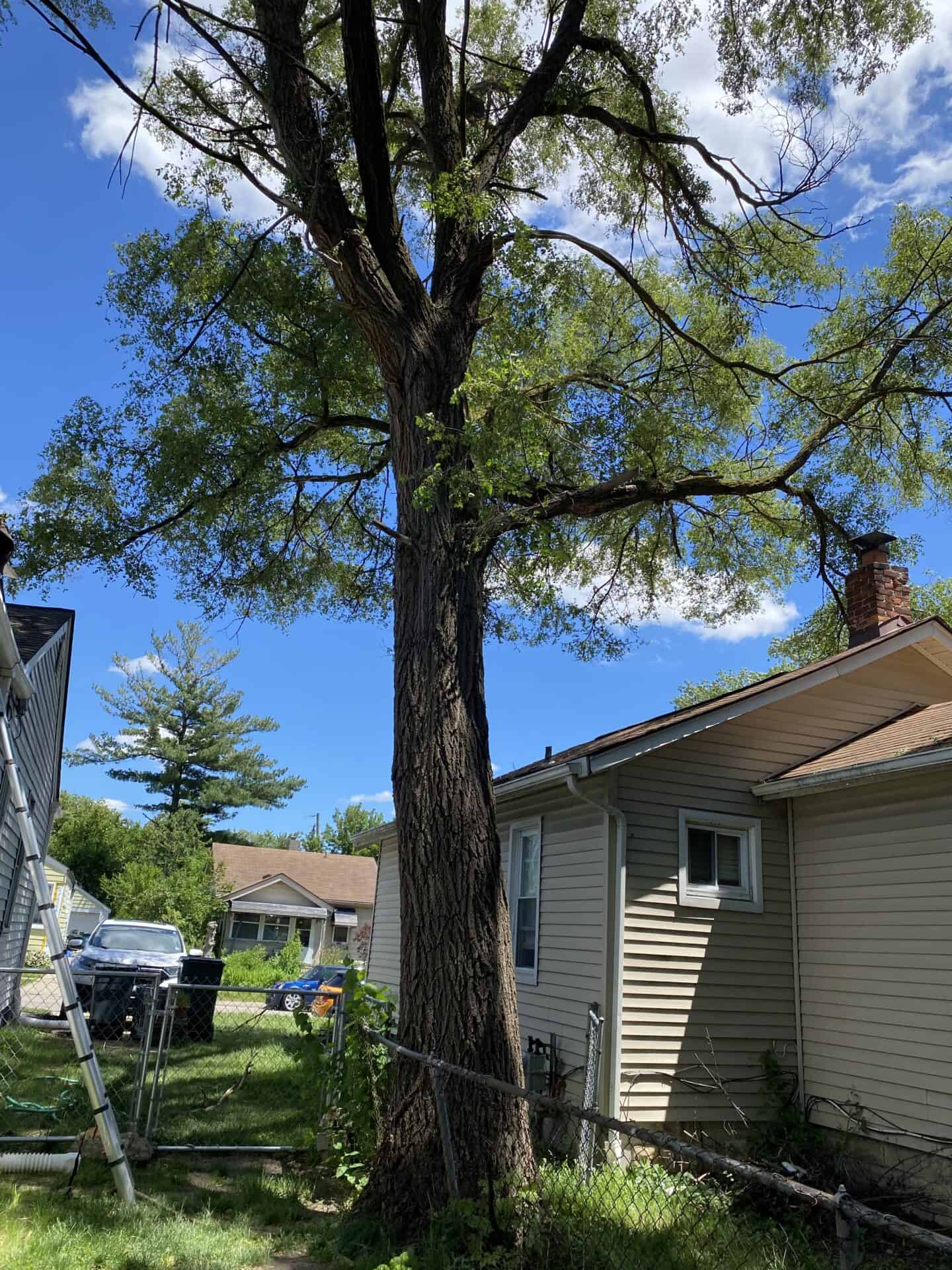
It starts with a site walk. Before any equipment comes out and before a single branch is touched, we walk the property with you. We look at the trees, identify what actually needs attention — dead wood, crossing limbs, co-dominant stems, canopy density — and put together a written scope of work. You know exactly what’s being done and why before you agree to anything.
From there, the work itself is guided by ANSI A300 pruning standards, which is the national benchmark for professional tree care in the United States. In practical terms, that means no topping, no flush cuts, and no climbing spikes on trees being pruned. It also means no more than 25% of live foliage is removed in a single session — a threshold that exists because exceeding it stresses the tree in ways that aren’t always visible right away but show up over time.
Timing is part of the process too, and in Brighton it matters more than people think. If you have oaks on your property — and a lot of Brighton Township lots do — pruning needs to happen between November 1 and March 31. That window exists because oak wilt, an incurable fungal disease, is transmitted by sap beetles that become active once temperatures warm up. Pruning outside that window on an oak isn’t just a bad idea; it’s a risk that can cost you the tree.
If you’re in Brighton city proper and your trees touch the street right-of-way, we can also walk you through the written permit process the city requires before any right-of-way work begins.
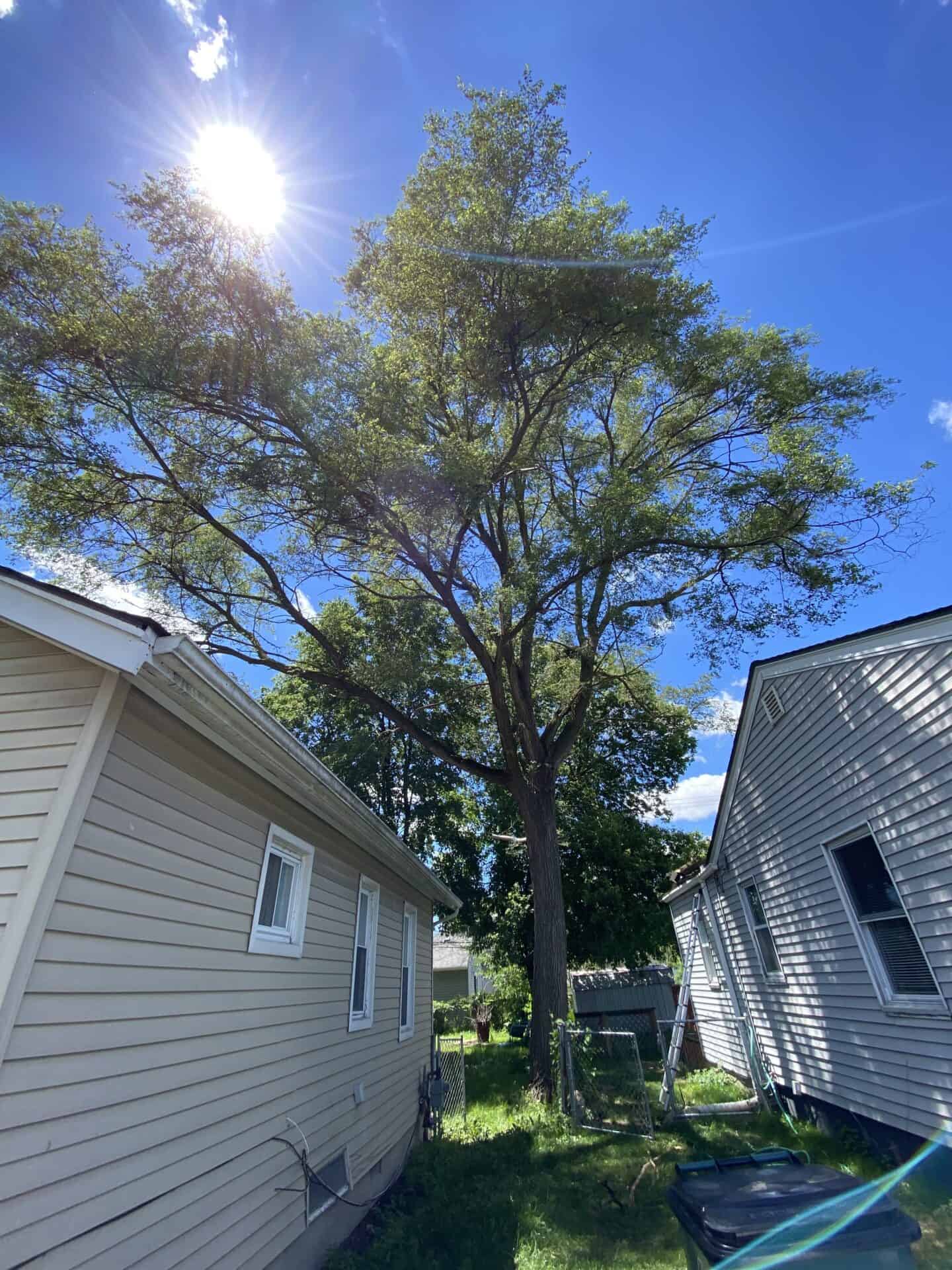
Ready to get started?
Tree pruning isn’t one thing — it depends on what the tree needs and what you’re trying to accomplish. Crown thinning selectively removes branches to improve light penetration and airflow through the canopy, which reduces wind resistance and snow-load stress without changing the tree’s overall shape. This is the most common service for Brighton’s mature shade trees and is typically recommended on a three-to-five-year cycle for established trees.
Crown reduction brings down the overall size of the tree while maintaining its natural form — the right approach when a tree has grown too close to a roofline, a structure, or a utility line. This is different from topping, which removes large sections of the canopy indiscriminately and causes long-term structural damage. Crown reduction is done selectively, with cuts made at proper branch unions so the tree retains its ability to heal and grow correctly. For lakefront properties around Brighton Lake and Woodland Lake, this is often the service that addresses the asymmetric canopy growth that comes from years of reaching toward open water.
Deadwooding — removing dead, dying, or diseased branches — is frequently part of the same visit. Dead wood doesn’t just look bad; it’s the first thing that comes down in a storm, and in Brighton’s storm corridor along the I-96 and US-23 interchange, that’s a real consideration. Every service includes complete debris removal and site cleanup. The written estimate you receive before work begins covers all of it — no add-ons, no surprises at the end.
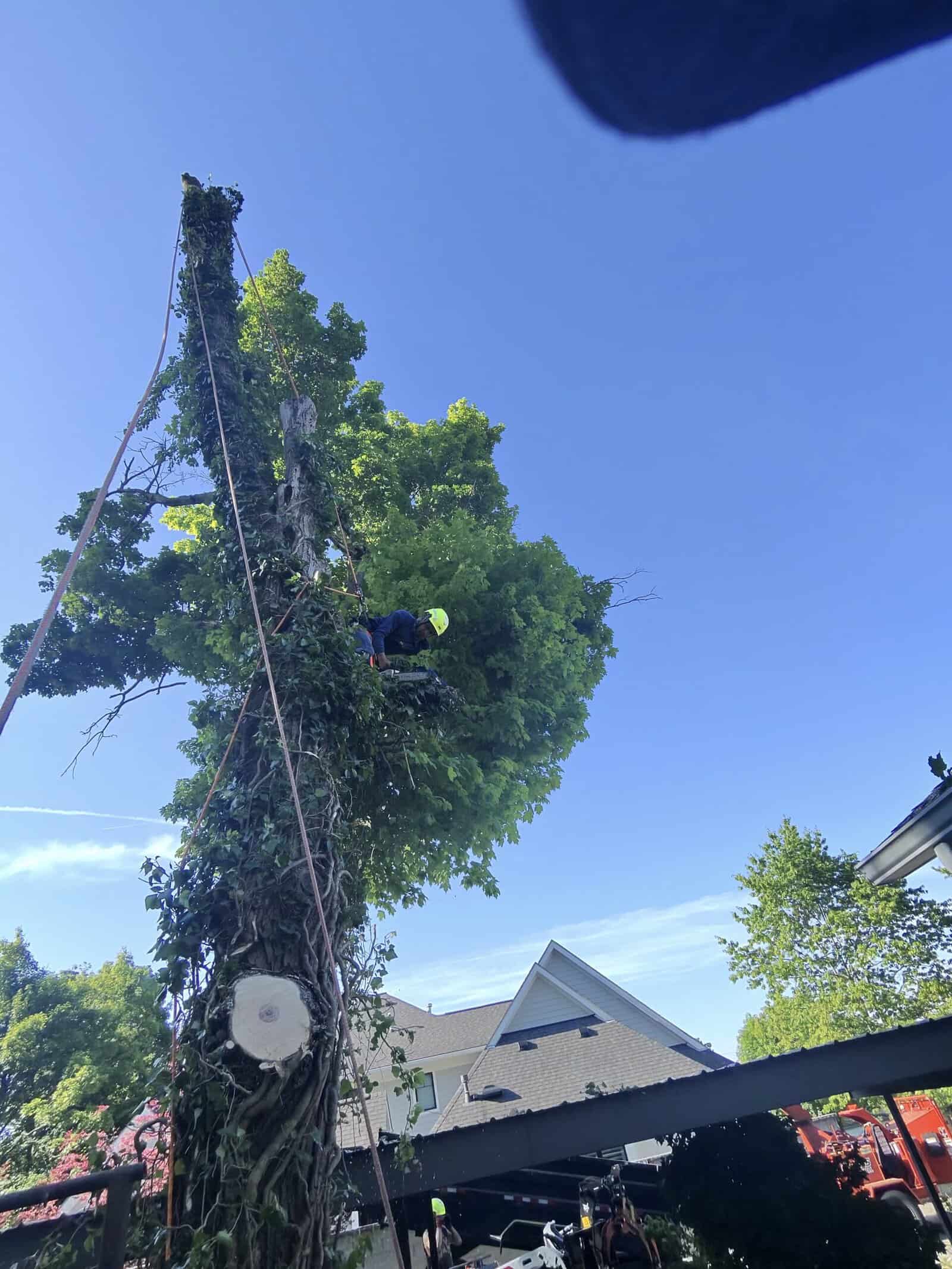
For oak trees in Brighton — and across all of Livingston County — the safe pruning window runs from November 1 through March 31. This isn’t an arbitrary guideline; it’s tied directly to the life cycle of the sap beetles that transmit oak wilt, a fungal disease that enters through fresh pruning wounds and can kill a red oak within a single growing season. Once temperatures climb above 50°F in spring, those beetles become active and are drawn to the scent of fresh cuts.
Brighton Township and the surrounding areas have a significant number of oak trees on residential lots, which makes this timing critical for a lot of homeowners in this area. If you’re not sure whether your trees include oaks, an ISA Certified Arborist can identify them during a site walk before any pruning is scheduled. The short answer: don’t let anyone prune your oaks in April, May, or June. If a company offers to do it without flagging this concern, that’s a sign they either don’t know or don’t care — and neither is acceptable when you’re talking about a tree that’s been growing on your property for decades.
Crown thinning and crown reduction are both forms of professional tree pruning, but they accomplish different things. Crown thinning removes select branches throughout the canopy to improve light penetration and airflow without significantly changing the tree’s overall size or silhouette. It’s the right choice when a tree is structurally sound but has become too dense — which is common with mature maples and oaks that haven’t been pruned in several years. Better airflow means less wind resistance, which matters when Michigan winters bring heavy snow and ice loads.
Crown reduction, on the other hand, actually reduces the size of the tree by cutting back to lateral branches at appropriate union points. This is the correct approach when a tree has grown too close to a structure, a roofline, or a utility line and needs to be brought back without destroying its natural form. It’s also the right call for lakefront properties around Brighton Lake and Woodland Lake, where trees have often grown asymmetrically toward open water and the canopy is both oversized and structurally imbalanced. Both services follow ANSI A300 standards — neither involves topping or indiscriminate cutting.
If the trees in question are in the street right-of-way — the strip of land between your property line and the road — then yes, the City of Brighton requires written permission from the city manager before any pruning, spraying, planting, or removal takes place. This applies to trees in city streets and parks, and it’s codified under Chapter 94, Article II of Brighton’s city code. The ordinance also restricts excavations and driveways within six feet of any tree in that zone without a separate written permit.
This is something that catches Brighton homeowners off guard fairly often, especially when a street tree has branches hanging over a driveway or sidewalk and it seems like a straightforward trim. If you’re a Brighton city resident and you’re not sure whether the trees you want pruned fall within the right-of-way, we can help you identify that during the initial site walk and walk you through what the permit process looks like. Brighton Township residents are not subject to the same city ordinance, but it’s worth confirming your property’s jurisdiction if you’re on the boundary between the city and the township.
For most mature shade trees — the oaks, maples, and pines that are common on Brighton Township residential lots — professional pruning every three to five years is the general recommendation. That said, the right interval depends on the species, the tree’s current condition, and what you’re trying to accomplish. A young tree being trained for structure might need attention more frequently; a healthy, well-maintained mature tree might go longer between visits.
What tends to push Brighton homeowners toward more frequent pruning is the combination of Michigan’s winter snow loads and the proximity of mature trees to structures, driveways, and shorelines. A tree that’s borderline every five years becomes a more urgent conversation when it’s overhanging a lakefront boathouse or growing toward a roofline. The best way to get an honest answer for your specific property is a site walk with an ISA Certified Arborist who can assess each tree individually rather than giving you a blanket schedule that may not fit your situation.
The most common result of improper pruning is a weakened tree that looks like it’s been pruned but is actually worse off than before. Topping — removing large sections of the canopy without regard for branch unions — is the most damaging example. It creates large, exposed wounds that invite decay and disease, produces structurally weak regrowth that’s more likely to fail in a storm, and is explicitly prohibited under ANSI A300 pruning standards. A topped tree doesn’t become safer; it becomes a slower problem.
Beyond the tree itself, hiring an uninsured crew creates real liability for you as a homeowner. If a worker is injured on your property and the company doesn’t carry workers’ compensation, you can be held personally responsible. Michigan doesn’t have a statewide licensing requirement for tree service companies, which means anyone can show up with a chainsaw and call themselves a tree service. The credentials that matter — ISA certification, TRAQ qualification, proof of liability insurance and workers’ comp — are what separate a professional from someone who’ll leave you with a damaged tree and a legal exposure you didn’t see coming.
Yes, and the research behind it is more specific than most people expect. Peer-reviewed studies and USDA Forest Service data consistently show that healthy, mature trees increase property value by 7 to 19 percent. In the Midwest specifically, that translates to an average of $10,000 added to home value from mature trees alone. In a Brighton market where median home prices have risen to $444,370 — with Brighton Township properties averaging closer to $520,000 — that’s not a trivial number.
The connection between pruning and value isn’t just theoretical. When a buyer drives your street or a real estate agent photographs your property, unpruned trees with dead wood, crossing branches, and overgrown canopies read as deferred maintenance. They signal that the property hasn’t been looked after, and that perception affects offers. Well-maintained trees, by contrast, read as an asset — one that took decades to grow and was clearly cared for. In Brighton’s rising market, property condition genuinely matters, and professional tree pruning is one of the more straightforward ways to protect what you’ve built here.
Other Services we provide in Brighton
