Hear from Our Customers
Brighton sits on sandy glacial soil that drains faster than the clay-heavy ground you’ll find east of here in Oakland County. That’s great for drainage, but it means your garden beds lose moisture quickly — and by midsummer, plants start showing stress before you’ve even noticed the soil has dried out. We install mulch at the proper depth to slow evaporation, keep root zones cooler during the dry stretches Livingston County summers bring, and give your plants a fighting chance without running the sprinkler twice a day.
Beyond moisture, the weed suppression alone is worth it. A 2 to 3 inch layer of organic mulch can cut weed germination by up to 90%, which means you’re not spending your weekends pulling weeds from beds you just planted in spring. For Brighton homeowners who’d rather be out on the water or on the trails than crouched over a flower bed, that’s a real difference.
And if you’ve got mature trees on your property — which many Brighton Township lots do, backed by oak-hickory woodland — mulch around the base protects root systems from Michigan’s freeze-thaw cycles all the way through Zone 6a winters, where temperatures can drop to -10°F and the ground heaves repeatedly from November through March. That kind of root protection isn’t cosmetic. It’s what keeps established trees healthy for the long run.
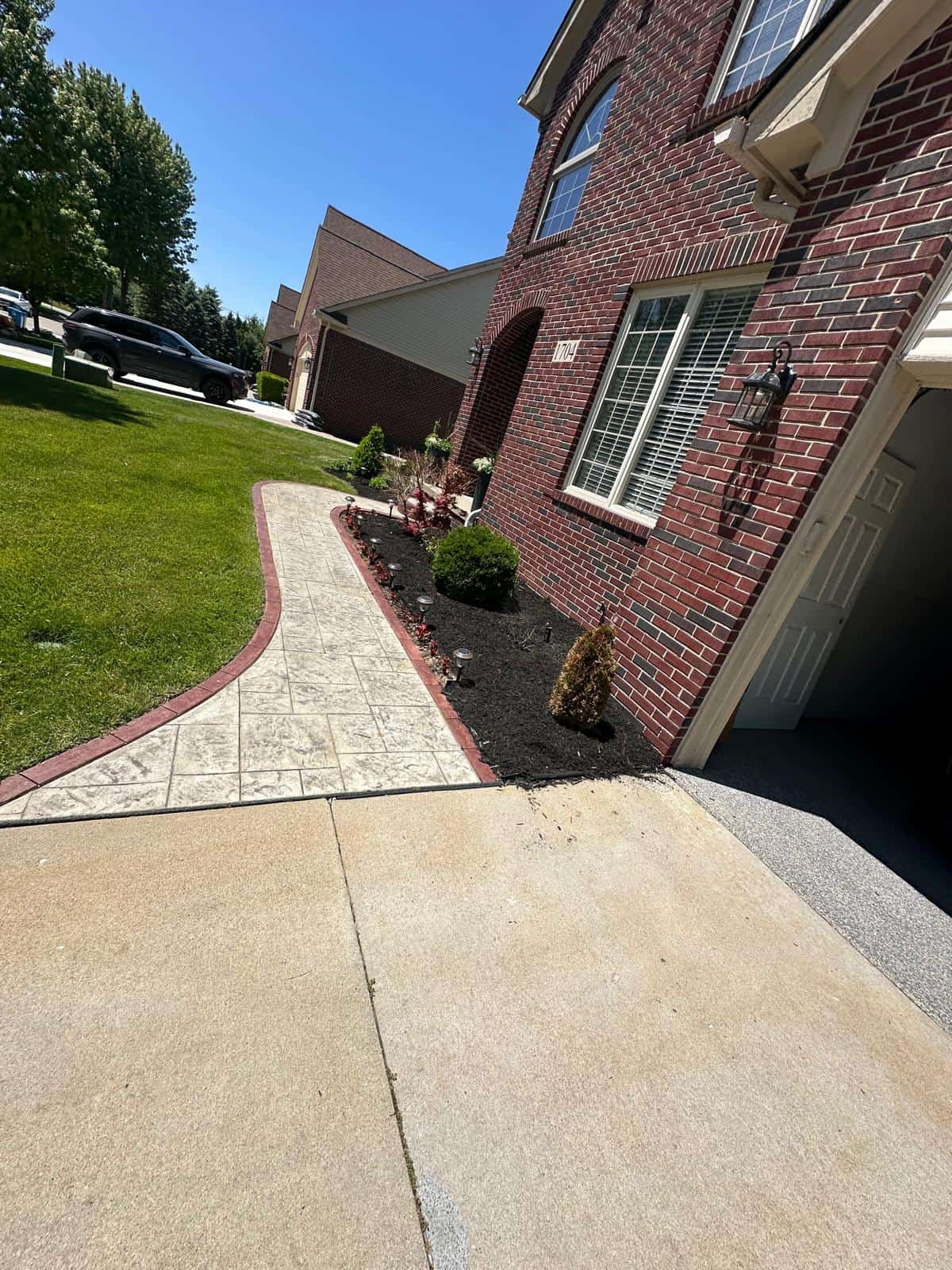
We’re based out of Oakland — about 15 to 20 miles from Brighton via M-59 — and have been working across southeast Michigan for over seven years. Ivan started his career as a groundman in California, learning rigging, pruning, and tree-health assessment from the ground up before relocating to Michigan and building this company alongside his fiancée, Cecilia. Ivan leads every field crew personally. Cecilia handles the customer side. It’s a small operation by design, and that shows in how jobs get done.
What separates an arborist-trained crew from a standard landscaping crew when it comes to mulch is the knowledge behind the install. Our team understands root systems, proper depth, and why piling mulch against a trunk — the “mulch volcano” you see everywhere — quietly damages trees over time. For Brighton properties with established oaks, mature pines, and wooded lots that back up to natural areas, that distinction matters. You’re not just getting beds that look better. You’re getting mulch installed by people who understand what’s underneath the soil.
It starts with a written estimate. We provide all quotes in writing before any work begins, and they’re valid for 30 days. That matters in a service category where verbal quotes and door-to-door operators are a documented problem — you know exactly what you’re paying for before anyone shows up with a truck.
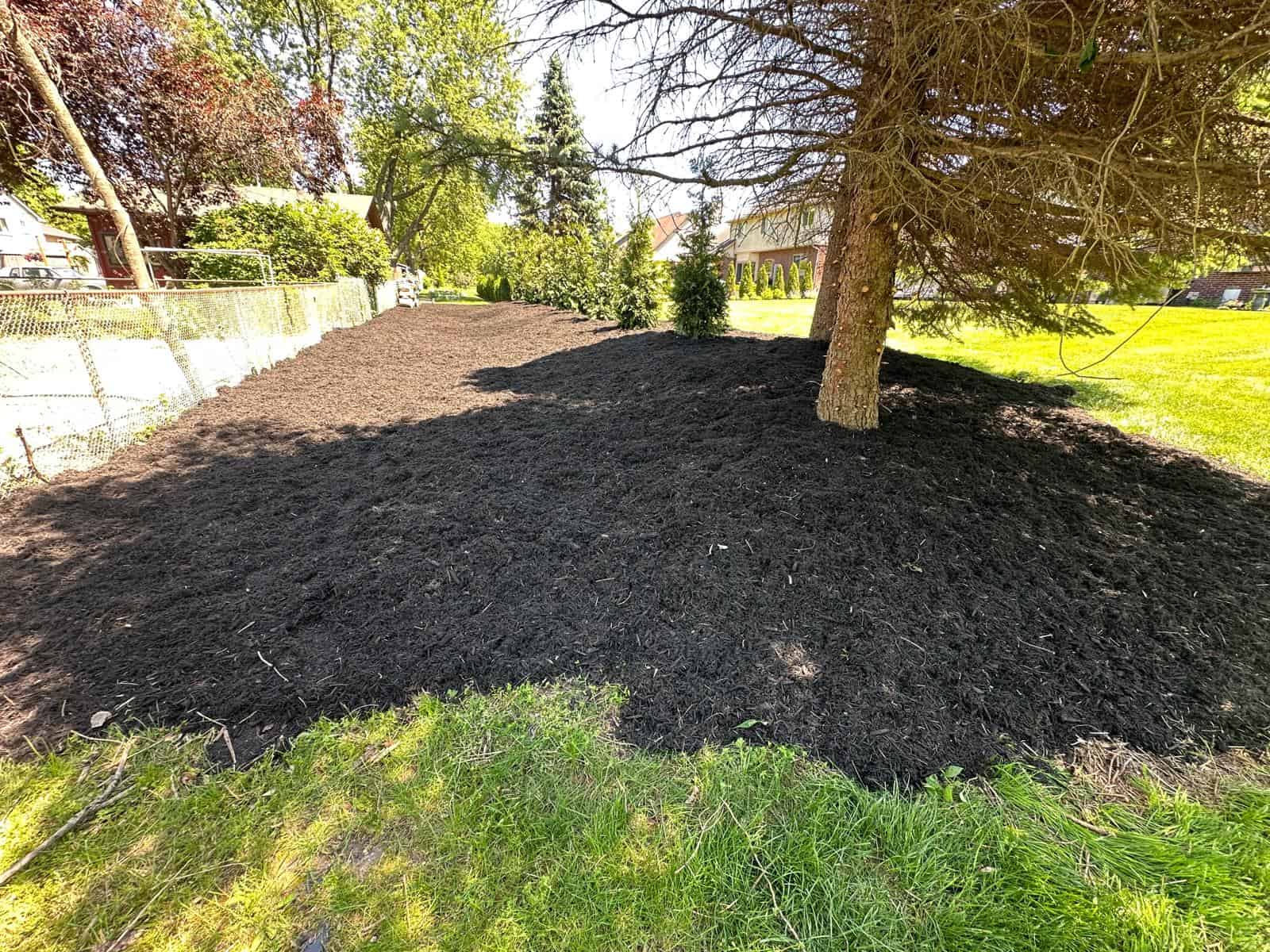
Once the job is scheduled, our crew handles bed preparation before any mulch goes down. That means clearing debris, addressing existing mulch that’s compacted or matted, and making sure the surface is ready for a clean, even installation. In Brighton, where spring rains can be heavy and sloped lots near the lake communities are common, proper bed prep also means thinking about how mulch will sit on a grade — because mulch that isn’t installed correctly on a slope washes out in the first hard rain and ends up exactly where you don’t want it.
From there, mulch goes down at the ISA-recommended 2 to 3 inch depth. The root flare on any trees stays fully exposed — always. When we leave, the beds are clean, the depth is consistent, and nothing is piled against trunk bases. If you’ve also had tree work done recently — a removal, stump grinding, any clearing — we can follow up with topsoil to restore the full yard in one visit, so you’re not tracking down a second contractor for the finish work.
The spring window in Brighton runs roughly from late April through mid-May, and it books up fast. Getting your estimate in early keeps you on schedule before the season slips past.

Ready to get started?
Our core mulch service covers the full installation: bed prep, correct depth, clean edges, and proper technique around trees and root zones. The mulch itself is repurposed wood chip material from our own tree work across southeast Michigan — fresh arborist chips that include bark and leaf material, which the ISA considers among the best options for trees and large shrubs. It’s locally sourced, it breaks down into the soil over time, and it’s not the dyed bagged product sitting on a pallet at a hardware store.
For Brighton homeowners who’ve recently had a tree removed or had storm damage cleared, the yard often looks rough after the work is done — bare soil, disrupted ground, an area that needs attention before it becomes a weed patch. We can handle the follow-through: mulch installation in the cleared area and topsoil where the grade needs building back up. One company, one conversation, one finished yard.
Our service area includes Brighton and the surrounding Livingston County communities, and we work across the full range of property types you’ll find here — from walkable downtown Brighton lots with established beds to larger township properties near Woodland Lake, Lake Chemung, and the named subdivisions like Pine Creek, Oak Pointe, and Hidden Lake. If the property has trees, garden beds, or bare soil that needs attention, the scope of what we offer covers it.
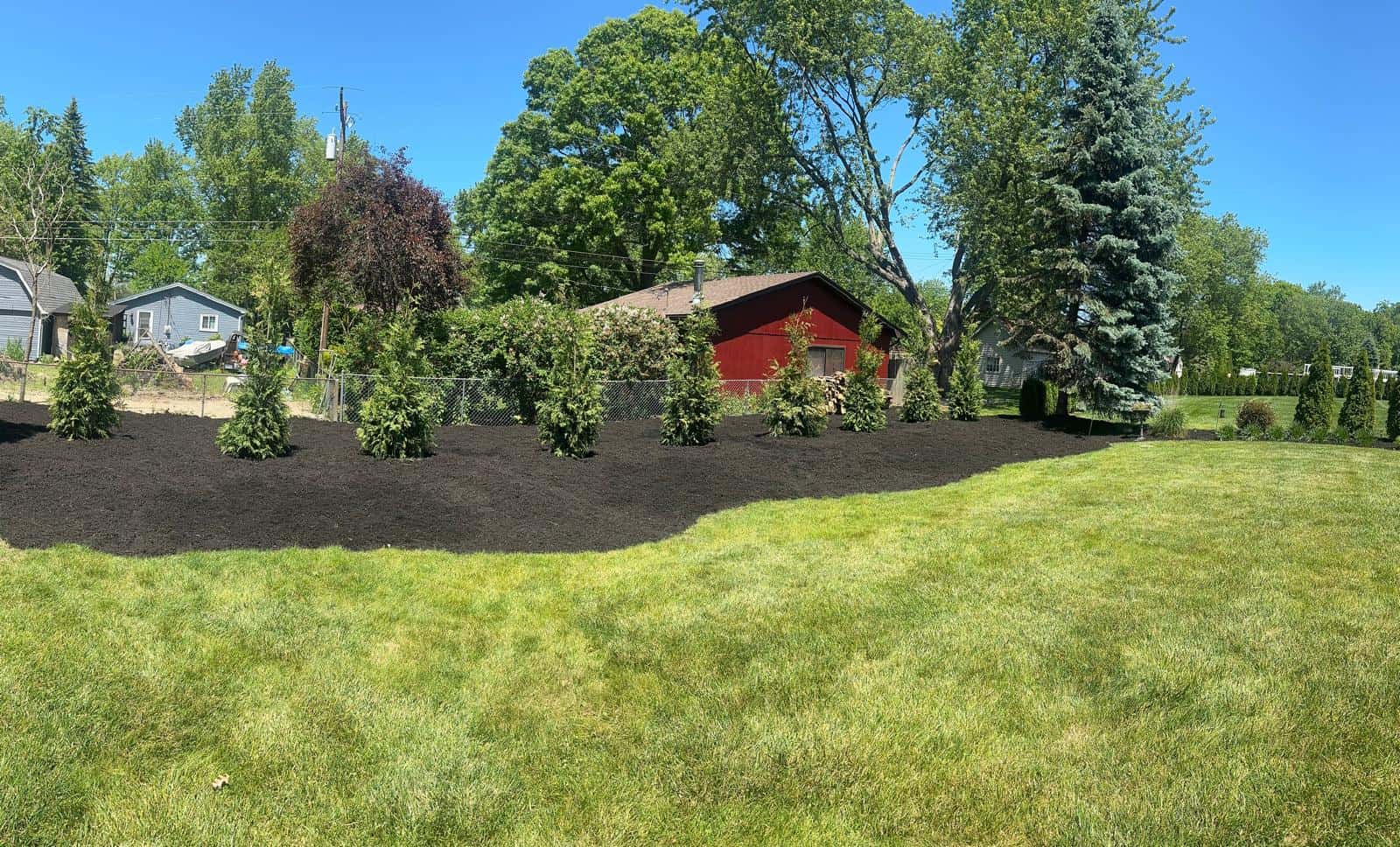
The optimal window for spring mulch installation in Brighton runs from late April through mid-May. By that point, the soil has warmed enough that you’re not trapping cold ground under an insulating layer — which is a real issue if you mulch too early in a Zone 6a climate like Livingston County’s. Mulching before the soil has warmed delays plant growth and can hold moisture against root systems that are still coming out of dormancy.
Brighton’s sandy glacial soils actually warm up a bit faster than the clay-heavy ground you’ll find east of here in Oakland County, so the spring window can open slightly earlier than in neighboring communities. That said, the window is still short — roughly five weeks — and landscapers in the area book up quickly once it opens. Getting your estimate scheduled in late March or early April puts you ahead of the rush.
Fall is the second mulch season worth knowing about. Applying mulch after the first hard frost — typically sometime in October in Livingston County — protects perennial root systems from the freeze-thaw cycles that define Michigan winters. The ground freezes, thaws, and refreezes repeatedly through late fall and early spring, and that repeated movement heaves roots and stresses plants that aren’t properly insulated. Fall mulch doesn’t prevent dormancy — it moderates the temperature swings that cause the most damage.
The ISA standard is 2 to 3 inches of organic mulch for most applications — and that range exists for a reason. Less than 2 inches doesn’t provide reliable weed suppression or meaningful moisture retention. More than 4 inches starts to create problems: it can mat down, block water from reaching the soil, and in the case of mulch piled against tree trunks, it traps moisture against the bark and creates conditions for rot and secondary root growth.
The most common mistake in mulch installation is what’s called “volcano mulching” — piling mulch high against the base of a tree trunk, sometimes 6 inches or more. It looks intentional, but it’s one of the more reliable ways to slowly damage a mature tree. The root flare — the point where the trunk widens at the base — needs to stay fully exposed. Mulch should taper away from the trunk, not build up against it.
For Brighton properties with established oaks, mature pines, and wooded lots in areas like Brighton Township, this distinction is particularly important. Large, established trees represent real property value and decades of growth. We install mulch with that in mind — not just to make the bed look finished, but to protect what’s underneath.
Yes, and it’s worth understanding before you choose a mulch type. Brighton’s soils are predominantly sandy glacial deposits — the result of the same Pleistocene-era glacial activity that shaped the rolling terrain and lake-dotted landscape throughout Livingston County. Sandy soil drains quickly, which is good for avoiding waterlogged roots, but it also means moisture doesn’t stay in the root zone as long as it does in heavier clay soils.
For sandy soil specifically, organic mulch — shredded hardwood, wood chips, bark — does more work than inorganic options like rubber or stone. As organic mulch breaks down, it adds organic matter back into the soil, gradually improving its structure and water-holding capacity over time. That’s a meaningful long-term benefit for Brighton gardens that are working with naturally lean, fast-draining ground.
Arborist wood chips — the kind we use from our own tree work — are particularly well-suited to this environment. They’re coarser than bagged shredded mulch, which means they don’t mat down as easily, allow better water infiltration, and break down more slowly. For Brighton’s sandy soils, that combination of moisture retention and good drainage is the right balance.
Bed prep matters more than most people realize, and skipping it is one of the reasons mulch jobs look good for three weeks and then fall apart. Before any mulch is spread, the existing bed surface needs attention — debris cleared, old mulch that has compacted or developed mold addressed, and the soil surface loosened if the existing layer has matted down into a barrier that water can’t penetrate.
If weeds are already established in the bed, those need to be dealt with before the mulch goes down. Mulch suppresses new weed germination effectively, but it doesn’t kill existing weeds — it just gives them a layer to grow through. Proper bed prep removes what’s already there so the mulch layer starts clean and does its job from day one.
For sloped properties — which are common in Brighton given the rolling glacial terrain around the lake communities and township subdivisions — bed prep also includes thinking about how the mulch will behave on a grade. Mulch installed on a slope without attention to depth and compaction at the edges washes downhill in a hard rain. Our crew accounts for this during installation, not after the fact.
It can, and for Brighton properties near the water or on rolling terrain, it’s one of the more practical reasons to invest in a professional installation. Bare soil on a slope erodes. Rain hits it, runs off, and takes topsoil with it — toward the lake, toward the foundation, or into low spots in the yard where it collects and creates its own problems. A properly installed layer of organic mulch absorbs the impact of rainfall, slows runoff, and holds soil in place on grades that would otherwise lose material with every storm.
For properties near Woodland Lake, Lake Chemung, Brighton Lake, or any of the other lake communities in the Brighton area, this is a real consideration — not just aesthetically, but practically. Soil runoff near waterfront properties affects the shoreline and the water quality of the lake itself. Mulched beds and tree rings on sloped lakefront lots reduce the amount of bare soil exposed to rainfall and help keep the landscape stable through Michigan’s spring storm season.
The key is installation depth and coverage. Mulch that’s too thin on a slope won’t hold. Mulch that’s properly installed at 2 to 3 inches, with attention to how it sits at the edges of the bed, does the job. This is where professional installation — rather than a DIY bag-and-spread approach — makes a visible difference after the first heavy rain.
This is a fair question, and it’s one more Brighton homeowners are asking after the door-to-door mulch scam problem became more widely documented across southeast Michigan. The pattern is consistent: an operator shows up unsolicited, gives a low verbal quote, does the work, and presents a bill that’s two to five times what was discussed. Without anything in writing, the homeowner has very little recourse.
We provide all estimates in writing before any work begins, and those estimates are valid for 30 days. That means you have time to compare, ask questions, and make a decision without pressure — and when you do say yes, you know exactly what the job costs before anyone touches your property. There are no verbal-only quotes and no surprises at the end.
Beyond the written estimate, the practical way to verify you’re getting fair value is to understand what’s included. A legitimate mulch installation quote should cover bed prep, the mulch material itself, labor, and cleanup — not just the material cost with labor added on after. Ask what depth the mulch will be installed at, whether bed prep is included, and how the crew handles existing mulch that needs to be addressed. A company that can answer those questions specifically — and put the scope in writing — is a company operating transparently. That’s the baseline you should expect, and it’s what we deliver on every job in Brighton.
Other Services we provide in Brighton
