Hear from Our Customers
Ann Arbor earned the nickname “Tree Town” for a reason. The city’s 33% urban tree canopy — those mature trees lining Burns Park, Old West Side, and Ives Woods — is part of what makes this place worth investing in. But across Ann Arbor, one of the most common mulch mistakes is quietly doing damage: mulch piled high against tree trunks.
It looks tidy. It’s actually trapping moisture against the bark, promoting rot, and slowly weakening trees that took decades to grow. We install mulch the way the International Society of Arboriculture requires — 2 to 3 inches deep, root flare fully exposed, nothing packed against the trunk. That’s the difference between mulch that protects your trees and mulch that harms them.
Beyond tree health, properly installed mulch does real work for your garden beds. A correctly applied layer can reduce weed germination by up to 90%, meaning far less hand-weeding from late spring through summer. It also reduces soil moisture evaporation by roughly 35%, which matters in Ann Arbor where established beds compete with large root systems for water during dry stretches.
Ann Arbor’s glacial terrain creates soil that varies from fast-draining sandy loam on the moraines to clay-heavy ground near the Huron River lowlands. Mulch applied at the right depth for your specific conditions makes a measurable difference in how your plants perform through the season.
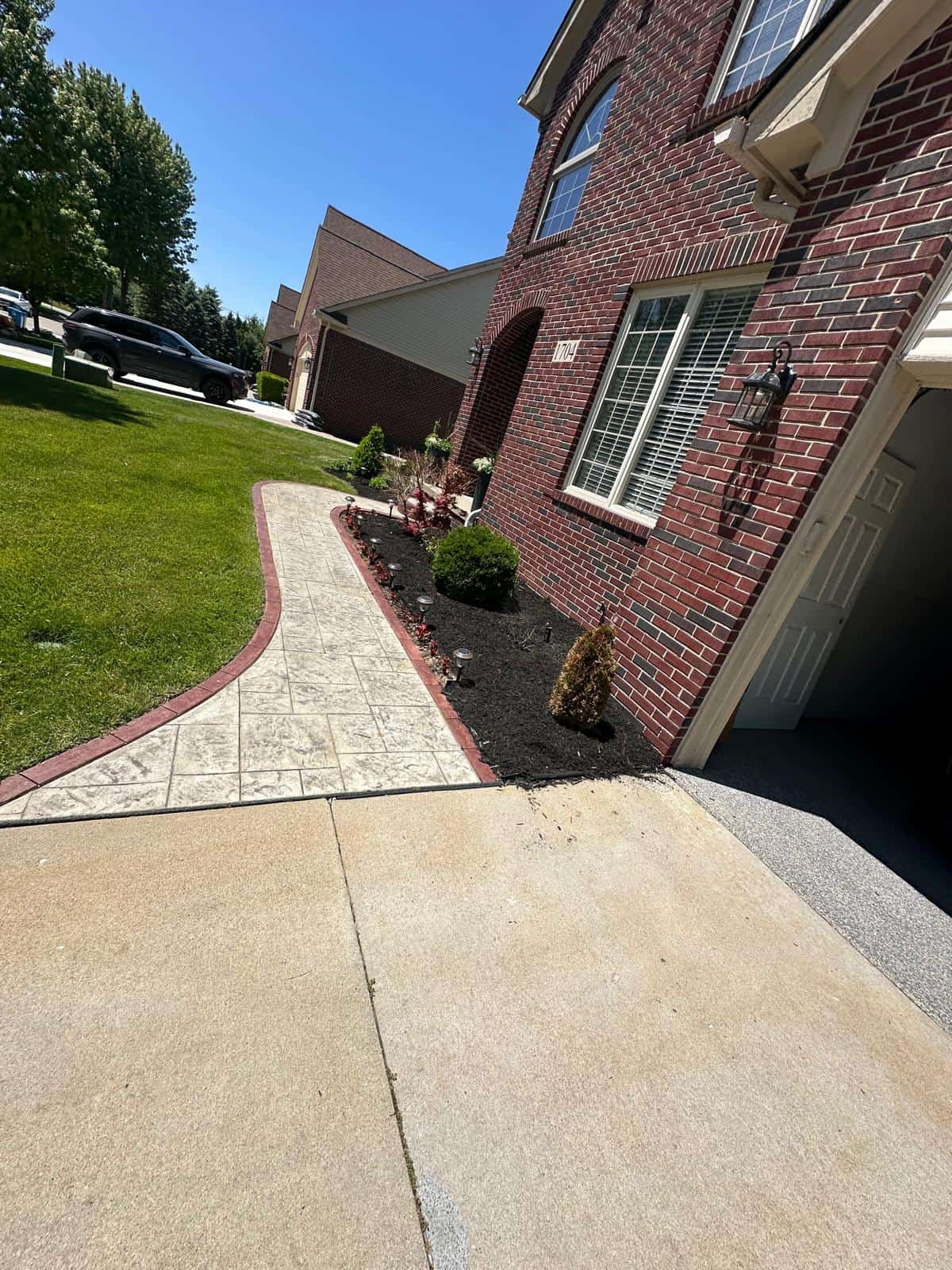
We’re a family-operated business based in Oakland County, founded by Ivan, who started his career as a groundman in California learning the fundamentals of safe climbing, rigging, and tree health before bringing that experience to Michigan. Ivan leads every job personally. His fiancée Cecilia handles the customer side of the business. Between the two of us, you’re not dealing with a call center or a rotating crew you’ve never met — you’re dealing with the people who are actually accountable for the work.
The crew that shows up to install mulch in your Ann Arbor yard includes certified arborists. That’s not a marketing line — it means the people working around your trees understand what proper mulch depth does to root systems, why the root flare needs to stay exposed, and how Ann Arbor’s mix of shaded canopy beds and variable glacial soils affects how the job gets done. If you’re in Burns Park with a 60-year-old oak in your front yard, that matters.
We’re licensed, insured, and provide all estimates in writing before any work begins — valid for 30 days so you can plan without pressure.
It starts with a written estimate. You reach out, describe what you’re working with — number of beds, approximate square footage, any trees you want mulched around — and we put together a clear, written quote before anyone sets foot on your property. No verbal ballpark figures that shift when the crew arrives. The estimate is yours to review for up to 30 days.
When the crew comes out, the first step is bed preparation. Existing mulch gets raked and aerated if it’s compacted — we don’t just pile new material on top of a matted, broken-down layer. Edges are cleaned up, debris is cleared, and the beds are ready to receive fresh material.
Then the mulch goes down at the ISA-recommended depth: 2 to 3 inches across the beds, with a deliberate gap maintained around any tree trunks so the root flare stays exposed. In Ann Arbor, timing matters too — spring installations are scheduled after the soil has warmed enough that the mulch is locking in moisture rather than insulating cold ground and delaying plant growth. Fall applications go in after the first hard frost, when the goal shifts to protecting root zones through Washtenaw County’s freeze-thaw cycles.
The mulch itself is repurposed wood chip material generated from our own tree removal and trimming work — locally sourced, recycled, and back in the ground where it belongs. If your yard needs topsoil alongside the mulch work, we can handle that in the same visit.
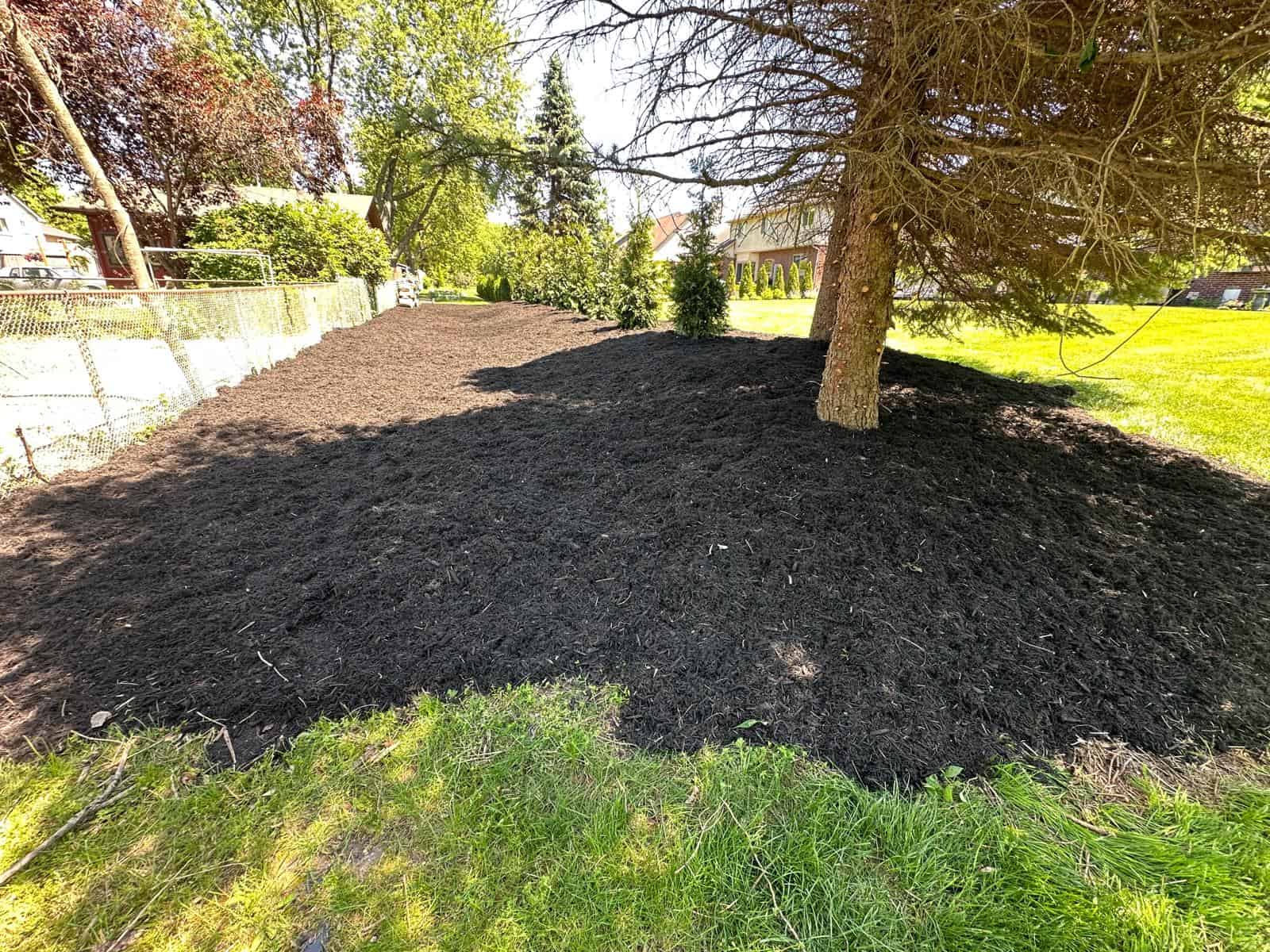
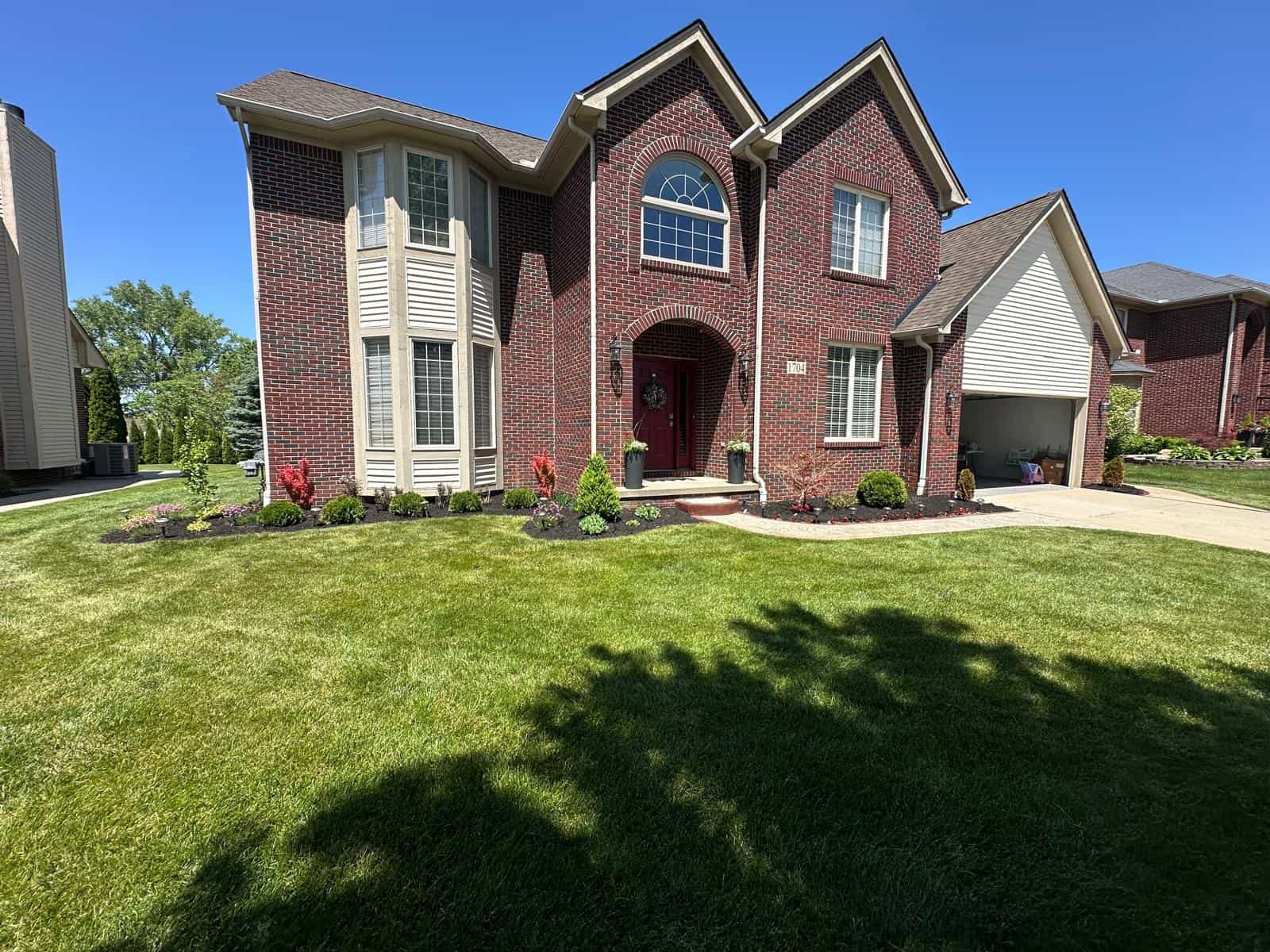
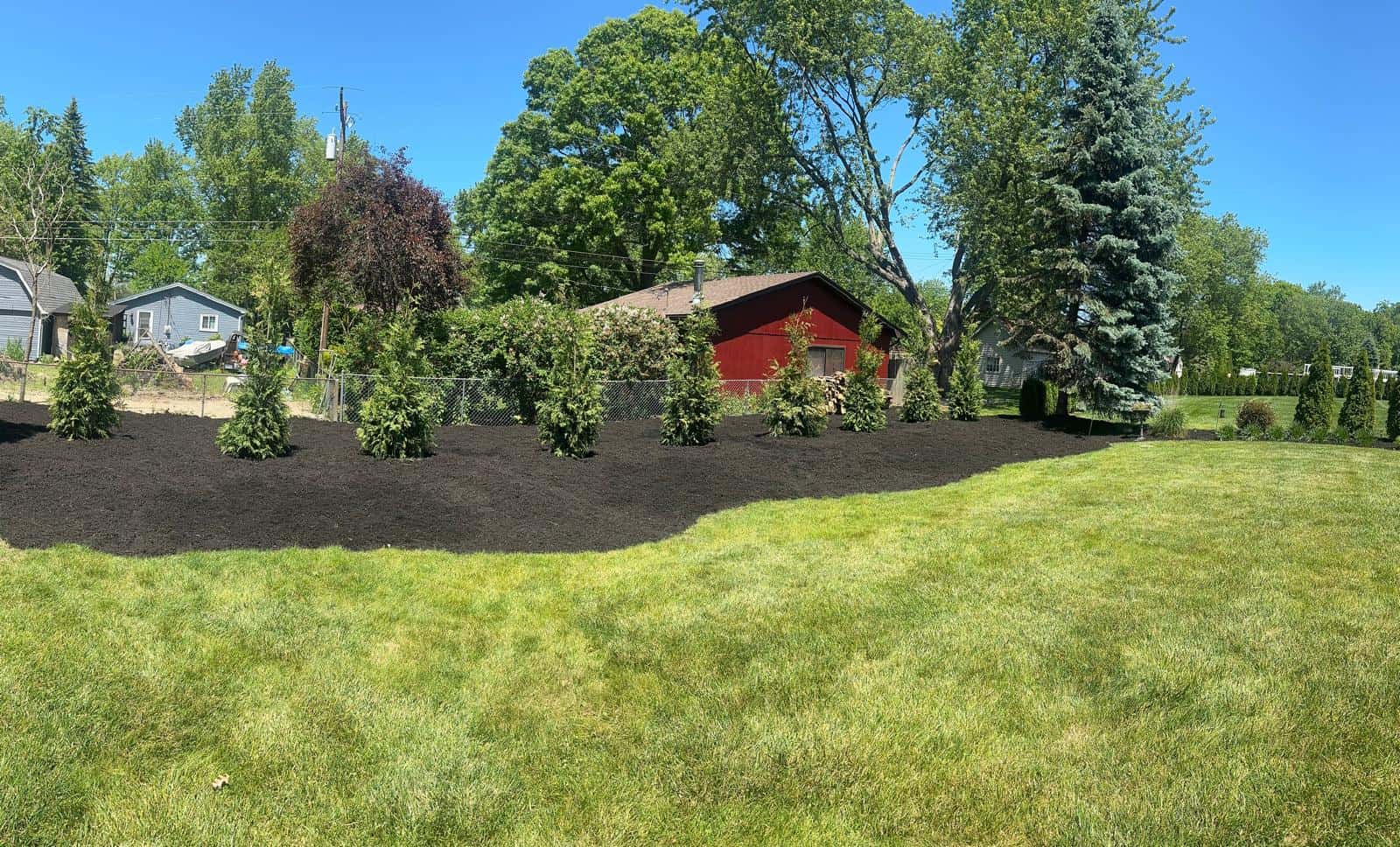
A lot of mulch services in Ann Arbor will deliver material and spread it. That’s the whole job. Our approach is different because we come from a tree care background, not a landscaping background — and that changes what we pay attention to.
Bed prep is part of the process, not an add-on. Proper depth calibration around trees is standard, not optional. And the material itself is repurposed wood chip mulch from our own tree work, which means it’s locally sourced and keeps waste out of the landfill — something that aligns with what a lot of Ann Arbor homeowners actually care about given the city’s A2ZERO sustainability commitments.
For Ann Arbor properties specifically, we account for the shaded conditions that come with 33% canopy coverage. Shaded beds don’t need the same depth as sun-exposed beds, and too much mulch in a dense shade environment can create fungal conditions that hurt the plants underneath. That kind of assessment doesn’t happen when a landscaping crew is just filling a square footage order.
If you’ve recently had tree removal or stump grinding done, we can follow that work with mulch installation and topsoil to restore the full yard — so you’re not left with a disrupted landscape and a second contractor to find. One call handles it. All estimates are provided in writing, and the crew that shows up is the same crew that knows what was promised.
The city’s compost facility on Platt Road is a genuine perk, and if you need a small amount of wood chips for a single tree ring or a compact bed, it’s worth knowing about. But the program limits each Ann Arbor household to 1 cubic yard per year, available only on Saturday mornings from April through late June, while supplies last — and you need to bring your own shovel and containers and load it yourself.
One cubic yard covers roughly 100 square feet at a 3-inch depth. Most homes in Ann Arbor with established garden beds, multiple tree rings, and front-walk plantings need 3 to 6 cubic yards or more to do the job properly. Professional installation through us means you get the right volume delivered, beds prepped before anything goes down, correct depth calibrated for your specific conditions, and proper technique around your trees — including keeping the root flare exposed, which the city program can’t help with. The free option is real, but it’s a partial solution for most Ann Arbor properties. If your beds actually need a full refresh, the math on DIY versus professional installation is closer than it looks once you factor in time, physical labor, and multiple Saturday trips.
The ISA standard is 2 to 3 inches of organic mulch around trees, and the root flare — the point where the trunk widens as it meets the ground — needs to stay fully exposed. No mulch against the bark.
This is the most commonly violated rule in residential mulch installation, and it matters especially in Ann Arbor where so many properties have mature trees that took decades to establish. Piling mulch 5 or 6 inches deep against a trunk traps moisture against the bark, creates conditions for rot and secondary root development, and can cause serious long-term damage that isn’t obvious until the tree is already in decline.
Ann Arbor’s 33% urban tree canopy means a lot of residential properties have large, established trees with significant root zones. Mulch rings should extend outward toward the dripline of the tree when possible — not just a tight circle around the base. Our certified arborist crews apply mulch with these standards in mind on every job, because we understand what’s at stake with the trees that define neighborhoods like Burns Park and Old West Side.
For most residential garden beds in Ann Arbor, organic wood chip mulch is the strongest choice. It breaks down over time and improves soil structure, which is particularly useful given the soil variability across Ann Arbor’s glacial terrain — sandy loam on the moraines drains quickly and benefits from the organic matter that decomposing wood chips add back to the soil; clay-heavy soils near the Huron River lowlands benefit from improved aeration and drainage that organic mulch supports as it breaks down.
Dyed or colored mulch options are available and hold their appearance longer, but they don’t offer the same soil-building benefits as natural wood chip material. We use repurposed wood chip mulch generated from our own tree removal and trimming work — it’s the same material that ISA arborists recommend as excellent for trees and large shrubs, and it’s locally sourced rather than shipped in from a distant supplier. If you have a specific aesthetic preference or want to discuss what makes sense for your particular beds, that conversation happens at the estimate stage before any work is scheduled.
Spring is the primary window, but timing within spring matters. In Washtenaw County, the soil warms later than areas further south in Michigan, so mulching too early in April can actually insulate cold ground and delay plant growth rather than helping it. The target window is late April through mid-May, once the soil has warmed but before weed seeds are actively germinating — that’s when a properly installed mulch layer does the most work in terms of suppression and moisture retention.
Fall is the second useful window, and it’s underutilized by a lot of Ann Arbor homeowners. After the first hard frost — typically mid-October in Washtenaw County — a fresh layer of mulch over perennial beds and tree root zones protects against the freeze-thaw cycling that causes soil heaving and root damage through the winter. If you have established perennial beds in older neighborhoods like Old West Side or Water Hill, fall mulching is worth doing. Spring books up fast, so reaching out in March or early April to get on the schedule is the practical move.
It’s not overstated — but depth and timing are what make it work. Research shows that a 2 to 4 inch mulch layer can reduce weed germination by up to 90%. The key word is germination: mulch physically blocks light from reaching weed seeds in the soil, which prevents them from sprouting. Weeds that are already established before mulch goes down won’t be killed by it, which is why proper bed prep — clearing existing weeds before installation — is part of the process, not something to skip.
Timing matters for weed control specifically. Mulch installed before weed seeds in your Ann Arbor beds have a chance to germinate in spring does significantly more work than mulch applied after weeds are already pushing through. That’s part of why the late April to mid-May window is the target — you’re getting ahead of the season rather than reacting to it. A correctly timed, properly installed mulch layer genuinely reduces the amount of hand-weeding you’re doing from June through August.
Yes, and it’s one of the more practical reasons to work with us for both jobs. After a tree removal or stump grinding, the area where the tree stood often looks disrupted — bare soil, uneven ground, sometimes a significant gap in the landscape that the surrounding beds don’t connect to cleanly. We can follow the tree work with mulch installation and topsoil where the grade needs to be rebuilt. The whole yard gets addressed in one service relationship rather than requiring a separate landscaping contractor.
This is especially relevant in Ann Arbor’s older neighborhoods, where tree removals often involve large, established trees that leave a noticeable void. Ann Arbor’s tree protection ordinance means some removals go through a permit process, and once that work is done, homeowners are often motivated to restore the landscape quickly — both for curb appeal and because properties here carry significant value. With a median home value near $470,000 in Ann Arbor, getting the yard back to looking right after tree work isn’t a minor concern. We handle the full restoration so you’re not left managing two separate contractors to finish the job.
Other Services we provide in Ann Arbor
