
Tree Removal in Mikado, MI
When Half Your Township Is Forest, One Dead Tree Is One Too Many
Hear from Our Customers
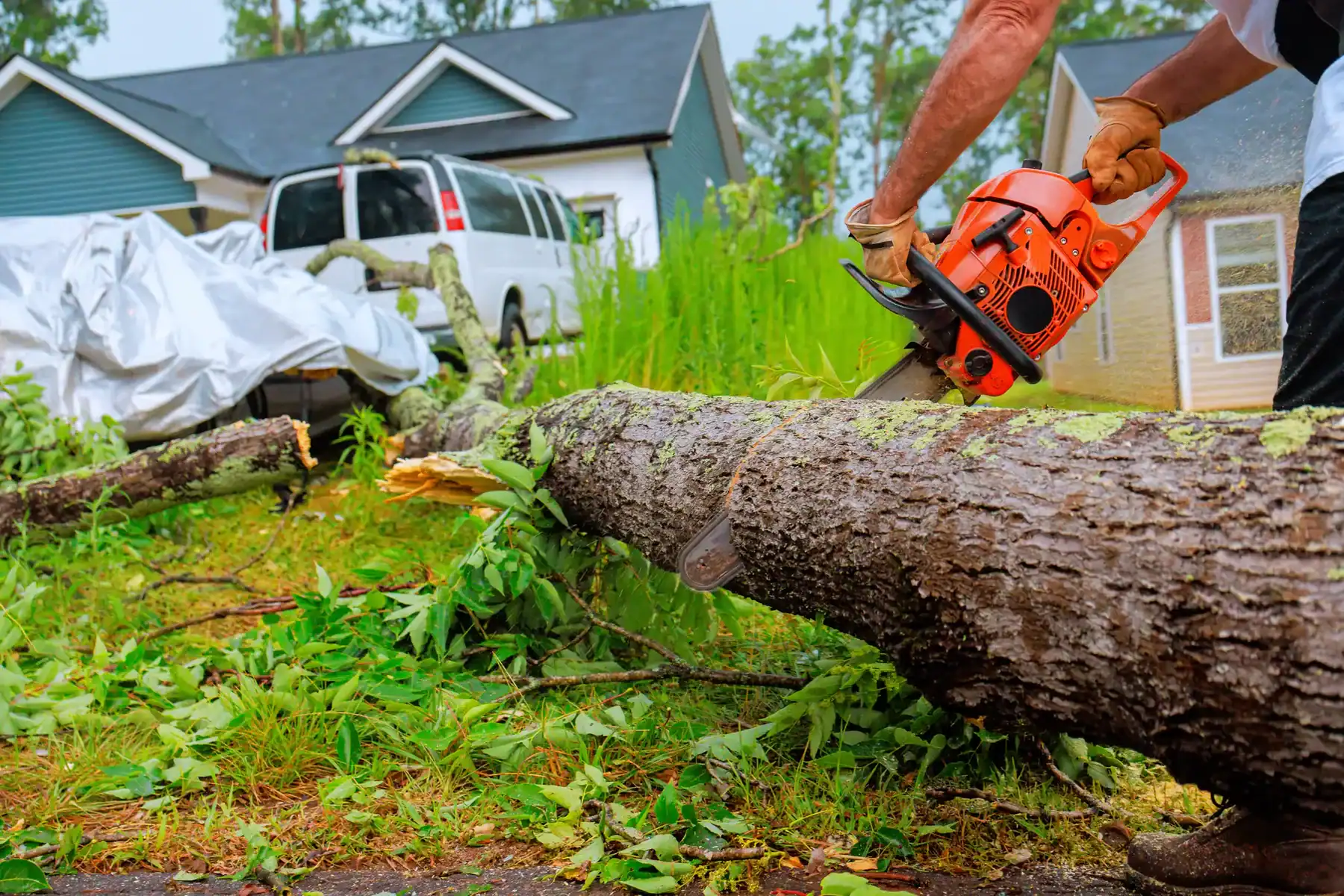
Hazardous Tree Removal, Alcona County
When you’re surrounded by state forest landand roughly half of Mikado Township is exactly thatthe trees pressing up against your structure weren’t planted or maintained by anyone. They grew on their own terms, and some of them are now a problem.
A dead ash killed by emerald ash borer. A pine with a root system that shifted after last winter’s ice loading. A leaning oak that nobody’s looked at in years. Getting those trees down correctly means your roof stays intact, your outbuildings stay upright, and you’re not dealing with an emergency removal at the worst possible time.
For seasonal property owners and hunting camp operators in the 48745 area, this matters even more. You’re not here every week. You don’t see the gradual lean, the cracked leader, or the dead wood accumulating over your cabin. What you do see is the aftermath when you pull in for deer season in November and find a tree through the structure.
Professional removal before that happensbased on an actual risk assessment, not a gut feelingis what keeps a manageable situation from becoming a costly one. The cleanup matters here too. On a rural parcel off F-30 or F-41, a pile of brush left behind isn’t a minor inconvenience. It blocks trail access, creates fire risk, and sits there until you deal with it yourself. Every job we complete includes full debris removal, so the property is left in working order when our crew leaves.
Certified Arborist Tree Service, Mikado, MI
We’ve been operating for over seven years across Michigan, and the credentials we bring to Mikado are genuinely hard to find in this part of the state. Our team includes ISA Certified Arborists on staff, TRAQ-qualified risk assessors who can formally document tree hazardsnot just eyeball themand multiple crew members with line-clearance certification and the specialized utility insurance required to work near energized lines along rural corridors like F-30 and F-41.
No local Alcona County competitor we’ve identified holds or advertises those credentials. That matters in a place like Mikado. The trees here are large, mature, and often structurally complex in ways that suburban ornamental work simply doesn’t prepare you for. Dead ash trees behave unpredictably during removal. Ice-storm-damaged trees can look stable and fail without warning.
The difference between a crew with the right training and one without it isn’t abstractit shows up in whether the removal goes cleanly or whether something goes wrong.
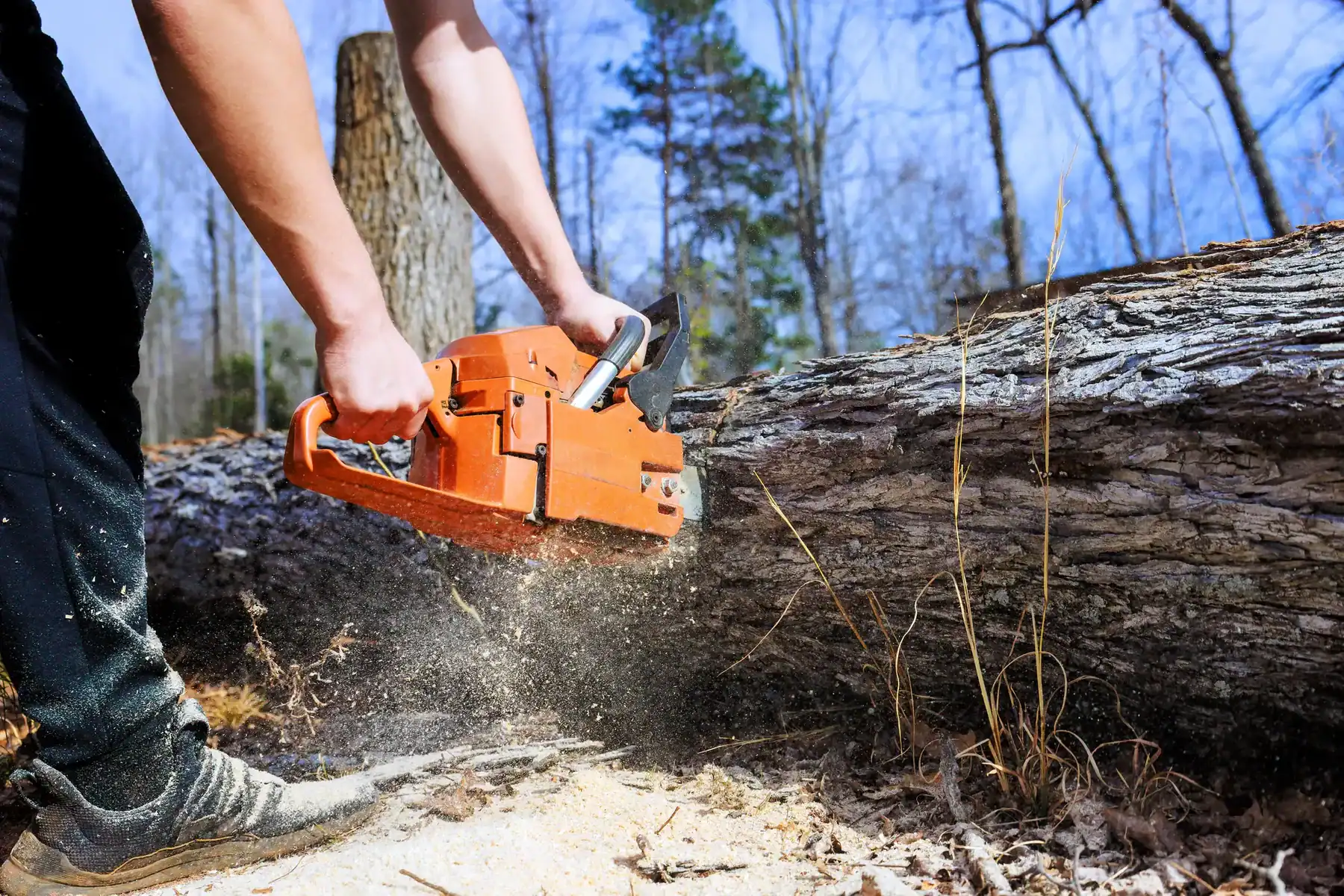
Professional Tree Cutting Process, Mikado
The first step is a site walk. Before any work begins, an arborist meets with youor coordinates with you remotely if you’re managing the property from a distancewalks the site, and puts together a detailed written scope. That scope tells you exactly what’s being removed, how it’s being done, and what the full cost is.
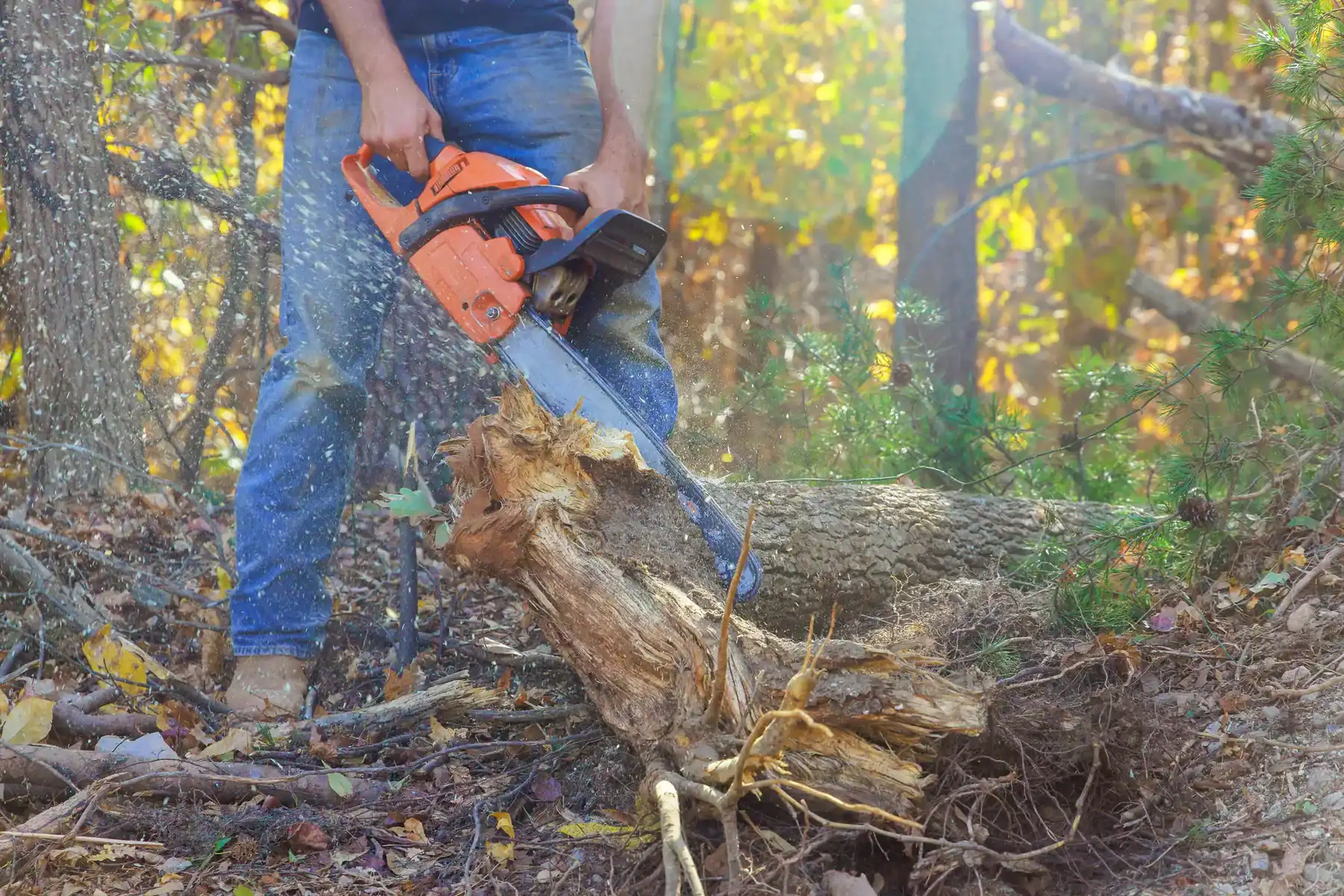
No verbal estimates that shift later. No surprise charges for debris removal. You know what you’re getting before anyone picks up a chainsaw.
For properties in and around Mikado Township, that site assessment often involves more than just the tree you called about. Our TRAQ-qualified arborists are trained to evaluate multiple trees at once and document which ones represent genuine hazards versus which ones are fine. On a forested parcel where dozens of mature trees are within fall distance of a structure, that comprehensive look is worth more than a single-tree quote. It gives you a clear picture of what needs attention now and what can wait.
Once the scope is agreed on, our crew works piece by piecesectioning trees down in controlled stages rather than felling them whole, which is especially important on parcels where structures, fences, access roads, or other obstacles are nearby. When the job is done, the debris comes with us. Logs, brush, and chips are cleared from the property completely.
Mikado Township has no municipal permit requirement for private property tree removal, but if your parcel borders state forest land or a county road right-of-way on F-41 or F-30, that’s something the assessment will flag before work begins.
Ready to get started?
Emergency Tree Removal Services, Alcona County
Tree removal in Mikado isn’t a single scenario. It’s a dead ash tree that’s been standing for two seasons and is now brittle enough to drop without warning. It’s a pine that ice-loaded last February and cracked its main leader but is still technically standing. It’s a storm that came through overnight and dropped a tree across the access road to your hunting camp.
We handle all of ithazardous tree removal, dead tree removal, emergency tree removal with 24/7 availability, stump grinding, and land clearing for larger parcels.
Alcona County has been included in gubernatorial state of emergency declarations following severe ice storms that damaged nearly a million acres of DNR-managed land across northern Michigan. Great Lakes Energy and Consumers Energy both operate infrastructure through the forested corridors around Mikado, and when ice-loaded branches contact those lines, the work requires more than a standard removal crew. Line-clearance certified arborists with the right utility insurance are what that situation calls forand that’s what we bring.
For seasonal property owners who aren’t on-site year-round, the process can be coordinated remotely. You don’t need to be standing in the driveway for the assessment or the removal. The written scope gets to you before any work starts, and the job gets documented so you know exactly what was done. Whether you’re dealing with one hazardous tree or clearing out storm damage from a season you weren’t there to see, the work gets done completely and the property gets left clean.
Do I need a permit to remove a tree on my Mikado Township property?
For most private property in Mikado Township, no permit is required for tree removal. Mikado is an unincorporated community within Alcona County, and the township’s zoning ordinance does not impose a tree removal permit requirement on private land. That’s consistent with most rural Michigan townships, where land use regulations focus on structures and setbacks rather than individual tree removal decisions.
That said, there are two situations where you need to be more careful. If your parcel shares a boundary with DNR-managed state forest landwhich applies to a significant portion of properties in Mikado Township, given that roughly 52% of the township is publicly ownedany work near or on that boundary requires coordination with the DNR. Trees within the county road right-of-way along F-30 or F-41 fall under county road commission jurisdiction, not private property rules.
A proper site assessment will identify whether either of those situations applies to your property before any work begins, so there are no surprises after the fact.
How do I know if a tree on my Mikado property is actually dangerous or just looks bad?
This is one of the most important questions to get right, because the answer isn’t always obvious from the ground. A tree can look mostly intact and still have a cracked crotch, a compromised root system, or internal decay that makes it a genuine structural hazard. Conversely, a tree that looks roughdead branches, sparse canopy, some bark damagemight be structurally sound and not an immediate removal priority.
What a TRAQ-qualified arborist does is different: it’s a formal, documented risk assessment that evaluates the tree’s structural integrity, its failure potential, and what it would hit if it came down. That documentation matters, especially for insurance purposes or if you’re managing a property remotely.
In Mikado’s environmentwhere properties sit at the edge of state forest land and trees were never planted or maintainedhaving a professional assessment rather than a gut-check estimate is the practical approach, not an upsell.
What happens to ash trees killed by emerald ash borerare they more dangerous to remove?
Yes, and this is something Mikado-area property owners should understand clearly. Emerald ash borer is endemic throughout Michigan, including Alcona County’s mixed hardwood-conifer forests. Once an ash tree dies from EAB infestation, the wood begins to degrade relatively quickly. The bark loosens, the wood becomes brittle, and the structural integrity of the tree becomes unpredictable in ways that a living tree simply isn’t.
What that means practically is that removing a dead ash tree is not the same job as removing a living one. The wood can break unexpectedly during cutting, limbs can fall in directions that aren’t anticipated, and the entire removal requires more careful planning and execution. If you have ash trees on your Mikado propertystanding dead, partially dead, or showing signs of EAB declinegetting them assessed sooner rather than later is the right call.
The longer a dead ash stands, the more unpredictable the removal becomes.
Can tree removal be coordinated remotely if I don't live at my Mikado property full-time?
Yes, and this comes up frequently with properties in the Mikado area. A meaningful share of land around the 48745 ZIP Code is owned by people who aren’t there year-roundhunting camp owners, seasonal cabin owners, and recreational parcel holders who may visit primarily during deer season or summer months. Managing a tree removal from a distance is completely workable with the right process in place.
The way it works is straightforward. The site assessment can be scheduled around your availability or coordinated with someone who has access to the property. The written scope and full cost breakdown come to you before any work startsby phone, email, or however works bestso you’re approving the job on your terms, not guessing at what’s happening.
When the work is complete, the debris is fully cleared, and you’re not arriving to find brush piles or log sections scattered across the property. For absentee property owners, that complete cleanup and documented process isn’t just convenientit’s the whole point.
What should I do if a tree falls on my cabin or blocks my access road during a storm?
Call as soon as it’s safe to do so. We offer 24/7 emergency tree removal, and that availability is not theoretical in Alcona Countysevere ice storms have triggered state of emergency declarations in this region, and storm damage to structures and access roads is a documented, recurring reality here, not a once-in-a-decade event.
When you call for an emergency situation, the priority is getting the immediate hazard addressed: a tree on a structure, a blocked road, a hanging limb over a building. Our crew comes out, assesses what’s in front of them, and handles the removal safely. If a fallen tree has damaged your cabin, it’s also worth knowing that homeowners’ insurance may cover tree removal costs when a tree has damaged a structurethat’s a conversation worth having with your insurance provider before you assume you’re paying out of pocket.
Getting a professional crew on-site quickly also helps document the damage for any insurance claim, which is another reason not to wait.
Why hire a company from outside Alcona County instead of a local tree service?
It’s a fair question, and the honest answer comes down to credentials. The tree services operating in Alcona County are generally small local operatorssome of them do good work and know the area well. But based on available information, none of the local providers serving Mikado and the surrounding area hold ISA Certified Arborist credentials, TRAQ qualification, or line-clearance certification with utility insurance for power line work.
Those aren’t just letters after a name. ISA certification requires passing a rigorous professional exam and completing ongoing continuing education. TRAQ is a specialized credential that allows arborists to formally assess and document tree riskwhich matters when you’re dealing with multiple potentially hazardous trees on a forested parcel and need more than a ballpark opinion. Line-clearance certification is what’s required to legally and safely work near energized utility lines along rural corridors like F-30 and F-41.
If your tree situation is straightforward, a local operator might handle it fine. If it involves structural complexity, storm damage, dead ash trees, or anything near utility infrastructure, the credential gap becomes a real practical differencenot just a marketing point.
Other Services we provide in Mikado