
Tree Pruning in Cheviers, MI
When Northern Michigan Winters Break Trees, Preparation Is Everything
Hear from Our Customers
Professional Tree Pruning, Alcona County
When a mature tree on your Curtis Township property failswhether it’s a branch over your roofline or a co-dominant stem that splits under ice loadthe cost to deal with it after the fact is almost always higher than what proper pruning would have been. Crown reduction, dead branch removal, and structural pruning reduce the weight and wind resistance your trees carry into every storm season.
Alcona County has been named in multiple state-declared disaster areas for severe winter weather, including an ice storm that left up to 1.5 inches of accumulation across the region and a March 2026 snowfall event that set a new county record at 31.9 inches in the Southeast Forest Lake area. That’s not hypothetical risk for Cheviersit’s the seasonal reality you’re managing.
Beyond storm protection, professional pruning keeps your trees healthy over the long term. Removing dead, diseased, or crossing branches stops problems from spreading and gives the tree room to grow the way it should. For property owners managing large rural acreages along the M-65 corridor or near the Alcona Dam Pond area, that means fewer surprises and more years out of the mature trees that make this landscape what it is.
If you’re a seasonal property owner who’s not on-site through the winter, proactive pruning before you leave in the fall means you’re not arriving in spring to assess damageyou’re arriving to a property that was already taken care of.
Tree Trimming Services, Cheviers, MI
We’re a family-owned operation out of MichiganI run the field work, and Cecilia handles scheduling and communication. That means when you call, you’re talking to someone who actually knows what’s happening on your job, not a dispatcher reading from a screen.
We’ve been delivering tree care across Michigan for over seven years, with a focus on doing the job right and leaving the property clean when it’s done. That last part matters more than most companies admiton a rural Cheviers property where you may have dozens of mature trees, a crew that leaves slash piles and debris scattered across your yard has created a new problem on top of the old one. We don’t operate that way, and the reviews back that up consistently.
Every job starts with an in-person assessment, a written estimate, and a clear explanation of what needs to happen and why. No pressure, no vague pricing, no surprises when the invoice arrives. Every job is backed by a 30-day workmanship guaranteewhich carries real weight for seasonal property owners in the Cheviers area who may not be on-site the day work is completed.
Crown Reduction Pruning Process, Cheviers
It starts with a conversation. You describe what you’re seeinga dead limb over the cabin, an overgrown crown that’s pressing against the roofline, storm damage you noticed when you came back up M-65 in the springand we schedule an in-person visit to assess the property. That visit isn’t a sales call. It’s a real look at what’s going on with your trees, what’s a priority, and what can wait.
After the assessment, you get a written estimate with a clear breakdown of the work. No vague line items, no verbal-only pricing that changes when the crew shows up. If the scope makes sense to you, you schedule the job. If it doesn’t, there’s no obligation.
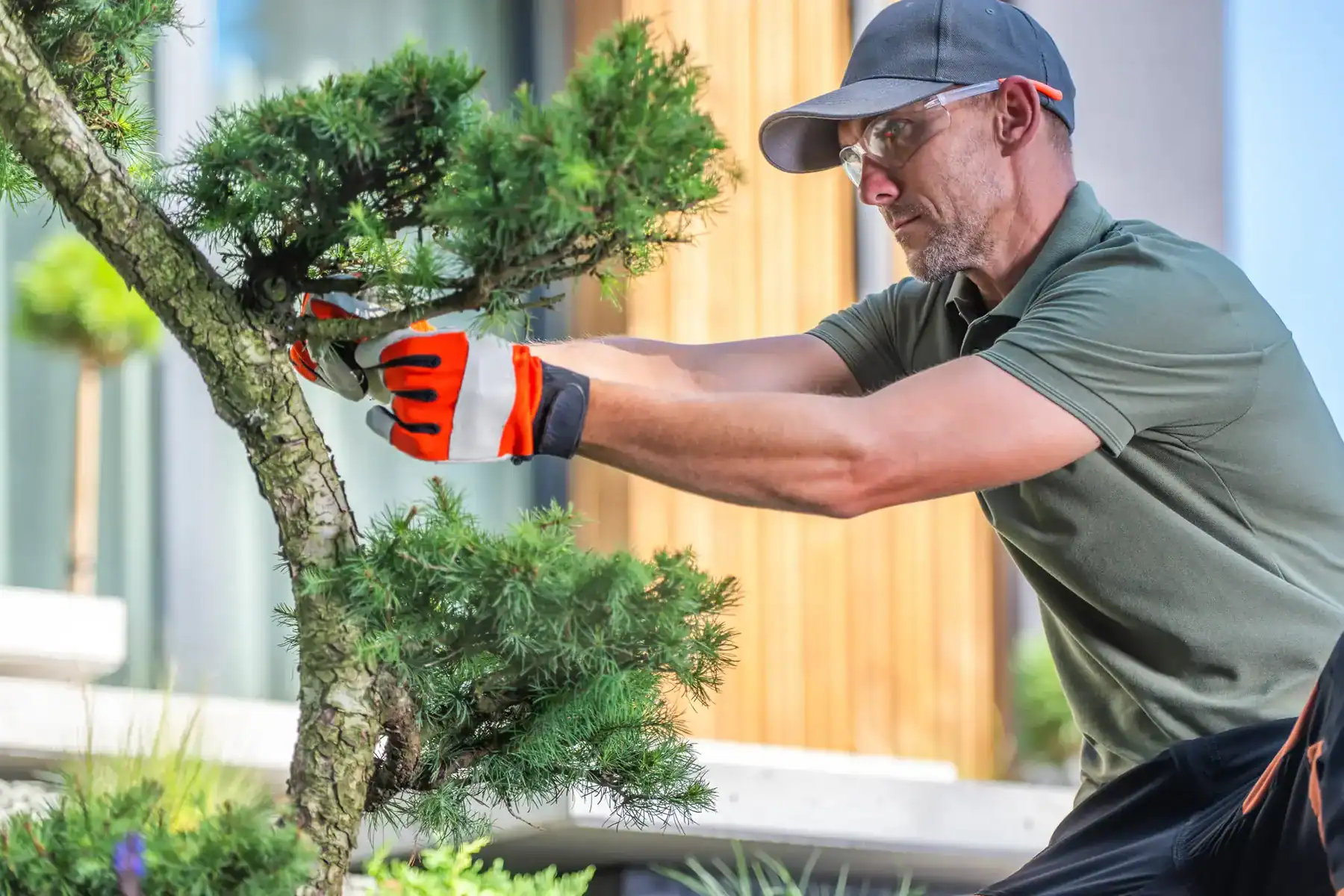
On the day of the work, the crew arrives with the equipment needed for the jobwhether that’s crown thinning on a mature maple, structural pruning on a white pine that’s grown too close to an outbuilding, or dead branch removal across multiple trees on a larger rural parcel. Timing matters in northern Michigan, particularly for oak species where pruning during active sap flow (roughly April through July) carries a real oak wilt risk. We plan around that window.
When the work is done, the property is cleaned upbrush, limbs, and debris removedand you’re left with a clear picture of what was done and why.
Ready to get started?
Tree Canopy Thinning and Pruning, Alcona County
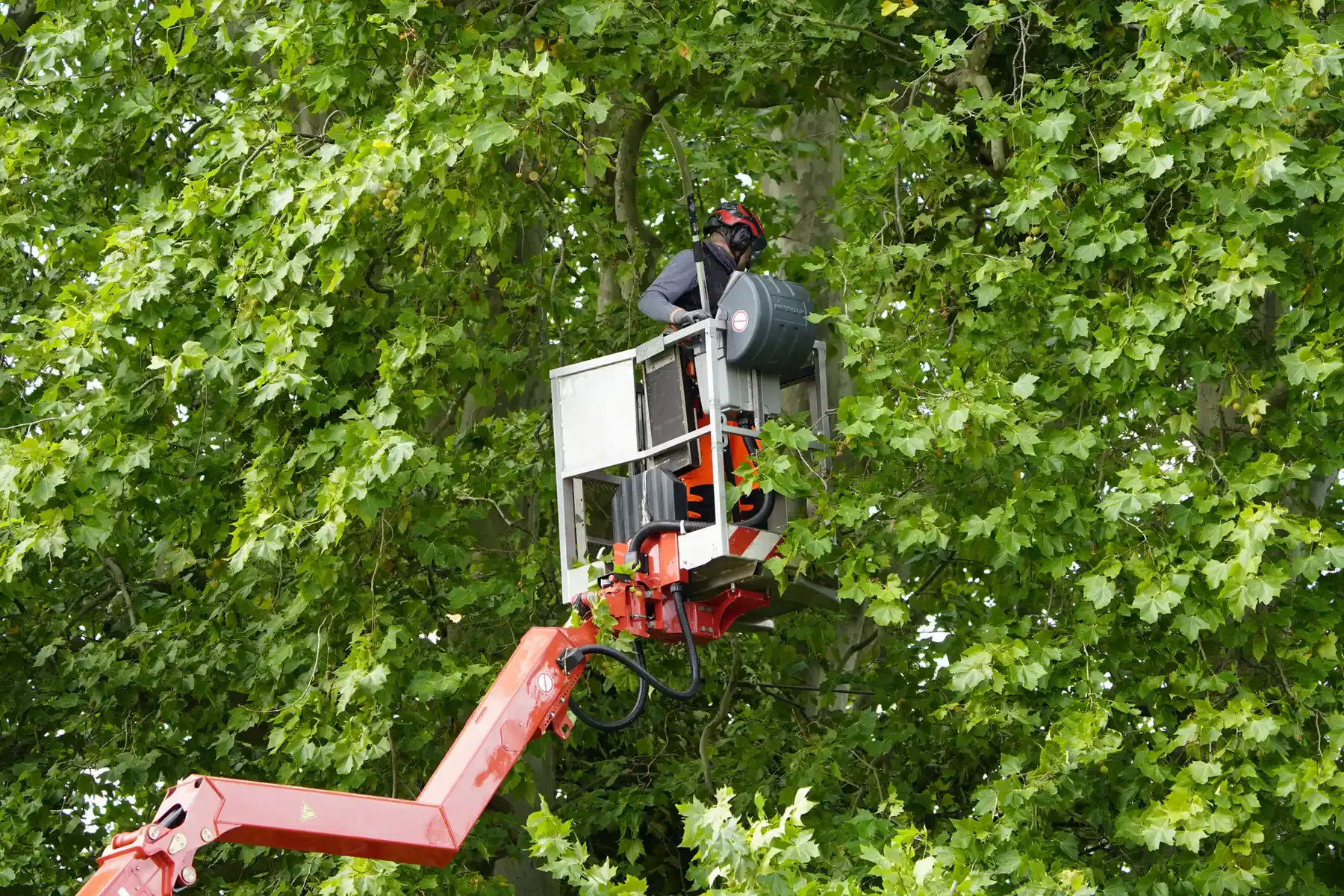
Tree pruning covers more ground than most people expect when they first call. Depending on what your trees actually need, the work might involve crown thinningremoving select branches throughout the canopy to improve airflow and reduce the weight load the tree carries in a heavy snow or ice event. It might involve crown reduction, which brings down the overall height and spread of the tree while preserving its natural structure and its ability to heal properly. Or it might be focused dead branch removal, targeting limbs that are already gone and are now just waiting to fall.
On rural properties in the Cheviers area, the mix of species matters. The northern Michigan forest here includes red maple, white birch, aspen, white pine, red pine, and oak specieseach with different pruning needs and timing sensitivities. We approach each tree on its own terms, not with a one-size-fits-all method.
What’s included in every job: the in-person assessment, the written estimate, the actual pruning work performed by an experienced crew using professional equipment, and full cleanup of all debris generated by the job. We carry general liability insurance and workers’ compensation coverage, so you’re not taking on any risk by having a crew on your property. For seasonal property owners in Curtis Township who won’t be on-site immediately after the work is done, the 30-day workmanship guarantee means the job is covered regardless of when you’re next able to inspect it.
When is the best time to prune trees on a Cheviers property?
For most deciduous trees in northern Michigan, the dormant seasonroughly November through Marchis the safest and most effective window for pruning. The tree is not actively growing, wounds close more efficiently, and insects and fungal pathogens that exploit fresh cuts are largely inactive. That window aligns well with the pre-storm preparation mindset that makes sense for Alcona County property owners, since getting pruning done before the ice season starts is exactly when it does the most good structurally.
The one significant exception in this area is oak trees. Pruning oaks during active sap flowgenerally April through July in northern Michigancreates an entry point for oak wilt, a fungal disease that spreads through root grafts and insect vectors and can kill an infected tree within a season. If you have oak trees on your Curtis Township property near Cheviers, those should be pruned either in the dormant window or in late summer after the high-risk period has passed. We plan pruning schedules around these timing realities, not just around what’s convenient on the calendar.
What's the difference between tree trimming and tree pruning?
The terms get used interchangeably, but they describe different goals. Trimming is primarily about appearanceshaping a tree so it looks the way you want it to look, clearing branches that have grown over a walkway or are rubbing against a structure. Pruning is health- and structure-focused. It targets dead, diseased, or structurally weak branches that are putting the treeor the property around itat risk.
In practice, most jobs involve elements of both. A mature white birch on a rural Cheviers parcel might need structural pruning to address co-dominant stems that are likely to split under ice load, plus some trimming to reduce clearance from a roofline. The important thing is that whoever is doing the work understands the difference and is making cuts for the right reasons, not just removing whatever is easiest to reach. Proper cuts are made at the branch collarthe slight swelling where a branch meets the trunkwhich allows the tree to compartmentalize the wound and heal naturally. Cuts made incorrectly, or branches removed without regard for the tree’s structure, create problems that outlast the job by years.
How much does tree pruning typically cost for a northern Michigan property?
Pricing for tree pruning varies based on the size of the trees, how many need attention, how close they are to structures or power lines, how difficult access is on the property, and whether debris removal is included. For most residential trees, national data puts the typical range at $250 to $900, with a national average around $475. Larger, more complex treesor jobs involving multiple mature trees on a rural acreagewill fall toward the higher end or above it.
What matters most is getting a written estimate that breaks down exactly what you’re paying for before any work starts. On a rural Curtis Township property where you may have dozens of mature trees at various stages of health, a thorough on-site assessment is the only way to get a number that actually reflects the scope of the work. We provide that assessment in person, with a clear written estimate and no obligation to move forward. There are no surprise charges added after the fact, and the price you’re quoted is the price you pay.
Is tree topping a safe way to reduce the size of a large tree near my cabin?
Tree topping is one of the most damaging things you can do to a mature tree, and it’s unfortunately something that gets recommended or performed more often than it shouldparticularly in rural areas where oversight is limited and some contractors prioritize speed over quality. Topping removes the main structural branches and the growing tips of the tree, which triggers the tree to produce multiple fast-growing, weakly attached shoots from the cut points. Those shoots look like regrowth, but they’re structurally inferior to the original crown and far more likely to fail under ice and snow loadwhich is exactly the opposite of what most property owners in Alcona County are trying to achieve.
The correct approach when a large tree near a structure is too big or too close is crown reductionstrategic cuts at lateral branches that reduce the tree’s height and spread while maintaining its natural structure and its ability to seal over the wounds properly. It takes more knowledge and more time than topping, but the result is a tree that’s actually safer and healthier afterward, not one that’s been damaged and destabilized. We do not top trees.
What should I look for when hiring a tree pruning service in Cheviers, MI?
The two non-negotiables before you let anyone touch your trees are proof of general liability insurance and proof of workers’ compensation coverage. On a rural Alcona County property, an uninsured contractor working at height creates real financial exposure for you as the property owner if something goes wrong. Ask for documentation of both before signing anything, and don’t accept verbal assurances in place of actual proof.
Beyond insurance, look for a company that will come to your property in person before quoting you a price. A legitimate tree service doesn’t quote jobs over the phone without seeing the trees. You also want a written estimate that itemizes the work, a clear explanation of what’s being done and why, and some form of guarantee on the workmanship. For seasonal property owners in the Cheviers area who won’t be on-site every day, that guarantee mattersit’s your protection if something wasn’t done correctly and you don’t discover it until your next visit. We carry both required insurance coverages, provide written estimates after an in-person assessment, and back every job with a 30-day workmanship guarantee.
Can overgrown trees near the Alcona Dam Pond area be pruned without a permit?
For work on private property within Curtis Township, there is no specific tree pruning permit requirement at the township or county level that applies to standard residential or rural property work. Curtis Township is an unincorporated community in Alcona County, and rural Michigan townships generally operate with minimal tree-specific regulations compared to incorporated cities or villages.
That said, there are situations where additional coordination is worth confirming before work starts. If trees are growing near a county road right-of-way along M-65 or a township road, the Alcona County Road Commission may have jurisdiction over work that affects the road corridor. If your property borders Au Sable State Forest land, any work that extends onto DNR-managed ground requires DNR authorization. And because Consumers Energy operates the Alcona Dam and associated infrastructure in the area, properties near power line easements connected to that infrastructure may have restrictions on tree work within the easement boundary. None of these typically affect standard pruning on private property set back from those boundaries, but it’s worth a quick check with the relevant agency if your situation is close to any of those lines. We can help you think through what applies to your specific property during the initial assessment.
Other Services we provide in Cheviers