
Storm Damage Tree Service near Cheviers, MI
When Alcona County Ice Storms Drop Trees on Your Property in Cheviers
Hear from Our Customers
Emergency Tree Removal Alcona County MI
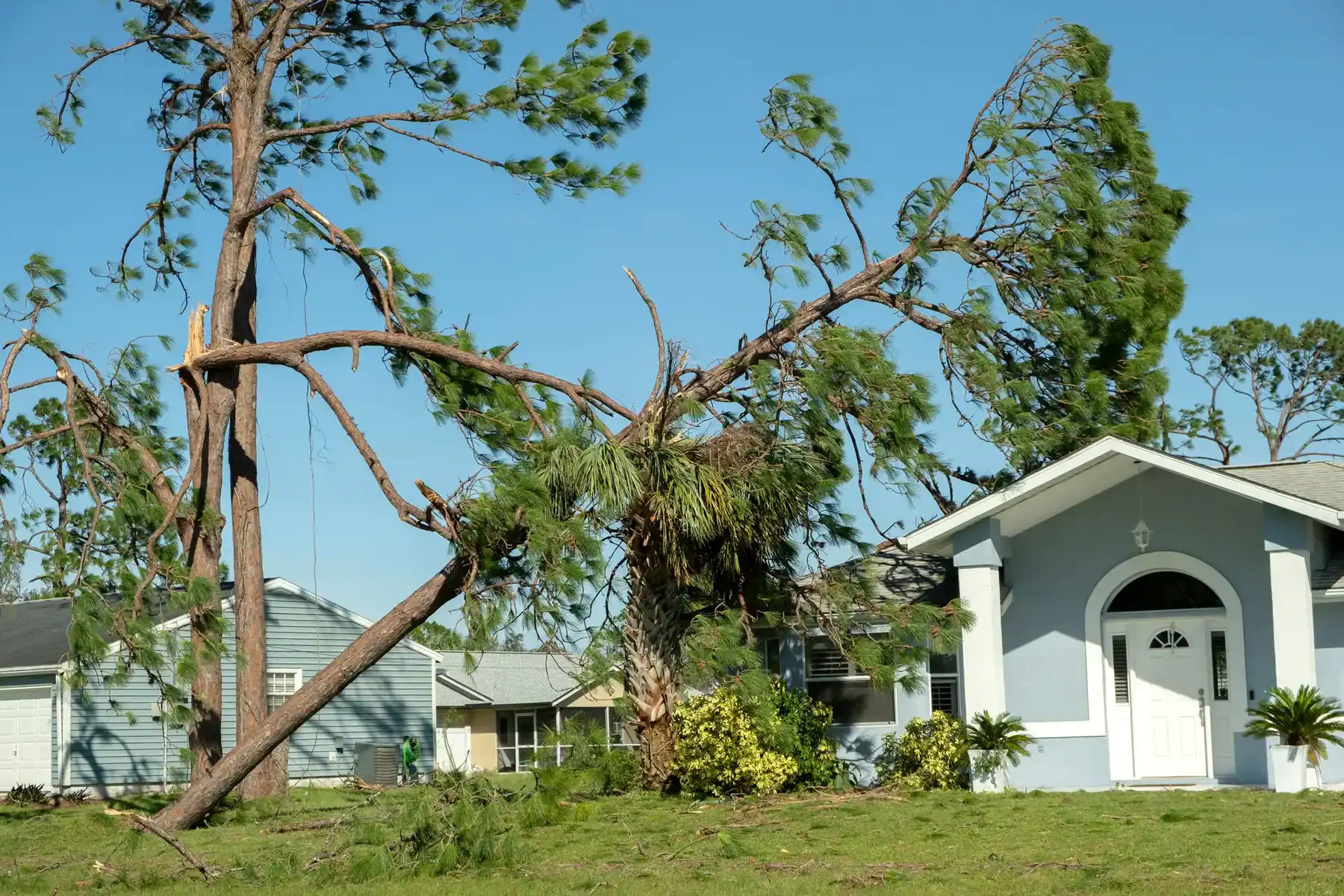
Alcona County has been formally declared a disaster area for catastrophic ice storm damage multiple times in the past three years alone. If you live in Cheviers or anywhere in Curtis Township, you already know what that looks likepower out for days, roads blocked by downed trees, and a yard that looks like the forest moved in. The question after a storm isn’t whether the damage is real. It’s who’s actually going to come.
When we respond to a storm damage call in Cheviers and the surrounding area, the goal isn’t just to cut the tree and leave. Curtis Township properties sit at the edge of the Huron National Forest, which means the trees falling on your land are often large-canopy forest treesmature maples, birch, and pine that have been growing for decades. Getting them off your structure, out of your driveway, or away from your power line takes the right equipment and someone who understands how forest trees behave when they fail, not just how to trim a suburban yard tree.
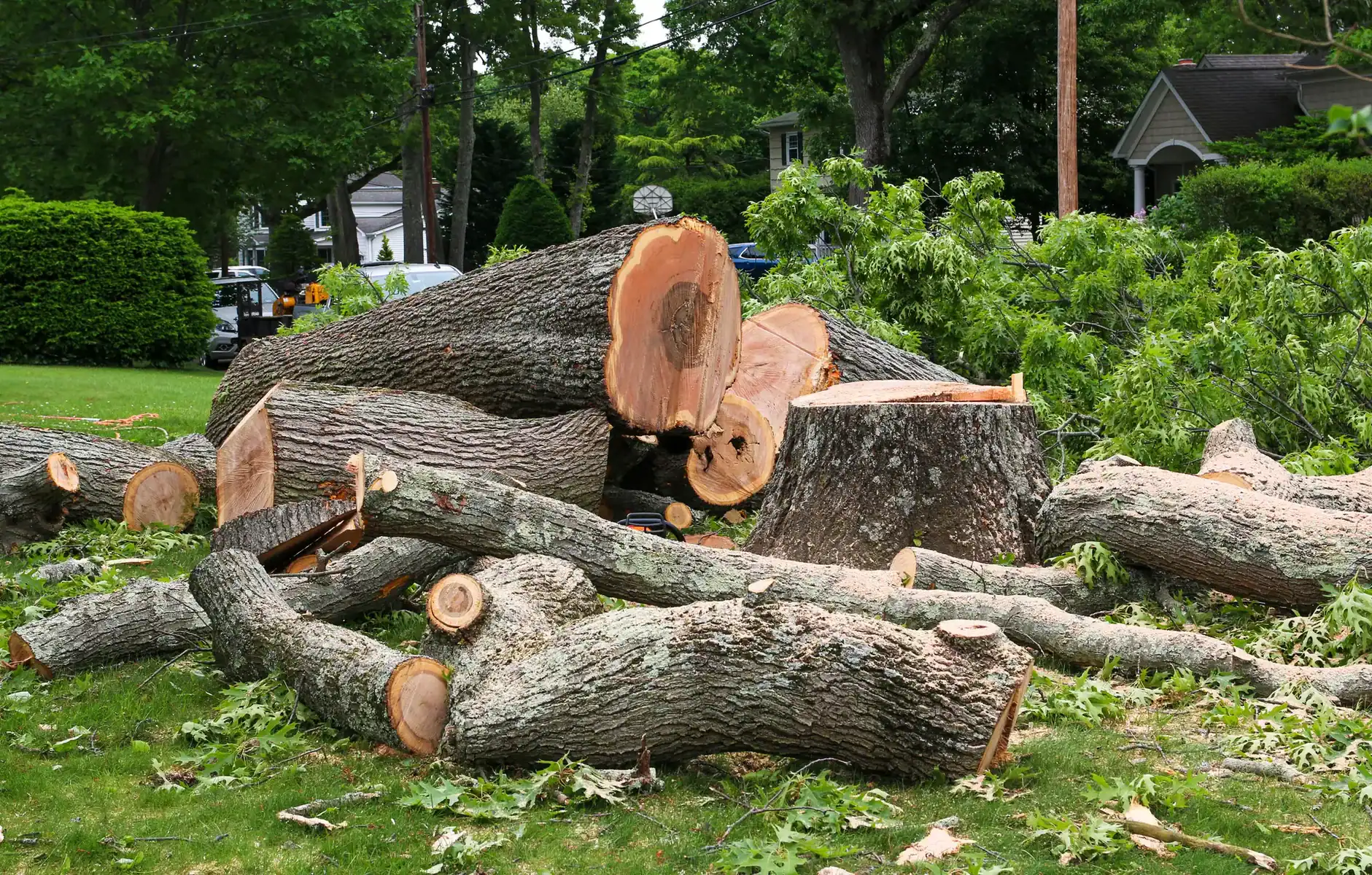
The job ends when the property is clean. That means stump grinding if needed, debris hauled out, and the option to restore torn-up ground with topsoil, mulch, or grass seeding. One call, one crew, one complete jobso you’re not coordinating three separate contractors after an already stressful event.
Licensed Tree Service Crew Alcona County
We’re a family-owned operation run by Ivan and his fiancée Cecilia. Ivan leads every field job personally. Cecilia handles scheduling and communication. When you call, you reach a real personnot a call center routing your emergency to whoever’s available.
That matters in a rural county like Alcona, where after a major storm the local contractor queue fills up fast. The ice storm events that hit Cheviers, Curtis Township, and the surrounding area didn’t just damage treesthey overwhelmed every available crew in the region for days. We’re licensed and insured, carry general liability and workers’ comp coverage, and have over seven years of field experience working across diverse environments, including the kind of large forest trees that define properties along the M-65 corridor and deep into the township’s interior.
Post-storm scam crews are a documented problem. The BBB has issued active warnings about unlicensed, uninsured operators who show up after disasters demanding cash upfront. We have a published address, a direct phone number, and verifiable customer reviewsthe kind of paper trail that separates a legitimate company from someone knocking on your door after the storm passes.
Storm Damage Tree Clearing Curtis Township MI
When you call about storm damage, the first thing that happens is a real conversationnot an automated form or a callback queue. You describe what you’re dealing with: tree on the roof, limb over the power line, blocked driveway, or a standing tree that took a hit and you’re not sure if it’s stable. Our team assesses the situation with you over the phone to understand the urgency and get a crew moving in the right direction.
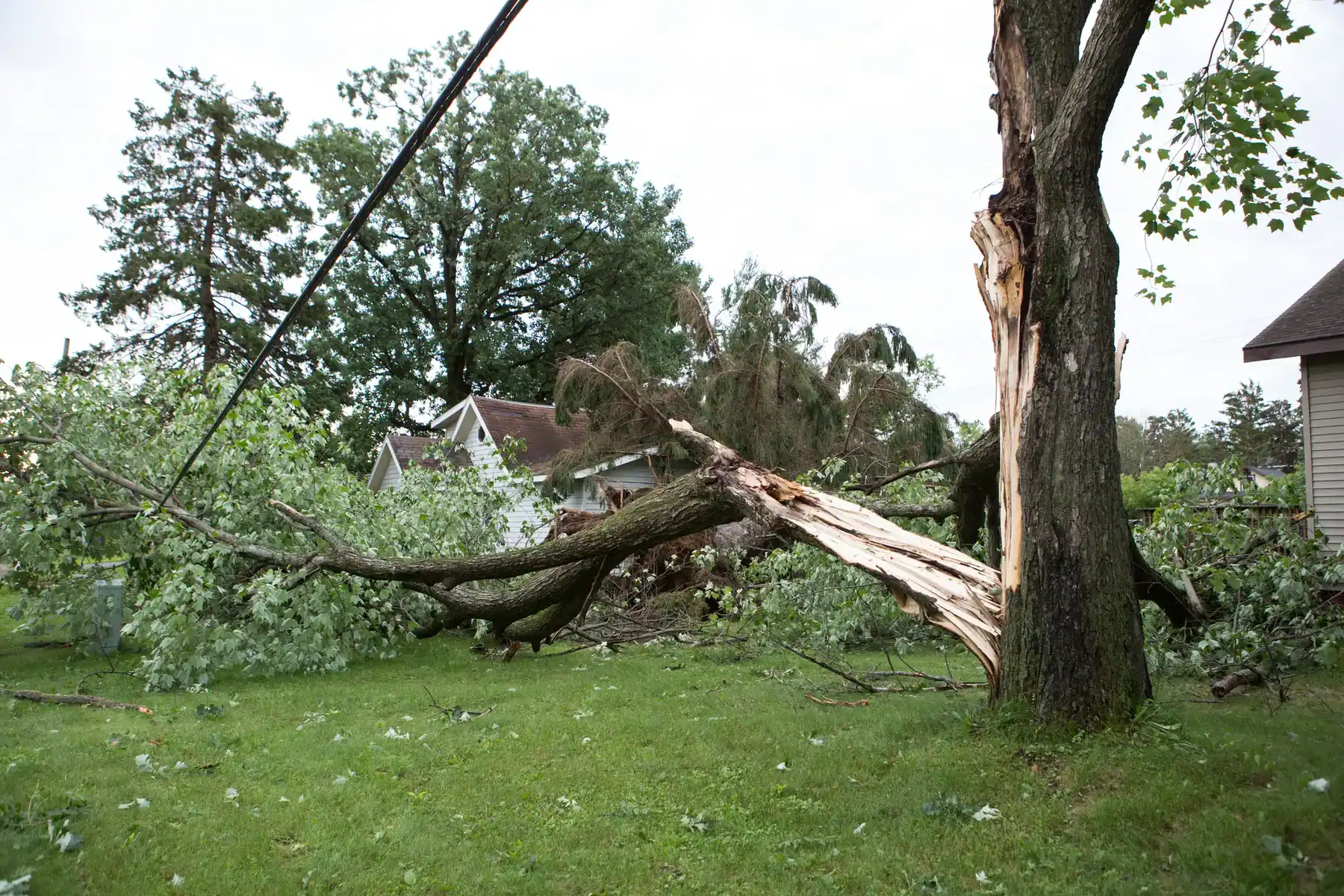
Once on-site, the priority is safety. In Cheviers and throughout Curtis Township’s ice storm conditions, that often means dealing with trees that are entangled with or leaning toward power linesa scenario that requires trained handling, not guesswork. Multiple customers have specifically noted our crew’s ability to work safely around electrical infrastructure, which is one of the most dangerous elements of storm damage work in a rural county where trees and utility lines share the same corridor for miles. We assess the full situation before any cutting starts, identify secondary hazards like compromised root plates or hanging widow-maker limbs that aren’t obvious from the ground, and work through the job systematically.
After the tree is down and sectioned, cleanup is part of the process. Debris gets hauled, the stump gets ground if that’s part of the scope, and if the removal tore up the ground, there’s an option to bring in topsoil and reseed. Curtis Township doesn’t have a specific tree removal permit requirement for private property, but if your land borders Huron National Forest, it’s worth knowing that trees on Forest Service land are the agency’s responsibilitywhile anything on your private parcel falls to you. We can help you understand where that line is.
Ready to get started?
Fallen Tree Removal and Hazardous Limb Service Cheviers
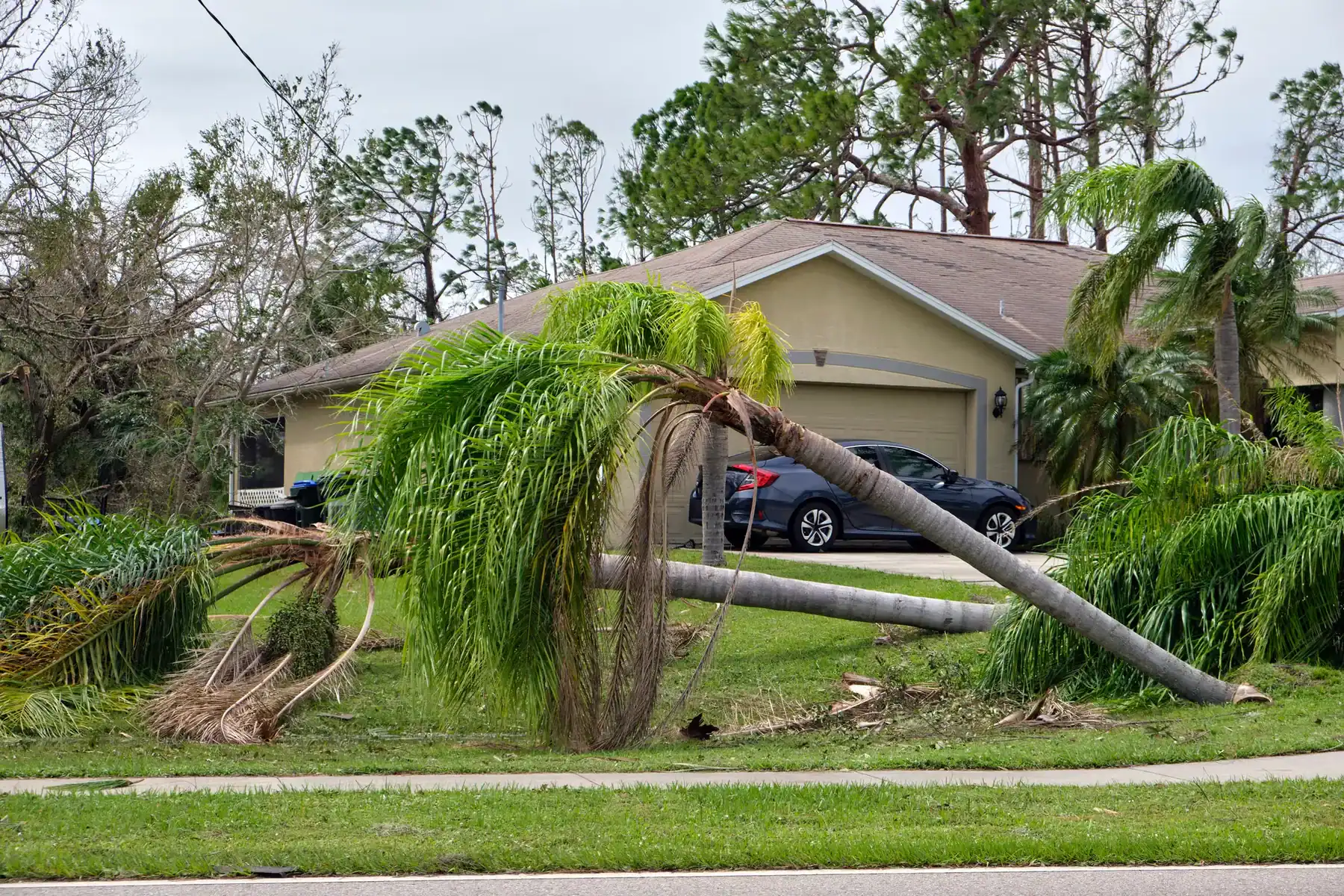
Storm damage in Cheviers isn’t a single scenario. It might be a birch that came down across your driveway on Bamfield Road during the March ice storm. It might be a massive pine that split under ice load and landed on your cabin roof while you were downstate. It might be a hanging limbthe kind that looks stable but isn’tsuspended over your power line after a wind event. Each situation is different, and we handle all of them.
Our core services for storm response include emergency tree removal, fallen tree clearing, hazardous limb removal, storm debris cleanup, and 24/7 availability for situations that can’t wait until Monday morning. For properties in Curtis Township where the tree canopy is dense and the lots are large, debris removal isn’t a minor add-onit’s a significant part of the job. We bring the equipment to handle it fully, not just the chainsaw.
Beyond the immediate removal, we also offer stump grinding, topsoil installation, mulch spreading, and grass seeding for properties that need ground restoration after a large tree comes out. This is especially relevant for Cheviers-area properties where seasonal cabin owners return after an ice storm to find damage that happened weeks earlierthe tree is gone, but the stump, the ruts, and the bare soil still need attention. The full restoration option means you’re not leaving your property in worse shape than before the storm, just because the tree is technically gone.
Does homeowners insurance cover fallen tree removal after an ice storm in Alcona County?
It depends on where the tree landed, not just that it fell. Most Michigan homeowners insurance policies will cover tree removal costs when a tree falls on an insured structureyour house, garage, or fenceas a result of a covered peril like wind, ice, or lightning. The typical coverage range is $500 to $1,000 per tree, sometimes capped around $2,500 per incident. That won’t cover the full cost of removing a large forest tree from a structure in most cases, but it offsets a meaningful portion.
Where it gets complicated is when the tree falls in your yard without hitting anything. In that scenario, most standard policies won’t cover removal at alleven if the tree is blocking your driveway or creating a hazard. Alcona County’s ice storms have a history of dropping trees across rural properties in exactly this way, so it’s worth pulling out your policy and checking the specific language before assuming you’re covered. Documenting the damage with photos immediately after the stormbefore any cleanup beginsis important for any claim you plan to file.
How quickly can a crew reach a rural property in Cheviers after a storm?
Response time in a rural area like Cheviers and Curtis Township depends on two things: how severe the storm was regionally and whether the roads are passable. After the major ice storms that have hit Alcona County in recent years, the honest answer is that every tree service in the region gets overwhelmed fast. Local contractors fill their schedules within hours of a major event, and properties deeper in the townshipoff the main M-65 corridor, down county roadscan be harder to reach while debris is still blocking access routes.
We operate 24/7 for emergency situations, which means you’re not waiting until business hours to get someone on the phone. The earlier you call after a storm, the better your position in the response queueespecially in a county where local capacity is thin and demand spikes sharply after a disaster-level event. Calling at 2 a.m. when the ice comes down is not an inconvenience. That’s exactly what the emergency line is for.
Is it safe to stay in my house if a tree has fallen on the roof?
That depends on the size of the tree, where it hit, and whether the structure is compromised. A small limb that landed on shingles without penetrating the roof deck is a different situation than a large maple that came through the rafters. If there’s any visible structural damage, sagging, or if you can hear the tree shifting, the safest move is to get out and call for emergency removal immediately.
What’s less obvious is the secondary risk. A tree that appears to be resting stably on a roof may still be under tensionmeaning it can shift or roll when the ice melts or when wind picks up again. In Alcona County’s ice storm conditions, restoration crews have specifically noted that thawing trees and limbs snapped and fell in the days after the initial storm, causing new damage. A tree that looked stable the morning after the storm may not be stable three days later. Don’t wait on a professional assessment just because it seems okay right now.
What's the difference between a hazardous limb and normal storm debris in Cheviers?
Normal storm debris is what’s already on the groundbranches, bark, brush that came down and landed. Hazardous limbs are the ones still in the tree, partially broken, hanging, or suspended. These are sometimes called widow-makers, and they’re the most dangerous part of any post-storm cleanup. They can look like they’re wedged in place, but they’re under loadand they can drop without warning, especially as ice melts and the weight distribution shifts.
In Cheviers and throughout Curtis Township, where the surrounding Huron National Forest contributes large-canopy trees to private properties, hazardous limbs after an ice storm can be substantialnot small branches, but major structural limbs from mature maples or birch. Trying to clear debris from below a compromised limb, or attempting to cut a hanging branch yourself, is one of the most dangerous things a homeowner can do after a storm. OSHA reports more than 100 people are killed by falling trees every year in the U.S. Let the crew handle anything that’s still in the tree before anyone walks underneath it.
Can a storm-damaged tree be saved, or does it always need to come down?
Not every storm-damaged tree needs to be removed. It depends on how much of the tree’s structure is intact, whether the root system is compromised, and what the tree’s condition was before the storm hit. A tree that lost a major limb but still has a sound trunk and healthy root plate may recover well with proper pruning. A tree that split at the crotch, uprooted partially, or took a direct lightning strike is usually a removal situationthe structural integrity is gone even if the tree is still standing.
In Curtis Township, where properties are surrounded by mature forest trees, this assessment matters a lot. A tree that survived the storm but was weakened by ice load becomes a hazard in the next weather eventand Alcona County’s recent history shows that major storms aren’t one-off events here. Getting a professional assessment after any significant storm is worth doing even if nothing fell, because the trees that look fine from the yard aren’t always fine from the inside. We can walk through what’s worth saving and what needs to come out before it becomes the next emergency.
How do I know if a tree service showing up after a storm in Cheviers is legitimate?
This is a real concern, not a hypothetical one. The BBB has issued active warnings about unlicensed, uninsured crews that show up door-to-door after disaster-level stormsexactly the kind of events Alcona County has experienced repeatedly. These operators typically demand full cash payment upfront, provide no written estimate, and either do incomplete work or disappear entirely. In a rural county with limited local contractor options, homeowners are especially vulnerable to this because the pressure to get a tree off a structure is high and the alternatives feel limited.
Before you agree to any work, ask for proof of general liability insurance and workers’ compensation coverage. Get a written estimate before anything is cut. Verify the company has a real address and phone number you can look up independently. We carry full insurance, provide written estimates as a standard part of every job, and have a published street address and direct phone number. That’s not a long checklistit’s the basic minimum that separates a legitimate crew from someone taking advantage of a bad situation. If a company can’t hand you proof of insurance before starting, send them away.
Other Services we provide in Cheviers