
Storm Damage Tree Removal in Glennie, MI
When Ice Brings Down Your Trees, We're Available Around the Clock
Hear from Our Customers
Emergency Tree Service Alcona County
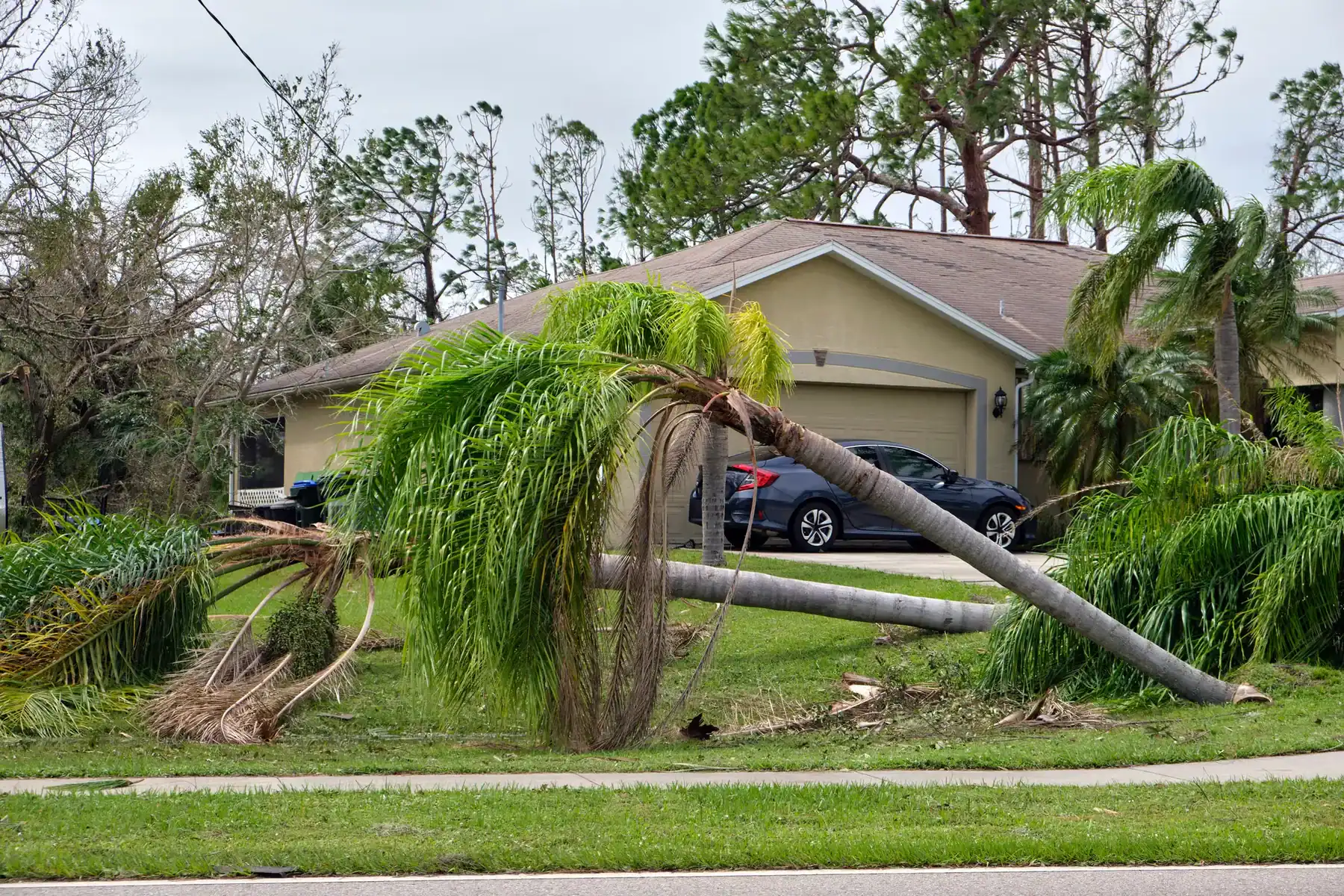
A storm doesn’t just leave a tree on the ground. It leaves you with a blocked driveway, a compromised structure, a stump in the yard, and questions about what your insurance actually covers. Our goal isn’t just getting the tree off your propertyit’s getting your property back to the way it was, without you having to manage four different contractors to make that happen.
For Glennie property owners, that distinction matters in a specific way. Over half of Curtis Township sits inside the Huron National Forest. The trees surrounding your home or cabin aren’t small ornamentalsthey’re mature hardwoods and white pines that have been growing for decades. When an ice storm loads them past their limit, the damage is serious. The 2025 and 2026 ice storms both triggered state emergency declarations for Alcona County, with up to 1.5 inches of ice accumulation bringing down trees and power lines across the region.
Whether you’re a year-round resident on M-65 or a cabin owner who just arrived to find your driveway blocked and a limb through your porch roof, the outcome you need is the same: a clean, safe, fully restored propertyhandled by people who actually answer the phone and show up when they say they will.
Licensed Tree Removal Alcona County, MI
We’re a family-owned operation out of Milford, MI. I lead every job in the field. My fiancée Cecilia handles scheduling, communication, and coordinationwhich means when you call after a storm, you’re talking to an actual person, not a national call center routing your request into a queue.
That structure matters especially for Glennie, where a large share of properties along the AuSable River corridor and around Alcona Dam Pond are seasonal cabins or vacation rentals. If you’re three hours away and a neighbor just sent you a photo of a pine tree across your roof, you need someone who will pick up, give you a straight answer, and coordinate the job without you having to babysit the process from a distance.
With over seven years of experience across multiple states and environments, our crew has the equipment and field knowledge to handle large, complex removals on rural, forested propertiesincluding safe work around downed or compromised power lines. We’re licensed and insured, with a verifiable review history and a published address. Not a toll-free aggregator. Not a storm chaser.
Storm Damage Tree Removal Process Glennie
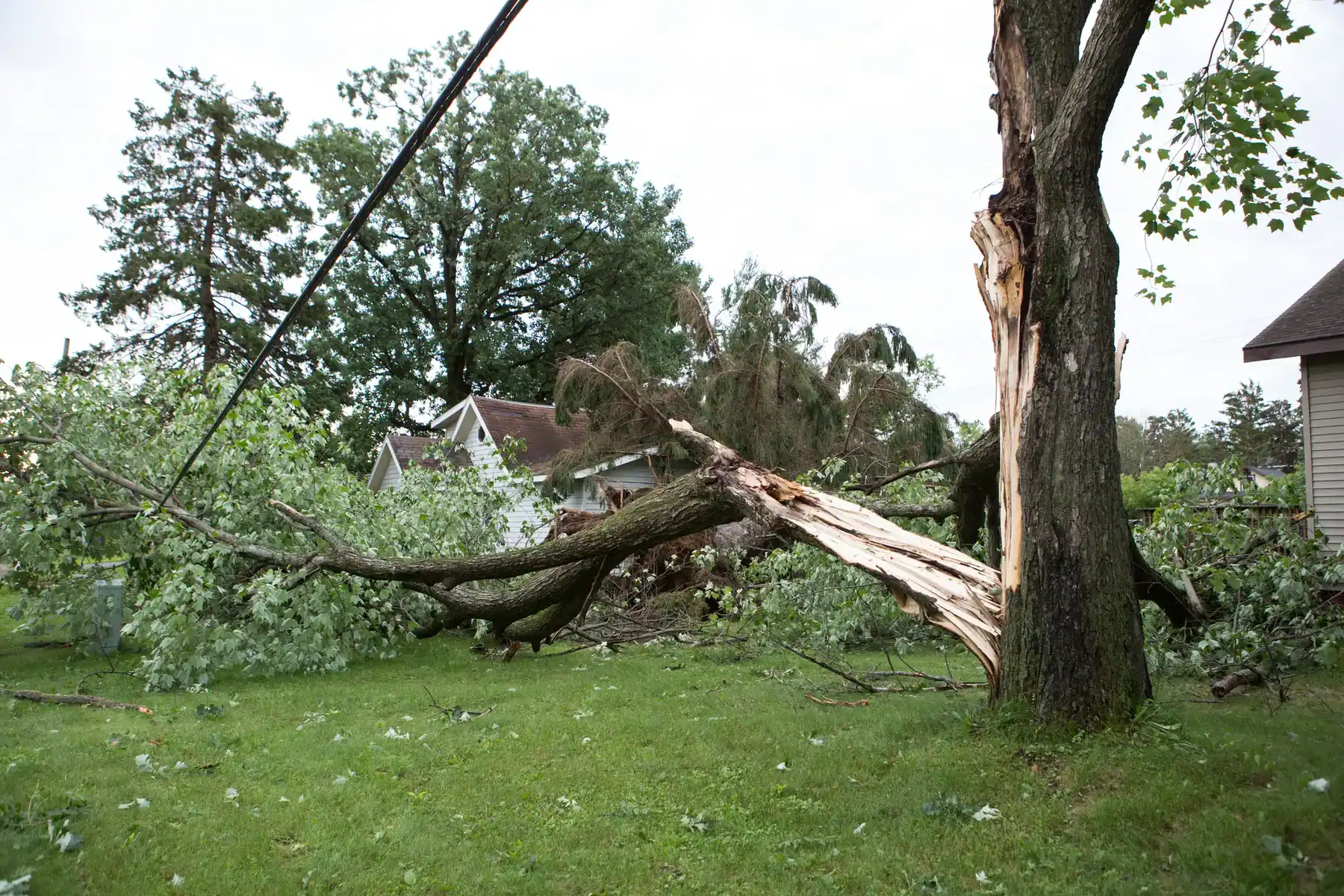
When you call us after storm damage, the first conversation is about understanding the situationwhat fell, where it landed, whether there are power lines involved, and how urgent the risk is. If a tree is on a structure or a limb is hanging over an active line, that gets treated as an immediate emergency. You get a real person on the phone who can help you assess the situation and determine next steps, even if you’re not on the property yourself.
Once our crew arrives, the first priority is making the area safe. In Alcona County, where ice storms regularly bring trees down onto utility infrastructure, that means identifying any contact with power lines before any cutting begins. Our crew is trained and equipped for thisit’s not an afterthought.
From there, the tree is removed using the right equipment for the job. Rural properties in Glennie often mean tight access, large mature trees, and forest-edge conditions that require more than a pickup truck and a chainsaw. We bring high-end equipment to handle these jobs without causing secondary damage to your property.
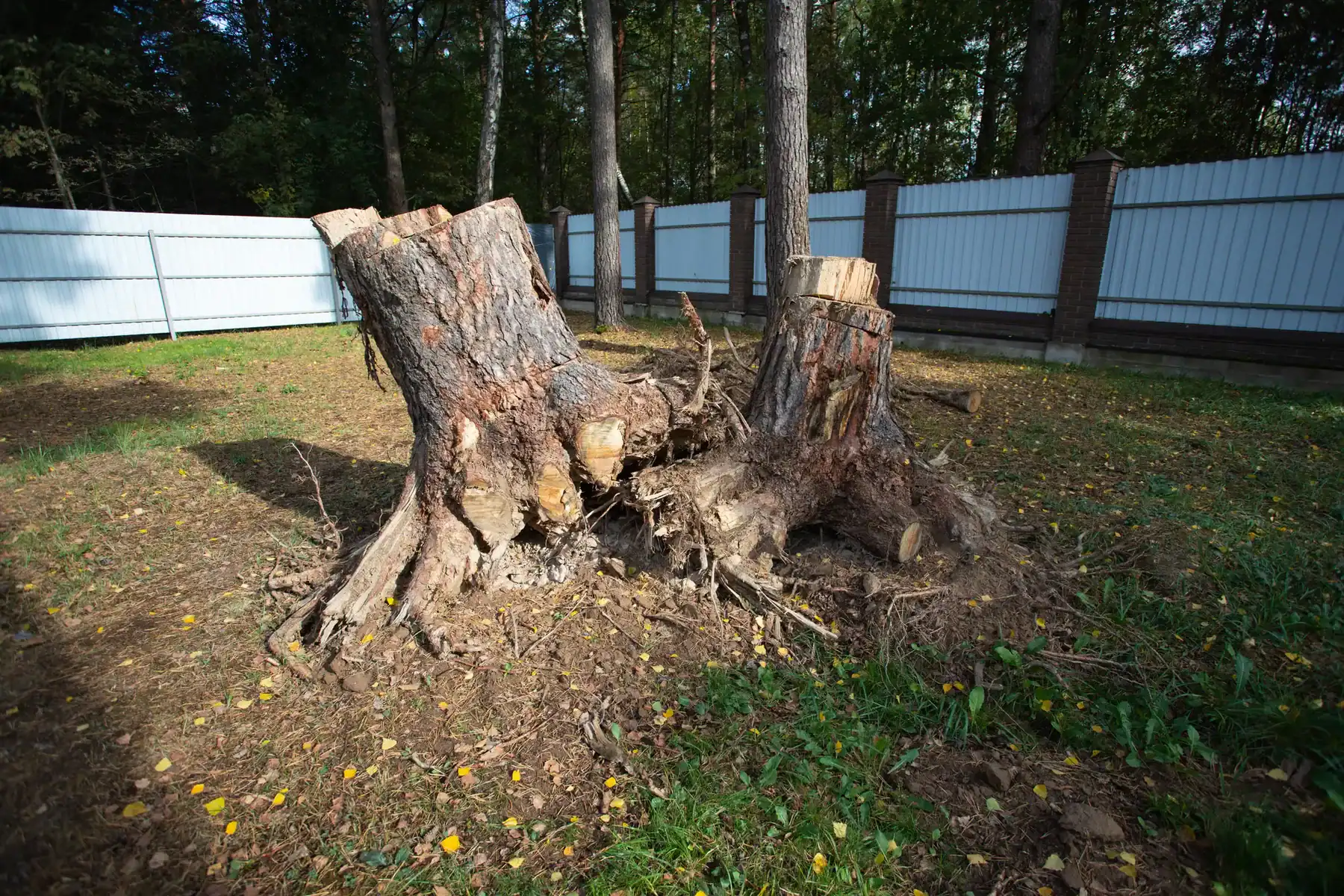
After the tree is out, you have options. Stump grinding, topsoil, mulch, and grass seeding are all availableso the job ends with a restored property, not a stump and a rut. We provide a written estimate before any work begins. No surprises on the bill.
Ready to get started?
Fallen Tree Removal and Hazardous Limb Service Glennie
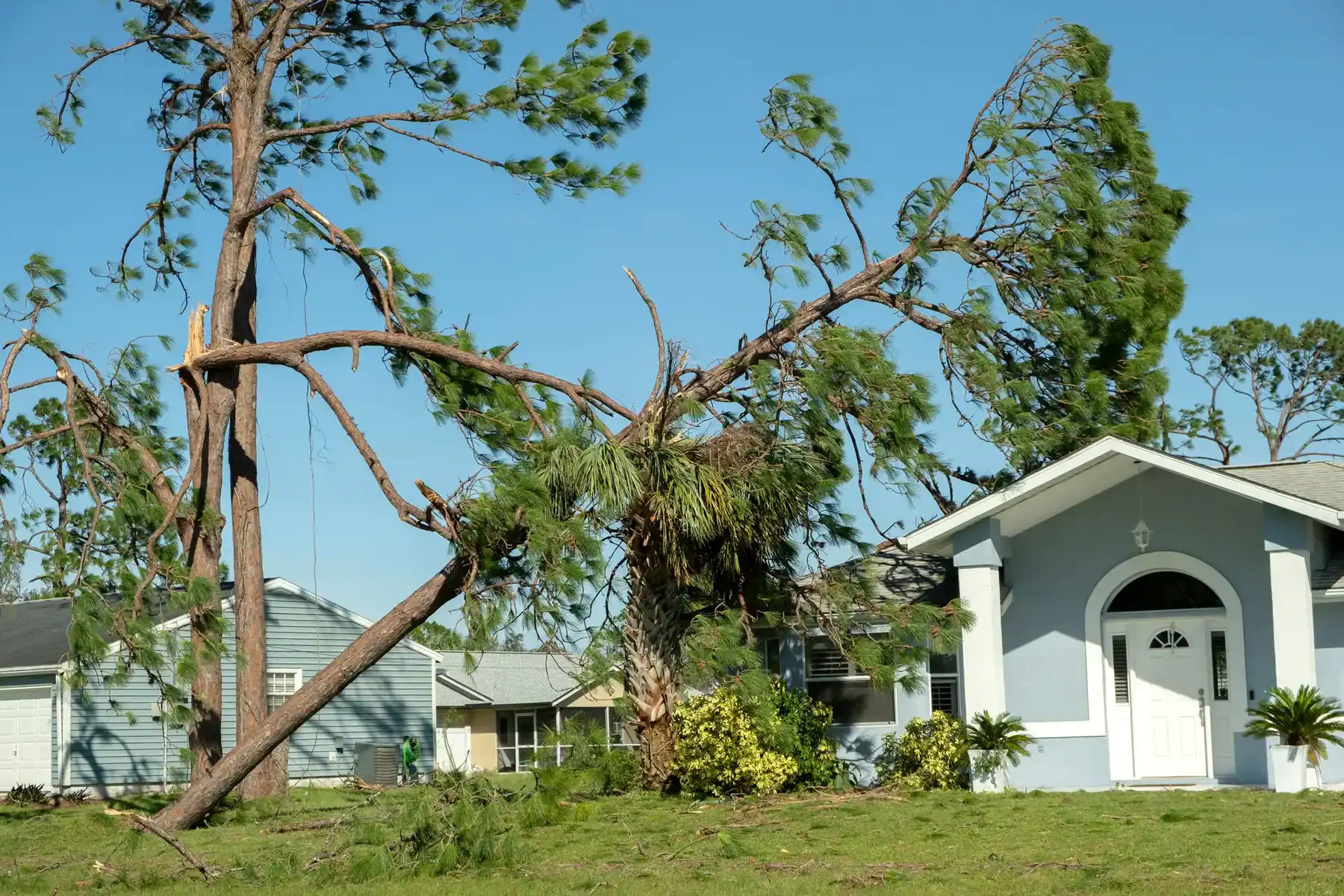
Our storm damage tree service covers the full scope of what a major weather event can leave behind: emergency fallen tree removal, hazardous limb removal, 24-hour emergency tree clearing for blocked driveways and access routes, and storm debris cleanup. For properties in Glennie and the surrounding Curtis Township area, that scope mattersbecause the trees here are large, the lots are wooded, and the access challenges are real.
We also offer what most local Alcona County operators don’t: full property restoration after the tree is gone. Stump grinding removes what’s left below the surface. Topsoil installation and grass seeding restore the ground cover. Mulch spreading protects the soil and finishes the look. For vacation rental owners who need the property presentable before guests arrive, or for year-round residents who want their yard back to normal before the next season, this matters.
One thing worth knowing for Glennie specifically: because the area is unincorporated and governed by Curtis Township rather than an incorporated municipality, there’s no city permit process to navigate for removing a storm-damaged tree on private property. That removes one layer of delay in a situation where speed directly affects your insurance claim and your property’s safety. We provide a written estimate before work starts, document the job thoroughly, and can help you understand what your homeowners insurance is likely to coverand what it isn’t.
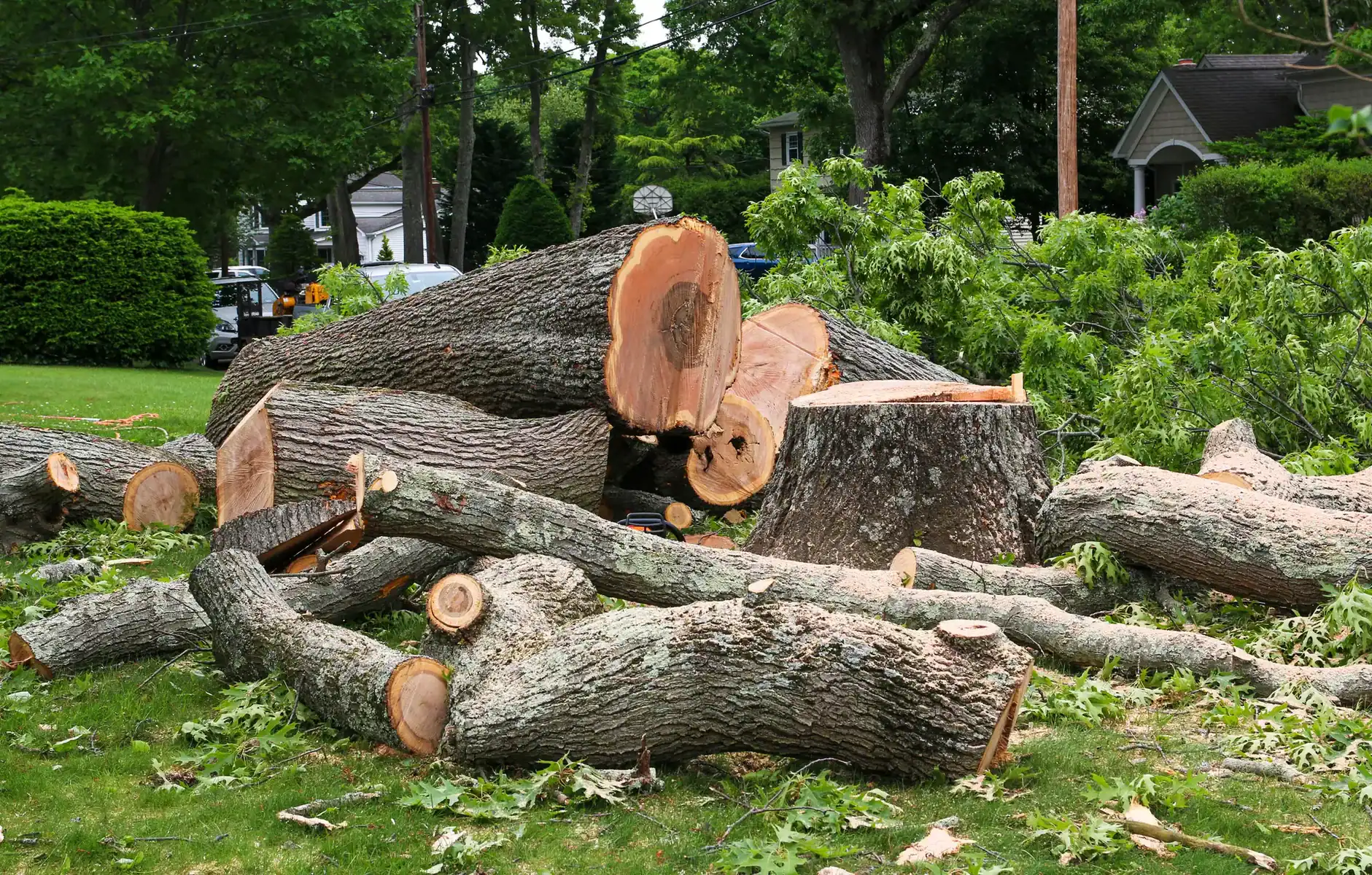
Does homeowners insurance cover fallen tree removal in Glennie, MI?
It depends on where the tree landed, not just that it fell. Michigan homeowners policies typically cover tree removal when a tree falls on an insured structureyour home, garage, fence, or another covered structureas a result of a covered peril like wind, ice, or lightning. Most policies cap that coverage somewhere between $500 and $1,000 per tree, with a per-incident limit often around $2,500. If the tree fell in your yard and didn’t hit anything, most policies won’t cover the removal cost at all.
For Glennie property ownersespecially those with seasonal cabins along the AuSable River corridorthis distinction is important to understand before you assume the bill is covered. Document everything with photos before any work begins. If a tree is on your structure, call your insurance company to open a claim and then call us to get the tree off safely. One thing to be aware of: delaying removal after a tree has damaged a structure can give your insurer grounds to deny the claim for failure to mitigate ongoing damage. Speed matters, both for your property and your claim.
How fast can you respond to storm damage in the Alcona County area?
We offer 24/7 emergency response for storm damage situationsfallen trees on structures, hazardous limbs over power lines, blocked driveways, and any situation where a delay creates additional risk or damage. When you call, you’re talking to a real person who can assess the urgency and coordinate the response, not a voicemail or a national dispatch system.
Response time to the Glennie area will depend on current conditions and demandand after a major ice storm like the ones that struck Alcona County in March 2025 and March 2026, demand spikes sharply across the region. That’s exactly when having a company with the crew capacity and equipment to handle rural, forested properties becomes critical. Smaller local operators often get overwhelmed quickly in surge conditions. If you’re a seasonal property owner who can’t be on-site, Cecilia can coordinate directly with you by phone to confirm access, document the job, and keep you updated throughout. You don’t have to be there for the work to get done right.
Is it safe to stay in my house if a tree has fallen on the roof?
Not without a professional assessment first. A tree on a roof creates several risks that aren’t obvious from the insidestructural compromise, hidden punctures in the roofline, and the weight of the tree continuing to shift as it settles or as weather conditions change. In winter and early spring conditions common to Alcona County, a second freeze or additional ice accumulation on the fallen tree can significantly increase that load.
The safest approach is to avoid the rooms directly below or adjacent to the impact point until the tree is removed and the structural damage can be assessed. If there’s any sign of roof deflection, cracking sounds, or visible ceiling damage, leave the structure entirely and call for emergency removal. We handle tree-on-structure removals with the rigging and equipment needed to extract the tree without causing additional damage to the roof or walls in the process. Getting the tree off quickly also limits water intrusionparticularly important in a wooded, high-moisture environment like the AuSable River area, where a compromised roof can deteriorate fast.
What should I do right now if a tree fell on my cabin while I was away?
This is one of the most common scenarios for property owners in the Glennie area, where the majority of housing units are seasonal or vacation properties. If you’ve just found out remotelythrough a neighbor, a camera, or a photothe first step is to call us to report the situation and describe what you know. You don’t need to be on-site to get the process started.
If you can, ask a neighbor or someone nearby to take photos of the damage from a safe distancenot approaching the tree itself, especially if there’s any chance of contact with power lines. Those photos are important for your insurance claim. Once you’ve opened a claim with your insurer, we can coordinate the removal and document the work on your behalf. For cabin and vacation rental owners in Curtis Township, this kind of remote coordination is something we handle regularlyCecilia manages scheduling and communication, so you have a direct point of contact throughout the job without needing to drive up before the work is done.
What makes a tree limb "hazardous" and when does it need to come down immediately?
A limb is considered hazardous when it poses an imminent risk of falling on a structure, vehicle, power line, or personand that risk isn’t always obvious from the ground. The most dangerous scenario is what arborists call a widow-maker: a partially fractured branch that’s still attached but hanging by a thread, sometimes 50 or 60 feet up. You may not see the fracture from the ground, especially in a dense canopy like the mature hardwoods and conifers common throughout the Huron National Forest area around Glennie.
After any significant ice storm or wind event, a professional assessment of your trees is the right callnot because every limb needs to come down, but because the ones that do need to come down are genuinely dangerous and can’t wait. Signs that point to immediate removal include visible cracking or splitting at the branch union, a limb that’s visibly deflected or hanging at an unnatural angle, contact with or proximity to power lines, and any branch over a structure or frequently used area. In Alcona County’s ice storm conditions, these situations can develop quickly and change between the storm passing and the next wind event.
How much does emergency tree removal typically cost in the Glennie area?
Emergency tree removal generally costs more than a scheduled removaltypically in the range of 25 to 50 percent above standard rates. That premium reflects the after-hours response, the urgency of the situation, and the additional complexity that storm-damaged trees often involve. A tree that’s already fallen on a structure, tangled in power lines, or sitting on a roof requires more rigging, more care, and more time than a straightforward standing removal.
For properties in the Glennie area specifically, a few factors tend to push costs toward the higher end: the size of mature trees common in this forested landscape, access challenges on rural driveways and forest-edge lots, and the complexity of working safely around utility lineswhich is a real and recurring issue in a county that has lost power for thousands of residents during back-to-back ice storm events. We provide a written estimate before any work begins, so you know exactly what you’re agreeing to. There are no surprise charges after the job. If you’re filing an insurance claim, that written estimate also serves as documentation your adjuster will needanother reason to get it in writing from the start.
Other Services we provide in Glennie