
The first day after a storm is when most of the real risk is: adrenaline is high, everyone wants the yard cleaned up fast, and that’s exactly when people get hurt or make a bad situation worse. Here’s the order that actually keeps you safe and gets the property back in shape without creating a second problem.
First: Check for What You Can’t See
Downed power lines are the single biggest risk after a storm, and a branch resting on a line doesn’t always look dangerous. Treat any tree or limb touching a line as live until the utility company confirms otherwise, and keep everyone, including pets, well clear of that whole section of yard. If a line is down, that call goes to the utility company first, before anything else.
Once that’s ruled out, walk the property (don’t climb on anything) and look for what’s actually holding weight. A branch that’s fully down on the ground is one problem. A branch that’s cracked but still hanging, caught in the canopy above, or leaning against the house under tension is a completely different one: it can shift or drop with no warning, and it’s not a DIY job.
What’s Safe to Handle Yourself
Small branches and debris already on the ground, away from structures and power lines, are generally fine to clear yourself if you’re comfortable doing it. Anything larger than that, or anything still attached and under tension, is where we come in.
What to Call In
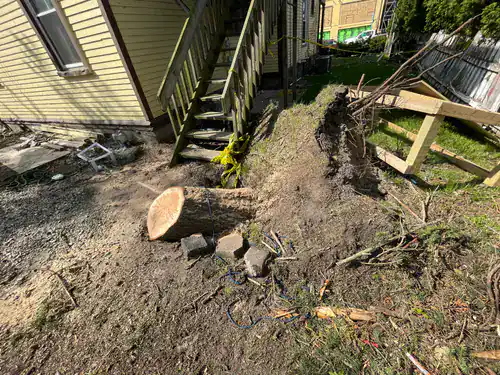
- A tree leaning at a new angle or with soil heaving at the base: the root system may already be failing. Keep people and vehicles out of the drop zone and call the same day.
- A hung-up limb caught in the canopy above: this is one of the more dangerous storm-cleanup situations because it looks stable and isn’t. It needs to come down with proper rigging, not a ladder and a chainsaw.
- A split trunk or major limb resting on the roof, a fence, or a car: weight is already being transferred to whatever it’s resting on, and removing it wrong can cause more damage than the storm did. This is exactly what our 24/7 emergency response is built for.
After the Immediate Danger Is Handled
Once anything hazardous is down safely, full storm cleanup covers everything else: hauling debris, assessing whether damaged trees can be saved with pruning or need to come down, and checking for less obvious damage, like a split that runs into the trunk but hasn’t fully failed yet. Michigan storms are frequent enough that we treat this as routine work, not a special case, and estimates for cleanup are always free.
If you’re in Novi and dealing with storm damage right now, the fastest path is a call, not a guess: we’ll tell you plainly whether what you’re looking at needs to happen today or can be scheduled normally.