
Pruning at the wrong time doesn’t just look sloppy, it can genuinely hurt a tree: encourage weak regrowth right before winter, cut off next year’s flowers, or open a fresh wound during the exact season when certain diseases and pests are most active. Timing is not a minor detail here, it’s most of the decision.
The Short Answer: Late Winter, While the Tree Is Dormant
For most deciduous trees, late winter (after the coldest stretch has passed but before new growth starts in spring) is the best window. With no leaves in the way, you can actually see the tree’s structure clearly: which limbs are crossing, which are crowding the canopy, which are dead versus just dormant. Cuts made while the tree is dormant also heal faster once spring growth kicks in, and pests and fungal diseases that spread easily through fresh wounds are far less active in cold weather.
When to Break the Rule
Spring-flowering trees
If a tree flowers in spring, it likely set those flower buds the previous summer, and pruning it in late winter means cutting off the coming season’s blooms. Those get pruned right after they finish flowering instead, not before.
Storm damage or a hazardous limb
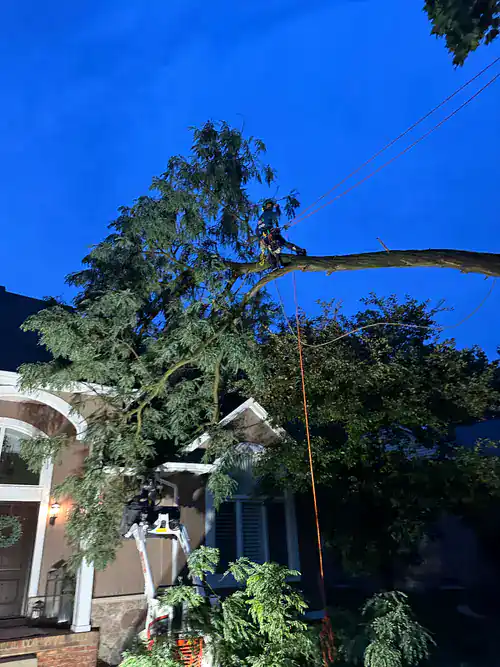
None of the above applies once safety is the issue. A cracked limb, a branch hanging over a roof or driveway, or anything actively at risk of falling gets removed immediately, regardless of season. Waiting for “the right time of year” is how a hanging limb becomes a much bigger problem during the next windstorm.
Newly planted trees
Young trees generally need only light, structural pruning in their first couple of years, mainly removing damaged or crossing branches so the tree develops one strong central leader instead of competing ones. Heavy pruning too early can slow root establishment.
What “Pruning” Actually Means Here
Done right, pruning is targeted: dead and damaged wood removed, crossing branches thinned so the canopy isn’t rubbing on itself, and structural cuts made to guide how the tree grows for years, not just this season. It’s a different job from removal, and it’s also a different job from a hedge trim: a poorly made pruning cut in the wrong spot can cause decay that works its way into the trunk over several years, which is the opposite of what pruning is supposed to prevent.
If you’re not sure whether a tree needs a light structural prune or something more urgent, that’s a normal reason to call. We handle pruning on residential and commercial properties throughout the area, and estimates are free, so there’s no cost to finding out what your trees actually need before deciding when to do it.