Hear from Our Customers
A tree that needs to come down in Walled Lake is rarely a simple job. The city covers just over two square miles with more than 3,000 residents per square mile — which means your tree is almost always close to something: a dock, a seawall, a driveway, a neighbor’s roof. When it comes down, it needs to come down in a controlled way, not in whatever direction gravity decides.
That’s where the difference between a credentialed crew and a guy with a chainsaw becomes very real. We bring ISA Certified Arborists and TRAQ-qualified risk assessors to every major job. What this means for you is a team that evaluates the actual structural risk before anyone picks up a saw — not just someone eyeballing it from the yard.
For lakefront and near-water properties in Walled Lake, that assessment matters even more. Trees growing near the shoreline face root instability from fluctuating water levels, softer soil on the bank side, and wind exposure that inland trees don’t get. What looks stable from your porch may not be stable where the roots actually meet the ground. Getting that evaluated properly is the difference between a planned removal and an emergency one.
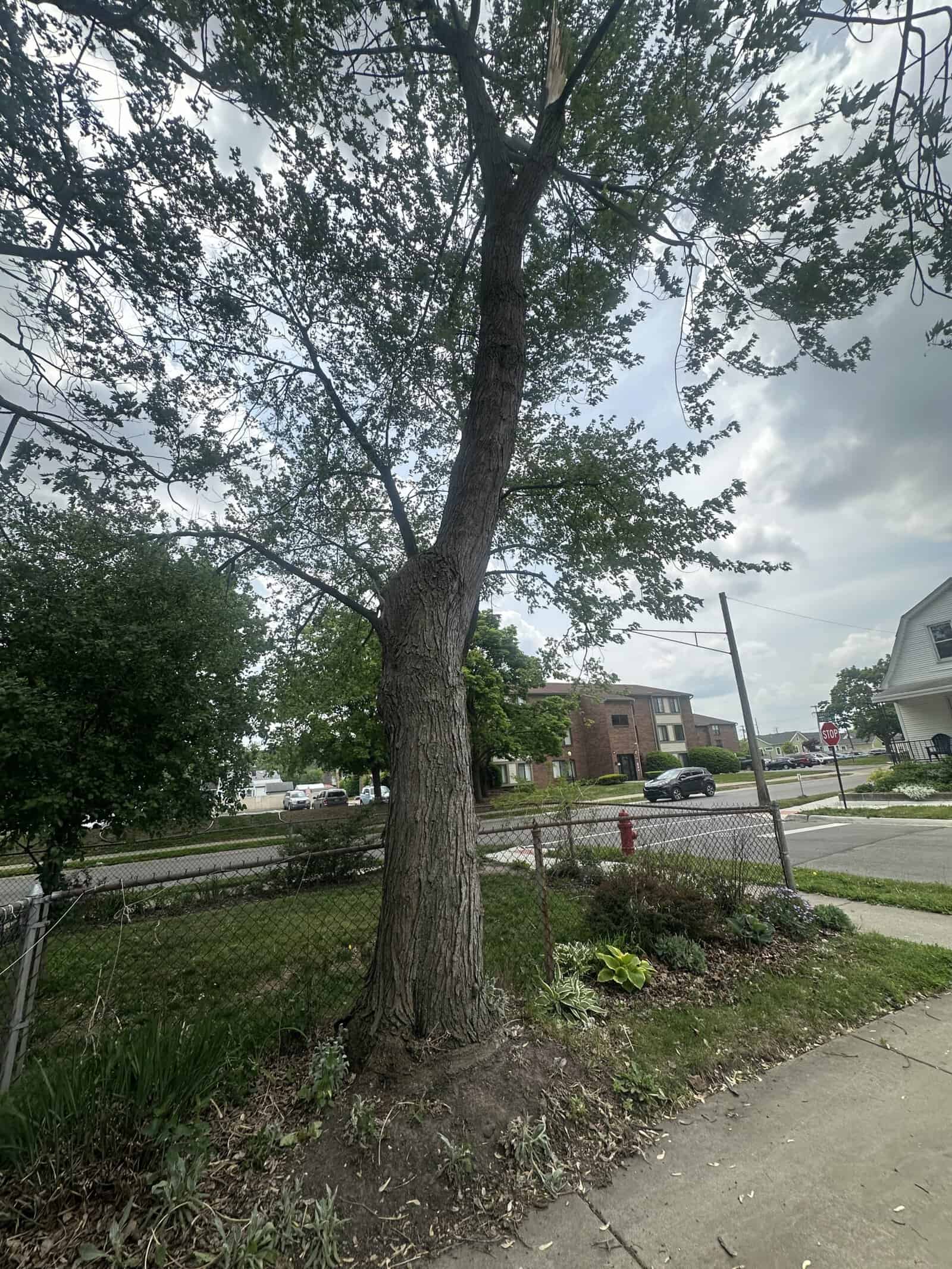
We’re a family-owned and operated company based in Oakland, Michigan — about 15 to 20 miles from Walled Lake — and have been serving Oakland County for over seven years. Ivan runs every field operation personally. Cecilia handles scheduling, communication, and the administrative side, which is why calls get answered and estimates get scheduled without the runaround.
We’re fully licensed and insured, including both general liability and workers’ compensation coverage. That matters more than it might seem. If an uninsured crew gets hurt on your property, you’re the one holding the liability. That’s especially important when you’re talking about work on a lakefront lot or near the utility corridors along Pontiac Trail and Maple Road in Walled Lake.
Our team is also trained and certified to work near electric poles and overhead power lines — a capability that, as Walled Lake residents know firsthand, isn’t as common as it should be. After the storms that uprooted trees and sheared poles at Maple and Commerce roads, that training isn’t just a credential on paper. It’s the reason the job gets done when other companies say no.
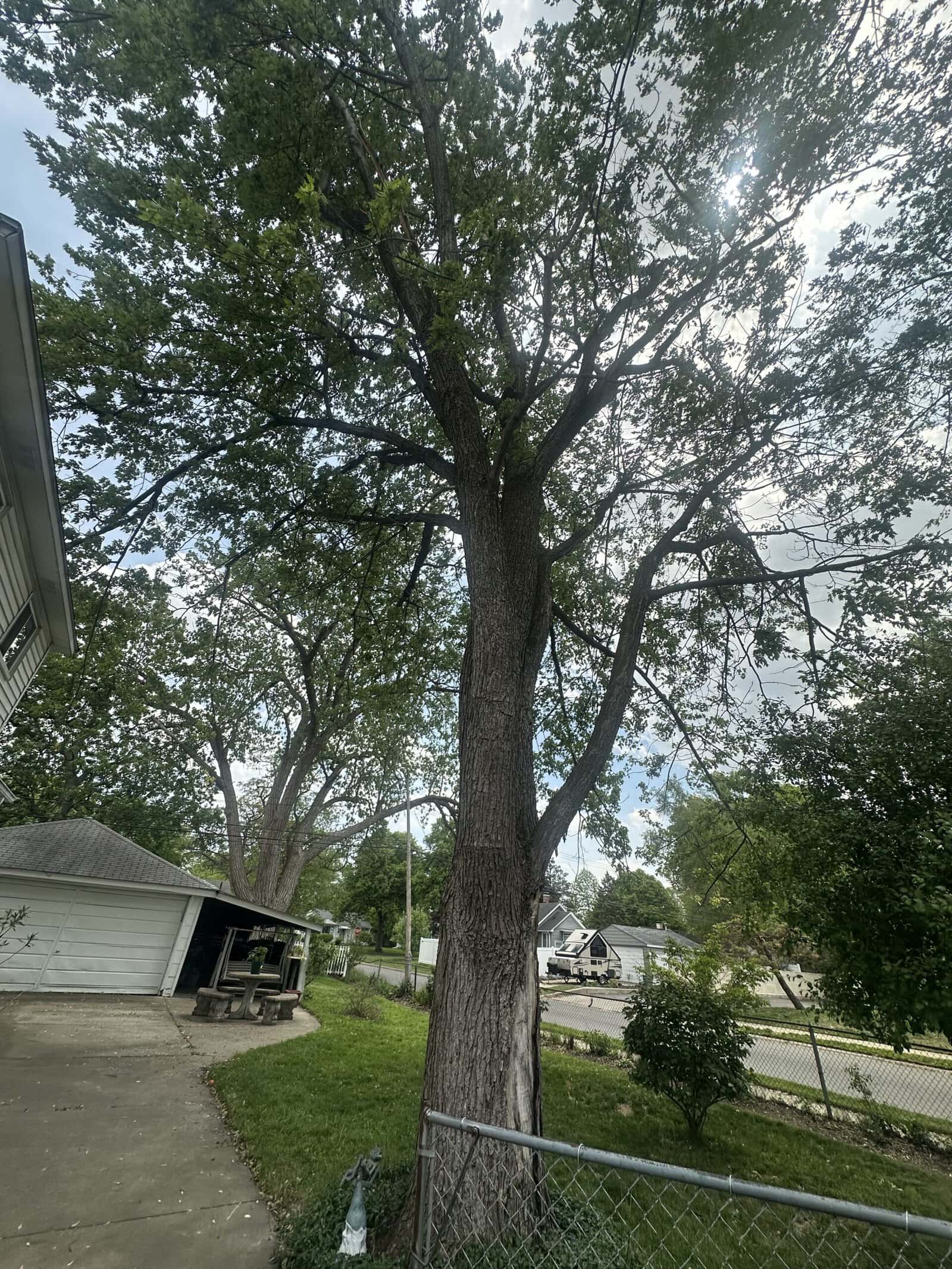
It starts with an on-site walkthrough. We never quote a job blind — every estimate begins with someone physically on your property, looking at the tree, the surrounding structures, the access points, and anything that could complicate the removal. In a city as compact as Walled Lake, that step isn’t optional. There’s almost always something in the fall zone, and the plan needs to account for it before the work begins.
From there, you get a written estimate that spells out exactly what’s included. No vague numbers, no surprises when the crew shows up. If your property is near the water’s edge or adjacent to overhead utility lines, those factors are built into the scope — not treated as add-ons after the fact.
For lakefront and near-shore properties in Walled Lake, we also consider whether Michigan’s NREPA Part 303 wetland provisions apply, since activities near regulated wetlands may require a permit from EGLE. That’s something worth knowing before work starts, not after.
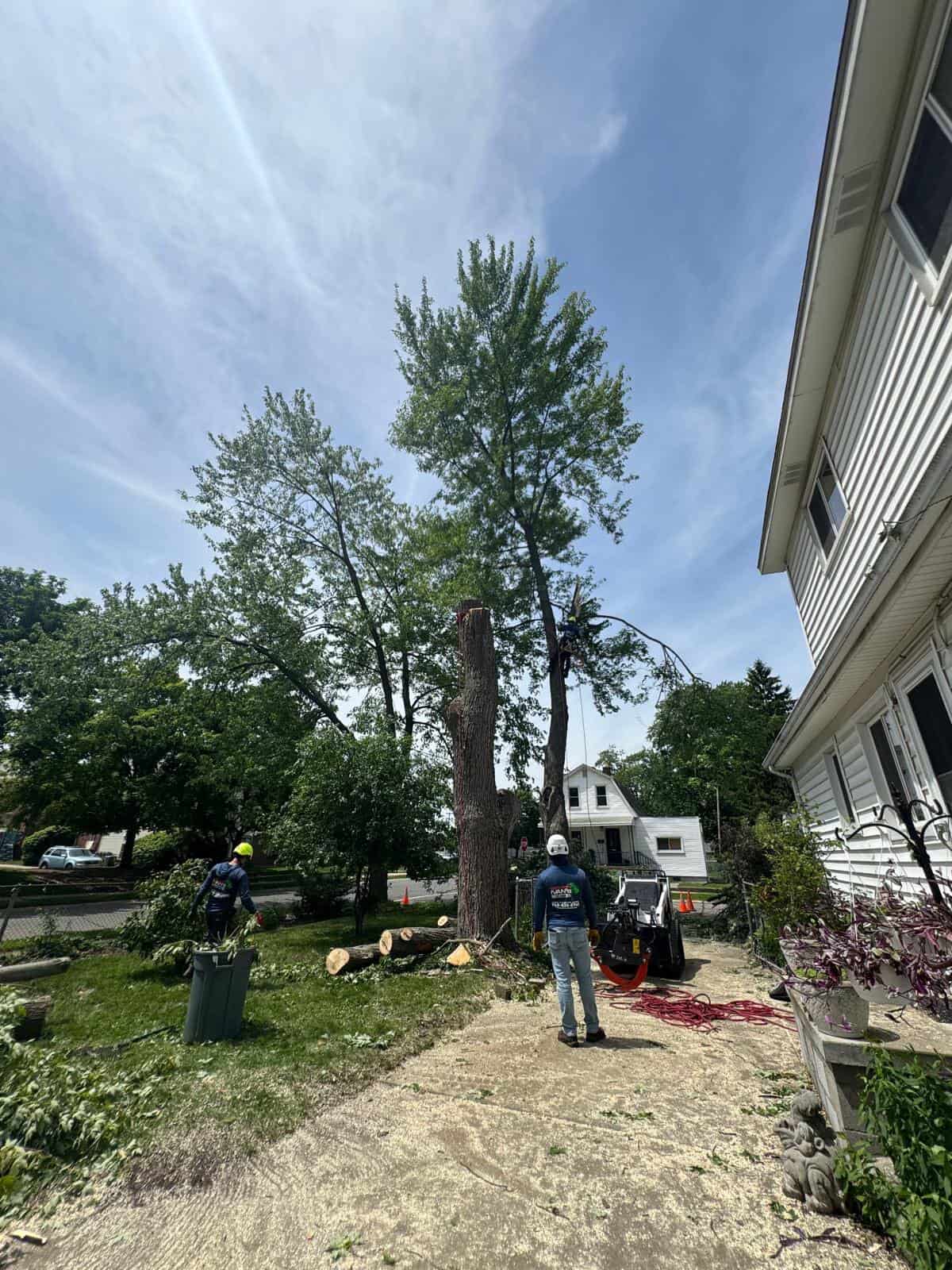
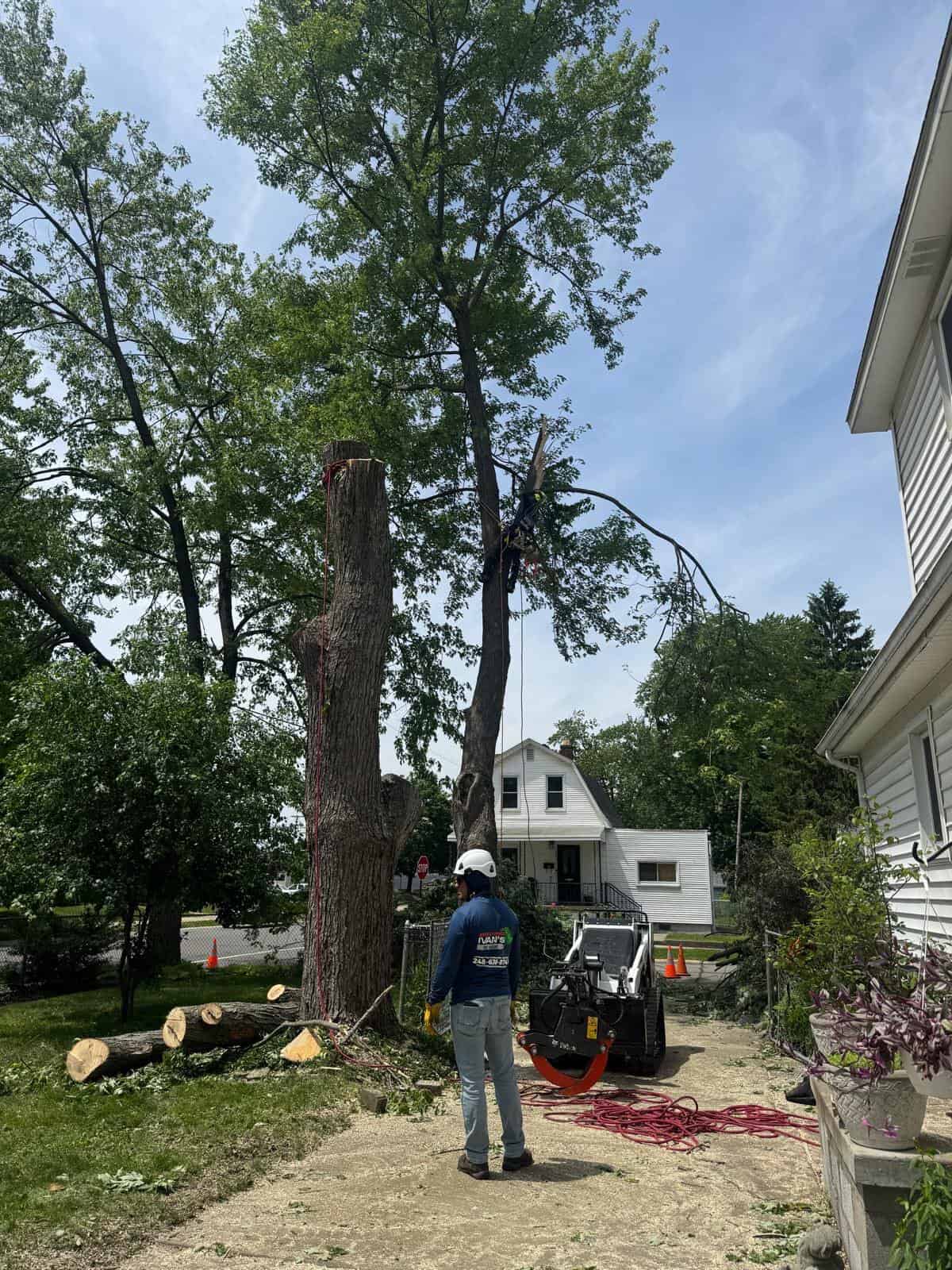
The removal itself uses controlled rigging and proper equipment to bring the tree down safely — not just the path of least resistance. Once the work is done, we handle complete debris removal and site cleanup before leaving. Logs, brush, chips — all of it goes. You don’t spend the weekend dealing with what’s left behind.
Ready to get started?
Tree removal in Walled Lake, MI covers a wider range of situations than most homeowners expect until they’re in one. Routine removal of a dead or unwanted tree is the most common call — but it’s far from the only one. We handle dead tree removal regularly throughout Oakland County, and it’s worth noting that dead trees don’t need to wait for spring. They can come down year-round, and winter removal is often cleaner and more efficient for certain species.
Hazardous tree removal is a separate category that comes up often in this area. A tree doesn’t have to be visibly dead to be dangerous. Internal decay, root damage from waterlogged soil near the lake, or structural compromise from a previous storm can all create failure risk that isn’t obvious until it’s too late. The TRAQ-qualified risk assessment we deploy is specifically designed to catch what a visual inspection misses.
We offer emergency tree removal in Walled Lake, MI 24 hours a day, seven days a week. After the August 2023 storms that caused documented damage across Oakland County — including here in Walled Lake — the ability to respond immediately isn’t just a selling point. It’s the difference between a tree on your fence and a tree through your roof. We also handle storm cleanup, lot clearing, stump grinding, and complete stump removal with full site cleanup, so the job doesn’t end at the cut.
For most standard residential tree removal on private property in Walled Lake, a permit is not typically required — but that answer has an important exception. If your property is near the shoreline of Walled Lake or adjacent to a regulated wetland, Michigan’s Natural Resources and Environmental Protection Act (NREPA Part 303) may require a permit from EGLE — the Michigan Department of Environment, Great Lakes, and Energy — before any vegetation removal occurs in or near that wetland boundary. This applies to a meaningful number of properties in Walled Lake given how much of the housing stock sits close to the water.
The safest move is to check with the City of Walled Lake directly before work begins, and to work with a company that knows to ask the question in the first place. We walk through permit considerations as part of the on-site estimate process — so you’re not caught off guard after the job is already scheduled.
This is one of the most common questions homeowners ask, and it’s a fair one. A tree can look completely fine from the outside and still be structurally compromised. Internal decay, split root systems, and fungal damage don’t always show up visually until the tree is already at serious risk of failure. On the flip side, a tree that looks rough — sparse canopy, some dead branches — may still be healthy enough to save with trimming or cabling.
The standard the industry uses is this: if less than 25% of the tree’s branches are dead, it may still be a candidate for preservation rather than removal. But that threshold is a starting point, not a diagnosis. For Walled Lake properties near the water, root systems can be undermined by fluctuating lake levels and softer shoreline soils in ways that aren’t visible from the surface at all. We deploy TRAQ-qualified risk assessors — a specialized ISA designation built specifically for evaluating structural failure risk — so the recommendation you receive is based on methodology, not a gut call.
Tree removal and stump removal are two separate services, and this surprises a lot of homeowners. When a tree comes down, the stump stays in the ground unless stump grinding or full stump removal is specifically included in the scope of work. This is standard across the industry — it’s not a bait-and-switch, it’s just how the work is structured, and it’s worth clarifying upfront so you’re not looking at a stump in your yard wondering what happened.
We offer stump grinding and complete stump removal with full site cleanup as a standalone service or as part of a broader tree removal job. If you want the stump gone, just say so at the estimate stage and it gets built into the scope. For Walled Lake properties near the lake where root systems can extend into soft or wet soil, full stump removal — not just grinding — is sometimes the better option to avoid ongoing root decay near the water’s edge. Your estimator can walk through which approach makes sense for your specific situation.
Yes — but not by every company. This is a real issue in Walled Lake. After documented storm events along Maple Road and Commerce Road where trees uprooted poles and snapped power lines, a number of homeowners in the area have run into the same problem: they call for a removal near overhead utility lines and the company either refuses or tells them to wait for DTE Energy to clear the lines first. In one documented case in the area, DTE quoted a two-to-six-month backlog just to clear ten feet of clearance.
We’re trained and certified to work near electric poles and overhead utility lines — a specific capability that most local tree companies in this market don’t have and don’t advertise. This doesn’t mean working on live lines; it means having the training, protocols, and equipment to safely remove trees in close proximity to utility infrastructure without creating additional hazards. If you have a tree that’s growing into or near overhead lines on your property, that training is the reason we can take the job when others can’t.
Cost varies based on several factors: the size of the tree, how close it is to structures or utility lines, whether stump removal is included, and how complex the access situation is. Nationally, professional tree removal ranges from around $200 for small trees under 30 feet to $2,000 or more for large trees over 80 feet, with emergency removal potentially reaching $5,000 depending on the circumstances. Michigan market pricing can differ from those national figures.
What affects cost specifically in Walled Lake is the density of the city and the prevalence of near-water and near-utility-line situations. A removal that requires controlled rigging because the tree is positioned between a dock and a fence line is a more involved job than an open-field removal, and the pricing reflects that. We provide written, itemized estimates after an on-site walkthrough — so you know exactly what you’re paying for before anyone shows up with equipment. Multiple reviewers have noted that our quotes came in as the most competitive among four or five they received, with no hidden charges after the fact.
Honestly, tree removal can happen year-round in Michigan, and the “best” time depends more on the situation than the calendar. Spring through early fall is peak demand season, which means scheduling fills up faster and post-storm emergency calls can push routine jobs back. If you have a dead or hazardous tree that isn’t an immediate emergency, getting it on the schedule in late fall or winter often means faster availability and, in some cases, more competitive pricing.
For Walled Lake specifically, winter removal has an added benefit for certain species: dormant trees are easier to assess structurally, there’s no leaf canopy to work around, and frozen ground can actually make equipment access cleaner on properties near the lake where the soil gets soft and wet in spring. The one timing consideration that does matter here is storm season. Oakland County’s spring and summer thunderstorm season — combined with Walled Lake’s open-water wind exposure — creates real urgency for trees that are already showing signs of structural risk. If a tree is leaning, cracked, or has visible root heaving, waiting until a convenient time on the calendar is the higher-risk choice.
Other Services we provide in Walled Lake
