Hear from Our Customers
When a tree is properly pruned, it stops being a liability and starts doing what it’s supposed to do — add value, provide shade, and hold up under pressure. For Walled Lake homeowners, that last part matters more than most people realize. Tornado activity here runs 26% above the U.S. average, and the city has documented proof of what happens when mature trees meet a serious wind event.
Properly thinned crowns allow wind to pass through rather than push against the canopy like a wall. That’s not a small thing when you’ve got a lakefront home, a tight lot in Glenwood Hills, or a large tree hanging over your roof. Beyond storm readiness, there’s the property value side of it. Walled Lake homes — especially those near the lake or along the Michigan Air Line Trail — carry real value in their established tree canopy.
Peer-reviewed research consistently shows that well-maintained mature trees add 7 to 19 percent to home value, and in the Midwest specifically, that often translates to around $10,000 in added value per property. Letting those trees go unpruned doesn’t just create a safety risk — it slowly erodes one of the most valuable outdoor assets your property has. After a proper pruning by an ISA Certified Arborist, you get cleaner structure, better light, reduced storm risk, and trees that are genuinely healthier — not just shorter.
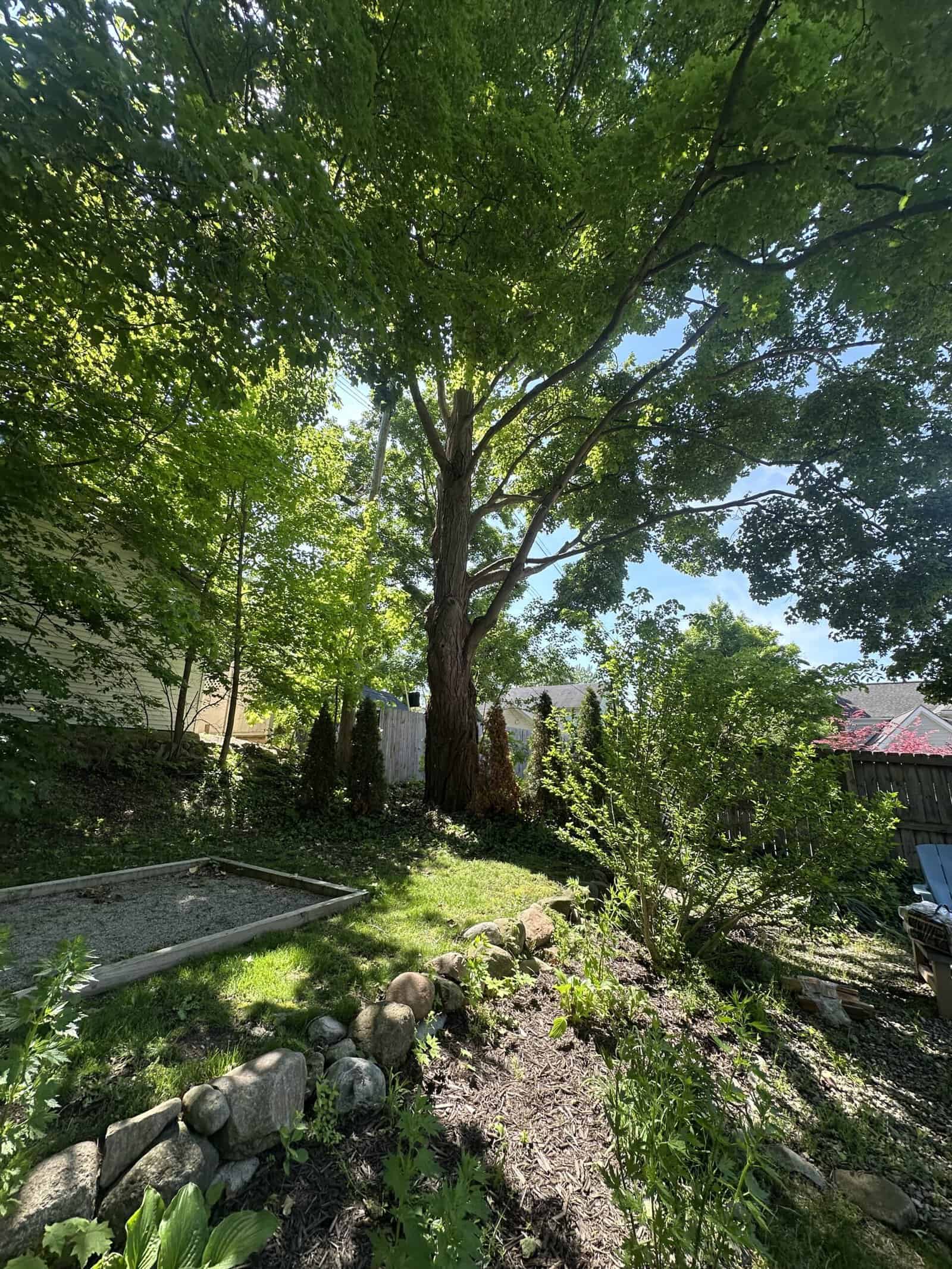
Ivan’s Tree Services is a family-owned company — roughly 15 to 20 minutes northwest of Walled Lake via Commerce Township roads and Pontiac Trail. Ivan leads every field operation personally. Cecilia manages scheduling and customer communication, which means when you reach out, you’re talking to someone who’s accountable — not a call center routing your request to whoever’s available.
We’ve been serving homeowners for over seven years. That includes the established subdivisions of Walled Lake, the lakefront properties along the 670-acre all-sports lake, and the utility-adjacent corridors along Pontiac Trail and East West Maple Road where tree maintenance isn’t just aesthetic — it’s genuinely consequential.
What separates us from most of the tree companies operating in this market is the credential stack. ISA Certified Arborists, TRAQ-qualified risk assessors, and line-clearance certification for work near energized power lines — that last one is particularly relevant in Walled Lake, where the 2021 storm event at Maple and Commerce roads showed exactly what happens when trees and overhead infrastructure meet during a wind event. Ivan personally trains every crew member in both technique and homeowner communication. That’s intentional, and it shows in the reviews.
Every job starts with a site walk. We never send a crew to start cutting without first meeting you at the property, walking the site together, and putting together a written scope of work. In Walled Lake specifically, that assessment matters — lots are compact, neighbors are close, and many properties have trees near overhead utility lines along Pontiac Trail or East West Maple Road.
The pre-work walkthrough is how we make sure the right approach is identified before any equipment comes out. From there, the pruning work itself follows ANSI A300 national standards — the legal benchmark for professional tree care in the U.S. That means no topping, no flush cuts, no climbing spikes on trees being pruned.
Depending on what your trees need, that could mean crown thinning to reduce wind resistance and improve airflow, crown reduction to bring an oversized tree back to a manageable and structurally sound form, or deadwooding to remove failing branches before they become a problem. For oaks specifically — which are common throughout County — pruning is scheduled between November and March to avoid oak wilt, a disease that spreads rapidly once temperatures climb above 50°F and sap beetles become active.
When the work is done, the site gets cleaned up completely. Debris removed, ground raked, property left in better shape than it was found. That’s not an add-on — it’s standard.
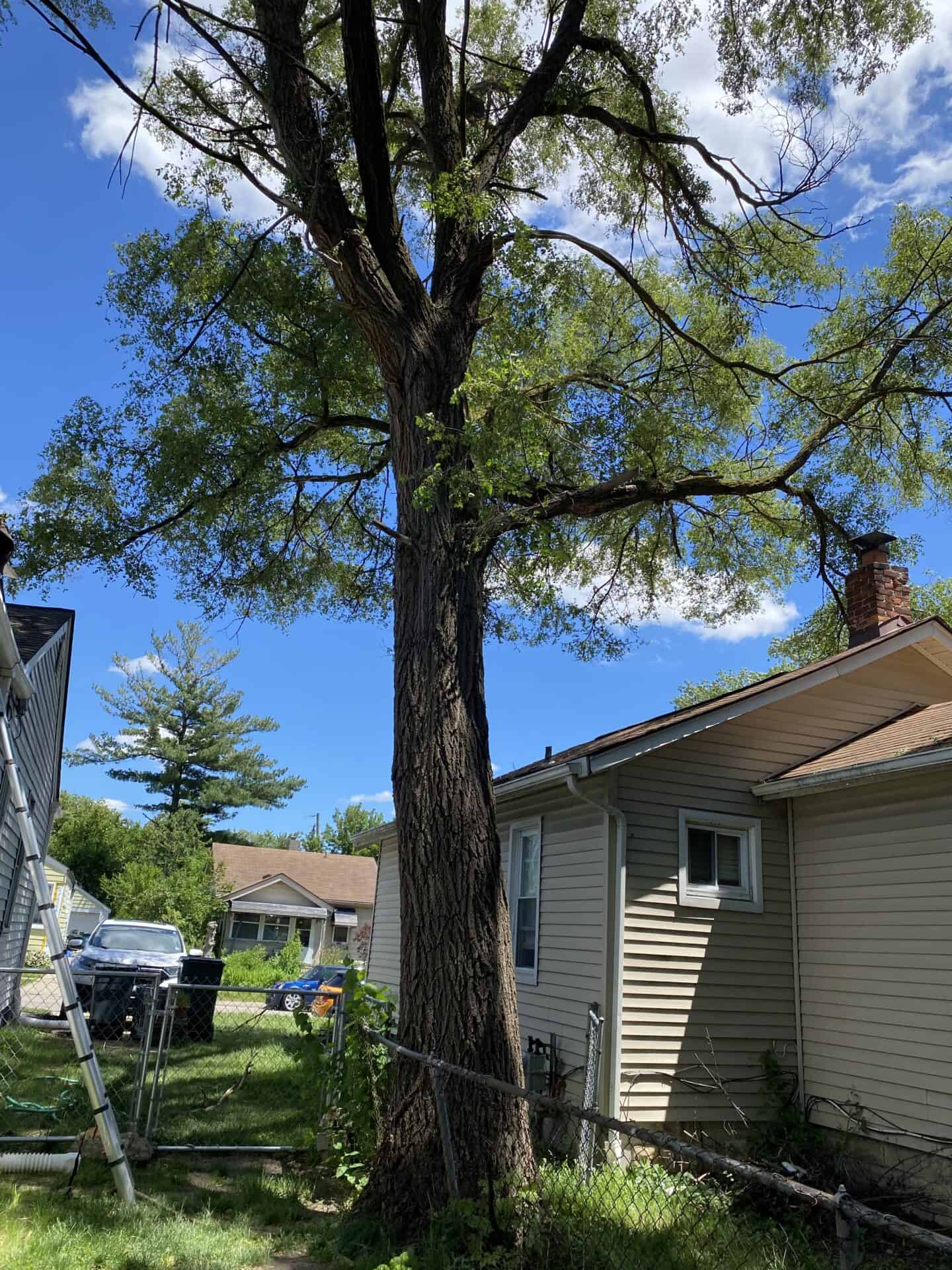
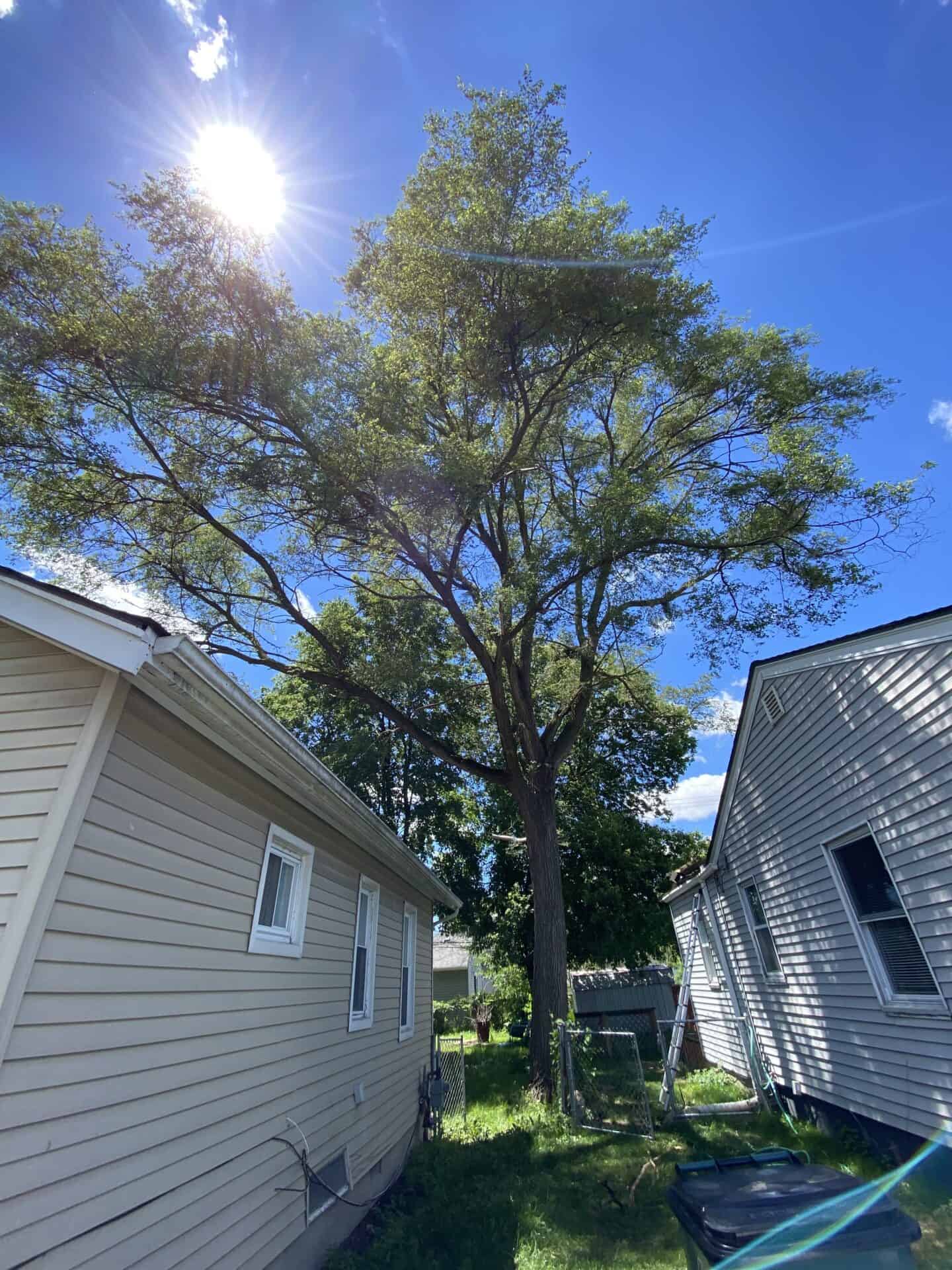
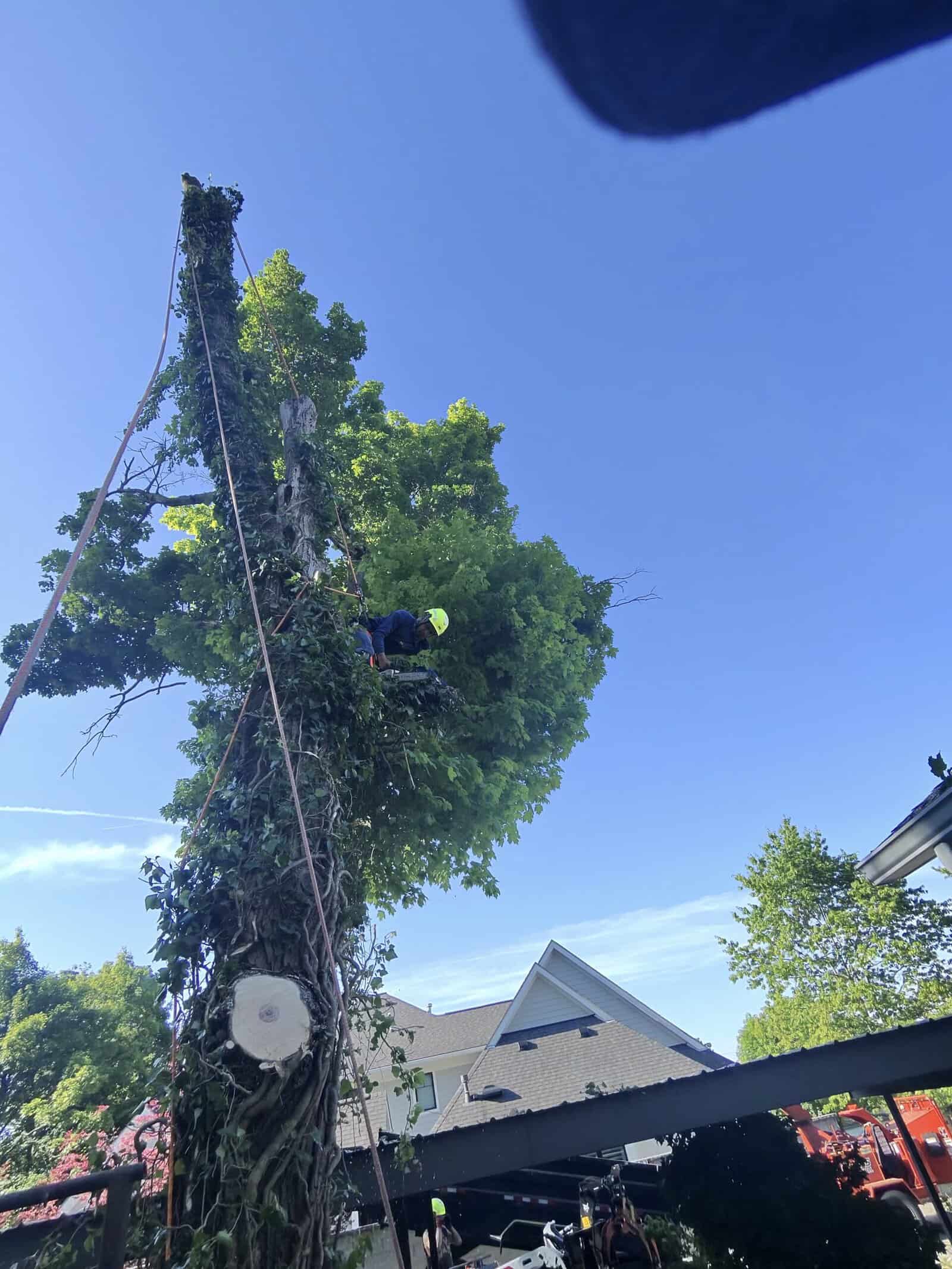
Tree pruning isn’t a single action — it’s a set of targeted decisions made by someone who understands tree biology, not just how to operate equipment. The specific techniques we use depend on what your trees actually need, and that determination happens during the pre-work site assessment, not from a truck window at the end of your driveway.
Crown thinning selectively removes branches throughout the canopy to improve light penetration and airflow without changing the tree’s overall shape or size. For Walled Lake properties near the lake or along the Michigan Air Line Trail, where aesthetics matter as much as function, this is often the right approach for mature shade trees — it keeps the canopy full while reducing the wind-load that makes large trees dangerous during storm season.
Crown reduction takes the overall size of the tree down while maintaining its natural form, which is the correct technique when a tree has outgrown its space near a structure or utility corridor. This is what should happen instead of topping — which is harmful, structurally destabilizing, and explicitly prohibited under ANSI A300 standards. Deadwooding removes branches that are already dead, dying, or diseased, reducing the risk of failure and preventing the spread of disease to the rest of the tree.
Every service includes a written estimate before work begins, full debris removal and site cleanup after, and the assurance that the crew working on your property carries liability insurance and workers’ compensation coverage. In a city where property owners adjacent to county road right-of-ways — including Pontiac Trail and East West Maple Road — are responsible for vegetation maintenance, having that documentation isn’t optional.
For most trees in Walled Lake, late winter is the professional recommendation — roughly February through early March, while trees are still dormant. At that point, the structure of the tree is fully visible without foliage, the risk of disease transmission is lower because insects and pathogens are also dormant, and pruning cuts heal faster once spring growth kicks in. The broader dormant window runs from late November through early March, and most of that range is acceptable for standard deciduous trees.
The exception that matters most in Walled Lake is oak trees. In Michigan, oaks should only be pruned between November 1 and March 31. Once temperatures consistently climb above 50°F, sap beetles become active and can carry oak wilt spores directly into fresh pruning cuts. Oak wilt is incurable and spreads fast — it can kill a tree within a season. If you have oaks on your property in Walled Lake, that pruning window isn’t a guideline, it’s a hard deadline.
Maples are another common local species worth timing carefully — spring pruning can trigger significant sap loss, so dormant season is strongly preferred for those as well.
Yes, and in Walled Lake specifically, this is more than a general talking point. The city’s tornado activity runs 26% above the U.S. average, and in August 2021, a straight-line wind event uprooted trees and sheared utility poles at the intersection of Maple and Commerce roads — one of Walled Lake’s main intersections. That’s not ancient history. It’s a documented example of what an unpruned, structurally compromised tree can do in a real storm event.
Crown thinning is the specific technique that addresses storm risk most directly. By selectively removing branches throughout the canopy, a thinned crown allows wind to pass through rather than push against a solid wall of foliage. That reduction in wind resistance significantly lowers the chance of branch failure or full tree uprooting during high-wind events. Crown reduction — properly reducing the overall size and weight of a large tree — serves a similar purpose for trees that have grown too large relative to their root system or proximity to structures.
Neither of these techniques weakens a healthy tree. Done correctly, to ANSI A300 standards, they make it structurally stronger.
These are two distinct techniques with different goals, and knowing which one your tree needs matters. Crown thinning removes select branches from throughout the canopy — not the outer edges, but interior branches — to improve light penetration and airflow without changing the tree’s overall size or silhouette. It’s the right approach when a tree is healthy and well-sized but has become too dense, which increases wind resistance and reduces light to the lawn or structures below.
Most arborists recommend thinning mature shade trees on a cycle of roughly every three to five years. Crown reduction is different. It reduces the actual height and spread of the tree by cutting back to lateral branches, which take over as the new growing tips. This is the correct alternative to topping — it brings an oversized tree back to a manageable size while preserving its natural form and keeping the branch structure intact.
Topping, by contrast, makes large, indiscriminate cuts that create massive wounds, invite decay, and produce structurally weak regrowth. It’s explicitly prohibited under ANSI A300 standards and is one of the most damaging things you can do to a mature tree. If someone quotes you a job that involves cutting the top off your tree flat, that’s a red flag worth taking seriously.
In most cases, yes — and the City of Walled Lake’s own roads documentation makes this explicit. Property owners adjacent to county road right-of-ways, which include North Pontiac Trail, East West Maple Road, Fourteen Mile Road, and South Commerce Road, are responsible for routine vegetation maintenance along those corridors. That means if a tree or large branch from your property is encroaching on the road right-of-way, the responsibility for addressing it generally falls on you, not the county.
For trees growing near or toward overhead utility lines, the situation gets more specific. Most general tree companies are not equipped or insured to work near energized power lines — it requires specialized training, specific equipment, and utility-grade insurance coverage. We hold line-clearance certification, which covers exactly this type of work.
Given that the 2021 storm event in Walled Lake involved downed power lines at a main city intersection, this isn’t a hypothetical concern for homeowners near Pontiac Trail or Maple Road. If you have trees approaching overhead infrastructure, it’s worth confirming that whoever you hire is actually certified and insured for that work — not just willing to attempt it.
The most reliable indicator is ISA Certified Arborist status. The International Society of Arboriculture’s certification requires passing a comprehensive exam covering tree biology, diagnosis, pruning standards, and risk assessment — and it requires ongoing continuing education to maintain. You can verify any arborist’s certification directly through ISA’s public directory before you hire anyone. That’s the baseline credential worth asking about.
Beyond that, ask specifically about ANSI A300 compliance. ANSI A300 is the national standard for professional tree pruning in the U.S. — it’s the benchmark used in civil disputes when tree work goes wrong. A company following ANSI A300 will not top your trees, won’t make flush cuts, and won’t use climbing spikes on trees being pruned rather than removed. These aren’t obscure technicalities; they’re the difference between work that strengthens your trees and work that slowly destroys them.
Also confirm that the company carries both general liability insurance and workers’ compensation. Without workers’ comp specifically, you as the homeowner can be held personally liable if a worker is injured on your property — your homeowner’s policy may not cover it. Always ask for documentation, not just a verbal assurance.
Yes. We provide 24/7 emergency tree response, with typical on-site arrival within 60 to 90 minutes. For Walled Lake homeowners, that matters in a practical sense — the city sits in a documented above-average storm zone, and when a limb comes down on a roof or blocks a driveway on Pontiac Trail at 11 PM, waiting until the next business day isn’t a realistic option.
Emergency pruning after a storm event is different from routine maintenance. The priority is stabilizing what’s damaged — removing hanging or partially attached limbs that pose an immediate risk to people, structures, or vehicles, and assessing whether the remaining tree structure is sound enough to preserve or whether removal is the safer call. Our ISA Certified Arborists and TRAQ-qualified risk assessors handle that evaluation on-site, not over the phone.
The same written scope and cleanup standards apply to emergency work as to scheduled jobs — the urgency doesn’t change how the work gets done or what gets left behind. If you’re dealing with storm damage in Walled Lake, the line is open around the clock.
Other Services we provide in Walled Lake
