Hear from Our Customers
After a storm hits Wixom, the goal is simple: get the hazard removed, get your property cleared, and get your life back on track. What that actually takes — the right equipment, the right credentials, and a crew that knows what they’re doing around energized lines — is where most homeowners run into problems.
Wixom’s residential neighborhoods along Wixom Road and Grand River Avenue are served by overhead utility lines that run close to mature tree canopy. Many of those trees were planted in the late 1950s and 1960s when the city was built up around the Ford Assembly Plant. Those trees are now 50 to 70 years old — large enough to cause serious structural damage when a storm brings one down, and old enough that failure can happen with very little warning.
When a limb or a full tree goes into that utility corridor, you need a crew that’s certified to work near energized lines — not one that has to stop at the property line and wait for DTE Energy. That’s the specific gap we fill in Wixom. Line-clearance certified arborists, TRAQ-qualified risk assessors, and ISA Certified Arborists — all on the same crew, available around the clock.
You get the hazard resolved, the debris cleared, and a professional assessment of anything still standing that might not make it through the next storm.
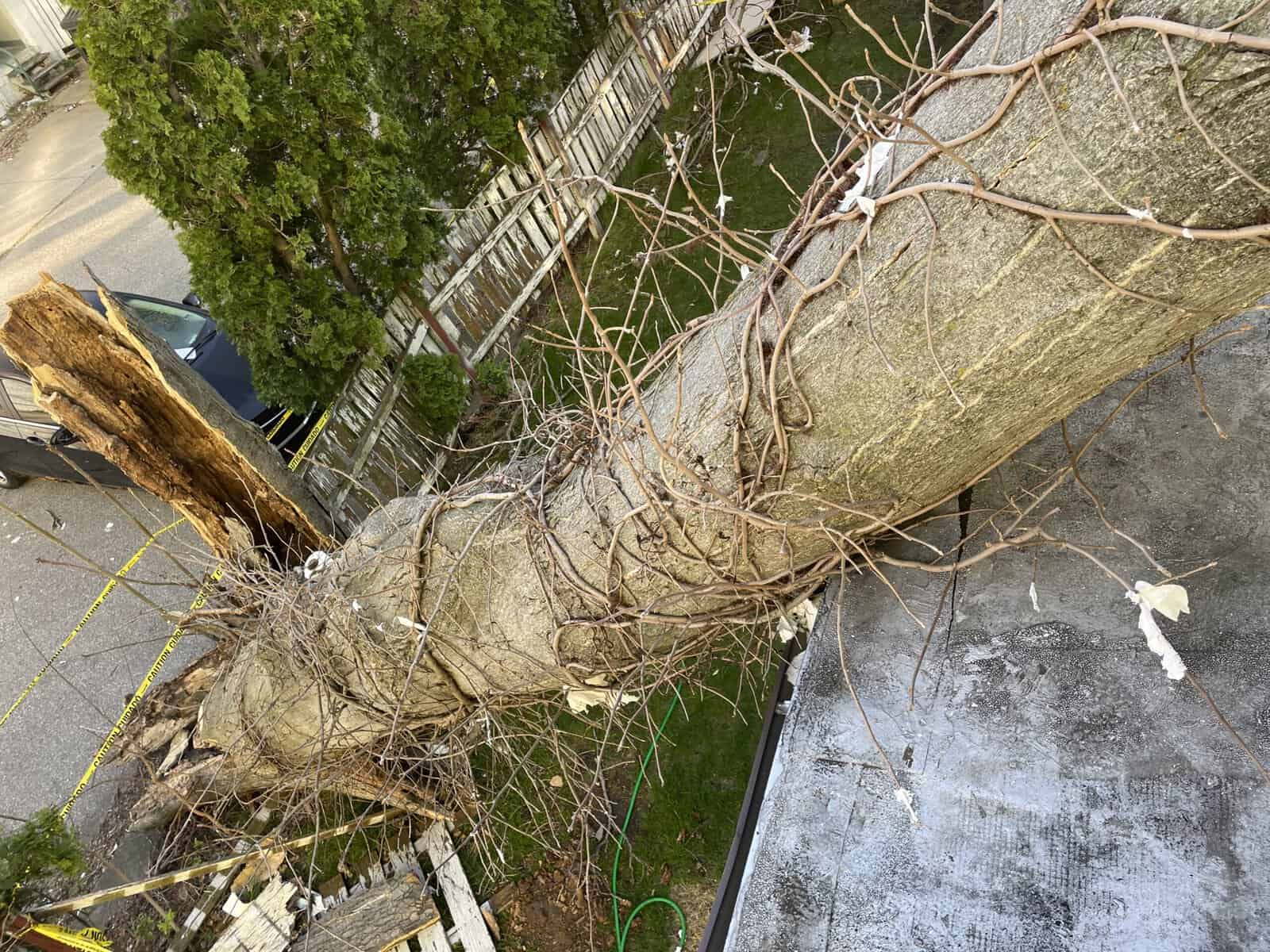
We’re based in Oakland, MI — about 10 to 12 miles from Wixom via I-96. That proximity matters when you’re dealing with an emergency at 11 p.m. on a weeknight after a summer derecho. The crew that shows up isn’t driving in from across the metro; it’s a neighboring-community business that knows western Oakland County’s roads, tree species, and storm patterns.
Ivan started his career as a groundman in California, built his technical foundation there, and brought that experience to Michigan when he and his family settled in Oakland. Over seven years in, we’ve handled storm damage cleanup across Oakland County — the kind of work that requires more than a chainsaw and a pickup truck.
Every significant job brings ISA Certified Arborists and TRAQ-qualified risk assessors to the site. Our line-clearance certification means we can work in the utility corridors along Pontiac Trail and Wixom Road where most other companies simply cannot go. This is a family-owned, owner-operated business — not a franchise, not a corporate subsidiary. When western Oakland County gets hit by a storm, our community gets hit too.
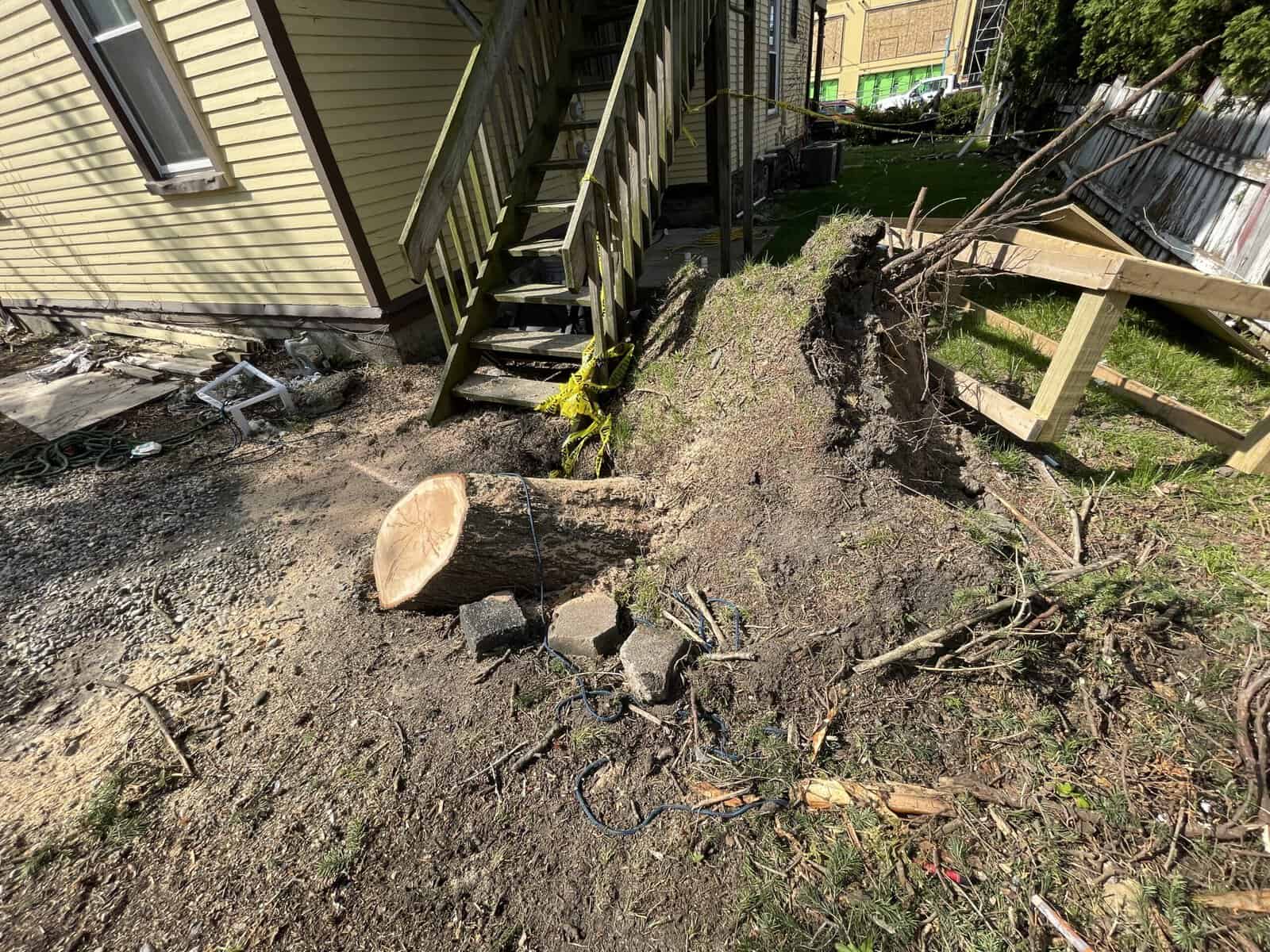
When you call Ivan’s Tree Services LLC — day or night — a real person picks up. You describe what happened, and we determine whether the situation requires an immediate emergency response or a same-day assessment. For active hazards like a fallen tree on a structure, a hanging limb over a vehicle, or a tree that’s come down into a utility line along Wixom Road, the response is immediate.
Before any work begins, we walk the site with you. This isn’t a formality — it’s how we ensure the scope is clear, the risks are identified, and you know exactly what the job involves before a single cut is made. If the removal involves proximity to overhead power lines, our line-clearance certified arborists handle that portion of the work directly. No stopping, no waiting for a utility crew to arrive first.
One thing worth knowing for Wixom specifically: the city requires a tree removal permit for most living tree removals on private property. Dead trees are exempt from that ordinance. Our team can walk you through what applies to your situation during the site assessment — so there are no surprises with the city after the job is done.
Once the removal is complete, we handle full debris cleanup and do a final walkthrough with you before leaving the property.
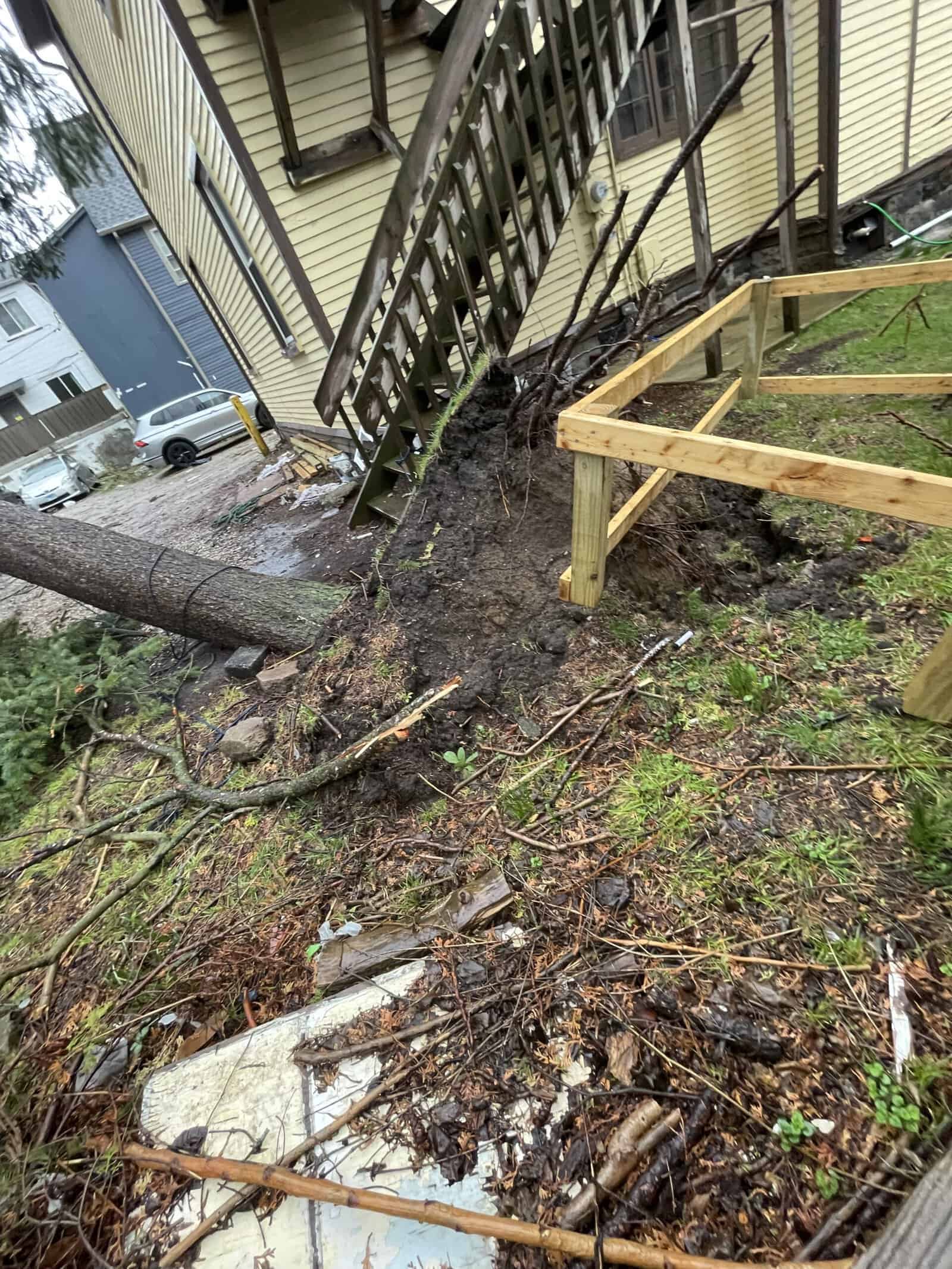
Ready to get started?
The storm damage calls we handle in Wixom cover a wide range of situations — and not all of them are the dramatic, tree-on-the-roof scenario. Some of the most common and most dangerous calls involve hanging limbs that didn’t fully come down. These are what arborists call widow-makers: branches that are partially broken, suspended in the canopy, and under unpredictable tension.
They look stable. They aren’t. In Wixom’s older residential neighborhoods, where mature oaks and maples have been growing for decades, widow-maker removal after a storm is one of the most frequent and most urgent calls we receive.
The full scope of storm damage cleanup we handle in Wixom includes emergency tree clearing for blocked driveways and access roads, fallen tree removal from structures and vehicles, hazardous limb removal, stump grinding after emergency removals, and post-storm tree risk assessments for trees that are still standing but may be structurally compromised.
That last piece — the TRAQ-qualified risk assessment — is something very few tree companies in western Oakland County can offer. It gives you a documented, professional evaluation of whether a storm-damaged tree is safe to leave or needs to come down before the next weather event rolls through.
Wixom’s mix of residential subdivisions and active commercial and logistics properties along Wixom Road also means we handle storm damage cleanup for property managers and commercial tenants — not just individual homeowners. If a tree comes down on a property boundary or blocks access to a facility, the 24/7 emergency response applies there too.
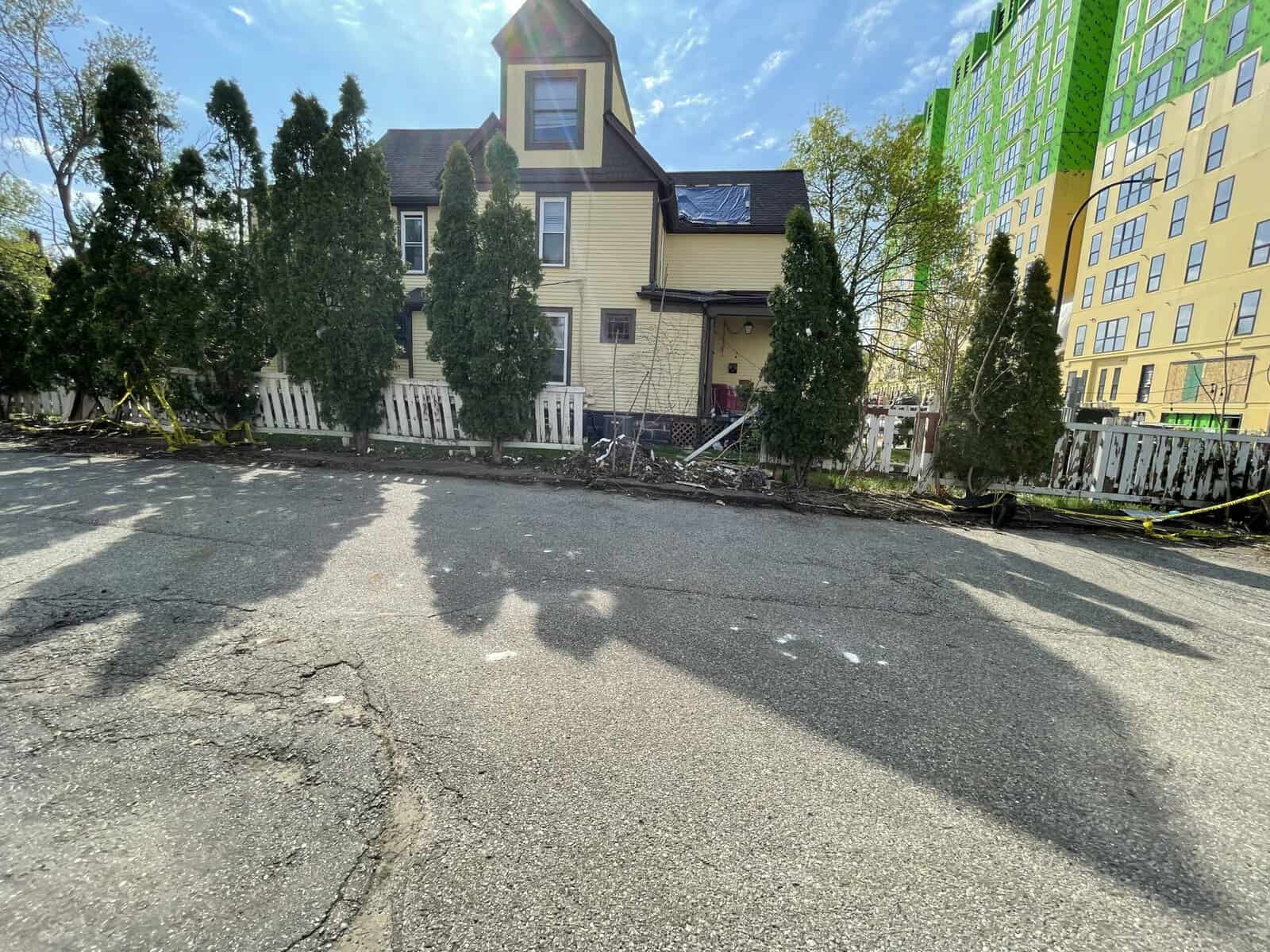
It depends on whether the tree is alive or dead. Wixom’s tree ordinance requires a removal permit for most living trees on private property. If the storm killed the tree outright — meaning it’s completely dead — it’s exempt from the permit requirement, and you can move forward with removal without going through the city’s planning process.
If your property was approved through the planning department and has a tree plan on file, the Building Department still needs to be consulted even for dead tree removal. For storm-damaged trees in Wixom that are still living but structurally compromised, the permit requirement applies.
The practical implication is that you shouldn’t assume the exemption covers your situation without confirming the tree’s status. During the site walkthrough, we can help you understand which category your tree falls into and what the next step with the city looks like — so you’re not navigating that process alone after an already stressful event.
Most cannot — and that’s not an exaggeration. Working near energized power lines requires specialized line-clearance arborist certification: dedicated training, specific equipment, and a separate category of liability insurance that most residential tree companies don’t carry.
In Wixom, where overhead utilities run along major corridors including Wixom Road, Grand River Avenue, and Pontiac Trail, this comes up more often than homeowners expect. A downed power line incident previously closed I-96 between Oakland and Wixom roads — that’s the kind of scenario where an uncertified crew simply cannot safely operate.
We hold line-clearance arborist certification, which means our crew can work in utility corridors where other companies have to stop and wait for DTE Energy to de-energize the lines first. If your storm damage involves a tree or limb that’s come down near or into overhead lines, that certification is what separates a job that gets done from one that sits for days waiting on a utility crew’s schedule.
This is one of the most common — and most underestimated — post-storm situations. A tree can look completely normal from the ground and still be critically compromised. The signs that warrant immediate professional evaluation include visible trunk cracks or splits, soil heaving around the base of the tree (which indicates root failure), a noticeable lean that wasn’t there before the storm, and major scaffold branches that are cracked but haven’t fully separated yet.
Any one of these is a reason to get a professional on-site before the next wind event. In Wixom’s established neighborhoods, where many trees are 50 to 70 years old and have been through decades of Michigan winters and summer storms, structural failure can develop quietly over time and then accelerate after a significant weather event.
A TRAQ-qualified risk assessment — the credential we bring to every significant post-storm job — gives you a documented, professional evaluation of the tree’s structural integrity. It’s not a visual guess; it’s a credentialed process that tells you definitively whether the tree is safe to leave or needs to come down.
Emergency tree removal in Wixom runs approximately $990 on average, though the actual cost for any specific job depends on several factors: the size of the tree, whether it’s fallen on a structure or vehicle, how accessible the site is for equipment, and whether the job involves proximity to overhead utility lines.
A small tree in an open yard is a very different job from a large, 60-year-old oak that’s come down across a driveway and into a utility corridor — and the pricing reflects that difference. Emergency rates are higher than standard removal rates because of the urgency, the equipment required, and the risk involved — particularly when power lines are a factor.
We provide a written estimate after the site walkthrough, before any work begins. There are no verbal quotes that shift after the fact. If your homeowners insurance covers the damage — which typically applies when a tree has damaged a covered structure — the written documentation from the assessment also helps with the claims process.
We’re based in Oakland, MI, which is approximately 10 to 12 miles from Wixom via I-96. For genuine emergencies — a tree on a roof, a limb blocking access to a property, a widow-maker hanging over a vehicle — our 24/7 emergency line means a real person answers regardless of the time, and the crew can be en route quickly. You’re not leaving a voicemail and waiting until morning.
Response time for non-emergency storm damage — a tree that came down in the yard but isn’t creating an immediate safety hazard — is typically same-day or next-day depending on volume after a major storm event. Western Oakland County gets hit hard during summer derecho season and early fall wind events, and post-storm demand can create short backlogs.
The honest answer is that calling sooner is always better than waiting, especially for situations involving hanging limbs or trees with visible structural damage — those can deteriorate quickly between one storm and the next.
It depends on the specifics of what happened and what your policy covers. Generally speaking, if a storm-damaged tree has fallen on and damaged a covered structure — your home, a detached garage, a fence — your homeowners insurance is likely to cover at least a portion of the removal cost.
Most standard policies carry a sublimit for tree removal in storm events, typically in the range of $500 to $1,000 per event, or up to a percentage of your dwelling coverage if a structure was damaged. If a tree came down in your yard but didn’t hit anything, removal is usually considered your expense — insurance doesn’t typically cover cleanup for trees that only damaged the lawn or landscaping.
The most useful thing you can do immediately after a storm event is document everything: photos of the tree, the damage to any structures, and the position of the tree before any cleanup begins. We provide a written assessment after the site walkthrough, which gives you the documentation your adjuster will ask for if you’re filing a claim. Getting that paperwork in order early makes the claims process significantly smoother.
Other Services we provide in Wixom
