Hear from Our Customers
By late April in Wixom and western Oakland County, last year’s mulch has already done its job — and then some. It’s faded, compressed, and broken down to the point where weeds are starting to push through bare soil. The beds in front of your home look tired, and you know it.
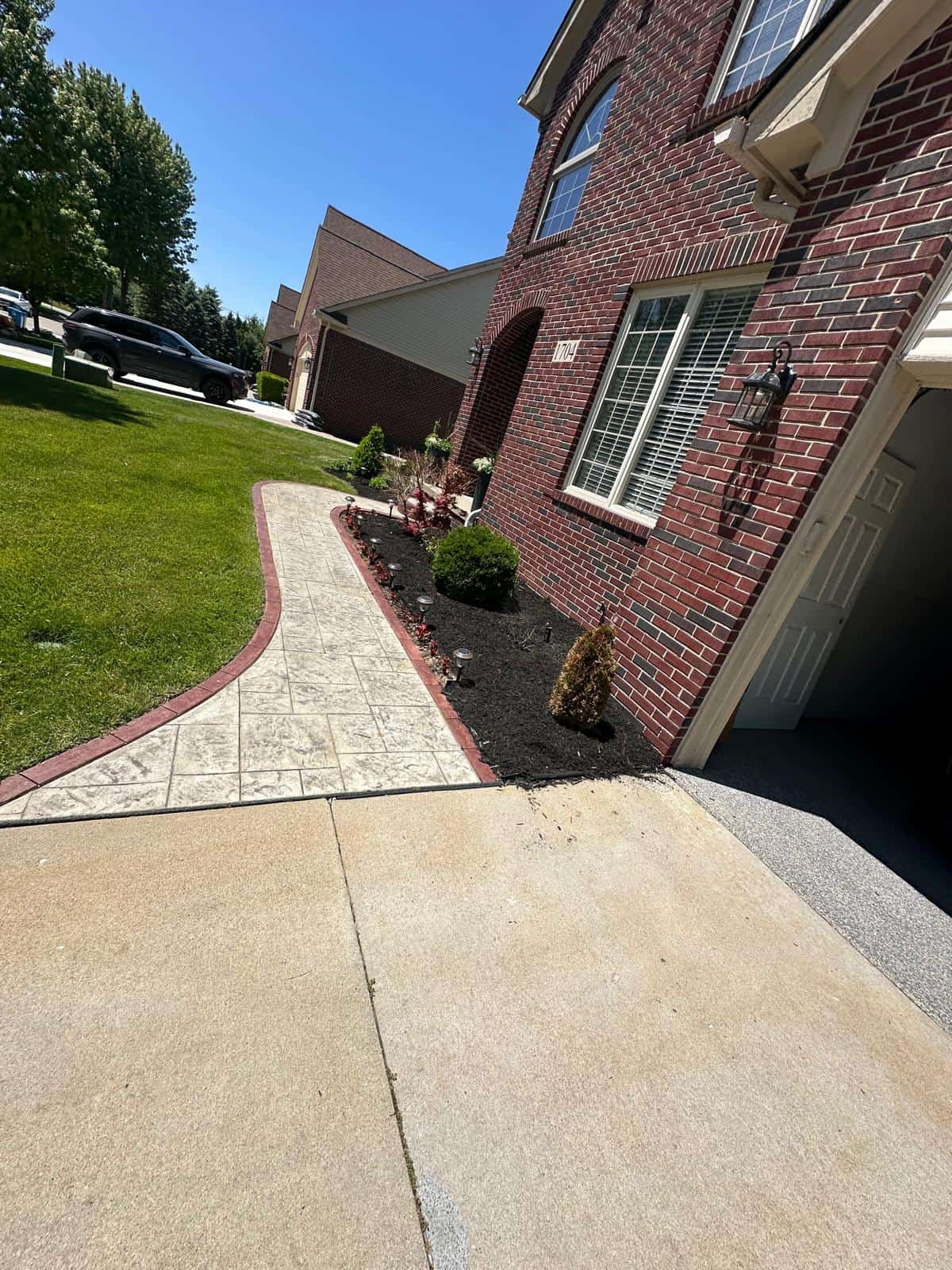
What changes after a proper installation isn’t just the appearance — it’s the function underneath. A 2–3 inch layer of organic mulch can cut weed germination by up to 90% and reduce soil moisture evaporation by roughly 35%. For homeowners near Loon Lake Road or the preserve-adjacent neighborhoods off Wixom and Potter Roads, that matters more than it might in drier, sandier parts of Oakland County.
The Huron River Watershed runs right through Wixom, and the soil variability that comes with it — clay-heavy in low spots, faster-draining in others — means your beds can go from waterlogged to bone dry within the same season. Mulch buffers both ends of that spectrum.
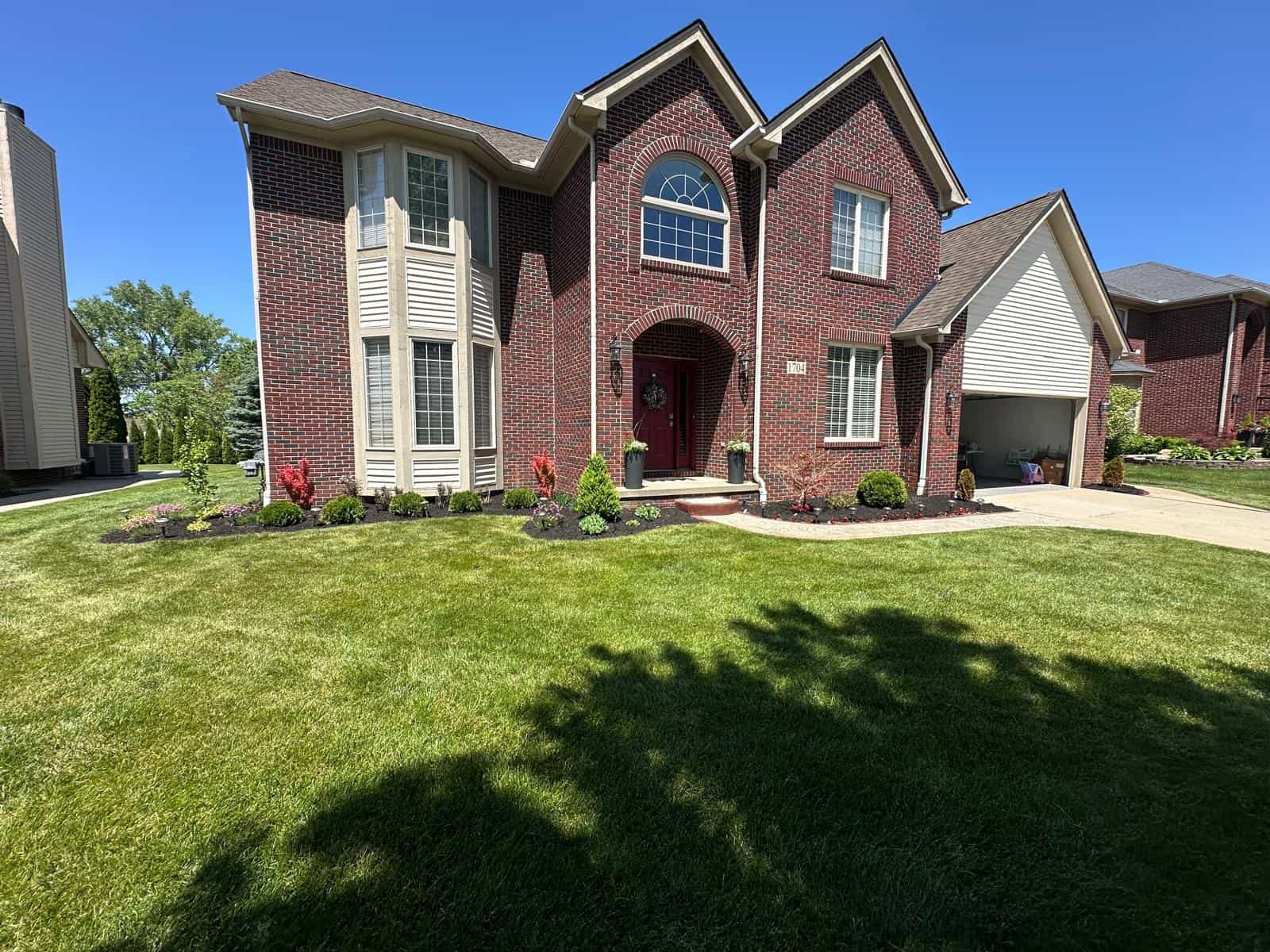
Beyond the soil science, there’s the straightforward reality that a freshly mulched bed just looks cared for. Whether you’re in a planned subdivision like Butler Ridge or a condo backing to Gunnar Mettala Park, the difference between maintained and neglected is visible from the street — and it matters for your home’s value and how the whole neighborhood feels.
We’re based in Oakland — a short drive up Pontiac Trail from Wixom — and have been serving Oakland County homeowners long enough to show up in the top tree service results for the 48393 zip code. Ivan founded the company after 7-plus years in professional tree care, starting as a groundman in California where he learned rigging, climbing, pruning, and how trees actually respond to the work done around them.
That background isn’t just a resume detail — it’s why we apply mulch the way arborists do, not the way a landscaping crew does. Ivan leads every field job. His fiancée Cecilia handles the communication and scheduling side. Together we run a business where you deal with real people, get a written estimate before anything starts, and don’t have to wonder whether the crew showing up knows what they’re doing.
We’re licensed, insured, and carry certified arborists on staff — the kind of verifiable credentials that matter when you’re trusting someone to work on your property in Wixom.
It starts with a written estimate. Before any crew shows up at your property, you’ll know exactly what the job covers and what it costs. We provide all estimates in writing, and they’re valid for 30 days — so you’re not being pressured into a same-day decision.
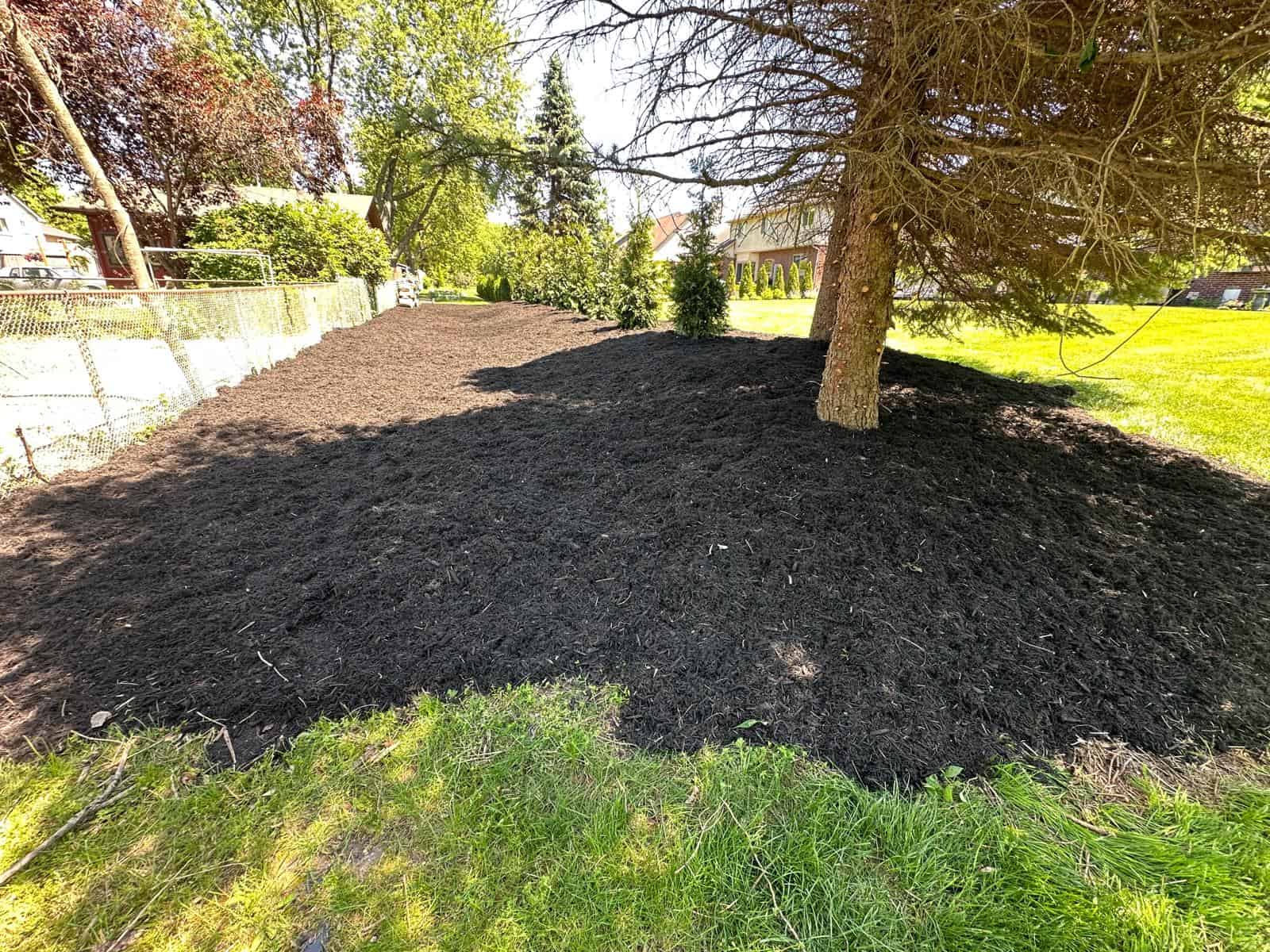
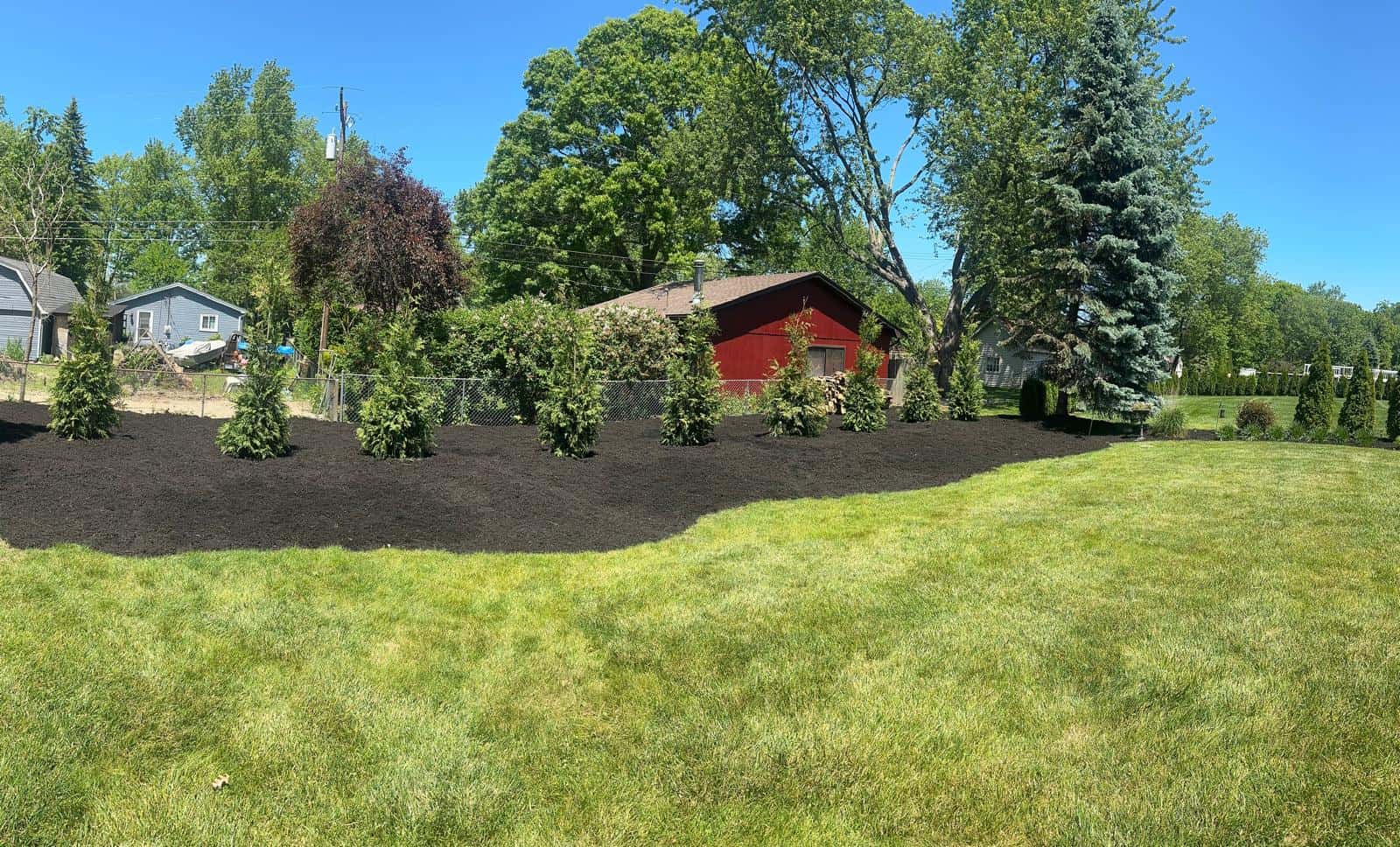
Once the job is scheduled, our crew handles bed prep first. That means clearing debris, raking and aerating any existing mulch layer so it doesn’t compact underneath the new material, and making sure the edges are clean before anything gets spread. Then the mulch goes down at the correct depth — 2 to 3 inches across the bed, with a deliberate gap kept around the base of any trees.
That gap isn’t an oversight; it’s the difference between protecting a tree’s root flare and slowly suffocating it. Piling mulch against a trunk is one of the most common ways mature trees get damaged over time, and it’s something our crews are specifically trained to avoid.
Timing matters in Wixom. The optimal spring window for mulch installation in western Oakland County runs from late April through mid-May — after the soil has warmed enough to benefit from coverage, but before summer heat sets in. Applying too early traps cold soil and can delay plant growth. We know the seasonal window and work efficiently to get jobs done within it, because once every landscaper in Oakland County is booked solid, the window closes fast.
The most visible mulch option showing up in Wixom local searches right now is delivery-only service — material dropped at your property, and the rest is your problem. That works fine if you want to spend a weekend spreading and calculating cubic yards and hauling bags from the Meijer at Wixom Road and I-96.
We offer something different. What you’re getting is professional mulch installation: bed prep, correct depth calibration, clean edging, and proper technique around trees — all done by a crew that understands what happens to a tree when mulch is applied incorrectly.
The mulch itself is repurposed wood chip material sourced from our own tree work — locally generated, not factory-bagged — which fits naturally with the environmental values of a city that actively partners with the Huron River Watershed Council and maintains a 292-acre nature preserve at its edge.
If you’ve recently had tree work done — a removal, a stump grinding, storm cleanup — we can follow that job directly with mulch installation over the former root zone, topsoil where the ground is bare. That’s a complete landscape restoration handled in one service relationship, which no delivery-only mulch company and no landscaping-only crew can offer the same way. There are no named package tiers — just a clear scope of work in a written estimate that covers exactly what your property needs.
The spring window in western Oakland County runs from late April through mid-May, and it’s shorter than most people expect. Once soil temperatures have risen enough that plants are actively growing, mulch does its best work — holding in moisture before summer heat sets in and suppressing weeds before they’ve had a chance to establish.
Apply it too early and you’re insulating cold soil, which can slow plant emergence. Apply it too late and you’ve already lost the moisture-retention benefit during the driest stretch of the season.
Fall is the second opportunity — typically after the first hard frost in mid-October. At that point, mulch applied over perennial beds and around tree root zones helps protect against Michigan’s freeze-thaw cycles, which are especially rough on plants in areas with temperature swings. Wixom’s inland subdivision lots can see sharp overnight drops that lakeside properties don’t, making fall mulching a smart investment for homeowners in neighborhoods like Butler Ridge or North Burns Park.
If you’re unsure which window makes sense for your property, that’s exactly the kind of question to bring up when you request your written estimate.
The standard calculation is based on square footage and target depth. For a 2–3 inch layer — the ISA-recommended depth for organic mulch — you’re looking at roughly 1 cubic yard covering about 100–160 square feet, depending on how level your beds are and how much existing material is already there. Most homeowners underestimate how much they need, which is why beds end up looking thin and uneven after a DIY job.
The honest answer is that calculating this correctly requires walking the property and measuring the actual bed areas, not guessing from memory. We do that as part of the estimate process — so you’re not paying for material you don’t need or coming up short on coverage. If you have a mix of foundation beds, tree rings, and border plantings across a full subdivision lot, those add up faster than expected.
Getting the math right upfront is what separates a professional installation from a project that looks okay for two weeks and then starts showing bare spots.
Yes — and it’s one of the most common mistakes made during residential mulch installation. The practice is so widespread it has a name: volcano mulching. It looks like a cone or mound of mulch built up against the trunk, and it causes real damage over time.
Trapped moisture against the bark creates conditions for rot and fungal growth. It also encourages secondary root systems to develop in the mulch layer itself, which weakens the tree’s structural root system underground. In Wixom’s older housing stock — mid-century ranch homes with mature trees that have been growing for decades — this kind of slow damage can go unnoticed until the tree is already compromised.
The correct approach is to leave a clear gap of several inches between the mulch and the base of the trunk, keeping the root flare fully exposed. The mulch ring should extend outward toward the dripline of the tree, not inward toward the trunk. Our crews are trained specifically on this by someone who has spent 7-plus years in professional tree care — it’s not an afterthought, it’s the standard we work to on every job.
For most residential beds in Oakland County — foundation plantings, tree rings, perennial borders — shredded hardwood or wood chip mulch is the practical choice. It breaks down over time, adding organic matter back into the soil, and it stays in place better than bark nuggets during Michigan’s spring rain events. Colored mulch options like black and brown are popular in planned subdivisions because they hold their appearance longer through the season, but the dye is surface-level and fades regardless.
We use repurposed wood chip mulch generated from our own tree removal and trimming work. This material contains bark, wood, and leaf matter — what arborists consider some of the best mulch available for trees and large shrubs, because it mirrors the natural decomposition process that happens in a forest. It’s locally sourced, not factory-processed, and it feeds the soil as it breaks down.
For Wixom homeowners near the Wixom Habitat or the Loon Lake Road area who are already thinking about soil health and environmental impact, this is a meaningful difference from bagged dyed mulch from a big-box store.
In most cases, yes — but with an important step in between. You don’t need to haul out the old mulch unless it shows visible signs of mold, fungus, or pest activity. What you do need to do is rake and aerate the existing layer before adding new material on top.
Old mulch compacts over time and can form a mat that water struggles to penetrate, which defeats the moisture-retention purpose of mulching in the first place. Breaking that layer up first ensures the new material integrates properly and drainage isn’t blocked at the surface.
The other consideration is depth. If your existing mulch layer is still at 1.5 inches or more, you may only need a light top-dressing to bring it back to the 2–3 inch standard. If it’s broken down to almost nothing — which is common in Wixom yards after a full Michigan winter — you’re essentially starting fresh. Our crew assesses the existing conditions before spreading anything, so the final depth is correct and you’re not paying for more material than the job actually requires.
Yes, and it’s one of the more practical reasons to use a tree service for mulch rather than a separate landscaping company. After a tree comes down — whether it was a storm-damaged tree, a dead oak in the backyard, or a hazard tree near the house — the area around the stump and former root zone is bare, disrupted soil that looks nothing like the rest of the yard.
Stump grinding leaves behind a depression and wood chip debris. The surrounding lawn is often torn up from equipment access.
We can follow the tree work directly with mulch installation over the former root zone, topsoil where the ground is uneven. This is a full landscape restoration handled by the same crew that did the tree work — no coordinating a second contractor, no waiting weeks for a landscaper to fit you into their schedule. For Wixom homeowners who’ve had storm damage along I-96 corridors or in the older tree-lined neighborhoods near Pontiac Trail, this kind of end-to-end service means your yard goes from disrupted to restored in one process, not two.
Other Services we provide in Wixom
