
Tree Removal in Lincoln, MI
When Alcona County's Forest Pushes Back, You Need More Than a Chainsaw
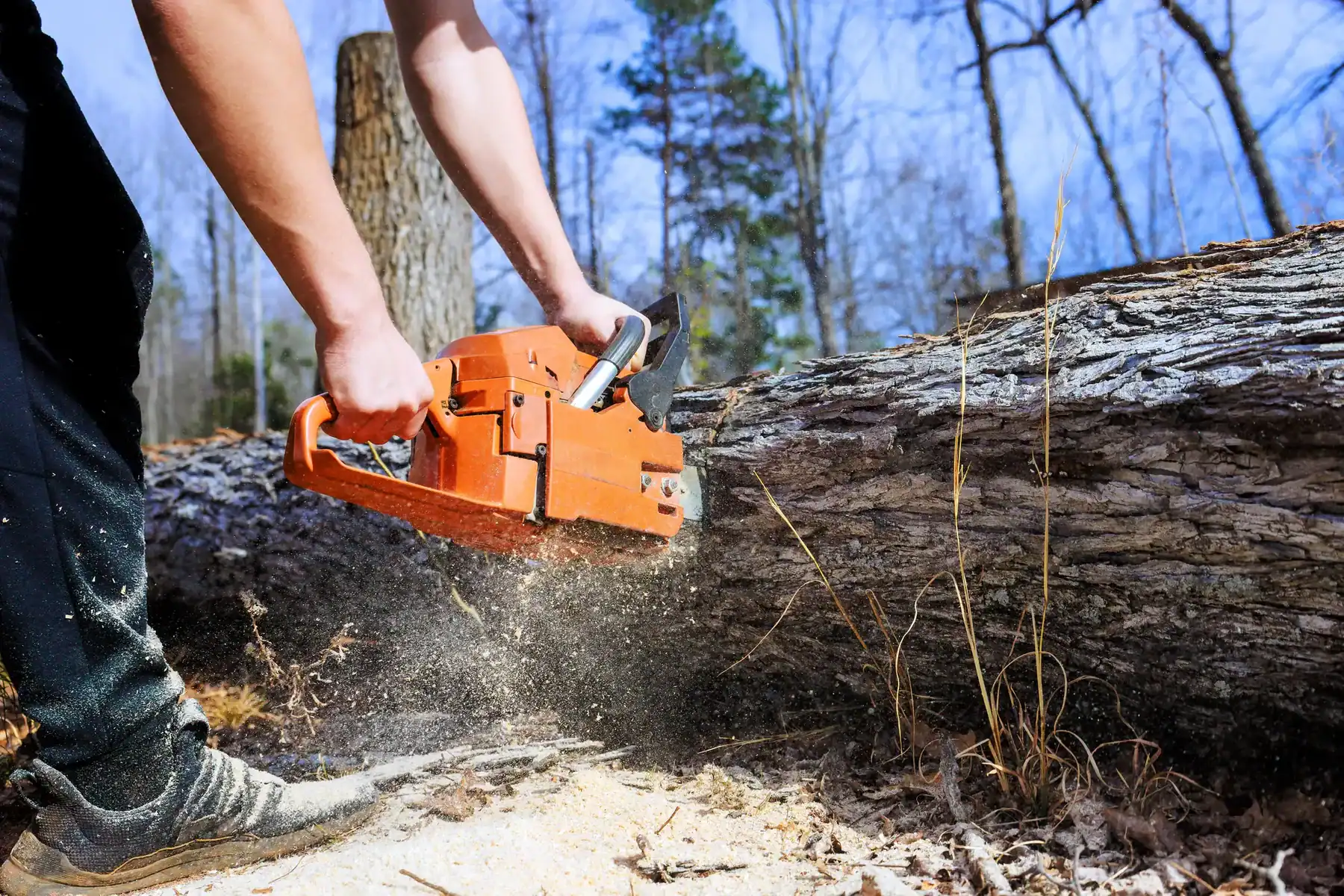
Hear from Our Customers
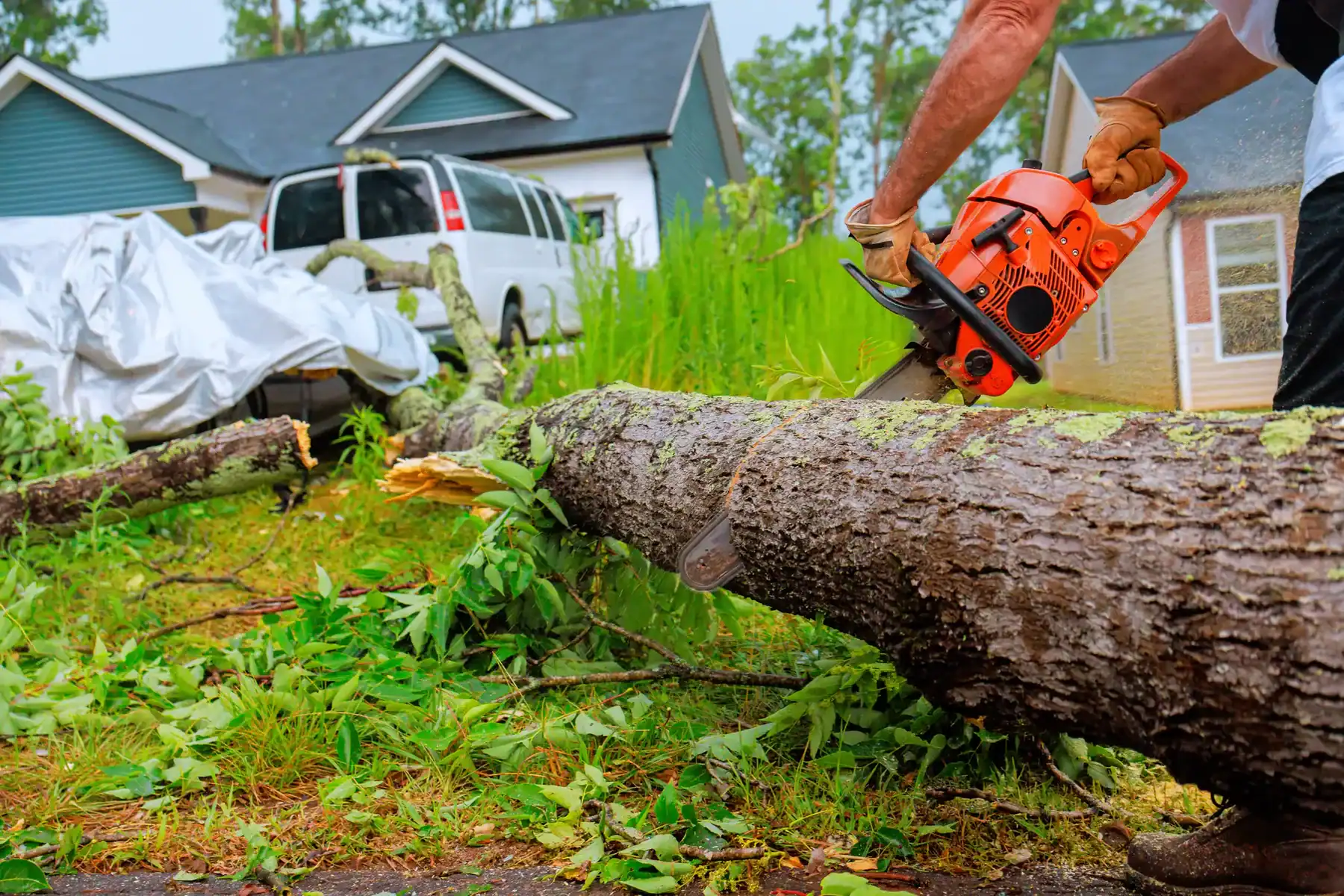
Hazardous Tree Removal, Alcona County
Most Lincoln-area homeowners aren’t dealing with a tidy ornamental maple planted twenty years ago. They’re dealing with mature forest treessugar maples, white pines, red oaksthat have been growing since before the house was built. When one of those trees dies, leans, or starts splitting at the base, the stakes are completely different than they are in a suburb. A 90-foot pine doesn’t fall politely.
What changes after a hazardous tree comes down the right way is simple: you stop watching it. You stop calculating which way it would fall if tonight’s storm is the one that finally takes it. That mental weight lifts, and the house, the garage, the truck in the drivewaythey’re no longer in the equation.
Alcona County’s ice storms and summer blow-downs are relentless. The lake-effect weather that comes off Lake Huron loads branches with ice every winter, and it doesn’t spare the trees closest to your roof. Getting ahead of a compromised treebefore it decides the timing for youis the only version of this story that ends without a claims call to your insurance company.
Certified Arborist Service, Lincoln, MI
We’ve been doing this work across Southeast Michigan and beyond for over seven years. The difference in a market like Lincoln isn’t just experienceit’s the credentials that most operators serving Alcona County simply don’t carry. We have ISA Certified Arborists on staff. TRAQ-qualified risk assessors who formally document tree hazards before a single cut is made. Multiple crew members with line-clearance certification for work near the utility lines running along M-65 and M-72. That combination is genuinely hard to find this far north.
Lincoln is the county seat of Alcona Countya community surrounded by some of the most densely forested land in Michigan’s Lower Peninsula. The trees here aren’t ornamental. They’re old-growth forest edge, and they require a level of assessment and planning that goes well beyond what an informal local operator brings to the job. We bring the full picture: written scope, site walk before work begins, complete cleanup when it’s done, and the kind of honest estimate that doesn’t change when the crew shows up.
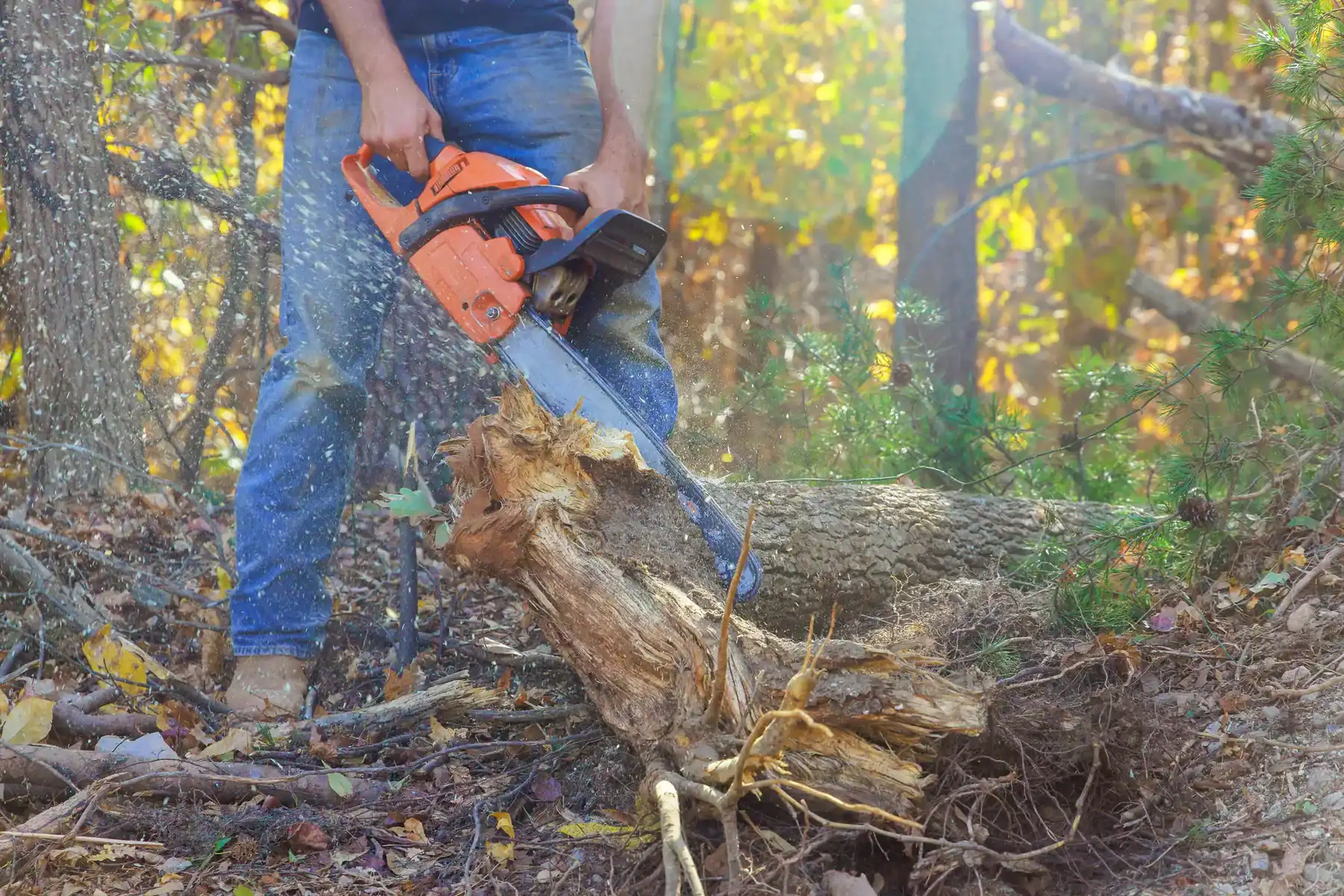
Professional Tree Removal Process, Lincoln, MI
It starts with a site walk. Before any equipment moves and before any quote is finalized, we walk your property with you. On a Lincoln-area lotwhere you might have mature hardwoods thirty feet from the house, utility lines running through the canopy along the road, or a property line that backs up to state forest landthat walkthrough isn’t a formality. It’s where the job actually gets planned.
Our arborist looks at the tree’s lean, the condition of the wood, what’s in the fall zone, and what the ground access looks like. If there’s a dead ash on the property, that gets specific attentionEAB-killed ash loses structural integrity fast, and it behaves differently under a saw than a live tree does.
From there, you get a written scope with a clear price. No vague verbal estimate that shifts when the invoice arrives. Once you’re ready to move forward, we work through the removal methodicallypiece by piece when the situation calls for it, with the full removal and debris cleanup included. When the job is done, the property gets left clean. Not “mostly clean with a brush pile you’ll deal with later”clean.
If you’re dealing with a tree that’s already down or actively threatening a structure, our emergency line is open around the clock. Northern Michigan storms don’t follow business hours, and neither does our response.
Ready to get started?
Dead Tree Removal Services, Alcona County
Tree removal in Lincoln covers a lot of ground depending on what you’re dealing with. Standard removalsa dead or dying tree that needs to come down before it failsinclude the full cut, sectioning, and debris removal. Stump grinding is available as an add-on and is worth doing at the same time rather than scheduling separately.
For trees near the utility lines that run along M-65 or M-72 through Lincoln Township, our line-clearance certified crew members handle that work specificallyit’s not something every tree service is equipped or insured to do, and it matters on rural road corridors where overhead lines are the norm.
We offer emergency tree removal 24 hours a day. If a storm drops a tree on a structure or blocks access to your property, that’s not a situation where you want to be leaving voicemails and waiting for a callback. The emergency line exists for exactly that.
For properties in Lincoln and the surrounding Alcona County areawhether you’re in Lincoln Township, out near Hubbard Lake, or closer to Harrisvillethe process is the same: site walk, written estimate, clear scope, and complete cleanup. If you have EAB-killed ash trees on the property, those get assessed carefully before removal. Dead ash is unpredictable, and it gets treated accordingly. The goal every time is a job that’s done right and a property that’s left better than it was found.
How much does tree removal typically cost in Lincoln, Michigan?
Tree removal pricing varies based on a few key factors: the size of the tree, how close it is to structures or utility lines, how compromised the wood is, and what the site access looks like. Nationally, a typical removal runs somewhere between $700 and $1,000, though large or complex jobsparticularly trees near structures or with significant decaycan exceed $2,000. Smaller removals on straightforward sites can come in under that range.
In Lincoln specifically, a few things tend to push jobs toward the more involved end of the scale. Properties here often have large-diameter mature trees, not the smaller ornamentals you’d find in a suburb. EAB-killed ash trees require extra care because the wood deteriorates unpredictably, which adds time and planning to the removal. And trees near the overhead utility lines common along Lincoln Township’s rural roads require line-clearance certified crew members, which affects how the job is scoped.
The best way to get an accurate number is a site walk and written estimatewhich we provide at no charge. That way you know exactly what’s included before any work starts.
Is a dead ash tree more dangerous to remove than a living tree?
Yesand this is one of the most important things to understand if you have EAB-killed ash trees on your Lincoln property. Dead ash loses structural integrity surprisingly fast after death. What looks like a solid trunk from the outside can be significantly hollow and brittle within two to three years of the tree dying. That makes the wood unpredictable under a sawit doesn’t respond the way a live tree does, and sections can fail in unexpected directions.
Alcona County has been hit hard by the emerald ash borer. Black ash, green ash, and white ash were all common components of the forest and residential lots throughout the county, and a large percentage of those trees are now dead or in serious decline. If you’ve been watching an ash tree on your Lincoln property deteriorate over the past few years and putting off the removal, the window to do it safely gets narrower the longer it sits.
An ISA Certified Arborist who understands how EAB-killed ash behaves will assess the wood condition before the first cut and plan the removal accordingly. That’s not a precaution that every operator in this area takesbut it’s the right way to handle it.
Do I need a permit to remove a tree on my property in Lincoln, MI?
Lincoln is an unincorporated community within Lincoln Township, which means it doesn’t operate under a city government with its own municipal tree ordinances. Rural Michigan townships generally don’t require permits for tree removal on private property, so in most cases on a standard Lincoln Township residential lot, you won’t need a permit before a tree comes down.
That said, there are a couple of situations where regulations do come into play. If the tree is near a wetland or a streamwhich is common in Alcona County given the landscapeMichigan’s Wetlands Protection Act may apply. Removing trees within a regulated riparian buffer without proper authorization can create legal exposure. Additionally, if the tree is near or within the right-of-way along M-65 or M-72, there may be coordination required with the county road commission or the utility company.
If your property borders Michigan DNR state forest land, the boundary between private and state land is worth clarifying before any removal work begins. We’ll walk through any relevant considerations during the site assessment so you know where you stand before the job starts.
What should I do if a tree falls on my house during a storm in Alcona County?
First, get everyone out of the affected area of the house and don’t go back in until the structural situation is assessed. A tree on a roof creates unpredictable load conditionswhat looks stable can shift. If there’s any chance the tree has contacted electrical lines, stay well clear and call your utility provider before anyone approaches the area.
Once the immediate safety situation is managed, call for emergency tree removal. We have 24/7 emergency response specifically for situations like this. In a rural county like Alcona, where the nearest large city is 30 to 45 minutes away and local emergency resources are limited, having a service that actually answers and dispatches quickly makes a real difference. Waiting days for a callback from a local operator is a common frustration out hereit shouldn’t be the reality when a tree is sitting on your roof.
It’s also worth contacting your homeowner’s insurance company early in the process. If a fallen tree has damaged a structure, your policy may cover some or all of the removal costthat’s a fact many homeowners don’t realize until after the job is already done and paid for.
How do I know if a tree on my Lincoln property is actually hazardous?
Some signs are obviousa tree that’s leaning noticeably more than it used to, large dead branches hanging over the house, bark that’s peeling off in sheets, or a trunk with visible cavities or fungal growth at the base. Those are the ones most homeowners notice. The harder ones to catch are the trees that look fine from the outside but have internal decay, compromised root systems, or structural defects that only become visible when you know what to look for.
This is where TRAQ qualification matters. TRAQthe Tree Risk Assessment Qualification from the International Society of Arboricultureis a specialized credential for formally assessing and documenting tree risk. It goes beyond a general arborist’s eye-check. On a Lincoln-area property where you have mature forest-edge trees with decades of storm history, a formal risk assessment gives you an actual documented evaluation of which trees are genuinely dangerous and which are finenot a sales pitch designed to maximize removal volume.
If you’ve been watching a tree and something feels off about it, that instinct is worth following up on. A professional assessment costs nothing upfront when you request an estimate, and it gives you real information to make a decision with.
Does Ivan's Tree Services remove trees near power lines along M-65 and M-72 in Lincoln?
Yes. We have multiple crew members with line-clearance certificationa specialized credential required for safe work near energized utility lines. This isn’t the same as general tree removal experience. Line-clearance work requires specific electrical safety training, the right equipment, and specialized utility insurance. Most tree service operators, including many who work in the Alcona County area, are not certified or insured to perform this work on energized lines.
Along the M-65 and M-72 corridors through Lincoln Township, overhead utility lines run through wooded areas where trees regularly grow into or over the lines. Ice storm loading in the winter makes these situations urgenta branch that’s been pressing on a line for years can fail under ice weight and take the line with it. Getting that tree or those branches addressed before the next ice event is the right call.
When a job involves utility line proximity, the site walk includes a specific assessment of the line situation, and the removal is planned around it. If coordination with the utility company is needed, that gets handled as part of the processyou don’t have to navigate that on your own.
Other Services we provide in Lincoln