
Mulch in Gustin, MI
Root Protection Built for Alcona County Winters
Hear from Our Customers
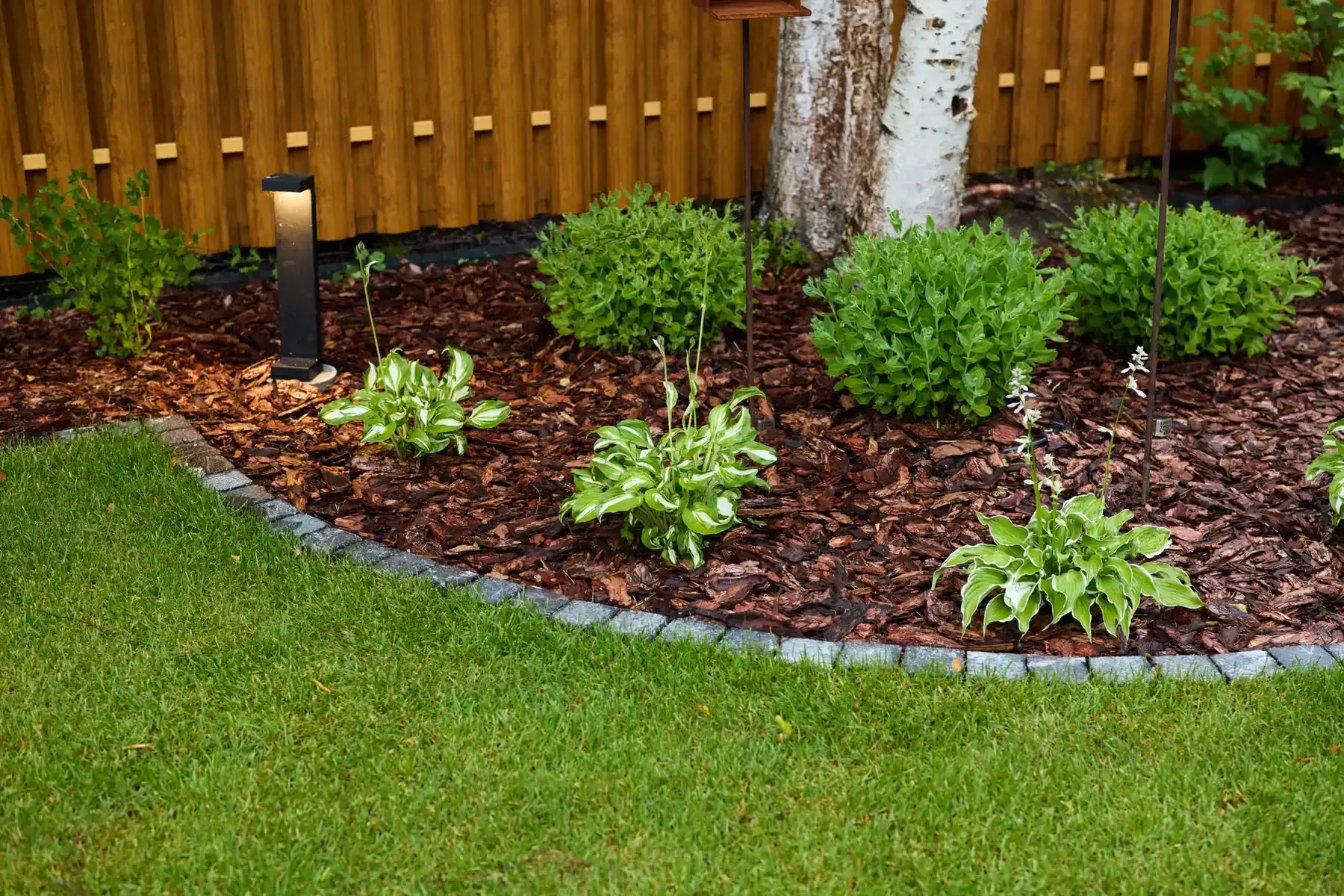
Residential Mulch Installation Alcona County
If you’ve been fighting the same weed problem every June, or watching your plants struggle through July despite regular watering, the issue usually isn’t the plantsit’s what’s underneath them. Gustin Township sits on glacially deposited sandy soil, the same fast-draining, low-organic-matter ground that made this land unsuitable for farming and eventually became the Huron National Forest. That soil loses moisture fast.
With Alcona County averaging around 31 inches of rain per yearwell below the national averageyour garden beds and tree rings are working against two problems at once every summer. A properly installed mulch layer addresses both. Research shows it can reduce soil evaporation by up to 35%, which means less watering and less stress on your plants during dry stretches. At 2 to 3 inches of depth with clean bed prep underneath, you’re also cutting weed germination by up to 90%not because mulch is magic, but because it’s blocking the light and disrupting the conditions weeds need to take hold.
Then there’s the other half of the year. Inland Alcona County sits in USDA Hardiness Zone 5a to 5b, where minimum winter temperatures can reach negative 20 degrees Fahrenheit. The freeze-thaw cycles that hit northeastern Michigan each spring and fall can heave shallow roots and damage perennials that would survive without issue in milder climates. A fall mulch application before the ground locks up insulates those root zones through the worst of it.
Most homeowners mulch once in spring and call it donethe fall application is the one that actually protects your investment through a Gustin winter.
Tree Service Mulch Experts Gustin, MI
We’re a family-operated tree care company with over seven years of hands-on experience. I lead every field job myself. Cecilia handles scheduling and communication on the back end. There’s no anonymous crew showing upyou know who’s coming, and there’s a real person to reach if anything isn’t right.
What makes our mulch work different is the background. I started as a groundman learning safe climbing, rigging, and tree health assessment before bringing that experience to Michigan. That means when mulch goes around a tree on your Gustin propertywhether it’s a mature northern hardwood on a wooded lot near the Huron National Forest edge or a foundation planting along your drivewayit’s applied by someone who understands root zones, trunk flare, and what happens when mulch is piled wrong.
The ISA-certified arborists on our team know the difference between mulch that protects a tree and mulch that slowly damages one. Every job is backed by a 30-day workmanship guarantee. In a rural area like Gustin Township where options are limited and you’re trusting someone to show up and do it right, that accountability matters.
Mulch Delivery and Installation Gustin, MI
It starts with a straightforward conversation. You describe what you’ve gothow many beds, tree rings, or areas need coverageand we work out how much material you actually need. One cubic yard covers roughly 162 square feet at 2 inches deep or about 108 square feet at 3 inches. Getting that estimate right upfront means no shortage mid-job and no leftover material you’re stuck dealing with.
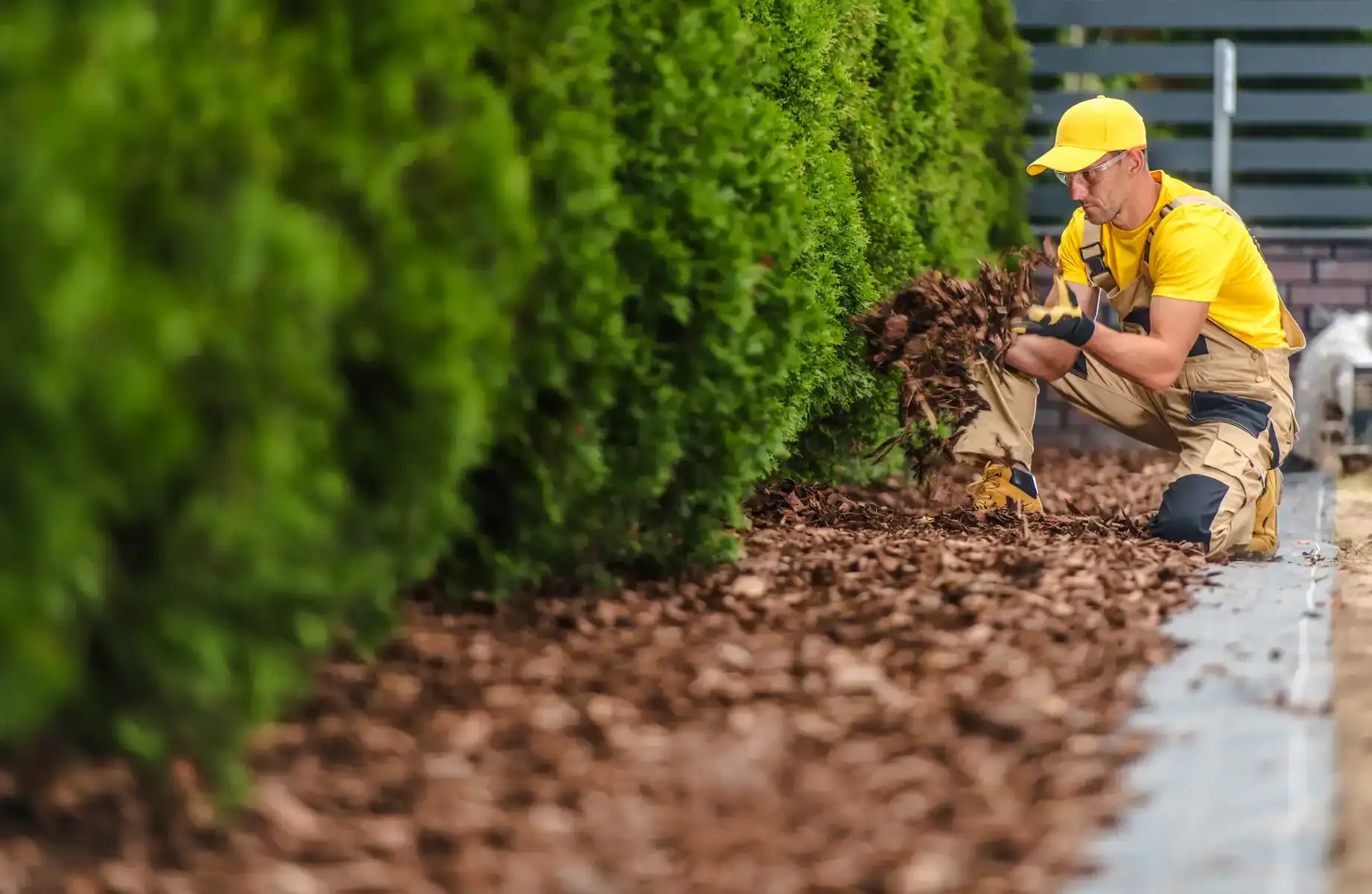
From there, our crew handles bed preparation before a single yard of mulch goes down. That means clearing old debris, pulling existing weeds, and edging where needed. Skipping this step is why DIY mulch jobs failyou’re covering the problem instead of addressing it. With Gustin’s sandy soil and the compressed growing season in Zone 5a, that prep work is what determines whether the mulch actually performs or just sits on top of whatever was already there.
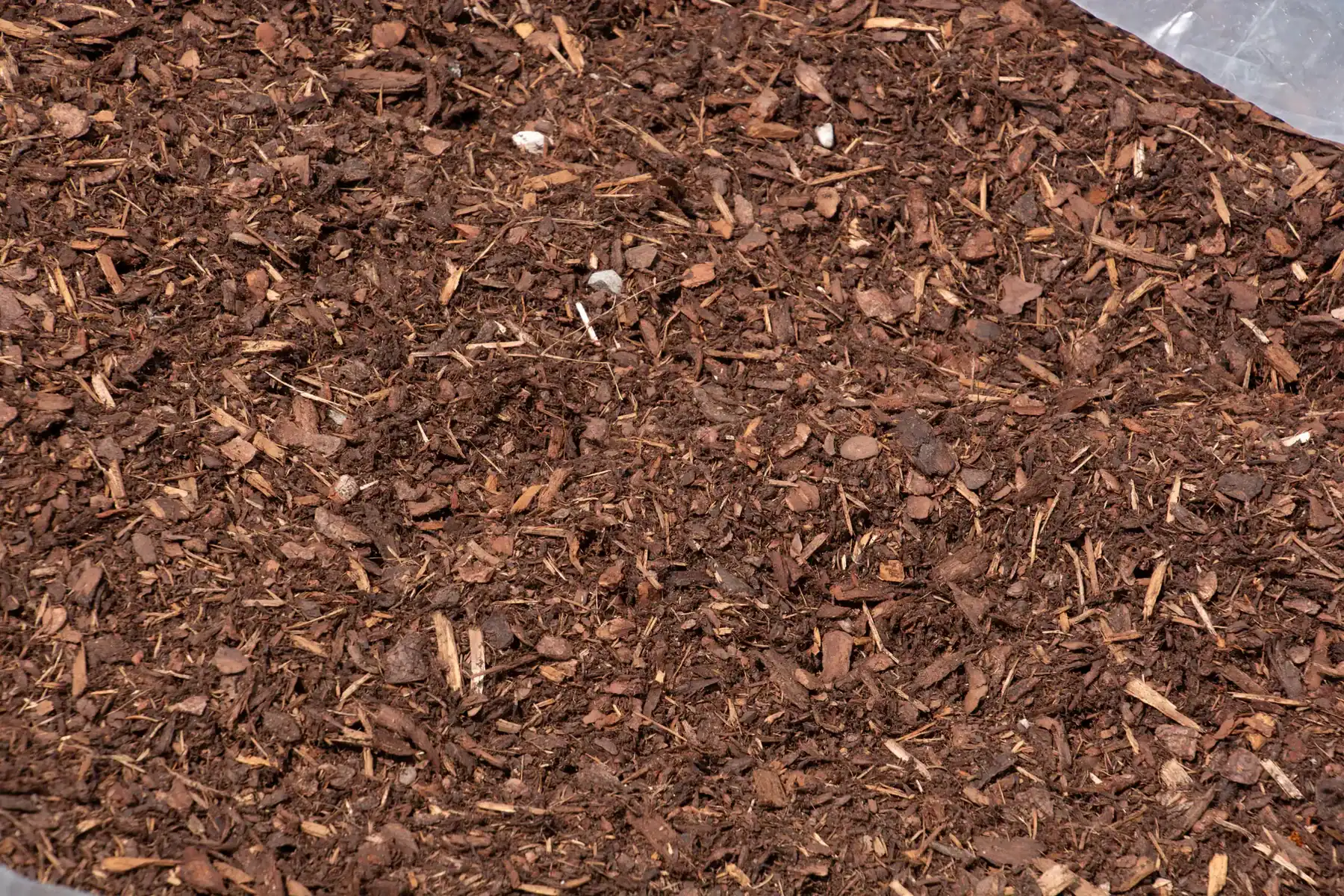
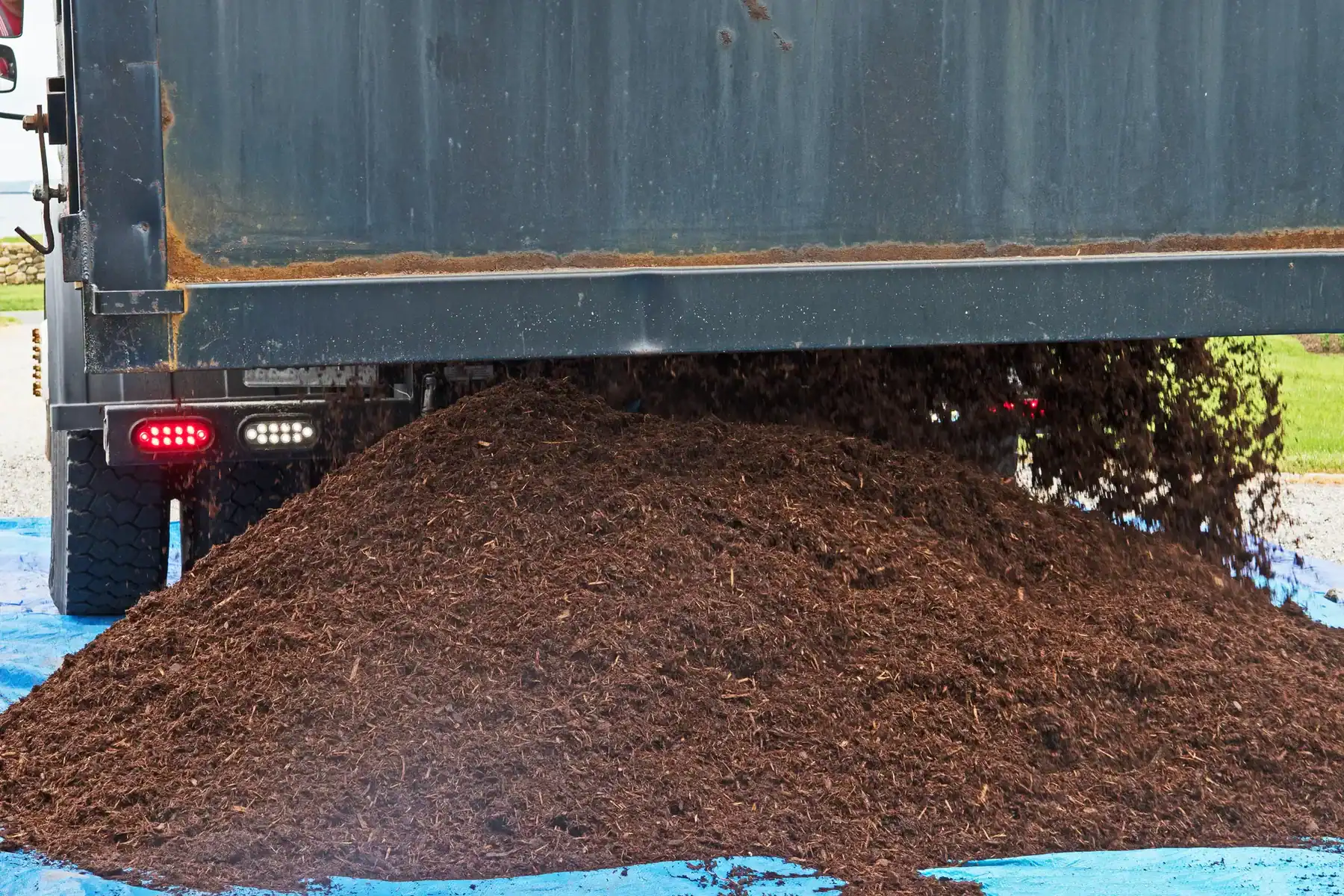
The mulch itself is repurposed organic material reclaimed from real tree workfresh, natural, and free of the dyes or chemical treatments you find in bagged product. It goes down at the correct depth with proper clearance from tree trunks. Then our crew cleans up and leaves.
Timing matters in northeastern Michiganthe window between snowmelt and peak weed germination in spring, and between plant hardening and first hard freeze in fall, is shorter than it is downstate. We understand that and work with your schedule to hit the right window for your property.
Ready to get started?
Garden Bed Mulching Service Alcona County
Our full service covers measurement, sourcing, delivery, bed preparation, installation, and cleanuphandled in a single visit. You don’t coordinate separate vendors, rent a truck, or spend a weekend hauling 40-pound bags from a store an hour away. For homeowners in Gustin Township, where the nearest home improvement store isn’t around the corner, that convenience is real and practicalnot a sales pitch.
The mulch we use is organic and repurposed from actual tree service operations. In a community adjacent to the Huron National Forest, where the land and its trees are part of daily life, that matters to a lot of residents. It enriches Alcona County’s naturally sandy, low-organic-matter soil as it breaks down over timeeach season’s application is also a slow investment in the soil beneath your beds. It’s not rubber. It’s not dyed. It’s what belongs in the ground here.
Beyond standard garden bed mulching and tree ring coverage, we also handle bulk mulch delivery for larger properties, wood chip delivery for wooded lots or utility areas, and landscape mulch service for full-yard refreshes. If your property also needs topsoil or lawn seedingcommon needs after tree removal on rural Gustin lotsthat can be combined in the same visit. No permit is required for residential mulch installation in Gustin Township, so there’s nothing on your end to file or coordinate before the work begins.
When is the best time to install mulch on a Gustin, MI property?
In Gustin Township, there are two meaningful windowsspring and falland both serve different purposes. Spring installation should happen after the soil has had a chance to warm up following snowmelt, but before weed seeds start germinating in earnest. In inland Alcona County, where last frosts can run into mid-to-late May, that window typically falls in late May to early June. Going too early locks cold soil under the mulch and slows the warming your plants need to get growing.
Fall installation is the one most Gustin homeowners skip, and it’s arguably the more important of the two. Applying 2 to 3 inches of mulch after your plants have hardened off but before the ground freezes gives the root zone insulation through the freeze-thaw cycles that define northeastern Michigan’s winter and early spring. In a Zone 5a to 5b climate with potential minimum temps around negative 20 degrees Fahrenheit and average snowfall near 64 inches annually, that insulation layer is the difference between perennials that come back in spring and ones that don’t. If you only mulch once a year, fall is the application worth prioritizing.
How much mulch do I actually need for my garden beds?
The standard installation depth is 2 to 3 inches, and the math from there is straightforward. One cubic yard covers roughly 162 square feet at 2 inches deep, or about 108 square feet at 3 inches. A typical residential property in Gustin with a few garden beds and a couple of tree rings might need anywhere from 2 to 5 cubic yards depending on the size and layout of the beds.
The tricky part for most homeowners isn’t the mathit’s the measuring. Irregular bed shapes, tree rings around large-canopy trees, and foundation plantings that wrap around corners are all easy to underestimate. Ordering too little means stopping mid-job; ordering too much means you’re left with a pile. When you book with us, we measure before anything is ordered or delivered, so the estimate is based on your actual property, not a rough guess. For properties in Gustin Township with larger wooded lots or multiple tree rings on forested edges, getting that measurement right upfront saves a second trip and a lot of frustration.
What is a mulch volcano and why should Gustin homeowners avoid it?
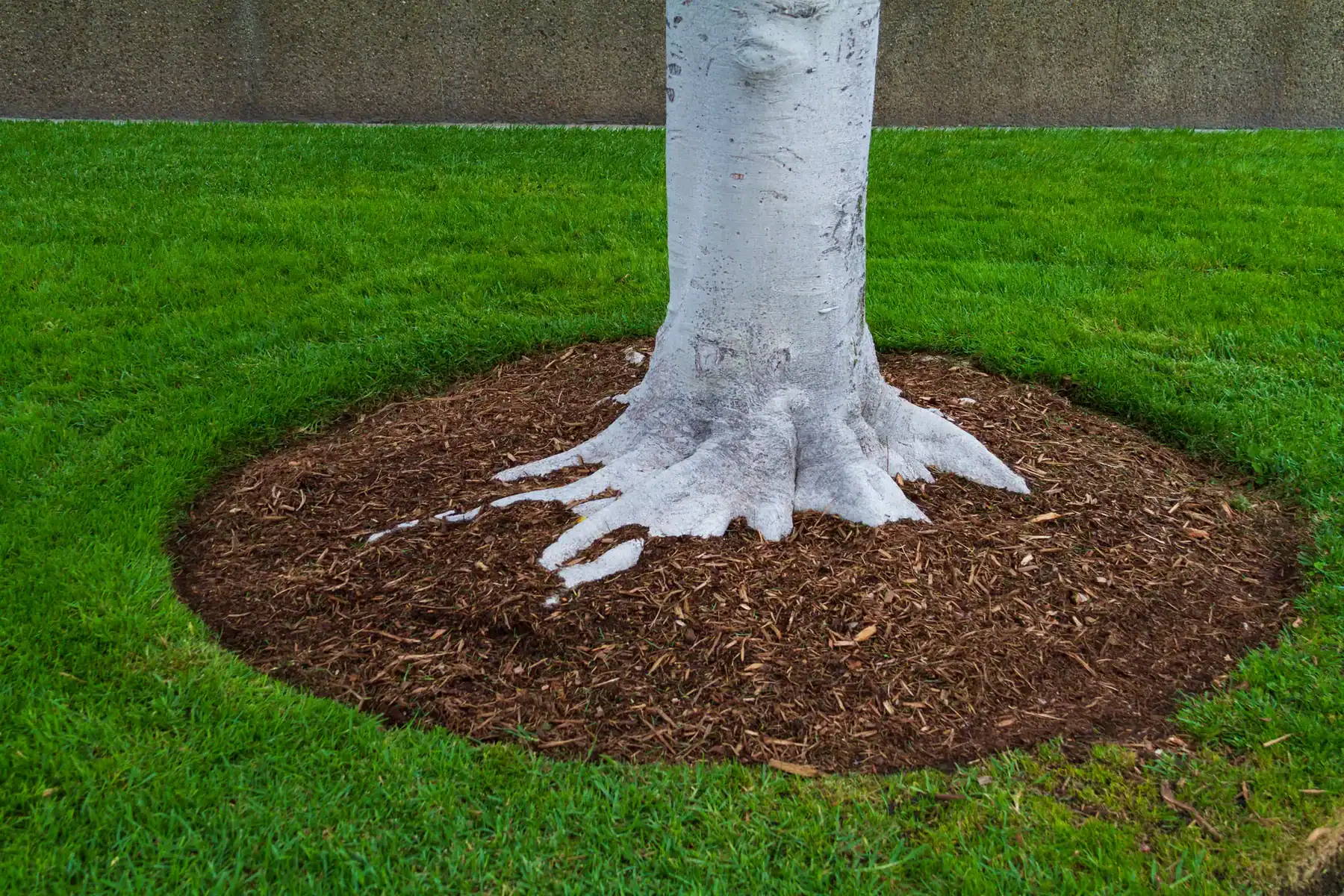
A mulch volcano is what happens when mulch gets piled up against a tree trunk in a cone shapethick at the base, tapering up the bark. It looks intentional, and a lot of people assume more coverage around the trunk means better protection. It does the opposite. When mulch stays in direct contact with bark, it traps moisture against the wood, which creates conditions for bark rot, fungal disease, and pest infestation. Over time, it can kill a tree that would have otherwise lived for decades.
The correct approach is to keep mulch 2 to 3 inches away from the trunk itself, letting the flare of the root system breathe. This is one of the clearest differences between mulch applied by an arborist and mulch spread by someone without tree health training. On Gustin properties with mature northern hardwoods or established trees near the Huron National Forest edge, this isn’t a minor detailthose trees are part of what makes the property what it is. We apply mulch with trunk clearance built into the process every time, because we understand what’s at stake when it’s done wrong.
Is it worth hiring someone to install mulch, or should I just do it myself?
For a single small bed, bagging it yourself might make sense. For anything covering multiple beds, tree rings, and a few hundred square feet of ground, the math shifts pretty quickly. A cubic yard of mulch weighs roughly 800 pounds when wet. Spreading 3 or 4 yards across multiple beds, edging cleanly, prepping the ground underneath, and cleaning up afterward is a full day of physical worksometimes more.
For a lot of Gustin Township residents, the nearest place to buy bulk mulch in quantity isn’t a short drive. Renting a truck, loading the material, hauling it to the property, and then doing the labor on top of that is a significant time and physical investment for a result that still might not hit the right depth or include proper bed prep. Professional installation means the measuring, sourcing, delivery, prep, spreading, and cleanup all happen in one visit. For homeowners who’ve been maintaining their Gustin property for years and want it done correctlyespecially with the Zone 5a winters that make proper root insulation genuinely importanthiring out is a straightforward decision, not a luxury one.
What type of mulch works best in Alcona County's sandy soil?
Organic mulchhardwood bark, wood chips, or shredded woodis the right choice for Alcona County’s sandy, low-organic-matter soils. The reason goes beyond surface-level moisture retention. Sandy soil drains fast and holds very little organic material naturally. That’s the same soil condition that made this region unsuitable for farming after the logging era and contributed to the land becoming the Huron National Forest. Organic mulch breaks down gradually over time, adding the organic matter that the native soil is missing. Each season’s application slowly builds a richer, more moisture-retentive layer beneath your beds.
Rubber mulch and inorganic materials don’t do that. They sit on top indefinitely without contributing anything to the soil below, and some rubber products can leach chemicals into the ground over time. Dyed wood mulches may contain chemical treatments that aren’t ideal for beds where you’re growing edibles or native plants. We use repurposed organic mulch reclaimed from real tree workfresh-chipped, natural material that fits the character of northeastern Michigan landscapes and actually improves the soil it sits on over time.
Does Ivan's Tree Services handle mulch jobs in rural areas outside of Lincoln, MI?
Yes. Gustin Township covers a wide rural area, and not every property is right in the Village of Lincoln. Whether your beds are on a wooded lot further out along M-65, a rural homestead off M-72, or a larger property on the edge of the township, we travel to where the work is. Rural properties in this part of Alcona County often have more ground to coverlarger tree rings, longer bed runs, wooded edges that need attentionand our service is built to handle that scale.
The process is the same regardless of where you are in the township: we measure, source the right amount of material, prep the beds, install at the correct depth, and clean up before leaving. The 30-day workmanship guarantee applies to every job, whether it’s a compact foundation planting near Lincoln or a multi-bed property further out in Gustin Township. If you’re unsure whether your location falls within the service area, the easiest thing to do is reach out directlyCecilia handles scheduling and can confirm availability and timing for your specific address.
Other Services we provide in Gustin