
Tree Pruning in Curran, MI
When Your Property Borders the National Forest, Pruning Isn't Optional
Hear from Our Customers
Professional Tree Pruning Alcona County
Alcona County has been through back-to-back declared ice storm disastersMarch 2025, then again in March 2026. The Michigan DNR said it plainly: many parts of northern Michigan still hadn’t recovered from the first storm when the second one arrived. If your trees came through with broken crowns, split limbs, or hanging deadwood, that damage doesn’t fix itself. It just waits for the next heavy ice load.
Proper pruning removes the weight and weakness that makes trees dangerous. Crown thinning lets wind and ice move through the canopy instead of against it. Deadwood removal eliminates the limbs most likely to fail under pressure. On a Mitchell Township property where mature second-growth hardwoods surround the house on every side, that’s not a cosmetic upgradeit’s a structural one.
There’s also a longer game here. The aspen, maple, oak, and mixed pine that dominate the Curran landscape are reaching middle age after decades of post-logging regrowth. This is the window where the right pruning decisions extend a tree’s life by years and reduce the risk of catastrophic failure later. Miss it, and you’re managing a crisis instead of preventing one.
Tree Trimming Services Curran Michigan
We’re a family-owned operation out of MichiganI run every job in the field, and Cecilia handles scheduling and communication on the back end. When you call, you’re talking to someone who’s actually connected to the work. There’s no call center, no franchise layer, no one passing your job down the line.
We’ve been doing this for over seven years across Michigan, and that experience matters in Alcona County. This isn’t the same work as trimming a few ornamental trees in a suburban backyard. Properties around Curran often sit directly on the edge of the Huron National Forest, surrounded by dense second-growth canopy on multiple sides. That context changes how a job gets assessed, planned, and executed.
We carry full general liability insurance and workers’ compensationwhich protects you if anything goes sideways on your property. Every job also comes with a 30-day workmanship guarantee. That’s a written commitment, not a talking point.
How Tree Pruning Works in Curran
It starts with an on-site visit. I come out to your property, walk the trees with you, and give you a clear picture of what needs attention and why. You’ll get a written estimate before any work is scheduledno pressure, no vague verbal quotes that change when the crew shows up.
Once you’re ready to move forward, the work is planned around your specific trees and the time of year. That timing matters more in northern Michigan than most places. Red oaks in the Curran area should not be pruned between April and Julythat’s when oak wilt spreads most aggressively, and the beetle vectors that carry it are active in forest-dense environments like this one. For most deciduous trees, the dormant window between November and March is the safest time to prune: less stress on the tree, wounds heal cleaner, and disease pressure is lower. If you’re dealing with storm damage from last winter’s ice event, that work can be assessed and prioritized regardless of season.
The crew handles everythingpruning, debris removal, and full cleanup before we leave. Nothing gets left behind on your property. That’s part of the job, not an add-on.
Ready to get started?
Crown Reduction Pruning Northern Michigan
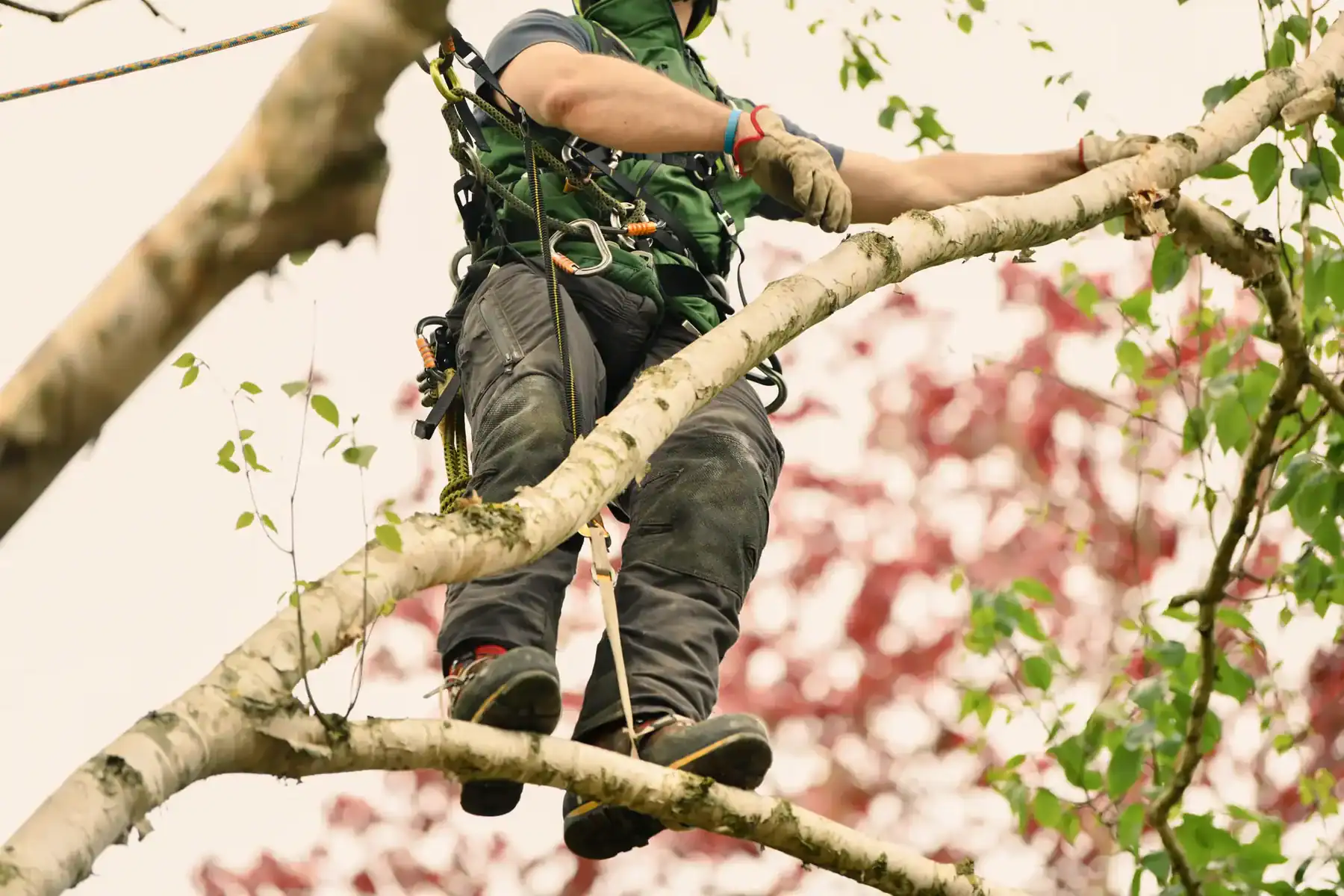
Tree pruning covers a range of techniques depending on what the tree actually needs. Crown thinning selectively removes interior branches to improve airflow and reduce the surface area that catches ice and windparticularly relevant for the dense hardwood canopies common on Mitchell Township properties. Crown reduction brings the overall size of the canopy down without damaging the tree’s framework, which is useful when limbs are encroaching on a structure or extending toward a roofline. Deadwood removal targets branches that are already dead or dying and pose the most immediate risk of failure.
All cuts are made at the branch collarthe natural boundary where the branch meets the trunk or parent limb. This is how trees heal. Cuts made in the wrong place leave the tree unable to close the wound properly, which opens the door to decay and disease. We don’t top trees. Topping is one of the most damaging things you can do to a treeit creates weak, fast-growing regrowth that’s structurally inferior and more likely to fail in the next storm, not less.
If your property has trees near the boundary with Huron National Forest land, that’s worth discussing during the estimate. You have no control over what’s happening on the federal side of that line, but you can make sure your trees are in the best possible condition to handle whatever comes from it.
Is it safe to prune trees in Curran, MI right after an ice storm?
It depends on the damage. After an ice storm like the ones that hit Alcona County in 2025 and 2026, the priority is assessing what’s structurally compromisedsplit crotches, hanging limbs, cracked trunksand addressing those hazards first. Some of that work needs to happen quickly regardless of season, because a damaged limb that’s partially attached is unpredictable and can fall without warning.
For the broader pruning workcrown thinning, deadwood removal, structural shapingit’s worth waiting until conditions are safe for the crew to work properly. Frozen ground, icy branches, and unstable canopy all affect how the job gets done. We’ll give you a straight answer on what’s urgent versus what can wait a few weeks for better conditions rather than rushing work that doesn’t need to be rushed.
How do I know if my trees actually need pruning or if they're fine?
A few things to look for: dead branches that haven’t shed on their own, limbs that cross or rub against each other, sections of the canopy that look noticeably thinner or discolored compared to the rest of the tree, and any branches that hang over your roof, driveway, or outbuildings. On heavily wooded rural properties like most around Curran, it’s also worth paying attention to how the canopy is loadingif the outer branches are very dense and the interior is bare, that’s a sign the tree could benefit from thinning before the next ice season.
You don’t have to diagnose it yourself. The on-site estimate is specifically designed to walk through what’s there, explain what’s concerning and what isn’t, and give you a clear picture before you commit to anything. There’s no obligation attached to that visit.
What's the difference between tree trimming and tree pruning?
Trimming is mostly about shape and appearancekeeping a tree looking neat, managing growth that’s getting out of bounds, cleaning up the edges. Pruning goes deeper than that. It’s about the health and structure of the tree: removing dead, diseased, or structurally weak branches, improving the branch architecture so the tree can handle stress better, and making cuts that allow the tree to heal correctly.
On a property surrounded by second-growth forest in northern Michigan, the distinction matters. Trimming a tree to look tidy doesn’t make it more storm-resistant. Pruning it properlyremoving the right branches, at the right points, at the right time of yeardoes. Both services have their place, and we handle both, but if storm resistance and long-term tree health are your priority, pruning is the conversation to have.
When is the best time of year to prune trees on a wooded property in northern Michigan?
For most deciduous treesthe sugar maples, red maples, basswood, and birch that make up a lot of the second-growth canopy in the Curran arealate fall through early spring is the ideal window. The trees are dormant, which means less stress from the pruning cuts, faster wound closure when growth resumes, and lower disease pressure because insects and fungal spores are less active.
The one significant exception in this region is red oaks. You should not prune red oaks between April and July. That’s the active season for the beetles that spread oak wilt, and a fresh cut on a red oak during that window is essentially an open invitation. If you have red oaks on your property and they need attention, plan that work for late fall or winter. For storm damage that can’t wait, the cut should be sealed immediately after it’s made to reduce exposure risk. We factor this into how we plan jobs in northern Michigan.
Does professional tree pruning actually help trees survive ice storms better?
Yes, and the mechanism is straightforward. Ice accumulates on branchesthe more surface area and the denser the canopy, the more weight the tree has to carry. A properly thinned crown lets ice and wind move through rather than pile up. Removing deadwood eliminates the branches with the weakest attachment points, which are the first ones to fail under load. Correcting poor branch structurenarrow crotch angles, co-dominant stems competing for the same spacereduces the points where splitting is most likely to start.
After what Alcona County experienced in 2025 and 2026, this isn’t theoretical. Trees that were well-maintained came through those storms in significantly better shape than ones that hadn’t been touched in years. Proactive pruning before ice season is a direct investment in reducing the damage you’re dealing with afterward.
Will Ivan's Tree Services actually come out to Curran, MI for a pruning job?
Yes. We serve northern Michigan properties, including Alcona County. The distance from our base doesn’t change how the job gets handledyou still get an on-site visit, a written estimate, and the same crew and equipment that handles every other job.
For Curran residents, this matters because the local options are genuinely thin. When you’re on a wooded rural property and you need someone with insurance, real pruning knowledge, and a workmanship guarantee, it’s worth calling a company that will actually show up and stand behind the workeven if we’re driving a distance to get there.
Other Services we provide in Curran